

U0100 on 2003-2004 Audi A4 3.0L: Lost Communication with ECM Causes and Fixes
On a 2003-2004 Audi A4, code U0100 is most often caused by water damage to either the Engine Control Module (ECM) in the plenum box or the Transmission Control Module (TCM) under the passenger-side carpet. Check for clogged drains under the battery and signs of moisture in these areas first.
- For a 2003-2004 Audi A4, U0100 is almost always a symptom of water damage.
- Your first diagnostic step should be to physically check for water in the ECM box (engine bay, driver's side) and under the passenger-side carpet (TCM location).
- Do not replace any parts until you have found and fixed the source of the water leak.
- A weak battery can cause this code; test the battery before beginning complex wiring diagnostics.
- Replacement of the ECM or TCM requires professional programming to integrate with your car's security system.
What's Unique About the 2003-2004 Audi A4
The B6 generation Audi A4 (2002-2005) is notoriously prone to water intrusion issues that directly cause this code. The primary culprits are clogged drains in the cowl/plenum area (below the windshield, especially under the battery) and clogged sunroof drains. These clogs cause water to overflow into two critical areas: the sealed electronics box containing the ECM in the plenum, and the passenger-side footwell where the Transmission Control Module (TCM) is located. A short-circuited TCM or ECM is the most common platform-specific reason for a U0100 code on this vehicle.
Symptoms You May Notice
- Check Engine Light is on
- Engine will not start or is very hard to start
- Engine cranks but does not fire
- Engine stalls intermittently while driving
- Rough idle, misfires, or significant loss of power
- Transmission is stuck in 'limp mode' (usually one gear) and will not shift
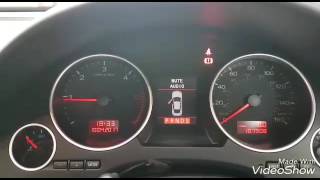
- PRND (gear selector) indicator on the dashboard is flashing or completely lit up.
- Harsh 'clunk' when shifting from Park into Reverse or Drive
- Multiple other warning lights (ABS, ESP, EPC, Airbag) may illuminate at the same time
- Replacing the ECM without first checking for water in the plenum or under the carpet for a flooded TCM.
- Replacing individual sensors (like crank or cam sensors) when the root cause is a network failure preventing the ECM from receiving any data.
- Replacing the battery without confirming if a parasitic drain from a water-damaged module was the reason the battery failed.
Most Likely Causes
- Water Damage to Transmission Control Module (TCM) 🔴 High Probability → Shop Transmission Assembly The TCM on B6 A4s is located in a black box in the passenger footwell, an area highly susceptible to flooding from clogged sunroof drains or failed door seals. A shorted TCM can bring down the entire powertrain CAN bus, causing the ECM to lose communication.
How to confirm: Pull back the passenger-side front carpet and check 🎬 Watch: How to fix water leaks in the footwell the black plastic module box for any signs of moisture, corrosion, or a water line on the TCM and its wiring connectors. Scan for code U0101 (Lost Communication with TCM), which often accompanies U0100 in this scenario.
Typical fix: The TCM must be replaced. The interior must be thoroughly dried and the source of the water leak (e.g., clogged sunroof drain tubes) must be found and repaired to prevent recurrence.
Est. part cost: $300-$800 - Water Damage to Engine Control Module (ECM) 🔴 High Probability → Shop Engine Control Module (ECM) The ECM is housed in a plastic electronics box in the plenum (cowl) area. Drains in this area, particularly one located directly under the battery, frequently clog with leaves and debris. This causes the plenum chamber to fill with water like a bathtub, flooding the ECM box and short-circuiting the module.
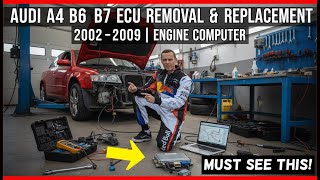
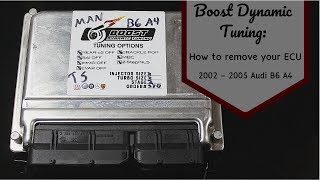
How to confirm: Open the black plastic electronics box located in the engine bay on the driver's side, near the base of the windshield. Check for any signs 🎬 See this walkthrough on how to remove the ECU of standing water, condensation, or green/white corrosion on the ECM and its multi-pin connectors.
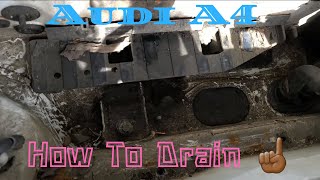
Typical fix: The ECM must be replaced and the plenum drains must be cleared. It is common practice to remove the rubber drain grommet under the battery entirely. 🎬 Watch: How to clear the drain holes under the battery The replacement ECM will require professional programming ('cloning' or immobilizer adaptation) to work with the car.
Est. part cost: $250-$700 - Weak or Failing Battery 🟡 Medium Probability → Shop Vehicle Battery
How to confirm: Test the battery voltage with the car off; a healthy battery should read at least 12.4-12.6 volts. Perform a load test to check its health. Low or unstable voltage can cause random communication dropouts between modules, especially during engine cranking.
Typical fix: Recharge or replace the vehicle's battery. Clean any corrosion from the battery terminals.
Est. part cost: $150-$300 - CAN Bus Wiring or Ground Fault ⚪ Low Probability
How to confirm: Visually inspect the main wiring harnesses for any signs of chafing, rodent damage, or corrosion, particularly in the plenum area and under the carpets where water damage occurs. Check main engine and chassis ground straps for tightness and corrosion. Advanced diagnosis requires a multimeter to check for continuity and resistance (should be ~60 Ohms across CAN High and CAN Low) on the CAN bus wires at the OBD-II port or at a module connector.
Typical fix: Repair the damaged section of wiring. Clean or replace faulty ground straps.
Est. part cost: $10-$100
Diagnosis Steps
- Scan for all stored fault codes in all vehicle modules. Note any other 'U' codes or codes pointing to a specific module (e.g., U0101 for TCM).
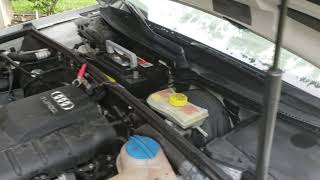
- Check for water. This is the most critical step for this vehicle. Remove the plastic cover over the battery and brake fluid reservoir. Check for standing water in the plenum chamber. Open the ECM box (driver's side plenum) and inspect for moisture.
- Pull up the passenger-side front carpet and insulation. Open the black plastic box and inspect the TCM and its wiring for any signs of moisture or corrosion.
- If water is found, the affected module is the primary suspect. Address the failed module and repair the leak (clear plenum/sunroof drains, reseal door membranes). The plenum drain under the battery is the most common culprit.
- If no water is found, test the battery and charging system. Ensure voltage is stable and above 12.4V with the engine off and that the alternator is charging correctly (13.7-14.7V) when running.
- Inspect all power and ground connections to the ECM and TCM. Ensure they are clean, tight, and free of corrosion.
- Visually inspect the main wiring harnesses connected to the ECM and TCM for any obvious damage.
- If the above steps do not reveal the cause, the issue is likely a more complex wiring fault or an internal module failure requiring professional diagnosis with an advanced scan tool and multimeter to test CAN bus resistance and signal.
Parts You'll Likely Need
- Transmission Control Module (TCM)
(OEM #8E0927156M (for Quattro w/ ZF 5HP19 Tiptronic). Part number varies for FWD CVT models. Always verify by VIN.)— A primary point of failure due to its location in the passenger footwell, which is prone to water damage from clogged sunroof drains. A faulty TCM can disrupt the entire CAN network.
Trusted brands: Bosch, Genuine Audi
OEM price range: $800-$1200
Aftermarket price range: $300-$600 (Remanufactured) - Engine Control Module (ECM)
(OEM #8E0909559L / 8E0909559R (Bosch P/N: 0261208261). Always verify by VIN.)— The second most common failure point, almost always due to water intrusion from clogged plenum drains that flood the electronics box.
Trusted brands: Bosch, Genuine Audi
OEM price range: $1000-$1500
Aftermarket price range: $250-$700 (Used/Cloned)
Related Codes That Often Appear With This One
- U0101 — This code specifically means 'Lost Communication with TCM'. If you see U0100 and U0101 together, the problem is almost certainly originating from the Transmission Control Module or its wiring, a very common scenario in flooded B6 A4s.
- P0606 — This code means 'ECM/PCM Processor Fault'. If seen with U0100, it strongly suggests the ECM itself has an internal failure (often from water damage) and is the source of the communication loss.
- P0600 — This code means 'Serial Communication Link Malfunction'. It's a more general communication error that points to a problem on the CAN bus, consistent with the U0100 fault.
Technical Service Bulletins (TSBs) & Recalls
- While no specific TSB for U0100 was found, Audi has issued numerous TSBs for related issues on the B6 platform, such as TSB 40 21 24 for front upper control arm bushing noise and TSBs for water leaks from clogged sunroof drains, which are the root cause of this electronic failure.
Platform-Specific Known Issues
- Clogged plenum cowl drains under the battery and brake booster are a well-documented issue that leads to the ECM electronics box flooding with rainwater.
- Clogged sunroof drains are also common, with tubes that can become detached or blocked, channeling water inside the cabin and soaking the carpet, which destroys the Transmission Control Module.
Mechanic-Grade Diagnostic Values
- CAN Bus Resistance — expected: ~60 Ω (measured between CAN High and CAN Low pins at the OBD-II port with battery disconnected). Failure: A reading of ~120 Ω suggests a break in the bus or a missing terminating resistor in a module. A reading near 0 Ω indicates a short between the CAN lines.
- CAN High Voltage (Key On, Engine Off) — expected: ~2.5V in recessive state, pulsing to ~3.5V in dominant state.. Failure: Voltage stuck high, low, or not pulsing indicates a bus fault or faulty module.
- CAN Low Voltage (Key On, Engine Off) — expected: ~2.5V in recessive state, pulsing to ~1.5V in dominant state.. Failure: Voltage stuck high, low, or not pulsing indicates a bus fault or faulty module.
- Battery Voltage (Engine Off) — expected: 12.4V - 12.6V. Failure: Voltage below 12.4V indicates a weak or discharged battery, which is a known cause of random communication faults.
Scan Tool Commands That Help
- VCDS (VAG-COM) or ODIS: Gateway Installation List — To see which modules are currently communicating with the CAN Gateway. If the Engine (Address 01) or Transmission (Address 02) is missing from the list, it confirms they are offline and not responding.
- Specialized Bench Tools (K-Tag, Autel IM608, FC200): ECM/ECU Cloning (EEPROM & Flash Read/Write) — This is required when replacing the ECM. It copies the immobilizer data, VIN, and software from the original (even if faulty) ECM to a used donor unit, making it plug-and-play.
- VCDS (VAG-COM) or ODIS: TCM Coding / Basic Settings — After installing a used TCM, it may need to be coded with the vehicle's specific configuration (engine, AWD/FWD, etc.). Running basic settings can also initiate the transmission adaptation process.
Wiring & Ground Locations
- G12 — At the center of the firewall in the engine compartment.. This is a primary ground connection for the Engine Control Module (ECM). A corroded or loose connection here can cause a loss of power to the ECM, leading to a U0100 code.
- G43 — Behind the passenger side kick panel, near the lower A-pillar.. This point grounds several important modules on the CAN bus, including the Instrument Cluster and Steering Column Control Module. A fault here can disrupt network communication.
- G44 — Behind the driver's side kick panel, near the lower A-pillar.. This ground serves the Body Control Module (Comfort System). While not on the powertrain CAN, an electrical fault here can sometimes introduce noise that affects other systems.
- CAN Bus Wires — Twisted pair of wires running throughout the vehicle, connecting major control modules.. These are the physical data lines. On this platform, they are typically an Orange/Black (CAN High) and Orange/Brown (CAN Low) twisted pair. Knowing the colors is critical for tracing wires and testing.
Real Owner Repair Stories
- AudiWorld Forums user (2001 Audi Allroad Quattro (similar B5/C5 platform with known water leak issues)) — After heavy rain, passenger floor was flooded. ABS, Check Engine, and ESP lights were on. Codes P0600 (Serial Communication Link) and U-codes were present.
❌ Tried (didn't work) Initially hoped drying the module would work.
✅ What actually fixed it The Transmission Control Module (TCM) was completely submerged and destroyed. The problem was resolved by replacing the TCM with a used unit that had the exact same part number. The user also noted the root cause was a clogged plenum drain under the battery, which must be cleared to prevent recurrence. - Owner Report (NHTSA ODI #11218134) — An owner reported that their vehicle sometimes takes a few cranks to start regardless of engine temperature. Upon pulling codes, U0100 was found, indicating a loss of communication to the ECM. The owner noted this as a safety issue as the communication loss can occur while driving.
OEM Part Supersession History
8E0927156A→8E0927156P— Revision and update by the manufacturer.
Heads up: When replacing the TCM, it is critical to use a module with the exact same part number or a known compatible superseded number. Using an incorrect part number, even if it physically fits, will likely result in no communication or incorrect transmission operation.
Model Year Variations Within This Range
- 2003-2004: While there were minor running changes between the 2003 and 2004 model years, including a potential piston design change and a different transmission model (O2X) appearing in some 2004s, there are no documented significant variations in the CAN bus architecture, ECM/TCM location, or wiring that would alter the diagnosis or common causes of a U0100 code. The primary causes (water intrusion) and diagnostic steps remain identical for both years.
Diagnostic Flowchart
Other Known Issues on This Vehicle
Issues unrelated to this code that are worth knowing about as an owner of this generation:
- Front Control Arm Bushing Failure 🔴 High — Extremely common. Noises like clunking or creaking often appear after 60,000-100,000 miles. Affects both upper and lower control arms. (Ref: TSB 40 21 24 (2016453/4) and TSB 40 23 64 (2043424/17) address noises from upper and lower arm bushings respectively.)
- Rear Coolant Flange Leak 🔴 High — Very common failure. The plastic flange and associated pipes at the rear of the engine become brittle and crack, causing a significant coolant leak. Often occurs between 60,000 and 120,000 miles.
- Excessive Oil Consumption 🟠 Medium — The AVK V6 engine is known to consume oil, particularly at higher mileage (over 100,000 miles). This is often due to piston ring and valve stem seal wear.
- Torque Converter Failure (Tiptronic) 🔴 High — A known weak point on Quattro models with the ZF 5HP19 automatic transmission. Symptoms include shuddering at highway speeds and may trigger code P0741. Failure often requires transmission removal to replace.
- Vacuum System Leaks 🟠 Medium — The engine's complex network of plastic vacuum hoses and check valves becomes brittle with age and heat, leading to cracks and vacuum leaks that can cause rough idling and lean fault codes.
Used vs. New Parts: Buying Guide for This Vehicle
When a used part is the smart pick: For this repair, sourcing a used ECM or TCM is the most common and cost-effective strategy. New OEM modules are often prohibitively expensive or no longer available. A used part from a reputable salvage yard is a smart choice, provided the correct follow-up procedures are performed.
Donor-vehicle mileage cap: roughly under 150000 miles for the part to have meaningful remaining life.
What to inspect on the donor part:
- Verify the donor car was not a flood vehicle.
- Inspect the part's connectors for any signs of bent pins, corrosion, or water marks.
- If possible, get the VIN of the donor car to check its history.
- For the TCM, ensure the part number matches your original module exactly.
- For the ECM, ensure the Bosch hardware number on the case matches, as this is more critical for cloning than the Audi part number.
OEM-only on this vehicle (don't cheap out):
- While used parts are recommended, they should be Genuine Audi/Bosch parts. Avoid no-name, cloned aftermarket units of unknown origin, as their quality and software compatibility can be highly suspect.
Aftermarket brands forum-validated for this vehicle:
- Bosch (as OEM)
- Professional cloning/remanufacturing services (e.g., Velectronix, DUDMD Tuning) are often used and are a reliable option if your original module is too damaged to be cloned.
Brands owners have reported issues with on this vehicle:
- Generic, unbranded TCMs or ECMs sold on marketplaces without a clear warranty or return policy.
Real Owner Stories
Aggregated from forums and TSBs cited above. Mileages and costs reflect what owners reported in those sources.
2009 Audi A4
Symptoms: No-crank condition and the vehicle network appears to be down.
What fixed it: The Transmission Control Module was found to be 'toasted' with water damage and had to be replaced.
Source hint: Ross-Tech Forums - Thread 'AUDI A4 2009 no crank.' (2015)
2003 Audi A4 3.0L V6 — ~100000 miles
Symptoms: The plenum area turned into a 'bath' because the drainage holes were blocked with leaves and debris.
What fixed it: Cleared the scuttle/plenum drains and removed the rubber grommet under the battery to allow water to escape.
Source hint: Audi-Sport.net - Thread 'Scuttle / Plenum drainage issues' (2013)
2004 Audi A4 3.0L V6
Symptoms: PRNDS flashing on the dashboard and intermittent starting issues.
What fixed it: Traced to water ingress affecting the vehicle modules.
Source hint: Audi-Sport.net - Thread 'PRNDS Flashing - Intermittent Starting Issue' (2015)
Related OBD-II Codes
Frequently Asked Questions
My 2003 Audi A4 has a flashing PRND indicator and won't shift out of one gear. Is this related to U0100?
I found standing water under my battery; could this cause the U0100 code?
Is there a TSB for the suspension clunking I hear along with these electronic issues?
Where is the Transmission Control Module (TCM) located on my 2004 A4 3.0L?
Can a weak battery cause U0100 even if the car still cranks?
What is the recommended fix for the clogged drains under the battery?
Helpful Videos

Used OEM Parts in Stock
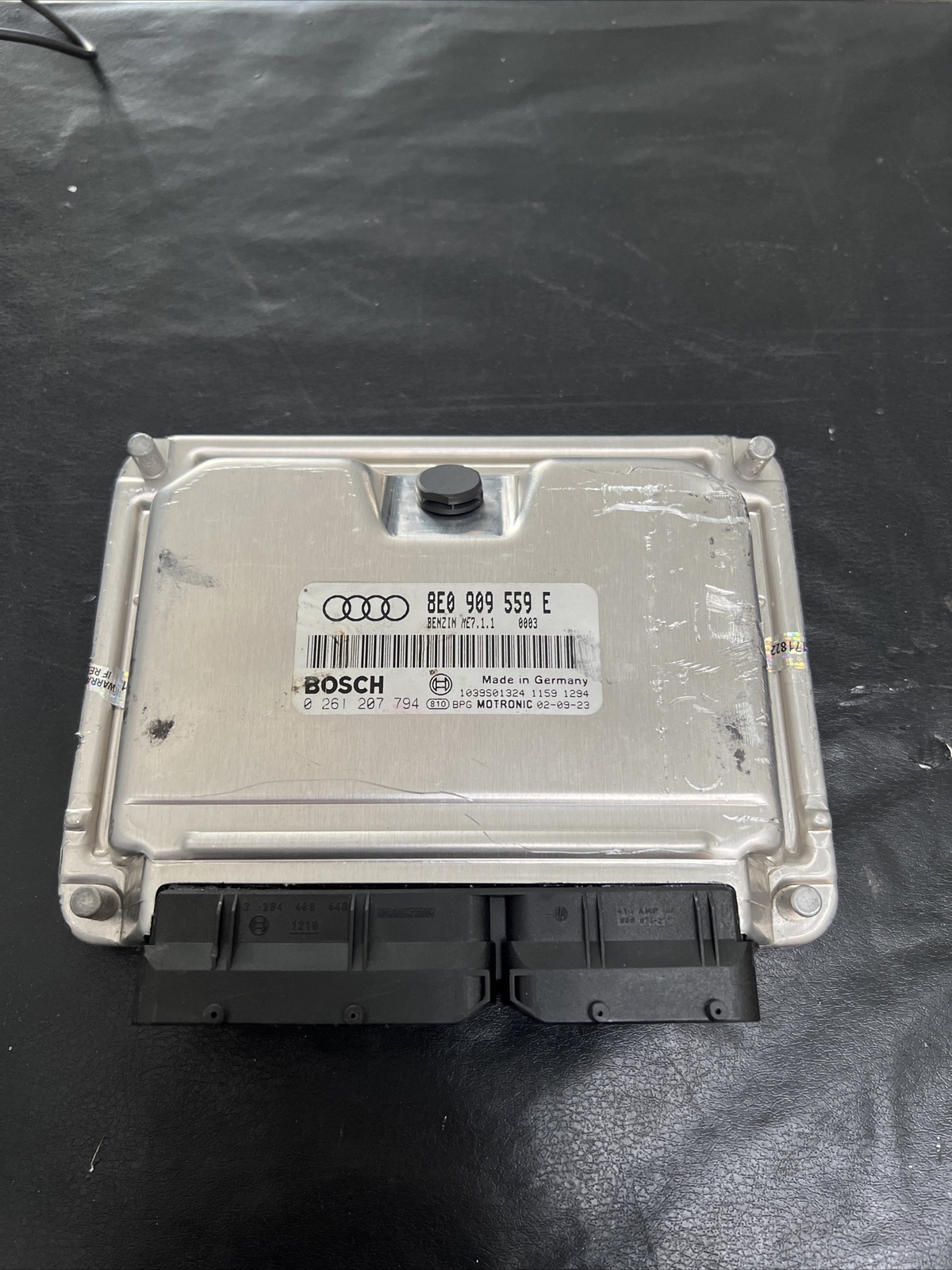
New Aftermarket Parts Available

The information in this article is provided for general reference and educational purposes only. Vehicle specifications, procedures, and part compatibility can vary by production date, trim level, and region. Always consult your vehicle's factory service manual and verify part numbers before purchasing or performing repairs. Safety-critical components such as airbags, seat belts, and braking systems should be installed by a qualified professional.
- Audi A4:
- 🧭 Diagnostic Flowchart
- 🎬 Helpful Videos
- 🛍️ Shop This Part
- What's Unique About the 2003-2004 Audi A4
- Symptoms You May Notice
- Most Likely Causes
- Diagnosis Steps
- Parts You'll Likely Need
- Related Codes That Often Appear With This One
- Technical Service Bulletins (TSBs) & Recalls
- Platform-Specific Known Issues
- Mechanic-Grade Diagnostic Values
- Scan Tool Commands That Help
- Wiring & Ground Locations
- Real Owner Repair Stories
- OEM Part Supersession History
- Model Year Variations Within This Range
- Other Known Issues on This Vehicle
- Used vs. New Parts: Buying Guide for This Vehicle
- Real Owner Stories
- 2009 Audi A4
- 2003 Audi A4 3.0L V6 — ~100000 miles
- 2004 Audi A4 3.0L V6
- Related OBD-II Codes
- Frequently Asked Questions
- 🎟️ Get 5% Off