

U0100 on 2013-2015 Cadillac ATS: Lost Communication with ECM Causes and Fixes
On a 2013-2015 Cadillac ATS, code U0100 is most often caused by a poor connection at the transmission wiring harness connector (X1), as documented in a GM Technical Service Bulletin. Inspecting and securing the pins in this connector is the most likely fix and can often be done for a minimal parts cost. Another known issue is a poor negative battery cable connection, which can also cause widespread communication faults.
- U0100 on a 2013-2015 ATS is a critical code that makes the vehicle unsafe to drive.
- The most probable cause is a poor connection at the transmission wiring harness (X1 connector), as per GM TSB PIC4740E.
- Always check the battery and basic connections first, but prioritize inspection of the transmission connector before considering expensive module replacement.
- Due to the complexity of network diagnostics, professional service is strongly recommended.
- Do not replace the ECM unless all wiring and connection issues have been definitively ruled out.
What's Unique About the 2013-2015 Cadillac ATS

For this specific generation of Cadillac ATS, General Motors issued a Technical Service Bulletin (PIC4740E) that directly links the U0100 code to a known issue. The bulletin points technicians to inspect the transmission X1 connector for unseated or loose-fitting terminal pins. For the ATS and CTS specifically, it also advises checking for harness chafing near a securing bracket on the passenger side of the transmission bell housing. This specific, documented weak point makes a wiring inspection at the transmission a much higher priority than on other vehicles where a U0100 code might be more generic. Additionally, another bulletin, PIP5790B, warns that coolant or oil can wick into the ECM connectors, causing corrosion and a host of codes, including communication faults.
Diagnostic Flowchart
Tap your situation to follow the diagnostic path that matches what you're seeing on this vehicle.
Symptoms You May Notice

- Check Engine Light is on
- Vehicle will not start or has a no-crank condition
- Engine may stall intermittently while driving
- Transmission shifts harshly or gets stuck in one gear (limp mode)
- Multiple warning lights on the instrument cluster (e.g., ABS, Traction Control, StabiliTrak)
- Reduced Engine Power message displayed
- Door locks may cycle while driving
- Instrument panel cluster may go blank or be inoperative
- Replacing the Engine Control Module (ECM) without first thoroughly inspecting the transmission X1 connector and all related power and ground connections. This is an expensive mistake, as the problem is very often a simple connection issue as described in TSB PIC4740E.
Most Likely Causes

- Loose or Poorly Seated Pins in Transmission X1 Connector 🔴 High Probability → Shop Transmission Assembly This is a well-documented issue cited in GM Technical Service Bulletin #PIC4740E for this specific vehicle platform. The connector's design or position can lead to pins becoming unseated over time, causing intermittent communication loss.
How to confirm: Disconnect the X1 transmission connector, located on the driver's side of the transmission. Carefully tug on each individual wire to ensure the pins are fully seated and locked in place. A side load on the wires may give a false sense of security. A visual inspection for corrosion or damage should also be performed. Also inspect the harness for chafing near the securing bracket on the passenger side of the transmission bell housing.
Typical fix: Reseat any loose pins. If the terminals or connector housing are damaged or corroded, they will need to be repaired or replaced. Applying dielectric grease to the seal before reconnecting can help prevent future moisture intrusion.
Est. part cost: $0-$50 - Low Battery Voltage or Poor Power/Ground Connection 🟡 Medium Probability → Shop Vehicle Battery Modern GM vehicles are sensitive to voltage fluctuations. A weak battery or poor ground can cause multiple modules to drop off the network. TSB #18-NA-161 specifically addresses various electrical issues, including U0100, caused by high resistance or loose connections at the battery cables. There are several key engine and body ground points that can corrode or loosen, disrupting module communication.
How to confirm: Test the battery voltage with the engine off; it should be at least 12.4V. Check the alternator output with the engine running (should be 13.7V-14.7V). Perform a loaded voltage drop test on the negative battery cable; if the drop is above 200 mV, the cable has high resistance and should be replaced per TSB #18-NA-161. Inspect main battery terminals, engine ground straps (G103, G104, G110), and ECM/TCM power and ground connections for corrosion or looseness.
Typical fix: Recharge or replace the battery. Clean or tighten all power and ground connections. Replace a faulty alternator if necessary. If the negative battery cable fails the voltage drop test, replace it.
Est. part cost: $5-$400 - Damaged Wiring Harness ⚪ Low Probability TSB PIC4740E specifically mentions to check for harness chafing at a securing bracket on the passenger side of the transmission bell housing for the ATS and CTS models.
How to confirm: Visually inspect the CAN bus wiring harnesses for any signs of chafing, rodent damage, or heat damage, especially near the engine, transmission, and the specific bracket mentioned in the TSB. A multimeter can be used to check for continuity and shorts in the CAN high and low circuits.
Typical fix: Repair the damaged section of the wiring harness using solder and heat-shrink tubing.
Est. part cost: $10-$150
Rare But Worth Checking
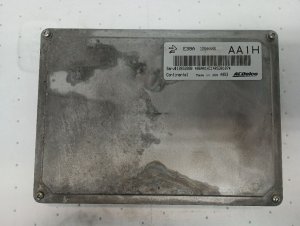
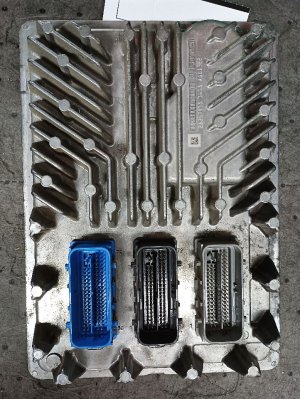
- Failed Engine Control Module (ECM): → Shop Engine Control Module (ECM) This is a 'last resort' diagnosis. The ECM is an expensive component and is rarely the true cause of a U0100 code. All other possibilities, especially wiring and connections as detailed in TSBs, must be exhaustively ruled out before condemning the ECM.
- Blown ECM/PCM Fuse: A short circuit in a related component can blow the fuse that powers the ECM, causing it to lose power and drop off the network. Always check all relevant fuses in the underhood and interior fuse panels before proceeding with more complex diagnostics.
- Fluid Contamination in ECM Connectors: GM TSB PIP5790B warns that for the 2.0L and 2.5L engines, engine oil (from a leaking oil pressure sensor) or coolant can wick along the wiring harness and contaminate the ECM connector terminals. This can cause corrosion and unpredictable codes, including U0100. A thorough inspection of all three ECM connectors (X1, X2, X3) for any signs of moisture or green corrosion is required if other causes are not found.
Diagnosis Steps
- Check Battery Health & Connections: Ensure the battery is fully charged (12.4V+ engine off) and that terminals are clean and tight. Check alternator output (13.7-14.7V running). Perform a voltage drop test on the negative battery cable as per TSB #18-NA-161.
- Scan for All Codes: Use a professional scan tool (like GM's GDS2) to read codes from ALL modules (ECM, TCM, BCM, ABS, etc.). Note all communication codes present and which modules are not communicating.
- Inspect Transmission X1 Connector: This is the most critical step. Locate the large X1 harness connector on the driver's side of the transmission. Disconnect it. Visually inspect for corrosion or damage. Gently pull on each individual wire to confirm every pin is securely locked in the connector.
- Inspect Harness for Chafing: Specifically for the ATS, inspect the wiring harness near the securing bracket on the passenger side of the transmission bell housing for any signs of physical damage or chafing.
- Inspect Power and Grounds: Check the main engine ground straps and the power/ground connections at the ECM for tightness and corrosion. Key grounds to inspect on the ATS include G103, G104, and G110, which are located on the cylinder head and engine block.
- Test CAN Bus Resistance: With the battery disconnected, use a multimeter to check the resistance between Pin 6 (CAN High) and Pin 14 (CAN Low) at the OBD-II port. A reading of approximately 60 ohms indicates the main network wiring and terminating resistors are likely intact. A reading of 120 ohms suggests a break in the circuit or that one of the two terminating resistors (usually in the ECM and BCM) is offline.
- Inspect ECM Connectors for Contamination: Per TSB PIP5790B, disconnect all three ECM connectors (X1, X2, X3) and inspect every terminal for green corrosion or the presence of oil or coolant.
- Isolate Modules: If the issue persists, a technician may disconnect modules one by one to see if a faulty module is bringing down the network.
- Test ECM: If all wiring and other modules are confirmed to be good, the final step is to test the ECM itself, which may involve checking for power, ground, and signal output at the ECM connector.
Parts You'll Likely Need
- Transmission Harness Connector Terminals
(OEM #Varies, e.g., ACDelco PT2298 (pigtail))— The pins inside the X1 connector can become loose or corroded, causing the communication failure described in TSB PIC4740E. Often the existing terminals can be reseated, but if damaged, they or a pigtail connector will be needed.
Trusted brands: ACDelco, Dorman
OEM price range: $5-$20 (per terminal)
Aftermarket price range: $2-$10 (per terminal) - Negative Battery Cable
(OEM #Part number is VIN-specific, check with dealer. (e.g., 85616916 for some GM models))— As per TSB 18-NA-161, the negative battery cable can develop high internal resistance, causing a voltage drop sufficient to disrupt module communication and set U-codes.
Trusted brands: GM Genuine Parts
OEM price range: $40-$80
Aftermarket price range: $25-$60 - Engine Control Module (ECM)
(OEM #Service #12653998 (common hardware for 2013-15). Specific P/N varies by year/engine, e.g., 12666134 (2013 2.0L), 12666132 (2015 2.0L).)— A last resort replacement if the module has failed internally after all wiring, power, and ground issues have been ruled out. Requires programming to the vehicle's VIN.
Trusted brands: ACDelco (GM Genuine)
OEM price range: $400-$800
Aftermarket price range: $200-$500 (remanufactured)
Related Codes That Often Appear With This One
- U0121 — Lost Communication with Anti-Lock Brake System (ABS) Control Module. This often appears with U0100 because the ABS module relies on data from the ECM. It is specifically listed in TSB PIC4740E.
- U0140 — Lost Communication with Body Control Module (BCM). The BCM is a central node on the network and its communication is often disrupted by the same root causes. It is also listed in TSB PIC4740E.
- P0700 — Transmission Control System Malfunction. This code is set when the TCM requests the check engine light, often due to communication loss with the ECM. It is one of the primary codes associated with the X1 connector issue.
- C0561 — System Disabled Information Stored. This is a common GM code indicating that a system like StabiliTrak has been disabled due to a fault, such as losing communication with the ECM. It is also listed in TSB PIC4740E.
- U0073 — Control Module Communication Bus 'A' Off. This is a general network failure code that often accompanies U0100 when a major communication disruption occurs.
- P1682 — Ignition 1 Switch Circuit 2. This code can appear alongside U0100 in a no-crank situation and suggests a missing ignition voltage signal at the ECM, pointing to a power supply issue.
Technical Service Bulletins (TSBs) & Recalls
- PIC4740E: Addresses multiple communication DTCs, including U0100, and directs technicians to inspect the transmission X1 connector terminals for a loose or poor fit and to check for harness chafing.
- 18-NA-161: Addresses numerous electrical conditions and communication DTCs (including U0100) that can be caused by high resistance or loose connections at the battery cables, particularly the negative cable.
Platform-Specific Known Issues
- A known issue, documented in GM TSB #PIC4740E, involves unseated pins in the transmission X1 connector causing a loss of communication and setting code U0100 along with numerous other faults. The TSB specifically directs inspection of the connector terminals and harness routing.
- A secondary known issue, documented in GM TSB #18-NA-161, points to poor battery cable connections, particularly high resistance in the negative cable, as a cause for a host of communication DTCs including U0100.
Mechanic-Grade Diagnostic Values
- CAN Bus Network Resistance — expected: ~60 Ω. Failure: A reading of ~120 Ω indicates an open in the CAN circuit or one of the two terminating resistors is offline. A reading near 0 Ω indicates a short between the CAN High and CAN Low wires.
- ECM Ignition 1 Voltage (Key On, Engine Off) — expected: Battery Voltage (approx. 12.4V+). Failure: 0V or significantly low voltage indicates a problem in the power supply circuit to the ECM, potentially related to code P1682.
- Negative Battery Cable Voltage Drop (Under Load) — expected: < 200 mV (0.2V). Failure: Voltage drop greater than 200mV indicates high internal resistance in the cable, requiring replacement as per TSB #18-NA-161.
Scan Tool Commands That Help
- GDS2 (GM Global Diagnostic System 2): Module Replacement and Programming — When replacing a major control module like the ECM or BCM. The new module must be programmed to the vehicle's VIN using the Service Programming System (SPS) accessed via GDS2 software.
- GDS2 (GM Global Diagnostic System 2): Network Scan / View All Module Status — This is a primary step in diagnosing any U-code. It provides a list of all control modules on the network and shows which ones are communicating and which are not, helping to isolate the source of the communication loss.
- GDS2 (GM Global Diagnostic System 2): Crankshaft Position Variation Learn — After replacing an ECM, this procedure may be required to sync the new module with the crankshaft position sensor to prevent misfire codes like P0315.
Wiring & Ground Locations
- X1 (Transmission Connector) — Large harness connector located on the driver's side of the transmission.. This is the single most common point of failure for code U0100 on this platform, as documented in TSB PIC4740E. Loose or unseated pins directly interrupt communication between the ECM and TCM.
- G103, G104, G110 — These are key engine ground points. Locations vary slightly by engine, but are generally on the cylinder head(s) and engine block. For example, on the 3.6L, G110 is on the left rear of the engine, while G104 is on the front of the right cylinder head.. A poor engine ground can create voltage potential differences between modules, disrupting the sensitive CAN bus communication and causing U-codes.
- ECM Connectors (X1, X2, X3) — Located on the Engine Control Module itself, in the LH (driver's side) of the engine compartment.. These are the direct interface to the ECM. TSB PIP5790B notes they can become contaminated with oil or coolant, leading to corrosion and communication faults. They are also the primary test points for ECM power and ground.
- ECM Connector X1, Pins 51 & 73 — On the X1 connector of the Engine Control Module.. In a no-crank scenario with U0100 and P1682, these pins are the Ignition 1 Voltage inputs. Pin 51 (Violet/Green) and Pin 73 (Violet/Blue) should both have battery voltage with the key in the 'RUN' position. Lack of voltage here points to a power supply fault, not an ECM failure.
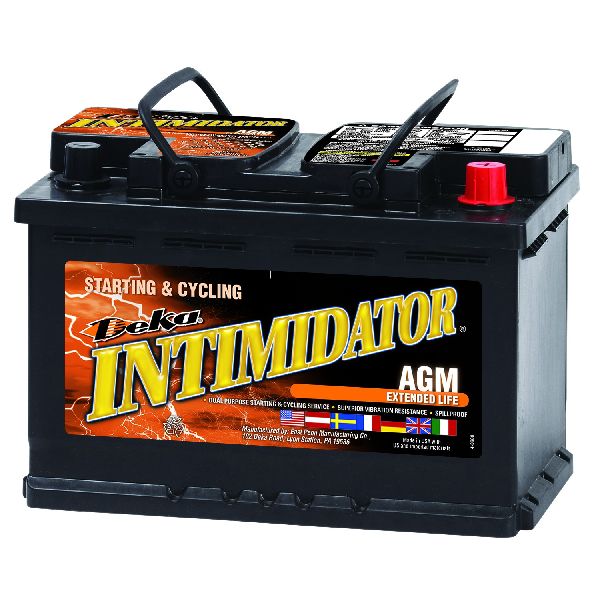
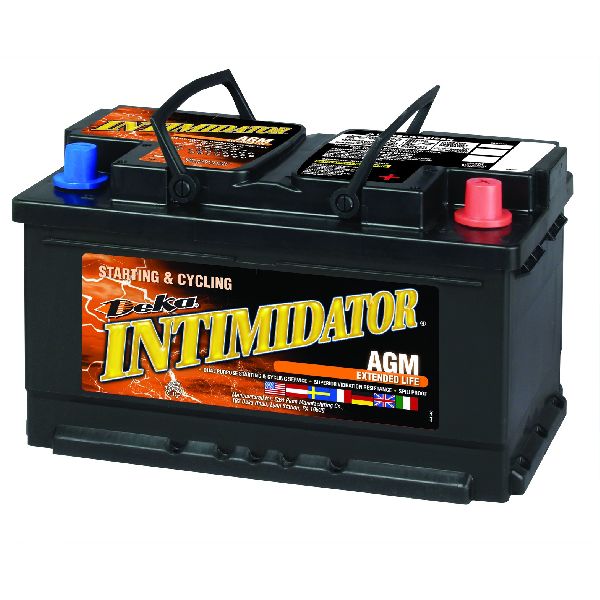
- Battery Location — Located in the trunk, on the driver's side, behind a removable trim panel.. Since the battery is not under the hood, technicians must know its location for testing and be aware of the remote jump-start posts in the engine bay. All U-code diagnostics should start with confirming battery health at the source.
Real Owner Repair Stories
- Reddit user in r/MechanicAdvice (2014 Cadillac ATS 2.5L) — No crank, no start. Multiple codes stored including U0100, P1682, P0686.
❌ Tried (didn't work) Replacing ECM, Replacing fuses, Replacing battery, Replacing starter, Replacing starter relay
✅ What actually fixed it The diagnosis pointed to missing ignition hot wires to the ECM. The fix required testing for battery voltage at ECM connector X1, specifically pins 51 (Violet/Green) and 73 (Violet/Blue), with the key on. The problem was a lack of power on these circuits, preventing the ECM from powering on and communicating.
OEM Part Supersession History
Varies by year/engine, e.g., 12666134, 12656453, 12644446, 12666132→Many part numbers may be in use for the same application.— General Motors uses a common hardware service number, 12653998, for the ECM across all 2013-2015 ATS models and engines (2.0L, 2.5L, 3.6L). The specific final part number reflects the software/calibration loaded for a particular VIN.
Heads up: A used ECM must be reprogrammed to the new vehicle's VIN using the GM Service Programming System (SPS). Failure to do so will result in a no-start condition due to an immobilizer mismatch (may set code P0633).
Model Year Variations Within This Range
- 2013-2015: While the core causes of U0100 are consistent, the specific ECM part number varies by model year and engine, even though they share a common hardware service number (12653998). For example, a 2013 2.0L might use P/N 12666134, while a 2015 2.0L might use 12666132. This is critical when sourcing a replacement part.
Used OEM Parts in Stock
New Aftermarket Parts Available


The information in this article is provided for general reference and educational purposes only. Vehicle specifications, procedures, and part compatibility can vary by production date, trim level, and region. Always consult your vehicle's factory service manual and verify part numbers before purchasing or performing repairs. Safety-critical components such as airbags, seat belts, and braking systems should be installed by a qualified professional.
- Cadillac ATS:
- 🧭 Diagnostic Flowchart
- 🛍️ Shop This Part
- What's Unique About the 2013-2015 Cadillac ATS
- Symptoms You May Notice
- Most Likely Causes
- Rare But Worth Checking
- Diagnosis Steps
- Parts You'll Likely Need
- Related Codes That Often Appear With This One
- Technical Service Bulletins (TSBs) & Recalls
- Platform-Specific Known Issues
- Mechanic-Grade Diagnostic Values
- Scan Tool Commands That Help
- Wiring & Ground Locations
- Real Owner Repair Stories
- OEM Part Supersession History
- Model Year Variations Within This Range
- 🎟️ Get 5% Off