

U0100 on 2014 Cadillac ELR: Lost Communication with ECM Causes and Fixes
On a 2014 Cadillac ELR, code U0100 is most often caused by a poor ground connection for the Body Control Module (BCM) at a location known as G218. This is a known issue documented in GM Technical Service Bulletin #PIT5405B. The ground is located at the base of the driver's side A-pillar, and the factory dash insulation is often trapped under the connection, causing high resistance. Before suspecting expensive computer failures, inspecting and cleaning this ground connection is the most critical
- U0100 on a 2014 ELR is a critical fault that makes the vehicle unsafe to drive.
- Do not immediately assume the ECM has failed. The most probable cause is a poor BCM ground (G218) under the driver's side dash, a known issue covered by a GM TSB.
- The Chevrolet Volt (2011-2015) is a platform mate and suffers from the exact same G218 ground issue.
- Fixing the G218 ground is a low-cost, high-success repair that involves cleaning the connection and cutting away trapped insulation.
- Symptoms may worsen when turning the steering wheel at low speeds due to the high current draw of the electric power steering.
What's Unique About the 2014-2014 Cadillac ELR
The Cadillac ELR is a sophisticated range-extended electric vehicle based on the first-generation Chevrolet Volt platform. Its complex system of modules controlling both the electric drive and gasoline engine makes robust communication absolutely critical. For this specific vehicle and its GM cousins from the same era (including the Chevy Volt and various trucks), a particular ground point (G218) for the Body Control Module is a well-documented weak spot that can disrupt the entire vehicle network, leading to code U0100 and a host of other seemingly unrelated electrical problems.
Diagnostic Flowchart
Tap your situation to follow the diagnostic path that matches what you're seeing on this vehicle.
Symptoms You May Notice
- Engine will not start or cranks but does not fire
- Engine stalls intermittently or shuts off while driving
- Check Engine Light is on
- Service Stabilitrak message displayed
- Instrument panel, radio, or HVAC displays go blank or flicker
- Reduced or loss of power steering assist, especially at low speeds or when turning the wheel
- Multiple other warning lights may be illuminated
- Door locks cycling or alarm sounding unexpectedly
- Replacing the Engine Control Module (ECM) without first verifying its power, ground, and network connections. This is an expensive part that is often replaced in error.
- Replacing the battery without cleaning and verifying the integrity of all major power and ground connections, especially the BCM ground at G218.
Most Likely Causes
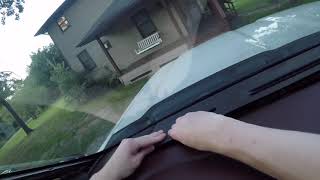
- Poor Body Control Module (BCM) Ground at G218 🔴 High Probability → Shop Body Control Module This is a known issue documented by GM in TSB #PIT5405B and its successors. The ground connection can become loose, corroded, or, most commonly, have the dash insulator mat trapped under the eyelet from the factory 🎬 Watch: How to fix the G218 ground connection issue., causing high resistance. This problem is shared with many other GM vehicles of the era.
How to confirm: Visually inspect the G218 ground location, which is at the base of the driver's side A-pillar, behind the plastic kick panel and potentially a speaker. Remove the 10mm nut and check for a loose connection or, more likely, the black dash insulator mat caught between the ground eyelet and the vehicle body stud. A voltage drop test across the ground point while the system is under load can confirm high resistance.
Typical fix: Disconnect the battery. Remove the 10mm ground nut and the eyelet terminal. Cut away the section of the dash insulator mat that is interfering with the stud. Clean the eyelet and the body surface with a wire brush or sandpaper to ensure a clean, bare metal-to-metal contact, then securely retighten the nut.
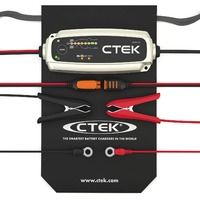
Est. part cost: $0-$5 - Low Battery Voltage or Poor Battery Connections 🟡 Medium Probability → Shop Vehicle Battery Modern vehicles with numerous control modules are highly sensitive to voltage. A weak 12V auxiliary battery or corroded terminals can cause modules to drop off the communication network, triggering a U0100 code. On the Volt/ELR platform, a failing 12V battery is a very common cause of a 'Christmas tree' effect on the dash and multiple communication codes.
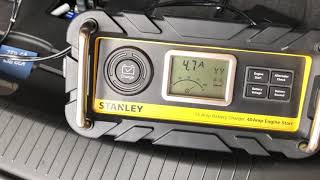
How to confirm: Test the 12V battery voltage with a multimeter; it should be at least 12.5 volts with the vehicle off. Inspect battery terminals for corrosion and ensure clamps are tight. TSB #PIT5405C recommends torquing the battery cable clamp nuts 🎬 See this guide on charging the ELR 12V battery. to 7 Nm (62 lb-in).
Typical fix: Clean the battery terminals and cable ends. Charge or replace the battery if it fails a load test. Ensure all connections are secure to the specified torque.
Est. part cost: $0-$250 - Damaged Wiring or Connectors on the CAN Bus ⚪ Low Probability Wiring for the Controller Area Network (CAN bus) can become chafed, corroded, or damaged from vibrations, previous repairs, or rodent damage, leading to a short or open circuit that brings down the network.
How to confirm: Visually inspect wiring harnesses for damage, particularly around the ECM and BCM. A multimeter can be used to check for continuity and proper resistance (typically 60 ohms between Pin 6 and Pin 14 of the DLC) across the CAN bus with the battery disconnected.
Typical fix: Repair the damaged section of wiring. This may involve soldering the broken wire and protecting it with heat shrink tubing, or replacing a connector pigtail.
Est. part cost: $10-$100
Rare But Worth Checking
- Failed Engine Control Module (ECM): → Shop Engine Control Module (ECM) This is a common misdiagnosis. The ECM is rarely the root cause of a communication code. It should only be considered after all wiring, power, and ground issues have been definitively ruled out by a professional.
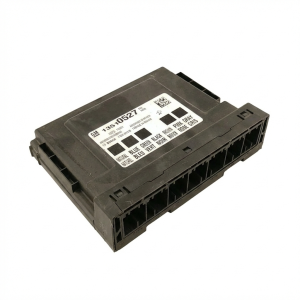
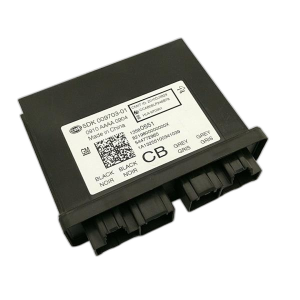
- Failed Body Control Module (BCM): → Shop Body Control Module Since the primary known cause is the BCM's ground, a failure of the BCM itself is possible, though less likely than the ground issue. A faulty BCM can disrupt the entire network. The OEM part number 13592376 is interchangeable with several others, including 13580698, 13589115, and 13590173.
Diagnosis Steps
- Check the 12V auxiliary battery voltage and clean the battery terminals. Ensure the voltage is above 12.5V and terminals are torqued to spec (7 Nm / 62 lb-in).
- Use a professional scan tool to check for DTCs in ALL available modules. Note which modules are not communicating.
- Inspect all fuses related to the ECM, BCM, and ignition systems in both the under-hood and in-cabin fuse boxes.
- Locate and inspect the BCM ground at G218, as specified in TSB #PIT5405B/C. It is on the driver's side A-pillar base, behind the kick panel. Disconnect the battery, remove the 10mm nut, and check for looseness, corrosion, or trapped insulation material. Clean and tighten the connection regardless of appearance, ensuring the insulation is cut away.
- If the G218 ground is good, perform a thorough visual inspection of the main wiring harnesses connected to the ECM and BCM for any signs of chafing, melting, or corrosion.
- Perform a voltage drop test on the main power and ground cables for the ECM to ensure it's receiving proper power. 🎬 Watch: Diagnosing a no-start condition and U0100 code.
- If all wiring, power, and grounds are confirmed to be good, the issue may be with a failed control module (BCM or ECM), which requires professional diagnosis.
Parts You'll Likely Need
- Battery — A weak or failing 12V auxiliary battery is a common cause of network communication codes. Testing the battery is a critical first step.
Trusted brands: ACDelco
OEM price range: $200-$300
Aftermarket price range: $150-$250 - Body Control Module (BCM)
(OEM #13592376 (interchangeable with 13580698, 13578458, 13589115, 13589637, 13590173, 13590851, 13591300, 13593775, 13593776, 13594564))— While less common than its ground failing, the BCM itself can fail and disrupt the network. This is a last resort after all wiring and ground issues are ruled out.
Trusted brands: ACDelco (OEM)
OEM price range: $250-$400
Aftermarket price range: $150-$300 (plus programming)
Related Codes That Often Appear With This One
- U0101 — Lost Communication with TCM. The Transmission Control Module (TCM) is on the same network. If the ECM goes offline, the TCM will also report a loss of communication.
- U0121 — Lost Communication with ABS Control Module. The Anti-lock Brake System module is another critical component on the network that will set a code when it can't hear from the ECM.
- U0140 — Lost Communication with Body Control Module. This code often appears with U0100, especially if the G218 ground is the root cause, as it directly affects the BCM's ability to communicate.
- U0073 — Control Module Communication Bus 'A' Off. This is a general network code indicating the entire high-speed CAN bus is down, which is a direct result of a critical module like the ECM going offline.
Technical Service Bulletins (TSBs) & Recalls
- PIT5405B / PIT5405C: Lists multiple DTCs including U0100 and points to checking the Body Control Module ground at G218 as a primary cause of electrical issues. The bulletin describes the issue of the dash insulator mat being trapped under the ground eyelet and instructs technicians to cut it away. It also notes symptoms can be exacerbated by high electrical loads like the power steering.
- PIC5988: Lists U0100 among a large number of potential DTCs related to general vehicle communication issues, confirming it is part of a known cluster of electrical faults.
Platform-Specific Known Issues
- TSB #PIT5405B/C: G218 Ground Fault: Technical Service Bulletin #PIT5405B and its successor PIT5405C explicitly identify a poor Body Control Module ground at location G218 as a primary cause for a list of communication DTCs, including U0100. Symptoms are often worse when turning the steering wheel at low speeds, which increases the current draw from the electric power steering system and stresses the high-resistance ground connection, causing a voltage drop that takes the BCM offline.
Mechanic-Grade Diagnostic Values
- High-Speed CAN Bus Resistance — expected: Approximately 60 Ohms. Failure: A reading of 120 Ohms indicates an open circuit or a missing termination resistor. A reading significantly below 60 Ohms suggests a short in the circuit.
- CAN High Voltage (Key On, Engine Off) — expected: ~2.5V to 3.5V. Failure: Voltage stuck high, low, or not changing indicates a bus problem.
- CAN Low Voltage (Key On, Engine Off) — expected: ~1.5V to 2.5V. Failure: Voltage stuck high, low, or not changing indicates a bus problem.
- 12V Auxiliary Battery Resting Voltage — expected: 12.5V or higher. Failure: A reading below 12.4V indicates a weak battery that can cause random communication faults.
Scan Tool Commands That Help
- GM GDS2 (Global Diagnostic System 2): Module Presence/Network Scan — This is the first step to get a complete list of all modules on the network and identify which specific modules are not responding, which is crucial for diagnosing a U0100.
- GM GDS2 (Global Diagnostic System 2): Data Bus Diagnostics Tool — This function provides a real-time voltage trace of the CAN bus activity, allowing a technician to visually identify signal integrity problems like shorts or opens that could cause communication loss.
- GM GDS2 (Global Diagnostic System 2): BCM Programming/Setup — This is required after replacing the Body Control Module (BCM). The new module must be programmed with the vehicle's VIN, RPO codes (options), and security information to function correctly.
- GM GDS2 (Global Diagnostic System 2): Immobilizer Relearn / Key Programming — After a BCM is replaced and programmed, the vehicle's keys must be relearned to the new module. This involves a specific procedure, often a 30-minute cycle, to sync the keys with the vehicle's theft deterrent system.
Wiring & Ground Locations
- G218 — Located at the base of the driver's side A-pillar, behind the plastic kick panel. On some GM models, a speaker must be removed for access.. This is the primary ground for the Body Control Module (BCM). A poor connection here, often due to trapped dash insulation from the factory, causes high resistance and can take the BCM offline, disrupting the entire vehicle communication network and triggering U0100.
- Data Link Connector (DLC) / OBD-II Port — Under the driver's side dashboard.. Pins 6 (CAN High) and 14 (CAN Low) are the primary test points for measuring the resistance and voltage of the high-speed communication network to diagnose shorts or opens.
- 12V Auxiliary Battery — In the rear compartment (trunk area), behind a closeout panel.. Unlike conventional cars, the battery is not under the hood. All communication code diagnostics must start by verifying the health of this battery at its source in the trunk.
Real Owner Repair Stories
- Reddit user in r/volt (2017 Chevrolet Volt (shared platform with ELR)) — A 'Christmas tree' of warning lights on the dash, including ABS, check engine, and a 'Service Stabilitrak' message.
❌ Tried (didn't work) Restarting the car multiple times.
✅ What actually fixed it The consensus from other owners was that these exact symptoms are almost always caused by a failing 12V AGM battery in the trunk. The recommendation was to replace the 12V battery. - Chevy HHR Network forum user (Chevrolet HHR (different platform, but same GM electrical logic)) — Car acted like it had a dead battery, then started with a jump. Check engine and security lights on, DIC dropped out, hard shifting, no power steering, and code U0100 was stored.
❌ Tried (didn't work) Pulling the 50 amp maxi fuse to reset the BCM only partially cleared the issue.
✅ What actually fixed it Disconnecting the negative battery cable for 20 minutes performed a hard reset of all modules. After reconnecting, the check engine light was off, the U0100 code was gone, and normal operation resumed. This points to a module 'logic lock' or glitch that was cleared by a full power cycle.
OEM Part Supersession History
13580698, 13589115, 13590173→13592376— Standard part evolution for hardware/software revisions by the manufacturer.
Heads up: When replacing the BCM, the new unit must be programmed with the vehicle's specific VIN and RPO codes using GM's SPS software. Alternatively, cloning services are available that transfer the data from the old module to the new one, making it 'plug-and-play'. A blank module will not work without programming.
Helpful Videos

Used OEM Parts in Stock
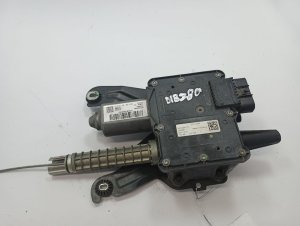
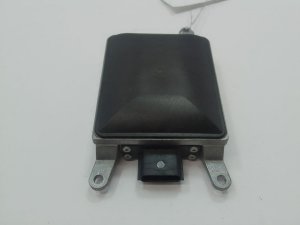
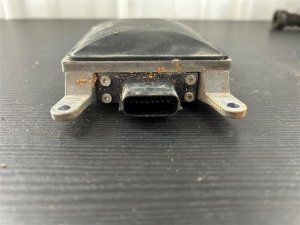
New Aftermarket Parts Available

The information in this article is provided for general reference and educational purposes only. Vehicle specifications, procedures, and part compatibility can vary by production date, trim level, and region. Always consult your vehicle's factory service manual and verify part numbers before purchasing or performing repairs. Safety-critical components such as airbags, seat belts, and braking systems should be installed by a qualified professional.
- Cadillac ELR:
- 🧭 Diagnostic Flowchart
- 🎬 Helpful Videos
- 🛍️ Shop This Part
- What's Unique About the 2014-2014 Cadillac ELR
- Symptoms You May Notice
- Most Likely Causes
- Rare But Worth Checking
- Diagnosis Steps
- Parts You'll Likely Need
- Related Codes That Often Appear With This One
- Technical Service Bulletins (TSBs) & Recalls
- Platform-Specific Known Issues
- Mechanic-Grade Diagnostic Values
- Scan Tool Commands That Help
- Wiring & Ground Locations
- Real Owner Repair Stories
- OEM Part Supersession History
- 🎟️ Get 5% Off