

U0100 on 2015-2017 Cadillac Escalade ESV: Lost Communication with ECM/PCM Causes and Fixes
On a 2015-2017 Escalade ESV, code U0100 is most often caused by a poor Body Control Module (BCM) ground at location G218 under the driver's dash, as cited in GM TSB #PIT5405C. This known factory flaw, where insulation gets trapped under the ground nut, can cause a no-start, stalling, or a dashboard full of warning lights. The fix is often a simple, low-cost cleaning and tightening of this ground connection.
- U0100 on a 2015-2017 Escalade ESV is a critical network code that can make the vehicle unsafe or impossible to drive.
- Before suspecting an expensive ECM failure, always inspect the BCM ground point G218 under the driver's dash, as this is a well-documented problem area in GM TSBs.
- Thoroughly test the battery and check all main power and ground connections. Low voltage is a common trigger for communication faults.
- This code is often accompanied by a host of other 'U' codes (like U0140 and U0101), which points to a central network or power/ground fault rather than multiple failed modules.
What's Unique About the 2015-2017 Cadillac ESCALADE ESV
The fourth-generation Escalade and its GM K2XX platform siblings (Tahoe, Yukon, Silverado) are known for specific electrical vulnerabilities that trigger U0100. Manufacturer Technical Service Bulletins (TSBs) for this exact vehicle range, like #PIT5405C, point directly to a poor Body Control Module (BCM) ground point known as G218 as a primary cause for a cascade of communication codes, including U0100. Another known issue is a 'logic lock' or poor connection at the Serial Data Gateway Module (SDGM), cited in TSB #PIT5586G and its successor, #20-NA-212. These known weak points should be the first suspects before considering an expensive ECM replacement.
Diagnostic Flowchart
Tap your situation to follow the diagnostic path that matches what you're seeing on this vehicle.
Symptoms You May Notice
- No-start or no-crank condition
- Engine stalls intermittently, especially at low speeds or while turning
- Multiple warning lights on the instrument cluster (Check Engine, ABS, 'Service Stabilitrak')
- Instrument panel cluster (IPC) goes blank or gauges sweep to zero
- Radio/HVAC controls go blank or become inoperative.
- Loss of electric power steering assist.
- Transmission may not shift correctly or may be stuck in one gear
- Door locks cycling or alarm sounding unexpectedly when locking.
- Replacing the Engine Control Module (ECM) without first checking and cleaning the G218 ground, verifying battery health, and inspecting the SDGM connectors. The ECM is expensive, requires programming, and is rarely the root cause.
- Replacing the battery without cleaning and securing all main power and ground connections, including G218. A new battery may temporarily overcome the high resistance of a bad ground, but the problem will return. 🎬 See how to properly clean and secure GM ground connections.
Most Likely Causes
- Poor Body Control Module (BCM) Ground at G218 🔴 High Probability → Shop Body Control Module GM TSBs #PIT5405C and #PIT5405B specifically identify this ground as a common failure point for this platform. Sound-deadening material can get trapped under the ground terminal eyelet from the factory, leading to a high-resistance connection that worsens over time.
How to confirm: Locate G218 under the driver's side dashboard, to the left of the steering column, often behind the A-pillar trim panel and near the dash speaker. Check if the 10mm nut is loose or if the black, fibrous insulation mat is caught under the terminal. Perform a voltage drop test on the ground circuit for confirmation; a reading under 0.2V is acceptable.
Typical fix: Disconnect the battery. Remove the 10mm nut, pull the ground terminal(s) off the stud, and use a utility knife to cut away the interfering insulation mat. Clean the terminal eyelet and the body surface to bare metal with a wire brush or sandpaper, then securely retighten the ground nut.
Est. part cost: $0-$5 - Low Battery Voltage or Poor Connections 🟡 Medium Probability → Shop Vehicle Battery These vehicles have a high electrical demand with numerous modules, making them sensitive to voltage drops. A weak or failing AGM battery or corroded terminals can cause modules to drop off the network. TSB #PIT5405C lists a discharged or faulty battery as a key item to investigate and specifies terminal nuts should be torqued to 62 lb-in (7 Nm).
How to confirm: Test the battery with a digital multimeter; a healthy AGM battery should read at least 12.6 volts with the engine off. A proper load test is required to confirm its health. Inspect battery terminals and main power/ground cables for corrosion or looseness.
Typical fix: Clean the battery terminals and cable ends. Recharge or replace the battery if it fails a load test. Ensure all connections are tight to the specified torque.
Est. part cost: $0-$350 - Faulty Serial Data Gateway Module (SDGM) or Connectors 🟡 Medium Probability → Shop Telematics Interface Module TSB #PIT5586G and its successors identify issues with the SDGM. The module can enter a 'logic lock' state, or the X1/X2 connectors can have poor pin tension or backed-out terminals, disrupting the entire network.
How to confirm: The SDGM is located under the driver's side dash. A temporary fix for a logic lock is to perform a hard reset by disconnecting the battery for 30 minutes. For a physical issue, disconnect the SDGM connectors (X1, X2) and inspect for any bent, loose, or corroded pins.
Typical fix: Reseating the connectors may temporarily work. A permanent fix may involve repairing terminals, reprogramming the module with updated software, or replacing the SDGM (which requires programming). 🎬 Watch: Understanding the Serial Data Gateway Module and common failures.
Est. part cost: $20-$400
Rare But Worth Checking
- Damaged CAN Bus Wiring or Connectors: Wiring harnesses can be damaged by chafing, corrosion, or rodents. Loose connectors, particularly at the underhood fuse block or main harness pass-throughs, can disrupt the entire network. With the battery disconnected, resistance between CAN High (Pin 6) and CAN Low (Pin 14) at the OBD-II port should be ~60 ohms.
- Faulty Engine Control Module (ECM): → Shop Engine Control Module (ECM) While this is what the code directly points to, actual ECM failure is uncommon compared to wiring, ground, and power supply issues. This should be considered a last resort after all other possibilities are ruled out. An ECM that does not illuminate the check engine light at all during the key-on bulb check is a potential sign of failure.
Diagnosis Steps
- Read all Diagnostic Trouble Codes (DTCs) from all vehicle modules using a professional scan tool.
- Check the battery voltage (should be 12.6V+) and perform a load test. Ensure battery terminals are clean and tight, torqued to 62 lb-in.
- Locate and inspect the Body Control Module (BCM) ground point G218 under the driver's side dash, near the A-pillar speaker. Disconnect the battery, remove the 10mm nut, and check for trapped insulation material as described in TSB #PIT5405C. Clean to bare metal and retighten. 🎬 Watch: Step-by-step guide to fixing the G218 ground issue.
- Inspect the main power and ground connections at the battery, underhood fuse block, and engine block for tightness and corrosion.
- Inspect the connectors (X1, X2) at the Serial Data Gateway Module (SDGM) for loose or backed-out pins.
- Visually inspect the CAN bus wiring harnesses connected to the ECM, BCM, and SDGM for any signs of physical damage, chafing, or corrosion.
- With the battery disconnected, measure the resistance between Pin 6 (CAN High) and Pin 14 (CAN Low) at the DLC. A reading of approximately 60 ohms indicates the terminating resistors are intact.
- If all wiring, grounds, and power sources are confirmed to be good, further testing of the SDGM or ECM by a professional may be necessary.
Parts You'll Likely Need
- Battery
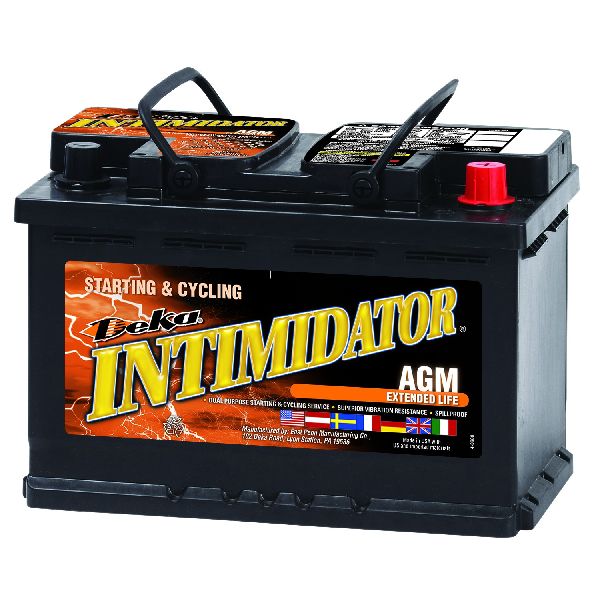
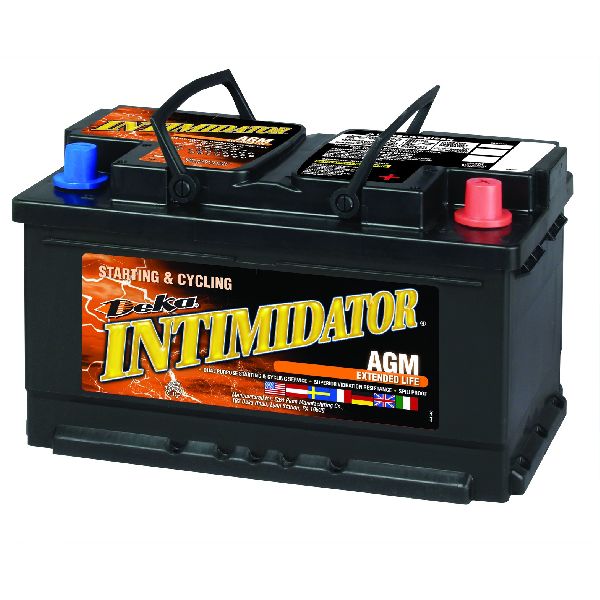
(OEM #ACDelco Gold 49AGMHR (Group Size 49/H8) or H7-AGM (Group Size 94R/H7))— A weak or failing AGM battery is a frequent cause of network communication codes. These vehicles require a specific AGM (Absorbent Glass Mat) type battery.
Trusted brands: ACDelco, DieHard, Odyssey
OEM price range: $250-$400
Aftermarket price range: $200-$350 - Serial Data Gateway Module (SDGM)
(OEM #13599318 (supersedes 13599317), 13542838)— This module can fail or suffer from a 'logic lock', taking down the communication network. Replacement requires programming. Always verify the part number with the vehicle's VIN.
Trusted brands: ACDelco (GM Genuine)
OEM price range: $80-$150
Related Codes That Often Appear With This One
- U0140 — Lost Communication with Body Control Module. This code frequently appears with U0100 when the G218 ground is the culprit, as it is the BCM's primary ground point.
- U0101 — Lost Communication with Transmission Control Module (TCM). The TCM is on the same high-speed CAN bus and often loses communication at the same time as the ECM.
- U0073 — Control Module Communication Bus 'A' Off. This is a general network failure code that indicates a system-wide communication breakdown, often triggered by the same root cause as U0100.
- U0121 — Lost Communication With Anti-Lock Brake System (ABS) Control Module. This is another critical module on the high-speed network that will set a code when communication is lost, often accompanied by a 'Service Stabilitrak' message.
Technical Service Bulletins (TSBs) & Recalls
- PIT5405C: Dated Jan 2017, this TSB addresses multiple electrical concerns, including U0100, stemming from a poor BCM ground at G218, a shorted B+ cable at the starter, or a faulty battery.
- PIT5405B: Dated Aug 2016, this is an earlier version of the above TSB, also pointing to the G218 ground as a primary culprit for a list of communication codes.
- PIT5586G / 20-NA-212: These TSBs address communication issues caused by the Serial Data Gateway Module (SDGM), including logic lock-ups and poor terminal connections.
Platform-Specific Known Issues
- TSB #PIT5405C is the most critical document for this issue. It directly links U0100 to a poor BCM ground at G218, which may be compromised by trapped dash insulation material from the factory. The TSB provides a diagram and procedure for cutting away the insulation and cleaning the ground.
- TSB #PIT5586G and its successor #20-NA-212 specifically call out the Serial Data Gateway Module (SDGM) and its connectors as another high-probability cause for U0100 and other communication failures.
Mechanic-Grade Diagnostic Values
- High-Speed CAN Bus Network Resistance — expected: 60 Ohms (+/- 5 Ohms). Failure: A reading of ~120 Ohms indicates an open in the bus or a missing terminating resistor. A reading near 0 Ohms indicates a short between the CAN High and Low wires.
- CAN High Voltage (Pin 6 at DLC to Ground) — expected: ~2.6V (Key On, Engine Off). Failure: Voltage stuck high, low, or matching the CAN Low voltage indicates a short or open circuit.
- CAN Low Voltage (Pin 14 at DLC to Ground) — expected: ~2.4V (Key On, Engine Off). Failure: Voltage stuck high, low, or matching the CAN High voltage indicates a short or open circuit.
- G218 Ground Voltage Drop — expected: Under 0.2V (200mV). Failure: A higher voltage reading while the system is under load (e.g., turning the steering wheel) indicates high resistance at the ground point.
- Battery Terminal Torque — expected: 7 Nm (62 lb-in). Failure: Loose terminals can cause intermittent voltage drops, triggering communication faults.
Scan Tool Commands That Help
- GDS2 / Tech2Win: Data Bus Diagnostic Tool — GM introduced this tool around 2015 to assist in diagnosing High Speed LAN issues. It should be used after initial checks fail to identify the cause, helping to pinpoint which module may be corrupting the bus.
- GDS2 / Tech2Win: Module Communication Status — This function allows the technician to see a list of all modules on the network and their communication status (e.g., 'Communicating' or 'Not Communicating'). This is essential for identifying which modules are offline and helps narrow down the location of the fault.
- GDS2 / Tech2Win: SDGM Reprogramming — If the SDGM is suspected of being in a 'logic lock' state as described in TSB #20-NA-212, a software reflash is the first recommended repair step before replacing the module.
Wiring & Ground Locations
- G218 — Under the driver's side dashboard, behind the A-pillar lower trim panel, near the dash speaker.. This is the primary ground for the Body Control Module (BCM). TSB #PIT5405C identifies a poor connection here, often due to trapped insulation, as the number one cause for U0100 and other communication codes on this platform.
- SDGM (Serial Data Gateway Module) — Under the driver's side dash, often near the steering column or integrated with the dash fuse box.. This module acts as a router for all CAN bus traffic. A logic lock, loose X1/X2 connectors, or internal failure will bring down the entire network, causing U0100.
- X183 / X133 Connector — The main 2-way power and ground connector for the electric power steering rack.. TSB #PIT5405C notes that a loose connection here can cause a significant electrical load and voltage drop when turning the wheel, which can disrupt network communication and set U0100.
- DLC (Data Link Connector) — Under the driver's side dash, below the steering column.. This is the primary diagnostic access point. Pins 6 (CAN High) and 14 (CAN Low) are used for all high-speed network communication tests.
Real Owner Repair Stories
- YouTube channel 'Tach It Up' (2009 Cadillac Escalade (older model, but demonstrates a relevant wiring principle)) — No crank, intermittent stalling, U0100 code stored.
❌ Tried (didn't work) Initial diagnosis focused on module communication failure.
✅ What actually fixed it The large wire connector block located underneath the underhood fuse box was not fully seated or clicking into place. Forcing the connector to ensure a tight, secure fit resolved the no-communication and no-start issue.
"I Checked Everything" — The Actual Cause
- A common scenario for U0100 on this platform is when all basic wiring, power, and ground tests (including checking G218) come back clean. In these cases, the root cause is often a software issue within the Serial Data Gateway Module (SDGM) known as 'logic lock'. The module's hardware is fine, but its microprocessor has frozen, halting all network traffic. This condition cannot be found with a multimeter and requires a dealer-level scan tool to diagnose by observing a total lack of communication from the SDGM and then attempting a software reflash to resolve it, as noted in TSB #20-NA-212.
OEM Part Supersession History
13509768, 13524297, 13524298, 13599317→13599318— Standard revision and consolidation of part numbers for the Serial Data Gateway Module (SDGM).
Heads up: Part number 13599318 is the common service replacement. All versions require programming by a dealer or qualified shop with GDS2 software upon installation.
Model Year Variations Within This Range
- 2016: For 2016, Cadillac added Lane Keep Assist and made upgrades to the CUE infotainment system. Since these systems are tied into the CAN bus, a fault in these new modules could potentially be a source of network issues not present on the 2015 model.
- 2017: The 2017 models received an updated CUE system and a new live-view rear-vision camera in the mirror. TSB #PIT5405C was also updated to include 2017 models, confirming the G218 ground issue persisted through this model year.
Helpful Videos

We Have This Part in Stock


The information in this article is provided for general reference and educational purposes only. Vehicle specifications, procedures, and part compatibility can vary by production date, trim level, and region. Always consult your vehicle's factory service manual and verify part numbers before purchasing or performing repairs. Safety-critical components such as airbags, seat belts, and braking systems should be installed by a qualified professional.
- Cadillac ESCALADE ESV:
- 🧭 Diagnostic Flowchart
- 🎬 Helpful Videos
- 🛍️ Shop This Part
- What's Unique About the 2015-2017 Cadillac ESCALADE ESV
- Symptoms You May Notice
- Most Likely Causes
- Rare But Worth Checking
- Diagnosis Steps
- Parts You'll Likely Need
- Related Codes That Often Appear With This One
- Technical Service Bulletins (TSBs) & Recalls
- Platform-Specific Known Issues
- Mechanic-Grade Diagnostic Values
- Scan Tool Commands That Help
- Wiring & Ground Locations
- Real Owner Repair Stories
- "I Checked Everything" — The Actual Cause
- OEM Part Supersession History
- Model Year Variations Within This Range
- 🎟️ Get 5% Off