

U0100 on 2004-2008 Cadillac SRX: Causes and Fixes for Lost ECM Communication
On a 2004-2008 Cadillac SRX, code U0100 is most often caused by a poor connection in the transmission wiring harness (X1 connector) or other specific wiring faults, not a failed Engine Control Module (ECM). Inspecting these known weak points as detailed in GM Technical Service Bulletins is the most likely and cost-effective fix. This issue is also common on its platform mates, the Cadillac STS and CTS.
- U0100 on a 2004-2008 SRX is most often a wiring or connector problem, not a bad ECM.
- Before replacing any parts, inspect the transmission X1 connector and related wiring harnesses as specified in GM's service bulletins.
- Always check the battery and main ground connections first, as low voltage is a common cause of communication codes.
- This is a complex electrical issue; professional diagnosis is highly recommended to avoid unnecessary expense.
- Do not drive the vehicle, as it is unsafe and could stall at any time.
What's Unique About the 2004-2008 Cadillac SRX
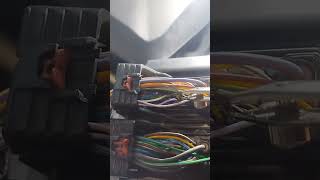
🎬 Watch: Troubleshooting a no-start condition on the Cadillac SRXFor this first-generation Cadillac SRX and its platform mates (CTS, STS), a U0100 code is frequently a wiring issue rather than a failed computer. General Motors issued Technical Service Bulletins (TSBs) that directly link this code to specific, known problems like loose terminals in the transmission wiring harness connector (X1) and other power or data line wiring faults. This makes a targeted wiring inspection the most critical first step, often preventing a costly and unnecessary ECM replacement.
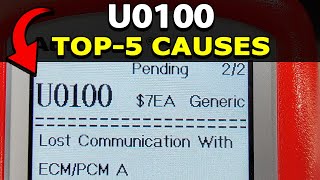
🎬 See the top 5 causes for a U0100 trouble codeDiagnostic Flowchart
Tap your situation to follow the diagnostic path that matches what you're seeing on this vehicle.
Symptoms You May Notice
- Engine will not start or has a no-crank condition.
- Engine stalls intermittently or shuts off while driving.
- Check Engine Light is on.
- "Service Stabilitrak" message or other warning lights may illuminate, such as for ABS or security.
- Transmission may shift harshly or get stuck in one gear (limp mode).
- Loss of power steering assist.
- Instrument cluster gauges may behave erratically or go blank.
- Key may get stuck in the ignition.
- Replacing the Engine Control Module (ECM) before thoroughly inspecting and testing all related wiring, connectors, and grounds. The TSBs for this vehicle strongly suggest the problem is often external to the module.
Most Likely Causes
- Loose or Corroded Terminals in Transmission X1 Connector 🔴 High Probability → Shop Transmission Assembly This is a well-documented failure point identified by GM in TSB #PIC4740E. The 16-pin X1 connector, located on the driver's side of the transmission, acts as a pass-through for critical data lines. Its terminals can lose tension or develop fretting corrosion, disrupting communication on the data bus.
How to confirm: Locate the large X1 connector on the transmission. Disconnect it and visually inspect the pins and terminals for corrosion (green or white powder), backed-out pins, or damage. Gently tug on each wire going into the connector to ensure the terminal is securely seated.
Typical fix: Reseat any loose terminals, clean any corrosion with electrical contact cleaner, and apply dielectric grease to seal the connection. In some cases, the connector terminals or the entire connector pigtail may need to be replaced.
Est. part cost: $10-$50 - Ignition 1 Power Feed or Class 2 Data Line Wiring Fault 🟡 Medium Probability TSB #PIC5460B points to wiring concerns in the Ignition 1 power feed (circuit 5290) or the Class 2 serial data line (circuit 1807) as a cause for U0100 and a no-crank condition. Harnesses can chafe against brackets or break internally over time, especially in the engine bay.
How to confirm: Check for power at the 'ECM' or 'PCM' fuse in the underhood fuse block. Trace the specified circuits from a wiring diagram, checking for continuity and any shorts to ground or power between the fuse block and the ECM connectors.
Typical fix: Repair the damaged section of the wiring harness. This may involve soldering the broken wire and protecting it with heat shrink tubing and loom.
Est. part cost: $5-$25 - Low Battery Voltage or Poor Ground Connections 🟡 Medium Probability → Shop Vehicle Battery All modern vehicles are sensitive to voltage. A weak battery, failing alternator, or a corroded main engine/chassis ground can cause modules to drop off the communication network intermittently. The main engine-to-chassis ground strap (often designated G101, on the engine block) is a critical point that can cause this issue if compromised.
How to confirm: Test the battery voltage (should be >12.4V with engine off). Load test the battery. With the engine running, check for 13.7-14.7V at the terminals to confirm alternator function. Locate, clean, and tighten the battery terminals and all major ground straps from the engine to the chassis and battery.
Typical fix: Replace a weak battery or failing alternator. Clean or replace corroded ground straps.
Est. part cost: $5-$250 - Failed Engine Control Module (ECM) ⚪ Low Probability → Shop Engine Control Module (ECM)
How to confirm: This should be the last step. After confirming all power (including Ignition 1 feed), ground (especially G101), and network wiring (Class 2 data line) to the ECM are intact and functioning correctly, the module itself is the likely culprit.
Typical fix: Replace the Engine Control Module. The new module will require programming to the vehicle's VIN and specific configuration.
Est. part cost: $400-$1000
Rare But Worth Checking
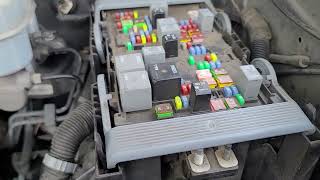
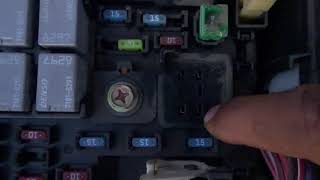
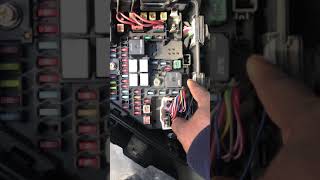
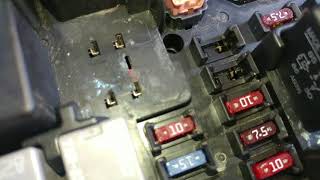
- Faulty Underhood Fuse Box: → Shop Fuse Box Internal corrosion or a loose connector block within the fuse box itself can sever power or communication to the ECM. On similar GM platforms like the Escalade, a loose grey connector underneath the fuse box is a known cause of U0100 and no-crank symptoms, which can be temporarily fixed by wedging the connector tight.
- Faulty Ignition Switch: → Shop Ignition Switch A worn ignition switch can fail to provide the proper 'run/crank' signal to the BCM and ECM, preventing them from establishing communication on the network and triggering a U0100 code. This can also cause the key to become stuck.
Diagnosis Steps
- Check the battery. Ensure it has a full charge (>12.4V) and clean, tight terminals. Load test the battery to confirm its health.
- Use a professional scan tool to check which other modules are storing U0100 or other communication codes (e.g., U2100, U0121). Note which modules are not communicating.
- Check critical fuses. Inspect the fuses for the ECM/PCM in the underhood fuse block.
- Perform a full visual inspection of the engine wiring harness, looking for obvious damage, chafing against brackets, or melted sections near the exhaust.
- Specifically locate and inspect the transmission X1 connector on the driver's side of the transmission, as per TSB #PIC4740E. Disconnect, check for loose pins, corrosion, or damage. Wiggle the connector while monitoring network status if possible.
- Inspect the wiring for the Ignition 1 Power Feed (circuit 5290) and Class 2 data line (circuit 1807) as per TSB #PIC5460B, checking for voltage and continuity.
- Verify the main engine and chassis ground connections are clean and tight, paying special attention to the G101 ground on the engine block.
- If all wiring, connectors, and power/grounds are confirmed good, suspect a faulty ECM as the final step.
Parts You'll Likely Need
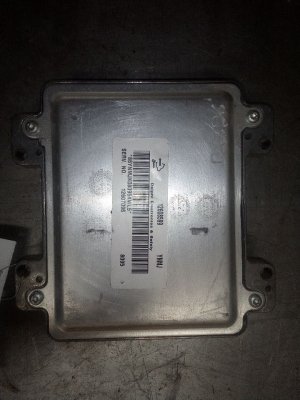
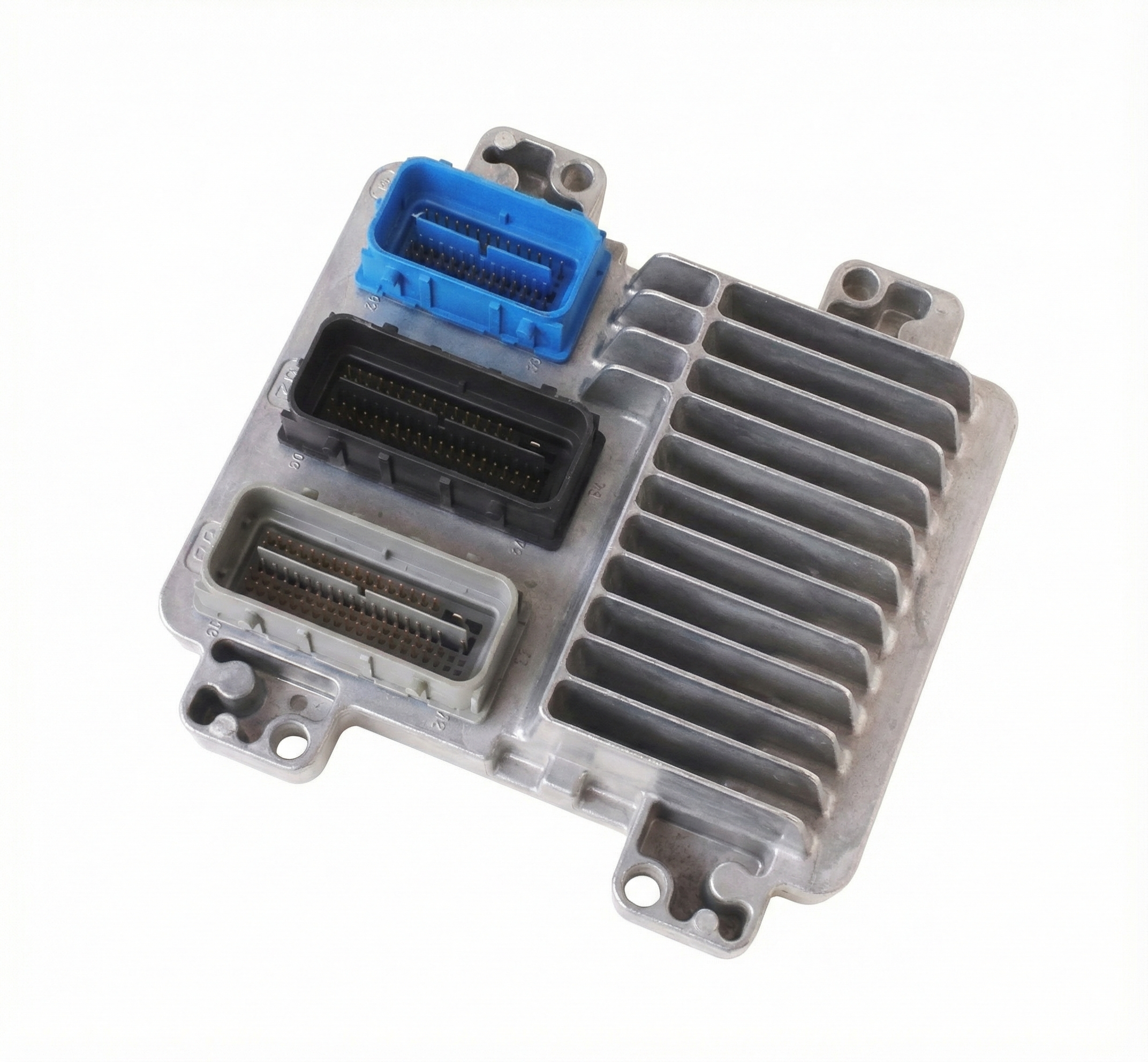
- Engine Control Module (ECM)
(OEM #12602568, 12596147 (for 2006 4.6L, verify by VIN))— This is the part to replace only after all wiring, connector, power, and ground issues have been completely ruled out. Requires VIN programming.
Trusted brands: ACDelco (OEM), Flashmasters, Flagship One
OEM price range: $600-$1000
Aftermarket price range: $400-$700 - Connector Terminals / Pigtail
(OEM #ACDelco PT2769 (Verify by VIN, example for similar GM trans connector))— Often, the fix is not a major component but the small metal terminals inside a connector (like the transmission X1) that have corroded or lost tension.
Trusted brands: ACDelco, Dorman
OEM price range: $20-$75
Aftermarket price range: $10-$50 - Engine to Chassis Ground Strap — The main ground strap for the engine block can corrode or break, leading to a no-crank and no-communication scenario that mimics a dead ECM.
Trusted brands: ACDelco, Standard Motor Products
OEM price range: $15-$40
Aftermarket price range: $10-$25
Related Codes That Often Appear With This One
- U0073 — Control Module Communication Bus 'A' Off. This is a general CAN bus failure code that often accompanies a specific module communication loss like U0100.
- P0700 — Transmission Control System (MIL Request). The TCM sets this code to tell the ECM to turn on the Check Engine Light because the TCM has lost communication with the ECM (U0100), often due to the X1 connector issue.
- U0121 — Lost Communication With Anti-Lock Brake System (ABS) Control Module. This indicates network-wide communication problems, not just an issue with the ECM.
- U2100 — Controller Area Network (CAN) Bus Communication. Another general network fault code often stored in multiple modules when a primary module like the ECM goes offline.
Technical Service Bulletins (TSBs) & Recalls
- PIC4740E: Notes that various communication DTCs, including U0100, can be caused by loose or poor-fitting terminals in the transmission X1 connector. Instructs technicians to perform a pull-test on the wires at the connector.
- PIC5460B: Suggests that U0100, often with a no-crank symptom, can be caused by wiring issues related to the Ignition 1 power feed (CKT 5290) or the Class 2 data line (CKT 1807) to the engine electronics. The diagnostic path involves checking voltage at the ECM fuse and tracing continuity.
Platform-Specific Known Issues
- TSB #PIC4740E specifically identifies the transmission X1 connector terminals as a potential cause for U0100 and a host of other communication codes.
Mechanic-Grade Diagnostic Values
- GM Class 2 Serial Data Line Voltage — expected: Fluctuates, but bus is active at ~7.0V and inactive at 0V (ground). A multimeter may show fluctuating voltage as data is transmitted.. Failure: Stuck at 0V or a constant, non-fluctuating voltage, indicating a short or open circuit.
- High-Speed GMLAN Bus Resistance (at DLC) — expected: 58-64 Ohms between Pin 6 (CAN-H) and Pin 14 (CAN-L) with battery disconnected and modules asleep.. Failure: 118-122 Ohms indicates one of the two 120-Ohm terminating resistors is offline. 0-2 Ohms indicates a short between the CAN-H and CAN-L wires. An open circuit (OL) reading indicates a break in the wiring before the first resistor.
- High-Speed GMLAN Bus Voltage (at DLC) — expected: Approximately 2.5V on both Pin 6 (CAN-H) and Pin 14 (CAN-L) when the bus is idle (Key On, Engine Off).. Failure: Voltages that do not average around 2.5V, or a voltage that is stuck high or low, can indicate a short to power or ground on the data lines.
Scan Tool Commands That Help
- GM Tech2 / GDS2: Module Status / Network Scan — This is the first step with a professional scanner. It polls all modules on the network and shows which ones are actively communicating and which are not responding. For a U0100, this will confirm if only the ECM is offline or if multiple modules are affected, pointing to a broader network issue.
Wiring & Ground Locations
- G101 (Engine Ground) — On the left side of the engine block, sometimes specified as the left rear of the engine compartment.. This is a primary ground for the Engine Control Module (ECM). A loose or corroded G101 can cause a no-start and U0100 by preventing the ECM from powering up correctly.
- G102 (Engine Ground) — On the right rear of the engine (4.6L) or on the left rear of the engine. Grounds the ignition coils.. While primarily for ignition, a poor engine ground at any major point can introduce electrical noise and intermittent communication problems for all engine-mounted electronics, including the ECM.
- ECM (Engine Control Module) — For the 3.6L V6, it's on the passenger side of the engine under a cover. For the 4.6L V8, it's on the left frame rail below the driver's side headlight.. This is the module that is 'lost'. Knowing its location is critical for checking its connectors, power, and ground wires directly.
- Transmission X1 Connector — A 16-pin connector located on the driver's side of the transmission. It serves as a major pass-through for data lines.. TSB #PIC4740E explicitly calls out poor terminal fit in this connector as a direct cause of U0100. It's a known weak point for interrupting Class 2 communication.
Real Owner Repair Stories
- Reddit user in r/MechanicAdvice (2010 Cadillac SRX (2nd Gen, but relevant principle)) — Driving normally, then sudden loss of power. Stabilitrak and Check Engine lights came on. Code U0100 was stored. Dash lights had a barely noticeable flicker the night before.
❌ Tried (didn't work) Initially checked fuses and relays, which were all okay.
✅ What actually fixed it The user diagnosed a failing alternator. With accessories on, voltage dropped to 12.7V while running. With accessories off, it was 13.7-14.0V. Replacing the alternator resolved the issue. - 2CarPros Forum User (2005 Cadillac STS (platform mate)) — Won't crank or start, dash goes black when start button is pushed, then lights return after 10-15 seconds. Single code U0100 stored.
❌ Tried (didn't work) Tried jumping the car. Replaced the battery even though the old one tested okay.
✅ What actually fixed it The user did not post the final resolution, but the symptoms and code are a classic example of the issue on this platform, pointing towards a communication bus failure rather than a simple battery or starter problem.
OEM Part Supersession History
12595777, 12592124, 12587223→19260507, 12602703 (Verify by VIN and Service No.)— Standard component revisions and software updates.
Heads up: Part numbers are specific to engine (3.6L vs 4.6L) and model years. A replacement ECM must match the original 'Service No.' or be a direct supersession. For example, PN 12616451 is for a 2007 3.6L. Using an incorrect hardware version can cause a no-start or U0100 even if the part is new.
Model Year Variations Within This Range
- 2007-2008: The 2007 model year introduced a significantly redesigned dashboard, center console, and interior materials. V8 models also received a new 6-speed automatic transmission, replacing the previous 5-speed. These electrical and powertrain changes can affect diagnosis, as module locations and wiring may differ from earlier 2004-2006 models.
- 2004-2006: These earlier models used a 5-speed automatic for both V6 and V8 engines and had the original interior design. ECM part numbers are often different from the 2007+ models.
Helpful Videos

We Have This Part in Stock

The information in this article is provided for general reference and educational purposes only. Vehicle specifications, procedures, and part compatibility can vary by production date, trim level, and region. Always consult your vehicle's factory service manual and verify part numbers before purchasing or performing repairs. Safety-critical components such as airbags, seat belts, and braking systems should be installed by a qualified professional.
- Cadillac SRX:
- 🧭 Diagnostic Flowchart
- 🎬 Helpful Videos
- 🛍️ Shop This Part
- What's Unique About the 2004-2008 Cadillac SRX
- Symptoms You May Notice
- Most Likely Causes
- Rare But Worth Checking
- Diagnosis Steps
- Parts You'll Likely Need
- Related Codes That Often Appear With This One
- Technical Service Bulletins (TSBs) & Recalls
- Platform-Specific Known Issues
- Mechanic-Grade Diagnostic Values
- Scan Tool Commands That Help
- Wiring & Ground Locations
- Real Owner Repair Stories
- OEM Part Supersession History
- Model Year Variations Within This Range
- 🎟️ Get 5% Off