

U0100 on 2010-2015 Chevrolet Camaro: Causes for Lost Communication with ECM/PCM
On a 2010-2015 Camaro, code U0100 is most often caused by a poor ground connection, especially the ECM grounds on the cylinder heads, a weak battery, or a blown 15A ECM fuse in the under-hood fuse box. Check and clean all engine grounds and test the battery before suspecting more complex issues like a failed ECM.
- Always check the simple things first: test the battery and inspect the ECM fuse (#5) before attempting complex diagnostics.
- The most likely cause on a 2010-2015 Camaro is a bad ground. Thoroughly clean and tighten the ECM grounds on both cylinder heads.
- Do not immediately assume the ECM is faulty. It is an expensive part and should only be replaced after all other potential causes are ruled out.
- This code indicates a critical failure. Do not drive the vehicle until it is repaired, as it can stall without warning.
What's Unique About the 2010-2015 Chevrolet Camaro
The 5th generation Camaro is well-documented in owner forums for having grounding issues that can directly lead to a U0100 code. The ECM grounds, located on the engine cylinder heads, are a frequent culprit, especially if they have been disturbed during other repairs like header installation. Some owners have also found that a blown ECM fuse (15A, position F5 in the under-hood fuse box), caused by a wiring short or an internally failed ECM, can trigger this code.
Symptoms You May Notice
- Engine will not crank or start
- Engine stalls intermittently while driving
- Check Engine Light is on or flashing rapidly
- "Service StabiliTrak" message on the dash
- Fuel gauge reads empty even with fuel in the tank
- Transmission may be stuck in a single gear (limp mode)
- Cooling fans run constantly at high speed with key on
- "Service Theft Deterrent System" message on display
- Immediately replacing the ECM without checking grounds, fuses, and battery voltage first. The ECM is often blamed, but is frequently not the root cause.
Most Likely Causes
- Poor or Loose Ground Connections 🔴 High Probability Forum discussions frequently point to specific, problematic ground points on the engine. The ECM grounds on the passenger and driver side cylinder heads are known weak points, especially after aftermarket work like header installs. A high-resistance ground can cause a significant voltage drop at the engine block compared to the battery, leading to communication issues.
How to confirm: Perform a visual inspection of all major ground straps in the engine bay, particularly the small ground wires bolted to the cylinder heads (G110 for V8). Remove, clean the contact surfaces with a wire brush to bare metal, and securely retighten them. One user on Camaro5 forums traced a no-start/U0100 to a bad engine ground that caused voltage to drop to 6V on the engine block while the battery read 12.6V.
Typical fix: Cleaning and tightening the existing ground connections. In some cases, owners add supplemental ground wires to improve connectivity.
Est. part cost: $0-$50 - Blown ECM Fuse 🔴 High Probability A well-documented issue where a short circuit, either in the wiring harness or internally within the ECM, causes the 15A ECM fuse (fuse #5 in the under-hood fuse box) to blow. This immediately cuts power to the ECM, causing U0100. Manufacturer service bulletin #20-NA-206 notes that a blown fuse can be associated with U0100 and may require module replacement to clear the condition.
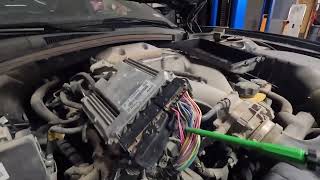
How to confirm: Check fuse F5 in the engine compartment fuse block. If it is blown, it indicates a dead short. If a replacement fuse blows immediately upon turning the key to the 'ON' position, it confirms an active short circuit. 🎬 See how to diagnose an ECM fuse that keeps blowing. Diagnostics on ScannerDanner and Camaro5 forums show this is a common symptom leading to ECM replacement.
Typical fix: The underlying short circuit must be found and repaired. This may involve inspecting the wiring harness for chafing or damage. If the fuse only blows when the ECM is connected, the ECM has likely failed internally and requires replacement.
Est. part cost: $1-$800 - Weak or Dead Battery 🟡 Medium Probability → Shop Vehicle Battery Modern vehicles are highly sensitive to voltage. Low battery voltage can cause unpredictable communication errors between modules before the battery is weak enough to prevent cranking. This is a common cause for U-codes across many platforms. NHTSA ODI #10733263 describes a situation where a vehicle threw U0100 and other codes even after the battery had been replaced twice.
How to confirm: Test the battery with a multimeter. A healthy, fully charged battery should read at least 12.6 volts with the engine off. If the voltage is below 12.4V, charge and re-test it. A load test at an auto parts store is the most definitive way to confirm battery health. Voltage dropping below 10V during cranking is a strong indicator of a failing battery.
Typical fix: Recharge or replace the battery.
Est. part cost: $150-$250 - Failed Engine Control Module (ECM) ⚪ Low Probability → Shop Engine Control Module (ECM) While less common than wiring or ground issues, the ECM can fail internally. Multiple owner forums document cases where an internal short in the ECM was the root cause of the blown fuse #5 and U0100 code, requiring ECM replacement.
How to confirm: This is often a diagnosis of exclusion. If the battery is good, all grounds are clean and tight, and the ECM fuse repeatedly blows only when the ECM is connected, the module itself is the primary suspect. A professional shop can perform bench testing to confirm.
Typical fix: Replace the ECM. The new module must be programmed to the vehicle's VIN and a security 'key relearn' procedure is required for the car to start.
Est. part cost: $300-$1000
Rare But Worth Checking
- Damaged Wiring Harness: While grounds are more common, the main engine harness can get damaged. Check for chafing against engine brackets or heat damage from exhaust components, which could short out the CAN bus wires. One user on a ScannerDanner forum detailed a lengthy process of elimination to rule out wiring shorts before condemning the ECM.
- Faulty Starter: In one documented case, a faulty starter motor was causing a short that repeatedly blew the ECM fuse, leading to the U0100 code. The owner diagnosed this by bridging the fuse and tracing the smell of burning electronics to the starter area.
- Accessory Wake Up Circuit: Manufacturer TSB Bulletin #PIT6198 suggests that for a MIL at startup with DTC U0100, technicians should test the accessory wake up circuit to the ECM for proper power.
Diagnosis Steps
- Check Battery Health: Use a multimeter to ensure battery voltage is above 12.5V. A low battery is a very common cause of communication codes. Charge or replace the battery if necessary.
- Scan for All Codes: Use a quality OBD-II scanner to read codes from all modules (BCM, TCM, ABS, etc.), not just the engine. Note any other 'U' codes, which can help pinpoint a network-wide fault versus an isolated ECM issue. 🎬 Watch: Troubleshooting a Camaro with no crank and no communication.
- Inspect Fuses: Check the ECM fuse (15A, position F5 in the engine bay fuse block). If it's blown, suspect a short circuit. If it blows again with a new fuse when the key is turned 'ON', do not proceed until the short is found. This is a critical diagnostic step.
- Isolate a Potential ECM Short: Disconnect the electrical connectors (X1 and X2) from the ECM. With the ECM unplugged, insert a new 15A fuse and turn the key 'ON'. If the fuse does NOT blow, the short is very likely internal to the ECM itself. If the fuse still blows, the short is in the wiring harness between the fuse box and the ECM.
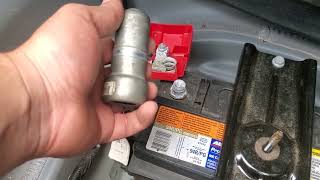
- Inspect and Clean Grounds: This is the most critical step for a Camaro. Locate the main ECM grounds on the driver and passenger side cylinder heads. Remove the bolts, clean the terminals and mating surfaces to bare metal, and re-tighten securely. Also check the main battery ground cable connection. 🎬 Watch this guide to fixing no power and no start issues.
- Check CAN Bus Resistance: With the battery disconnected, use a multimeter to check the resistance between Pin 6 (CAN High) and Pin 14 (CAN Low) on the OBD-II port. A healthy network should read approximately 60 ohms. Readings of 120 ohms or 0 ohms indicate a problem with the wiring or a terminating resistor.
- Professional Diagnosis: If the steps above do not resolve the issue, the problem is likely a complex wiring short or requires a programmed ECM replacement. A professional will have the tools to perform a key relearn procedure.
Parts You'll Likely Need
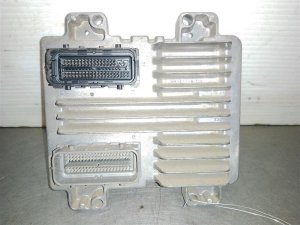
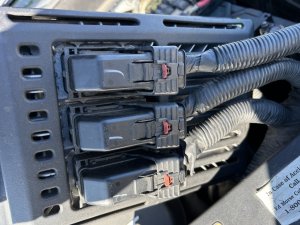
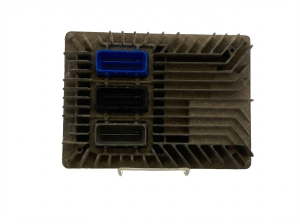
- Engine Control Module (ECM)
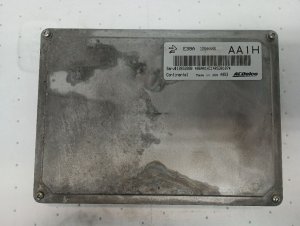
(OEM #12633238 (Common for V8, verify by VIN))— This is the 'last resort' part, replaced only after all wiring, ground, and fuse issues have been ruled out. An internal failure of the ECM can cause a direct short, blowing the F5 fuse and triggering a U0100 code.
Trusted brands: ACDelco (OEM)
OEM price range: $400-$800
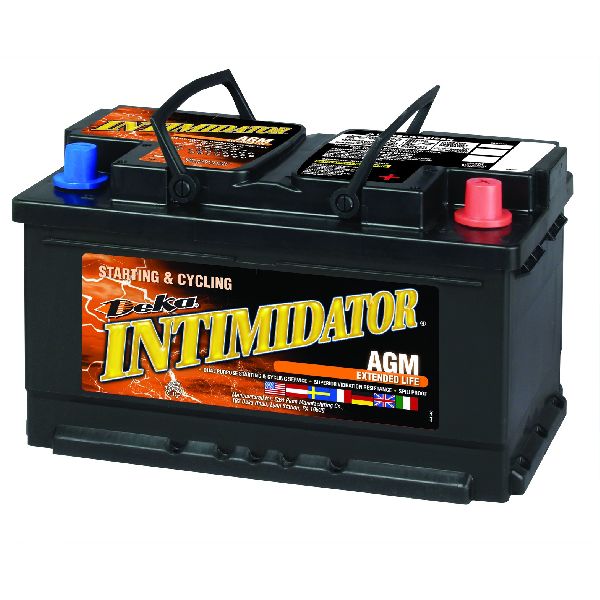
Aftermarket price range: $250-$500 - Battery — A weak battery is a common cause of various electrical and communication faults in modern vehicles.
Trusted brands: ACDelco, DieHard, Optima
OEM price range: $200-$300
Aftermarket price range: $150-$250
Related Codes That Often Appear With This One
- U0101 — Lost Communication with TCM. The TCM and ECM are on the same high-speed CAN bus. A network-wide problem will often cause communication loss codes for multiple modules.
- P0700 — Transmission Control System (MIL Request). This code is set by the ECM when the TCM has detected a fault and requested the Check Engine Light to be turned on. It often appears with U0100 when the transmission goes into limp mode.
- U0073 — Control Module Communication Bus 'A' Off. This is a general network failure code that points to a problem with the bus itself, such as a wiring short or a bad module pulling the whole network down.
Platform-Specific Known Issues
- A loose ECM ground on the passenger-side cylinder head is a known cause of U0100, particularly after installing aftermarket headers.
- The 15A ECM fuse (F5) in the engine bay fuse block can blow due to an internal short in the ECM, leading to a no-start and U0100.
Mechanic-Grade Diagnostic Values
- CAN Bus Resistance — expected: ~60 Ohms. Failure: A reading of 120 Ohms indicates an open circuit or a module offline. A reading of 0 Ohms indicates a short between the CAN High and CAN Low wires.
- CAN Bus Voltage (Key On) — expected: CAN High (Pin 6 to ground): ~2.5-3.5V; CAN Low (Pin 14 to ground): ~1.5-2.5V.. Failure: Voltages outside these ranges, or a voltage of 0V, indicate a wiring fault or a module pulling the bus down. One user reported 2.67V on CAN High and 2.31V on CAN Low on a functional network.
- ECM Ground Voltage Drop — expected: < 0.1 Volts (100mV). Failure: A reading higher than 0.1V indicates high resistance in the ground circuit, which is a common cause of this code. One owner found only 6V at the engine block when the battery was at 12.6V, indicating a severe ground issue.
Scan Tool Commands That Help
- GM GDS2 (Global Diagnostic System 2): Module Presence/Network Scan — This is the first step with a dealer-level tool. It polls all possible modules on the network and provides a clear list of which ones are communicating and which are not, immediately confirming the ECM is offline.
- GM GDS2 (Global Diagnostic System 2): Data Bus Diagnostics Tool — After confirming the ECM is offline, this function provides a real-time oscilloscope-like view of the CAN bus voltage. It helps a technician visually identify electrical noise, shorts to ground/power, or other signal integrity issues that a multimeter check might miss.
Wiring & Ground Locations
- G110 (V8) — Attached to the rear of the driver's side cylinder head. A second critical ground is on the passenger side cylinder head.. These are the primary grounds for the ECM. They are frequently disturbed during header installations and are a top cause of U0100 if loose or corroded.
- ECM Connector X2 (Gray) — The rear-most connector on the ECM, located on the passenger side of the engine bay.. Pins 3, 5, and 6 are the ignition voltage inputs from the fuse that repeatedly blows. Pins 1, 2, and 4 are the grounds. Disconnecting this specific connector is key to isolating whether a short is in the ECM or the harness.
- G101 / G102 — G101 is on the front of the left wheelhouse; G102 is on the front of the right wheelhouse.. These are major chassis grounds that can cause widespread electrical issues, including module communication problems, if they become corroded or loose.
- OBD-II Port Pins 6 & 14 — The Data Link Connector (DLC) under the driver's side dashboard.. Pin 6 is CAN High and Pin 14 is CAN Low. These are the access points for testing the health of the entire high-speed communication network with a multimeter.
Real Owner Repair Stories
- Camaro5 Forum User (5th Gen Camaro (details unspecified)) — Car crapped out while driving, no crank, no start, fuel gauge read zero.
❌ Tried (didn't work) Checking battery voltage, Looking for burnt wires, Checking all fuses
✅ What actually fixed it The user had installed headers and removed the ECM ground wire on the passenger cylinder head to do so. The bolt was only finger-tight. Tightening the ECM ground bolt securely resolved all issues and the car fired right up. - Camaro5 Forum User 'Gunn' (2011 Camaro LT V6) — No crank, no start, rapidly flashing check engine light, U0100 code, fuel gauge reads empty.
❌ Tried (didn't work) Cleaning all engine bay grounds, Replacing the battery
✅ What actually fixed it The user diagnosed that the 15A ECM fuse (F5) was blown. It would blow immediately when the key was turned to 'ON'. By disconnecting the ECM connectors (X1 and X2) and finding the fuse no longer blew, they correctly deduced the short was internal to the ECM. The final fix was replacing the Engine Control Module. - Camaro5 Forum User 'Aprojectile' (2012 Camaro V6) — No start, starter clicking then nothing, 'Service Stabilitrak' message, codes U0100 and P023F.
❌ Tried (didn't work) Jumping the battery, Replacing the battery (was done one month prior)
✅ What actually fixed it The user performed a voltage drop test. With the battery at 12.6V, they measured only 6V at the engine block when using it as a ground point. This confirmed a high-resistance ground path between the engine and the chassis/battery. The fix was to find, clean, and tighten the main engine ground straps. - NHTSA ODI #11129698 — An owner reported a rough start accompanied by Stabilitrak and traction control warnings with codes U0100 and U0121. While spark plugs were recommended, the coil pack was replaced, though the CEL returned while climbing a hill.
- NHTSA ODI #10676316 — A vehicle was diagnosed with U0100 (Engine Control Module), P0324 (Knock Control System), and P2135 (Throttle Position Sensor) after experiencing stability control issues.
OEM Part Supersession History
12633238→N/A— This part number remains active but fits a wide range of GM vehicles from 2010-2015, including Corvette, Express vans, and Cadillac Escalade, not just the Camaro.
Heads up: While the hardware may be shared, the programming is vehicle-specific. A replacement ECM must be flashed with the correct software for a Camaro and programmed with the vehicle's VIN.
Model Year Variations Within This Range
- 2010-2011 vs 2012-2015 (V6 Models): The V6 engine was updated in 2012 from the LLT (312 hp) to the LFX (323 hp). While the U0100 diagnosis is largely the same, the ECMs (E39/E39A) have different software calibrations. Ensure any replacement ECM is correct for the specific engine.
- 2010-2013 vs 2014-2015 (All Models): The 2014 model year introduced a significant facelift with new front/rear fascias. While major electrical architecture for the powertrain remained similar, infotainment systems (MyLink) and some BCM-related features were updated. This is unlikely to change the root cause of a U0100 but may present different secondary symptoms on the dash display.
Diagnostic Flowchart
Other Known Issues on This Vehicle
Issues unrelated to this code that are worth knowing about as an owner of this generation:
- Premature Timing Chain Wear (V6 Models) 🔴 High — Common on 2010-2012 3.6L LLT V6 engines, often appearing between 30,000-60,000 miles. Can lead to catastrophic engine failure if ignored.
- Torque Converter Shudder (Automatic Models) 🟠 Medium — Some owners of automatic transmission models report a shuddering or vibration at low speeds (around 40-50 mph). (Ref: Related TSBs often recommend a fluid flush or replacement of the torque converter.)
- Ignition Key Can Be Bumped Out of 'Run' Position 🔴 High — Affects models with a folding key fob. The driver's knee can bump the key, turning the engine off while driving. (Ref: GM Recall N192223230 was issued to replace the folding key with a new straight-blade key design.)
- Air Conditioning System Failures 🟡 Low — Can be caused by several issues, including a faulty A/C control module or a failed compressor. A customer satisfaction program was issued for 2011 models for a BCM reprogram to prevent compressor failure. (Ref: #11160: Customer Satisfaction - Loss of Air Conditioning - Reprogram Body Control Module (for 2011 models).)
- Active Fuel Management (AFM) Lifter Failure (V8 Models) 🟠 Medium — Some 2010-2011 L99 V8 engines are prone to AFM lifter collapse, causing ticking noises, misfires, and poor performance.
Used vs. New Parts: Buying Guide for This Vehicle
When a used part is the smart pick: For this repair, obtaining a used part from a junkyard is only practical for simple components like fuses, relays, or ground cable hardware. A used ECM is NOT a straightforward 'plug and play' option and should be approached with extreme caution.
Donor-vehicle mileage cap: roughly under 80000 miles for the part to have meaningful remaining life.
What to inspect on the donor part:
- For an ECM, verify the donor vehicle was not in a flood or fire.
- Check that the service number on the used ECM (e.g., 12633238) matches your original part.
- Ensure none of the connector pins on the used ECM are bent, corroded, or damaged.
OEM-only on this vehicle (don't cheap out):
- Engine Control Module (ECM). While 'virgin' or refurbished units are available, they are not truly 'used' in the junkyard sense. They MUST be programmed to your vehicle's VIN and undergo a security relearn procedure to function. A used ECM from another Camaro will not start the car without this programming because it is locked to the original vehicle's security system (BCM, ignition key).
Aftermarket brands forum-validated for this vehicle:
- ACDelco (OEM) is the most reliable choice for the ECM.
- Reputable programming services like Flashmasters offer refurbished ECMs that are pre-flashed or 'virginized' to accept a new VIN.
Brands owners have reported issues with on this vehicle:
- Avoid generic, no-name online sellers of 'plug and play' ECMs for this vehicle. The security integration with the BCM is complex and requires proper programming tools and software subscriptions that cheap vendors often bypass, leading to persistent issues.
Real Owner Stories
Aggregated from forums and TSBs cited above. Mileages and costs reflect what owners reported in those sources.
2011 Chevrolet Camaro
Symptoms: No start, no crank, and a blown ECM fuse.
What fixed it: The technician isolated the short by disconnecting modules and confirmed the ECM was the culprit, requiring replacement.
Source hint: ScannerDanner Forum: 2011 Camaro No Start, No Crank, Code U0100, blown ECM Fuse
2010 Chevrolet Camaro V6
Symptoms: Repeatedly blowing the #5 ECM fuse, destroying multiple PCMs, rapid flashing check engine light, and the throttle body cycling wildly.
What fixed it: The issue was identified as a severe internal short within the ECM that was frying the computer.
Source hint: ScannerDanner Forum: 2010 v6 camaro keeps frying computer
2010-2015 Chevrolet Camaro
Symptoms: No-start, U0100 code, and 'Service StabiliTrak' message. A voltage drop was discovered between the battery and the engine block (6V at the block vs 12.6V at the battery).
What fixed it: Cleaning and tightening the engine ground connections to resolve the high resistance.
Source hint: Camaro5 Forum: Car Won't Start / U0100 & P023F
2010-2015 Chevrolet Camaro
Symptoms: Car not starting, U0100 code, and a 15A ECM fuse that blows as soon as the key is turned 'ON'.
What fixed it: Internal ECM failure was confirmed by unplugging the ECM; when the fuse stopped blowing with the module disconnected, the ECM was replaced.
Source hint: Camaro5 Forum: Car Not Starting - U0100 Code: SOLVED!
Related OBD-II Codes
Frequently Asked Questions
Why is my 2010-2015 Camaro displaying 'Service StabiliTrak' and 'Service Theft Deterrent System' along with code U0100?
I just installed aftermarket headers on my Camaro and now I have a U0100 code. What should I check first?
Which fuse should I check in my engine bay if I suspect an ECM power issue?
My Camaro's fuel gauge reads empty even though I just filled up, and I have a U0100 code. Are these related?
How can I tell if the short circuit is inside my ECM or in the wiring harness?
What should the CAN bus resistance be on my Camaro's OBD-II port?
Helpful Videos

Used OEM Parts in Stock
New Aftermarket Parts Available



The information in this article is provided for general reference and educational purposes only. Vehicle specifications, procedures, and part compatibility can vary by production date, trim level, and region. Always consult your vehicle's factory service manual and verify part numbers before purchasing or performing repairs. Safety-critical components such as airbags, seat belts, and braking systems should be installed by a qualified professional.
- Chevrolet Camaro:
- 🧭 Diagnostic Flowchart
- 🎬 Helpful Videos
- 🛍️ Shop This Part
- What's Unique About the 2010-2015 Chevrolet Camaro
- Symptoms You May Notice
- Most Likely Causes
- Rare But Worth Checking
- Diagnosis Steps
- Parts You'll Likely Need
- Related Codes That Often Appear With This One
- Platform-Specific Known Issues
- Mechanic-Grade Diagnostic Values
- Scan Tool Commands That Help
- Wiring & Ground Locations
- Real Owner Repair Stories
- OEM Part Supersession History
- Model Year Variations Within This Range
- Other Known Issues on This Vehicle
- Used vs. New Parts: Buying Guide for This Vehicle
- Real Owner Stories
- 2011 Chevrolet Camaro
- 2010 Chevrolet Camaro V6
- 2010-2015 Chevrolet Camaro
- 2010-2015 Chevrolet Camaro
- Related OBD-II Codes
- Frequently Asked Questions
- 🎟️ Get 5% Off