

U0100 on 2005-2010 Chevrolet Cobalt: Causes and Fixes for Lost ECM Communication
On a 2005-2010 Cobalt, U0100 is often caused by bad grounds, a chafed wiring harness near the oil filter, or a faulty ECM. Check fuses and battery first, then inspect the main engine ground and harness. If those are good, the ECM itself is the likely culprit.
- U0100 on a Cobalt is a critical code that will likely prevent the car from starting or cause it to stall.
- Before suspecting the expensive ECM, always start with the simple, common fixes: check the battery, fuses, and all major ground connections.
- Pay special attention to the wiring harness where it runs near the oil filter housing, as this is a known chafing point.
- If the ECM needs to be replaced, it must be programmed to your car's VIN.
- This is a complex electrical issue. DIY diagnosis is possible but requires a multimeter and a methodical approach.
What's Unique About the 2005-2010 Chevrolet Cobalt
The Chevrolet Cobalt platform is known for specific electrical vulnerabilities that can trigger a U0100 code. A major safety recall for the ignition switch (GM Recall 14133) highlights how power interruptions can disrupt module communication. Furthermore, owner forums frequently point to specific weak points in the wiring, such as the engine harness chafing near the oil filter housing and poor ground connections on the engine block, as common culprits for communication loss on this particular vehicle. This issue is also shared with its platform mates, the Pontiac G5 and Chevrolet HHR.
Symptoms You May Notice
- No-crank, no-start condition.
- Engine stalls unexpectedly while driving.
- Check Engine Light is on.
- Instrument cluster gauges behave erratically or go dead.
- Fuel gauge does not read or shows empty.
- Power Steering warning message appears on the driver information center (DIC).
- Scan tool cannot communicate with the ECM.
- Transmission defaults to 2nd gear (limp mode) and shifts harshly.
- DIC may show 'SERVICE TRACTION' or other error messages.
- Replacing the Body Control Module (BCM) without confirming the ECM is the source of the network failure.
- Replacing the battery without load testing it or checking for a parasitic drain that caused it to fail.
Most Likely Causes
- Poor or Corroded Grounds 🔴 High Probability Grounding points on the engine and chassis are exposed to the elements and vibration, leading to corrosion and loose connections over time. The main transmission-to-chassis ground strap is a frequent failure point.
How to confirm: Visually inspect and physically check the main ground strap on the transmission case (G105/G107) and the ground point under the driver's side headlight (G103). Clean the contact surfaces and ensure the connections are tight. A voltage drop test on the ground circuit should show less than 0.2 ohms.
Typical fix: Remove the ground bolt/nut, clean the terminal and the chassis/engine block surface to bare metal with a wire brush or sandpaper, apply dielectric grease, and re-secure tightly.
Est. part cost: $1-$10 - Chafed or Damaged Engine Wiring Harness 🔴 High Probability → Shop Engine Wiring Harness The engine wiring harness is routed close to the engine block near the oil filter housing, where vibration and heat can cause it to rub through, shorting the CAN bus wires (typically tan and tan/black or dark green wires). It can also chafe on the A/C compressor or transmission case.
How to confirm: Carefully inspect the section of the wiring harness that runs near the oil filter and along the side of the engine. Look for any signs of abrasion, exposed wires, or damage to the protective loom. Pay close attention to where the harness makes contact with metal components.
Typical fix: Repair the damaged wires by soldering and using heat-shrink tubing. Protect the repaired section with a new wire loom and re-route or secure it to prevent future chafing.
Est. part cost: $10-$30 - Faulty Engine Control Module (ECM) 🟡 Medium Probability → Shop Engine Control Module (ECM) Internal component failure, often the CAN transceiver chip, can cause the ECM to stop communicating or short out the entire network. This can be caused by voltage spikes, heat, or age.
How to confirm: After confirming all powers, grounds, and the CAN bus wiring to the ECM are good, the ECM is the likely failure. A diagnostic test involves unplugging the ECM; if communication is restored to other modules (like the BCM), it strongly indicates the ECM has an internal short.
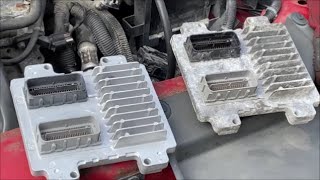
Typical fix: Replace the ECM. The new module must be programmed to the vehicle's VIN and security system. This often requires a specialized scan tool or a pre-programmed unit from a specialist. 🎬 See how an ECM replacement fixed these erratic instrument gauges.
Est. part cost: $150-$400 - Blown ECM/PCM Fuses 🟡 Medium Probability
How to confirm: Check the under-hood fuse box. Specifically inspect the fuses labeled 'ECM', 'PCM', or 'ECM/PCM'. A user reported a 15A 'ECM' fuse and a 20A 'ECM/PCM' fuse. Use a multimeter to test for continuity across the fuses.
Typical fix: Replace the blown fuse with one of the same amperage rating. If the fuse blows again immediately, it indicates a short circuit in the wiring that must be found and repaired.
Est. part cost: $1-$5 - Open Circuit in CAN Bus Wiring ⚪ Low Probability
How to confirm: With the battery disconnected, measure the resistance between Pin 6 (CAN High) and Pin 14 (CAN Low) at the Data Link Connector (DLC). A healthy network should read approximately 60 ohms. A reading of 120 ohms indicates an open circuit in the wiring or a faulty terminating resistor in one of the modules (often the ECM or BCM).
Typical fix: Trace the CAN bus wiring to find the break or disconnection. This requires a wiring diagram and can be a time-consuming process.
Est. part cost: $5-$25
Rare But Worth Checking
- Faulty Ignition Switch: → Shop Ignition Switch A major safety recall (14133) was issued for this part. A failing switch can cause intermittent power loss to the ECM and other modules, leading to communication dropouts. If the vehicle has other electrical oddities when the key is wiggled, suspect the switch.
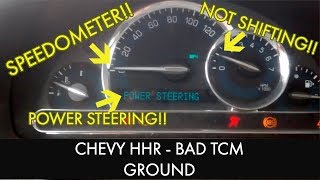
- Faulty Transmission Control Module (TCM): → Shop Transmission Assembly The TCM is on the same high-speed GMLAN bus as the ECM. An internal short in the TCM can bring down the entire network, mimicking an ECM failure. 🎬 Watch: How a bad TCM ground causes power steering and shifting issues. Unplugging the TCM and seeing if communication with the ECM is restored is a valid diagnostic step.
Diagnosis Steps
- Check the battery. Ensure it has a full charge (12.6V+) and passes a load test. Clean any corrosion from the terminals. A weak battery is a common cause of communication codes.
- Inspect under-hood fuses, especially those labeled 'ECM' and 'ECM/PCM'. Replace if blown.
- Attempt to communicate with the vehicle's modules using a capable scan tool. Note which modules are communicating and which are not. If only the ECM is offline, the problem is localized to it or its wiring.
- If the ECM is not communicating, perform a visual inspection of the engine wiring harness, paying close attention to the area near the oil filter housing, A/C compressor, and transmission for any signs of chafing.
- Locate and inspect the main engine ground connections. Key locations are G105/G107 on the transmission case and G103 under the driver's side headlight. Clean and tighten as needed.
- Measure resistance between Pin 6 and Pin 14 of the DLC. A reading of ~60 ohms is normal. A reading of ~120 ohms indicates an open in the bus or a disconnected module. A reading near 0 ohms indicates a short between the two CAN wires.
- If wiring and grounds are good, disconnect the main connectors from the ECM. Re-check if communication is restored with other modules (like the BCM). If it is, the ECM has likely failed internally.
- If all other steps fail, the ECM is the most probable cause.
Parts You'll Likely Need
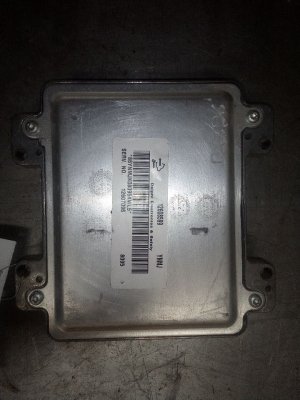
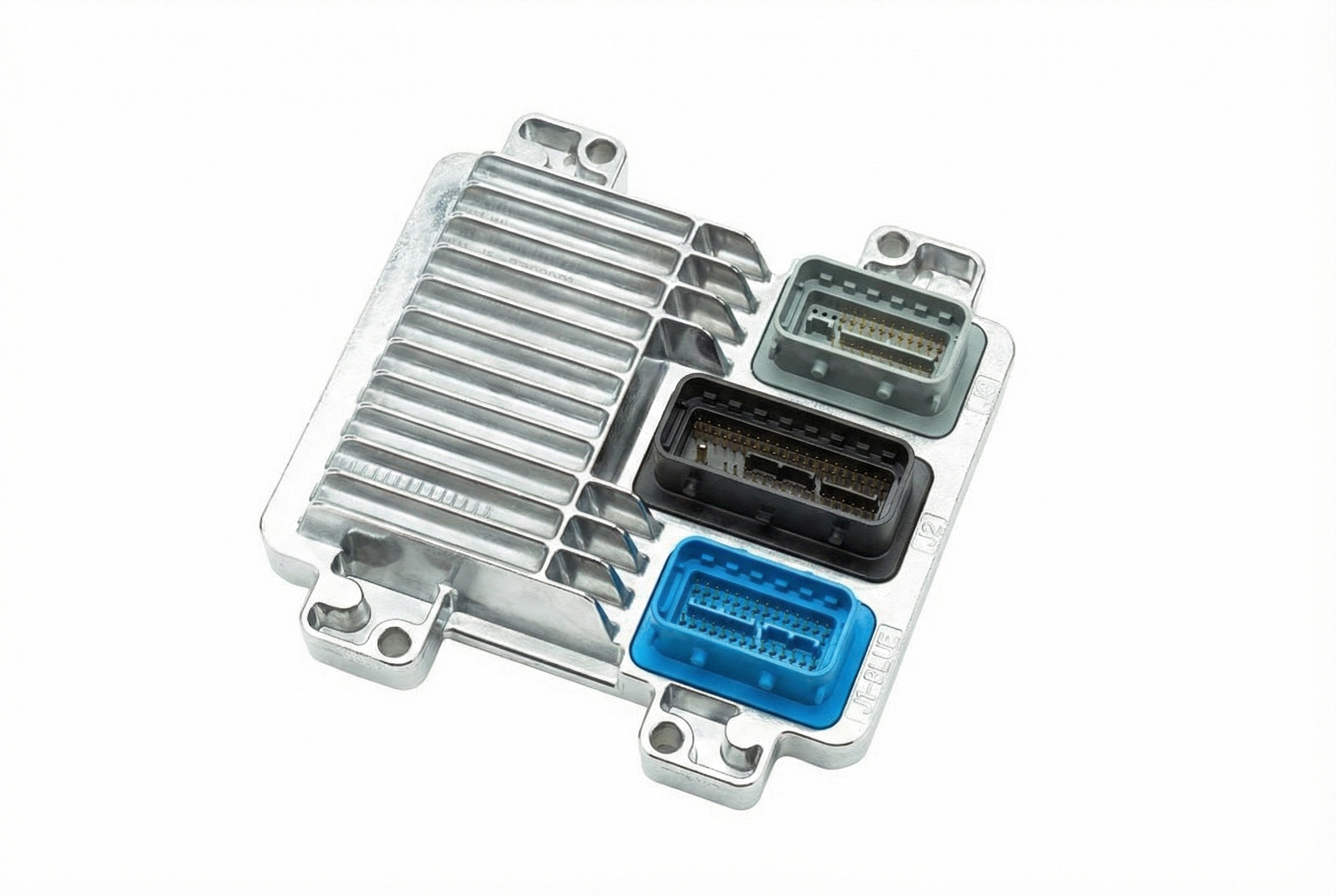
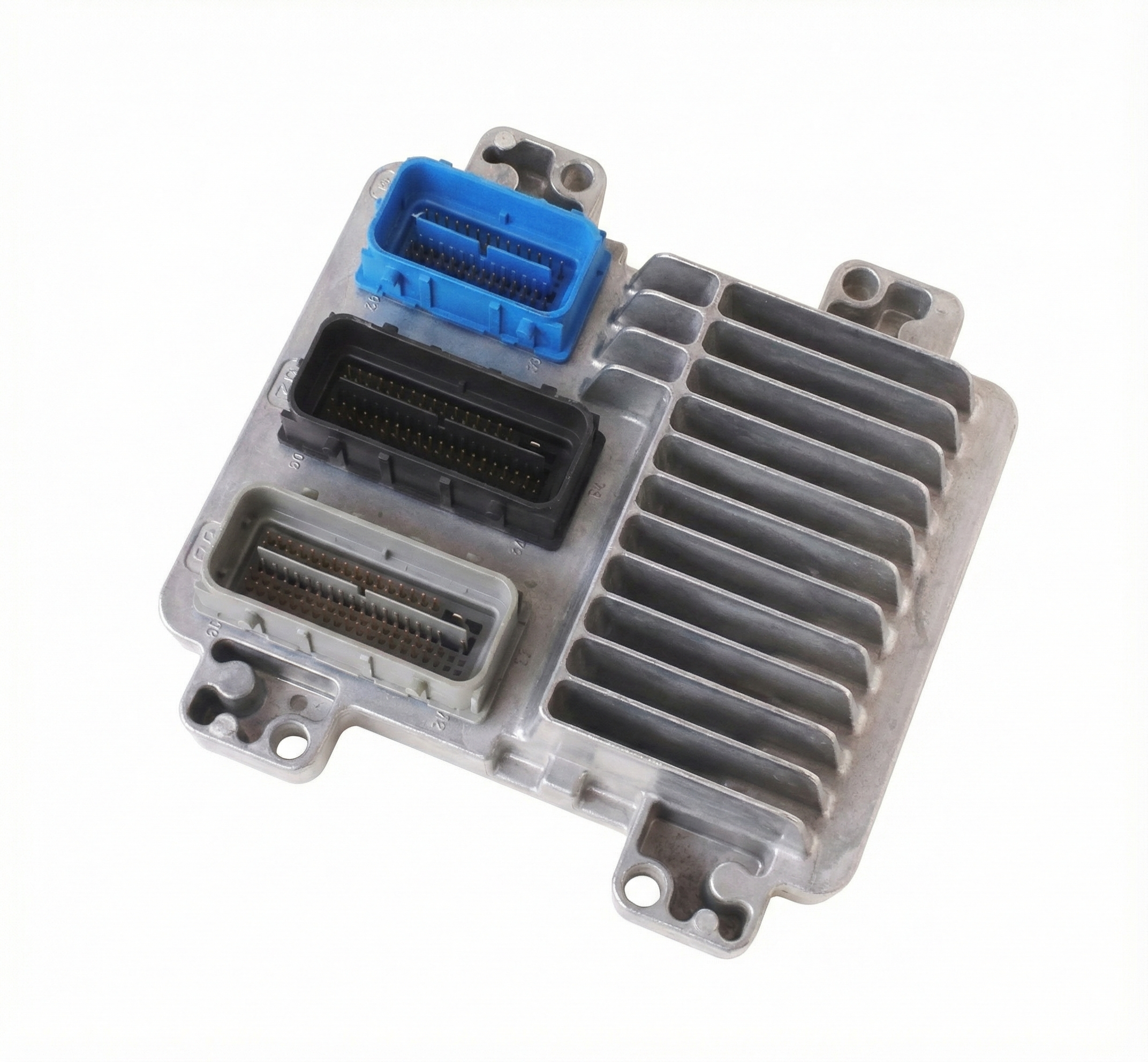
- Engine Control Module (ECM)
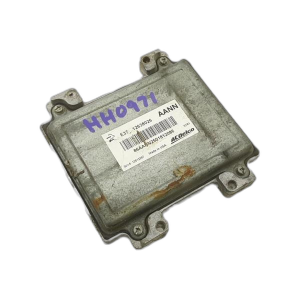
(OEM #12612397, 12633238 (ACDelco E39/E67, varies by year/engine))— Internal failure of the ECM is a common cause for U0100 after wiring and ground issues have been ruled out.
Trusted brands: ACDelco
OEM price range: $250-$400
Aftermarket price range: $150-$300 - Wire Loom and Repair Supplies — Needed to repair the commonly chafed engine wiring harness near the oil filter housing.
OEM price range: $20-$40
Aftermarket price range: $10-$25
Related Codes That Often Appear With This One
- U0101 — Lost Communication with TCM. The TCM and ECM are on the same high-speed CAN bus, so a network-wide failure will often cause both codes to set simultaneously.
- U0140 — Lost Communication with BCM. This indicates a widespread network issue, as the BCM is another key module on the CAN bus.
Technical Service Bulletins (TSBs) & Recalls
- GM Bulletin 08-07-30-021G: Outlines general diagnostic procedures for High Speed GMLAN communication concerns, which includes U0100. It details checking for chafed wiring, backed-out terminals in connectors (especially the transmission connector), and proper resistance on the data bus.
- GM Recall 14133: Addresses a faulty ignition switch which can lead to intermittent power and communication loss.
Platform-Specific Known Issues
- GM Safety Recall 14133 addresses a faulty ignition switch that can cause power interruptions to modules.
- The engine wiring harness is known to chafe against the engine block near the oil filter, causing shorts in the CAN bus wires.
Mechanic-Grade Diagnostic Values
- GMLAN Bus Resistance — expected: ~60 Ohms. Failure: 120 Ohms indicates an open circuit or a module with a failed termination resistor. ~0 Ohms indicates a short between the high and low speed CAN lines.
- GMLAN Bus Voltage (Key On, Engine Off) — expected: CAN High (Pin 6 at DLC): ~2.5-3.5V. CAN Low (Pin 14 at DLC): ~1.5-2.5V.. Failure: Voltages outside these ranges, or that are stuck high or low, indicate a short to power or ground on the bus.
- ECM Ground Circuit Resistance — expected: < 0.2 Ohms. Failure: Higher resistance indicates a poor ground connection, which can cause intermittent module operation.
- Battery Voltage (Cranking) — expected: > 10.0V. Failure: Voltage dropping below 10V during cranking can cause modules to reset or lose communication, triggering a U0100 code.
Scan Tool Commands That Help
- GM Tech 2 / GDS2: Module Isolation Diagnostics — When U0100 is present and the scan tool cannot communicate with the ECM. The technician systematically unplugs modules on the high-speed GMLAN (starting with TCM, then Power Steering, etc.) while observing the scan tool. If communication is restored after unplugging a specific module, that module is identified as the one shorting the network.
- GM Tech 2 / GDS2: Crankshaft Position Variation Learn (P0315 Relearn) — This procedure is required after replacing the ECM. Failure to perform the relearn will result in a Check Engine Light with code P0315, even though the engine may run normally.
- Professional Scan Tool (e.g., Autel MaxiSys): BCM Setup / VIN Relearn — If the BCM is replaced, it must be coded to the vehicle's PCM to establish communication and proper function.
Wiring & Ground Locations
- G105 / G107 — On the lower left front of the transmission case.. This is a primary ground point for the ECM and TCM. Corrosion or a loose connection here is a very common cause of U0100 and U0101 codes.
- G103 — On the body frame behind/under the driver's side headlamp assembly.. This ground serves as a chassis connection point for the engine harness grounds (via a jumper from G105) and also grounds the BCM and Data Link Connector. A fault here can cause widespread communication issues.
- G101 — Behind the left headlamp, on the frame rail.. Grounds the Mass Air Flow sensor and other engine components. While less directly tied to the ECM communication line, a bad ground here can cause erratic data that may contribute to network issues.
- BCM — Integrated into the fuse box on the passenger side of the center console.. The BCM acts as a gateway module. While not usually the cause of U0100, its location is critical for diagnosis as it's often the last module to check.
Real Owner Repair Stories
- CobaltSS.net user 'Boujii' (2008 Chevrolet Cobalt) — No-crank, no-start, fuel gauge reads empty, 'Power Steering' message on DIC, U0100 code present.
❌ Tried (didn't work) Manually grounding the ECM chassis, Checking ECM connectors, Checking ECM fuses (noted one fuse had no power)
✅ What actually fixed it Replaced the ECM with a used, pre-programmed unit from eBay. This resolved the no-start and U0100 code, though it did require a subsequent crankshaft variation relearn (P0315). - Chevy HHR Network user 'Cat Man HHR' (Chevrolet HHR (platform mate)) — No-start (acted like dead battery), hard shifting, loss of power steering, DIC messages dropped out, U0100 code. Symptoms appeared after the car sat in the hot sun.
❌ Tried (didn't work) Using a jump pack to start the car (worked initially but symptoms persisted)
✅ What actually fixed it A temporary fix was achieved by disconnecting the negative battery cable for 20 minutes to reset all modules. This points to an intermittent hardware fault (like a bad ground or failing module) causing a software glitch, rather than a permanent failure. - NHTSA ODI #11093283 — An owner reported that their vehicle presented diagnostic codes P0700 and U0100. Despite the alternator and battery being in optimal working condition, the vehicle had to be pulled off the road due to recurring occurrences.
OEM Part Supersession History
12589998→Various, including 12603577, 19369985— Updates to hardware and software calibrations for performance and emissions.
Heads up: ECMs must be programmed with the vehicle's specific VIN and software calibration. A used ECM from another vehicle will not work without being reprogrammed. Some services can clone an old ECM to a new/used one.12612397 (Hardware Number)→Service numbers like 12635901, 12635902— This is a hardware family number. The specific service number on the sticker is what matters for programming and compatibility.
Heads up: When ordering a replacement, the service number is key, but most vendors program based on VIN to ensure correct software load.
Model Year Variations Within This Range
- 2007-2010: The radio and data bus integration changed starting in 2007. Installing an aftermarket radio in a 2007+ model requires a more complex and expensive integration harness to retain accessory power and prevent data bus issues, compared to 2005-2006 models.
- 2005-2006 vs 2007-2010: Minor exterior and interior updates were made in 2007, including revised bumpers and interior materials. More significantly, side-curtain airbags and stability control became standard in later years, adding more complexity to the vehicle's module network.
Diagnostic Flowchart
Other Known Issues on This Vehicle
Issues unrelated to this code that are worth knowing about as an owner of this generation:
- Electric Power Steering (EPS) Motor Failure 🔴 High — Extremely common. Can occur at any mileage, leading to a sudden loss of steering assist. (Ref: GM Recall 10V073000 (also referenced as 14113/14115).)
- Faulty Ignition Switch & Cylinder 🔴 High → Shop Ignition Switch — Widespread, affecting millions of GM vehicles. The switch can move out of the 'Run' position, shutting off the engine while driving. (Ref: GM Recalls 14133, 14113, 14063.)
- Fuel Line & Fuel Pump Module Leaks 🔴 High — Common in warmer climates or 'salt belt' regions due to corrosion. Leaks can occur at the fuel pump module plastic ports or from corroded lines near the rear wheel well. (Ref: NHTSA Campaign 09V419000, NHTSA Investigation PE20-009.)
- Timing Chain Tensioner Wear (2.2L Ecotec) 🟠 Medium — More prevalent on pre-2005 models due to oiling issues, but can still occur on 2005+ models. Often presents as a rattling noise on a cold start.
- Front Lower Control Arm Bushing Failure 🟡 Low — A very common wear item. The rear bushing on the front control arm fails, causing clunking noises over bumps and poor alignment.
Used vs. New Parts: Buying Guide for This Vehicle
When a used part is the smart pick: A used ECM from a junkyard or online retailer is a very common and cost-effective fix for a U0100 code on a Cobalt, provided the root cause is a failed ECM. Many online sellers offer pre-programming services where they flash the used ECM with your car's VIN and latest software before shipping it.
Donor-vehicle mileage cap: roughly under 150000 miles for the part to have meaningful remaining life.
What to inspect on the donor part:
- Ensure the seller guarantees the part is tested and functional.
- Verify the seller offers VIN programming as part of the sale.
- Check for physical damage to the case or connectors, although internal failure is more common.
- Confirm the part number matches or is a valid supersession for your original ECM.
Aftermarket brands forum-validated for this vehicle:
- ACDelco (Remanufactured)
- Cardone (Remanufactured)
Brands owners have reported issues with on this vehicle:
- Unbranded, no-name units from online marketplaces with no warranty or programming support.
Real Owner Stories
Aggregated from forums and TSBs cited above. Mileages and costs reflect what owners reported in those sources.
2008 Chevrolet Cobalt
Symptoms: No-crank condition and the fuel gauge was not reading. The car threw code U0100.
What fixed it: The owner replaced the original ECM with a pre-programmed used ECM from eBay after the original unit failed internally.
Source hint: CobaltSS.net - 'U0100 - Lost Communication With Engine Control Module'
2006-2011 Chevrolet HHR
Symptoms: No-start, hard shifting, and loss of power steering after the vehicle sat in the sun.
What fixed it: A temporary fix was achieved by disconnecting the battery to reset the module, though the source notes this often points to underlying hardware issues like a bad ground or failing ECM.
Source hint: Chevy HHR Network - 'U0100 code have to pass this info on'
NHTSA Reported Incident
Symptoms: An owner reported symptoms including dimming lights and diagnostic codes P0700 and U0100.
What fixed it: While the battery and alternator were found to be in optimal condition, the vehicle experienced multiple occurrences of the issue (NHTSA ODI #11093283).
Related OBD-II Codes
Frequently Asked Questions
My 2005-2010 Cobalt has a no-crank condition and the fuel gauge is dead; is there a recall for this?
Where are the main ground points I should check on my Cobalt to fix a U0100 code?
Can a bad ground on the transmission cause my Cobalt to shift harshly?
Which fuses should I check if my scan tool cannot communicate with the ECM?
Does GM Bulletin 08-07-30-021G apply to my Cobalt's communication issues?
Why is my Power Steering warning light on along with the U0100 code?
Helpful Videos

We Have This Part in Stock

The information in this article is provided for general reference and educational purposes only. Vehicle specifications, procedures, and part compatibility can vary by production date, trim level, and region. Always consult your vehicle's factory service manual and verify part numbers before purchasing or performing repairs. Safety-critical components such as airbags, seat belts, and braking systems should be installed by a qualified professional.
- Chevrolet Cobalt:
- 🧭 Diagnostic Flowchart
- 🎬 Helpful Videos
- 🛍️ Shop This Part
- What's Unique About the 2005-2010 Chevrolet Cobalt
- Symptoms You May Notice
- Most Likely Causes
- Rare But Worth Checking
- Diagnosis Steps
- Parts You'll Likely Need
- Related Codes That Often Appear With This One
- Technical Service Bulletins (TSBs) & Recalls
- Platform-Specific Known Issues
- Mechanic-Grade Diagnostic Values
- Scan Tool Commands That Help
- Wiring & Ground Locations
- Real Owner Repair Stories
- OEM Part Supersession History
- Model Year Variations Within This Range
- Other Known Issues on This Vehicle
- Used vs. New Parts: Buying Guide for This Vehicle
- Real Owner Stories
- 2008 Chevrolet Cobalt
- 2006-2011 Chevrolet HHR
- NHTSA Reported Incident
- Related OBD-II Codes
- Frequently Asked Questions
- 🎟️ Get 5% Off