

U0100 on 2011-2015 Chevrolet Cruze: Causes for Lost Communication with ECM and Fixes
On a 2011-2015 Cruze, code U0100 is almost always caused by a faulty negative battery cable with a poor internal crimp. This is a well-known issue covered by GM Special Coverage 14311B. Replacing the cable with the updated OEM part (GM P/N 22754271) usually resolves the issue and costs around $30-$50 for the part.
- For a 2011-2015 Cruze, U0100 is most likely caused by the faulty negative battery cable, a known issue with a GM service bulletin.
- Do not assume the ECM has failed. The symptoms are misleading; start with the cheapest and most probable fix: the negative battery cable.
- Symptoms are severe and include no-start or stalling, making the vehicle unsafe to drive until repaired.
- If a new battery cable does not solve the problem, the next step is to thoroughly inspect, clean, and tighten all major engine and chassis ground connections.
What's Unique About the 2011-2015 Chevrolet Cruze
The first-generation Chevrolet Cruze is uniquely prone to electrical issues stemming from a single, well-documented point of failure: the negative battery cable. General Motors issued a Special Coverage bulletin (14311B) acknowledging that the factory cable terminal has an insufficient crimp, which creates high internal resistance over time and starves vehicle electrical systems of adequate power. This single fault can cause a cascade of seemingly unrelated error codes and symptoms, making the U0100 code on a Cruze much more likely to be a simple cable or ground issue rather than a complex module failure. The special coverage extends the warranty for this specific part to 10 years or 120,000 miles, whichever occurs first.
Symptoms You May Notice
- Engine will not crank or start.
- Intermittent stalling while driving.
- Multiple warning lights on the dashboard, especially 'Service Stabilitrak', 'Service Traction Control', and ABS lights.
- Radio or HVAC display flickering, turning on and off, or going black.
- Loss of power steering assist, making the wheel hard to turn.
- Rough or unstable idle.
- Turn signal clicking sound may be absent.
- "Battery Saver Active" message in the Driver Information Center (DIC).
- Replacing the Engine Control Module (ECM) without first replacing the negative battery cable and checking all major grounds. The symptoms strongly mimic a failed ECM, but the cause is usually a simple power supply issue.
- Replacing the battery without addressing the faulty negative cable. A new battery may temporarily resolve the issue due to a stronger charge, but the underlying high resistance in the cable will cause problems to return.
- Replacing the alternator. While a failing alternator can cause low voltage and communication codes, on the 2011-2015 Cruze, the negative battery cable is a far more probable cause for these specific symptoms.
Most Likely Causes
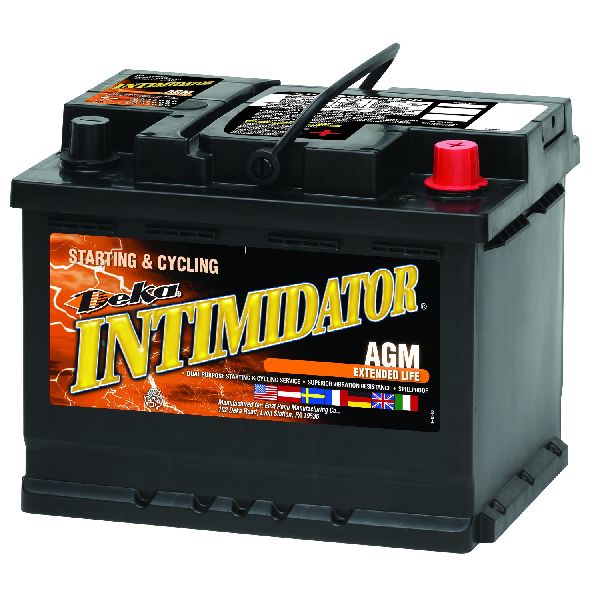
- Faulty Negative Battery Cable 🔴 High Probability → Shop Vehicle Battery This is a known factory defect. GM Special Coverage bulletin 14311B was issued because the terminal clamp has an insufficient crimp, causing high internal resistance and starving vehicle modules of adequate power. The bulletin explicitly mentions flickering displays, various warning messages, and loss of power steering as direct consequences.
How to confirm: Visually inspect the negative battery terminal for corrosion or swelling. Even if it looks clean, the fault is internal to the crimp. Wiggling the cable may temporarily restore function. The most reliable confirmation is to replace it as the primary diagnostic step, as recommended by countless owner experiences and the TSB itself.
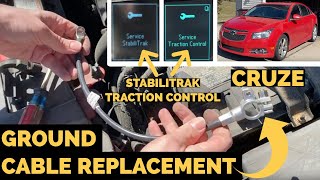
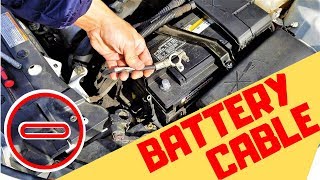
Typical fix: Replace the entire negative battery cable assembly with the updated OEM part, GM P/N 22754271. This is a straightforward DIY job requiring basic hand tools. 🎬 Watch this step-by-step walkthrough for replacing the negative battery cable. The updated cable design may require a new bolt (GM P/N 11561025) for the chassis ground point.
Est. part cost: $30-$50 - Poor Engine or Chassis Ground Connections 🟡 Medium Probability Beyond the battery cable itself, the main ground points can corrode or loosen over time, creating similar electrical issues. On the Cruze, common points to check are G105 (left front of engine compartment), G114, G106, and G107.
How to confirm: Locate the main ground straps from the engine to the chassis and from the wiring harness to the engine block. Check for looseness, corrosion, or breakage. A voltage drop test from the battery negative post to the engine block should show less than 0.2 volts with the engine running. Specific ground locations can be found in wiring diagrams or forum posts.
Typical fix: Remove the ground connection, clean the contact surfaces on the terminal and the chassis/engine block with a wire brush until shiny, and re-secure the connection tightly. Applying dielectric grease can help prevent future corrosion.
Est. part cost: $0-$5 - Damaged CAN Bus Wiring Harness ⚪ Low Probability Wiring harnesses can rub against sharp edges on the engine block or transmission case, eventually wearing through the insulation and causing a short or open circuit in the CAN bus wires. The harness running to the transmission is a common area for this type of damage.
How to confirm: Visually inspect the wiring harness that runs to the ECM and TCM, paying close attention to any areas where it makes contact with other components. Look for chafing, exposed wires, or damaged conduit. Check for blown fuses related to the TCM (e.g., F1 20A in the underhood fuse block), which can indicate a short circuit in the harness.
Typical fix: Repair the damaged section of wire using solder and heat shrink tubing. Reroute or protect the harness with additional conduit to prevent future damage.
Est. part cost: $5-$20
Rare But Worth Checking
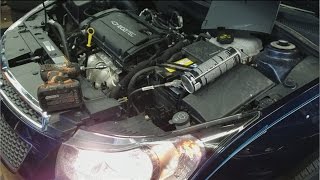
- Failed PCV System in Valve Cover (1.4L & 1.8L Engines): A failed diaphragm in the PCV system, which is integrated into the valve cover, can cause a massive vacuum leak. This makes the engine run extremely rough, surge, and nearly stall, causing voltage fluctuations that can trigger communication codes like U0100. This is often accompanied by a P0171 (System Too Lean) code and a distinct whistling or hissing sound from the engine bay. 🎬 See how a failed PCV system can trigger these communication codes.
- Faulty Engine Control Module (ECM): → Shop Engine Control Module (ECM) While often suspected, a true internal failure of the ECM is much less common than the wiring and ground issues listed above. All other possibilities, especially the negative battery cable and grounds, should be exhaustively ruled out before condemning the ECM. A faulty ECM is the last resort, not the first guess.
- Corroded or Loose Underhood Fuse Block (X50A): → Shop Fuse Box The main fuse block can develop internal corrosion or loose terminal connections, especially the main positive battery cable connection. This creates high resistance and voltage drops that mimic a bad battery cable, causing network communication failures. In some cases, the plastic housing may show signs of heat-related warping.
Diagnosis Steps
- Check the battery. Ensure it is fully charged (12.6V) and passes a load test. A weak or failing battery can cause a host of communication codes.
- REPLACE the negative battery cable. Due to the known defect covered by GM Special Coverage 14311B, this is the most crucial and cost-effective first step. Use the updated part (GM P/N 22754271). This should be done even if the cable appears visually fine.
- Inspect and clean major ground points. Locate and service the main engine-to-chassis ground strap (G114) and any grounds on the transmission case (G106, G107) and left front of the engine bay (G105).
- Check fuses. Inspect all fuses related to the ECM, TCM, and BCM in the under-hood and interior fuse panels. Specifically check the 20A F1 fuse in the underhood block for the TCM and the fuse for the Data Link Connector (OBD-II port).
- Inspect the ECM and TCM wiring harnesses. Look for any signs of physical damage, chafing, or corrosion on the connectors and wiring, especially where the harness may rub against the engine or transmission.
- Test CAN bus resistance. With the battery disconnected, measure the resistance between pins 6 (CAN High) and 14 (CAN Low) of the OBD-II port. A healthy network should read approximately 60 ohms. A reading of 120 ohms indicates a break in the circuit or a missing terminating resistor, while 0 ohms indicates a short between the two lines.
- If all other steps fail, the ECM may be faulty. This should be the last consideration after all power, ground, and wiring issues have been ruled out.
Parts You'll Likely Need
- Negative Battery Cable
(OEM #22754271 (supersedes 95281536, 95460238, 95995010))— This is the most common cause of code U0100 on this vehicle due to a documented manufacturing defect. Replacing it is the primary fix.
Trusted brands: ACDelco (GM Genuine)
OEM price range: $30-$50
Aftermarket price range: $25-$45 - Chassis Ground Bolt
(OEM #11561025)— The updated negative battery cable design often requires a bolt to secure it to the chassis ground point, whereas the original may have used a stud.
Trusted brands: ACDelco (GM Genuine)
OEM price range: $5-$10
Aftermarket price range: $2-$5
Related Codes That Often Appear With This One
- U0101 — Stands for 'Lost Communication with TCM'. The TCM (Transmission Control Module) is on the same CAN bus as the ECM. When the network goes down due to a bad ground or cable, communication is often lost to both modules simultaneously.
- U0073 — Stands for 'Control Module Communication Bus 'A' Off'. This is a general code indicating the entire communication network has shut down, which is a common result of the primary U0100 fault.
- U0140 — Stands for 'Lost Communication with Body Control Module'. This indicates the problem is affecting the wider vehicle network, reinforcing the likelihood of a foundational power/ground issue.
Technical Service Bulletins (TSBs) & Recalls
- 14311B: Special Coverage Adjustment – Negative Battery Cable Insufficient Crimp
- 17-NA-211: No Crank, No Start, DTC U0100 and/or U0101 Set
- Bulletin #PIT6198: Diagnostic tip for an SES MIL at startup with DTC U0100; dealers are to test the accessory wake up circuit to the ECM for power.
- Bulletin #20-NA-206: Provides a procedure to replace the BCM and PSCM to correct a condition of Service Power Steering Message Displayed with U0100 set.
Platform-Specific Known Issues
- GM Special Coverage 14311B was issued for 2011-2015 Cruze models to address an insufficient crimp on the negative battery cable, which causes numerous electrical faults, including communication codes. The coverage extends the warranty on this part to 10 years/120,000 miles.
Mechanic-Grade Diagnostic Values
- High-Speed GMLAN Bus Resistance — expected: ~60 Ohms. Failure: A reading of ~120 Ohms indicates an open circuit or one of the two terminating resistors is offline. A reading near 0 Ohms indicates a short between the CAN High and CAN Low wires.
- CAN High Voltage to Ground — expected: 2.5V to 3.5V (typically ~2.6-3.0V) with data active. Failure: Voltage significantly outside this range indicates a potential short or open on the CAN High line.
- CAN Low Voltage to Ground — expected: 1.5V to 2.5V (typically ~2.0-2.4V) with data active. Failure: Voltage significantly outside this range indicates a potential short or open on the CAN Low line.
- Battery Voltage — expected: 12.6V or higher with engine off. Failure: Below 12.4V indicates a discharged battery that can cause module communication errors.
Scan Tool Commands That Help
- GDS2 (GM Tech Tool): Module Status / Communication Check — To see a list of all expected modules on the network and which ones are actively communicating. This is the first step to confirm which module (in this case, the ECM) is offline.
- GDS2 (GM Tech Tool): Clear All DTCs — After a repair is performed, this command clears codes from all modules. If the U0100 code returns immediately, it indicates a hard fault is still present.
Wiring & Ground Locations
- G103 — On the cowl at the left rear of the engine compartment, above the brake booster.. This is a major ground point for the Body Control Module (BCM), Instrument Panel Cluster (IPC), and the Data Link Connector (DLC), all of which are critical for network communication.
- G105 — Left front of the engine compartment, on the frame rail/shock tower area.. Grounds various components in the front of the engine bay. While not a primary module ground, poor connections here can introduce electrical noise.
- G106 / G107 — Grounds for the transmission electronics (TEHCM), often located on the transmission case or nearby chassis points.. A bad transmission ground can cause U0101 (Lost Comms with TCM), which frequently appears with U0100. Ensuring these are clean is critical when both codes are present.
- G114 — Main engine/transmission ground, located near the flywheel on the radiator side of the engine.. This is a primary ground path for the powertrain. High resistance here can starve the ECM and TCM of a stable ground reference.
- ECM Connector X1 — The primary connector on the Engine Control Module, located on the left side of the engine compartment.. Contains the High Speed GMLAN pins (e.g., Pin 10 and 11 on some diagrams) and multiple power/ground pins essential for the ECM to function and communicate.
- Underhood Fuse Block (X50A) — In the engine compartment, next to the left strut tower.. This is the central power distribution point. Corrosion on the main battery feed or loose internal connections can cause a system-wide voltage drop, triggering U0100.
- Connector X114 — A harness connector, potentially related to the subframe or power steering module wiring.. A broken wire in or near this connector has been documented as a root cause for bringing down the CAN network, affecting the PSCM, TCM, and ECM.
Real Owner Repair Stories
- Reddit user in r/AskAMechanic (2013 Chevy Cruze 1.8L) — No crank, no start, U0100 error code.
❌ Tried (didn't work) Replaced negative battery cable., Tested battery (was good).., Bypassed starter relay (starter cranked, proving it was good)., Cleaned and checked all grounds on the firewall, in front of the battery, and on the engine chassis.
✅ What actually fixed it A broken wire was found at the X114 harness connector. The wire traced back to the Power Steering Control Module (PSCM) and its failure brought down communication to the PSCM, TCM, and ECM on the CAN network. - YouTube video by a professional mechanic (2014 Chevy Cruze) — Limp mode (won't go over 30-40 mph), multiple warning lights (Service power steering, Service stabilitrak, Service traction control), U0101 code (no communication with TCM).
❌ Tried (didn't work) Initial code scan pointed towards a bad TCM.
✅ What actually fixed it A bent terminal (pin 37) was found in the X3 connector of the underhood fuse block. The pin was related to a previous repair. Straightening the pin and reconnecting the fuse block restored communication with the TCM and resolved all symptoms without replacing any parts. - YouTube video by a DIYer (2011 Chevy Cruze 1.8L) — Rough idle, occasional stalling, SES and Stabilitrak lights, codes P0171, U0100, U0140, U0073.
❌ Tried (didn't work) Initial diagnosis could point to complex electrical faults due to the communication codes.
✅ What actually fixed it The root cause was a massive vacuum leak from a failed PCV valve diaphragm, which is integrated into the valve cover. The resulting near-stall events caused system voltage to drop, triggering the communication codes. Temporarily blocking the PCV port resolved all symptoms, confirming the diagnosis. The final fix was replacing the entire valve cover assembly.
When the Usual Fixes Don't Work
- While the negative battery cable is the most probable cause, there are documented cases where this did not fix the issue. In one instance involving a 2013 Cruze with a no-start and U0100, the owner had already replaced the cable and cleaned all major grounds to no effect. The final solution was repairing a broken wire at the X114 harness connector, which had disabled communication for the power steering, transmission, and engine control modules. This highlights the need to perform full circuit diagnostics if the common, high-probability fix does not work.
OEM Part Supersession History
95995010, 95460238, 95281536→22754271— The original negative battery cables were manufactured with an insufficient crimp at the terminal, leading to high internal resistance over time. The updated part has a revised design to correct this flaw.
Heads up: The updated cable (22754271) requires a separate bolt (GM P/N 11561025) to secure the small regulated voltage wire to the chassis ground point, as the original design may have used a stud.
Diagnostic Flowchart
Other Known Issues on This Vehicle
Issues unrelated to this code that are worth knowing about as an owner of this generation:
- PCV System / Valve Cover Failure (1.4L Turbo) 🔴 High — Extremely common. The PCV check valve in the intake manifold fails, causing high crankcase vacuum which then ruptures the diaphragm in the valve cover. Often occurs between 60,000 and 100,000 miles. (Ref: GM Special Coverage 14496 / Bulletin MC-10163845-9999 covers valve cover replacement for 10 years/120,000 miles.)
- Water Pump Coolant Leak (1.4L Turbo) 🔴 High — Very common failure. The pump leaks from the weed hole or shaft seal, leading to coolant loss and potential overheating. (Ref: GM Special Coverage 14371 / TSB PI0762D extends warranty coverage to 10 years/150,000 miles for this specific leak.)
- Cracked Plastic Thermostat Housing / Coolant Outlet 🟠 Medium — Common failure point, especially on the 1.8L engine. The plastic housing becomes brittle with heat cycles and cracks, causing a significant coolant leak. Aftermarket aluminum replacements are a popular and permanent fix.
- 6T40 Automatic Transmission Failure 🔴 High → Shop Transmission Assembly — Prevalent in earlier models (2011-2012). Failures include a broken 3-5-R wave plate leading to harsh shifts or loss of gears, and solenoid/TCM issues. A cracked filter screen inside the transmission is also a known issue causing shifting problems. (Ref: Multiple recalls and TSBs exist for shift linkage and other transmission issues, but not all common failure modes are covered.)
- Engine Oil Cooler / Cooler Line Leaks 🟠 Medium — The seals and lines for the engine oil cooler and transmission cooler are prone to leaking over time, a common issue noted by owners and mechanics. (Ref: A safety recall (12081) was issued for oil spilling onto hot surfaces on some models.)
Used vs. New Parts: Buying Guide for This Vehicle
When a used part is the smart pick: For this specific U0100 fault, using used parts is generally NOT recommended for the primary culprits. A used negative battery cable will likely have the same manufacturing defect as the one being replaced. A used ECM is a viable option if the original is confirmed faulty, but it will require professional programming to the vehicle's VIN.
Donor-vehicle mileage cap: roughly under 80000 miles for the part to have meaningful remaining life.
What to inspect on the donor part:
- For a used ECM: Ensure the part number matches exactly. Inspect the connector pins for any corrosion or damage. Ask for the donor vehicle's VIN to aid in potential reprogramming.
- For a used wiring harness: Inspect thoroughly for any cuts, chafing, brittle conduit, or signs of previous repairs (e.g., tape, butt connectors). Avoid harnesses from vehicles with signs of flood or fire damage.
OEM-only on this vehicle (don't cheap out):
- Negative Battery Cable: Given the known defect and the low cost of the updated OEM part, using anything other than the new, genuine GM part (22754271) is a significant risk and waste of time.
Brands owners have reported issues with on this vehicle:
- Generic/unbranded negative battery cables: Many aftermarket versions may not have the correct design or quality control to solve the specific high-resistance issue and may fail prematurely.
Real Owner Stories
Aggregated from forums and TSBs cited above. Mileages and costs reflect what owners reported in those sources.
2014 Chevrolet Cruze
Symptoms: Vehicle experienced a no-start condition. The owner shared the text of TSB 14311B regarding the battery cable crimp.
What fixed it: Replacing the negative battery cable as advised by the TSB.
Source hint: reddit.com/r/cruze thread about a no-start 2014 Cruze
2011-2015 Chevrolet Cruze
Symptoms: Stabilitrak error messages and the radio turning on and off intermittently.
What fixed it: Replacement of the negative battery cable using the updated OEM part numbers.
Source hint: youtube.com video by 'drive by reviews' titled 'Chevy Cruze Negative Battery Cable Replacement Walk Through | Stabilitrack Error | Radio On Off'
2015 Chevrolet Cruze
Symptoms: An owner reported the vehicle started rough with Stabilitrak and Traction Control warnings, and a flashing Check Engine Light. Codes P0300, U0121, and U0100 were pulled (NHTSA ODI #11129698).
What fixed it: The dealer initially recommended spark plug replacement but ultimately replaced the coil pack.
2011 Chevrolet Camaro (Cross-Manufacturer Reference)
Symptoms: NHTSA ODI #11342631 describes a condition where the vehicle shows reduced power and stops while driving, accompanied by a Service Stabilitrak message and code U0100.
What fixed it: While the specific fix was not recorded, the symptoms mirror the communication failures seen in other GM platforms.
Documented NHTSA Reports
In addition to manufacturer bulletins, owner reports highlight the severity of communication failures. For instance, NHTSA ODI #10733263 (Equinox) describes a vehicle that had the battery replaced twice and was towed multiple times due to codes including U0073 and U0100. Such reports emphasize that simply replacing the battery often fails to resolve the underlying communication fault if the wiring or cabling is compromised.
Related OBD-II Codes
Frequently Asked Questions
Is there a recall or special coverage for the negative battery cable on my 2011-2015 Chevrolet Cruze?
What is the specific part number for the updated negative battery cable?
My Cruze shows 'Service Stabilitrak' and the radio is flickering; could this be U0100?
Can a bad PCV system cause electrical codes like U0100 on the 1.4L Turbo engine?
Why did my power steering become hard to turn when the U0100 code appeared?
Is the water pump failure on the Cruze related to these electrical issues?
Helpful Videos

We Have This Part in Stock


The information in this article is provided for general reference and educational purposes only. Vehicle specifications, procedures, and part compatibility can vary by production date, trim level, and region. Always consult your vehicle's factory service manual and verify part numbers before purchasing or performing repairs. Safety-critical components such as airbags, seat belts, and braking systems should be installed by a qualified professional.
- Chevrolet Cruze:
- 🧭 Diagnostic Flowchart
- 🎬 Helpful Videos
- 🛍️ Shop This Part
- What's Unique About the 2011-2015 Chevrolet Cruze
- Symptoms You May Notice
- Most Likely Causes
- Rare But Worth Checking
- Diagnosis Steps
- Parts You'll Likely Need
- Related Codes That Often Appear With This One
- Technical Service Bulletins (TSBs) & Recalls
- Platform-Specific Known Issues
- Mechanic-Grade Diagnostic Values
- Scan Tool Commands That Help
- Wiring & Ground Locations
- Real Owner Repair Stories
- When the Usual Fixes Don't Work
- OEM Part Supersession History
- Other Known Issues on This Vehicle
- Used vs. New Parts: Buying Guide for This Vehicle
- Real Owner Stories
- 2014 Chevrolet Cruze
- 2011-2015 Chevrolet Cruze
- 2015 Chevrolet Cruze
- 2011 Chevrolet Camaro (Cross-Manufacturer Reference)
- Documented NHTSA Reports
- Related OBD-II Codes
- Frequently Asked Questions
- 🎟️ Get 5% Off