

U0100 on 2006-2011 Chevrolet HHR: Lost Communication with ECM Fixes
On a 2006-2011 Chevy HHR, U0100 usually means there's an electrical problem preventing modules from talking to the engine computer. The most common causes are bad grounds, loose connections at the underhood fuse box, a chafed wiring harness near the EVAP purge solenoid, or a weak battery, not a failed ECM. Check and clean battery terminals and main ground points before replacing parts.
- Do not immediately replace the ECM. U0100 on an HHR is most often caused by a simple electrical fault.
- Start your diagnosis by checking the easiest and most common culprits: the battery, its connections, the main fuse box power wire, and key ground points.
- Symptoms are often severe and can include a no-start, stalling, and loss of power steering, making the vehicle unsafe to drive.
- If codes U0100 and U0101 appear together, the Transmission Control Module (TCM) is a strong suspect.
- This code is difficult to diagnose without a multimeter and a good scan tool; professional help is recommended if the basic checks don't solve the issue.
What's Unique About the 2006-2011 Chevrolet HHR
The Chevy HHR, built on the GM Delta platform with the Cobalt and G5, is notoriously sensitive to voltage and ground issues. The U0100 code is frequently a symptom of a problem elsewhere in the electrical system rather than a faulty Engine Control Module (ECM). A GM Technical Service Bulletin (PIP4549A) addresses intermittent electrical issues caused by the engine wiring harness chafing on the EVAP purge solenoid bracket. Owners on ChevyHHR.net frequently report that simple fixes like tightening the fuse box connections, cleaning grounds, or performing a battery reset resolve a cascade of communication errors that trigger the U0100 code.
Symptoms You May Notice
- Check Engine Light is on
- Multiple warning lights on the dash (e.g., "Service ESC/Traction", "Service Airbag", "Service Power Steering")
- No-crank, no-start condition.
- Engine stalls while driving.
- Transmission shifts hard or goes into limp mode.
- Loss of power steering.
- Driver Information Center (DIC) displays warnings, goes blank, or shows dashes.
- Instrument panel gauges (speedometer, tachometer, fuel gauge) stop working or behave erratically.
- Security/theft light may stay illuminated.
- Replacing the Engine Control Module (ECM) first. The U0100 code points to a communication loss *with* the ECM, but the cause is most often an external wiring, ground, or power supply issue, not an internal ECM failure.
- Replacing the BCM (Body Control Module). While the BCM is on the network, the most common failure points on the HHR for U0100 are power, grounds, and the specific harness chafing issue.
Most Likely Causes
- Poor Ground Connections 🔴 High Probability Corrosion can easily form on key grounding points, interrupting the low-resistance path needed for stable module operation. The main engine-to-chassis ground is a frequent culprit.
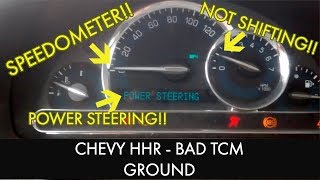
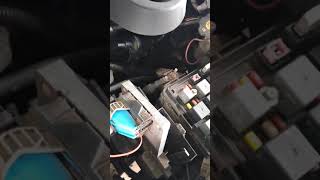
How to confirm: Visually inspect and test the main ground points. Key locations include the strap on top of the transmission near the oil filter and the ground on the radiator support above the driver-side headlight. A loose or corroded ground here is a very common fix. Some owners add a redundant ground wire to the TCM case as a preventative measure. 🎬 Watch: How to fix a bad TCM ground
Typical fix: Disconnect the battery, then remove, clean all contact surfaces with a wire brush until shiny, and securely re-fasten the ground wires and bolts.
Est. part cost: $0-$10 - Loose or Corroded Underhood Fuse Box Connection 🔴 High Probability → Shop Fuse Box The main power connection (B+ terminal) to the underhood fuse box can become loose or corroded over time, causing voltage drops that disrupt the entire vehicle network. Forum users repeatedly stress the importance of checking this connection.
How to confirm: Check the large red wire where it attaches to the stud on the underhood fuse box for tightness and any signs of corrosion or arcing. Owners report these connections are often loose from the factory and need to be tightened significantly.
Typical fix: Disconnect the battery, then clean the terminal and the fuse box post and re-torque the connection securely. Applying dielectric grease can help prevent future corrosion.
Est. part cost: $0-$5 - Damaged Wiring Harness at EVAP Purge Solenoid Bracket 🔴 High Probability A known issue, documented in GM bulletin PIP4549A, involves the engine harness rubbing against the sharp edge of the EVAP purge solenoid bracket. This can chafe through the insulation on the CAN bus wires, causing them to short to ground.
How to confirm: Visually inspect the engine wiring harness where it passes the EVAP purge solenoid bracket, located on the side of the cylinder head. 🎬 Watch: How to locate and replace the purge solenoid Look for any signs of rubbing, exposed copper wires, or damage to the loom.
Typical fix: Repair the damaged wires using solder and heat shrink. File down the sharp edge of the bracket and secure the harness away from it, potentially adding protective conduit.
Est. part cost: $10-$50 - Weak or Failing Battery 🟡 Medium Probability → Shop Vehicle Battery Control modules require a stable voltage (above 12.4V) to operate. A weak battery can cause intermittent voltage drops during startup or when under load, leading to communication errors. Many forum posts describe U0100 issues that were ultimately solved with a new battery.
How to confirm: Test the battery voltage with a multimeter. A healthy, fully charged battery should read around 12.6 volts with the engine off. A reading below 12.4V is suspect. Have the battery load-tested at an auto parts store to confirm its health.
Typical fix: Replace the vehicle's battery.
Est. part cost: $150-$250 - Failed Transmission Control Module (TCM) ⚪ Low Probability → Shop Transmission Assembly The TCM (GM Type T42) is located on the high-speed GMLAN data bus with the ECM. If the TCM fails internally, it can disrupt the entire network, causing other modules to report a loss of communication with the ECM. Heat is a contributing factor to failure.
How to confirm: This is difficult to confirm without an advanced scan tool. A common clue is the presence of code U0101 (Lost Communication with TCM) alongside U0100. Symptoms are often worse when the engine is hot.
Typical fix: Replace the Transmission Control Module. This requires professional installation and programming to the vehicle's VIN.
Est. part cost: $200-$400
Rare But Worth Checking
- Failed Engine Control Module (ECM): → Shop Engine Control Module (ECM) While U0100 directly names the ECM, the module itself is rarely the root cause. It's more often a victim of external electrical issues. All other possibilities, especially power, ground, and wiring harness problems, should be exhausted before condemning the ECM.
- Aftermarket Device Interference: Improperly installed remote starters, alarms, or data trackers spliced into the CAN bus wiring can disrupt network communication and trigger U-codes.
- Faulty Ignition Switch: → Shop Ignition Switch The HHR was subject to a major recall for faulty ignition switches (GM Recall 14V171) that could unexpectedly turn off, cutting power to modules and causing communication loss. While the recall should have been performed, a failing switch could still be a root cause.
- Bad Underhood Fuse Box Relay: → Shop Fuse Box In some no-crank, no-start scenarios accompanied by communication codes, a faulty CRNK or RUN/CRNK relay in the underhood fuse box has been the culprit.
- Accessory Wake Up Circuit Issues: Manufacturer service bulletin #PIT6198 suggests that for a U0100 code appearing at startup, technicians should test the accessory wake up circuit to the ECM for proper power.
Diagnosis Steps
- Check Battery Health & Terminals: Ensure the battery is fully charged (12.6V+) and the terminals are clean and tight. A reading below 12.4V can cause issues. Load test the battery.
- Scan for All Codes: Use a scan tool capable of reading codes from all modules (BCM, TCM, EBCM, PSCM, etc.), not just the ECM. Note all U-codes present, as they provide clues to the source of the failure.
- Inspect Main Power and Grounds: CRITICAL STEP. Check the large red power cable connection at the underhood fuse box for tightness and corrosion; owners report this is often very loose. Inspect, clean, and tighten the main engine/chassis ground points, especially the one on the transmission and the one on the radiator support.
- Inspect Wiring Harness for Chafing: Per GM bulletin PIP4549A, carefully inspect the engine harness for damage where it passes the EVAP purge solenoid bracket on the side of the cylinder head.
- Check CAN Bus Resistance: Disconnect the battery. Measure the resistance between Pin 6 (CAN High) and Pin 14 (CAN Low) at the OBD-II port with a multimeter. A healthy network should read approximately 60 ohms. A reading of 120 ohms suggests a terminating resistor is offline (often in the ECM or TCM) or there's a break in the wiring. A reading near 0 ohms indicates a short between the two CAN wires.
- Perform a Hard Reset: Disconnect the negative battery terminal for at least 20-30 minutes. This can sometimes clear a temporary module glitch, as reported by owners. If the problem disappears and then returns, it confirms an intermittent hardware fault.
- Isolate Modules: This is an advanced step. If the fault is intermittent, try disconnecting non-essential modules one by one to see if the problem disappears. The TCM is a common module to isolate first.
Parts You'll Likely Need
- Battery — A weak or failing battery can cause low voltage conditions that disrupt module communication, triggering the U0100 code.
Trusted brands: ACDelco
OEM price range: $200-$300
Aftermarket price range: $150-$250 - Transmission Control Module (TCM)
(OEM #ACDelco 24252114 (Supersedes older numbers like 24239224, 24234503))— If the TCM fails internally, it can bring down the entire communication network. This is a common point of failure on this platform.
Trusted brands: ACDelco (GM Genuine)
OEM price range: $250-$400
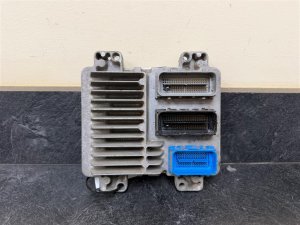
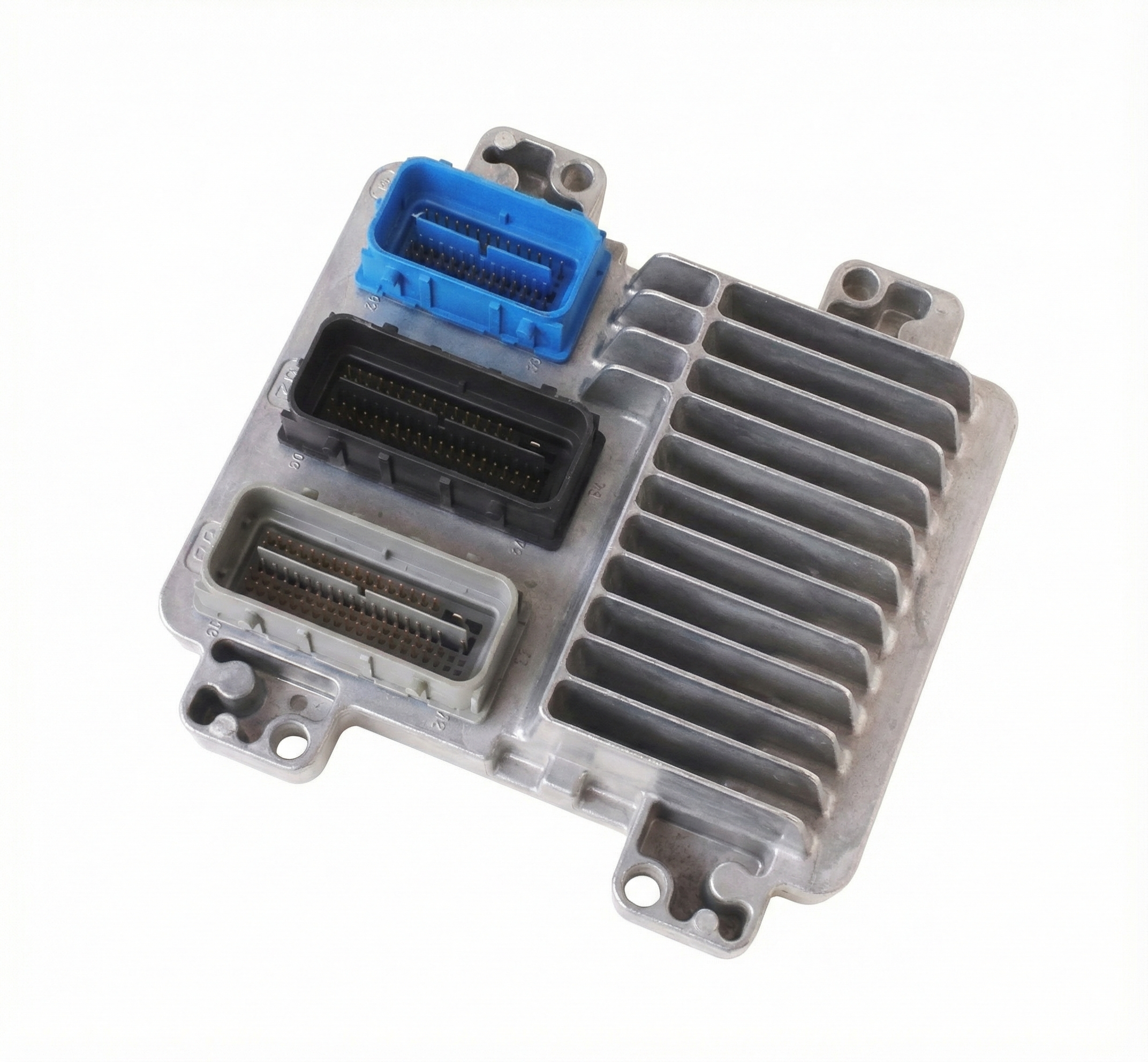
Aftermarket price range: $200-$350 - Engine Control Module (ECM)
(OEM #Varies by engine (e.g., E38 or E67 type). Must be matched by VIN.)— In the rare event that the ECM itself has failed internally, it will need to be replaced. This should be the last resort after all wiring and power/ground issues are ruled out.
Trusted brands: ACDelco
OEM price range: $300-$500
Aftermarket price range: $250-$400
Related Codes That Often Appear With This One
- U0073 — This code means 'Control Module Communication Bus 'A' Off' and indicates a general network failure, often appearing with U0100 when a major wiring or module issue brings the whole bus down.
- U0101 — This code for 'Lost Communication with TCM' is a strong indicator that the Transmission Control Module itself may be the faulty component causing the network crash, which in turn logs the U0100 code in other modules.
- U2105 — This code also indicates 'Lost Communication with ECM' and is often logged in other modules like the Power Steering Control Module (PSCM) or Instrument Panel Cluster (IPC) when the ECM goes offline.
- U1814-02 — As noted in Bulletin #20-NA-206, this code can set alongside U0100 and may not clear if there is a fault requiring BCM or PSCM replacement.
Technical Service Bulletins (TSBs) & Recalls
- PIP4549A: Addresses intermittent DTCs and communication concerns caused by the engine harness chafing on the EVAP purge solenoid bracket.
- Recall N140115 / TSB 14119: Pertains to the sudden loss of Electric Power Steering (EPS) assist, requiring replacement of the EPS motor.
- Recall 14V171 / 14V047: Addresses the faulty ignition switch that can turn off while driving and the key being removable when not in the 'Off' position.
- Bulletin #20-NA-206: Provides a procedure to replace the BCM and PSCM to correct a condition where U0100 and/or U1814-02 set and will not clear, often accompanied by a "Service Power Steering" message.
- Bulletin #PIT6198: Notes that a U0100 code at startup may require testing the accessory wake up circuit to the ECM for power.
Platform-Specific Known Issues
- Heat-Related Failures: Owners on chevyhhr.net report that U0100 and its related symptoms (hard shifting, no power steering) often appear when the vehicle's interior or engine bay is very hot, pointing towards components like the TCM failing as their temperature rises. A cool-down period or a battery reset often temporarily resolves the issue.
- Fuse Box Connections: Multiple threads on owner forums emphasize that the main B+ power stud and the four main bolts holding the underhood fuse box together are common sources of electrical problems. They are often found to be loose and require significant tightening to ensure a solid connection for all vehicle modules.
Mechanic-Grade Diagnostic Values
- GMLAN Bus Resistance — expected: 60 Ohms. Failure: A reading of 120 Ohms indicates an open circuit or one of the two terminating resistors is offline. A reading near 0 Ohms indicates a short between the CAN High and CAN Low wires.
- GMLAN Bus Voltage (CAN High) — expected: ~2.5 Volts. Failure: Significant deviation from 2.5V indicates a bus problem.
- GMLAN Bus Voltage (CAN Low) — expected: ~2.5 Volts. Failure: Significant deviation from 2.5V indicates a bus problem.
- Ground Circuit Integrity — expected: < 0.1 Ohms. Failure: Higher resistance indicates a poor ground connection, a common cause of communication faults.
Scan Tool Commands That Help
- Tech2/GDS2: View High Speed GMLAN Module List — To see which modules are currently active and communicating on the high-speed network. If the ECM or TCM is missing from the list, it confirms they are offline.
- Tech2/GDS2: SPS (Service Programming System) — Required after replacing the ECM or TCM to load the correct VIN-specific software and calibrations onto the new module.
- Foxwell 510 Elite (or similar): Crankshaft Position System Variation Learn (P0315 Relearn) — This procedure is required after replacing the ECM to synchronize the new module with the crankshaft position sensor. Failure to do this will result in a P0315 code and potential running issues.
Wiring & Ground Locations
- CAN Bus Terminating Resistors — There are two 120-Ohm resistors. One is internal to the Engine Control Module (ECM), and the other is internal to the Transmission Control Module (TCM). Together in parallel, they create the 60-Ohm resistance seen at the DLC.. If either the ECM or TCM is disconnected or fails internally, the total bus resistance will jump to 120 Ohms, indicating an open in the network.
- G105 — Left front of the engine block.. This is a primary engine ground. A poor connection here can cause a host of electrical issues, including module communication failures.
- G201 / G203 — Behind the left end of the dashboard, near the A-pillar.. These are key interior ground points for various modules and systems connected to the BCM and instrument panel.
- Underhood Fuse Block — Driver's side of the engine compartment, next to the left strut tower.. This is the central power distribution hub. Loose connections on the main B+ stud or corrosion within the multi-part box are extremely common causes for U0100.
- Instrument Panel Fuse Box (BCM) — On the passenger side of the center console. The BCM is integrated with this fuse panel.. This fuse box contains Fuse 25, which powers the ECM and TCM. It is also a central hub for the low-speed GMLAN network.
- ECM / TCM Location — Both the Engine Control Module (ECM) and Transmission Control Module (TCM) are located on the left side of the engine compartment, in front of the underhood fuse block.. Knowing their location is critical for checking connectors, inspecting for damage, and performing the TCM ground mod.
Real Owner Repair Stories
- ChevyHHR.net user 'Cat Man HHR' (Chevy HHR, year not specified) — Acted like a dead battery, then started with a jump. Check engine and security lights on. DIC went blank, hard transmission shifting, and loss of power steering. Symptoms were worse on hot days.
❌ Tried (didn't work) A battery reset (disconnecting negative terminal) provided a temporary fix, but the problem returned.
✅ What actually fixed it The user suspected a heat-related failure of the Transmission Control Module (TCM). The combination of U0100, U0073, and U0101 (TCM loss of communication) appearing when the car was hot pointed towards the TCM being the source of the network disruption. The final fix was adding a dedicated ground wire directly to the case of the TCM, a common forum-recommended modification. - YouTube user 'chadwilliamsfixesall' (Chevy HHR, year not specified) — No speedometer, no power steering, transmission would not shift.
❌ Tried (didn't work) Reading forum posts suggesting replacing the TCM.
✅ What actually fixed it The problem was identified as a bad ground to the TCM. The fix was to run a new 12-gauge ground wire from a clean chassis ground point (like the strut tower bolt) directly to the metal case of the TCM, bypassing the potentially faulty ground in the factory harness. - YouTube user 'ScannerDanner' (2009 Chevy HHR) — No crank, no start, no communication with PCM, TCM, or EBCM.
❌ Tried (didn't work) Checking powers and grounds at the PCM and TCM, which were all good., Checking CAN bus voltage at the DLC, which showed a good 2.5V on both lines.
✅ What actually fixed it Measuring CAN bus resistance showed 120 ohms, indicating an open circuit. By disconnecting modules sequentially, the fault was isolated to the Vehicle Communication Interface Module (VCIM), also known as the OnStar module. The module was located in the rear of the car and had been submerged in water, causing it to fail and break the CAN bus circuit. Replacing the VCIM and programming it restored communication. - NHTSA ODI #11093283 describes an owner who experienced a loss of power steering and dimming lights. Despite the alternator and battery being in optimal working condition, the vehicle presented diagnostic codes P0700 and U0100.
- NHTSA ODI #10676316 reports a situation where a vehicle was diagnosed with U0100 (Engine Control Module), P0324 (Knock Control System), and P2135 (Throttle Position Sensor) after experiencing similar communication-related symptoms.
- NHTSA ODI #11129698 notes a rough start accompanied by Stabilitrak and Traction Control warnings, where the dealer pulled codes P0300, U0121, and U0100.
When the Usual Fixes Don't Work
- While the most common fixes involve grounds and wiring, a significant number of owner reports, especially those with heat-related symptoms, find that the Transmission Control Module (TCM) is the true root cause. In these cases, the TCM fails when hot, disrupting the CAN bus and causing other modules to log a U0100 code. A popular and often successful field repair is to add a redundant ground wire directly to the TCM's metal casing, which seems to solve the problem even if the original ground wire tests as 'good'. This suggests an internal grounding issue within the TCM that is bypassed by the external wire.
OEM Part Supersession History
Multiple, including 24234503, 24241806, 24235754→24252114 (common service replacement)— Hardware and software revisions to improve reliability.
Heads up: The TCM is a GM T42 type module. While many part numbers exist, they must be programmed with the correct software for the specific vehicle's engine (2.2L vs 2.4L) and VIN. A used module from another vehicle will not work without being reprogrammed by a professional service with SPS software.
Model Year Variations Within This Range
- 2009-2011: Engines were updated for Flex-Fuel capability, which involved changes to the ECM software and potentially the engine wiring harness.
- 2006: First model year vehicles had some unique block castings and wiring. While the U0100 causes are largely the same, part numbers for some components may be specific to 2006.
- 2008+: OnStar became a standard feature, meaning the Vehicle Communication Interface Module (VCIM) is present on all vehicles and is a potential point of failure for the CAN bus.
Diagnostic Flowchart
Other Known Issues on This Vehicle
Issues unrelated to this code that are worth knowing about as an owner of this generation:
- Electric Power Steering (EPS) Motor Failure 🔴 High — Very common. Can occur at any mileage. Led to GM Safety Recall N140115 and Special Coverage Adjustment 14119. (Ref: Recall N140115 / TSB 14119)
- Faulty Ignition Switch 🔴 High → Shop Ignition Switch — Extremely common. The switch can move out of the 'Run' position, shutting off the engine and disabling airbags. Led to a massive GM recall. (Ref: Recall 14V171 / 14V047)
- Front Lower Control Arm Bushing Failure 🟠 Medium — Commonly fails between 60,000 and 100,000 miles, causing clunking noises, vibration during braking, and poor alignment.
- Key Stuck in Ignition / Shifter Failure 🟠 Medium — Often caused by a failed microswitch in the shifter assembly or a faulty ignition lock cylinder. Led to GM recall 14V171. (Ref: Recall 14V171)
- Variable Valve Timing (VVT) Solenoid Failure 🟡 Low — Fairly common, especially with poor oil maintenance. Causes rough running, stalling, and sets P-codes related to camshaft position.
- Instrument Panel Center Storage Bin Latch Failure 🟡 Low — The latch for the top storage compartment frequently breaks, causing the door to not stay closed. Led to a compliance recall. (Ref: Recall 08V444)
Used vs. New Parts: Buying Guide for This Vehicle
When a used part is the smart pick: Used parts are a smart choice for components that do not require electronic programming. This includes the underhood fuse box assembly, engine wiring harnesses (if matched by year and engine), and ground straps. These can be sourced from a junkyard for a fraction of the cost of new parts.
Donor-vehicle mileage cap: roughly under 80000 miles for the part to have meaningful remaining life.
What to inspect on the donor part:
- For wiring harnesses, inspect for any previous repairs, cuts, or signs of chafing, especially near the EVAP purge solenoid bracket area.
- For a fuse box, check for any signs of water intrusion, heavy corrosion on the main B+ stud, or melted plastic around fuses/relays.
- Ensure the donor vehicle is from a similar climate to avoid bringing salt-belt corrosion issues to a dry-climate car.
OEM-only on this vehicle (don't cheap out):
- Engine Control Module (ECM)
- Transmission Control Module (TCM)
Aftermarket brands forum-validated for this vehicle:
- Dorman offers remanufactured TCMs that are a common alternative to OEM.
- ACDelco (GM Genuine Parts) is the original equipment supplier and is the most reliable choice for modules.
Brands owners have reported issues with on this vehicle:
- Unbranded, no-name ECMs or TCMs from online marketplaces should be avoided. These often have programming issues or are not properly refurbished, leading to repeat failures. Buying a pre-programmed module from a reputable rebuilder like Flagship One or Garrett Tuning is critical if not buying new from GM.
Real Owner Stories
Aggregated from forums and TSBs cited above. Mileages and costs reflect what owners reported in those sources.
2006-2011 Chevrolet HHR
Symptoms: The car experienced a no-crank, no-start condition with no communication to the modules.
What fixed it: Disconnected the battery for 20-30 minutes to perform a hard reset, which cleared the temporary module glitch.
Source hint: chevyhhr.net thread 'no-crank-no-start-no-communication-58388'
2006-2011 Chevrolet HHR
Symptoms: Hard shifting, loss of power steering, and U0100/U0101 codes appearing specifically when the engine bay got hot.
What fixed it: Replacement of the Transmission Control Module (TCM) and ensuring it was programmed to the vehicle VIN.
Source hint: chevyhhr.net thread 'lost-communication-tcm-ecm-60205'
2006-2011 Chevrolet HHR
Symptoms: Intermittent DTCs and communication concerns caused by wiring issues.
What fixed it: Repaired damaged wires at the EVAP purge solenoid bracket using solder and heat shrink, then filed down the sharp bracket edge.
Source hint: GM bulletin PIP4549A
2006-2011 Chevrolet HHR
Symptoms: Multiple warning lights on the dash and erratic gauge behavior (speedometer and tachometer stopped working).
What fixed it: Cleaned the main engine-to-chassis ground strap on top of the transmission and the ground on the radiator support.
Source hint: chevyhhr.net thread 'u0100-code-have-pass-info-61215/'
Related OBD-II Codes
Frequently Asked Questions
My HHR is showing 'Service ESC' and 'Service Traction' along with U0100. Is this related to the power steering recall?
I've heard the EVAP purge solenoid bracket can cause U0100 on the HHR. How do I check this?
Why does my HHR only throw the U0100 code and shift hard when it's hot outside?
Where are the main ground points I should clean to fix a U0100 on my HHR?
Can a loose fuse box cause the 'Service Airbag' and 'No-Start' issues associated with U0100?
What should the resistance be when testing the CAN bus at the OBD-II port?
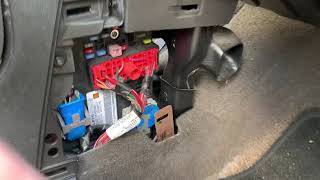
Helpful Videos
Used OEM Parts in Stock
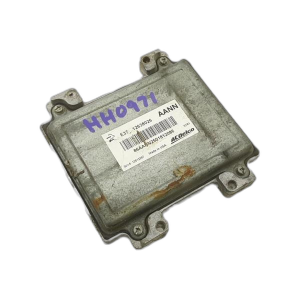
New Aftermarket Parts Available

The information in this article is provided for general reference and educational purposes only. Vehicle specifications, procedures, and part compatibility can vary by production date, trim level, and region. Always consult your vehicle's factory service manual and verify part numbers before purchasing or performing repairs. Safety-critical components such as airbags, seat belts, and braking systems should be installed by a qualified professional.
- Chevrolet HHR:
- 🧭 Diagnostic Flowchart
- 🎬 Helpful Videos
- 🛍️ Shop This Part
- What's Unique About the 2006-2011 Chevrolet HHR
- Symptoms You May Notice
- Most Likely Causes
- Rare But Worth Checking
- Diagnosis Steps
- Parts You'll Likely Need
- Related Codes That Often Appear With This One
- Technical Service Bulletins (TSBs) & Recalls
- Platform-Specific Known Issues
- Mechanic-Grade Diagnostic Values
- Scan Tool Commands That Help
- Wiring & Ground Locations
- Real Owner Repair Stories
- When the Usual Fixes Don't Work
- OEM Part Supersession History
- Model Year Variations Within This Range
- Other Known Issues on This Vehicle
- Used vs. New Parts: Buying Guide for This Vehicle
- Real Owner Stories
- 2006-2011 Chevrolet HHR
- 2006-2011 Chevrolet HHR
- 2006-2011 Chevrolet HHR
- 2006-2011 Chevrolet HHR
- Related OBD-II Codes
- Frequently Asked Questions
- 🎟️ Get 5% Off