

U0100 on 2007-2014 Chevrolet Silverado 1500: Causes and Fixes for Lost Communication
On 2007-2014 Silverado 1500s, the U0100 code is most often caused by a poor ground connection at location G218, located under the driver's side dash near the hood release lever. This can cause a no-start, stalling, and multiple warning lights like 'Service Stabilitrak'. Cleaning this ground is a well-documented, low-cost, high-success repair.
- Code U0100 on a 2007-2014 Silverado indicates a critical loss of communication with the engine computer.
- Before suspecting an expensive ECM failure, thoroughly inspect, clean, and tighten the G218 ground under the driver's side dashboard.
- A weak battery, poor main ground connections, and damaged wiring are other common, low-cost causes to investigate.
- Driving with this code is unsafe due to the risk of the engine stalling without warning.
- This issue is well-documented by GM, and checking the G218 ground is the most important first step in diagnosis.
What's Unique About the 2007-2014 Chevrolet SILVERADO 1500

This generation of Silverado and its platform mates (Sierra, Tahoe, Yukon) are known for specific electrical grounding issues that can trigger a network-wide communication failure. Manufacturer Technical Service Bulletins (TSBs) like #PIT5405C and #08-07-30-021H point directly to faulty grounds (specifically G218 under the driver's dash) and compromised wiring as primary culprits for U0100 and a host of other 'U' codes. This makes a simple, poor ground connection a much more likely cause than a more expensive, failed computer module.
Diagnostic Flowchart

Tap your situation to follow the diagnostic path that matches what you're seeing on this vehicle.
Generation note: This range covers the GMT900 (2007-2013) and the start of the K2XX (2014) Silverado generations. The well-documented G218 ground issue is a known problem across this entire range. TSB #PIT5405C specifically calls out the G218 ground on 2014 models, while TSB #08-07-30-021H covers broader GMLAN communication failures on the earlier GMT900s, making ground and wiring integrity a key checkpoint for all years in this range.
Symptoms You May Notice

- Engine will not start or has a long crank time.
- Sudden stalling while driving.
- Check Engine Light is on.
- Multiple other warning lights may illuminate, such as ABS, Traction Control, or 'Service Stabilitrak' messages.
- Gauges may sweep erratically or go dead.
- Transmission may not shift correctly or may be stuck in one gear ('limp mode').
- Scan tool cannot communicate with the ECM/PCM.
- Intermittent cycling of door locks or chimes.
- Loss of power steering.
- Replacing the ECM first. Given the high probability of a simple ground or wiring issue on these trucks, the expensive ECM should be the last component to be replaced.
- Replacing the battery without testing the charging system. If the alternator is faulty, a new battery will soon fail and the communication issues will return.
Most Likely Causes

- Poor Body Control Module (BCM) Ground at G218 🔴 High Probability → Shop Body Control Module Multiple GM Technical Service Bulletins (#PIT5405C, #PIT5405B) specifically identify the G218 ground as the cause for U0100. Sound-deadening material can get trapped under the ground terminal from the factory, or the connection can corrode, leading to a poor connection. This is a widely documented failure point in owner forums.
How to confirm: Locate G218 under the driver's side of the dashboard, typically behind the kick panel near the A-pillar and hood release lever. Visually inspect the ground for looseness or corrosion. Disassemble, clean the terminal, wire lug, and mounting surface with a wire brush or sandpaper until shiny, and re-secure it tightly.
Typical fix: Cleaning and securing the ground connection.
Est. part cost: $0-$5 - Damaged or Corroded Wiring Harness 🟡 Medium Probability Wiring for the GMLAN bus can chafe against chassis components, especially near the parking brake assembly, where the harness passes through the firewall, or on the main engine harness ground lug itself. Connectors can also become corroded, especially at the main fuse block, ECM, or the 16-way transmission connector.
How to confirm: Visually inspect the wiring harness leading to the ECM, TCM, and under-dash fuse block for any signs of chafing, melting, or corrosion. With the battery disconnected, check the resistance of the CAN bus at the OBD-II port (pins 6 and 14); it should be approximately 60 ohms. A reading of 120 ohms suggests an open circuit or a bad terminating resistor, while a reading near 0 ohms indicates a short between the CAN High and Low wires.
Typical fix: Repairing the damaged section of wire or cleaning/replacing the affected connector.
Est. part cost: $10-$50 - Low Battery Voltage or Faulty Alternator ⚪ Low Probability → Shop Alternator Modern control modules are extremely sensitive to voltage. A weak or failing battery, a faulty alternator, or corroded battery terminals can cause unpredictable communication errors across the network, often triggering U-codes.
How to confirm: Test the battery voltage with a multimeter; it should be above 12.4V with the engine off. With the engine running, the alternator should produce between 13.7V and 14.7V. Check that battery terminals are clean and tight.
Typical fix: Charging or replacing the battery, or replacing the alternator.
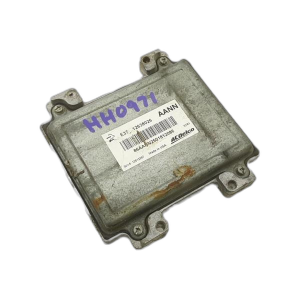
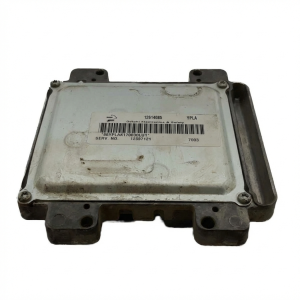
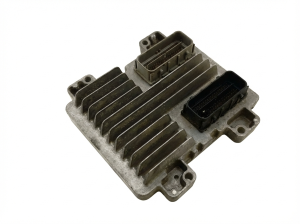
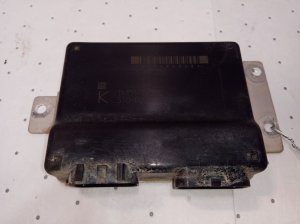
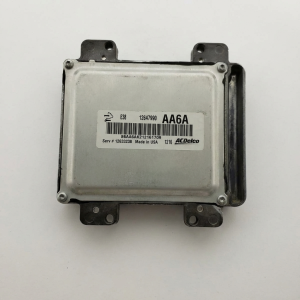
Est. part cost: $150-$400 - Faulty Engine Control Module (ECM) ⚪ Low Probability → Shop Engine Control Module (ECM) While less common than wiring or ground issues, the ECM itself can fail internally due to heat, vibration, or age. The ECMs used in this generation are typically the ACDelco E38 or E78.
How to confirm: This is typically a last resort after all other possibilities (grounds, wiring, power) have been exhaustively checked. A key symptom can be the complete absence of a Check Engine Light when the key is first turned to the 'ON' position, or a scan tool being unable to communicate with any module. Professional bench testing may be required.
Typical fix: Replacing the ECM and programming it to the vehicle's VIN. This programming is mandatory.
Est. part cost: $300-$800
Rare But Worth Checking
- Corrosion in Underhood Fuse Block (UBEC): → Shop Fuse Box The main fuse block in the engine bay can suffer from internal corrosion on its multi-layered circuit board, often due to moisture intrusion or even rodent damage. This can cause intermittent power loss to the ECM or other modules, leading to U0100. A visual inspection may reveal melted plastic or corroded terminals underneath the block.
- Faulty Transmission Control Module (TCM): → Shop Transmission Assembly The TCM is also on the high-speed CAN bus. A failure in the TCM can sometimes disrupt the entire network, causing other modules to report lost communication with the ECM. This is more likely if U0100 is accompanied by a U0101 (Lost Communication with TCM) code. TSB #08-07-30-021H specifically mentions checking the transmission harness connector for backed-out terminals.
- Aftermarket Electronics: Improperly installed remote starters, alarms, or audio equipment spliced into the CAN bus wiring can interfere with network communication and trigger a U0100 code.
Diagnosis Steps
- Check the battery. Ensure it is fully charged (>12.4V) and the terminals are clean and tight.
- Scan for all codes. Note all 'U' codes present in any module, as this can help pinpoint a network-wide fault versus a single module failure.
- Inspect all relevant fuses in both the under-hood (UBEC) and in-cabin fuse panels, especially those labeled ECM, BCM, or TCM.
- Locate and inspect ground G218. It is under the driver's side dash, near the A-pillar/hood release. Disconnect the battery, then remove, clean all contact surfaces to bare metal, and securely re-fasten the ground connection.
- Inspect other major grounds. Check the main engine-to-chassis and battery-to-chassis ground straps for corrosion or damage. A broken wire inside the crimped lug is possible.
- Check CAN Bus Resistance. Disconnect the battery. Use a multimeter to measure the resistance between Pin 6 (CAN High) and Pin 14 (CAN Low) on the OBD-II port. A healthy network should read ~60 Ohms.
- Inspect the CAN bus wiring. Look for obvious signs of damage near the ECM, TCM, under-dash fuse block, and around the parking brake mechanism.
- If all wiring and grounds are confirmed good, test the ECM's power and ground circuits directly at the module's connector.
- As a final step, consider having the ECM tested or replaced by a professional.
Parts You'll Likely Need
- Engine Control Module (ECM)
(OEM #Varies by year/engine (e.g., ACDelco 12612384, 12633238). Must be matched by VIN.)— This is the part to replace ONLY after all wiring, ground, and power supply issues have been ruled out. A failed ECM is the final possibility. Requires VIN programming to function.
Trusted brands: ACDelco (OEM)
OEM price range: $400-$800
Aftermarket price range: $250-$500 - Ground Strap/Bolt
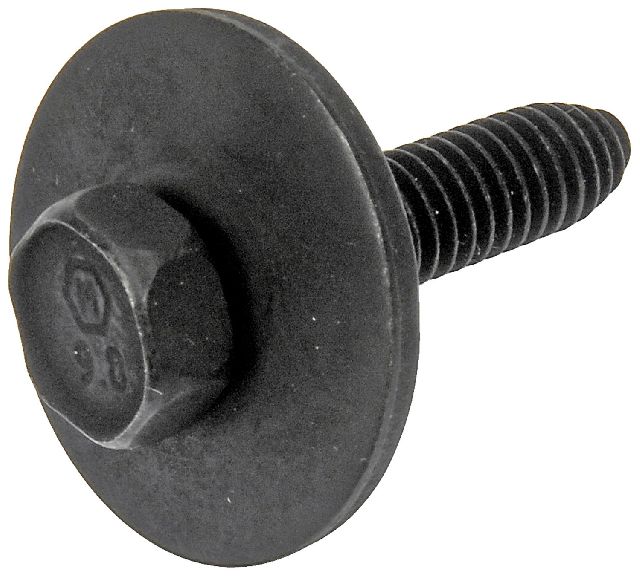
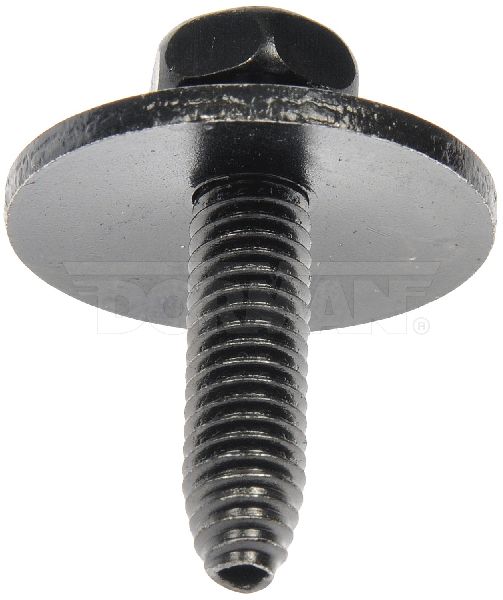
(OEM #Universal fit parts like Dorman 60213 or 85669 can be used.)— If the factory ground connection at G218 or on the engine block is corroded or the wire is broken, it must be replaced to ensure proper module communication.
Related Codes That Often Appear With This One
- U0101 — Lost Communication with TCM. Both the ECM and TCM are on the same high-speed network; a network-wide problem often causes both codes to appear.
- U0073 — Control Module Communication Bus 'A' Off. This is a general network code indicating the entire CAN bus has shut down, often due to a bad ground or short circuit. It is listed alongside U0100 in TSB #PIT5405C and #08-07-30-021H.
- U0121 — Lost Communication With Anti-Lock Brake System (ABS) Control Module. Also on the same network and often appears during a general communication failure, sometimes with a 'Service Stabilitrak' light.
- U0140 — Lost Communication With Body Control Module (BCM). This code is frequently seen with U0100, especially when the G218 ground is the root cause, as the BCM is grounded at that point.
Technical Service Bulletins (TSBs) & Recalls
- TSB #PIT5405C: Addresses multiple diagnostic trouble codes including U0100 on 2014 models, directly pointing to checking the BCM ground at G218.
- TSB #PIT5405B: An earlier version of the above bulletin with the same recommendation to check ground G218 for a host of communication codes.
- TSB #08-07-30-021H: A comprehensive bulletin for 2007-2014 models covering loss of high-speed GMLAN communications. It lists U0100 and many other codes caused by chafed wiring, poor connections at the transmission connector, corroded module connectors, or faulty terminating resistors.
Platform-Specific Known Issues
- The G218 ground point, located under the driver-side dash panel behind the kick panel, is the most well-documented failure point that causes U0100. Factory-installed sound insulation can get caught under the ground lug, creating a poor connection over time that worsens with vibration and moisture.
- TSB #08-07-30-021H notes that intermittent electrical issues like door lock cycling, various warning lamps (including 'Service Stabilitrak'), and communication DTCs like U0100 can be caused by backed-out terminals in the main transmission harness connector or chafed wiring.
- A real-world repair story from a forum member with a 2014 Silverado involved fixing initial U0100 codes by cleaning the G218 ground, only to have the issue return intermittently, causing total power loss until the ground cable was physically touched. This highlights the extreme sensitivity of this connection.
Mechanic-Grade Diagnostic Values
- CAN Bus Network Resistance — expected: ~60 Ohms. Failure: A reading of ~120 Ohms indicates an open circuit or one terminating resistor is offline. A reading near 0 Ohms indicates a short between the CAN High and Low wires.
- CAN Bus Terminating Resistor Resistance — expected: 120 Ohms. Failure: A reading significantly different from 120 Ohms (e.g., 176 Ohms was seen in one case) indicates a faulty resistor or high resistance in the wiring to it.
- High-Speed GMLAN Voltage (at rest) — expected: CAN High (Pin 6): ~2.6V. CAN Low (Pin 14): ~2.3V.. Failure: Voltages that are stuck high, low, or equal to each other indicate a short or open circuit.
- High-Speed GMLAN Voltage (transmitting) — expected: CAN High toggles to ~3.5V, CAN Low toggles to ~1.5V.. Failure: No voltage change during communication attempts indicates a dead module or bus.
- ECM Ground Circuit Voltage Drop — expected: < 0.1 Volts. Failure: A reading greater than 0.3V indicates excessive resistance in the ground circuit due to corrosion or a faulty wire.
Scan Tool Commands That Help
- Tech2 / GDS2: Vehicle DTC Information / All Module Scan — This is the first step to determine the scope of the communication failure. Seeing U0100 in multiple modules alongside U0073 points to a network-wide physical layer fault (wiring, ground, resistor) rather than just a bad ECM.
- Tech2 / GDS2: SPS (Service Programming System) — Used to reprogram or update module software. However, this will NOT fix a U0100 code caused by a physical fault like bad wiring, grounds, or a failed terminating resistor. It should only be attempted after all physical layer issues are ruled out.
Wiring & Ground Locations
- GMLAN Terminating Resistors (x2) — One is internal to the Engine Control Module (ECM). The second is a stand-alone 120-ohm resistor often located at the far end of the bus, typically taped into the harness near the Fuel Pump Control Module above the spare tire area.. The network requires two 120-ohm resistors to function. If the external resistor or its wiring fails, the bus resistance will change from 60 ohms to 120 ohms, causing communication instability and U-codes.
- Harness Chafe Point: Adjustable Pedals — The DLC wiring harness can rub on the adjustable pedal motor.. This can cause an intermittent short on the GMLAN wires that only occurs when the brake pedal is applied, making it extremely difficult to diagnose.
- Harness Chafe Point: Transfer Case — The main vehicle harness can chafe on the rear of the transfer case.. Vibration can cause the harness to rub through, shorting the GMLAN wires.
- Harness Chafe Point: Frame & Body Mounts — The pickup chassis harness can get pinched between the truck box and frame, or chafe on body mounts along the left frame rail.. Flex between the body and frame can eventually wear through the wiring insulation, causing intermittent shorts.
- Connector: EBCM (ABS Module) — Typically mounted on the driver's side frame rail.. The EBCM connector is exposed to the elements and prone to water intrusion and corrosion, which can disrupt the GMLAN signals that pass through it.
- Connector: Transmission Pass-Through — The main 16-way round connector for the transmission harness.. TSB 08-07-30-021H points to backed-out terminals or corrosion in this connector as a cause for lost communication with both the ECM (U0100) and TCM (U0101).
Real Owner Repair Stories
- YouTube channel 'WillPowered Garage' (2007-2014 Chevrolet Tahoe (GMT900 platform)) — Sudden stall while driving, especially when shifting or under torque. Codes for lost communication between ECM and TCM (U0100, U0101).
❌ Tried (didn't work) Initial visual wiring inspection.
✅ What actually fixed it The main engine harness ground wire was broken *inside* the crimped ring lug that attaches to the engine block. The connection looked secure but would separate intermittently when the engine moved, breaking the ground path for the modules. The fix was to cut off the old lug and properly install a new one. - YouTube channel 'Global Commerce CA' (2013 Chevrolet Silverado) — No communication with multiple modules, codes U0100 and U0073.
❌ Tried (didn't work) Visual inspection of easily accessible wiring.
✅ What actually fixed it Diagnosis determined the final fix was to repair a damaged section of the GMLAN wiring harness. A resistance test from the ABS module connector to the rear terminating resistor showed 176 ohms instead of the expected 120 ohms. The resistor itself tested good, proving the high resistance was in the wiring between the two points, likely chafed near the fuel tank.
"I Checked Everything" — The Actual Cause
- A common scenario is a main engine ground wire breaking internally within the crimped terminal lug that bolts to the engine block. A visual inspection, continuity check, or voltage drop test might pass if the wire ends are touching at rest. However, when the engine torques under load, the connection separates, causing modules to lose their ground reference and triggering a U0100. The fix is to physically pull on the wires at the crimp; if it's bad, the wire will pull out of the lug.
When the Usual Fixes Don't Work
- While the high-probability fix is cleaning the G218 ground under the dash, many owners have performed this repair with no success. In these cases, the root cause was often found to be a different physical layer fault. One confirmed fix was a broken engine ground wire, where the wire had snapped inside the crimped ring terminal that bolts to the block. The connection looked fine visually but would separate when the engine torqued, causing an intermittent stall and U0100 code. Another case required dropping the fuel tank to repair a section of the GMLAN harness that had chafed and developed high resistance. This proves that if the G218 fix doesn't work, a thorough inspection of other grounds and the entire length of the GMLAN harness is required.
Model Year Variations Within This Range
- 2007-2013 (GMT900) vs. 2014 (K2XX): The 2014 model year marked the transition to the new K2XX platform. While many principles like the G218 ground fault remain, the specific ECM used (E38 on many GMT900, E78 on later models), connector types, and harness routing can vary. GM also began promoting a 'Data Bus Diagnostic Tool' around 2015, indicating a shift in the official diagnostic approach for these newer models.
Helpful Videos



Used OEM Parts in Stock
New Aftermarket Parts Available

The information in this article is provided for general reference and educational purposes only. Vehicle specifications, procedures, and part compatibility can vary by production date, trim level, and region. Always consult your vehicle's factory service manual and verify part numbers before purchasing or performing repairs. Safety-critical components such as airbags, seat belts, and braking systems should be installed by a qualified professional.
- Chevrolet SILVERADO 1500:
- 🧭 Diagnostic Flowchart
- 🎬 Helpful Videos
- 🛍️ Shop This Part
- What's Unique About the 2007-2014 Chevrolet SILVERADO 1500
- Symptoms You May Notice
- Most Likely Causes
- Rare But Worth Checking
- Diagnosis Steps
- Parts You'll Likely Need
- Related Codes That Often Appear With This One
- Technical Service Bulletins (TSBs) & Recalls
- Platform-Specific Known Issues
- Mechanic-Grade Diagnostic Values
- Scan Tool Commands That Help
- Wiring & Ground Locations
- Real Owner Repair Stories
- "I Checked Everything" — The Actual Cause
- When the Usual Fixes Don't Work
- Model Year Variations Within This Range
- 🎟️ Get 5% Off