

U0100 on 2012-2018 Chevrolet Sonic: Causes for Lost Communication with ECM/PCM and Fixes
On a 2012-2018 Chevrolet Sonic, code U0100 often results in a no-start condition. Before suspecting an expensive ECM failure, check for a weak battery or a faulty negative battery cable, which are common, less expensive causes. A replacement battery cable costs between $50-$100.
- U0100 is a critical code on your Sonic that will likely prevent it from starting or cause it to stall. Do not drive the vehicle.
- Always start your diagnosis with the simplest and most common causes: check the battery's health and all ground connections, especially the negative battery cable, which is a known weak point.
- Do not assume the ECM is bad. It is an expensive last resort after all power, ground, and wiring issues have been ruled out.
- Consult TSB #17-NA-211 for GM's official diagnostic guidance on this issue.
What's Unique About the 2012-2018 Chevrolet Sonic
While U0100 is a generic code, the Chevrolet Sonic, built on the GM Gamma II platform, is known for its sensitivity to electrical system health. The most common triggers are often not the expensive Engine Control Module (ECM) itself, but foundational electrical issues. Many owners on forums report that a weak battery or a failing negative battery cable can set this code. The negative battery cable, in particular, is a known failure point that can corrode internally or at its ground points on the chassis and transmission, causing a voltage drop that disrupts module communication. Always rule out these simpler, more common electrical faults before condemning the main computer.
Symptoms You May Notice
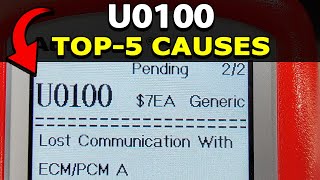
- Engine will not crank or start 🎬 Watch: Top 5 causes for the U0100 trouble code (no-crank, no-start)
- Engine stalls while driving
- Check Engine Light is on (may be intermittent or flash)
- Other warning lights, such as Traction Control, ABS, or Power Steering, may illuminate
- Reduced engine power or 'limp mode'
- Erratic or non-functional gauges on the instrument cluster
- Transmission shift indicator on dash may be missing or incorrect
- Erratic door locking and unlocking
- Replacing the ECM without first testing the battery, ground connections, and wiring. A new ECM will not fix a bad ground or power supply issue.
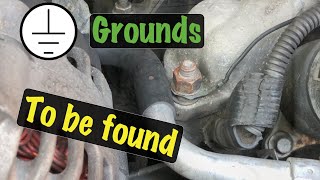
- Replacing the battery but failing to inspect and replace the faulty negative battery cable 🎬 See how this Cruze owner fixed multiple communication codes that caused the original battery to fail.
Most Likely Causes
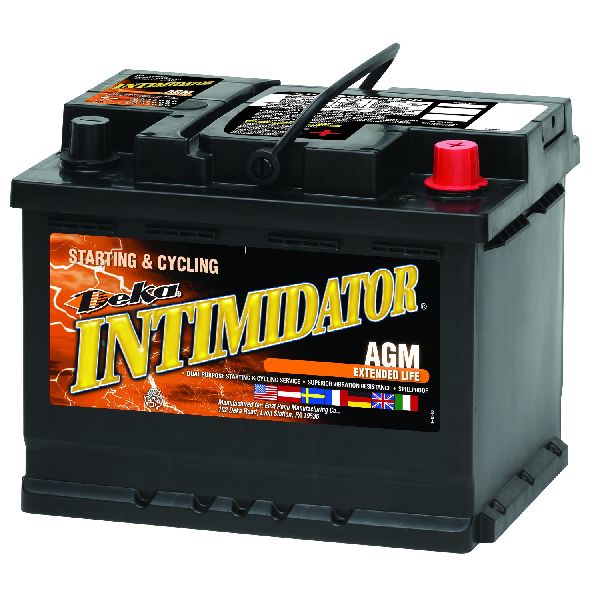
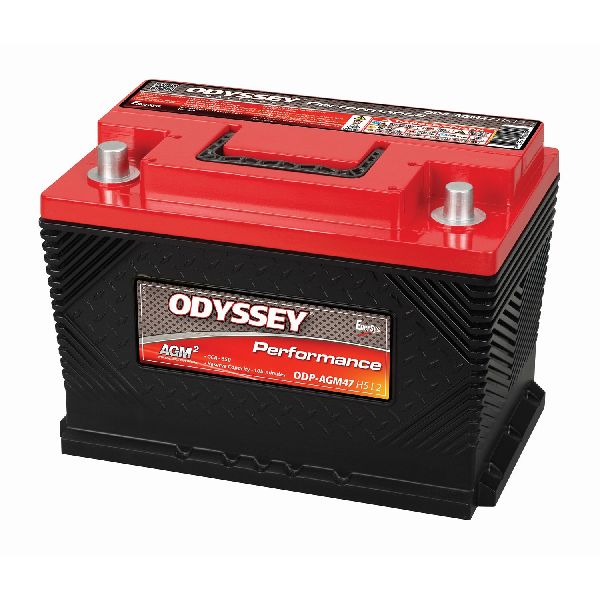
- Weak or Faulty Battery 🔴 High Probability → Shop Vehicle Battery Modern vehicle modules are highly sensitive to voltage. A battery that is old, has a bad cell, or can't hold a full charge (below 12.4V at rest) can cause modules to drop off the communication network, triggering a U0100 code. This is the easiest and cheapest potential fix.
How to confirm: Test the battery voltage with a multimeter when the car is off; it should be above 12.4 volts. Have the battery load-tested at an auto parts store, as a battery can show good voltage but fail under load.
Typical fix: Recharge or replace the battery.
Est. part cost: $100-$250 - Faulty Negative Battery Cable or Ground Connection 🔴 High Probability → Shop Vehicle Battery GM vehicles of this era, including the Sonic and its platform mates, are known to have issues with negative battery cables. Corrosion can build up internally within the cable or where it bolts to the vehicle's frame and transmission case, causing a poor ground and significant voltage drop that upsets the sensitive modules.
How to confirm: Visually inspect the entire negative battery cable, including the terminal clamp and where it bolts to the vehicle's frame (near the battery tray) and transmission. Look for swelling, corrosion (green or white powder), or fraying. Perform a voltage drop test on the ground circuit from the battery negative post to the engine block and chassis; a drop of more than 0.2 volts indicates a problem.
Typical fix: Replace the negative battery cable assembly. Ensure the new ground connections on the frame and transmission are cleaned to bare metal and tightened securely.
Est. part cost: $50-$100 - Corroded or Damaged ECM Wiring/Connectors 🟡 Medium Probability
How to confirm: Locate the ECM and carefully disconnect its connectors (with the battery disconnected). Inspect the pins on both the module and the harness connectors for corrosion, moisture, bent pins, or physical damage. Check the wiring harness for any signs of rubbing, melting, or rodent damage, paying close attention to where the harness may contact the engine or chassis.
Typical fix: Clean corroded pins with an electrical contact cleaner and a small brush. Repair or replace damaged sections of the wiring harness. A user on a Cruze forum fixed a U0100 by repairing a broken wire at the X114 harness connector. Manufacturer service bulletin #PIT6198 also suggests testing the accessory wake up circuit to the ECM for power when diagnosing a U0100 at startup.
Est. part cost: $10-$500 - Blown Fuse for ECM/PCM ⚪ Low Probability
How to confirm: Consult the owner's manual to locate the fuses for the ECM/PCM in both the under-hood and interior fuse panels. Visually inspect the fuses and test for continuity with a multimeter.
Typical fix: Replace the blown fuse. If the fuse blows again immediately, this indicates a short circuit that needs to be diagnosed.
Est. part cost: $1-$5
Rare But Worth Checking
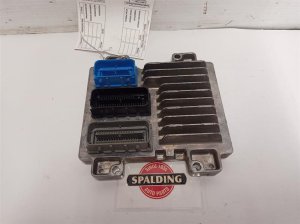
- Faulty Engine Control Module (ECM): → Shop Engine Control Module (ECM) While this is the component the code points to, it's often not the root cause. It should only be replaced after all other possibilities (power, ground, wiring) have been exhaustively ruled out. A forum user on SonicOwnersForum confirmed a faulty ECM was the cause after working on the car without disconnecting the battery, which likely shorted the module. Another owner also ended up at the dealer for an ECM replacement after other steps failed.
- Another Module on the CAN Bus is Faulty: A different module (like the TCM, BCM, or ABS module) can short out the communication bus, making it seem like the ECM is offline. Manufacturer bulletin #20-NA-206 notes that replacing the BCM and PSCM may be necessary to correct a condition where U0100 is set and will not clear.
- Loose Power/Ground Connections at Under-hood Fuse Box: A user on SonicOwnersForum reported that after replacing the negative battery cable, their electrical issues persisted. The final fix was tightening loose positive and negative screws going into and out of the under-hood fuse block.
Diagnosis Steps
- Check Battery Health: Ensure the battery is fully charged (12.4V+ at rest) and load-tests properly. A weak battery is a primary cause of communication codes.
- Inspect Battery Terminals and Grounds: Clean any corrosion from the battery terminals. Thoroughly inspect the full length of the negative battery cable, from the battery post to the chassis and transmission ground points. Ensure connections are clean and tight. A voltage drop test is highly recommended.
- Check Fuses: Inspect all fuses related to the ECM, PCM, BCM, and ignition systems in both the engine bay and interior fuse panels.
- Check Fuse Box Connections: Inspect the main power and ground connections at the under-hood fuse block to ensure they are clean and tight.
- Scan for Other Codes: Use a capable OBD-II scanner to see if other 'U' codes are present. A loss of communication to multiple modules may point to a network-wide wiring issue rather than a single module failure.
- Inspect ECM Connectors: Disconnect the battery. Unplug the connectors at the ECM and inspect for any signs of corrosion, moisture, or bent/damaged pins.
- Check CAN Bus Resistance: With the battery disconnected, you can check the resistance of the CAN bus at the OBD-II port (between pins 6 and 14). A healthy network should read approximately 60 ohms. Readings of 120 ohms suggest a break in the wiring or a missing terminating resistor, while 0 ohms indicates a short circuit.
- Professional Diagnosis: If the steps above do not identify the fault, professional diagnosis is needed to test the ECM's power and ground circuits directly and to isolate a potentially faulty module using advanced scan tools.
Parts You'll Likely Need
- Negative Battery Cable
(OEM #42721827 (for 1.8L Engine, supersedes 95319180, 95031575) or 95179573 (for 1.4L Engine))— This is a very common failure point on GM Gamma II platform vehicles. The cable can corrode internally or at its ground points, causing intermittent or total loss of electrical connection, which triggers communication codes.
Trusted brands: ACDelco, Duralast
OEM price range: $40-$80
Aftermarket price range: $30-$60 - Engine Control Module (ECM) — This is the 'last resort' part to replace. If all wiring, power, and grounds are confirmed to be good, the module itself may have failed internally. Note that a replacement ECM will require programming to the vehicle's VIN.
Trusted brands: ACDelco
OEM price range: $400-$700
Aftermarket price range: $250-$500
Related Codes That Often Appear With This One
- U0101 — Lost Communication with TCM. If the main CAN bus has a problem, communication can be lost to multiple modules simultaneously. This code is often seen with U0100.
- U0073 — Control Module Communication Bus 'A' Off. This is a more general network code indicating a complete shutdown of the communication bus, often seen with U0100.
Technical Service Bulletins (TSBs) & Recalls
- TSB #17-NA-211: Addresses a no-crank/no-start condition with U0100/U0101 codes on various GM vehicles, including the 2012-2018 Sonic, and provides diagnostic tips for finding issues on the CAN bus data lines.
- TSB Bulletin #20-NA-206: Provides a procedure to replace the BCM and PSCM to correct a condition where U0100 is set and will not clear, often accompanied by a Service Power Steering message.
- TSB Bulletin #PIT6198: Offers a diagnostic tip for a Check Engine Light at startup with DTC U0100, advising technicians to test the accessory wake up circuit to the ECM for power.
Platform-Specific Known Issues
- A user on SonicOwnersForum with a 2014 Sonic experienced a no-crank/no-start with code U0100 after replacing interior components without disconnecting the battery. After trying all other diagnostics, the issue was ultimately a fried ECM that had to be replaced and programmed by a dealer.
- On the platform-mate Chevy Cruze, a user on Reddit with a no-crank and U0100 code traced the problem to a b
Mechanic-Grade Diagnostic Values
- CAN Bus Voltage (Key-On, Engine-Off) — expected: CAN High (Pin 6 at DLC): ~2.7V. CAN Low (Pin 14 at DLC): ~2.3V.. Failure: Voltages that are stuck high (e.g., 5V or 12V), stuck low (0V), or equal to each other indicate a short or open in the CAN wiring.
- ECM Power and Ground Pin Voltage Drop — expected: Less than 0.5V. Failure: A voltage drop greater than 0.5V on either the power feed circuit (testing between the ECM connector pin and the positive battery terminal) or the ground circuit (testing between the ECM ground pin and the negative battery terminal) indicates excessive resistance.
- ECM Connector X1 (2016 Sonic 1.4L) — expected: Pin 20 (RD/WH wire): Battery Positive Voltage. Pin 29 (BU wire): High Speed GMLAN Serial Data (+). Pin 18 (VT/YE wire): Accessory Wakeup Serial Data.. Failure: Absence of battery voltage at Pin 20 means the ECM is not powered. Absence of data signals on pins 29 or 18 points to a wiring issue between the ECM and the network.
- ECM Connector X2 (2017 Sonic) — expected: Pin 73 (BK wire): Ground.. Failure: High resistance to ground or a significant voltage drop on this pin indicates a bad ground connection for the ECM.
Hidden / Shadow Codes Worth Checking
- Module-Specific DTCs (e.g., B2575-04, P0700): While a basic scanner only shows U0100, a professional scan tool (like the dealer's GDS2) queries every module. Finding codes in other modules (like a
P0700from the TCM or aB2575-04from the BCM) provides critical clues. A flood of 'U' codes from many modules points to a network-wide issue, not just a faulty ECM. (see via Requires a professional-grade scan tool capable of communicating with all vehicle modules (ECM, TCM, BCM, ABS, etc.).)
Scan Tool Commands That Help
- GDS2 (GM Tech Tool) or equivalent: Module Status / Network Test — This function polls all modules on the CAN bus and displays which ones are actively communicating. This is the fastest way to determine if only the ECM is offline or if multiple modules are not responding, which would point to a network wiring or gateway module issue.
- GDS2 (GM Tech Tool) or equivalent: Output Control Functions (e.g., 'Fuel Injector Balance') — If you can establish communication with the ECM but the U0100 code is intermittent, you can use bidirectional commands to test the ECM's functionality. Forcing an injector to click or a fan to turn on proves the ECM's processor and output drivers are working, making an internal ECM fault less likely.
Wiring & Ground Locations
- G105 — On the frame rail, directly under the battery tray. The tray must be removed for access.. GM Service Bulletin PIC5574A specifically calls out this ground for inspection on the 2012 Sonic for no-crank/no-start and communication code issues. It is prone to having weld slag or paint on the stud, causing a poor connection.
- G104 — On the engine. A 2017 schematic shows it on the lower right rear of the engine.. GM Service Bulletin PIC5879 identifies G104 as a potential site for glue contamination from the factory, which can insulate the connection and cause intermittent electrical issues, including communication codes.
- G107 — Located on the lower left rear of the engine block.. This is a primary engine block ground. A loose or corroded connection here can cause a voltage differential between modules, disrupting CAN bus communication.
- Underhood Fuse Block (UBEC) — Engine compartment, next to the left front strut tower.. A GM bulletin noted that in some cases, an internal open circuit can develop within the fuse block itself, cutting power to the ECM via circuits like the 'Powertrain Main Relay Fused Supply'. This is a rare but critical failure point beyond just checking the fuses themselves.
OEM Part Supersession History
95031575→95319180, then 42721827— Part revision by the manufacturer, likely for improved durability or to address known failure modes like internal corrosion.
Model Year Variations Within This Range
- 2017-2018: The Chevrolet Sonic received a significant facelift for the 2017 model year, which included changes to the instrument cluster, center stack (MyLink radio), and some electrical systems. While the fundamental causes of U0100 (power, ground, wiring) are the same, technicians must use a wiring diagram specific to 2017+ models for accurate diagnosis, as ECM pin assignments, wire colors, and connector locations may have changed from the 2012-2016 models.
Diagnostic Flowchart
Other Known Issues on This Vehicle
Issues unrelated to this code that are worth knowing about as an owner of this generation:
- PCV System Failure (1.4L & 1.8L) 🔴 High — Very common. A failed diaphragm in the valve cover (1.4L) or a missing check valve in the intake manifold (1.4L) causes vacuum leaks, high oil consumption, and codes like P0171. (Ref: GM bulletin PI0907B mentions a related faulty PCV pipe.)
- Cooling System Leaks 🟠 Medium — Common across all engines. Plastic components like the thermostat housing, water pump, and coolant reservoir tank become brittle and crack, causing coolant loss. (Ref: GM extended warranty coverage (14371A) for leaking water pumps on 2012-2014 1.4L models up to 10 years/150,000 miles.)
- Turbocharger Coolant Line Leaks (1.4L) 🟠 Medium — Frequent issue where the coolant feed and return lines for the turbocharger leak at the banjo bolt fittings.
- Valve Cover Gasket Oil Leaks 🟡 Low — Common oil leak point on both engines as the gasket ages and hardens.
- Cracked Intake Manifold (1.8L) 🟠 Medium — The plastic intake manifold can develop cracks, leading to vacuum leaks and lean codes.
Used vs. New Parts: Buying Guide for This Vehicle
When a used part is the smart pick: For a U0100 repair, obtaining a used negative battery cable from a junkyard is a cost-effective option, provided it is sourced from a vehicle in a dry climate and passes a thorough visual inspection for corrosion, swelling, or frayed wires. Sections of wiring harness and connectors can also be sourced used.
Donor-vehicle mileage cap: roughly under 80000 miles for the part to have meaningful remaining life.
What to inspect on the donor part:
- For battery cables: Check for any green or white powder corrosion at the terminal or ground lugs. Squeeze the length of the cable; it should be flexible, not stiff or crunchy, which indicates internal corrosion. Ensure the insulation is not cracked or swollen.
- For wiring harnesses/connectors: Inspect for brittle plastic, broken locking tabs, and any signs of previous repair (e.g., tape, butt connectors). Ensure pins are straight and not corroded.
OEM-only on this vehicle (don't cheap out):
- Engine Control Module (ECM): An ECM from a donor vehicle is locked to that car's VIN and security system. It cannot be installed in another car without specialized programming tools to 're-learn' it. It is strongly recommended to either have the original ECM professionally repaired or to purchase a new OEM unit that a dealer or qualified shop can program to your vehicle.
Aftermarket brands forum-validated for this vehicle:
- ACDelco (OEM supplier)
- Standard Motor Products (for connectors and pigtails)
Brands owners have reported issues with on this vehicle:
- Unbranded, no-name negative battery cables from online marketplaces may use inferior materials that corrode quickly or have poor crimps, leading to a repeat failure.
Real Owner Stories
Aggregated from forums and TSBs cited above. Mileages and costs reflect what owners reported in those sources.
2014 Chevy Sonic Sedan LT 1.8L
Symptoms: No-crank/no-start condition after replacing interior components (Climate Control Panel and Transmission Shift Assembly) without disconnecting the battery.
What fixed it: Replacement and dealer programming of a fried ECM.
Source hint: SonicOwnersForum.com - Thread: '2014 Chevy Sonic Sedan LT (1.8L) showing U0100 after swapping out Climate Control Panel and Transmission Shift Assembly'
2013 Chevy Cruze 1.8L
Symptoms: No-crank, no-start, and U0100 error code.
What fixed it: Repairing a broken wire at the X114 harness connector.
Source hint: Reddit.com/r/Cruze - Thread: '2013 Chevy Cruze 1.8, no crank, no start, give me the U0100 error code'
Documented NHTSA Reports
An owner reported a rough start with Stabilitrak and Traction Control warnings where the dealer pulled codes P0300, U0121, and U0100 (NHTSA ODI #11129698). Another report describes a vehicle where the battery was replaced twice, yet codes P069E, P0700, U0073, and U0100 persisted (NHTSA ODI #10733263). A separate diagnostic at an auto parts store revealed codes U0100, P0324, and P2135 occurring together (NHTSA ODI #10676316).
Related OBD-II Codes
Frequently Asked Questions
Is there a technical service bulletin for the U0100 code on my 2012-2018 Chevrolet Sonic?
Why is my Sonic's transmission shift indicator missing from the dash along with the U0100 code?
Can a bad battery really cause a U0100 communication code in a Chevy Sonic?
I heard the negative battery cable is a common problem on the Sonic; how does this relate to U0100?
Should I disconnect the battery before working on interior components like the climate control panel?
What resistance should I see when testing the CAN bus on my Sonic?
Helpful Videos
Used OEM Parts in Stock
New Aftermarket Parts Available


The information in this article is provided for general reference and educational purposes only. Vehicle specifications, procedures, and part compatibility can vary by production date, trim level, and region. Always consult your vehicle's factory service manual and verify part numbers before purchasing or performing repairs. Safety-critical components such as airbags, seat belts, and braking systems should be installed by a qualified professional.
- Chevrolet Sonic:
- 🧭 Diagnostic Flowchart
- 🎬 Helpful Videos
- 🛍️ Shop This Part
- What's Unique About the 2012-2018 Chevrolet Sonic
- Symptoms You May Notice
- Most Likely Causes
- Rare But Worth Checking
- Diagnosis Steps
- Parts You'll Likely Need
- Related Codes That Often Appear With This One
- Technical Service Bulletins (TSBs) & Recalls
- Platform-Specific Known Issues
- Mechanic-Grade Diagnostic Values
- Hidden / Shadow Codes Worth Checking
- Scan Tool Commands That Help
- Wiring & Ground Locations
- OEM Part Supersession History
- Model Year Variations Within This Range
- Other Known Issues on This Vehicle
- Used vs. New Parts: Buying Guide for This Vehicle
- Real Owner Stories
- 2014 Chevy Sonic Sedan LT 1.8L
- 2013 Chevy Cruze 1.8L
- Documented NHTSA Reports
- Related OBD-II Codes
- Frequently Asked Questions
- 🎟️ Get 5% Off