

U0100 on 2015-2020 Chevrolet Suburban: Lost Communication with ECM/PCM Causes and Fixes
On a 2015-2020 Suburban, code U0100 is most often caused by a poor Body Control Module (BCM) ground at location G218 or a faulty connection at the Serial Data Gateway Module (SDGM). Both are known issues documented in GM Technical Service Bulletins. Fixing the G218 ground is a well-documented, low-cost DIY, while SDGM issues (connector fretting or logic lock-up) may require professional diagnosis and reprogramming.
- Code U0100 on a 2015-2020 Suburban is a serious network communication error that can cause a no-start or stalling.
- Before suspecting expensive modules, inspect the two most common causes: the BCM ground (G218) under the dash and the connectors at the Serial Data Gateway Module.
- Always check the battery's health and terminal connections first, as low voltage is a frequent cause of communication codes.
- This is a complex electrical issue; if simple checks of the battery and G218 ground do not solve the problem, professional diagnosis is strongly recommended.
What's Unique About the 2015-2020 Chevrolet SUBURBAN
For the 2015-2020 (K2XX generation) Suburban and its platform mates (Tahoe, Yukon, Silverado, Sierra), the U0100 code is frequently linked to specific, well-documented electrical weak points rather than random module failure. 🎬 Watch: Understanding the U0100 code and common causes. The most prominent is a poor ground connection for the Body Control Module (BCM) at a point known as G218, where dash insulation can interfere with the connection. Another common culprit is the Serial Data Gateway Module (SDGM), which can suffer from connector terminal issues or logic lock-ups. General Motors has issued multiple Technical Service Bulletins (TSBs) addressing these exact problems.
Diagnostic Flowchart
Tap your situation to follow the diagnostic path that matches what you're seeing on this vehicle.
Symptoms You May Notice
- Check Engine Light is on.
- Vehicle will not start or is hard to start (no-crank or cranks but won't fire).
- Engine stalls intermittently while driving.
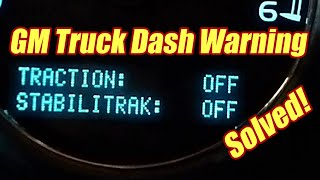
- Multiple warning lights on the dashboard, such as 'Service Stabilitrak', 'Service Power Steering', ABS, or Airbags.
- Instrument panel gauges drop to zero, go blank, or behave erratically.
- Radio, infotainment screen, or HVAC controls go blank or are inoperative.
- Loss of electric power steering assist, making the wheel hard to turn, sometimes accompanied by a 'Steering Assist is Reduced' message.
- Wipers, door locks, or dome lights behave erratically.
- Transmission may enter 'limp mode' and get stuck in one gear.
- Replacing the Engine Control Module (ECM) without first verifying all grounds, power feeds, and network wiring are intact. This is an expensive part to replace and often does not solve the underlying electrical issue.
- Replacing the Serial Data Gateway Module (SDGM) when the issue is simply a loose connector pin or a software logic-lock that could be resolved with a reprogram.
Most Likely Causes
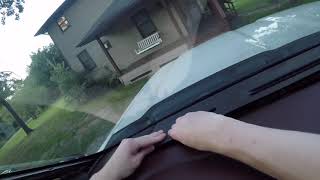
- Poor Body Control Module (BCM) Ground at G218 🔴 High Probability → Shop Body Control Module As documented in GM TSB #PIT5405C and its successor #18-NA-161, the ground stud (G218) located under the driver's side of the dashboard is a major weak point. The dash insulator mat often gets trapped under the ground terminal during assembly, preventing a solid metal-to-metal connection. This high resistance causes a host of communication and electrical problems.
How to confirm: Visually inspect the G218 ground, located on a stud to the left of the steering column, under the dash. Check if the 10mm nut is loose or if the black foam/rubber insulation mat is caught between the ring terminal and the vehicle body. A voltage drop test on the ground would show high resistance.
Typical fix: Disconnect the negative battery terminal. Remove the 10mm ground nut. Pull the wiring terminal aside and trim away the interfering insulation material from the stud. Scrape any paint off the body under the terminal to ensure bare metal contact. Securely retighten the nut. TSB #18-NA-161 specifies a torque of 15 Nm (11 ft lb) for fuse block connections and 45 Nm (33 ft lb) for the negative cable to engine block connection, suggesting a firm tightening is critical.
Est. part cost: $0-$5 - Serial Data Gateway Module (SDGM) Connector or Logic Issue 🔴 High Probability → Shop Telematics Interface Module GM TSBs #PIT5586B and #PIT5586G identify two primary issues with the SDGM, which acts as a central router for network traffic. The first is a 'logic lock-up' where the module freezes and stops communicating. The second, more physical issue, is poor terminal tension or fretting corrosion in the X1 or X2 connectors, leading to intermittent signal loss.
How to confirm: A technician can check for logic lock by attempting to communicate with the module using a scan tool. If it's unresponsive, a 'battery reset' (disconnecting the battery or the SDGM fuse) may temporarily restore function. For terminal issues, the connectors must be unplugged and inspected for backed-out pins, looseness, or the tell-tale dust of fretting corrosion.
Typical fix: For a logic lock-up, a temporary fix is a hard reset. The permanent fix, per TSB #PIT5586G, is a software update performed by a dealer. For connector issues, the fix involves cleaning the terminals and applying dielectric grease, or replacing the affected connector pins and housing. In some cases, the SDGM itself must be replaced and programmed.
Est. part cost: $0-$300 - Low or Unstable Battery Voltage 🟡 Medium Probability → Shop Vehicle Battery These modern trucks are extremely sensitive to voltage. A weak, failing, or improperly connected battery can cause unpredictable communication errors between modules long before it fails to crank the engine. TSB #PIT5405C also points to checking battery cable connections and performing a load test as a key diagnostic step.
How to confirm: Test the battery with a digital multimeter or a professional battery tester. A healthy, resting battery should be at approximately 12.6 volts. Check for clean, tight connections at the battery terminals, fuse block, and engine block ground. TSBs specify checking that terminal clamps are not loose or spinning on the posts.
Typical fix: Clean the battery terminals and cable ends with a wire brush. Charge or replace the battery if it fails a load test. Ensure all power and ground cable nuts are torqued to spec.
Est. part cost: $0-$250 - Damaged CAN Bus Wiring ⚪ Low Probability Wiring harnesses can become damaged from chafing against chassis components, aftermarket installations, or rodent activity, leading to a short or open circuit in the CAN bus network. TSB #PIT5405C also mentions checking for the starter solenoid B+ cable shorting on its heat shield as a possible cause of electrical chaos.
How to confirm: This requires a visual inspection of wiring harnesses, particularly where they pass through the firewall, under seats, and near the steering column. A multimeter can be used to check for continuity and resistance between pins 6 (CAN High) and 14 (CAN Low) of the OBD-II port. A healthy network should read approximately 60 ohms with the battery disconnected.
Typical fix: Isolating and repairing the damaged section of the wiring harness. This can be very labor-intensive.
Est. part cost: $10-$200
Rare But Worth Checking
- Failed Engine Control Module (ECM/PCM): → Shop Engine Control Module (ECM) While often suspected, the ECM itself is one of the least likely components to fail. All other possibilities, especially wiring and grounds, should be exhaustively checked before condemning the ECM.
- Aftermarket OBD-II Port Device: Some aftermarket devices that plug into the OBD-II port, such as insurance trackers or Active Fuel Management (AFM) disablers, can interfere with the CAN bus network and trigger a U0100 code. This was reported by an owner of a 2016 Suburban using a Range AFM delete device.
- Faulty Integrated Trailer Brake Controller (ITBC): A malfunctioning factory trailer brake controller module or its associated wiring can cause network communication issues, sometimes manifesting as a U0100 code along with a "Service Trailer Brake System" message. This can be caused by a bad module, a blown fuse, or corroded wiring in the harness running to the rear of the vehicle.
Diagnosis Steps
- Check Battery Health & Connections: Ensure the battery is fully charged (12.6V+) and passes a load test. Inspect and tighten all battery cable connections at the terminals, fuse block (15 Nm), and engine block (45 Nm) per TSB #18-NA-161.
- Scan All Modules: Use a high-quality OBD-II scanner to pull codes from ALL vehicle modules (BCM, TCM, ABS, etc.). Note every module that is not communicating.
- Inspect BCM Ground G218: This is the most likely culprit. Locate the G218 ground stud under the driver's side dash, to the left of the steering column. Disconnect the battery. Remove the 10mm nut, pull the terminal eyelet off, and check for trapped dash insulation. Cut away any insulation, clean the contact surfaces to bare metal, and securely retighten the nut.
- Inspect Serial Data Gateway Module (SDGM): Locate the SDGM. Disconnect its connectors (X1 and X2) and inspect for bent, loose, or corroded pins. If a temporary fix is needed, a battery disconnect for several minutes may reset a logic lock-up.
- Check Fuses: Inspect all fuses related to the ECM, BCM, TCM, and SDGM in the underhood and interior fuse panels.
- Perform CAN Bus Resistance Test: With the battery disconnected, measure the resistance between Pin 6 (CAN High) and Pin 14 (CAN Low) of the OBD-II data link connector. A healthy network should read approximately 60 Ohms. A reading of 120 Ohms suggests a missing terminating resistor or a break in the circuit.
Parts You'll Likely Need
- Serial Data Gateway Module
(OEM #13599318)— This module can fail due to internal logic lock-ups or be damaged by connector issues, as noted in TSBs. It is a central hub for network communication and may require replacement if reprogramming or connector repair doesn't work. This part number supersedes 13509768, 13524297, 13524298, and 13599317.
Trusted brands: ACDelco, GM Genuine Parts
OEM price range: $150-$250
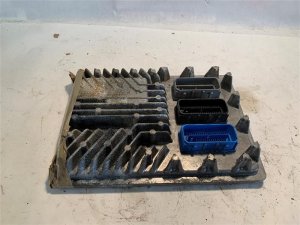
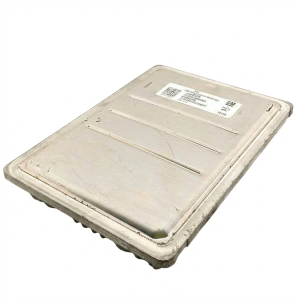
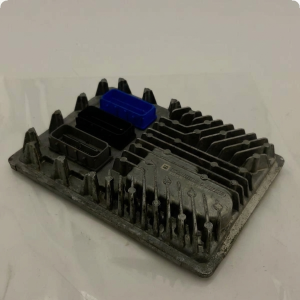
Aftermarket price range: $100-$200 - Engine Control Module (ECM/PCM) — This is a last resort replacement if the module itself is confirmed to be faulty after all wiring, ground, and power issues have been ruled out. It is expensive and requires VIN-specific programming.
Trusted brands: ACDelco, GM Genuine Parts
OEM price range: $600-$900
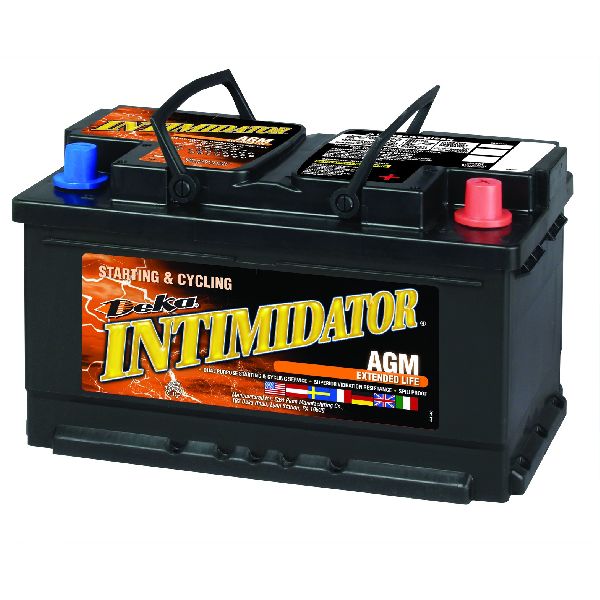
Aftermarket price range: $400-$700 - Battery — A weak or failing battery is a common cause of low voltage, which can trigger a cascade of communication codes on these vehicles.
Trusted brands: ACDelco, DieHard, Optima
OEM price range: $200-$300
Aftermarket price range: $150-$250
Related Codes That Often Appear With This One
- U0101 — Lost Communication with TCM. Both the ECM and TCM are critical powertrain modules on the same high-speed CAN bus; a general network failure often causes communication loss to both simultaneously.
- U0140 — Lost Communication with Body Control Module. This often appears with U0100 when the G218 ground is at fault, as that ground is specifically for the BCM.
- U0073 — Control Module Communication Bus 'A' Off. This is a general code indicating the entire network is down, which is a common root cause for the more specific U0100 code.
- P0700 — Transmission Control System (MIL Request). This is a generic code set by the TCM to tell the ECM to turn on the Check Engine Light. It often appears alongside communication codes like U0100 when the network fault affects the TCM.
Technical Service Bulletins (TSBs) & Recalls
- PIT5405C: Addresses various electrical issues including engine stalls and multiple DTCs (U0100 included) caused by a poor BCM ground at G218.
- PIT5586B / PIT5586G: Point to the Serial Data Gateway Module connector or logic as a potential cause for a wide range of communication codes, including U0100.
Platform-Specific Known Issues
- TSB #PIT5405C / #18-NA-161 directly links a multitude of electrical issues, including code U0100, to a poor BCM ground at location G218. The fix involves clearing insulation from under the ground terminal and ensuring it is tight.
- TSBs #PIT5586B and #PIT5586G identify issues with the Serial Data Gateway Module (SDGM), which can either enter a 'logic lock' state or suffer from poor terminal connections at its X1/X2 connectors. A software update may be required to fix the logic issue.
- A Power Steering Control Module (PSCM) calibration error noted in TSB #20-NA-100 can cause codes like U0100 to remain 'current' in the system even after the initial fault is gone, leading to persistent 'Service Power Steering' messages at every startup. The fix is to reprogram the PSCM.
Mechanic-Grade Diagnostic Values
- CAN Bus Terminating Resistance — expected: ~60 Ω. Failure: A reading of ~120 Ω indicates an open circuit or a missing terminating resistor. A reading significantly less than 60 Ω suggests a short circuit.
- CAN High Voltage (Key On, Engine Off) — expected: ~2.5V to 3.5V (recessive to dominant state). Failure: Voltage that is stuck high, low, or does not change indicates a bus problem.
- CAN Low Voltage (Key On, Engine Off) — expected: ~1.5V to 2.5V (dominant to recessive state). Failure: Voltage that is stuck high, low, or does not change indicates a bus problem.
- Battery Voltage (Resting) — expected: 12.6V or higher. Failure: A reading below 12.4V may indicate a weak battery that can cause communication issues.
Scan Tool Commands That Help
- GM GDS2 (Global Diagnostic System 2): Module Presence/Network Scan — To get a complete list of all modules on the network and see which ones are not responding. This is a primary step to see the scope of the communication failure.
- GM GDS2 (Global Diagnostic System 2): Data Bus Diagnostics Tool — This function provides a real-time voltage trace of the CAN bus lines, helping to visually identify bus faults, shorts to ground, or other electrical noise that a multimeter might miss.
- GM GDS2 (Global Diagnostic System 2): SDGM Reprogramming — Required after replacing the Serial Data Gateway Module or when a TSB calls for a software update to fix a logic-lock issue.
Wiring & Ground Locations
- G218 — Under the driver's side dash, on a stud to the left of the steering column.. This is the primary ground for the Body Control Module (BCM). High resistance here due to trapped insulation is a very common cause of network codes, including U0100, as documented in TSB PIT5405C.
- CAN Bus Terminating Resistor #1 — Internal to the Engine Control Module (ECM).. One of two 120-ohm resistors on the high-speed CAN bus. Its presence is critical for network stability. If the ECM is disconnected, the bus resistance will change from 60 ohms to 120 ohms.
- CAN Bus Terminating Resistor #2 — A separate, plug-in resistor located in the rear wiring harness, often taped to the harness above the spare tire area, near the trailer control modules.. This is the second 120-ohm resistor. A break in the wiring leading to this resistor, or failure of the resistor itself, will cause the total bus resistance to read 120 ohms instead of the correct 60 ohms, leading to communication faults.
- Serial Data Gateway Module (SDGM) — Under the driver's side dash, often described as a small box the size of a hockey puck with a gray and black connector.. This module is the central router for network traffic. TSBs PIT5586B and PIT5586G point to connector and logic issues here as a primary cause of U0100.
- Main Engine/Chassis Grounds — Includes the negative battery cable to the body, a ground strap from the body to the cylinder head, and a main ground on the engine block.. While G218 is specific, any poor main ground can introduce voltage instability and communication problems across the entire vehicle's electrical system.
Real Owner Repair Stories
- YouTube channel "Auto Technician" (2017 GMC Sierra (K2XX Platform sibling)) — "Service Trailer Brake System" message, loss of communication with the auxiliary chassis control module (which incorporates trailer brake functions), and a 'U' code for loss of communication.
❌ Tried (didn't work) Initial scan showed communication loss.
✅ What actually fixed it The technician found a corroded red power wire in the wiring harness near the running board motor. A pinhole in the insulation allowed salt and water to enter, corroding the wire internally and causing an open circuit. The fix involved cutting out the bad section of wire, soldering in a new piece, and sealing it with heat shrink.
OEM Part Supersession History
13509768, 13524297, 13524298, 13599317→13599318— Standard part evolution, integrating design updates and new technologies.
Heads up: Replacement of the SDGM requires programming by a dealer or a properly equipped independent shop using GM's Service Programming System (SPS) to ensure it works correctly with the vehicle.
Model Year Variations Within This Range
- 2015-2018: Primarily equipped with the 6-speed (6L80) automatic transmission paired with the 5.3L V8.
- 2019-2020: The 10-speed automatic transmission became available, typically paired with the optional 6.2L V8 engine on higher trims. This introduces different TCM logic and potential failure points compared to the 6-speed.
- 2017-2020: Vehicles from 2017 onwards are more likely to have the Serial Data Gateway Module (SDGM) that is implicated in TSBs #PIT5586B/G. Some aftermarket diagnostic or programming tools may require a special bypass harness to work on these vehicles.
Helpful Videos


Used OEM Parts in Stock
New Aftermarket Parts Available



The information in this article is provided for general reference and educational purposes only. Vehicle specifications, procedures, and part compatibility can vary by production date, trim level, and region. Always consult your vehicle's factory service manual and verify part numbers before purchasing or performing repairs. Safety-critical components such as airbags, seat belts, and braking systems should be installed by a qualified professional.
- Chevrolet SUBURBAN:
- 🧭 Diagnostic Flowchart
- 🎬 Helpful Videos
- 🛍️ Shop This Part
- What's Unique About the 2015-2020 Chevrolet SUBURBAN
- Symptoms You May Notice
- Most Likely Causes
- Rare But Worth Checking
- Diagnosis Steps
- Parts You'll Likely Need
- Related Codes That Often Appear With This One
- Technical Service Bulletins (TSBs) & Recalls
- Platform-Specific Known Issues
- Mechanic-Grade Diagnostic Values
- Scan Tool Commands That Help
- Wiring & Ground Locations
- Real Owner Repair Stories
- OEM Part Supersession History
- Model Year Variations Within This Range
- 🎟️ Get 5% Off