

U0100 on 2007-2014 Chevrolet Tahoe: Lost Communication with ECM Fixes
On a 2007-2014 Tahoe, code U0100 often points to a wiring issue, specifically a bad ground connection on the engine block or a damaged harness near the transmission. Before replacing expensive modules, thoroughly inspect the main engine ground (G110) and the transmission connector (X150/X109). A weak battery is also a very common and simple-to-fix cause.
- U0100 on a 2007-2014 Tahoe is a critical communication failure that makes the vehicle unsafe to drive.
- Do not immediately assume the ECM has failed. The most common causes are much cheaper to fix: bad ground wires and damaged wiring near the transmission.
- Always start diagnosis by checking the battery, fuses, and especially the main engine ground on the driver's side block.
- Reference GM Technical Service Bulletin #08-07-30-021H, as it specifically details the most likely wiring trouble spots for this code on your vehicle.
- This is a difficult DIY diagnosis. If a visual inspection of grounds and fuses doesn't solve the problem, professional help is recommended to avoid replacing expensive parts unnecessarily.
What's Unique About the 2007-2014 Chevrolet TAHOE

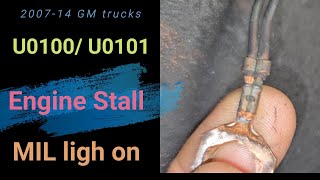
For this generation of Tahoe (GMT900 platform), GM has issued a detailed Technical Service Bulletin (TSB #08-07-30-021H) that directly addresses U0100 and other communication codes. The bulletin highlights common failure points in the wiring, particularly at the 16-way transmission connector and various ground points like G102 and G300. Many owners have successfully resolved this code by addressing these specific wiring issues rather than immediately replacing the expensive ECM or TCM modules. A frequent real-world failure is the engine ground wire breaking inside the insulation right at the ring terminal due to engine torque and vibration.
Diagnostic Flowchart

Tap your situation to follow the diagnostic path that matches what you're seeing on this vehicle.
Symptoms You May Notice
- Check Engine Light is on
- Engine may not start (no crank) or may stall while driving, especially when shifting into reverse.
- Transmission may not shift, may get stuck in one gear (limp mode), or shift harshly.
- Instrument panel gauges may fluctuate wildly or go dead. 🎬 Watch this fix for dead gauges and no-start conditions.
- Various warning lights may illuminate, such as for ABS, StabiliTrak, or "Service Hybrid System".
- Door locks may cycle intermittently.
- Audible chimes may sound for no reason.
- Loss of power steering assist (on some models).
- Message center may display "Service StabiliTrak", "Service Traction Control", or similar warnings.
- Replacing the Transmission Control Module (TCM) when the fault is in the wiring harness leading to it.
- Replacing the ECM when the actual problem is a simple bad ground connection or a weak battery.
- Replacing the Body Control Module (BCM) when the issue is a loose ground or harness connection.
Most Likely Causes

- Poor or Broken Ground Connection 🔴 High Probability Engine torque and vibration can, over time, fatigue the main engine ground wires (often labeled G102 or G110). The wires can break inside the insulation right at the ring terminal, appearing connected but providing a poor ground. This is a very common failure point discussed in owner forums.
How to confirm: Locate the main ground strap on the engine block (driver's side, near the front). Perform a voltage drop test from the battery negative post to the engine block. A reading of more than a few millivolts indicates a bad ground. Physically tug on the wires at the ring terminal; a broken wire will often pull out. Wiggling this harness while the engine is running may cause it to stall, confirming the fault location.
Typical fix: Repair or replace the ground terminal. This involves cutting back the old wire, crimping on a new heavy-gauge ring terminal, and ensuring a clean, tight connection to the engine block. Some owners perform a "Big 3" wiring upgrade to prevent future issues.
Est. part cost: $5-$20 - Damaged Wiring or Terminals at Transmission Connector 🟡 Medium Probability → Shop Transmission Assembly As highlighted in TSB #08-07-30-021H, the GMLAN (CAN bus) wires run through the 16-way connector (X150/X109) at the transmission. Terminals can back out, corrode, or the harness can chafe against the transmission case or nearby heat shields, causing an open or short in the communication circuit.
How to confirm: With the battery disconnected, raise the vehicle and inspect the large electrical connector on the transmission. Disconnect it and check for any pins that have pushed back into the connector, signs of green corrosion (water intrusion), or damaged wires in the harness leading to it. Check that the Terminal Position Assurance (TPA) lock is fully seated.
Typical fix: Reseat any backed-out terminals and ensure the connector's TPA lock is fully seated. Repair any chafed or broken wires in the harness. Dielectric grease can be used on the connector seal to prevent future moisture intrusion.
Est. part cost: $10-$50 - Low Battery Voltage or Faulty Alternator 🟡 Medium Probability → Shop Alternator Modern control modules are extremely sensitive to voltage. If the battery is weak (below 12.4V) or the alternator isn't charging correctly, modules can drop off the communication network, triggering a U0100 code. This is one of the most common and easiest-to-fix causes.
How to confirm: Test the battery voltage with the vehicle off; it should be at least 12.4V (12.6V is ideal). With the engine running, check the alternator output; it should be between 13.7V and 14.7V. A simple battery load test at an auto parts store can confirm battery health.
Typical fix: Recharge or replace the battery. If the charging voltage is low, replace the alternator.
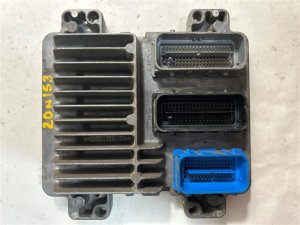
Est. part cost: $150-$400 - Failed Engine Control Module (ECM) ⚪ Low Probability → Shop Engine Control Module (ECM) While less common than wiring issues, the ECM (ACDelco E38) can fail internally due to heat, vibration, or voltage spikes.
How to confirm: This is a diagnosis of exclusion. If all wiring, grounds, power sources, and the CAN bus network itself have been verified as good, the ECM may have failed. A technician may check for a 5-volt reference signal from the ECM; its absence can point to an internal failure.
Typical fix: Replace the ECM. This requires programming the new module to the vehicle's VIN and security system using specialized tools.
Est. part cost: $300-$800
Rare But Worth Checking
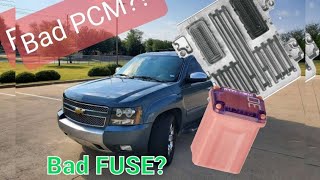
- Blown Fuse: A blown fuse for the ECM, TCM, or even the OBD-II port can cause a loss of power and communication. Always check the fuse boxes in the engine bay (underhood) and inside the cabin (left side of dash) before proceeding with more complex diagnostics.
- Faulty CAN Bus Terminating Resistor: The GMLAN bus has two 120-ohm resistors (one is in the ECM, the other often in the Instrument Panel Cluster or a separate module). If one fails, the total bus resistance will be incorrect (should be ~60 ohms), causing communication to fail. This is an advanced check for a technician.
- Loose Underhood Fuse Box Connector: → Shop Fuse Box On some GMT900 vehicles, the main connectors on the underside of the underhood fuse block can become loose, causing a loss of power or communication to multiple modules. A simple fix reported by owners is to ensure these connectors are fully seated and secured. 🎬 See how to troubleshoot lost communication codes on Chevy trucks.
- Aftermarket Electronics: Improperly installed aftermarket remote starters, alarms, or audio equipment can interfere with the CAN bus network, causing communication codes like U0100.
Diagnosis Steps
- Check Battery Health: Ensure the battery has a full charge (12.4V+ engine off) and the alternator is charging correctly (13.7-14.7V engine on). This is the most common and easiest first step.
- Scan All Modules: Use a high-quality scan tool to check for codes in all vehicle modules (ABS, BCM, TCM, etc.), not just the engine. Note all communication 'U' codes.
- Inspect Fuses: Check all fuses related to the ECM, TCM, and instrument panel in both the under-hood and interior fuse panels.
- Inspect Engine Grounds: Thoroughly inspect the main engine-to-chassis ground connections (G110 on the driver's side engine block) for corrosion or breaks. Physically pull on the wires at the crimped terminal to check for internal breaks.
- Inspect Transmission Harness Connector: Following TSB #08-07-30-021H, raise the vehicle and inspect the 16-pin connector at the transmission for backed-out pins, corrosion, or harness damage.
- Check CAN Bus Resistance: With the battery disconnected, use a multimeter to measure the resistance between Pin 6 (CAN High) and Pin 14 (CAN Low) at the OBD-II port. A healthy bus should read approximately 60 ohms. A reading of 120 ohms suggests a terminating resistor or a wire is open. A reading near 0 ohms indicates a short circuit.
- Isolate the Fault: If wiring checks out, a technician may begin unplugging modules one by one from the GMLAN network to see if communication is restored. This can isolate a single faulty module that is bringing down the entire network.
Parts You'll Likely Need
- Engine Control Module (ECM)
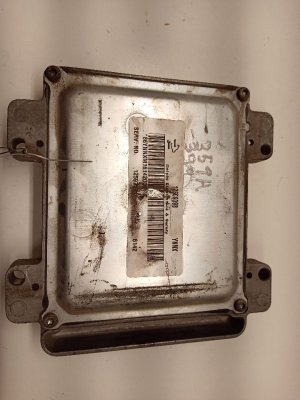
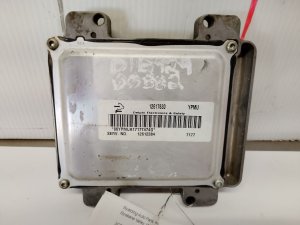
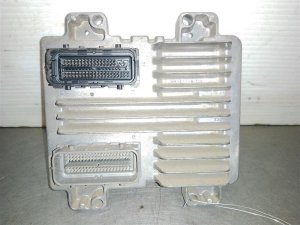
(OEM #12639900, 12612384)— If all wiring and power/ground sources are confirmed good, the ECM itself may have failed, preventing it from communicating. This is a last resort after all other checks.
Trusted brands: ACDelco (E38)
OEM price range: $400-$800
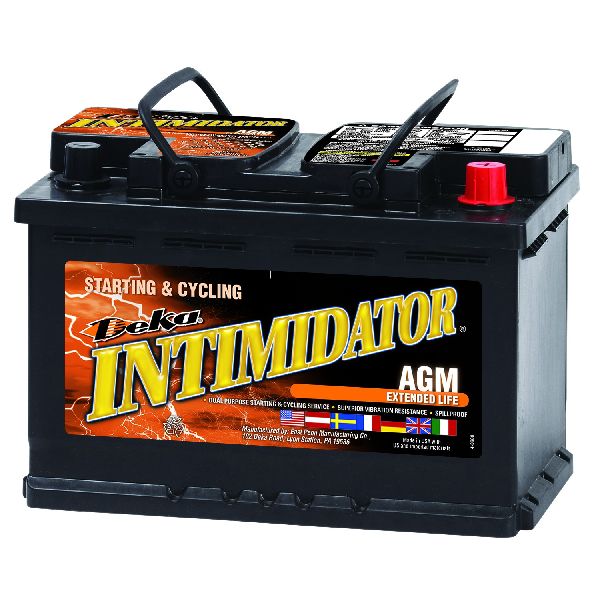
Aftermarket price range: $250-$500 - Battery — A weak or failing battery is a very common cause of low voltage, which can disrupt module communication and trigger a U0100 code.
Trusted brands: ACDelco, DieHard, Interstate
OEM price range: $200-$300
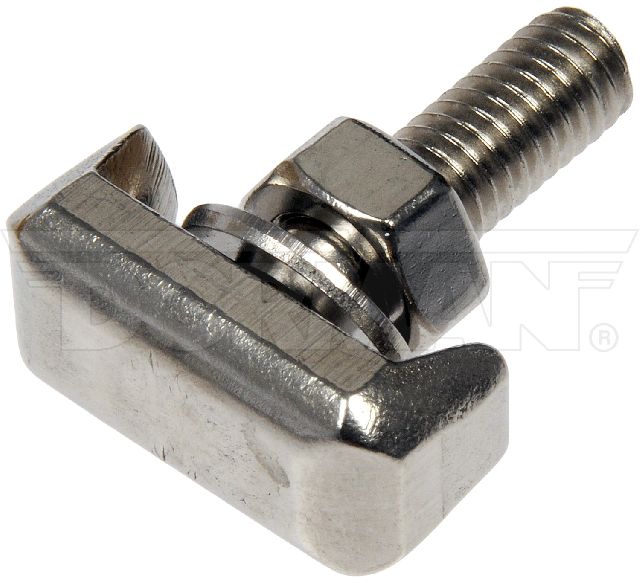
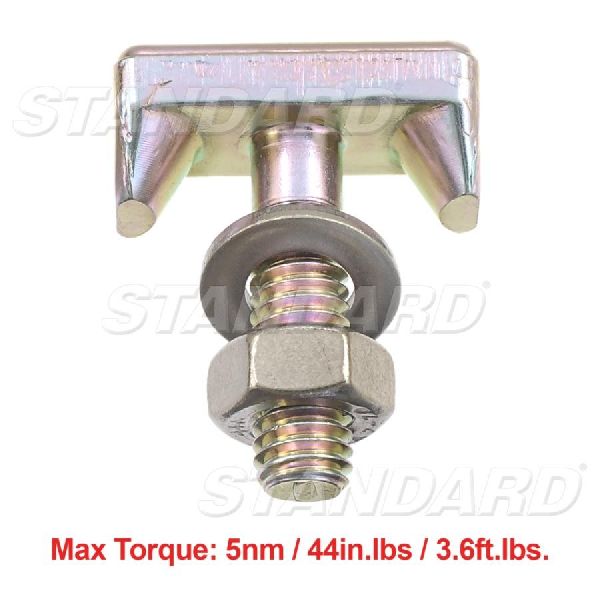
Aftermarket price range: $150-$250 - Ground Strap / Cable Terminal — The factory ground wires can break at the terminal, causing an intermittent open circuit that disrupts communication. This is a frequent, low-cost repair.
Trusted brands: Dorman, Standard Motor Products
OEM price range: $20-$40
Aftermarket price range: $5-$20
Related Codes That Often Appear With This One
- U0101 — Lost Communication with Transmission Control Module (TCM). The ECM and TCM are on the same high-speed GMLAN bus. A wiring problem affecting one often affects the other.
- U0073 — Control Module Communication Bus 'A' Off. This is a general code indicating the entire high-speed GMLAN bus is down, which is consistent with the symptoms of U0100.
- U0121 — Lost Communication With Anti-Lock Brake System (ABS) Control Module. Also on the same network, its loss often accompanies ECM/TCM communication failures.
- P0700 — Transmission Control System (MIL Request). This code is set by the ECM when the TCM has detected a fault and requested the Check Engine Light to be turned on. It often appears with U0100/U0101 when communication is intermittent.
Technical Service Bulletins (TSBs) & Recalls
- 08-07-30-021H: Addresses loss of high-speed GMLAN communications, covering a wide range of symptoms including no-crank, gauge fluctuation, and setting of codes U0073, U0100, U0101, etc. It points to checking the transmission harness connector, grounds, and other wiring issues.
- PIT4853C: Pertains to Hybrid models but also references checking ground G102 and connectors X150/X109 for communication issues and U-codes.
Platform-Specific Known Issues
- Broken Engine Ground at Ring Terminal: A very common failure is one of the smaller wires breaking inside the crimp of the main ground lug (G110) on the driver's side of the engine block. Engine movement fatigues the wire, causing an intermittent open circuit. Symptoms are often triggered when the engine torques, such as when shifting into reverse.
- Transmission Harness Chafing: → Shop Transmission Assembly The wiring harness that connects to the transmission can rub against the transmission case or the nearby exhaust Y-pipe heat shield. Over time, this can wear through the insulation of the CAN bus wires (typically a twisted pair of Tan and Tan/Black wires), causing a short or open circuit.
- Loose Underhood Fuse Block Connectors: → Shop Fuse Box In some cases, the large multi-pin connectors on the bottom of the underhood fuse block can work themselves loose, causing widespread electrical issues, including communication codes. Reseating these connectors until they click has solved the problem for some owners.
Mechanic-Grade Diagnostic Values
- CAN Bus Resistance — expected: ~60 ohms. Failure: A reading of ~120 ohms indicates an open circuit or a faulty terminating resistor. A reading near 0 ohms indicates a short between the CAN High and CAN Low wires.
- GMLAN High Speed Bus Voltage (Key On, Engine Off) — expected: CAN High (Pin 6): ~2.6V, CAN Low (Pin 14): ~2.3V. Failure: Voltages that are stuck high, low, or are equal can indicate a short to power, ground, or a short between the two lines.
- Alternator Charging Voltage — expected: 13.7V - 14.7V. Failure: Voltage below this range can cause modules to drop off the network due to insufficient power.
Scan Tool Commands That Help
- Tech2 / GDS2: Module Communication Test — To actively poll all modules on the network and see which ones are responding. This helps quickly identify which module is offline or if the entire bus is down.
- Tech2 / GDS2: Key Re-learn Procedure — Required after replacing the ECM to synchronize the new module with the vehicle's immobilizer system. The vehicle will not start until this is performed.
- Tech2 / GDS2: Crankshaft Position Variation Relearn — May be required after replacing the ECM to prevent a P0315 code and ensure accurate misfire detection.
Wiring & Ground Locations

- G110 — On the driver's side of the engine block, near the front. It is part of the main negative battery cable harness.. This is a primary ground for the ECM. A break or corrosion here, often inside the wire's insulation, is a very common cause for U0100, leading to stalling when the engine torques.
- G102 / G103 — G102 is on the left rear of the engine. G103 is on the front of the passenger side cylinder head.. These ground the ignition coils and other critical engine sensors. A poor connection can introduce electrical noise or cause voltage drops that disrupt module communication.
- Underhood Fuse Block Connectors — The large multi-pin connectors on the underside of the fuse block in the engine bay.. These connectors can become loose over time, causing intermittent power loss to multiple modules, including the ECM and TCM, which can trigger a U0100 code.
- Transmission Connector (X150/X109) — The large 16-way electrical connector on the transmission housing.. The high-speed GMLAN wires pass through this connector. It is a known failure point for corrosion, backed-out pins, or chafing, as detailed in TSB #08-07-30-021H.
- G101 — Located at the left front of the engine, lower block.. This ground point serves the ECM and TCM, making its integrity critical for network communication.
Real Owner Repair Stories
- YouTube user Willpowered Garage (2008 Chevrolet Tahoe) — Intermittent stalling, especially when shifting into reverse. Gauges would act erratically (tach jumping) and eventually a code was set for lost communication between the ECM and TCM.
❌ Tried (didn't work) Dropped and inspected oil pan and pickup tube for an oil pressure issue that was also present., Checked oil pressure with a mechanical gauge.
✅ What actually fixed it The user wiggled the main engine harness on the driver's side and was able to make the truck stall. Upon inspection, a ground wire had broken inside the insulation at the ring terminal that connects to the engine block (G110). The engine torquing in reverse was enough to break the intermittent connection, causing the stall and communication loss. Repairing the broken ground wire resolved the issue. - YouTube user Average Driveway Mechanic (2007 Chevrolet Avalanche (GMT900 platform)) — No start, no crank, or long crank with no start. Multiple codes including U0100.
❌ Tried (didn't work) Replacing the battery, Replacing the starter, Replacing the alternator, Replacing the throttle body, Replacing battery cables
✅ What actually fixed it After replacing the ECM and still having issues, the final fix was discovering a blown J-case fuse (Fuse #66) in the underhood fuse block, which was related to the brake pedal. This, in combination with a new ECM and a throttle body relearn procedure, resolved the no-start and communication issues.
OEM Part Supersession History
12612384→12633238— Revision for improved reliability and to cover a wider range of calibrations.
Heads up: The E38 ECM family was used throughout this generation, but part numbers changed. For example, PN 12612384 was common in 2008 models, while 12633238 was used in 2010-2014 models. While physically similar, they contain different hardware/software calibrations. Always match the service number (Serv. #) on the original ECM when ordering a replacement.
Model Year Variations Within This Range
- 2007-2008: Most 2007-2008 models with the 4.8L and 5.3L engines were equipped with the 4-speed (4L60E) automatic transmission.
- 2009-2014: Beginning in 2009, the 6-speed (6L80) automatic transmission became standard with the 5.3L V8. This change affects the Transmission Control Module (TCM) and its communication with the ECM, though the U0100 diagnostic principles remain the same.
- 2007: As the first year of the new GMT900 platform, 2007 models are noted by some owners to have more initial quality issues, including those related to the Active Fuel Management (AFM) system, which can sometimes be linked to other electrical problems.
Helpful Videos

Used OEM Parts in Stock
New Aftermarket Parts Available


The information in this article is provided for general reference and educational purposes only. Vehicle specifications, procedures, and part compatibility can vary by production date, trim level, and region. Always consult your vehicle's factory service manual and verify part numbers before purchasing or performing repairs. Safety-critical components such as airbags, seat belts, and braking systems should be installed by a qualified professional.
- Chevrolet TAHOE:
- 🧭 Diagnostic Flowchart
- 🎬 Helpful Videos
- 🛍️ Shop This Part
- What's Unique About the 2007-2014 Chevrolet TAHOE
- Symptoms You May Notice
- Most Likely Causes
- Rare But Worth Checking
- Diagnosis Steps
- Parts You'll Likely Need
- Related Codes That Often Appear With This One
- Technical Service Bulletins (TSBs) & Recalls
- Platform-Specific Known Issues
- Mechanic-Grade Diagnostic Values
- Scan Tool Commands That Help
- Wiring & Ground Locations
- Real Owner Repair Stories
- OEM Part Supersession History
- Model Year Variations Within This Range
- 🎟️ Get 5% Off