

U0100 on 2009-2017 Chevrolet Traverse: Lost ECM Communication Causes and Fixes
On a 2009-2017 Traverse, code U0100 is most often caused by an electrical power or ground issue, not a failed computer. Start by load testing the battery and cleaning all engine/chassis ground straps, especially the G110 ground on the passenger-side cylinder head, before suspecting the ECM.
- U0100 is a critical code that makes the vehicle unsafe to drive. The engine can stall at any time.
- Do not assume the ECM is bad. The most likely cause is a simple, inexpensive electrical fault with the battery, alternator, or ground connections.
- Always start diagnosis by load-testing the battery and cleaning all major ground points, especially the one on the back of the engine's cylinder head (G110).
- If the battery and grounds are good, inspect the large connectors at the ECM for a secure fit and any signs of corrosion.
- This code is difficult for a DIYer to solve if it's not a simple power/ground issue, and professional help is recommended to avoid wasting money on unneeded parts.
What's Unique About the 2009-2017 Chevrolet Traverse
On the first-generation Traverse and its GM Lambda platform siblings (Buick Enclave, GMC Acadia, Saturn Outlook), U0100 is frequently an electrical problem masquerading as a computer failure. These vehicles are sensitive to voltage drops, and owners often trace the fault to poor ground connections, loose connectors at the ECM itself, or a failing alternator causing momentary voltage dips that crash the network. The G110 ground, located on the rear 🎬 Watch: How to find and fix this common bad ground. of the passenger-side cylinder head, is a particularly common failure point due to corrosion or looseness.
Symptoms You May Notice
- Check Engine Light is on
- Vehicle will not start or has a 'no-crank' condition
- Engine stalls intermittently while driving
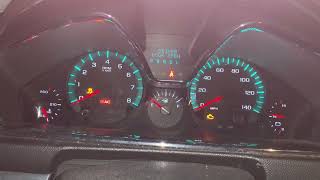
- Message center displays 'Service Stabilitrac' or 'Engine Power is Reduced'
- Instrument cluster gauges behave erratically or drop to zero (RPM, Speed, Temp)
- Transmission may shift harshly or get stuck in one gear (limp mode)
- Cooling fans run at maximum speed even when the engine is not hot
- Multiple warning lights (ABS, Traction Control, etc.) illuminate simultaneously
- Door locks may cycle intermittently
- Replacing the ECM when the fault was a bad ground or weak battery.
- Replacing the transmission or other modules when they were simply offline due to the U0100 fault. 🎬 Watch: Why your transmission might be fine despite the codes.
- Replacing the BCM or TCM without first verifying all power and ground inputs to the ECM.
Most Likely Causes
- Weak or Failing Battery / Alternator 🔴 High Probability → Shop Alternator Modern vehicles, including the Traverse, are highly sensitive to voltage. A momentary drop in voltage from a weak battery or failing alternator can be enough to cause the ECM to reboot or lose communication, triggering a U0100 code. In some cases, owners have reported replacing the battery multiple times while still encountering codes P069E, P0700, U0073, and U0100 (NHTSA ODI #10733263).
How to confirm: Load test the battery (a simple voltage check is not enough). With the engine running, check alternator output with a multimeter; it should be between 13.7 and 14.7 volts. Ensure battery terminals are clean and tight.
Typical fix: Replace the battery and/or alternator. Clean battery terminals and cable ends thoroughly.
Est. part cost: $150-$350 for a battery, $250-$600 for an alternator. - Poor or Broken Ground Connections 🔴 High Probability GM vehicles of this era are known for grounding issues. The main ECM/TCM ground (G110) is located on the right rear (passenger side) of the cylinder head near the firewall and can become loose or corroded. Other engine-to-chassis ground straps can also break or corrode, causing intermittent and high-resistance connections that disrupt module communication.
How to confirm: Locate, remove, clean, and tighten all major ground points between the engine, body, and negative battery terminal. The G110 ground is a critical one to check. Perform a voltage drop test on the ground circuits; any reading above 0.1-0.2 volts under load indicates a problem.
Typical fix: Clean mating surfaces of ground connections to bare metal and re-secure. Replace any broken or heavily corroded ground straps.
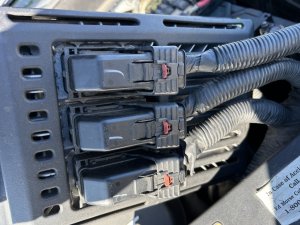
Est. part cost: $10-$50 - Loose or Corroded ECM Connectors 🟡 Medium Probability The ECM is located in the engine bay, where its large electrical connectors (often labeled X1, X2, X3) are exposed to vibration, heat, and moisture. The locking levers can get debris in them, preventing a fully seated connection, or the pins themselves can corrode, leading to intermittent signal loss.
How to confirm: With the battery disconnected, unplug the ECM connectors. Inspect for any bent or corroded pins, signs of water intrusion, or backed-out terminals. Clean with electrical contact cleaner and ensure they are fully seated and locked upon reinstallation.
Typical fix: Clean and securely re-seat the connectors. Applying dielectric grease can help prevent future corrosion. In rare cases of pin damage, a connector pigtail may need to be spliced in.
Est. part cost: $0-$100 - Damaged Wiring Harness ⚪ Low Probability The CAN bus wiring, typically a twisted pair of wires, can chafe or break where it routes through the engine bay, especially near the transmission or after engine service. Water intrusion into the underhood fuse block can also cause corrosion and communication faults.
How to confirm: Visually inspect the harness for obvious damage, chafing, or melting. Check for continuity on the CAN bus wires (typically a twisted pair) between the OBD-II port and the ECM. With the battery disconnected, measure resistance between Pin 6 and Pin 14 at the OBD-II port; a healthy network should read approximately 60 ohms.
Typical fix: Repair the broken or shorted section of the wiring harness. Address any water leaks into the fuse block area.
Est. part cost: $5-$50 for wiring supplies
Rare But Worth Checking
- Failed Engine Control Module (ECM): → Shop Engine Control Module (ECM) This is the least likely cause and should only be considered after all power, ground, and wiring issues have been definitively ruled out. An ECM failure is a common misdiagnosis for this code, leading to expensive and unnecessary replacement.
- Faulty Terminating Resistor: The CAN bus has two 120-ohm terminating resistors. If one fails or the module containing it goes offline, the total network resistance will change from 60 ohms to 120 ohms, causing communication to fail. This is less common than wiring or ground issues.
Diagnosis Steps
- Check Battery and Charging System: Start with the basics. Have the battery professionally load-tested, not just voltage-checked. Check that the alternator is charging correctly (13.7-14.7V). A weak battery is a top cause.
- Inspect and Clean Grounds: Disconnect the battery. Locate the main engine-to-chassis and battery ground straps. Pay special attention to ground G110 on the rear of the passenger-side cylinder head near the firewall. Remove the bolts, clean all contact points to bare metal with a wire brush, and re-torque securely.
- Inspect ECM Connectors: Unplug and inspect the main connectors at the Engine Control Module for corrosion, moisture, or bent/backed-out pins. Clean with contact cleaner if necessary and ensure they click and lock securely when reinstalled.
- Check Fuses: Inspect all fuses related to the ECM, PCM, and ignition system in the underhood fuse block. A manufacturer service bulletin for the same make, Bulletin #20-NA-206, notes that a blown fuse (specifically F6DA in that instance) can be associated with U0100 and communication errors.
- Perform CAN Bus Resistance Check: With the battery still disconnected, use a multimeter to measure the resistance between Pin 6 (CAN High) and Pin 14 (CAN Low) of the OBD-II diagnostic port. A reading of approximately 60 ohms indicates the main network wiring and terminating resistors are likely intact. A reading of 120 ohms suggests a break in the circuit or that one of the terminating modules is offline.
- Check for TSBs: Review GM TSB 08-07-30-021H. This bulletin covers widespread GMLAN communication issues and points to common areas of concern like the 16-way transmission harness connector, chafed wiring, and poor module connections as causes for codes like U0100.
- Professional Diagnosis: If the above steps do not resolve the issue, the problem is likely a complex wiring fault (e.g., short-to-power, short-to-ground) or an internal module failure that requires professional diagnostic tools like an oscilloscope to trace data signals.
Parts You'll Likely Need
- Engine Control Module (ECM)
(OEM #12635019)— This is only needed if the module has been confirmed to have failed internally, which is rare. It is the most commonly misdiagnosed part for this code. This part number is applicable for 2010-2011 models and may interchange with others.
Trusted brands: ACDelco
OEM price range: $250-$400 (Remanufactured)
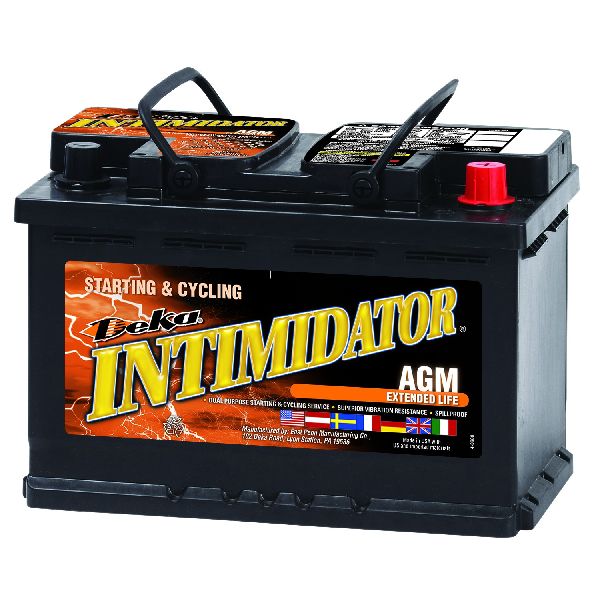
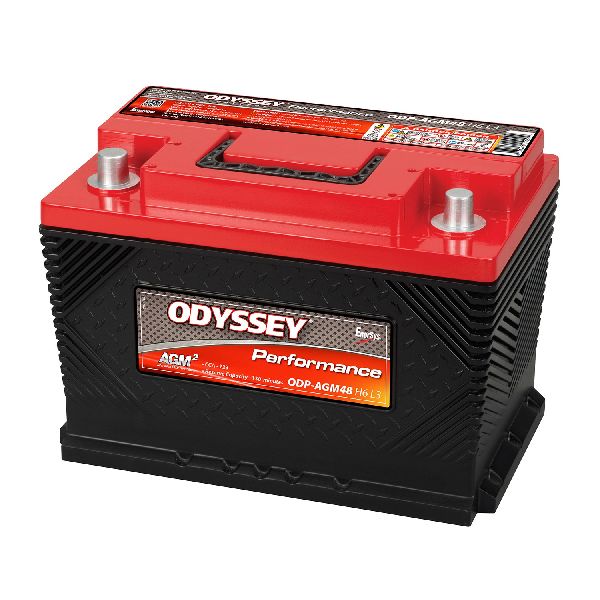
Aftermarket price range: $150-$300 (Remanufactured) - Battery — A weak battery is a very common cause of voltage-related communication codes.
Trusted brands: ACDelco, Interstate, DieHard
OEM price range: $200-$300
Aftermarket price range: $150-$250 - Engine Ground Strap — The original straps can corrode or break, causing intermittent and high-resistance ground paths that lead to communication loss.
Related Codes That Often Appear With This One
- P0700 — The Transmission Control Module (TCM) sets this code to request the check engine light because it has lost communication with the ECM and cannot function correctly.
- U0073 — This is a general 'Control Module Communication Bus A Off' code, indicating a network-wide shutdown often triggered by the primary U0100 fault.
- U0121 — Lost Communication with the Anti-Lock Brake System (ABS) module. This module also relies on data from the ECM. An owner reported this code appearing alongside U0100 and P0300 during a rough start condition (NHTSA ODI #11129698).
- U0140 — Lost Communication with the Body Control Module (BCM). This often appears alongside U0100 when the entire network is disrupted.
- P2135 — Throttle Position Sensor; an owner reported this code appearing in conjunction with U0100 and P0324 (NHTSA ODI #10676316).
Technical Service Bulletins (TSBs) & Recalls
- 08-07-30-021H: While not exclusively for the Traverse, this GM TSB for sibling platforms covers diagnosis for a host of communication codes including U0100, pointing to checks of grounds, data link resistors, and harness connectors.
- Bulletin #20-NA-206: This manufacturer bulletin describes a procedure to replace the BCM and PSCM to correct a condition where U0100 and/or U1814-02 are set and will not clear.
Platform-Specific Known Issues
- G110 Ground on Passenger Cylinder Head: A user on Reddit confirmed the location of the G110 ground on a 2011 Traverse as being on the passenger side of the engine block, facing the firewall, possibly above the exhaust manifold. This location makes it susceptible to heat and corrosion, and it is difficult to access, but cleaning it is a very common fix for U0100.
- Water Intrusion in Underhood Fuse Block: → Shop Fuse Box Some owners have traced intermittent communication issues to water leaking into the underhood fuse block, often from a bad cowl seal or windshield seal. This water causes corrosion on the fuse block terminals and connectors, disrupting power and data signals to the ECM and other modules.
- TSB 08-07-30-021H: A Known GM Problem: This extensive TSB from GM covers a wide range of models, including the Traverse, for loss of GMLAN communication. It specifically mentions that terminals backing out of the 16-way transmission connector, chafed wiring, and poor connections are known causes. It advises technicians NOT to replace control modules until these more common physical wiring and connection faults are ruled out.
Mechanic-Grade Diagnostic Values
- High-Speed GMLAN Bus Resistance — expected: ~60 Ω (measured between Pin 6 and Pin 14 of the DLC with battery disconnected).. Failure: A reading of ~120 Ω indicates an open circuit or a missing terminating resistor. A reading of ~0 Ω indicates a short between the CAN High and CAN Low wires.
- High-Speed GMLAN Bus Voltage (Key On) — expected: GMLAN High (Pin 6) should be ~2.6V, and GMLAN Low (Pin 14) should be ~2.4V. During data transmission, High toggles towards 3.5V and Low toggles towards 1.5V.. Failure: Voltages stuck high, low, or at 0V indicate a short to power, short to ground, or an open circuit.
- Ground Circuit Voltage Drop — expected: < 0.1 V (measured between the ECM ground pin and the negative battery terminal with the circuit under load).. Failure: A reading higher than 0.1-0.2 V indicates excessive resistance in the ground path, which needs to be located and cleaned.
- ECM Power Supply Voltage — expected: Should be equal to battery voltage (~12.6V with key on, engine off; 13.7-14.7V with engine running).. Failure: Voltage below 12V, especially during cranking, can cause the ECM to shut down and trigger communication codes.
Hidden / Shadow Codes Worth Checking
- U0100:00, U0100:75, U0100:7F: These are GM-specific suffixes (symptom bytes) for the U0100 code. While they all point to 'Lost Communication with Powertrain Control Module', they can provide a technician with more granular detail about the nature of the failure (e.g., 'No Communication', 'Incorrect Data Received'). (see via A professional-grade scanner like the GM Tech2 or GDS2 is required. Basic OBD-II code readers will typically only show the generic U0100 code.)
Scan Tool Commands That Help
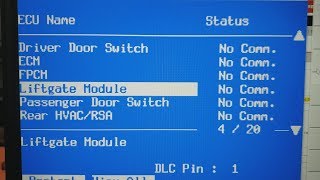
- GM GDS2 / Tech2: Module Communication Status / Poll Modules — This is the first step to see the scope of the problem. It polls all networks and lists which modules are communicating and which are not. If only the ECM is offline, the fault is isolated to the ECM's power, ground, or wiring. If multiple modules are offline, it suggests a network-wide issue.
- GM GDS2: Data Bus Diagnostics Tool — When you suspect a wiring issue like a short or electrical noise. This function provides a real-time voltage graph (oscilloscope view) of the CAN bus lines, making it possible to see signal integrity problems that a multimeter cannot.
- GM GDS2 / Tech2 with SPS2 subscription: ECM/PCM Programming and Setup — This is mandatory after replacing the ECM. The new or used module must be programmed with the vehicle's VIN and correct software. Failure to do so will result in a no-start condition.
- GM GDS2 / Tech2: Security Relearn (Immobilizer) — After replacing and programming an ECM, this procedure must be performed to sync the immobilizer system with the new module, allowing the engine to start and run. Sometimes a 10-minute key-on procedure is sufficient.
Wiring & Ground Locations
- G110 — On the rear of the passenger-side cylinder head, near the firewall.. This is a primary ground point for the ECM and TCM. It is a very common failure point due to corrosion or becoming loose, directly causing U0100.
- G101 — At the left front of the engine, on the lower block.. This ground serves the Engine Control Module (ECM) and Transmission Control Module (TCM). A fault here can cause a direct loss of ground for the ECM.
- G103 — On the cowl in the engine compartment, usually above the brake booster.. This grounds the Body Control Module (BCM), Instrument Panel Cluster (IPC), and the Data Link Connector (DLC). Since the BCM often acts as the gateway module, a bad ground here can disrupt the entire vehicle network.
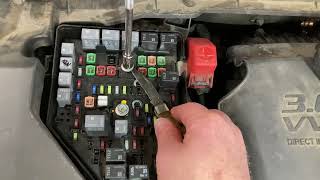
- Underhood Fuse Block (UBEC) — Driver's side of the engine compartment.. This is a central hub for both power and data lines. It is susceptible to water intrusion from clogged sunroof drains or windshield leaks, leading to internal corrosion that can cut power to the ECM or disrupt CAN bus signals passing through it.
- ECM Connectors (X1, X2, X3) — On the Engine Control Module itself, located in the engine bay near the firewall.. These are the direct connection points to the ECM. Loose pins, corrosion from moisture, or fretting from vibration can cause intermittent loss of power, ground, or data signals, directly triggering U0100.
Real Owner Repair Stories
- YouTube user diagnosing a 2017 Traverse (2017 Chevrolet Traverse LS AWD, 70,000 miles) — Gauges sweeping to max and back, 'Stabilitrac Disabled' message, no throttle response, engine stalling, and a long list of communication codes including U0100, U0073, U0121, and U0140.
❌ Tried (didn't work) The owner noted the problem seemed to get worse when running a module scan with his OBD-II tool, which initially made him suspect the tool itself.
✅ What actually fixed it The owner physically wiggled the large electrical connectors on the ECM. Doing so caused the symptoms to appear and disappear in real-time. The final fix was to disconnect the battery, unplug the ECM connectors, inspect for damage (none found), and reseat them firmly, ensuring the locking levers were fully engaged. The problem was an intermittent physical connection at the ECM itself. - Chevy HHR Network forum user (Chevrolet HHR (similar GM electrical architecture)) — No-start condition that acted like a dead battery, even with a new battery. After jump-starting, Check Engine and security lights were on, DIC dropped out, hard shifting, and loss of power steering. Code U0100 was present.
❌ Tried (didn't work) Pulling the 50-amp BCM maxi-fuse did not fully clear the issue.
✅ What actually fixed it A full power-down reset. The owner disconnected the negative battery cable and let the vehicle sit for 20 minutes. Upon reconnecting, the check engine light was off, and all systems returned to normal. This suggests a module logic lock-up ('brain fart') that was cleared by the hard reset.
"I Checked Everything" — The Actual Cause
- For code U0100, the equivalent of a 'smoke test clean' is when the CAN bus resistance check shows a perfect 60 ohms. This confirms the circuit and terminating resistors are electrically intact at that moment, but it can be misleading. The actual cause can be 'fretting corrosion' on connector pins, where micro-vibrations cause intermittent contact loss that a static resistance test won't see. It can also be a module that is 'logic-locked' and simply needs a hard reset (battery disconnect) to start communicating again, or a module that is failing only when it gets hot.
Documented NHTSA Reports
- NHTSA ODI #11205597: An owner reported that while driving, multiple error lights appeared on the dash and the steering wheel could not be turned. A diagnostic check revealed a stored code U0100. The errors would persist for 20-30 minutes before the vehicle returned to normal.
- NHTSA ODI #11129698: A report describes a rough start condition accompanied by Stabilitrak and Traction Control warnings and a flashing Check Engine Light. Dealer diagnostics pulled codes P0300, U0121, and U0100.
- NHTSA ODI #10676316: An owner seeking diagnosis for vehicle issues received codes U0100 (Engine Control Module), P0324 (Knock Control System), and P2135 (Throttle Position Sensor).
OEM Part Supersession History
12635019 (and others like 12630594, 12617230)→Varies by year. Later models use different hardware.— Hardware and software updates throughout the vehicle's lifecycle.
Heads up: ECM for 2009-2012 models.12653998 (interchanges with 12644446, 12633555, 12655007)→Varies by year.— Hardware and software updates for facelift models.
Heads up: ECM for 2013-2016 models.12670801→N/A— Final model year hardware.
Heads up: ECM for 2017 models. CRITICAL: No matter the part number, a replacement ECM is NOT plug-and-play. It MUST be programmed with the vehicle's VIN using GM's SPS2 software. A used ECM from another vehicle will not work until it is reprogrammed.
Model Year Variations Within This Range
- 2009-2012 (Pre-Facelift): These models use an earlier series of ECMs, such as part number 12635019. While the diagnostic principles are identical, the specific replacement ECM part number is different from later years.
- 2013-2017 (Post-Facelift): These models received a facelift and use a different series of ECMs (e.g., 12653998 for 2013-16, 12670801 for 2017). The physical location of grounds and connectors is largely the same, but the electronic components themselves were updated.
Diagnostic Flowchart
Other Known Issues on This Vehicle
Issues unrelated to this code that are worth knowing about as an owner of this generation:
- Premature Timing Chain Stretch (3.6L LLT Engine) 🔴 High — Very common on 2009-2012 models, often appearing between 70,000 and 120,000 miles. Less frequent on the 2013+ LFX engine. (Ref: Multiple TSBs exist, and a special coverage adjustment was issued for some vehicles.)
- Cracked 3-5-R Wave Plate in Transmission 🔴 High → Shop Transmission Assembly — Common in early models (especially 2009) with the 6T70/6T75 transmission, leading to loss of 3rd, 5th, and Reverse gears. (Ref: Special Coverage Adjustment 14404B extended the warranty for this specific failure to 10 years/120,000 miles.)
- Power Steering Pump/Gear Failure 🟠 Medium — Common on 2009-2012 models, causing intermittent loss of power steering assist, especially at low speeds. (Ref: Special Coverage Adjustment 14329 covered pump replacement for 10 years/150,000 miles.)
- Excessive Oil Consumption 🟠 Medium — Reported across many model years, often linked to a clogged PCV orifice in the valve cover or worn piston rings. (Ref: TSBs were issued to address diagnosis and repair, sometimes involving piston ring replacement.)
- Leaking A/C Lines to Rear HVAC 🟡 Low — The aluminum lines running to the rear auxiliary A/C unit are prone to corrosion and leaking, causing a loss of refrigerant.
- Water Pump Failure 🟠 Medium — A fairly common failure item across the 3.6L V6 engine's lifespan, leading to coolant leaks and potential overheating.
Used vs. New Parts: Buying Guide for This Vehicle
When a used part is the smart pick: A used Engine Control Module (ECM) is a cost-effective choice IF you have a confirmed plan for programming it. Many online sellers provide pre-programmed units. A used underhood fuse block or wiring harness pigtail from a junkyard is also a smart way to save money.
Donor-vehicle mileage cap: roughly under 100000 miles for the part to have meaningful remaining life.
What to inspect on the donor part:
- For an ECM: Ensure no physical damage to the case or connectors, and absolutely no signs of water damage or pin corrosion.
- For a Fuse Block: Inspect all terminals where fuses and relays plug in for any green/white corrosion or melted plastic. Reject any part with signs of overheating.
- Verify the donor vehicle was not a flood vehicle.
OEM-only on this vehicle (don't cheap out):
- Engine Control Module (ECM). While you can buy used OEM units, avoid unbranded 'new' clones. Stick with genuine ACDelco or a reputable remanufacturer that provides VIN programming and a warranty.
Aftermarket brands forum-validated for this vehicle:
- For pre-programmed ECMs: Flashmasters, Solo PCMs, Flagship One are frequently mentioned providers.
- For Batteries: ACDelco (OEM), Interstate, DieHard.
Brands owners have reported issues with on this vehicle:
- Any eBay or Amazon seller of used ECMs that does not explicitly offer VIN programming as part of the sale. A non-programmed module is a paperweight.
Real Owner Stories
Aggregated from forums and TSBs cited above. Mileages and costs reflect what owners reported in those sources.
2011 Chevrolet Traverse
Symptoms: The vehicle threw a U0100 code and the owner was performing diagnostic steps including a 60-ohm CAN bus resistance check at the OBD-II port.
What fixed it: Cleaning the G110 ground located on the passenger side of the engine block facing the firewall.
Source hint: reddit.com/r/MechanicAdvice and vehicle_specific_issues
2009-2017 Chevrolet Traverse
Symptoms: Check Engine Light, 'Service Stabilitrac', and 'Engine Power Reduced' messages appearing simultaneously.
What fixed it: Cleaning ground connections or replacing a weak battery.
Source hint: traverseforum.com
GM Platform Mate (GMC Acadia)
Symptoms: Identical communication symptoms to the Traverse, including intermittent loss of module communication.
What fixed it: Cleaning the G110 ground and checking for corroded wires in the main harness.
Source hint: acadiaforum.net
GM Platform Mate
Symptoms: Loss of GMLAN communication and codes U0073 and P0700.
What fixed it: Repairing wiring and connector issues at the 16-way transmission connector as outlined in TSB 08-07-30-021H.
Source hint: corvetteforum.com thread on TSB 08-07-30-021H
2012 Chevrolet Equinox
Symptoms: The check engine indicator was on with codes P069E, P0700, U0073, and U0100. The battery had been replaced twice and the vehicle required towing to the dealership multiple times.
What fixed it: Comprehensive electrical diagnosis following repeated battery failures and communication codes.
Source hint: NHTSA ODI #10733263
Related OBD-II Codes
Frequently Asked Questions
Does GM TSB 08-07-30-021H apply to my Chevrolet Traverse if I have a U0100 code?
Why is my Traverse displaying 'Service Stabilitrac' and 'Engine Power is Reduced' alongside the U0100 code?
Where is the G110 ground located on a 2011 Chevrolet Traverse?
Can a bad battery really cause a U0100 communication code on a 2009-2017 Traverse?
How can I check if my Traverse's CAN bus wiring is intact using the OBD-II port?
Could water leaking into my Traverse cause the U0100 code?
Helpful Videos

Used OEM Parts in Stock
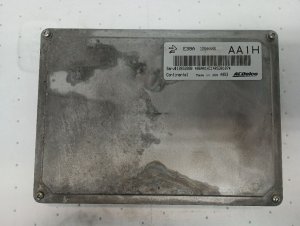
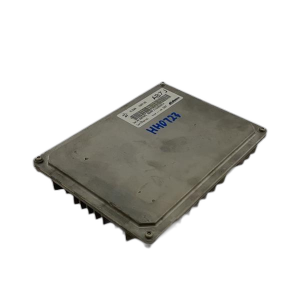
New Aftermarket Parts Available

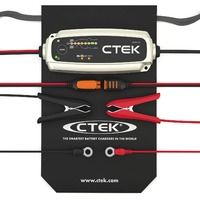

The information in this article is provided for general reference and educational purposes only. Vehicle specifications, procedures, and part compatibility can vary by production date, trim level, and region. Always consult your vehicle's factory service manual and verify part numbers before purchasing or performing repairs. Safety-critical components such as airbags, seat belts, and braking systems should be installed by a qualified professional.
- Chevrolet Traverse:
- 🧭 Diagnostic Flowchart
- 🎬 Helpful Videos
- 🛍️ Shop This Part
- What's Unique About the 2009-2017 Chevrolet Traverse
- Symptoms You May Notice
- Most Likely Causes
- Rare But Worth Checking
- Diagnosis Steps
- Parts You'll Likely Need
- Related Codes That Often Appear With This One
- Technical Service Bulletins (TSBs) & Recalls
- Platform-Specific Known Issues
- Mechanic-Grade Diagnostic Values
- Hidden / Shadow Codes Worth Checking
- Scan Tool Commands That Help
- Wiring & Ground Locations
- Real Owner Repair Stories
- "I Checked Everything" — The Actual Cause
- Documented NHTSA Reports
- OEM Part Supersession History
- Model Year Variations Within This Range
- Other Known Issues on This Vehicle
- Used vs. New Parts: Buying Guide for This Vehicle
- Real Owner Stories
- 2011 Chevrolet Traverse
- 2009-2017 Chevrolet Traverse
- GM Platform Mate (GMC Acadia)
- GM Platform Mate
- 2012 Chevrolet Equinox
- Related OBD-II Codes
- Frequently Asked Questions
- 🎟️ Get 5% Off