

U0100 on 2015-2022 Chevrolet Trax: Lost Communication Causes & Fixes
On a 2015-2022 Chevrolet Trax, code U0100 often points to a known issue where an internal failure in the Body Control Module (BCM) damages the Power Steering Control Module (PSCM). This is documented in GM Technical Service Bulletins. The fix requires replacing and programming both modules.
- On the 2015-2022 Trax, U0100 is very often caused by a specific failure pattern where the BCM fails and takes out the PSCM.
- Check for a 'Service Power Steering' message and a blown fuse (F6DA or F9DA) as key indicators of this known issue.
- If the TSB symptoms are present, both the BCM and PSCM must be replaced together to achieve a lasting repair.
- If TSB symptoms are not present, the next most likely cause is a chafed wiring harness at the firewall or near a ground stud.
- This is not a DIY-friendly repair due to the need for advanced network diagnostics and module programming.
What's Unique About the 2015-2022 Chevrolet TRAX

For the Chevrolet Trax and its platform-mate, the Buick Encore, U0100 is frequently not a random wiring or ECM problem. General Motors has issued specific Technical Service Bulletins (TSBs) for this platform that identify a pattern failure. An internal short on circuit 5985 within the Body Control Module (BCM) can send damaging voltage down the communication line, causing the Power Steering Control Module (PSCM) to fail. This triggers the U0100 code, which becomes "unrecoverable" and will not clear from the PSCM, often displaying a 'Rejected by Control Module' error on a scan tool. This makes diagnosis more direct than on other vehicles where the cause is often a mystery.
Diagnostic Flowchart

Tap your situation to follow the diagnostic path that matches what you're seeing on this vehicle.
Symptoms You May Notice

- Check Engine Light is on
- "Service Power Steering" message on the driver information center.
- Loss of power steering assist.
- Engine stalling or intermittent hesitation.
- No-start condition.
- Erratic instrument panel cluster gauges or display.
- Other warning lights, such as for ABS, Stability Control, or AWD, may illuminate.
- Hard transmission shifting.
- Replacing only the Power Steering Control Module (PSCM) or steering column without replacing the BCM. If the BCM has an internal short, it will damage the new PSCM, and the problem will return.
- Replacing the Engine Control Module (ECM) when the fault lies in the BCM, PSCM, or wiring.
- Attempting to clear the U0100 code from the PSCM without fixing the root cause. In the case of the BCM/PSCM failure, the code is latched and unrecoverable until both modules are replaced.
Most Likely Causes

- Faulty Body Control Module (BCM) and Power Steering Control Module (PSCM) 🔴 High Probability → Shop Power Steering Control Module A known pattern failure documented by GM in TSB #20-NA-206. An internal BCM failure shorts circuit 5985, which in turn damages the PSCM. This issue is so specific that GM has released multiple versions of the TSB covering different model years.
How to confirm: Check for a blown fuse (F6DA for 2017-2022 models, F9DA for 2019-2020 models). A professional scan tool will show U0100 in the PSCM and may display a 'Rejected by Control Module' error when attempting to clear the code. The code will be "unrecoverable" once set in this manner.
Typical fix: Replace both the Body Control Module (BCM) and the Power Steering Control Module (PSCM). The PSCM is replaced as part of the steering column assembly. Both modules require programming after installation.
Est. part cost: $700-$1500 - Wiring Harness Chafing 🟡 Medium Probability GM has identified several spots where the engine harness can rub against other components. TSB #19-NA-113 points to chafing against the bulkhead (firewall). TSB #18-NA-114 notes chafing against the G100 ground stud.
How to confirm: Visually inspect the engine wiring harness at the firewall and near the main ground points for signs of rubbing, exposed wires, or corrosion. Manipulating the harness in these areas while monitoring network data with a scan tool can help pinpoint the fault location.
Typical fix: Repair the damaged wires using proper splicing techniques and protect the harness from future contact using woven polyester electrical tape or loom. Reposition the harness for better clearance.
Est. part cost: $5-$25 - Low Battery Voltage or Poor Grounds ⚪ Low Probability → Shop Vehicle Battery Modern vehicles are highly sensitive to voltage fluctuations. A weak or failing battery can cause unpredictable communication errors between modules.
How to confirm: Test the battery voltage with a multimeter; it should be above 12.4 volts with the engine off. Inspect battery terminals for corrosion and ensure all main ground straps from the battery and engine to the chassis are clean and tight. A failing alternator can also cause voltage issues, so check charging voltage (should be ~14.2-14.8V) when the engine is running.
Typical fix: Charge or replace the battery. Clean or tighten ground connections. Replace the alternator if it's not charging correctly.
Est. part cost: $0-$250
Rare But Worth Checking
- Failed Engine Control Module (ECM/PCM): → Shop Engine Control Module (ECM) While possible, the ECM itself is rarely the root cause. The BCM/PSCM issue and wiring problems are far more common on the Trax. This should only be considered after all other possibilities are exhausted.
Diagnosis Steps
- Check the battery's state of charge and inspect terminals and ground connections for tightness and corrosion. A healthy battery should be above 12.4V engine-off.
- Scan all vehicle modules for codes. Note which modules are reporting 'Lost Communication' and which are not responding at all.
- Specifically check for a blown fuse in location F6DA (2017-2022) or F9DA (2019-2020), as this is a key indicator of the BCM/PSCM failure described in TSB #20-NA-206.
- If a power steering message is present and the relevant fuse is blown, attempt to clear the U0100 code. If it returns immediately with a 'Rejected by Control Module' message, the TSB #20-NA-206 condition is highly likely.
- Carefully inspect the engine wiring harness for any signs of chafing, especially where it passes the firewall/bulkhead (TSB #19-NA-113) and near the G100 ground stud (TSB #18-NA-114).
- If symptoms of TSB #20-NA-206 are confirmed, the definitive repair is to replace both the BCM and the steering column (which includes the PSCM), followed by programming.
- If no TSB symptoms are present, use a multimeter to check for proper resistance (around 60 ohms) across the CAN bus terminals (pins 6 and 14) at the OBD-II port to verify network integrity.
- If wiring and modules seem okay, the final step is to suspect a faulty ECM, though this is the least likely cause.
Parts You'll Likely Need
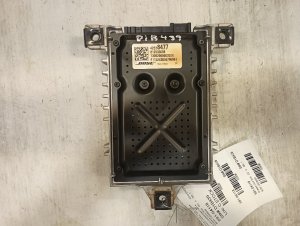
- Body Control Module (BCM)
(OEM #13594571 (superseded by 13534185))— This is the root cause of the common U0100 issue on the Trax, as it internally shorts and damages the PSCM. Requires programming.
Trusted brands: ACDelco (Genuine GM)
OEM price range: $250-$400
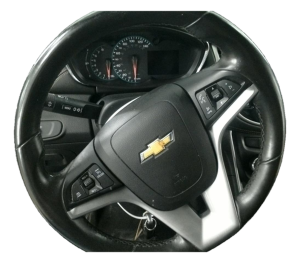
Aftermarket price range: $150-$300 - Steering Column with Power Steering Control Module (PSCM)
(OEM #42622461)— The PSCM is damaged as a result of the BCM failure. It is replaced as part of the steering column assembly.
Trusted brands: ACDelco (Genuine GM)
OEM price range: $500-$1100
Aftermarket price range: $400-$800
Related Codes That Often Appear With This One
- P0700 — Indicates the Transmission Control Module (TCM) has requested the check engine light be turned on. This often happens when the TCM also loses communication with the ECM, a common side effect of a general CAN bus failure.
- U0073 — This code means 'Control Module Communication Bus A Off,' indicating a general network problem, often caused by the same engine harness chafing that triggers U0100.
- U1814-02 — This code for 'Powertrain Wake-Up Communication Circuit' is specifically mentioned alongside U0100 in TSB #20-NA-206 related to the BCM/PSCM failure.
- U0121 — Indicates 'Lost Communication with Electronic Brake Control Module (EBCM),' often set due to the same engine harness chafing issues noted in TSBs #19-NA-113 and #18-NA-114.
Technical Service Bulletins (TSBs) & Recalls
- 20-NA-206: Service Power Steering Message Displayed, U0100 Set will not Clear, Blown Fuse F6DA/F9DA. Points to BCM/PSCM failure. Multiple versions exist covering 2017-2022 models.
- 19-NA-113: Erratic Instrument Panel Cluster, MIL Illuminated - DTC U0073, U0100, U0101 and/or U0121 Set. Caused by engine harness chafing against the bulkhead.
- 18-NA-114: Intermittent Service AWD/Stability Messages, No Crank, MIL Illuminated - Multiple U-codes including U0100. Caused by engine harness chafing against the G100 Ground stud.
Platform-Specific Known Issues
- TSB #20-NA-206 documents a pattern where an internal BCM failure on circuit 5985 causes a short that damages the PSCM, leading to U0100, a 'Service Power Steering' message, and a blown fuse (F6DA or F9DA). The official fix is to replace both modules.
- TSB #19-NA-113 and #18-NA-114 identify common chafing points on the engine wiring harness (against the bulkhead and G100 ground stud) that can cause U0100 and other communication codes by shorting CAN bus wires.
Mechanic-Grade Diagnostic Values
- CAN Bus Network Resistance — expected: Approximately 60 Ohms. Failure: A reading of 120 Ohms indicates an open circuit or a missing terminating resistor. A reading significantly less than 60 Ohms suggests a short between the CAN High and CAN Low wires.
- CAN Bus Voltage (Key On, Engine Off) — expected: CAN High (Pin 6): ~2.6V to 3.5V. CAN Low (Pin 14): ~1.5V to 2.4V.. Failure: Voltages that are identical, stuck at 0V, or stuck at battery voltage indicate a short to each other, ground, or power, respectively.
- Battery Voltage (Engine Off) — expected: Above 12.4 Volts. Failure: A reading below 12.4V indicates a discharged battery, and below 12.0V suggests a deeply discharged or faulty battery that can cause communication faults.
Scan Tool Commands That Help
- GDS2 (Global Diagnostic System 2): Module Programming (via SPS2) — Required after replacing the Body Control Module (BCM) or Power Steering Control Module (PSCM). The new module must be programmed with the vehicle's VIN and specific configuration data to function correctly. This is typically done online via GM's Service Programming System (SPS2).
- GDS2 (Global Diagnostic System 2): Clear All DTCs — Used after a repair to erase stored fault codes from all modules. For the specific BCM/PSCM failure on the Trax, if U0100 immediately returns in the PSCM with a 'Rejected by Control Module' status, it confirms the TSB condition.
- GDS2 (Global Diagnostic System 2): Module Diagnostics / Data Display — Allows a technician to view the status of all modules on the network. This is the first step to see which modules are actively reporting 'Lost Communication' and which are not responding at all, helping to isolate the source of the network failure.
Wiring & Ground Locations
- BCM (Body Control Module) — Located under the driver's side dashboard, to the left of the steering column, often behind the fuse access panel or knee bolster.. The BCM is the source of the internal short on circuit 5985 that damages the PSCM, as documented in TSB #20-NA-206. It has multiple large connectors (often color-coded) that are critical to inspect.
- G100 — A ground stud located at the left front of the engine block.. TSB #18-NA-114 identifies this ground stud as a point where the engine wiring harness can chafe, causing shorts that lead to U0100 and other communication codes.
- G103 / G110 (Varies by GM platform) — Typically located on the cowl in the engine compartment, above the brake booster, or on the driver's side of the engine block.. These are major ground points for multiple modules, including the ECM and TCM. A loose or corroded connection at these locations can cause intermittent loss of communication for several modules simultaneously.
- OBD-II Data Link Connector (DLC) — Under the driver's side dashboard.. Pins 6 (CAN-H) and 14 (CAN-L) provide a direct access point for testing the resistance and voltage of the main high-speed communication network.
Real Owner Repair Stories
- YouTube channel 'Broken Cars with Johnnie Mic' (2015 GMC Yukon (similar GM platform)) — U0100 and U0101 codes, no communication with ECM or TCM, loss of power steering assist, no tachometer reading, intermittent no-start.
❌ Tried (didn't work) Initial scanning showed multiple modules offline.
✅ What actually fixed it The technician located ground G110 on the driver's side of the engine, which is a common ground for the ECM and TCM. The ground bolt was loose. Cleaning the connection and tightening the bolt resolved all communication issues and symptoms.
OEM Part Supersession History
13594571, 13591222→13534185— Standard part evolution for bug fixes, component updates, or manufacturer changes. The new part is the current service replacement.
Heads up: The new part number 13534185 is the correct replacement for the older numbers and should be used for service.
Model Year Variations Within This Range
- 2017-2022: The Chevrolet Trax received a significant facelift for the 2017 model year, which included redesigned front/rear fascias, new headlamps, and a completely updated interior instrument panel and center stack with a new 7-inch MyLink touchscreen. These changes introduced different electrical components, fuse box layouts (as noted by the different fuses in TSB #20-NA-206), and potentially different harness routing compared to the 2015-2016 models.
- 2017-2022 vs. 2019-2020: TSB #20-NA-206 specifies different fuse designations for the BCM/PSCM failure. Fuse F6DA is cited for 2017-2022 models, while fuse F9DA is cited for 2019-2020 models, indicating a change in the underhood fuse block layout even within the post-facelift generation.
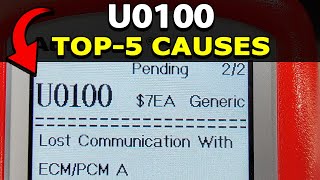
Helpful Videos
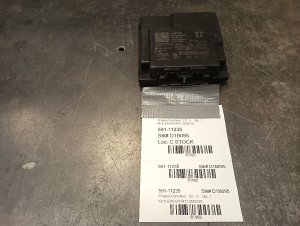
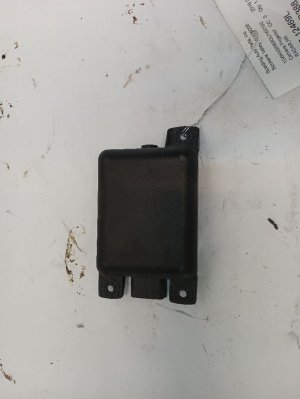
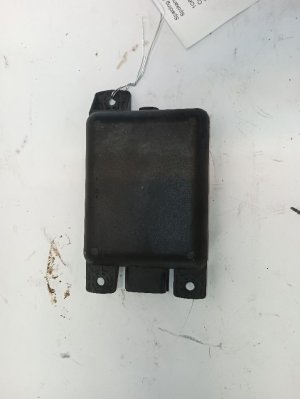
We Have This Part in Stock

The information in this article is provided for general reference and educational purposes only. Vehicle specifications, procedures, and part compatibility can vary by production date, trim level, and region. Always consult your vehicle's factory service manual and verify part numbers before purchasing or performing repairs. Safety-critical components such as airbags, seat belts, and braking systems should be installed by a qualified professional.
- Chevrolet TRAX:
- 🧭 Diagnostic Flowchart
- 🎬 Helpful Videos
- 🛍️ Shop This Part
- What's Unique About the 2015-2022 Chevrolet TRAX
- Symptoms You May Notice
- Most Likely Causes
- Rare But Worth Checking
- Diagnosis Steps
- Parts You'll Likely Need
- Related Codes That Often Appear With This One
- Technical Service Bulletins (TSBs) & Recalls
- Platform-Specific Known Issues
- Mechanic-Grade Diagnostic Values
- Scan Tool Commands That Help
- Wiring & Ground Locations
- Real Owner Repair Stories
- OEM Part Supersession History
- Model Year Variations Within This Range
- 🎟️ Get 5% Off