

U0100 on 2020-2021 Ford Explorer: Lost Communication Causes and Fixes
On a 2020-2021 Ford Explorer, a U0100 code is most often caused by a software glitch in the Powertrain Control Module (PCM) or another related module, especially on early-build models. The fix is typically a software update performed by a dealer under a Technical Service Bulletin (TSB). Always check for TSBs and test the battery before attempting more complex wiring or module repairs.
- For a 2020-2021 Explorer, a U0100 code is very likely a software issue that a Ford dealer can fix with a PCM update.
- Always check for applicable TSBs before replacing any parts.
- Test the battery thoroughly; low voltage is a simple but common cause of network communication faults.
- Do not drive the vehicle, as it could stall or lose control unexpectedly.
- If the code is only present in the radio (ACM) and the car drives fine, it can be safely ignored per Ford's guidance.
What's Unique About the 2020-2021 Ford EXPLORER

For the 6th generation Ford Explorer, particularly early-build 2020-2021 models, this code is frequently linked to software issues rather than physical part failures. Ford has issued multiple Technical Service Bulletins (TSBs) acknowledging that software in the PCM or Gear Shift Module (GSM) can cause this code to appear, sometimes accompanied by other communication codes. This is a key difference from many other vehicles where a U0100 code often points first to wiring or battery problems.
Diagnostic Flowchart

Tap your situation to follow the diagnostic path that matches what you're seeing on this vehicle.
Symptoms You May Notice

- Illuminated Malfunction Indicator Lamp (Check Engine Light).
- Illuminated Powertrain Malfunction (Wrench) Indicator Lamp.
- Vehicle may not start, or the starter may not engage.
- Engine may stall or run rough.
- Erratic or harsh transmission shifting.
- Loss of power or reduced engine performance ('limp mode').
- Multiple warning lights appearing on the dashboard simultaneously (e.g., ABS, traction control).
- Shifter may become locked, preventing the vehicle from being put into neutral for towing.
- In some specific cases, no observable symptoms at all (see Common Misdiagnoses).
- Replacing the PCM when only a software update is required. This is a costly mistake, as the new PCM will still need the correct programming. 🎬 Watch: How to program a module on a 2020 Explorer.
- Chasing a U0100 code found only in the Audio Control Module (ACM). TSB SSM 48916 explicitly states that if this code is present in the ACM with no other symptoms or warning lights, it should be disregarded as a benign glitch.
Most Likely Causes

- Powertrain Control Module (PCM) or Gear Shift Module (GSM) Software Issue 🔴 High Probability → Shop Engine Control Module (ECM) Multiple TSBs were issued for early-build 2020-2021 Explorers. TSB 20-2429 points to PCM software on 3.3L Hybrids, while SSM 49519 points to GSM software on models with 10-speed automatic transmissions.
How to confirm: Check the vehicle's VIN and build date against TSBs 20-2429 (for Hybrids built on/before 10/21/2020) and SSM 49519 (for vehicles built on/before 10/29/2020). A Ford dealer can verify TSB applicability using the OASIS system.
Typical fix: Reprogram the affected module (PCM or GSM) with the latest software version using a Ford diagnostic scan tool. This is a 0.4-hour job according to TSB 20-2429. The technician must connect a stable battery charger during the reflash process.
Est. part cost: $0 (if under warranty) - Weak or Failing Battery 🟡 Medium Probability → Shop Vehicle Battery Modern vehicles are highly sensitive to voltage. A battery providing less than 12.4 volts at rest, or one that fails a load test, can cause various modules to drop off the communication network, triggering U-codes.
How to confirm: Test the battery voltage with the engine off using a multimeter. A healthy, fully charged AGM battery should read at least 12.6 volts. Perform a load test for a definitive assessment. Check for corroded or loose terminals.
Typical fix: Recharge or replace the battery. Ensure terminals are clean and tight.
Est. part cost: $200-$400 - CAN Bus Wiring or Connector Fault ⚪ Low Probability While less common than software issues on this platform, wiring can still be damaged by vibrations, improper repairs, rodents, or corrosion. Poor ground connections are also a potential cause.
How to confirm: Perform a visual inspection of the wiring harness between the main modules (PCM, BCM, TCM, GWM). Check for resistance across the CAN bus pins (6 and 14) at the OBD-II port; it should be approximately 60 ohms with the battery disconnected. One owner on an Explorer ST forum noted a poor ground connection behind the glove box as a source of no-start issues.
Typical fix: Repair the damaged section of wiring, clean/re-seat the affected connector, or repair a faulty ground connection.
Est. part cost: $5-$200
Rare But Worth Checking
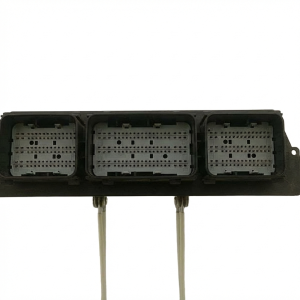
- Faulty Powertrain Control Module (PCM): → Shop Engine Control Module (ECM) This is an expensive last resort. The PCM should only be replaced after all software, wiring, and power/ground issues have been definitively ruled out. A replacement PCM will require programming by the dealer.
- Faulty Gateway Module (GWM) or other module: A single faulty module can sometimes disrupt the entire network by spamming the bus with bad data. Diagnosis involves systematically disconnecting modules to see if communication is restored, which is a job for a specialist.
- Blown Fuse: A user on an Explorer ST forum traced a no-start condition, which can be associated with U0100, to a blown starter motor fuse. 🎬 See how a simple fuse can fix a no-start issue. Always check relevant fuses for the PCM and other control modules.
Diagnosis Steps
- Perform a full vehicle scan to see which modules are reporting the U0100 code and if other codes are present. Note which modules are and are not communicating. 🎬 Watch: Troubleshooting a 2020 Explorer with no module communication.
- If the code is ONLY in the Audio Control Module (ACM) and there are no symptoms, disregard the code per TSB SSM 48916.
- Check battery voltage and perform a load test. Ensure the battery is healthy (12.6V+ at rest) and terminals are clean and tight. Low voltage is a primary cause of communication faults.
- Check for applicable TSBs. For 3.3L Hybrid models built on or before 10/21/2020, TSB 20-2429 is highly relevant. For other models with 10-speed transmissions built on or before 10/29/2020, check for SSM 49519.
- If a software-related TSB applies, have a Ford dealer or qualified shop reprogram the specified module (PCM or GSM). Note that after a PCM reprogram, the adaptive transmission strategy is reset, which may result in firmer shifts for several days.
- If no TSBs apply or the software update does not resolve the issue, begin network diagnostics. Disconnect the battery.
- Inspect all relevant fuses for the PCM, TCM, and other modules.
- Measure resistance between Pin 6 (CAN-H) and Pin 14 (CAN-L) on the OBD-II port. A reading of ~60 ohms indicates the main terminating resistors are intact. A reading of ~120 ohms suggests an open in the circuit or a faulty module/resistor.
- Inspect the main wiring harnesses connected to the PCM, GWM, and BCM for any signs of damage, corrosion, or loose pins. Pay special attention to ground connections. A known failure point is a ground under the driver's seat.
- If wiring and network resistance check out, the issue may be a faulty module. This requires advanced diagnostics, often by isolating modules one by one to see when communication is restored.
Parts You'll Likely Need
- PCM/GSM Software Update — This is not a physical part, but a service. It is the most common documented fix for this code on this specific vehicle, per multiple Ford TSBs.
Trusted brands: Ford (Dealer Service)
OEM price range: $150-$300
Aftermarket price range: N/A - Battery (AGM)
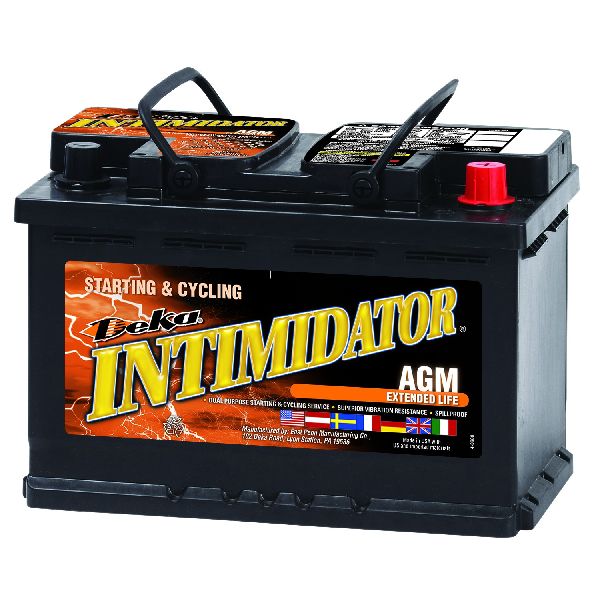
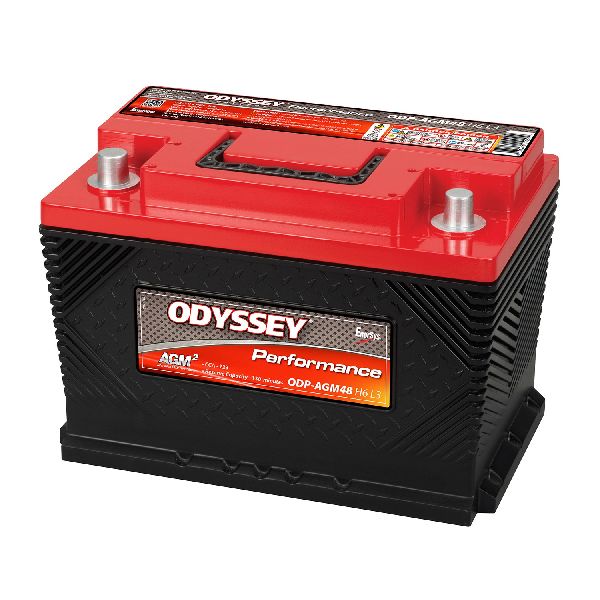
(OEM #BAGM-94RH7-800)— Low system voltage is a common cause of communication codes across all modern vehicles. The Explorer uses an AGM battery, which is more expensive than conventional types. The OEM Motorcraft part is an 800 CCA, Group Size 94R battery.
Trusted brands: Motorcraft, Interstate, DieHard
OEM price range: $250-$400
Aftermarket price range: $200-$300
Related Codes That Often Appear With This One
- U0155 — Lost Communication With Instrument Panel Cluster (IPC) Control Module. Often set alongside U0100 due to network-wide software glitches as noted in TSB SSM 49519. A Reddit user with a 2020 Explorer reported U0100 and U0155 together with an ABS light on.
- P166B — A manufacturer-specific code that can appear with U0100 as part of the same fault condition described in TSB SSM 49519.
- P0929 — Gear Shift Lock Solenoid/Actuator Control Circuit 'A' Range/Performance. Can be triggered by the same communication fault noted in TSB SSM 49519.
- P0919 — Gear Shift Position Control Error. Also listed in TSB SSM 49519 as a related code.
- U0121 — Lost Communication With Anti-Lock Brake System (ABS) Control Module. A technician on Reddit noted fixing U0100 and U0121 on a Ford with a PCM reflash.
Technical Service Bulletins (TSBs) & Recalls
- TSB 20-2429: 3.3L Hybrid - Illuminated MIL With DTC U0100 In BECM.
- SSM 49519: Illuminated MIL and/or wrench lamp with multiple DTCs including U0100, due to GSM software.
- SSM 49218: Illuminated MIL and/or wrench lamp with multiple DTCs including U0100. (Superseded by or related to SSM 49519).
- SSM 48916: DTC U0100 Stored In The ACM with no observable conditions.
- TSB 21-2452: Similar issue on Lincoln Aviator 3.0L PHEV, where U0100 in the BECM is fixed by a coordinated software flash of multiple modules.
Platform-Specific Known Issues
- TSB 20-2429: Affects 2020-2021 Explorer Hybrids and Police Interceptor Utility Hybrids with the 3.3L engine built on or before October 21, 2020. A U0100 code may be stored in the Battery Energy Control Module (BECM) due to a PCM software glitch. The fix is a PCM reprogram.
- TSB SSM 49519: Affects some 2020-2021 Explorers with a 10R60/10R80-MHT transmission built on or before October 29, 2020. May exhibit a U0100 along with other codes (U0155, P166B, P0929, P0919) and a wrench light. This is due to a software issue in the Gear Shift Module (GSM), and the fix is to reprogram the GSM.
Mechanic-Grade Diagnostic Values
- CAN Bus Network Resistance — expected: ~60 Ohms. Failure: A reading of ~120 Ohms indicates one of the two terminating resistors is offline. A reading significantly different from 60 or 120 Ohms suggests a wiring short or fault.
- CAN Bus Voltage (Key On, Engine Off) — expected: CAN High (Pin 6) and CAN Low (Pin 14) should both read approximately 2.5V relative to ground.. Failure: A line stuck near 0V or battery voltage indicates a short to ground or power.
- Battery Voltage (At Rest) — expected: 12.6 Volts or higher for a fully charged AGM battery.. Failure: A reading below 12.4V indicates a discharged or weak battery that can cause module communication errors.
- Ground Circuit Resistance — expected: Less than 0.1 Ohms. Failure: Higher resistance indicates a poor ground connection, a common cause of communication failures.
Scan Tool Commands That Help
- Ford IDS/FDRS (or compatible J2534/aftermarket tool): Programmable Module Installation (PMI) — This function is required when replacing a major control module (like the PCM, BCM, etc.). It reads the configuration data from the old module and writes it to the new one to ensure all vehicle options and settings are correctly configured.
- Ford IDS/FDRS: Module Reprogramming — This is the specific function used to apply the software updates called for in TSBs like 20-2429. It flashes the module with new firmware from Ford's servers to correct known bugs.
- Ford IDS/FDRS: Network Test — This automated test pings all modules on the network to quickly identify which ones are not communicating, helping to isolate the source of a U0100 code.
Wiring & Ground Locations
- Gateway Module (GWM) — Mounted under the driver side of the instrument panel. The OBD-II diagnostic port is physically integrated into this module.. The GWM is the central hub for all vehicle communication networks. A failure here or in its connections can cut off communication to the scan tool and between different networks, directly causing U-codes.
- Critical Ground Connection — Under the driver's seat.. A technician identified a bad ground at this location as the root cause of a complete no-power, no-communication issue on a 2020 Explorer. The modules had power but lacked a sufficient ground path to operate.
- HS-CAN Bus Wires — In the wiring harness located along the passenger-side door sill.. The specific wires are Green/Orange (CAN High) and Gray/Blue (CAN Low). Knowing these colors and location is critical for physically testing network integrity (resistance, voltage) away from the OBD-II port.
- Transfer Case Control Module (TCCM) — Underneath the driver's seat, below the carpet and an HVAC vent.. While not the PCM, a fault in the TCCM can disrupt the entire network. Its location makes it vulnerable to water damage from spills or leaks, which can cause corrosion and communication failures.
Real Owner Repair Stories
- YouTube channel 'Pine Hollow Auto Diagnostics' (2020 Ford Explorer 2.3L) — No power up when pressing start button, no communication with PCM and BCM, multiple communication DTCs (U0140, U0155).
❌ Tried (didn't work) Initial scan showed no communication with key modules.
✅ What actually fixed it A bad ground connection under the driver's seat was identified. The technician load-tested the ground and found the fault. Repairing the ground connection restored all power and communication. - Reddit user 'BuildingHot1869' in r/FordExplorer (2020 Explorer XLT, 65,000 miles) — Multiple simultaneous warnings on dash (hill start assist, pre-collision assist, service advanctrac, service AWD), loss of cruise control and drive modes. Codes included U0102 and U0100.
❌ Tried (didn't work) Clearing codes with FORSCAN (some returned immediately)., Battery tested okay (12.4V off, 10.8V cranking, 14.6V running).
✅ What actually fixed it The vehicle was taken to a dealer. The final repair was the replacement of the front axle disconnect actuator assembly, at a cost of approximately $2100. This corresponds to TSB 23-2114, which addresses faults in this component.
"I Checked Everything" — The Actual Cause
- In a documented case on a 2020 Explorer with no-communication codes, the vehicle's modules had proper power at their connectors, but the vehicle was dead. A simple voltage check would miss the issue. The actual cause was a high-resistance ground connection under the driver's seat that failed under load. The fix was found by providing an alternate ground path with a test light, which immediately powered up the modules.
When the Usual Fixes Don't Work
- While software updates and battery issues are the most common causes, they are not the only ones. In one real-world case, a 2020 Explorer with multiple network-related warnings and a U0100 code had a healthy battery and was ultimately fixed by replacing a faulty front axle disconnect actuator for over $2,000, demonstrating that a mechanical failure in a related system can cascade into network communication codes. In another instance, a user replaced the battery and performed a BCM reset, only to have the same electrical faults return three days later, proving a new battery is not a guaranteed solution.
OEM Part Supersession History
Unknown (Original Front Axle Disconnect Actuator/Intermediate Shaft)→N1MZ-3A329-A (Intermediate Shaft)— The original front axle disconnect assembly was prone to failure, causing powertrain malfunction warnings and setting DTCs like C00A6 and C0631, which can be accompanied by network communication faults.
Model Year Variations Within This Range
- 2020-2021 (Early Builds): Vehicles built on or before specific dates in late 2020 are subject to TSBs for software-related U0100 codes. TSB 20-2429 affects Hybrids built on/before Oct 21, 2020, while SSM 49519 affects other models built on/before Oct 29, 2020. Later 2021 models are less likely to have these specific software issues.
- 2020-2021 (Builds on or before Aug 30, 2021): These vehicles were equipped with a front axle disconnect actuator that was prone to failure. A revised part was specified in TSB 23-2114. Failure of this component can lead to a wrench light and network codes, a problem less likely on later builds with the revised part.
Helpful Videos
Used OEM Parts in Stock
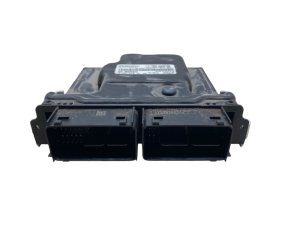
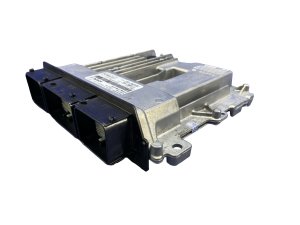
New Aftermarket Parts Available


The information in this article is provided for general reference and educational purposes only. Vehicle specifications, procedures, and part compatibility can vary by production date, trim level, and region. Always consult your vehicle's factory service manual and verify part numbers before purchasing or performing repairs. Safety-critical components such as airbags, seat belts, and braking systems should be installed by a qualified professional.
- Ford EXPLORER:
- 🧭 Diagnostic Flowchart
- 🎬 Helpful Videos
- 🛍️ Shop This Part
- What's Unique About the 2020-2021 Ford EXPLORER
- Symptoms You May Notice
- Most Likely Causes
- Rare But Worth Checking
- Diagnosis Steps
- Parts You'll Likely Need
- Related Codes That Often Appear With This One
- Technical Service Bulletins (TSBs) & Recalls
- Platform-Specific Known Issues
- Mechanic-Grade Diagnostic Values
- Scan Tool Commands That Help
- Wiring & Ground Locations
- Real Owner Repair Stories
- "I Checked Everything" — The Actual Cause
- When the Usual Fixes Don't Work
- OEM Part Supersession History
- Model Year Variations Within This Range
- 🎟️ Get 5% Off