

U0100 on 2017-2021 Ford F-250 SD: Lost Communication with ECM/PCM Causes and Fixes
U0100 on a 2017-2021 Ford F-250 indicates a communication loss with the main engine computer (PCM). This often causes a no-start condition or stalling. The most common causes are a weak battery, poor ground connections, or chafed/corroded wiring in the main harness, particularly near the driver's side fender liner or parking brake assembly, not a failed PCM.
- U0100 means a network failure, not necessarily a bad PCM. Do not replace the PCM without a thorough diagnosis.
- This code is serious and can leave you stranded; driving is not recommended.
- Always start your diagnosis with the simplest and most common causes: check the batteries, all related fuses, and clean all major ground connections.
- Carefully inspect the wiring harness for any signs of physical damage, as this is a frequent point of failure on work trucks.
- Due to the complexity of CAN bus diagnostics, professional help is strongly recommended if the issue isn't a simple battery or fuse problem.
What's Unique About the 2017-2021 Ford F-250 SD

The Ford Super Duty (P558 platform) is a complex truck with extensive wiring harnesses that are often exposed to harsh working conditions, making them susceptible to chafing, moisture intrusion, and corrosion. A very common and well-documented failure point is the large wiring harness in the driver's side front wheel well, which can rub against the fender liner and eventually short out the CAN bus wires. Another known trouble spot is the harness near the parking brake assembly inside the cab, which can get damaged by foot movement or the brake mechanism itself. While the provided NHTSA TSBs (SSM 54333, SSM 53994) are for newer 2023-2025 models, they highlight a platform tendency for communication issues stemming from poor ground connections (specifically G113) and other electrical faults that can lead to a U0100 code and a no-start condition. This suggests that checking grounds and specific, known-problem wiring harnesses is a critical first step on these trucks.
Diagnostic Flowchart

Tap your situation to follow the diagnostic path that matches what you're seeing on this vehicle.
Symptoms You May Notice

- No-crank, no-start condition.
- Engine stalls intermittently, possibly while driving.
- Multiple warning lights on the dashboard (Check Engine, ABS, AdvanceTrac, Service Trailer Brake, etc.).
- Odometer displays dashes (-------) instead of mileage.
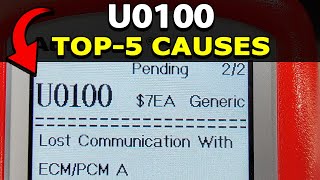
- Loss of communication with the scan tool, or the tool returns general errors and cannot see the PCM. 🎬 Learn the top 5 causes for a U0100 trouble code.
- Transmission may not shift correctly or may go into a limp mode.
- Loss of power steering assist or other module-dependent features.
- Clicking noise from the passenger side dash area when trying to start, but the starter does not engage. 🎬 Watch this case study of a 2017 F-250 no-crank diagnosis.
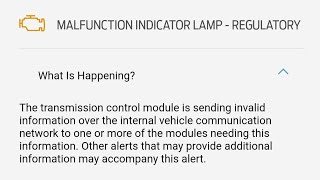
- Replacing the ABS module, instrument cluster, or other modules that are reporting the U0100 code. These modules are typically reporting the code because they cannot hear the PCM; they are not the source of the problem.
- Replacing the PCM without first performing a thorough inspection of the wiring harness, especially at the known chafe points.
Most Likely Causes

- Damaged or Corroded Wiring Harness 🔴 High Probability The extensive wiring harnesses can rub against the frame, engine components, or firewall. A primary known failure point on 2017-2021 Super Duty trucks is the main harness located behind the driver's side front fender liner. Vibration and tire debris can cause the harness to chafe, exposing and shorting the CAN bus wires. Another common spot is the harness near the parking brake pedal assembly.
How to confirm: Visually inspect the main engine and body harnesses for signs of rubbing, melting, or corrosion. Specifically, remove the driver's side front wheel and fender liner to inspect the large harness that runs along the frame rail. Also, check the wiring near the parking brake pedal assembly for damage.
Typical fix: Repair the damaged section of the wire(s) using solder and heat shrink. Protect the harness from future damage by re-routing it, securing it away from sharp edges, and wrapping it in protective loom or high-quality tape. 🎬 See how to fix common CAN bus communication wiring faults.
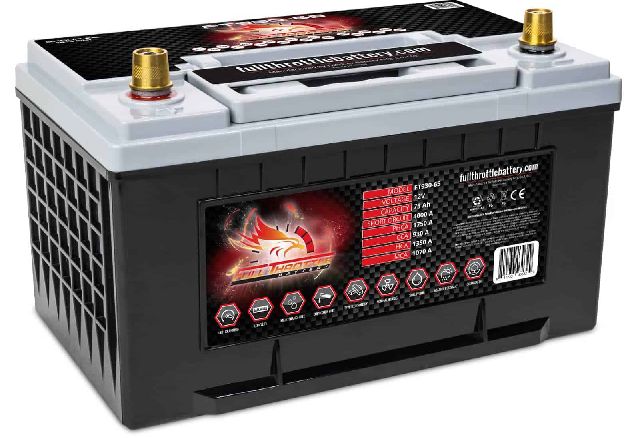
Est. part cost: $10-$75 for repair materials and protective loom - Weak or Faulty Battery/Poor Connections 🔴 High Probability → Shop Vehicle Battery Modern trucks have a high electrical demand, and low voltage (<12.4V) is a primary cause of modules dropping off the communication network. The dual-battery system in diesel models adds complexity, and an imbalance or failure in one battery can cause issues. Battery cable ends can also become loose or corroded.
How to confirm: Test both batteries individually with a multimeter (should be >12.4V with engine off). Perform a load test on both batteries. Ensure all battery terminals and cable ends are clean, free of corrosion, and tight.
Typical fix: Clean battery terminals and cable ends. Charge or replace weak or faulty batteries. It is recommended to replace both batteries at the same time on diesel models.
Est. part cost: $150-$500 for one or two quality batteries - Poor Ground Connections 🟡 Medium Probability TSBs on the Super Duty platform point to ground issues as a cause for communication codes. Grounds on the frame, engine block, and firewall can become loose or corroded. While TSB SSM 53994 points to ground G113 on newer models, checking all major grounds is crucial for the 2017-2021 models as well.
How to confirm: Locate and inspect major ground points for the PCM and BCM. On the 2017+ models, key grounds are located in the passenger kick panel area (G105, G129) and on the frame rails. Check for tightness and corrosion. Perform a voltage drop test on the ground circuit.
Typical fix: Remove the ground connection, clean the contact surfaces to bare metal, apply dielectric grease, and re-secure it tightly.
Est. part cost: $0-$10 for cleaning supplies - Faulty Relay or Fuse in Power Distribution Box ⚪ Low Probability Relays, particularly the PCM power relay, can fail over time, cutting power to the module and causing a loss of communication. Corrosion can also build up in the fuse box sockets, leading to a bad connection for a relay or fuse. In one documented case, a bad connector pin for the Run/Start relay was the culprit.
How to confirm: Check all fuses related to the PCM, BCM, and TCM in both the engine bay Power Distribution Box and the passenger compartment fuse panel. A key fuse is F52 in the BCM (driver's side) for PCM power. Swap the PCM power relay with a known good relay of the same type to see if the fault clears.
Typical fix: Replace the faulty relay or fuse. If the socket is corroded, it will need to be cleaned or replaced.
Est. part cost: $10-$40 for a relay
Rare But Worth Checking
- Faulty Powertrain Control Module (PCM): → Shop Engine Control Module (ECM) This is rarely the cause. All other possibilities, especially wiring and grounds, should be exhaustively ruled out before condemning the expensive PCM. A PCM failure is more likely if the vehicle has been subject to water damage or a significant electrical surge.
- Faulty Gateway Module (GWM) or Body Control Module (BCM): → Shop Body Control Module The GWM is built into the OBD-II port on these trucks and acts as a router for the CAN bus networks. If it fails, it can take down communication between networks. The BCM also plays a critical role in network communication. This requires advanced diagnostics to confirm.
- Aftermarket Electronics: Improperly installed remote starters, alarms, tuners, or even plug-in OBD-II devices can interfere with or damage the CAN bus network, causing communication faults. Always remove all aftermarket electronics when diagnosing a U0100 code.
Diagnosis Steps
- Check and charge the vehicle's batteries. Ensure voltage is stable and above 12.4 volts on both batteries. Clean all terminals.
- Use a quality OBD-II scanner to perform a full network scan. Note which modules are reporting 'Lost Communication' and which modules are not responding at all (e.g., PCM, TCM).
- Check all fuses related to the PCM, BCM, and Ignition Control. Pay special attention to the PCM power fuse (F52 in BCM) and the PCM power relay in the engine bay fuse box.
- Inspect the main battery ground cables and engine/body ground straps for tightness and corrosion. Clean as necessary. Key locations are on the frame rails and in the passenger kick panel.
- CRITICAL: Visually inspect the main wiring harness for any signs of chafing, rubbing, or melting. The two most important areas are: 1) The harness in the driver's side front wheel well, behind the liner. 2) The harness near the emergency brake pedal assembly inside the cab.
- With the battery disconnected, measure the resistance between Pin 6 (CAN High) and Pin 14 (CAN Low) at the OBD-II port. A healthy network should read approximately 60 ohms. A reading of 120 ohms indicates a missing terminating resistor or a break in the circuit. A reading near 0 ohms indicates a short between the two lines.
- If a wiring issue is suspected, perform a continuity check on the CAN
Parts You'll Likely Need
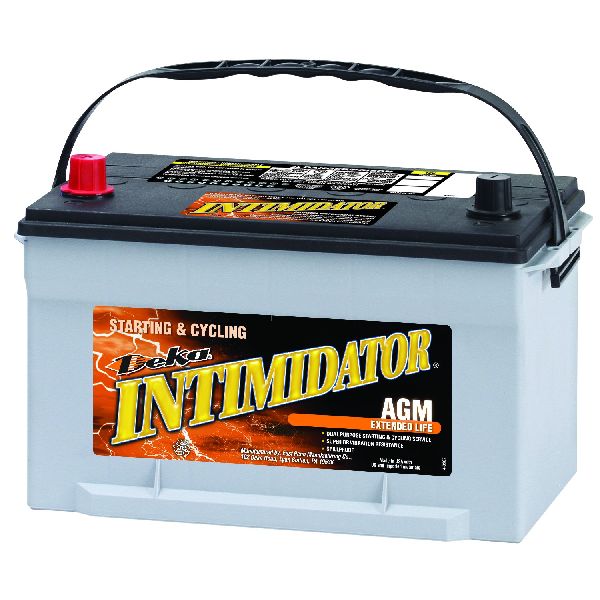
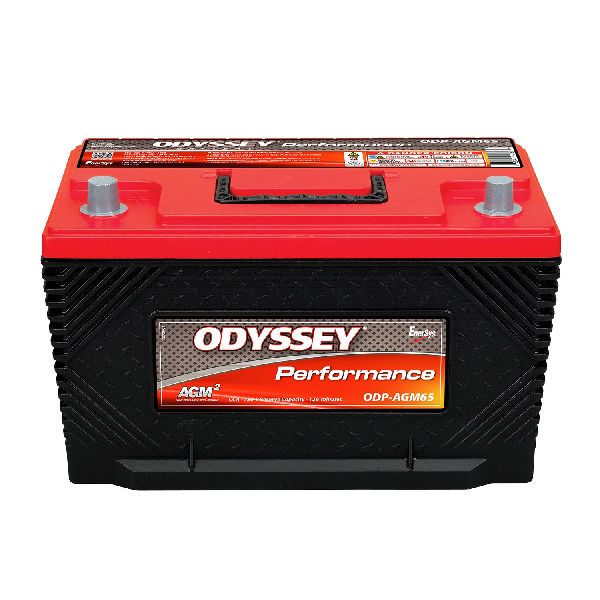
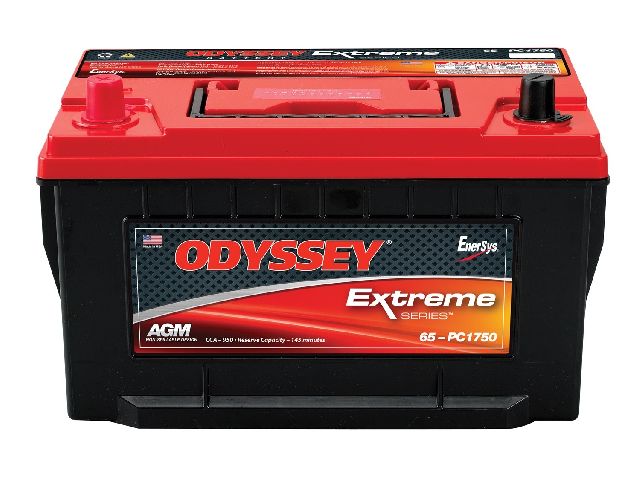
- Battery
(OEM #Motorcraft BXT-65-850 (example))— A weak or failing battery is a very common cause of network communication codes due to low voltage. Diesel models have two, and both should be tested and often replaced in pairs.
Trusted brands: Motorcraft, Interstate, Odyssey
OEM price range: $200-$300
Aftermarket price range: $150-$250 - PCM Power Relay
(OEM #5M5Z-14N089-A (multi-purpose relay))— This relay supplies power to the PCM. If it fails, the PCM cannot power on and communicate, triggering a U0100. It is an inexpensive and easy part to swap for diagnosis.
Trusted brands: Motorcraft, Standard Motor Products
OEM price range: $20-$40
Aftermarket price range: $10-$25 - Powertrain Control Module (PCM) — In rare cases, the PCM itself fails internally. This is a last resort after all wiring, power, and ground issues have been ruled out. Part numbers are VIN-specific and require programming.
Trusted brands: Motorcraft
OEM price range: $800-$1500
Aftermarket price range: $500-$900 (Remanufactured)
Related Codes That Often Appear With This One
- U0101 — Lost Communication with TCM (Transmission Control Module). The TCM and PCM are on the same high-speed network, so a network failure often affects both.
- U0121 — Lost Communication with ABS Control Module. This is another critical module on the network that will log a code when it can't communicate with the PCM.
- U0151 — Lost Communication With Restraints Control Module. This indicates the network fault is widespread, affecting safety systems as well.
- U0401 — Invalid Data Received from ECM/PCM. This code often accompanies the U0100, indicating that even if some communication is happening, the data is corrupt or nonsensical, pointing to a network integrity problem.
Technical Service Bulletins (TSBs) & Recalls
- SSM 54333 (for 2023-2025 models)
- SSM 53994 (for 2023-2025 models)
- SSM 51578 (for 2023 models)
- SSM 51488 (for 2023 models)
Platform-Specific Known Issues
- Wiring Harness Chafing in Driver's Front Wheel Well: A widely reported issue where the main wiring harness, routed behind the plastic fender liner on the driver's side, rubs against the liner or frame. Over time, this can wear through the insulation of the CAN bus wires (typically a twisted pair) and cause them to short to each other or to ground, taking down the entire network and causing a U0100 code with a no-start condition. Repair involves removing the wheel and liner, locating the damaged section, repairing the wires, and securely re-routing/protecting the harness to prevent recurrence.
- Wiring Damage Near Parking Brake Assembly: The wiring harness that runs near the parking brake pedal mechanism inside the driver's side footwell is susceptible to damage. The movement of the pedal can chafe or pinch wires, and connectors in this area can be kicked or dislodged, leading to a loss of communication. A visual inspection in this area is a key diagnostic step.
Mechanic-Grade Diagnostic Values
- CAN Bus Resistance — expected: ~60 Ohms (± 5 Ohms). Failure: A reading of ~120 Ohms indicates one of the two terminating resistors is offline or there's an open in the circuit. A reading near 0 Ohms indicates a short between the CAN High and CAN Low wires.
- CAN High Voltage (Key On, Engine Off) — expected: ~2.7 Volts. Failure: A line stuck near 0V or 5V, or a voltage that matches the CAN Low line (around 2.5V) indicates a short or open circuit.
- CAN Low Voltage (Key On, Engine Off) — expected: ~2.3 Volts. Failure: A line stuck near 0V or 5V, or a voltage that matches the CAN High line (around 2.5V) indicates a short or open circuit.
Hidden / Shadow Codes Worth Checking
- U0100:87: The ':87' suffix is a Ford-specific sub-type that means 'Missing Message'. This explicitly indicates that a module expected a message from the PCM but did not receive it, confirming a communication breakdown rather than a data corruption issue. (see via This sub-code is typically visible with advanced scan tools like Ford's IDS or high-end aftermarket scanners capable of reading manufacturer-specific codes.)
Scan Tool Commands That Help
- Ford IDS (Integrated Diagnostic System) or equivalent: Network Test / Self-Test — This function polls all modules on the network and provides a 'map' of which modules are communicating and which are not. It's the first step in isolating the source of the U0100 code by quickly identifying if only the PCM is offline or if multiple modules are affected.
Wiring & Ground Locations

- OBD-II Port (DLC) — Under the driver's side dashboard, to the left of the steering column.. This is the primary diagnostic access point. Pin 6 (CAN High) and Pin 14 (CAN Low) are used for network resistance and voltage tests.
- Terminating Resistors — The two 120-Ohm terminating resistors for the High-Speed CAN bus are typically located inside the Powertrain Control Module (PCM) and the Instrument Panel Cluster (IPC).. The entire network relies on these two resistors to function. If either the PCM or IPC is disconnected or fails internally, the network resistance will change from 60 Ohms to 120 Ohms, causing communication to fail.
- G105 & G129 — Located in the passenger side kick panel area. The kick panel is removed by first pulling up the door sill plate, then pulling the panel rearward.. These are major grounding points for various interior modules. A loose or corroded ground here can cause intermittent communication issues.
- Main Engine-to-Frame Ground — A large ground cable typically runs from the negative battery terminal to the engine block, often near the front of the engine below the harmonic balancer. A smaller wire may split off to the frame.. This is the primary ground for the PCM and the entire powertrain. Corrosion or looseness here can cause a no-start and a U0100 code.
- C175B — This is a major connector for the Powertrain Control Module (PCM).. The HS-CAN bus wires pass through this connector. The HS1 CAN High is Pin 59 (White/Blue) and HS1 CAN Low is Pin 58 (White). A backed-out pin or corrosion in this connector will sever communication with the PCM.
Real Owner Repair Stories
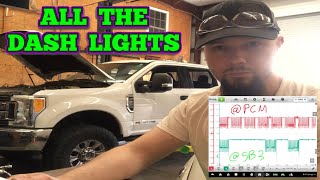
- YouTube channel 'The Keeney Garage' (2017 Ford F-250 6.7L Powerstroke) — No-crank, no-start after sitting for 3 weeks. Odometer displayed dashes. Multiple communication codes including U0100 in the ABS, radio, and trailer brake modules.
❌ Tried (didn't work) Replacing both batteries., Replacing the run/start relay., Tightening loose battery cable ends.
✅ What actually fixed it Found chewed and exposed wires in a wiring harness located near the driver's side battery. The damage was on the back side of a large connector, not immediately visible. Repairing the damaged wires restored communication and resolved the no-start condition. - Ford Truck Enthusiasts Forum (2013 F-250 6.2L (Similar P-platform, relevant issue)) — No-crank, no-start, Service Advancetrac message, U0100:00-8B code.
❌ Tried (didn't work) Checking firewall connections and grounds., Inspecting and reconnecting the large connector near the e-brake assembly.
✅ What actually fixed it The female terminal for the PCM/Fuel Pump relay inside the under-hood fuse box had broken and pushed down, preventing the relay from making contact. This cut power to the PCM, causing the U0100 code. The fix required repairing the terminal within the fuse box.
Model Year Variations Within This Range
- 2020-2021: For the 2020 model year, Ford introduced a new 7.3L V8 gas engine and an updated 6.7L Powerstroke diesel, both paired with a new 10-speed automatic transmission. These new powertrains have different PCM software and potentially different pinouts or harness routing compared to 2017-2019 models. While the core CAN bus architecture is the same, diagnostic specifics related to PCM power or transmission communication could vary.
Helpful Videos
We Have This Part in Stock

The information in this article is provided for general reference and educational purposes only. Vehicle specifications, procedures, and part compatibility can vary by production date, trim level, and region. Always consult your vehicle's factory service manual and verify part numbers before purchasing or performing repairs. Safety-critical components such as airbags, seat belts, and braking systems should be installed by a qualified professional.
- Ford F-250 SD:
- 🧭 Diagnostic Flowchart
- 🎬 Helpful Videos
- 🛍️ Shop This Part
- What's Unique About the 2017-2021 Ford F-250 SD
- Symptoms You May Notice
- Most Likely Causes
- Rare But Worth Checking
- Diagnosis Steps
- Parts You'll Likely Need
- Related Codes That Often Appear With This One
- Technical Service Bulletins (TSBs) & Recalls
- Platform-Specific Known Issues
- Mechanic-Grade Diagnostic Values
- Hidden / Shadow Codes Worth Checking
- Scan Tool Commands That Help
- Wiring & Ground Locations
- Real Owner Repair Stories
- Model Year Variations Within This Range
- 🎟️ Get 5% Off