

U0100 on 2014-2021 GMC Sierra 1500: Lost Communication with ECM Causes and Fixes
On a 2014-2021 GMC Sierra, code U0100 means the Engine Control Module (ECM) has lost communication. This is frequently caused by a weak battery, poor ground connections (specifically the G218 ground behind the driver's side dash), or a known issue with the Serial Data Gateway Module (SDGM) described in TSB #20-NA-212. Always start by load testing the battery and inspecting all major ground straps, especially G218, before suspecting expensive modules.
- U0100 means the Engine Control Module (ECM) is offline.
- Always start diagnostics by testing the battery and checking all major ground connections. These are the most common and cheapest fixes.
- Be aware of TSB #PIT5586G, which points to the Serial Data Gateway Module (SDGM) as a frequent cause of this code on your Sierra. A dealer may need to reprogram it.
- Do not replace the expensive ECM unless all other possibilities—especially wiring and other modules on the network—have been ruled out.
- Driving with this code is not recommended, as the engine could stall or fail to start at any time.
What's Unique About the 2014-2021 Gmc SIERRA 1500

On these GMC Sierra models, communication between different vehicle networks is routed through a central hub called the Serial Data Gateway Module (SDGM). A known issue, documented in GM Technical Service Bulletin #PIT5586G and its successor #20-NA-212, is that this module can enter a "logic lock" state, causing it to stop communicating and triggering a flood of U-codes, including U0100. Additionally, TSB #PIT5405C specifically identifies the BCM ground at location G218 (located on the driver's side, behind the dash/A-pillar) as a common point of failure causing widespread communication DTCs.
Diagnostic Flowchart

Tap your situation to follow the diagnostic path that matches what you're seeing on this vehicle.
Generation note: This range covers two generations of the GMC Sierra 1500: the third generation (K2XX; 2014-2018, and 2019 'Limited' models) and the fourth generation (T1XX; 2019-2021). While many causes are similar, some TSBs are specific. For example, TSB #PIT5735B regarding the Brake System Control Module (BSCM) causing communication codes applies specifically to the 2019-2020 models. TSB #20-NA-212, which supersedes PIT5586G for the SDGM logic lock issue, covers 2018-2020 models, highlighting the persistence of this problem across generations.
Symptoms You May Notice

- Check Engine Light is on
- Vehicle will not start or has a no-crank condition
- Engine stalls intermittently, especially when hot or shifting into reverse
- Instrument panel gauges sweep or fluctuate wildly while driving.
- Multiple warning messages on the driver information center (e.g., "Service Stabilitrak", "Service Suspension", "Service Airbag").
- Transmission may enter 'limp mode', stuck in one gear.
- HVAC controls may be inoperative.
- Radio display may be blank or shows incorrect information.
- Power steering may be lost intermittently.
- DIC message may show no gear selection (PRNDL blank).
- Replacing the Engine Control Module (ECM) without first verifying power, grounds, and network integrity. This is an expensive part that is often not the root cause.
- Replacing the battery without testing the alternator, which may be the reason the battery failed in the first place.
- Replacing the SDGM without first attempting the software update as per TSB #20-NA-212 or checking for bad grounds.
Most Likely Causes

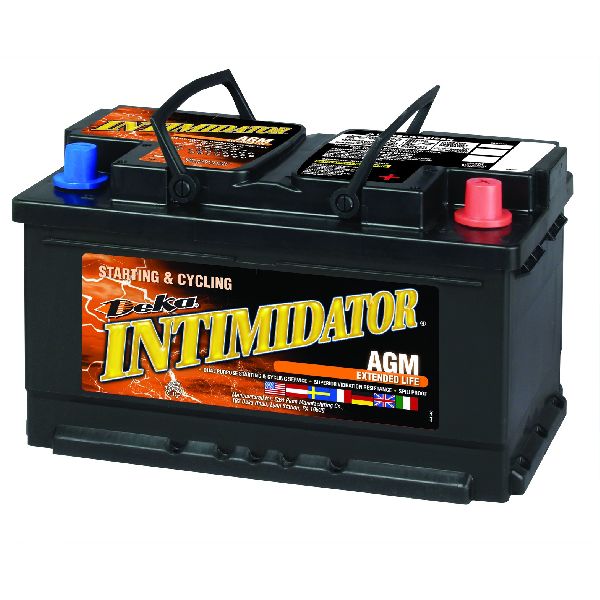
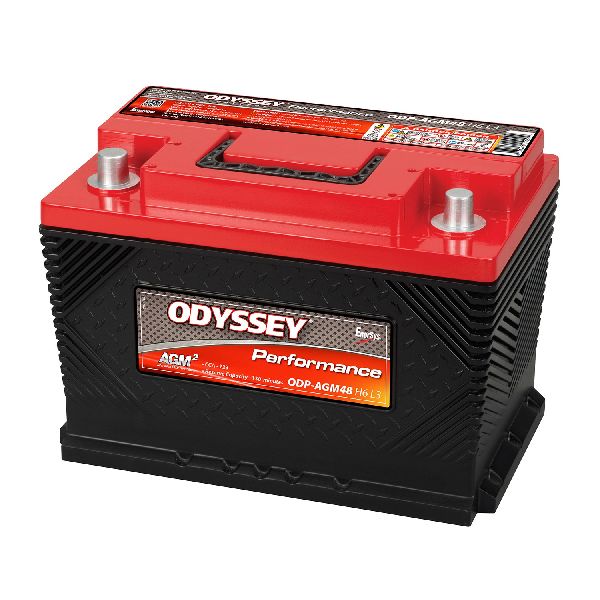
- Low Battery Voltage or Failing Battery 🔴 High Probability → Shop Vehicle Battery Modern trucks have a high electrical demand. A weak or failing battery can provide just enough power to turn on some electronics but not enough to maintain stable voltage for all modules, leading to communication dropouts. Corrosion on the battery cable terminals is also a very common culprit.
How to confirm: Test the battery with a multimeter or a load tester. A healthy, fully charged battery should read at least 12.6 volts with the engine off. Check the charging system output (should be ~13.7-14.7 volts with the engine running). Inspect the battery cable ends for any corrosion, especially under the red and black plastic covers.
Typical fix: Recharge or replace the battery. Thoroughly clean any corrosion from the battery terminals and cable ends. In some cases, the entire negative battery cable assembly, which has multiple ground points, needs replacement due to internal corrosion or loose crimps.
Est. part cost: $150-$350 for battery, $50-$100 for a new negative battery cable assembly (GM P/N 22846471 for some models) - Poor Ground Connections (Especially G218) 🔴 High Probability TSB #PIT5405C directly points to the BCM ground G218 as a source for a flood of communication codes. This ground is located behind the driver's side A-pillar trim, near the speaker, and is notorious for being loose or having the dash insulation caught under it from the factory. Other grounds from the engine block to the frame can also corrode or break.
How to confirm: Visually inspect and physically check the tightness of ground G218. Perform a voltage drop test on the main ground circuits; resistance should be less than 0.1 ohms. A user on a forum found a broken engine-to-chassis ground strap that caused intermittent stalling.
Typical fix: For G218, remove the nut, clean the contact surfaces of the eyelet and the stud with a wire brush, ensure no insulation is trapped, and re-torque securely. For other ground straps, clean the contact points and re-secure. If a strap is broken or heavily corroded, replace it.
Est. part cost: $10-$50 - Serial Data Gateway Module (SDGM) 'Logic Lock' or Failure 🟡 Medium Probability → Shop Telematics Interface Module As identified in TSB #20-NA-212 (superseding PIT5586G), the SDGM can suffer from a microcontroller error that causes it to stop communicating on all CAN channels. This acts as a bottleneck for all network traffic, causing widespread communication loss.
How to confirm: A professional scan tool will show a loss of communication with multiple modules simultaneously. The TSB instructs dealers to first attempt reprogramming the SDGM. If that fails, the connector terminals (X1 and X2) must be inspected for damage or poor pin tension before replacing the module.
Typical fix: Reprogramming the SDGM with updated software from the manufacturer is the first step. If reprogramming fails or if connector terminals are damaged, the module or its connector pigtail may need replacement. The module requires programming after installation.
Est. part cost: $75-$150 for the module (e.g., GM P/N 13599318, 13514249). - Damaged or Corroded Wiring/Connectors 🟡 Medium Probability Wiring harnesses, especially those near the engine, under the truck, or passing through the firewall, can be damaged by heat, vibration, or corrosion. TSB #PIT6198 specifically points to checking the accessory wake-up circuit to the ECM. A loose or water-damaged ECM connector is also a possibility.
How to confirm: Visually inspect the wiring harness leading to the ECM for any signs of chafing, melting, or corrosion. Unplug the ECM and SDGM connectors and check for bent, loose, or corroded pins. Check for power, ground, and CAN bus signals at the ECM connector with a multimeter.
Typical fix: Repair the damaged section of wire. Clean or replace corroded connector pins. If a connector housing is damaged, it may need to be replaced.
Est. part cost: $20-$200 depending on the extent of the repair
Rare But Worth Checking
- Faulty Engine Control Module (ECM): → Shop Engine Control Module (ECM) While often suspected, the ECM is rarely the true cause. It should only be considered after all wiring, grounds, and other modules have been thoroughly checked. An owner complaint (ODI #10956881) noted a persistent issue even after dealer analysis, highlighting the diagnostic difficulty. One technician on YouTube diagnosed a bad ECM after confirming no check engine light on key-on and inability to communicate with a scan tool.
- Faulty Brake System Control Module (BSCM): → Shop ABS Control Module On 2019-2020 models, TSB #PIT5735B notes that the BSCM can stay awake after the vehicle is shut off, leading it to set a host of communication codes, including U0100, at the next startup. A recall was also issued for 2019 models for a software issue in the BSCM (also called EBCM) that could disable ABS and ESC.
- Aftermarket Accessories: Improperly installed remote starters, alarms, or audio equipment tapped into the CAN bus wiring can disrupt network communication and trigger a U0100 code.
Diagnosis Steps
- Check and load test the battery. Ensure it has at least 12.6 volts and clean the terminals and cable ends thoroughly.
- Scan for all DTCs in all modules. Note which modules are not communicating. A flood of 'U' codes points towards a network-wide issue.
- Visually inspect all main battery and engine ground straps. Pay special attention to the G218 ground located behind the driver's side A-pillar/dash trim. Remove, clean, and tighten it.
- Inspect the negative battery cable assembly for corrosion or breaks, as it has multiple grounding points.
- With the ignition off for a few minutes, measure the resistance between pins 6 (CAN High) and 14 (CAN Low) of the OBD-II port. It should be approximately 60 ohms, indicating the two 120-ohm terminating resistors are intact. A reading of 120 ohms suggests one resistor (or the wiring to it) has failed.
- If multiple modules are offline, investigate the Serial Data Gateway Module (SDGM) per TSB #20-NA-212. Check its connectors (X1, X2) for loose pins and consider having a dealer check if a software update is available.
- Inspect the wiring harness and connectors at the ECM for any visible damage, corrosion, or loose pins.
- If only the ECM is offline, use a wiring diagram to verify all power and ground circuits directly at
Parts You'll Likely Need
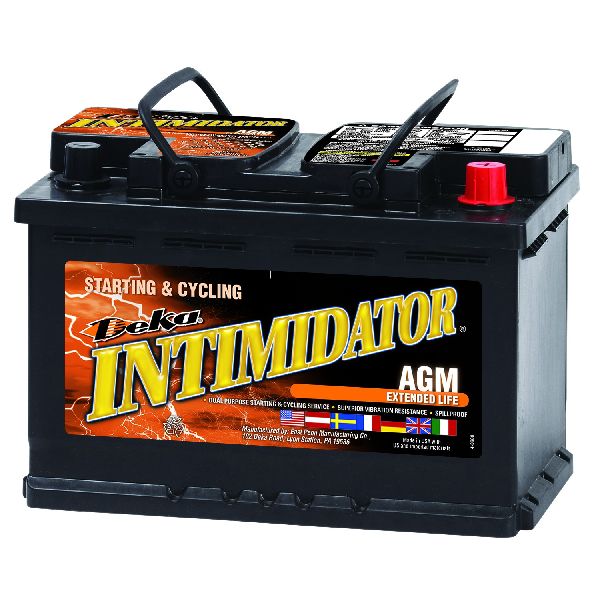
- Battery — Low voltage is a primary cause of communication faults.
- Serial Data Gateway Module (SDGM)
(OEM #13599318 or 13514249 (verify by VIN))— A known failure point for network communication, addressed by TSB #20-NA-212. - Negative Battery Cable
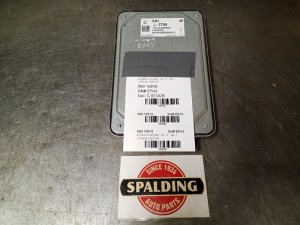
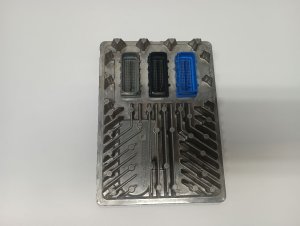
(OEM #22846471 (verify by VIN))— The factory cable can corrode internally or break at the crimps, causing poor grounding. - Engine Control Module (ECM/PCM) — Rarely the cause, but necessary if the module itself has failed internally. Requires programming.
Related Codes That Often Appear With This One
- U0101 — Lost Communication with Transmission Control Module (TCM). The TCM and ECM are on the same high-speed CAN bus, so a network-wide failure often takes both offline.
- U0140 — Lost Communication with Body Control Module (BCM). This indicates a widespread network problem, as the BCM is a central module for many body functions and is often affected by the same ground (G218) and SDGM issues.
- U0073 — Control Module Communication Bus 'A' Off. This is a general code indicating the entire high-speed CAN bus is down, which is why modules like the ECM cannot communicate.
- P0700 — Transmission Control System (MIL Request). The TCM sets this code in the ECM to turn on the Check Engine Light when it has a problem, which can include not being able to hear from the ECM.
Technical Service Bulletins (TSBs) & Recalls
- PIT6198: Diagnostic tip for U0100 at startup, points to testing the accessory wake up circuit to the ECM.
- PIT5713A: Lists U0100 as part of a massive group of DTCs related to network issues causing gauge sweeps and warning messages.
- PIT5677: Lists U0100 among many other powertrain and communication codes.
- PIT5586G: Details issues like inoperative AC controls and lists U0100 as a possible code caused by a 'logic lock' of the Serial Data Gateway Module.
Platform-Specific Known Issues
- G218 Grounding Point Failure: A significant number of 2014-2018 trucks left the factory with the G218 ground stud (behind the driver's side dash) either loose or with sound-deadening insulation trapped underneath the ground lug. This creates a poor connection for the Body Control Module and other components, leading to a cascade of communication codes, including U0100. The fix is to remove the A-pillar and dash side panel, access the ground, and clean and tighten it properly.
- SDGM Logic Lock (TSB 20-NA-212): The Serial Data Gateway Module can freeze due to a software glitch, effectively shutting down all CAN bus communication. Symptoms are sudden and severe, with multiple warning lights and systems failing at once. The first step in the repair is a software reflash by a dealer. If that doesn't work, the module's connector pins must be checked before the module is replaced.
- Real-World Repair: Intermittent Stall from Broken Ground Strap: → Shop Engine Ground Strap In a documented case on a related GM truck, the owner experienced intermittent stalling, particularly when shifting into reverse, accompanied by U0100/U0101 codes. The cause was found to be a frayed main ground strap from the engine block to the chassis. The engine's torque would flex the wire just enough to break the connection, killing communication and stalling the engine. Replacing the strap resolved the issue completely.
Mechanic-Grade Diagnostic Values
- CAN Bus Network Resistance — expected: Approximately 60 Ohms. Failure: A reading of 120 Ohms indicates an open circuit or a problem with one of the two terminating resistors. A reading significantly lower than 60 Ohms suggests a short between the CAN High and CAN Low wires.
- CAN High Voltage to Ground (Ignition ON) — expected: 2.5V to 3.0V. Failure: Voltage outside this range indicates a potential short or open on the CAN High circuit.
- CAN Low Voltage to Ground (Ignition ON) — expected: 2.0V to 2.5V. Failure: Voltage outside this range indicates a potential short or open on the CAN Low circuit.
- Battery Cable Voltage Drop (while cranking) — expected: Less than 200 mV. Failure: A voltage drop exceeding 200 mV indicates high resistance in the cable, which should then be replaced.
- Battery Cable Clamp Nut Torque — expected: 7 Nm (62 lb-in). Failure: Loose clamps can cause intermittent power loss and communication faults.
- Engine Block Negative Cable Nut Torque — expected: 45 Nm (33 ft-lb). Failure: A loose engine ground is a common source of electrical issues.
Scan Tool Commands That Help
- GDS2 (GM Dealer Scanner): Module Status/Module ID — When a U0100 code is present, this function is used to poll all networks and see which specific modules are not communicating. A long list of non-communicating modules points to a network-wide issue (like SDGM or grounds) rather than a single faulty module.
- GDS2 (GM Dealer Scanner): Brake System Control Module (BSCM) Reprogramming with SPS — For 2019 models specifically, if U0100 is accompanied by brake system warnings, this function is used to apply the updated software per a GM recall to fix a software bug that could cause communication issues.
Wiring & Ground Locations

- G218 — Located on the driver's side, behind the A-pillar trim panel and speaker. It is a stud with a nut securing one or more ground eyelets.. This is the primary ground for the Body Control Module (BCM). TSB #PIT5405C identifies it as a notorious failure point where dash insulation gets trapped under the eyelet, causing a poor connection and a flood of communication DTCs, including U0100.
- Serial Data Gateway Module (SDGM) — Located in the driver's side under-dash area, often near the BCM.. This module is the central hub for network traffic. TSBs PIT5586 and 20-NA-212 point to it for logic lock-ups and faulty connector pins (X1, X2) that can bring down the entire network.
- Negative Battery Cable Grounds — The main negative battery cable has multiple connection points: one to the battery post, one to the engine block, and often one to the chassis/frame.. Corrosion or looseness at any of these points can cause system-wide low voltage and communication faults. TSB 18-NA-161 details inspection procedures for these cables and their connections.
- Trailer Brake Control Module (TBCM) — For 2019+ models, it is located on a bracket above the spare tire.. While not a primary cause of U0100, water intrusion into this module is a known issue that can cause other communication codes (like U1556) on the LIN bus, demonstrating how module failures in harsh locations can affect the network.
Real Owner Repair Stories
- Reddit user /u/Ashenfenix (2017 GMC Sierra Elevation 5.3L) — Truck dies at low speed (e.g., in a parking lot) but will restart after a couple of minutes. Throwing low voltage codes. Problems started after a battery change where the posts were initially not tightened properly.
❌ Tried (didn't work) Tightening battery posts, Taking it to two different shops who could not find an issue on the computer.
✅ What actually fixed it Replacement of the negative battery cable assembly fixed the issue. - YouTube user comment on video about G218 ground (2014-2018 GMC Sierra (model year not specified)) — Unspecified electrical issues, likely including communication faults.
❌ Tried (didn't work) Hours of searching online for a solution.
✅ What actually fixed it Following the video's instructions to access the G218 ground behind the driver's side A-pillar, remove the trapped insulation, and tighten the ground nut. The user reported it "totally fixed my truck!" in 30 minutes.
OEM Part Supersession History
13509768, 13524297, 13524298, 13599317→13599318— Standard part evolution for the Serial Data Gateway Module (SDGM).
Heads up: The replacement part 13599318 requires programming by a dealer or a qualified shop with GM's SPS (Service Programming System) to function in the vehicle.
Model Year Variations Within This Range
- 2019: A recall was issued for a software issue in the Brake System Control Module (BSCM/EBCM) that could cause it to malfunction, potentially leading to communication codes. Dealers are instructed to reprogram the module with updated software.
- 2017-2020: TSBs related to the Serial Data Gateway Module (SDGM) 'logic lock' issue (PIT5586 and its revisions) primarily target these model years, indicating a higher prevalence of this specific failure mode.
Helpful Videos



Used OEM Parts in Stock
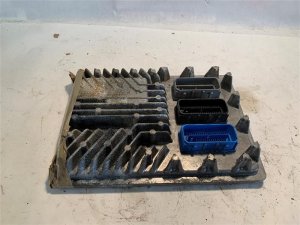
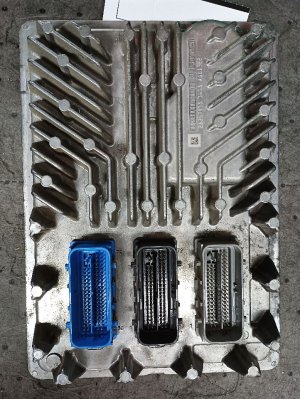
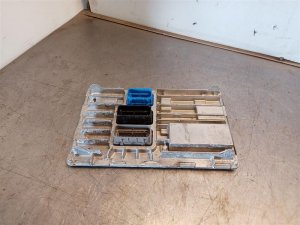
New Aftermarket Parts Available


The information in this article is provided for general reference and educational purposes only. Vehicle specifications, procedures, and part compatibility can vary by production date, trim level, and region. Always consult your vehicle's factory service manual and verify part numbers before purchasing or performing repairs. Safety-critical components such as airbags, seat belts, and braking systems should be installed by a qualified professional.
- Gmc SIERRA 1500:
- 🧭 Diagnostic Flowchart
- 🎬 Helpful Videos
- 🛍️ Shop This Part
- What's Unique About the 2014-2021 Gmc SIERRA 1500
- Symptoms You May Notice
- Most Likely Causes
- Rare But Worth Checking
- Diagnosis Steps
- Parts You'll Likely Need
- Related Codes That Often Appear With This One
- Technical Service Bulletins (TSBs) & Recalls
- Platform-Specific Known Issues
- Mechanic-Grade Diagnostic Values
- Scan Tool Commands That Help
- Wiring & Ground Locations
- Real Owner Repair Stories
- OEM Part Supersession History
- Model Year Variations Within This Range
- 🎟️ Get 5% Off