

U0100 on 2018 GMC Terrain: Lost Communication Causes and Fixes
On a 2018 GMC Terrain, code U0100 means a critical control module has lost communication with the main Engine Control Module (ECM). This often causes severe transmission problems like being stuck in gear, as noted in TSB #18-NA-097. The primary causes are typically wiring issues, poor grounds, or a software glitch requiring a TCM update, rather than a faulty module. Professional diagnosis is highly recommended.
- U0100 on a 2018 GMC Terrain is a critical code indicating the Engine Control Module is offline.
- It is strongly linked to severe transmission symptoms like being stuck in gear, per TSB #18NA097.
- Do not drive the vehicle; it is unsafe and unreliable.
- The most common causes are wiring/connector problems or low battery voltage, not necessarily a failed computer.
- Professional diagnosis is highly recommended due to the complexity of vehicle network systems.
What's Unique About the 2018-2018 Gmc TERRAIN
For the 2018 GMC Terrain, this isn't just a generic communication code. GM has specifically linked U0100 to significant transmission and drivability problems in Technical Service Bulletin #18-NA-097. The bulletin notes that symptoms like being stuck in gear or a blinking PRNDL display may be resolved with a software update for the Transmission Control Module (TCM), rather than a hardware replacement. This makes checking for available software updates a critical first step before attempting more invasive repairs.
Diagnostic Flowchart
Tap your situation to follow the diagnostic path that matches what you're seeing on this vehicle.
Symptoms You May Notice
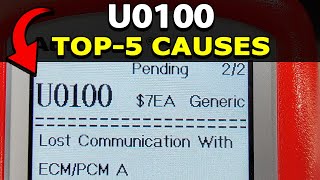
🎬 Watch: Top 5 causes for the U0100 trouble code- Inability to shift out of Park
- Stuck in one gear (limp mode)
- Transmission won't shift into Park or Reverse
- Blinking PRNDL (gear indicator) light
- Check Engine Light is on
- "Service Transmission" message on the dashboard.
- Engine may stall or not start.
- "Service StabiliTrak" message may appear
- Rough idling and poor acceleration.
- Reduced fuel economy.
- Replacing the transmission or other major mechanical parts based on symptoms like being stuck in gear, without first performing a complete network diagnostic and checking for available TCM software updates per TSB #18-NA-097.
- Replacing the ECM without first exhaustively checking for wiring harness chafe, corroded connectors (like X411), and poor ground connections at points like G103.
Most Likely Causes
- TCM Software Anomaly 🔴 High Probability TSB #18-NA-097 explicitly states that for symptoms like being stuck in gear or a blinking PRNDL with a U0100 code, the fix may be a simple software update for the Transmission Control Module (TCM) if initial diagnostics don't find a fault.
How to confirm: A GM dealership or a well-equipped independent shop can check for and apply the latest TCM calibrations using the Service Programming System (SPS).
Typical fix: Reprogram the TCM with the latest software. The TSB states that no parts are needed for this correction.
Est. part cost: $0 - Wiring or Connector Issues 🟡 Medium Probability GM platforms have known issues with specific connectors and harness routing. TSB #PIT5427B, while for the previous generation, highlights the X411 underbody connector's vulnerability to corrosion, which can cause widespread communication issues including U0100. The diagnostic principle of checking major pass-through connectors remains valid. General wiring harness chafing or loose connector pins are common culprits for network faults.
How to confirm: Visually inspect major wiring harnesses for chafing or damage, especially where they pass near the engine or transmission. Disconnect and inspect key connectors (like at the ECM, TCM, and underbody pass-throughs) for corrosion, moisture, or bent/loose pins. A professional would use a multimeter to check for continuity and shorts in the CAN bus wires.
Typical fix: Repairing the damaged section of the harness, cleaning corroded connectors with a terminal cleaner, or replacing damaged connector terminals.
Est. part cost: $10-$100 - Low Battery Voltage or Poor Grounds 🟡 Medium Probability → Shop Vehicle Battery All modern vehicles are sensitive to low voltage, which can cause unpredictable communication errors between modules. Bad or corroded ground straps from the battery to the chassis or engine block can also create floating voltages that disrupt the CAN bus. Key grounds like G103 can affect the ECM and Data Link Connector.
How to confirm: Test the battery with a load tester; it should read above 12.4V at rest. Inspect the main battery ground cable and engine/chassis ground straps for tightness and corrosion. Specifically check ground point G103 on the cowl above the brake booster. A resistance check between the ground point and the chassis should be less than 0.1 ohms.
Typical fix: Replace a weak battery or clean/replace corroded ground straps and their mounting points.
Est. part cost: $20-$250 - Faulty Engine Control Module (ECM) ⚪ Low Probability → Shop Engine Control Module (ECM) While less common than wiring or software issues, the ECM is the source of the communication. An internal failure can cause it to stop broadcasting on the network. This should be considered a diagnosis of last resort after all other possibilities are exhausted.
How to confirm: This is a last step after all wiring, power, ground, and software issues have been ruled out. A professional scan tool will show if the ECM is offline and unresponsive.
Typical fix: Replace the ECM. The new module must be programmed to the vehicle's VIN by a dealer or qualified shop.
Est. part cost: $600-$1200 - Faulty Transmission Control Module (TCM) ⚪ Low Probability → Shop Transmission Assembly The TCM is one of the primary modules that sets the U0100 code when it stops hearing from the ECM. TSB #18-NA-097 links U0100 to transmission symptoms, making the TCM and its wiring a key area of investigation. However, a software update is more likely than a hardware failure.
How to confirm: A professional scan tool can attempt to communicate directly with the TCM. If the TCM is also offline, it points to a shared wiring or power issue. If only the TCM is offline but the ECM is online, the TCM itself may be faulty.
Typical fix: Replace the TCM, which often requires programming.
Est. part cost: $500-$1000
Rare But Worth Checking
- Faulty CAN Bus Termination Resistor: The CAN network has two 120-ohm resistors. If one fails, network communication can collapse. A technician can measure the resistance at the OBD-II port (should be ~60 ohms). A reading of 120 ohms points to a failed resistor or a break in the wiring to it.
- Blown Fuse for Data Link Connector: The OBD-II port itself is fused. If a scanner cannot communicate with any module, check the fuse for the Data Link Connector. In the 2018 Terrain, this is fuse F17 (10 Amp) in the interior fuse box under the steering wheel.
Diagnosis Steps
- Check for TSBs and Software Updates: The first step for a professional is to check for applicable TSBs, especially #18-NA-097, which suggests a TCM software update may be the fix.
- Check Battery and Grounds: Ensure the battery is fully charged (12.4V+) and load tests properly. Inspect and clean all major power and ground connections, including the main battery-to-chassis and engine-to-chassis straps, paying special attention to ground G103 on the cowl.
- Scan All Modules: Use a professional-grade scan tool to check for codes in ALL vehicle modules (BCM, TCM, ABS, etc.). Note which modules are reporting a loss of communication with the ECM.
- Verify ECM Communication: Attempt to communicate directly with the ECM using the scan tool. If there is no response, this confirms the ECM is offline.
- Check Fuses: Check all fuses related to the ECM, TCM, and the OBD-II Data Link Connector (Fuse F17 in the interior fuse panel).
- Perform CAN Bus Resistance Test: With the battery disconnected, a technician can measure the resistance between Pin 6 (CAN High) and Pin 14 (CAN Low) at the OBD-II port. A healthy network should read approximately 60 ohms.
- Inspect Wiring and Connectors: Visually inspect the main engine wiring harness for any signs of chafing, melting, or rodent damage. Pay close attention to the connectors at the ECM, TCM, and large underbody connectors like the X411 mentioned in TSBs for other GM models.
- Isolate the Fault: If wiring, power, and grounds are good, and software is up to date, the final step is to isolate the faulty module, which requires advanced diagnostic techniques best left to a professional.
Parts You'll Likely Need
- Engine Control Module (ECM)
(OEM #12700116 (Replaces 12669908, 12687467). Always verify with VIN.)— If all wiring, software, and connections are confirmed good, the ECM itself may have failed, causing it to stop communicating. This is a diagnosis of last resort.
Trusted brands: ACDelco GM Genuine Parts
OEM price range: $800-$1200
Aftermarket price range: $400-$800 - Wiring Harness Repair Supplies — Often, the fix is not a replacement part but a repair to a broken wire, corroded connector, or loose pin in the CAN bus harness. This is a more common and less expensive solution than module replacement.
Aftermarket price range: $10-$50
Related Codes That Often Appear With This One
- P187D — This is a transmission-related code mentioned alongside U0100 in TSB #18-NA-097, specifically related to not being able to shift out of Park.
- P2731 — Another transmission pressure control solenoid code cited in TSB #18-NA-097 as appearing with U0100 and causing a tie-up feeling on the 1-2 shift.
- U0101 — Lost Communication with TCM. If the network fault affects both modules or if the TCM is the module setting the U0100 code, you may see both.
- U0073 — Control Module Communication Bus 'A' Off. This is a general code indicating the entire high-speed CAN bus is down, which would naturally include the ECM.
Technical Service Bulletins (TSBs) & Recalls
- 18-NA-097: Addresses symptoms like being stuck in gear or the PRNDL blinking, with possible DTCs including U0100. Recommends a TCM software update as a potential fix.
- PIT5427B: Points to potential corrosion or damage in the X411 connector as a cause for multiple communication DTCs, including U0100, on previous generation GM vehicles.
Platform-Specific Known Issues
- TSB #18-NA-097 directly links U0100 on the 2018 Terrain to symptoms including being stuck in gear, inability to shift into Park or Reverse, and a blinking PRNDL display. Crucially, it suggests a TCM software update as a primary fix.
- While TSB #PIT5427B is for the previous generation (2010-2016), it establishes a history of GM Equinox/Terrain vehicles having issues with the X411 underbody connector due to corrosion, leading to communication codes like U0100. This is a valuable diagnostic hint for any network issue on a GM vehicle.
- Forum discussions for the 2018+ Terrain and its platform-mate, the Chevy Equinox, reveal that intermittent U0100 codes are frequently traced back to poor ground connections or chafed wiring harnesses, reinforcing that physical inspection is key before module replacement.
Mechanic-Grade Diagnostic Values
- CAN Bus Network Resistance — expected: Approximately 60 Ω. Failure: A reading of ~120 Ω indicates an open circuit to one of the two terminating resistors. A reading near 0 Ω indicates a short between the CAN High and CAN Low wires.
- CAN Bus Voltage (Key On, Engine Off) — expected: Approximately 2.5 V on both CAN High (Pin 6) and CAN Low (Pin 14) relative to ground.. Failure: Significant deviation from 2.5V on either line indicates a network bias issue, short, or open circuit.
- Module Ground Resistance — expected: Less than 0.1 Ω. Failure: Higher resistance indicates a poor ground connection, which can cause floating voltages and communication errors.
Scan Tool Commands That Help
- GM GDS2 (Global Diagnostic System 2): Data Bus Diagnostic Tool — Use this function to actively poll all modules on the network. It will provide a list of which modules are communicating and which are not, helping to pinpoint the source of the U0100 code.
- GM SPS (Service Programming System): TCM Reprogramming — As per TSB #18-NA-097, if U0100 is present with transmission symptoms and no obvious wiring faults are found, this function is used to update the Transmission Control Module (TCM) with the latest software calibration, which may resolve the issue without replacing parts.
Wiring & Ground Locations
- DLC (OBD-II Port) — Under the driver's side dashboard, to the left of the steering column.. This is the primary point for all network diagnostics. Resistance between Pin 6 (CAN-H) and Pin 14 (CAN-L) is measured here to test the integrity of the entire CAN bus.
- G103 — Located at the left rear of the engine compartment on the cowl, above the brake booster.. This is a critical ground point that serves multiple modules, including the Body Control Module (BCM) and the Data Link Connector (DLC). A poor connection here can cause communication failures and prevent a scan tool from connecting.
- Fuse F17 (Interior) — In the interior fuse box located under the steering wheel, next to the OBD-II port.. This 10 Amp fuse provides power to the Data Link Connector (OBD-II port). If it is blown, a scan tool will not be able to communicate with any modules, which can be mistaken for a network-wide failure.
- X411 Connector — On previous generation Terrains, this is an underbody connector near the fuel tank. Its location on the 2018 model should be verified with a service manual.. Highlighted in TSBs for other GM models, large pass-through connectors like this are highly vulnerable to corrosion from water and road salt, which can cause an open or short in the CAN bus wiring, triggering U0100.
Real Owner Repair Stories
- Chevy HHR Network Forum User (Chevrolet HHR (GM Platform with similar CAN architecture)) — Car would not start, displayed security and check engine lights, and had code U0100 (No communication with ECM).
❌ Tried (didn't work) Resetting the BCM by pulling the 50 amp fuse.
✅ What actually fixed it Disconnecting the negative battery cable for 20 minutes to perform a hard reset of all modules. After reconnecting, the check engine light was off and the code was gone. The user described it as a 'brain fart' with the controllers. - Chevy HHR Network Forum User (Chevrolet HHR (GM Platform with similar CAN architecture)) — Intermittent security light, non-functional gauges, engine misfire, and a single U0100-type code for no communication.
❌ Tried (didn't work) Checking grounds., Disconnecting and reconnecting the battery.
✅ What actually fixed it Replacing the ECM/PCM with a reflashed unit. After replacement and reprogramming the keys, all symptoms were resolved immediately.
OEM Part Supersession History
12669908, 12687467→12700116— Standard part revision and consolidation by the manufacturer.
Heads up: The replacement part 12700116 requires programming to the vehicle's VIN to ensure proper function. It is not a plug-and-play replacement.
Helpful Videos

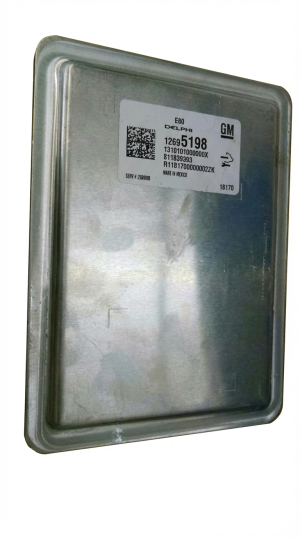
We Have This Part in Stock

The information in this article is provided for general reference and educational purposes only. Vehicle specifications, procedures, and part compatibility can vary by production date, trim level, and region. Always consult your vehicle's factory service manual and verify part numbers before purchasing or performing repairs. Safety-critical components such as airbags, seat belts, and braking systems should be installed by a qualified professional.
- Gmc TERRAIN:
- 🧭 Diagnostic Flowchart
- 🎬 Helpful Videos
- 🛍️ Shop This Part
- What's Unique About the 2018-2018 Gmc TERRAIN
- Symptoms You May Notice
- Most Likely Causes
- Rare But Worth Checking
- Diagnosis Steps
- Parts You'll Likely Need
- Related Codes That Often Appear With This One
- Technical Service Bulletins (TSBs) & Recalls
- Platform-Specific Known Issues
- Mechanic-Grade Diagnostic Values
- Scan Tool Commands That Help
- Wiring & Ground Locations
- Real Owner Repair Stories
- OEM Part Supersession History
- 🎟️ Get 5% Off