

U0100 on 2011-2016 Hyundai Elantra: Lost Communication with ECM/PCM Causes and Fixes
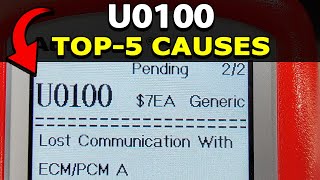
Code U0100 on a 2011-2016 Hyundai Elantra most often means a weak battery or a bad ground connection is preventing the main engine computer (ECM) from communicating. Before replacing any parts, fully charge and test the battery and clean the main engine and chassis ground points. This often resolves the issue for under $20.
- Do not immediately assume the expensive ECM has failed. U0100 is most often caused by a simple electrical issue.
- Your first and most important diagnostic step is to test the battery and clean its terminals.
- The second step should be to locate, remove, clean, and tighten the main chassis and engine ground straps.
- This code indicates a serious problem that can cause the vehicle to stall at any time. Do not drive the vehicle until it is repaired.
- If you see other 'U' codes along with U0100, it strongly suggests a network-wide issue like power or ground, not a single failed module.
What's Unique About the 2011-2016 Hyundai Elantra
The 2011-2016 Elantra (5th generation, MD/UD) does not have a widespread, unique design flaw that causes U0100. However, owner experiences and mechanic reports suggest these vehicles can be sensitive to poor ground connections. A common failure point is corrosion or looseness at the main chassis and engine grounds, which can cause intermittent no-start conditions and trigger this communication code. The diagnostic approach should prioritize these simple electrical checks before suspecting more complex CAN bus or module failures.
Symptoms You May Notice
- Check Engine Light is on (may be flashing).
- Vehicle will not start, or only cranks without starting.
- Engine stalls intermittently while driving.
- Multiple warning lights on the dashboard (ABS, Traction Control, etc.) may illuminate at once.
- Noticeable decrease in fuel economy.
- Transmission may not shift correctly or may be stuck in one gear (limp mode).
- Loss of throttle response or engine enters 'limp mode'.
- Cooling fans run constantly at high speed as a fail-safe.
- Replacing the starter motor when a no-start is present. The U0100 code points to a communication issue, which often prevents the ECM from commanding the starter to engage in the first place.
- Immediately replacing the ECM without first thoroughly checking battery, grounds, and wiring.
Most Likely Causes
- Weak or Faulty Battery 🔴 High Probability → Shop Vehicle Battery Modern vehicles are highly dependent on stable voltage. Low battery voltage is a leading cause of communication faults across all makes and models, as modules may not initialize or communicate properly during startup.
How to confirm: Use a multimeter to test the battery voltage with the car off. A healthy battery should read at least 12.4-12.6 volts. Then, have a helper crank the engine while you monitor the voltage; it should not drop below 10 volts. Most auto parts stores can perform a load test for free, which is a more definitive test of battery health.
Typical fix: Recharge or replace the battery. Ensure terminals are clean and tight.
Est. part cost: $120-$250 - Poor ECM/Chassis Ground Connections 🟡 Medium Probability There are documented cases for this generation of Elantra where corroded or loose main ground straps cause intermittent no-start and communication issues. The paint on the chassis at the ground point can also inhibit a solid connection from the factory or after repairs.
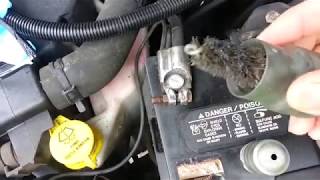
How to confirm: Visually inspect the main ground straps from the battery negative terminal to the chassis and from the engine block to the chassis. Look for fraying or corrosion. Unbolt the grounds, clean the contact points on the terminal and the chassis with a wire brush until shiny, 🎬 Watch this guide on properly cleaning battery terminals and grounds. and re-secure them tightly. Key ground points are often located on the driver's side strut tower and near the battery tray. 🎬 See how a bad ground causes intermittent no-start issues.
Typical fix: Clean all contact surfaces of the main ground connections. If the strap is heavily corroded or broken, replace it.
Est. part cost: $10-$30 - Damaged Wiring or Connectors 🟡 Medium Probability
How to confirm: Visually inspect the wiring harness leading to the ECM for any signs of damage, such as chafing, melting, or rodent damage. Unplug the main ECM connectors (with the battery disconnected) and check for corroded, bent, or pushed-out pins. Pay close attention to the harness where it may rub against the battery tray or engine components.
Typical fix: Repair the damaged section of the wiring harness or replace the affected connector pins. This often requires professional service.
Est. part cost: $50-$500+ - Failed Engine Control Module (ECM) ⚪ Low Probability → Shop Engine Control Module (ECM)
How to confirm: This is typically the last resort after all other possibilities (power, grounds, wiring) have been exhaustively ruled out. Confirmation requires an advanced scan tool to verify the ECM is offline and testing power/ground/CAN signals directly at the ECM connector per the factory service manual.
Typical fix: Replace the ECM. The new module will require programming to the vehicle's VIN and security system.
Est. part cost: $800-$1200
Rare But Worth Checking
- Blown fuses for the ECM or other control modules.
- Faulty aftermarket accessories (remote start, alarm) improperly spliced into the CAN bus wiring.
- A fault in another module on the CAN bus (e.g., TCM, ABS module) that is disrupting the entire network.
Diagnosis Steps
- Check Battery Health: → Shop Vehicle Battery Start with the simplest cause. Ensure the battery has a full charge (12.6V) and passes a load test. Clean any corrosion from the battery terminals.
- Scan for All Codes: Use an OBD-II scanner to check for any other 'U' codes (like U0101) or power-related codes (like P0562). Multiple 'U' codes suggest a network-wide problem, not a single module failure.
- Inspect Fuses: Check all fuses related to the ECM, PCM, and engine controls in both the under-hood and interior fuse panels. A blown fuse can cut power to the module.
- Inspect and Clean Grounds: Disconnect the battery. Locate the main chassis and engine ground straps. Unbolt them, clean the contact surfaces on the wire terminal and the frame/engine block with a wire brush until shiny, and re-tighten securely. A common ground point is on the driver's side strut tower.
- Inspect ECM Connectors and Wiring: Visually inspect the wiring harness going to the ECM for any obvious damage (chafing, burns, rodent damage). Disconnect the ECM connectors and check for corrosion or bent pins.
- Check CAN Bus Resistance (Advanced): With the battery disconnected, use a multimeter to measure the resistance between Pin 6 (CAN High) and Pin 14 (CAN Low) on the OBD-II port. A healthy network should read approximately 60 ohms. A reading of 120 ohms indicates a break in the circuit or a missing terminating resistor. A reading near 0 ohms indicates a short between the two wires.
- Verify Power and Ground at the ECM (Advanced): Using a wiring diagram for your specific vehicle, probe the ECM connector to ensure it is receiving proper battery voltage and has a solid ground connection.
- Suspect ECM: If all power, ground, and network wiring tests pass, the ECM itself may have an internal fault.
Parts You'll Likely Need
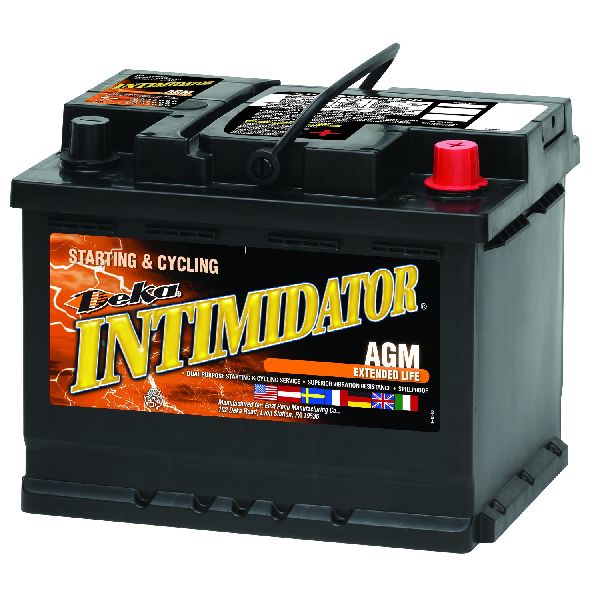
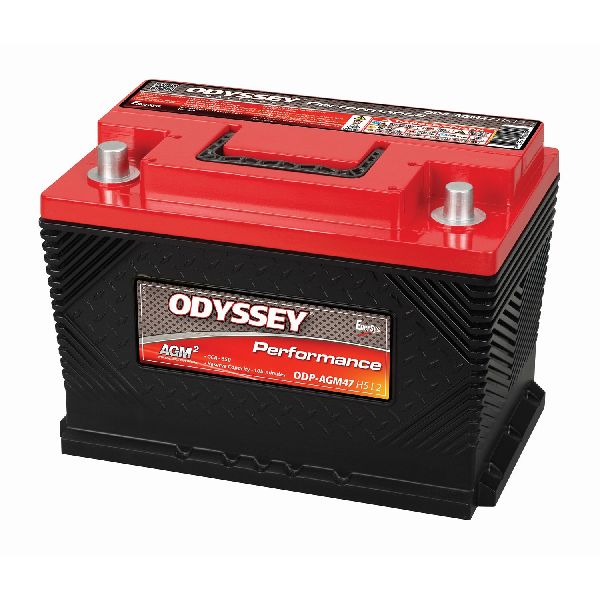
- Battery — A weak or failing battery is the most common trigger for communication codes like U0100 due to low system voltage.
Trusted brands: Bosch, Duralast, Interstate
OEM price range: $180-$250
Aftermarket price range: $120-$200 - Engine Control Module (ECM)
(OEM #Varies by year/trans, e.g., 39110-2EMB1, 39110-2EMA1. Always verify with VIN.)— If all wiring, power, and ground checks are good, the ECM itself may have failed internally, which is the least common but most expensive fix.
Trusted brands: Hyundai (OEM), Cardone (Remanufactured), Solo Auto Electronics (Remanufactured)
OEM price range: $900-$1200
Aftermarket price range: $400-$700 - Battery Ground Strap — The factory ground strap can corrode or break, causing intermittent power and communication issues. This is a cheap but critical part to inspect.
Trusted brands: Hyundai (OEM), Standard Motor Products
OEM price range: $20-$40
Aftermarket price range: $10-$25
Related Codes That Often Appear With This One
- U0101 — Lost Communication with TCM. The TCM and ECM are on the same high-speed CAN network, so a network-wide power or wiring issue will often cause both codes to appear together.
- P0562 — System Voltage Low. This code strongly points to a failing battery or charging system as the root cause of the communication failure.
- U0073 — Control Module Communication Bus 'A' Off. This code indicates a more general CAN bus failure, whereas U0100 specifically points to the loss of the ECM. Seeing both may indicate a severe wiring or network-wide issue.
Platform-Specific Known Issues
- Some owners and mechanics have specifically noted that cleaning the main ground points on the chassis can resolve intermittent no-start conditions associated with this code on 2011-2012 models.
- A user on 2CarPros.com reported a U0100 after a DIY wiring harness replacement, highlighting the importance of ensuring all ground wires are correctly reconnected and that the replacement harness is an exact match.
Mechanic-Grade Diagnostic Values
- CAN Bus Resistance — expected: ~60 Ω. Failure: A reading of ~120 Ω indicates an open circuit or a missing terminating resistor. A reading near 0 Ω indicates a short between the CAN High and CAN Low wires.
- CAN High (C-CAN) Voltage (Key On, Engine Off) — expected: ~2.5V to 3.5V (referenced to chassis ground). Failure: Voltage stuck at 0V, battery voltage, or a static value outside the normal range indicates a short or open.
- CAN Low (C-CAN) Voltage (Key On, Engine Off) — expected: ~1.5V to 2.5V (referenced to chassis ground). Failure: Voltage stuck at 0V, battery voltage, or a static value outside the normal range indicates a short or open.
- ECM Power Ground Resistance — expected: Less than 0.1 Ω. Failure: Higher resistance indicates a poor ground connection, which is a common cause of communication failures.
Scan Tool Commands That Help
- Hyundai GDS (Global Diagnostic System): Vehicle S/W Management — Used to perform ECM software updates or reset adaptive values. This can sometimes resolve communication issues if they are caused by software glitches or corrupted data, particularly after replacing an ECM.
- Advanced Scan Tool (e.g., Autel, Launch): Network Topology / CAN Bus Status — This function provides a visual map of all control modules on the network and shows which ones are communicating and which are offline. It's the fastest way to confirm if only the ECM is offline or if multiple modules are affected, pointing towards a network-wide issue.
Wiring & Ground Locations
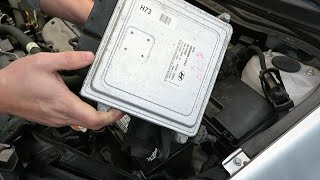
- ECM/PCM Location — In the engine bay, typically located near the battery tray or on the driver's side firewall.. This is the module that has lost communication. All power, ground, and network wiring tests will ultimately lead to its connectors.
- Main Chassis Ground — Typically found on the driver's side strut tower, connected directly from the negative battery terminal.. A poor connection at this primary ground point can cause system-wide low voltage and communication errors, including U0100.
- Engine/Transmission Ground Strap — A braided strap connecting the engine block or transmission case to the vehicle's chassis/frame.. This provides the main ground path for the engine and its sensors. Corrosion or looseness here can create electrical noise and communication faults.
- OBD-II Port Pins — Under the driver's side dashboard. Pin 6 is CAN High, Pin 14 is CAN Low.. This is the most accessible point for testing the resistance and voltage of the main C-CAN network to quickly assess its overall health.
OEM Part Supersession History
39100-2EMB2, 39100-2EMB3→39101-2EMB3— Standard part revision and update by the manufacturer.
Heads up: When replacing the ECM, the part number must be an exact match or a verified superseded number. Using an incorrect part number, even if it physically fits, will result in a no-start condition.
Model Year Variations Within This Range
- 2014-2016: The introduction of the 2.0L GDI engine in 2014 brought a different ECM and potentially different software. While the U0100 diagnostic process is the same, the specific ECM part numbers will be different from the 1.8L models.
Diagnostic Flowchart
Other Known Issues on This Vehicle
Issues unrelated to this code that are worth knowing about as an owner of this generation:
- 1.8L Nu Engine Piston Slap / Ticking Noise 🔴 High — Common, especially on cold starts. Can lead to excessive oil consumption and eventual engine failure. Most prevalent on 2011-2013 models. (Ref: TSB 22-EM-007H / 21-EM-002H extended the powertrain warranty for the engine long block for this issue in certain states.)
- Steering Coupler Wear 🟠 Medium — Very common. Owners report a clicking or clunking noise from the steering column when turning the wheel. The part itself is inexpensive, but labor can be significant. (Ref: TSB 17-ST-002; Hyundai extended the warranty for the flexible steering coupling to 10 years/100,000 miles.)
- Suspension Noises (Sway Bar Links) 🟡 Low — Fairly common. A clunking or knocking sound from the front suspension when going over bumps is often caused by worn sway bar end links or bushings.
- Premature Brake Wear 🟡 Low — Some owners report faster-than-expected wear on brake pads and rotors, sometimes under 30,000 miles.
- Front Coil Spring Corrosion 🔴 High — Primarily affects vehicles in salt-belt states. Corrosion can cause the front coil spring to fracture, potentially puncturing the tire. (Ref: Recall 15V629000 / NHTSA Campaign 13V115000.)
Used vs. New Parts: Buying Guide for This Vehicle
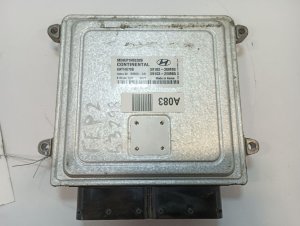
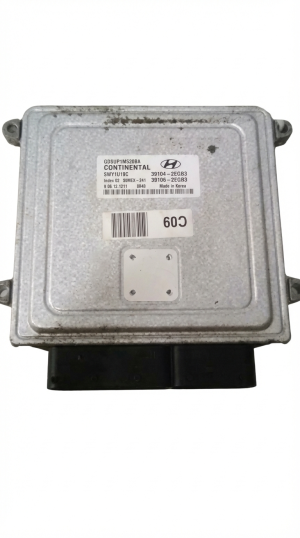
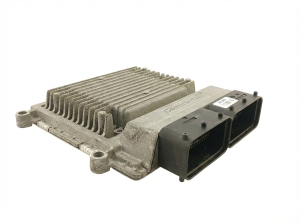
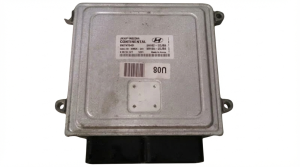
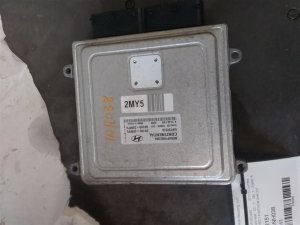
When a used part is the smart pick: A used ECM is a viable, cost-effective option if the original unit is confirmed to be faulty. Given the high cost of a new OEM module, a used part from a reputable seller can save hundreds of dollars. However, it is critical to understand that it is NOT a plug-and-play part.
Donor-vehicle mileage cap: roughly under 120000 miles for the part to have meaningful remaining life.
What to inspect on the donor part:
- Match the OEM part number EXACTLY. Do not rely on the model year alone.
- Inspect the used ECM for any physical damage, especially bent pins or corrosion on the connectors.
- Purchase from a seller that offers a warranty and has good reviews.
- Ensure the donor vehicle was not involved in a flood or fire.
OEM-only on this vehicle (don't cheap out):
- Engine Control Module (ECM). While remanufactured units from reputable brands like Cardone are available, a used OEM unit is often preferred for compatibility. New aftermarket ECMs are generally not available or recommended.
Aftermarket brands forum-validated for this vehicle:
- Cardone (for remanufactured ECMs)
Brands owners have reported issues with on this vehicle:
- Unknown, no-name brands found on online marketplaces with no warranty or return policy.
Real Owner Stories
Aggregated from forums and TSBs cited above. Mileages and costs reflect what owners reported in those sources.
2011 Hyundai Elantra
Symptoms: The vehicle experienced a no-start condition and the OBD-II scanner pulled a U0100 code.
What fixed it: Cleaning the main ground points on the chassis to resolve the intermittent no-start condition.
Source hint: vehicle_specific_issues
2011-2016 Hyundai Elantra
Symptoms: Vehicle would not start and showed code U0100.
What fixed it: Ensuring all ground wires were correctly reconnected and verifying the wiring harness was an exact match after a DIY replacement.
Source hint: 2CarPros - 'Will Not Start and Code U0100'
Related OBD-II Codes
Frequently Asked Questions
Could the ticking noise in my 2011-2013 Elantra 1.8L Nu engine be related to the U0100 code?
I have a U0100 and my steering is making a clunking noise; is there a warranty extension for this?
Where should I check for ground issues on my 2011 Elantra to fix this communication code?
Why are my cooling fans running at high speed while the Check Engine Light is on?
Can a weak battery really cause a U0100 code on a 2014 Elantra?
Helpful Videos

Used OEM Parts in Stock
New Aftermarket Parts Available



The information in this article is provided for general reference and educational purposes only. Vehicle specifications, procedures, and part compatibility can vary by production date, trim level, and region. Always consult your vehicle's factory service manual and verify part numbers before purchasing or performing repairs. Safety-critical components such as airbags, seat belts, and braking systems should be installed by a qualified professional.
- Hyundai Elantra:
- 🧭 Diagnostic Flowchart
- 🎬 Helpful Videos
- 🛍️ Shop This Part
- What's Unique About the 2011-2016 Hyundai Elantra
- Symptoms You May Notice
- Most Likely Causes
- Rare But Worth Checking
- Diagnosis Steps
- Parts You'll Likely Need
- Related Codes That Often Appear With This One
- Platform-Specific Known Issues
- Mechanic-Grade Diagnostic Values
- Scan Tool Commands That Help
- Wiring & Ground Locations
- OEM Part Supersession History
- Model Year Variations Within This Range
- Other Known Issues on This Vehicle
- Used vs. New Parts: Buying Guide for This Vehicle
- Real Owner Stories
- 2011 Hyundai Elantra
- 2011-2016 Hyundai Elantra
- Related OBD-II Codes
- Frequently Asked Questions
- 🎟️ Get 5% Off