

U0100 on 2022-2023 Jeep Cherokee: Lost Communication with ECM/PCM Causes and Fixes
On a 2022-2023 Jeep Cherokee, U0100 most often points to a weak main or auxiliary battery, or a poor ground connection. Before suspecting a costly computer failure, thoroughly test the battery and inspect its terminals and the main engine ground strap, which is a known failure point.
- U0100 means the Engine Control Module (PCM) has lost communication on the vehicle's network.
- For the 2022-2023 Jeep Cherokee, the most likely causes are a weak main battery or a failed auxiliary battery (if equipped with Engine Start-Stop).
- Always check the battery, terminals, and major ground connections before assuming a more complex wiring or module fault.
- This is a serious code that makes the vehicle unsafe to drive due to the risk of stalling.
- Diagnosis is complex and best left to a professional with CAN bus diagnostic tools to avoid replacing expensive parts unnecessarily.
What's Unique About the 2022-2023 Jeep CHEROKEE
The Jeep Cherokee (KL generation, 2014-2023) is known for having a sensitive electrical system. Many models use a dual-battery system for the Engine Start-Stop (ESS) feature, and the failure of the small auxiliary battery is a very common cause of this code and other seemingly unrelated electrical issues. Additionally, manufacturer Technical Service Bulletins (TSBs) have been issued that address communication codes, sometimes recommending software updates to prevent misdiagnosis and the unnecessary replacement of expensive modules.
Diagnostic Flowchart
Tap your situation to follow the diagnostic path that matches what you're seeing on this vehicle.
Symptoms You May Notice
- Check Engine Light is on
- Vehicle will not start or has a hard start/no-crank condition
- Engine stalls intermittently while driving
- Multiple other warning lights may illuminate (ABS, Traction Control, Airbag)
- Electronic Throttle Control (red lightning bolt) light may appear
- Transmission may not shift correctly or enters 'limp mode'
- "Service Start/Stop System" message may appear on the dash
- "Service Shifter" or "Service 4WD" message may appear
- Loss of power steering assist (if code U0131 is also present)
- Replacing the Transmission Control Module (TCM) or ABS module just because it logged the U0100 code. These modules are reporting that they cannot hear the PCM; they are usually not the cause of the problem.
- Replacing the PCM without first verifying its power, ground, and network connections are all intact. This is an expensive mistake when the root cause is often a bad battery or ground strap.
Most Likely Causes
- Weak or Failing Main/Auxiliary Battery 🔴 High Probability → Shop Vehicle Battery The KL Cherokee's sensitive electronics are highly dependent on stable voltage. Models with Engine Start-Stop (ESS) have a secondary auxiliary battery that is a known high-failure item and a primary cause of network communication codes like U0100. Owners on forums frequently report that replacing the 3-5 year old batteries resolves mysterious electrical faults.
How to confirm: Test the main battery with a multimeter; it should read at least 12.6 volts with the engine off. A load test is required to confirm its true health. 🎬 See why your Jeep won't crank even with a good battery. A "Service Start/Stop System" message is a strong indicator of a failing auxiliary battery. Many owners choose to bypass the auxiliary battery entirely to prevent future issues.
Typical fix: Replace the weak or failing battery. If the auxiliary battery has failed, it must be replaced. Cleaning terminals is a first step, but battery replacement is often necessary.
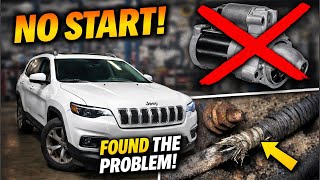
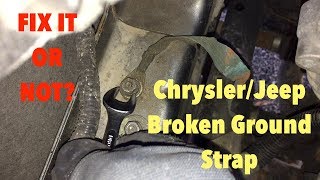
Est. part cost: $150-$400 - Poor Power or Ground Connection 🟡 Medium Probability Corrosion or looseness at battery terminals or chassis ground points can create unstable voltage for the modules. There is a key engine-to-chassis ground strap, often connected to a transmission bolt, where the terminal eyelet can break, causing a no-start and U0100. 🎬 Watch: How to find and fix a broken ground strap. This specific failure has been documented by technicians.
How to confirm: Visually inspect battery terminals for corrosion. Locate and inspect the main ground straps for looseness, corrosion, or breakage. The critical strap is often located under the alternator on the passenger side, connecting to the engine or transmission. A voltage drop test across the ground strap can definitively confirm a bad connection; the reading should be less than 0.2 volts.
Typical fix: Clean the battery terminals and cable ends. Remove, clean all contact surfaces with a wire brush, and securely reattach ground straps. Replace any corroded or broken straps or terminal ends.
Est. part cost: $10-$50 - CAN Bus Wiring Harness Issue 🟡 Medium Probability The CAN bus wiring runs throughout the vehicle. An open or short in the wiring, or corrosion in a connector, will disrupt communication. TSB 08-039-16 Rev. A specifically mentions that the transmission wiring harness can chafe and cause U0100 along with other codes. This can be caused by rodent damage, previous repairs, or chafing against vehicle components.
How to confirm: A visual inspection of the wiring harness, particularly around the transmission and engine bay, may reveal damage. A technician would use a multimeter to check for continuity and resistance between the CAN High (Pin 6) and CAN Low (Pin 14) wires at the OBD-II port. The network should have a total resistance of about 60 ohms with the battery disconnected.
Typical fix: Repair the damaged section of the wiring harness or clean/replace the corroded connector. For chafing issues mentioned in TSBs, a mastic patch may be applied to protect the harness.
Est. part cost: $5-$100 - Software Issue Requiring an Update ⚪ Low Probability Jeep has issued TSBs (e.g., #0806816) indicating that software updates can reduce the chance of misdiagnosis for communication codes, suggesting the original software may be overly sensitive or contain bugs that trigger false codes. This is a common strategy for FCA/Stellantis to resolve intermittent electronic issues.
How to confirm: A Jeep dealership or a qualified shop with a subscription to OEM data can check the vehicle's VIN for any available PCM or other module software updates using the wiTECH tool. This is not something a user can check on their own.
Typical fix: Flash the appropriate module (PCM, BCM, etc.) with the latest software using a dealer-level scan tool.
Est. part cost: $0-$200
Rare But Worth Checking
- Faulty Powertrain Control Module (PCM): → Shop Engine Control Module (ECM) This is a common misdiagnosis. The PCM should only be replaced after all other possibilities (power, grounds, wiring, and other modules) have been exhaustively ruled out. A recall (NHTSA 18V-524) was issued for some 2018-2019 models for a faulty voltage regulator chip inside the PCM, which could cause similar symptoms.
- Faulty Trailer Tow Module (TTM): A TSB (#S2608000007) for a newer model year indicates that a faulty TTM can disrupt the network, leading to a U0100 code being set. If the vehicle is equipped with a factory trailer tow package, this module can be a source of the problem. The module itself can be replaced, with part numbers like 68588996AC being available.
- Faulty Gateway Module (BCM or TIPM): The Body Control Module (BCM) or Totally Integrated Power Module (TIPM) often acts as the central gateway for network traffic. A failure in this module can prevent communication with the PCM. Aftermarket radio installations have been known to interfere with the CAN bus and cause this code if not done correctly.
Diagnosis Steps
- Check and charge the main battery. Perform a load test to ensure it is healthy. A weak battery is the most common cause.
- If equipped with Engine Start-Stop, suspect the auxiliary battery. A "Service Start/Stop System" message is a strong clue. Consider this a primary suspect.
- Use a professional scan tool (like wiTECH) to check for codes in ALL modules and view the network topology map. Note which modules are offline (not communicating).
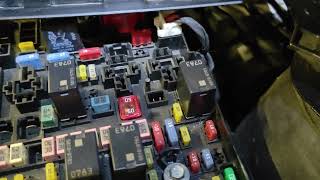
- Inspect all battery cables and main chassis/engine ground straps for corrosion, damage, or looseness. Pay special attention to the ground strap terminal on the transmission, which has been known to break and cause a no-crank condition. 🎬 Watch this diagnostic walkthrough of a common no-start issue.
- Visually inspect the engine wiring harness for obvious signs of damage, such as from rodents, chafing near the transmission, or melting.
- With the ignition off and battery disconnected, measure the resistance across pins 6 (CAN-H) and 14 (CAN-L) of the OBD-II port. A healthy CAN bus should read approximately 60 ohms. A reading of 120 ohms suggests a missing terminating resistor or a break in the circuit; a reading near 0 ohms indicates a short between the two lines.
- If a Trailer Tow Module is installed, consider disconnecting it to see if communication is restored, as suggested by TSB S2608000007.
- If all wiring, grounds, and power sources are good, check with a dealer for any available software updates for the PCM or other modules.
- If all else fails, the final step is to suspect a faulty module, such as the PCM or BCM/Gateway. This requires advanced diagnostics to verify power, ground, and network signals directly at the module connector.
Parts You'll Likely Need
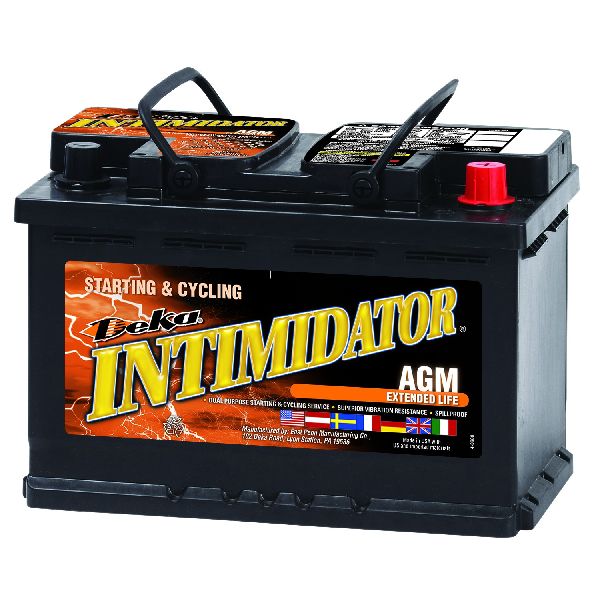
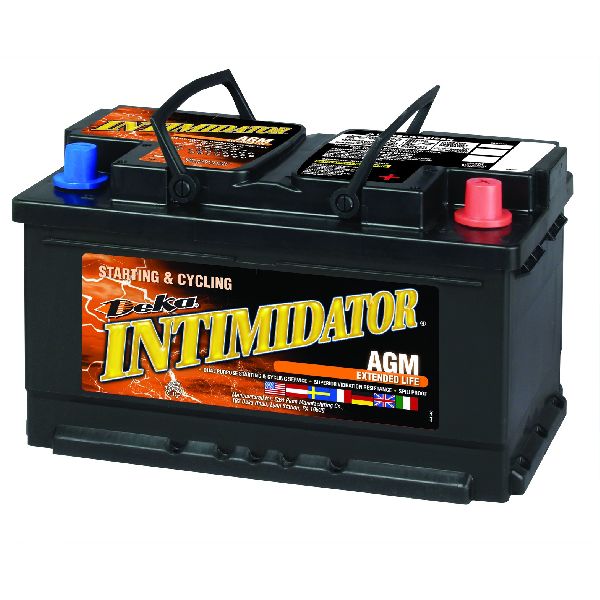
- Auxiliary Battery
(OEM #68252272AA)— For models with Engine Start-Stop (ESS), the failure of this smaller battery is a top cause of U0100 and other electrical issues on the KL Cherokee.
Trusted brands: Mopar, Deka, ACDelco
OEM price range: $100-$150
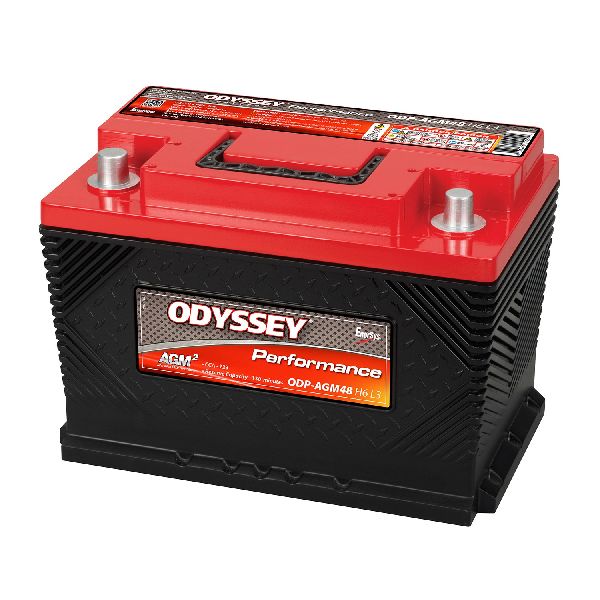
Aftermarket price range: $80-$120 - Battery — A weak or failing main battery provides unstable voltage, which is a very common cause of network communication errors in modern vehicles.
Trusted brands: Mopar, Interstate, DieHard, Optima
OEM price range: $200-$350
Aftermarket price range: $180-$300 - Engine Ground Strap
(OEM #68371295AB (replaces 68371295AA))— The engine-to-chassis ground strap is a known failure point due to corrosion or breakage, leading to a loss of a stable ground reference for the PCM and other modules.
Trusted brands: Mopar
OEM price range: $15-$30
Aftermarket price range: $10-$20
Related Codes That Often Appear With This One
- U0101 — Lost Communication with TCM. If the PCM is offline, the TCM will also log a communication loss code.
- U0140 — Lost Communication with Body Control Module. The BCM is another key module on the network that will report when it cannot communicate with the PCM.
- U0131 — Lost Communication with Power Steering Control Module. TSB 08-039-16 REV. A explicitly links this code with U0100, often due to a chafed wiring harness.
- P0512 — Starter Request Circuit. This code can appear alongside U0100 as part of a no-start condition, also mentioned in TSB 08-039-16 REV. A.
Technical Service Bulletins (TSBs) & Recalls
- S2608000007: Trailer Tow Module (TTM) Setting Active DTC U0100-00 – Lost Communication With ECM/PCM
- 0806816: Addresses multiple lost communication codes (U0100, U0140, U0101) and suggests a software update can reduce misdiagnosis.
- 08-039-16 REV. A: Mentions U0100-00 - Lost Communication With ECM/PCM in conjunction with other codes.
- U87 / NHTSA 18V-524: Safety recall for a potential internal PCM failure on some 2018-2019 models that could cause stalling or a no-start.
- U63 / NHTSA 18V-332: Safety recall to reprogram the PCM on 2014-2018 models to address an issue with the cruise control system if CAN-C bus communication is lost.
Platform-Specific Known Issues
- Dual Battery System (ESS): → Shop Vehicle Battery The Engine Start-Stop (ESS) system relies on a small, secondary auxiliary battery. This battery has a high failure rate and is a primary cause of network communication codes like U0100. When it fails, it can cause a cascade of seemingly unrelated electrical problems. Many owners report that a 'Service Start/Stop System' warning light is the first sign of trouble.
- Passenger-Side Ground Strap: → Shop Engine Ground Strap A specific braided ground strap connecting the engine block/mount to the chassis on the passenger side of the engine bay is a known weak point. It is susceptible to corrosion and breaking, which can interrupt the primary ground path for the PCM and other critical modules, directly causing the U0100 code.
- Chafing Transmission Harness: → Shop Transmission Assembly TSB 08-039-16 REV. A points out that the transmission wiring harness can rub against other components, eventually wearing through the insulation and causing shorts in the CAN bus wires. This specific issue is known to cause U0100, U0131 (Lost com with Power Steering), and a no-start condition.
Mechanic-Grade Diagnostic Values
- CAN Bus Resistance — expected: ~60 Ω (Ohms) across Pin 6 (CAN-H) and Pin 14 (CAN-L) at the OBD-II port with battery disconnected.. Failure: A reading of ~120 Ω indicates an open circuit or a missing terminating module. A reading near 0 Ω indicates a short between the CAN lines.
- CAN Bus Voltage (Key On, Engine Off) — expected: CAN-H (Pin 6) should be ~2.7V. CAN-L (Pin 14) should be ~2.3V. The two should add up to approximately 5V.. Failure: Voltages that are stuck high, low, or are identical on both lines indicate a wiring fault or module failure.
- Ground Strap Voltage Drop — expected: < 0.2 Volts DC. Failure: A reading higher than 0.2V indicates high resistance in the ground connection. The test is performed by placing one multimeter lead on the engine block/transmission case and the other on the negative battery terminal while the engine is cranking.
Hidden / Shadow Codes Worth Checking
- U0100-00: Lost Communication With ECM/PCM - No Sub Type Information. This is the most generic form of the code. (see via Professional scan tools, including FCA's wiTECH.)
- U0100-87: Lost Communication With ECM/PCM - Missing Message. This indicates the module is on the network but is not sending an expected message, which can point more specifically to a software or internal module fault rather than a complete wiring failure. (see via Advanced professional scan tools like wiTECH.)
Scan Tool Commands That Help
- wiTECH (FCA/Stellantis Dealer Tool): Network Topology View — This is the primary screen for diagnosing any 'U' code. It provides a live, color-coded map of all vehicle modules, instantly showing which are online (green), which have codes (yellow), and which are not communicating (red/gray), guiding the diagnostic path.
- wiTECH (FCA/Stellantis Dealer Tool): View All DTCs / Vehicle Scan Report — To get a complete list of codes from every module on the vehicle. A U0100 code is often set by multiple modules, and seeing which ones are complaining helps determine the scope of the network failure.
- wiTECH (FCA/Stellantis Dealer Tool): Check for Flashes — Used after confirming power and grounds are good. This function checks the vehicle's VIN against FCA's servers for any available software updates for the PCM or other modules that might resolve communication glitches.
- wiTECH (FCA/Stellantis Dealer Tool): Vehicle Restore Configuration — This is an advanced function used after replacing a module or to resolve configuration mismatch issues. It resets and realigns modules to the vehicle's factory build configuration based on its VIN.
Wiring & Ground Locations
- CAN Bus Star Connector (Diagnostic Hub) — Underneath the passenger side dashboard, below/behind the glove box. It is a green, multi-port connector where numerous CAN bus branches meet.. This is a central diagnostic point. A technician can disconnect individual branches to isolate a faulty module or wiring section that is bringing down the network. A failure of the connector itself due to heat or vibration can also cause intermittent network-wide communication loss.
- Main Engine/Transmission Ground Strap — Typically a thick, braided or insulated cable running from the engine block or transmission case to the chassis. A common failure point is the terminal eyelet on a transmission bolt.. This is the primary return path for the PCM and other critical engine components. High resistance or a complete break here will starve the PCM of a stable ground, causing it to shut down and triggering U0100 across the network, often with a no-crank symptom.
- PCM Power and Ground Pins — At the main connectors of the Powertrain Control Module (PCM) itself.. Before condemning the PCM, a technician must use a wiring diagram to test for battery voltage, ignition-on voltage, and solid ground directly at the PCM's connector pins to rule out a wiring or power supply issue.
Real Owner Repair Stories
- YouTube Channel 'Waqas Azmat' (2019 Jeep Cherokee) — No-crank, no-start condition. Multiple communication codes, including loss of communication with the power steering module.
❌ Tried (didn't work) Initial diagnosis focused on the non-communicating power steering module.
✅ What actually fixed it The root cause was a broken main ground cable terminal. The terminal eyelet that bolts to the transmission housing had snapped, severing the main ground for the powertrain. The fix was confirmed by temporarily connecting a jumper cable from the transmission case to the battery negative terminal, which allowed the vehicle to start immediately. The permanent fix was to replace the broken ground cable.
"I Checked Everything" — The Actual Cause
- In a documented case, a 2019 Cherokee with a no-start and communication codes had all its wiring harnesses appear visually intact. Standard diagnostic checks might miss the true cause, which was a main ground cable where the wire was fine, but the metal terminal eyelet bolted to the transmission had fractured. This created a complete open in the ground circuit that was only found by physically inspecting and tugging on the cable.
OEM Part Supersession History
5150861AH, 5150861AI→5150861AJ— Standard hardware/software revision and bug fixes.
Heads up: While multiple part numbers exist for the 2022 model year (e.g., 68534091AA, 68460250AB), the correct PCM is specific to the vehicle's engine (2.4L, 3.2L) and emissions package. The wrong part number will not program or function correctly.
Model Year Variations Within This Range
- 2022-2023: No significant, documented variations have been identified between the 2022 and 2023 model years that specifically affect the diagnosis or common causes of code U0100. The vehicle was in its final years of the KL generation, and major electrical architecture changes were not implemented.
Helpful Videos
We Have This Part in Stock


The information in this article is provided for general reference and educational purposes only. Vehicle specifications, procedures, and part compatibility can vary by production date, trim level, and region. Always consult your vehicle's factory service manual and verify part numbers before purchasing or performing repairs. Safety-critical components such as airbags, seat belts, and braking systems should be installed by a qualified professional.
- Jeep CHEROKEE:
- 🧭 Diagnostic Flowchart
- 🎬 Helpful Videos
- 🛍️ Shop This Part
- What's Unique About the 2022-2023 Jeep CHEROKEE
- Symptoms You May Notice
- Most Likely Causes
- Rare But Worth Checking
- Diagnosis Steps
- Parts You'll Likely Need
- Related Codes That Often Appear With This One
- Technical Service Bulletins (TSBs) & Recalls
- Platform-Specific Known Issues
- Mechanic-Grade Diagnostic Values
- Hidden / Shadow Codes Worth Checking
- Scan Tool Commands That Help
- Wiring & Ground Locations
- Real Owner Repair Stories
- "I Checked Everything" — The Actual Cause
- OEM Part Supersession History
- Model Year Variations Within This Range
- 🎟️ Get 5% Off