

U0100 on 2011-2016 Kia Sportage: Lost Communication with ECM/PCM Causes and Fixes
On a 2011-2016 Kia Sportage, code U0100 most often indicates a no-start or stalling condition due to a communication failure with the engine computer. Before suspecting an expensive computer failure, check for a weak battery, poor ground connections, or damaged wiring, which are the most common culprits. Be aware this vehicle has major engine recalls that could be related to electrical issues.
- U0100 means the Engine Control Module (ECM) is offline and not communicating.
- The most common symptoms are a no-start condition or the engine stalling unexpectedly.
- ALWAYS check the battery, its terminals, and vehicle ground connections before attempting more complex diagnostics. A simple voltage issue is a very common cause.
- If the battery and grounds are good, the next step is to inspect the ECM wiring harness for damage or corrosion.
- Replacing the ECM is expensive and should only be done after all other possibilities have been professionally ruled out.
What's Unique About the 2011-2016 Kia Sportage
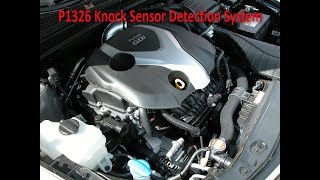
While the direct causes for U0100 on the Sportage (bad battery, grounds, wiring) are common to many vehicles, this platform's critical context is the widespread and well-documented failure of its Theta II engines. Numerous recalls (e.g., 17V-224) and class-action lawsuits address catastrophic engine bearing failure. An owner diagnosing a U0100, especially if accompanied by stalling or other engine performance issues, must be aware that the vehicle may be covered by a lifetime engine warranty extension. A dealer must verify the status of the Knock Sensor Detection System (KSDS) update 🎬 Watch: Understanding the Theta II engine recalls and P1326 cause, which is a prerequisite for this warranty. Therefore, any diagnostic approach must consider the possibility of an underlying engine issue alongside the typical electrical checks.
Symptoms You May Notice
- Engine will not start (no-crank or cranks but won't fire).
- Engine stalls intermittently while driving.
- Check Engine Light is on (may be flashing or intermittent).
- Multiple warning lights may appear on the dashboard simultaneously.
- Transmission may be stuck in one gear (limp mode).
- Noticeable loss of engine power.
- Reduced fuel economy.
- Replacing the ECM without first thoroughly checking the battery, grounds, and wiring harness. An expensive ECM replacement will not fix a problem caused by a bad ground or a weak battery.
- Overlooking a faulty module elsewhere on the CAN bus that is causing the network to crash.
Most Likely Causes
- Weak or Failing Battery 🔴 High Probability → Shop Vehicle Battery Modern vehicles are highly sensitive to voltage. A battery providing less than 12.4 volts at rest, or dropping below 10.0V during cranking, can cause unpredictable communication errors between modules before it's weak enough to prevent cranking.
How to confirm: With the engine off, test the battery voltage using a multimeter. A healthy battery should read at least 12.4-12.6 volts. Perform a load test by measuring voltage while cranking the engine; it should not drop below 10.0V. Also, inspect the battery terminals for corrosion and ensure they are tight.
Typical fix: Recharge or replace the battery. Clean the battery terminals and cable ends thoroughly.
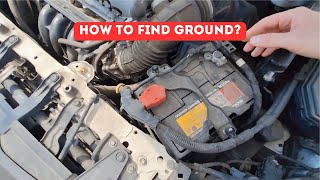
Est. part cost: $150-$250 - Poor Ground Connections 🟡 Medium Probability Corrosion or loose ground straps between the engine, body, and battery are a frequent source of intermittent electrical issues that can disrupt module communication. This is a common point of failure after engine or harness work. 🎬 See how to locate and inspect your car's ground cables
How to confirm: Visually inspect all major ground straps (engine-to-chassis, transmission-to-chassis, battery negative cable) for tightness and corrosion. A voltage drop test from the ECM case to the negative battery terminal should show less than 0.1 volts.
Typical fix: Unbolt, clean the contact points of ground connections to bare metal with a wire brush, and secure them tightly. In some cases, a corroded ground strap may need to be replaced.
Est. part cost: $10-$50 - Damaged or Corroded Wiring/Connectors 🟡 Medium Probability
How to confirm: Visually inspect the wiring harness leading to the Engine Control Module (ECM) for any signs of chafing, melting, or corrosion, paying close attention to the main connectors. A technician would use a multimeter to check for continuity and test the CAN bus resistance (should be 60 ohms with the key off).
Typical fix: Repair the damaged section of the wiring harness. Clean corroded connector pins with electrical contact cleaner. Ensure connectors are fully seated.
Est. part cost: $50-$500 - Faulty Engine Control Module (ECM) ⚪ Low Probability → Shop Engine Control Module (ECM)
How to confirm: This is diagnosed by exclusion. If the battery, all power/ground connections to the ECM, and the CAN bus wiring have been tested and confirmed to be good, the ECM itself is the likely culprit.
Typical fix: Replace the ECM. The new module must be programmed to the vehicle's VIN and specific configuration.
Est. part cost: $800-$1200
Rare But Worth Checking
- Faulty Module on CAN Network:
Diagnosis Steps
- Check Battery Health: Test the battery voltage; it should be 12.4V or higher at rest. Critically, perform a load test while cranking; the voltage should not dip below 10.0V. Clean any corrosion from the terminals and ensure connections are tight.
- Scan for All Codes: Use an OBD-II scanner to check for other 'U' codes. If multiple modules are reporting lost communication, it points to a network-wide issue. Note any engine-specific codes like P1326.
- Visual Inspection: Thoroughly inspect the wiring harness connected to the ECM. Look for any visible damage, corrosion, or loose connectors. Check for any aftermarket accessories that may be improperly wired into the vehicle's network.
- Check Power and Grounds: Use a multimeter to verify that the ECM is receiving proper battery voltage and has a solid ground connection. Locate and clean the main engine-to-chassis and battery ground points.
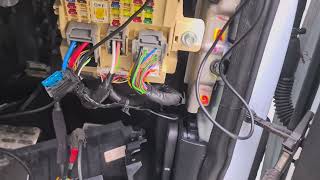
- Test the CAN Bus: This is an advanced step. 🎬 Watch a technician diagnose CAN bus faults on a Sportage With the ignition off, measure the resistance between the CAN High and CAN Low pins (Pins 6 and 14) at the OBD-II port. It should be 60 ohms. A reading of 120 ohms indicates a missing terminating resistor or a break in the wiring.
- Isolate Modules: If the CAN bus resistance is incorrect or a network-wide fault is suspected, a technician may unplug modules one by one to see if the network communication is restored, thereby isolating the faulty component.
- Contact Dealer for Warranty Status: Given the known engine issues, it is wise to have a Kia dealer check your VIN for any open recalls or warranty extensions (like the lifetime engine warranty) before authorizing expensive repairs.
Parts You'll Likely Need
- Vehicle Battery — A weak or failing battery is the most common cause of communication codes like U0100 due to low system voltage.
Trusted brands: Bosch, ACDelco, DieHard
OEM price range: $200-$300
Aftermarket price range: $150-$250 - Engine Control Module (ECM/PCM)
(OEM #Various, e.g., 39110-2Gxxx series. Part number is highly specific to year, engine, and transmission. Must be matched by VIN.)— If all other diagnostic steps fail to find a fault in the wiring or power supply, the ECM itself may have an internal failure. This is the least common and most expensive fix.
Trusted brands: Kia (OEM), Bosch (Remanufactured)
OEM price range: $900-$1200
Aftermarket price range: $400-$800 (Remanufactured)
Related Codes That Often Appear With This One
- U0101 — Lost Communication with TCM. The Transmission Control Module (TCM) is on the same CAN bus, so a network-wide failure will often cause communication loss with both the ECM and TCM.
- U0140 — Lost Communication with Body Control Module. This indicates a broader network problem, as the BCM is another key module on the CAN bus.
- P0562 — System Voltage Low. This code often accompanies communication codes, as low system voltage from a weak battery or failing alternator is a primary cause of network glitches.
- P1326 — Knock Signal Range/Performance. This code is specific to the Knock Sensor Detection System (KSDS) installed as part of the engine recalls. It indicates a potential engine bearing failure and will put the vehicle into limp mode. It can sometimes appear with other electrical fault codes.
Technical Service Bulletins (TSBs) & Recalls
- Recall 17V-224 / Kia Campaign SC147: Addresses premature engine bearing wear that can result in engine seizure.
- TSB PI1803 / Campaign 953: Relates to the Knock Sensor Detection System (KSDS) software update required to enable the lifetime engine warranty extension.
Platform-Specific Known Issues
- Theta II Engine Failure Context: The 2011-2016 Kia Sportage (with 2.0L & 2.4L GDI engines) is infamous for engine failures due to a manufacturing defect. This led to recalls (17V-224) and a lifetime warranty extension on the engine block for vehicles that have had the KSDS software update. While U0100 is an electrical code, any diagnosis of stalling or no-start must consider this possibility, as a seized engine can mimic electrical failure symptoms.
- Hydraulic Electronic Control Unit (HECU) Fire Risk Recall: Some 2014-2016 models were recalled due to a risk of an electrical short within the HECU, which could lead to an engine compartment fire. While not a direct cause of U0100, any electrical fault or fire in the engine bay can damage nearby wiring, including the CAN bus or ECM harness, leading to communication codes.
Mechanic-Grade Diagnostic Values
- CAN Bus Resistance (Ignition Off) — expected: 60 Ohms between Pin 6 (CAN-H) and Pin 14 (CAN-L) of the OBD-II port.. Failure: A reading of 120 Ohms suggests an open circuit or a missing terminating resistor in a module. A reading near 0 Ohms indicates a short between the CAN lines.
- CAN Bus Voltage (Ignition On) — expected: CAN High (Pin 6) and CAN Low (Pin 14) should both read approximately 2.5 Volts to ground.. Failure: Significant deviation from 2.5V on either line indicates a network bias issue or a short to power/ground.
- ECM Ground Resistance — expected: Less than 0.1 Ohms from the ECM housing/ground pins to the negative battery terminal.. Failure: Higher resistance indicates a poor ground connection, a common cause of intermittent module communication failures.
- ECM Power Supply Voltage (Cranking) — expected: Should not drop below 10.0 Volts during engine cranking.. Failure: Voltage dropping below 10.0V can cause the ECM to reset or lose communication, pointing to a weak battery or poor power connection.
Scan Tool Commands That Help
- Kia GDS (Global Diagnostic System): Fault Code Searching (All Systems) — Use this function to quickly determine if other modules besides the ECM are also reporting communication loss codes (e.g., U0101, U0140). A network-wide failure points away from the ECM being the sole culprit and toward a shared network wiring or power/ground issue.
- Kia GDS (Global Diagnostic System): Current Data / Live Data — After establishing communication, use this to monitor live data from the ECM. If communication is intermittent, the data stream will freeze or drop out, helping to confirm the network fault.
- Kia GDS (Global Diagnostic System): Actuation Test — This bidirectional control allows the technician to command specific outputs (like fans, relays, etc.) to verify the ECM is capable of sending commands. If the ECM can perform actuation tests but still sets U0100, the issue is more likely on the receiving end or an intermittent network wiring fault.
Wiring & Ground Locations
- Engine Harness Chafe Point 1 — Inspect the engine wiring harness near the ECM/TCM bracket and the left front upper control arm bushing.. Vibration can cause the harness to rub against these metal components, potentially shorting out CAN bus wires and causing a U0100 code. This is a known issue on similar platforms.
- Engine Harness Chafe Point 2 — Check the harness routing near the shock tower. The harness should be secured inside its designated channel.. If the harness is not properly secured in the shock tower channel, it can chafe against the shock tower bolts, leading to damaged wiring and network faults.
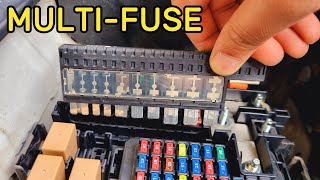
- Main Engine Fuse Box — Located in the engine compartment, near the battery.. This box contains the main fuses and relays that supply power to the ECM. A corroded or faulty multi-fuse assembly within this box can cut power to the ECM, directly causing a U0100 code.
- Main Chassis Ground — Typically a large cable from the negative battery terminal to the vehicle's chassis/frame rail in the engine bay.. Corrosion or looseness at this primary ground point can create high resistance for the entire vehicle's electrical system, leading to widespread communication faults.
Real Owner Repair Stories
- Kia-Forums user reports (2012 Kia Sportage) — No crank, no start, multiple warning lights on the dash, U0100 code present.
❌ Tried (didn't work) Replacing the battery, Checking all visible ground straps, Testing CAN bus resistance (which was correct at 60 ohms)
✅ What actually fixed it The main fuse box in the engine bay had internal corrosion on the multi-fuse assembly. Power was not being supplied consistently to the ECM relay. Replacing the entire fuse box assembly resolved the no-start condition and cleared the U0100 code.
Model Year Variations Within This Range
- 2011-2013: Early models of this generation are noted to have more initial complaints regarding engine and electrical system issues compared to the facelifted 2014-2016 models. While the causes for U0100 are the same, the probability of encountering wiring or module faults may be slightly higher on pre-facelift vehicles.
- 2014-2016: Facelift models received updates including a revised grille and better noise suppression. Some electrical components may have been updated, though the fundamental CAN architecture remains the same. These models are subject to the HECU fire risk recall, which can cause secondary wiring damage.
Diagnostic Flowchart
Other Known Issues on This Vehicle
Issues unrelated to this code that are worth knowing about as an owner of this generation:
- Catastrophic Engine Failure (Theta II Engine) 🔴 High — Widespread issue affecting 2.0L and 2.4L GDI engines. Manufacturing debris can lead to connecting rod bearing failure, causing engine seizure, often with little warning. Onset can be anytime, but commonly reported from 60,000 miles onward. (Ref: Recall 17V-224 (Campaign SC147); Class-action lawsuits led to a lifetime warranty on the engine short block for original and subsequent owners, contingent on receiving a Knock Sensor Detection System (KSDS) software update.)
- Excessive Oil Consumption 🔴 High — Very common on the 2.4L Theta II engine. Many owners report needing to add a quart of oil every 1,000-2,000 miles. This is often a precursor to more serious engine problems and can cause codes like P0011 before catastrophic failure. (Ref: Related to the Theta II engine lawsuits and warranty extensions. Kia has procedures for dealers to perform an oil consumption test.)
- A/C System Malfunction 🟠 Medium — Failures of the A/C compressor, clutch, or related relays/sensors are a common complaint. This can manifest as intermittent cooling or a complete failure to blow cold air. (Ref: While a specific TSB (CLI046) targets 2017-2019 models for poor A/C performance, the general issue is noted by owners throughout this generation.)
- Brake System Faults 🟠 Medium — NHTSA complaints include issues with brake performance, with 133 complaints noted for this generation.
Used vs. New Parts: Buying Guide for This Vehicle
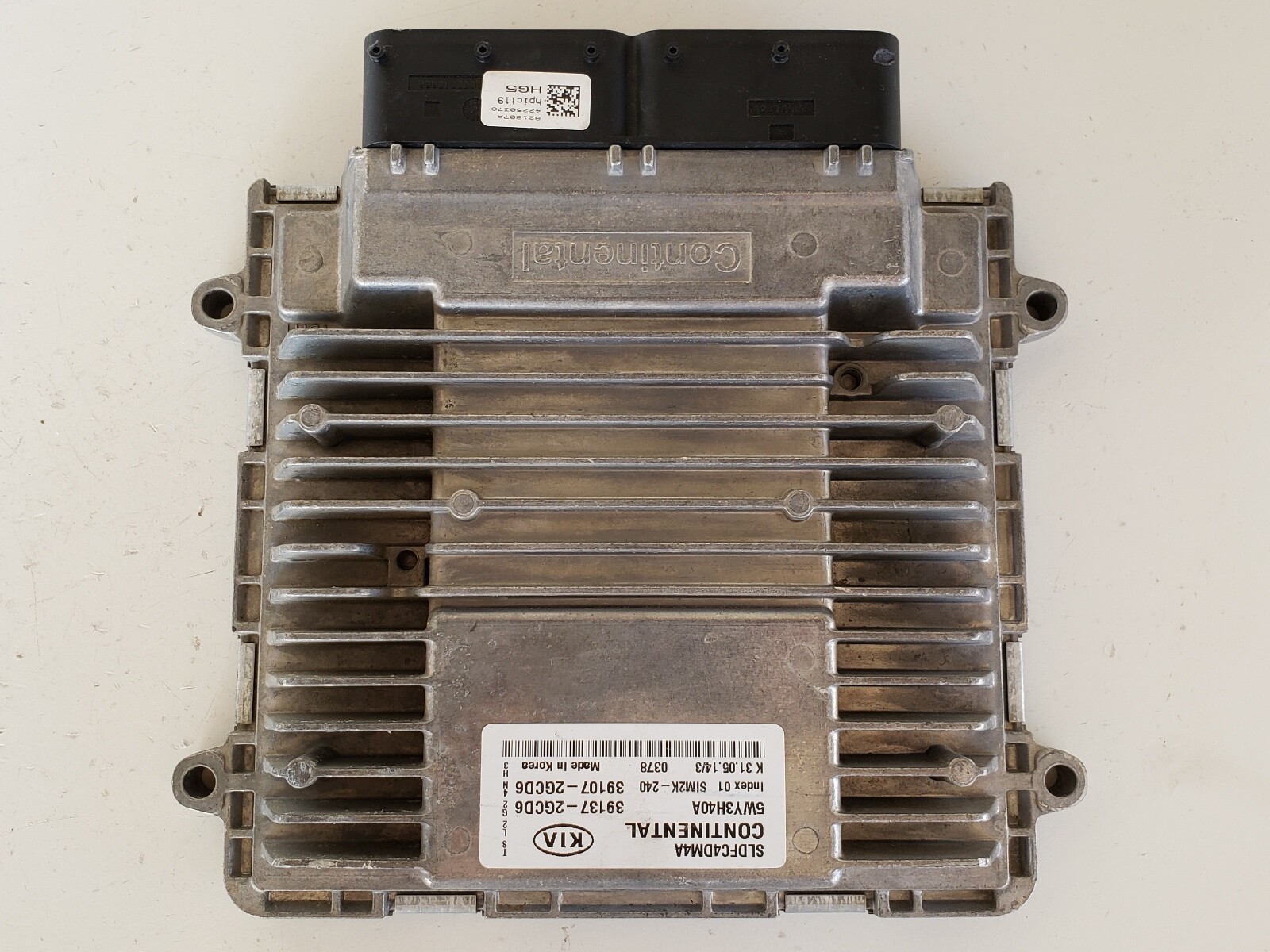
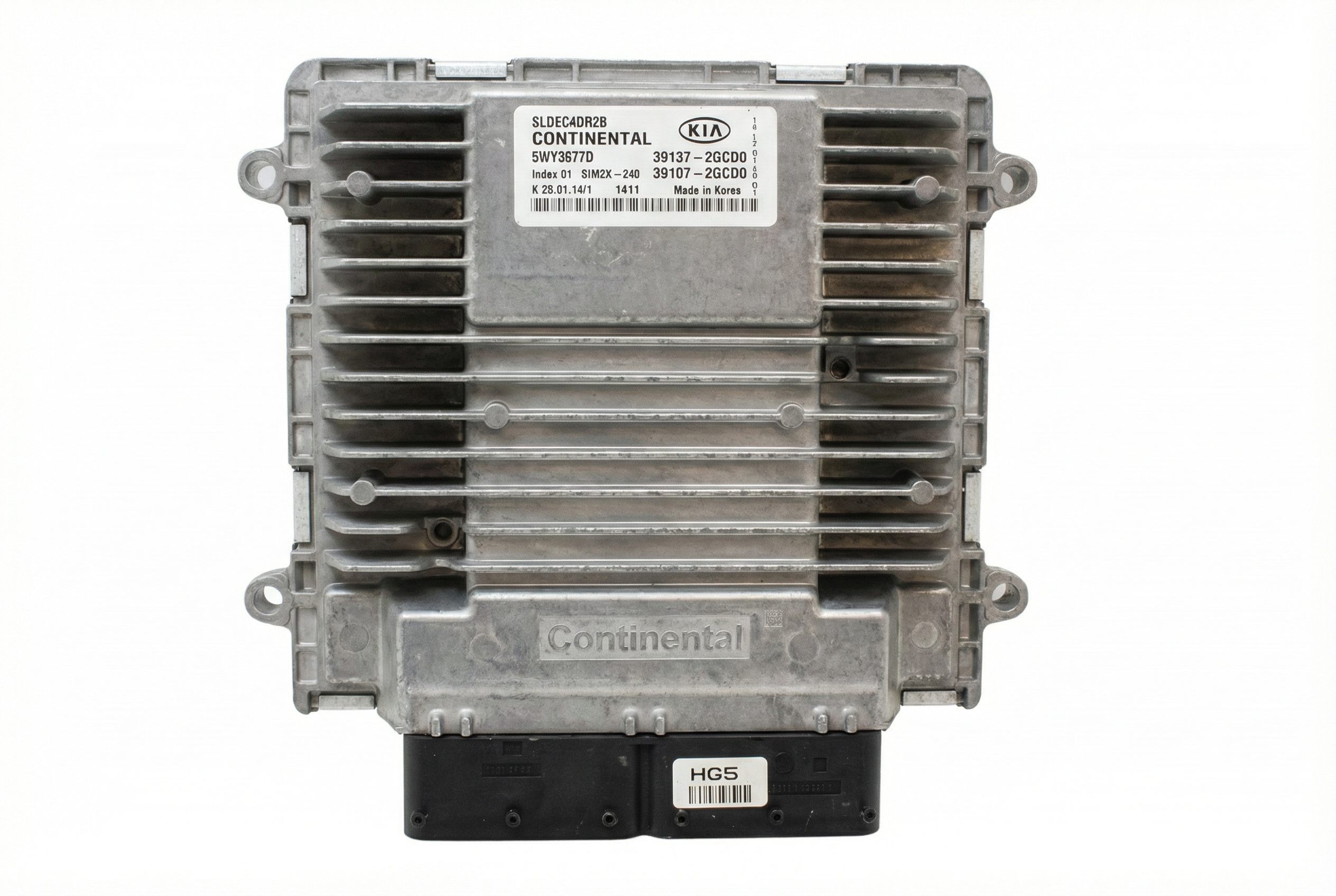
When a used part is the smart pick: A used OEM ECM from a reputable salvage yard is a viable, cost-effective option, especially since new aftermarket units are not common for this model. It is a good choice if the original ECM has been definitively diagnosed as faulty after ruling out all wiring, power, and ground issues.
Donor-vehicle mileage cap: roughly under 120000 miles for the part to have meaningful remaining life.
What to inspect on the donor part:
- Match the OEM part number on the sticker EXACTLY. Do not rely on visual appearance.
- Inspect the donor part for any signs of physical damage, especially bent connector pins or cracks in the casing.
- Check for any signs of water intrusion or corrosion on the connectors.
- If possible, get the VIN of the donor vehicle to verify its configuration (engine, transmission, FWD/AWD).
OEM-only on this vehicle (don't cheap out):
- Engine Control Module (ECM/PCM) - While used OEM is acceptable, avoid unverified aftermarket 'clones'. The complexity of Kia's immobilizer system makes OEM the most reliable choice.
Aftermarket brands forum-validated for this vehicle:
- Flagship One (Pre-programmed/cloned OEM units)
- FS1 (Pre-programmed/cloned OEM units)
Brands owners have reported issues with on this vehicle:
- Generic, unbranded ECMs from online marketplaces that do not offer VIN programming services.
Real Owner Stories
Aggregated from forums and TSBs cited above. Mileages and costs reflect what owners reported in those sources.
2012 Kia Sportage
Symptoms: The vehicle will not start and is throwing code U0100 after an engine harness replacement.
What fixed it: Checking for correct ground connections and verifying that the replacement harness is the exact match for the specific vehicle configuration.
Source hint: 2CarPros - 'Will Not Start and Code U0100'
2011-2016 Kia Sportage 2.4L GDI — ~60000 miles
Symptoms: Excessive oil consumption, needing a quart every 1,000-2,000 miles, often followed by serious engine problems.
What fixed it: Kia dealers perform an oil consumption test; if failure is imminent, it may lead to a short block replacement under the lifetime warranty extension.
Source hint: Known Issues: Catastrophic Engine Failure (Theta II Engine)
Related OBD-II Codes
Frequently Asked Questions
Could my 2011-2016 Kia Sportage stalling issue be related to the Theta II engine recall instead of just an electrical code?
Is there a specific software update I should check for to ensure my engine is covered under warranty?
Can a weak battery really cause a U0100 code on a Kia Sportage?
I have a 2014 Sportage; is there an electrical risk I should be aware of regarding the HECU?
What should the CAN bus resistance be when testing the OBD-II port on my Sportage?
Does the 2011-2016 Sportage share this U0100 vulnerability with any other vehicles?
Helpful Videos

Used OEM Parts in Stock
New Aftermarket Parts Available

The information in this article is provided for general reference and educational purposes only. Vehicle specifications, procedures, and part compatibility can vary by production date, trim level, and region. Always consult your vehicle's factory service manual and verify part numbers before purchasing or performing repairs. Safety-critical components such as airbags, seat belts, and braking systems should be installed by a qualified professional.
- Kia Sportage:
- 🧭 Diagnostic Flowchart
- 🎬 Helpful Videos
- 🛍️ Shop This Part
- What's Unique About the 2011-2016 Kia Sportage
- Symptoms You May Notice
- Most Likely Causes
- Rare But Worth Checking
- Diagnosis Steps
- Parts You'll Likely Need
- Related Codes That Often Appear With This One
- Technical Service Bulletins (TSBs) & Recalls
- Platform-Specific Known Issues
- Mechanic-Grade Diagnostic Values
- Scan Tool Commands That Help
- Wiring & Ground Locations
- Real Owner Repair Stories
- Model Year Variations Within This Range
- Other Known Issues on This Vehicle
- Used vs. New Parts: Buying Guide for This Vehicle
- Real Owner Stories
- 2012 Kia Sportage
- 2011-2016 Kia Sportage 2.4L GDI — ~60000 miles
- Related OBD-II Codes
- Frequently Asked Questions
- 🎟️ Get 5% Off