

U0100 on 2017-2022 Kia Sportage: Lost Communication With ECM/PCM Fixes
This code means the Engine Control Module (ECM) has lost communication. On the 2017-2022 Sportage, start by checking for a weak battery or corroded terminals. A fully charged battery should be at 12.6 volts. If the battery is good, the most likely cause is a wiring issue in the CAN bus harness or a poor ground connection, particularly the main chassis ground.
- U0100 is a critical code indicating a communication failure with the engine's main computer.
- Before suspecting expensive parts, always start by testing the battery and inspecting all main ground connections. This is the most common fix.
- If the battery is good, the next most likely cause is a damaged wire or loose connection in the CAN bus harness.
- Do not drive the vehicle. A U0100 code can lead to sudden stalling or a no-start condition, leaving you stranded.
- Due to the complexity of network diagnostics, professional service is highly recommended if a bad battery or obvious wiring damage is not the cause.
What's Unique About the 2017-2022 Kia Sportage
For the fourth-generation (QL) Kia Sportage and its platform-mate, the Hyundai Tucson, the U0100 code doesn't point to a single, universal design flaw. However, owner experiences suggest these vehicles are highly sensitive to low voltage, making battery and ground checks the critical first step. Furthermore, forum discussions on models from this generation point towards wiring harness connection issues as a potential cause for intermittent communication faults, sometimes affecting multiple systems at once. The high number of general electrical system complaints for this generation also supports the theory that wiring and grounding integrity are key areas for inspection. A key vulnerability on this platform is the CAN bus network's susceptibility to interference from improperly installed aftermarket devices, especially head units, which can disrupt module communication and trigger a U0100 code.
Symptoms You May Notice
- Engine will not start (no-crank or cranks but won't fire).
- Vehicle stalls intermittently while driving.
- Check Engine Light is on (may be intermittent or accompanied by other lights).
- Multiple other warning lights may appear on the dashboard (ABS, Traction Control, EPS, etc.).
- Engine runs poorly or is in a reduced power 'limp mode'.
- Transmission may be stuck in one gear.
- Scan tool cannot establish communication with the ECM/PCM.
- Replacing the ECM without first thoroughly checking the battery, grounds, and wiring harness. The ECM is expensive and often not the root cause. 🎬 See this guide on fixing lost ECM communication
Most Likely Causes
- Weak or Failing Battery 🔴 High Probability → Shop Vehicle Battery Modern vehicles like the Sportage are packed with electronics that are highly sensitive to voltage. A battery that is even slightly weak can cause unpredictable communication errors on the CAN bus before causing a complete no-start.
How to confirm: Test the battery voltage with a multimeter. A healthy, fully charged battery should read approximately 12.6 volts with the engine off. Perform a load test to confirm its health. Voltage dropping below 10V during cranking is a red flag.
Typical fix: Recharge or replace the battery.
Est. part cost: $150-$300 - Corroded or Loose Battery Terminals/Grounds 🟡 Medium Probability → Shop Vehicle Battery Corrosion on battery terminals or a loose main engine/chassis ground strap can create high resistance, mimicking a weak battery and disrupting module communication. Tracing ground wires is a critical step.
How to confirm: Visually inspect the battery terminals for white or greenish corrosion. Follow the main negative cable from the battery to where it bolts to the chassis (often on the strut tower or inner fender) and ensure the connection is clean and tight. Check other key ground points, such as straps from the engine block to the frame. A good ground connection should have less than 0.1 ohms of resistance.
Typical fix: Clean the battery terminals and posts with a wire brush. Disconnect, clean, and secure all main ground connections. Replace corroded cables or straps if necessary.
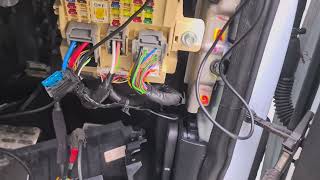
Est. part cost: $5-$50 - Damaged Wiring or Connectors in the CAN Harness 🟡 Medium Probability A forum member with a 2022 Sportage reported that similar random electrical issues were traced to a defective cable connection in the bus system. 🎬 Watch: Diagnosing common Kia Sportage CAN bus faults Wires can be damaged by chafing against other components, road debris, or rodents. Pay close attention to the harness near the battery tray and where it passes through the firewall.
How to confirm: Visually inspect the wiring harness leading to the ECM for any signs of physical damage, chafing, or corrosion. Advanced diagnosis involves checking for 60 ohms of resistance across the CAN High (Pin 6) and CAN Low (Pin 14) pins at the OBD-II port with the battery disconnected. A reading of 120 ohms suggests an open circuit or a missing terminating resistor.
Typical fix: Repair the damaged section of the wiring harness. This can be complex and may require a professional.
Est. part cost: $100-$800 - Faulty Engine Control Module (ECM/PCM) ⚪ Low Probability → Shop Engine Control Module (ECM) While less common, the ECM itself can fail due to internal component degradation, water damage, or electrical surges.
How to confirm: This is typically a process of elimination. If the battery, grounds, and all wiring have been confirmed to be good, and the ECM has proper power and ground at its connector but still won't communicate, the module itself is suspect.
Typical fix: Replace the ECM and have it programmed to the vehicle's VIN.
Est. part cost: $800-$1500
Rare But Worth Checking
- Faulty Fuse or Relay: A blown fuse or a failing relay for the ECM can cut power to the module, causing a U0100 code. Always check the fuses labeled 'ECM', 'PCM', or 'ECU' in both the engine bay and interior fuse boxes.
- Aftermarket Device Interference: Improperly installed aftermarket electronics (such as remote starters, alarms, or stereo systems) can interfere with the CAN bus network and cause communication errors.
- Faulty Intelligent Battery Sensor (IBS): → Shop Vehicle Battery The IBS, located on the negative battery terminal, monitors battery state. A faulty sensor can sometimes send incorrect data or disrupt the network, leading to various electrical and communication DTCs.
- Faulty Instrument Panel Cluster (IPC): → Shop Instrument Cluster The instrument cluster is a gateway module on many vehicles. An internal failure can disrupt the entire CAN network, leading to a U0100 code even though the engine computer is not the source of the problem.
Diagnosis Steps
- Check Battery Health: Test the battery voltage. It should be ~12.6V with the engine off. Perform a load test to ensure it holds a charge under load. A voltage drop below 10V during cranking indicates a problem.
- Inspect Battery Terminals and Grounds: Clean any corrosion from the battery terminals. Inspect and tighten the main chassis ground (from negative terminal to body) and engine ground straps.
- Check Fuses: Inspect all fuses related to the ECM/PCM and ignition systems in both the engine and passenger compartment fuse boxes.
- Visual Inspection of Wiring: Carefully inspect the wiring harness connected to the ECM for any visible signs of damage, such as chafing, melting, or corrosion. Pay special attention to areas near the battery and firewall.
- Scan for Other Codes: Use a quality OBD-II scanner to see what other modules are reporting communication loss. This can help determine the scope of the network failure.
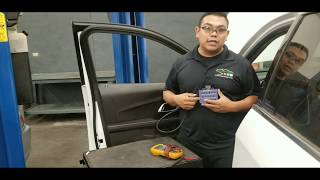
- Check CAN Bus Resistance: With the battery disconnected, use a multimeter to measure the resistance between Pin 6 (CAN High) and Pin 14 (CAN Low) on the OBD-II port. A healthy network should read approximately 60 ohms. A reading of 120 ohms indicates an open circuit. 🎬 Watch: How to test a CAN bus network with a multimeter
- Verify Power and Ground at the ECM: Using a wiring diagram for your specific vehicle, confirm that the ECM is receiving proper power (11-14V) and has a solid ground connection (less than 0.1 ohms) at its connector pins.
- Professional Diagnosis: If the steps above do not identify the issue, the vehicle should be taken to a qualified technician for advanced network diagnostics with an oscilloscope to analyze the CAN signal directly.
Parts You'll Likely Need
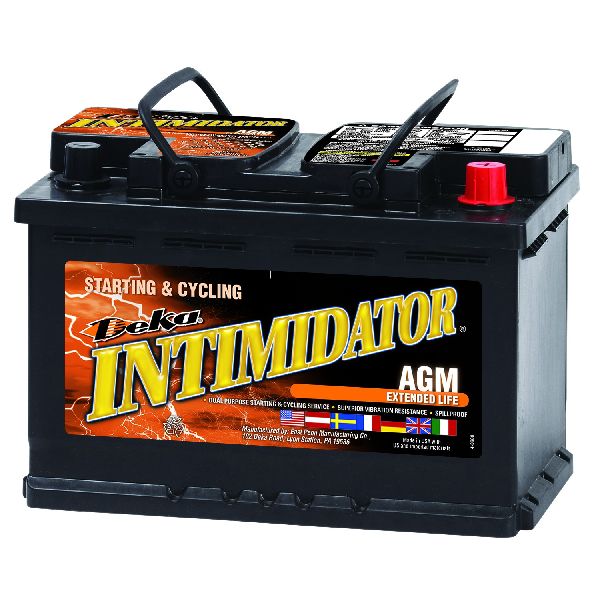
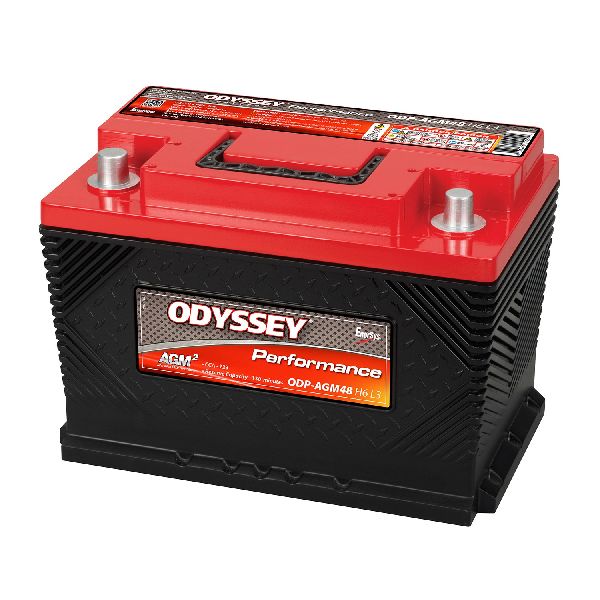
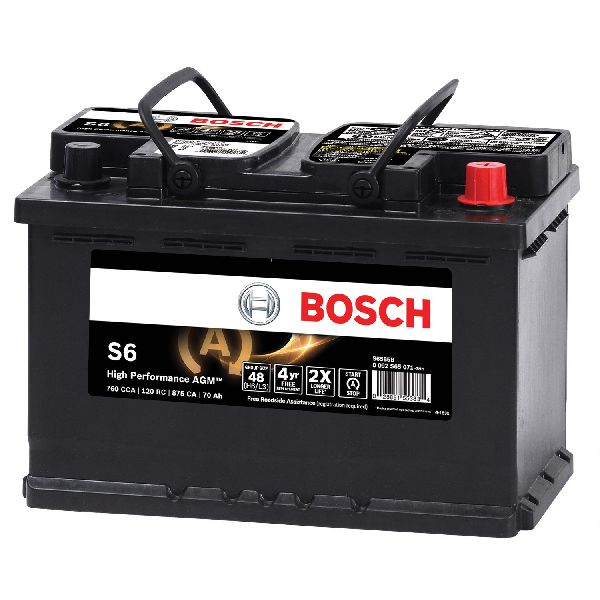
- Battery — A weak or failing battery is the most common and simplest cause of network communication codes like U0100.
Trusted brands: Bosch, ACDelco, DieHard
OEM price range: $200-$350
Aftermarket price range: $150-$300 - Engine Control Module (ECM/PCM)
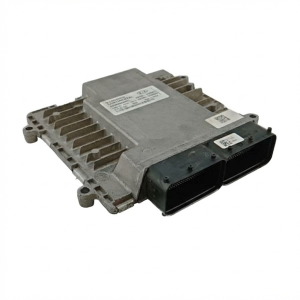
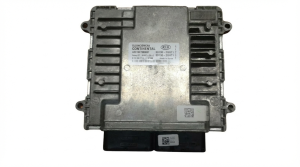
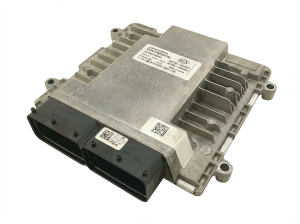
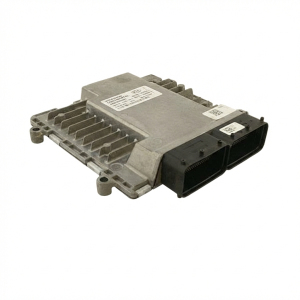
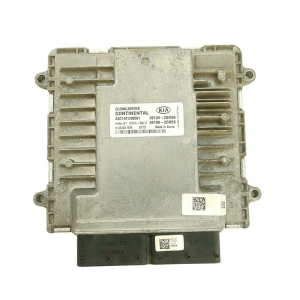
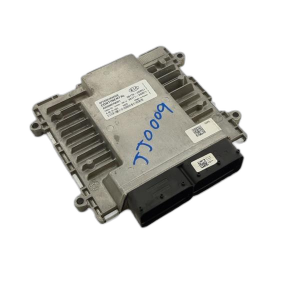
(OEM #Varies, e.g., 39100-2GHR6, 39100-2GHV7. Must match original part number.)— If all other causes are ruled out, the ECM itself may have failed internally. This is the last resort replacement.
Trusted brands: Kia (OEM)
OEM price range: $1000-$1600
Aftermarket price range: $600-$1000 (Remanufactured) - Ground Straps/Cables — If the original ground straps are heavily corroded or broken, they must be replaced to ensure proper module communication.
Trusted brands: Kia (OEM), Dorman
OEM price range: $20-$75
Aftermarket price range: $10-$40
Related Codes That Often Appear With This One
- U0101 — Lost Communication with TCM. The Transmission Control Module (TCM) is on the same CAN network. If both codes appear, it strongly suggests a network-wide issue (like wiring or power supply) rather than a single failed module.
- U0121 — Lost Communication With Anti-Lock Brake System (ABS) Control Module. Like the TCM, the ABS module is a key player on the CAN bus. Seeing this code with U0100 points to a broader network problem.
- P0562 — System Voltage Low. This code is a strong indicator that the root cause of the U0100 is related to a weak battery or a failing charging system, as low voltage is a primary cause of communication failures.
Technical Service Bulletins (TSBs) & Recalls
- While no specific TSB directly addresses U0100 on this model, Kia has issued numerous software updates for various control modules (like TSB: TRA102 for the TCM) to improve logic and prevent erroneous codes. It is always a good practice to check with a dealer if any ECM software updates are available, as they can sometimes resolve communication glitches.
Platform-Specific Known Issues
- A common failure point for grounds on many modern vehicles, including the Sportage, is the main chassis ground connection point near the strut tower or under the battery tray. These areas are exposed to the elements and can build up corrosion over time, creating high resistance and causing intermittent communication faults.
Mechanic-Grade Diagnostic Values
- CAN Bus Network Resistance — expected: ~60 Ω (Ohms). Failure: A reading of ~120 Ω indicates an open in the circuit or a missing termination resistor. A reading of 0 Ω indicates a short between CAN High and CAN Low wires.
- CAN Bus Voltage (Key On, Engine Off) — expected: CAN-H: ~2.7V, CAN-L: ~2.3V (sum should be ~5V). Failure: Significant deviation, CAN-L showing voltage above 2.5V or CAN-H below 2.5V, or either line shorted to ground (0V) or power (5V/12V).
- ECM Power Supply Voltage — expected: 11V to 14V. Failure: Voltage below 10.5V can cause the DTC to set. This should be tested at the ECM connector pins with the key on.
- ECM Ground Circuit Resistance — expected: Less than 0.1 Ω. Failure: Higher resistance indicates a poor ground connection, which is a common cause of communication failures.
Scan Tool Commands That Help
- Kia GDS (Global Diagnostic System) or equivalent professional scanner: Network Analysis / CAN Bus Check — Use this function to get a live view of all modules on the network. It can show which modules are actively communicating and which are offline, helping to quickly identify the scope of the communication failure.
- Bidirectional Scanner: Individual Module Communication Test — Attempt to communicate directly with each module on the network (ECM, TCM, ABS, BCM, etc.). If you can communicate with some modules but not the ECM, it helps isolate the problem to the ECM or its specific wiring, power, or ground.
Wiring & Ground Locations
- Smart Junction Box (SJB / BCM) — Integrated with the interior fuse panel, located behind the glove box assembly.. The SJB/BCM is a central node on the CAN bus. A failure here or in its wiring can disrupt the entire network, causing a U0100 code.
- Data Link Connector (DLC) — Below the left side of the driver's side dashboard.. This is the primary diagnostic port for testing the entire CAN bus network's resistance and voltage.
- Multipurpose Check Connector — Located inside the engine room fuse and relay box.. Provides a centralized point for testing various circuits, potentially including CAN lines, depending on the specific vehicle configuration.
- Ignition Switch Connector (M03) — At the ignition switch.. A fault at the ignition switch could interrupt the 'wake up' signal for various modules, including the ECM, potentially leading to communication issues.
Real Owner Repair Stories
- YouTube channel 'LM Auto Repairs' (Kia Sportage (modern, likely QL generation)) — Multiple CAN communication faults.
❌ Tried (didn't work) Unplugging the ECM, TCM, and ABS modules did not resolve the faulty signal on the CAN line.
✅ What actually fixed it This was a diagnostic story, not a final repair. The technician performed a standard CAN resistance check which passed (~60 ohms). However, using an oscilloscope, he found the CAN Low signal was corrupted. After unplugging major modules with no change, wiring diagrams pointed to a lesser-known module, a 'brake servo vacuum pump' (M131), as the next component to isolate and test, suspecting it was the one pulling the network down.
"I Checked Everything" — The Actual Cause
- The electrical equivalent of a 'smoke test clean' scenario is when the CAN bus resistance test passes. In one documented case on a Kia Sportage, the network resistance measured a perfect 60 ohms, suggesting the wiring was fine. However, the actual problem was a faulty module corrupting the data signal, something only visible with an oscilloscope. This proves that the 60-ohm test is a good first step but does not guarantee the network is healthy.
OEM Part Supersession History
39100-2GHR5→39100-2GHR6, 39100-2GHR7— Internal revisions and software updates.
Heads up: While listed as interchangeable, programming to the vehicle's VIN is always required. Using a module from a vehicle with different options (e.g., SULEV vs ULEV) may cause issues even if it physically fits.
Model Year Variations Within This Range
- 2018-2019 vs 2020-2022: The Smart Junction Box (BCM) has different part numbers. 2018-2019 models typically use 91950-D9650, while 2020-2022 models (post-facelift) typically use 91955-D9660. These parts are not interchangeable.
- 2017-2018: Vehicles in this range were subject to the PI1802Y/Z product improvement campaign for the Knock Sensor Detection System (KSDS), which involved an ECU logic update. Any replacement ECM for these years must have this updated software or be updated during installation to prevent other engine-related issues.
Diagnostic Flowchart
Other Known Issues on This Vehicle
Issues unrelated to this code that are worth knowing about as an owner of this generation:
- Theta II GDI Engine Failure 🔴 High — Widespread across multiple model years. Failure of connecting rod bearings can occur at various mileages, sometimes as low as 20,000 miles. This led to class-action lawsuits and massive recalls. (Ref: Multiple recalls (e.g., 18V907000) and a class-action settlement extended warranty coverage for the engine short block. Many vehicles received a Knock Sensor Detection System (KSDS) software update as part of the campaign.)
- Excessive Oil Consumption 🔴 High — Commonly reported on the 2.4L Theta II and 2.0L Nu engines, often a precursor to more severe engine problems. Owners may need to add oil between changes. (Ref: Related to the Theta II engine class-action lawsuits and warranty extensions.)
- Risk of Engine Compartment Fire 🔴 High — Several recalls were issued for fire risks, sometimes unrelated to a collision. Causes included potential short circuits in the ABS module (Recall 21V137000) and fuel leaks from improperly installed high-pressure pipes during previous engine replacements (Recall 18V907000). (Ref: NHTSA Recalls 21V137000, 18V907000, and others.)
- Electrical System Faults 🟠 Medium — The second most frequent complaint category on NHTSA after the engine. Issues include malfunctioning interior lights, dashboard errors, and battery drain. A recall was issued for 2022 models for voltage instability causing the instrument panel to go blank. (Ref: Recall for instrument panel on 2022 models.)
Used vs. New Parts: Buying Guide for This Vehicle
When a used part is the smart pick: A used part is a smart choice for wiring harnesses, connectors, or ground straps, provided they are in excellent physical condition. A used ECM can offer significant cost savings, but ONLY if you have a clear plan for professional programming, as it will not be plug-and-play.
Donor-vehicle mileage cap: roughly under 120000 miles for the part to have meaningful remaining life.
What to inspect on the donor part:
- For ECMs/modules: Check for zero corrosion on pins, intact connector housing, and no signs of water intrusion or case tampering.
- For wiring harnesses: Ensure no wires are cut, insulation is not brittle or cracked, and all connector locking tabs are intact.
- Source the part from a vehicle in a dry climate if possible to minimize corrosion risk.
OEM-only on this vehicle (don't cheap out):
- Engine Control Module (ECM/PCM): Due to the absolute requirement for VIN-specific programming to communicate with the immobilizer and other modules, an OEM or OEM-remanufactured part handled by a dealer or qualified specialist is strongly recommended.
Aftermarket brands forum-validated for this vehicle:
- For CAN bus adapters (if installing an aftermarket radio): PAC, Axxess
Brands owners have reported issues with on this vehicle:
- Generic, unbranded CAN bus adapters for aftermarket radios are a frequent source of network communication errors and should be avoided.
Real Owner Stories
Aggregated from forums and TSBs cited above. Mileages and costs reflect what owners reported in those sources.
2022 Kia Sportage
Symptoms: Intermittent electrical faults and unresponsive modules.
What fixed it: Repair of a defective cable connection to the BUS system.
Source hint: Carly Community (Sportage Hybrid electrical errors)
2016 Kia Sportage QLE
Symptoms: Random warning lights and no-communication (no-comm) with modules.
What fixed it: Diagnosis and repair of C Can Bus Off errors.
Source hint: MHH AUTO (2016 Sportage QLE - C Can Bus Off)
2017-2022 Kia Sportage
Symptoms: No-start condition and U0100 code appearing after a wiring harness replacement.
What fixed it: Meticulously verifying all ground wire connections and ensuring the harness was the correct version for the specific vehicle.
Source hint: 2CarPros.com (Will Not Start and Code U0100)
Related OBD-II Codes
Frequently Asked Questions
Could the Theta II engine issues on my Sportage be related to the U0100 communication code?
Is there a specific Kia TSB for communication errors on the Sportage?
Where is the most common ground failure point on the 2017-2022 Sportage?
My 2022 Sportage has random electrical errors; could it be a wiring defect?
Why does my Sportage go into 'limp mode' when the U0100 code appears?
Helpful Videos
Used OEM Parts in Stock
New Aftermarket Parts Available


The information in this article is provided for general reference and educational purposes only. Vehicle specifications, procedures, and part compatibility can vary by production date, trim level, and region. Always consult your vehicle's factory service manual and verify part numbers before purchasing or performing repairs. Safety-critical components such as airbags, seat belts, and braking systems should be installed by a qualified professional.
- Kia Sportage:
- 🧭 Diagnostic Flowchart
- 🎬 Helpful Videos
- 🛍️ Shop This Part
- What's Unique About the 2017-2022 Kia Sportage
- Symptoms You May Notice
- Most Likely Causes
- Rare But Worth Checking
- Diagnosis Steps
- Parts You'll Likely Need
- Related Codes That Often Appear With This One
- Technical Service Bulletins (TSBs) & Recalls
- Platform-Specific Known Issues
- Mechanic-Grade Diagnostic Values
- Scan Tool Commands That Help
- Wiring & Ground Locations
- Real Owner Repair Stories
- "I Checked Everything" — The Actual Cause
- OEM Part Supersession History
- Model Year Variations Within This Range
- Other Known Issues on This Vehicle
- Used vs. New Parts: Buying Guide for This Vehicle
- Real Owner Stories
- 2022 Kia Sportage
- 2016 Kia Sportage QLE
- 2017-2022 Kia Sportage
- Related OBD-II Codes
- Frequently Asked Questions
- 🎟️ Get 5% Off