

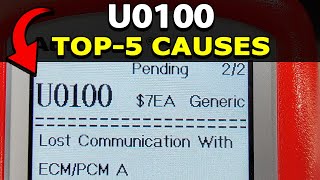
U0100 on 2007-2015 Mazda CX-9: Lost Communication with ECM/PCM Causes and Fixes
On a 2007-2015 Mazda CX-9, code U0100 often points to a failing Powertrain Control Module (PCM), frequently damaged by a bad ignition coil. Before replacing the PCM, always check the battery, grounds, and wiring. A PCM replacement can cost over $1,000 at a dealer, while a repair service is around $230-$600 plus the cost of new coils and plugs.
- U0100 on a 2007-2015 CX-9 is a critical code that makes the vehicle unsafe to drive.
- The most probable cause is a failed Powertrain Control Module (PCM), which is often damaged by a bad ignition coil.
- When replacing a failed PCM, you MUST also replace all six ignition coils and spark plugs to prevent destroying the new module.
- Always begin diagnosis by checking the battery, ground connections, and wiring harness before condemning the expensive PCM.
- Due to the complexity of the diagnosis and the need for programming, this repair is best left to a professional mechanic or a dealership.
What's Unique About the 2007-2015 Mazda CX-9
The first-generation Mazda CX-9 (2007-2015), which uses a Ford Cyclone V6 engine (3.5L in 2007, 3.7L from 2008-2015), has a well-documented weakness where a failing ignition coil can send a voltage spike back to the Powertrain Control Module (PCM), damaging the internal circuits that control the coils. This makes PCM failure a much more common cause for U0100 on this specific vehicle compared to others where the cause is more likely a simple wiring or ground issue. For this reason, if the PCM is found to be faulty, it is critical to replace all six ignition coils and spark plugs at the same time to prevent immediate repeat failure of the new or repaired computer.
Symptoms You May Notice
- Check Engine Light is on
- Vehicle will not start or has intermittent starting issues
- Engine stalls, misfires, or runs rough
- Transmission gets stuck in one gear ('limp mode') or shifts erratically
- Complete loss of power while driving
- Multiple warning lights on the dashboard (ABS, Traction Control, AT, etc.)
- Instrument cluster gauges (Speedo, RPM) drop to zero while driving.
- Turn signals may stop working.
- Sudden decrease in fuel economy
- Replacing the battery without performing a load test first.
- Replacing the PCM without replacing all six ignition coils and spark plugs, leading to repeat failure.
- Replacing other modules (like the TCM or ABS module) when they are simply reporting the loss of communication from the primary failed PCM.
Most Likely Causes
- Faulty Powertrain Control Module (PCM) 🔴 High Probability → Shop Engine Control Module (ECM) A common failure pattern on the 3.5L/3.7L V6 engine involves a bad ignition coil shorting and sending a voltage spike that damages the PCM's coil driver circuit. This is a widely reported issue in owner forums.
How to confirm: After verifying all power, ground, and CAN bus wiring to the PCM are intact, the module itself is the likely culprit. A scan tool will show no communication with the PCM. The presence of specific coil-related codes (P0351-P0356) is a very strong indicator of this specific failure.
Typical fix: Replace the PCM and ALL six ignition coils and spark plugs simultaneously. The new PCM will require programming to the vehicle's VIN. Alternatively, the original PCM can be sent to a specialist for repair.
Est. part cost: $230-$600 (for repair service or remanufactured), $725-$1100 (for new OEM). - Weak or Failing Battery 🟡 Medium Probability → Shop Vehicle Battery
How to confirm: Test the battery voltage with a multimeter. It should be at least 12.6V with the engine off. A load test is the most definitive way to confirm battery health. Low voltage can cause modules to drop off the network, leading to communication codes.
Typical fix: Replace the vehicle's battery.
Est. part cost: $150-$250 - Damaged Wiring or Corroded Connectors 🟡 Medium Probability A known issue with clogged sunroof drains can cause water to leak into the cabin, potentially corroding modules or wiring harnesses located in the passenger or driver footwell area, such as the Body Control Module (BCM). A Reddit user's experience with U0100 codes on an '11 CX-9 was linked to a past water leak from clogged sunroof drains.
How to confirm: Visually inspect the wiring harness to the PCM for any signs of chafing, breaks, or corrosion, especially at the main connectors. Check for dampness or signs of past water intrusion in the carpets and near modules in the kick panels.
Typical fix: Repair the damaged section of the harness or clean/replace the corroded connectors. Clear the sunroof drains to prevent recurrence.
Est. part cost: $10-$700 (depending on extent of damage and if a module needs replacement) - Poor Ground Connection ⚪ Low Probability
How to confirm: Locate and inspect the main ground straps for the engine and PCM. Wiring diagrams indicate key ground points are on the engine block, transmission, and chassis. Check for looseness, corrosion, or breakage. Perform a voltage drop test between the PCM ground pin and the negative battery terminal; it should be less than 0.1V.
Typical fix: Clean the ground connection point to bare metal and re-secure the strap, or replace the ground strap if it's damaged.
Est. part cost: $10-$40
Rare But Worth Checking
- Faulty Ignition Coil: → Shop Ignition Coil While a bad coil is the root cause of the common PCM failure, it can also disrupt the CAN bus on its own before completely destroying the PCM. If you catch it early by noticing a misfire (with codes P0351-P0356), replacing the coils might prevent PCM damage.
- Faulty Alternator: → Shop Alternator An alternator that is overcharging or undercharging can cause voltage fluctuations that disrupt module communication. A running voltage check should show between 13.2V and 14.8V. One owner reported U0100 codes with a running voltage of only 13.2V, which is on the low end.
Diagnosis Steps
- Check the battery. Ensure it has a full charge (12.6V+) and have it load tested. A weak battery is a common cause of transient communication codes.
- Scan for all DTCs in all modules. Note any other U-codes or P-codes that are present. Codes P0351-P0356 are a critical clue.
- Visually inspect the battery terminals and main engine/body ground straps for corrosion or looseness. Key grounds are on the transmission housing and driver-side fender area. Clean and tighten as needed.
- Inspect for water intrusion. Pull back the carpet in the front footwells and check for dampness, which points to clogged sunroof drains—a known issue that can damage wiring or the BCM.
- Locate the PCM and inspect its connectors for corrosion, moisture, or damaged pins. Inspect the wiring harness leading to the PCM for any visible signs of chafing or breaks.
- If ignition coil codes (P0351-P0356) are present, this strongly suggests a PCM failure caused by a bad coil.
- Using a multimeter with the battery disconnected, check for 60 Ohms of resistance between Pin 6 (CAN High) and Pin 14 (CAN Low) at the OBD-II port. This verifies the integrity of the CAN bus terminating resistors. A reading of 120 Ohms suggests one resistor is offline; 0 Ohms indicates a short.
- If all wiring, grounds, and the CAN bus resistance check out, the PCM is the most likely failed component. Confirm by checking for power and ground directly at the PCM connector before ordering a replacement.
Parts You'll Likely Need
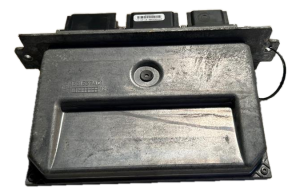
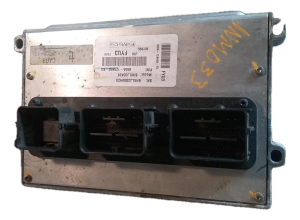
- Powertrain Control Module (PCM/ECM)
(OEM #CY01-18-881F (supersedes CY01-18-881, CY01-18-881A, CY01-18-881D, CY01-18-881E).)— This is the most common point of failure for this code on this vehicle, often damaged by a faulty ignition coil.
Trusted brands: Mazda (OEM), Circuit Board Medics (Repair Service), Flagship One (Remanufactured), AutoECMs (Remanufactured)
OEM price range: $725-$1100.
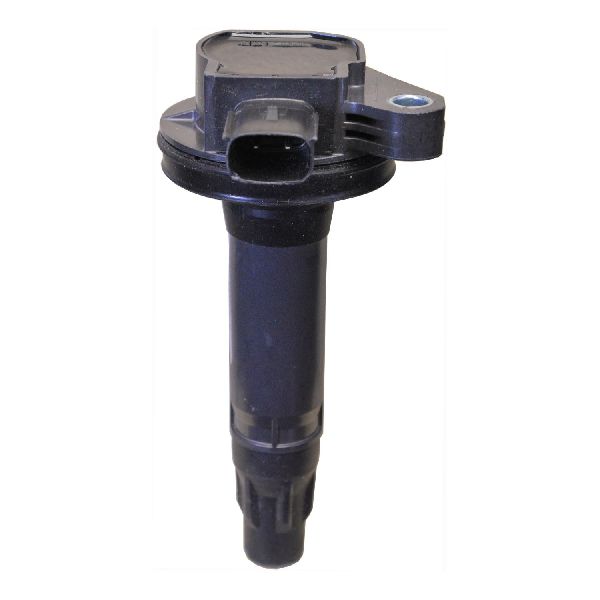
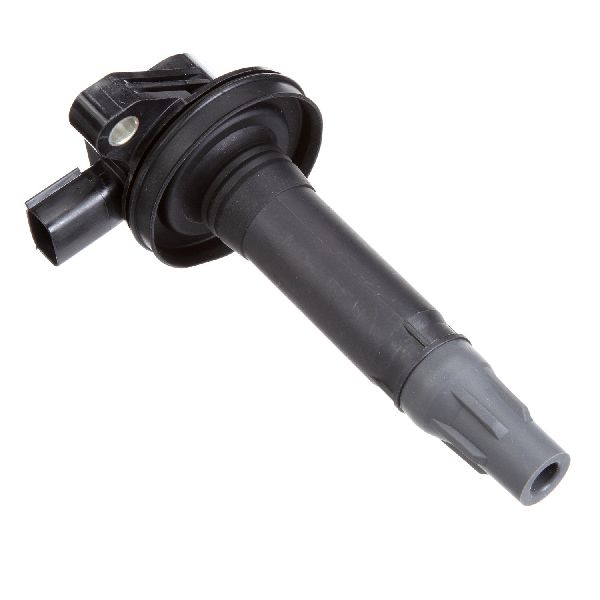
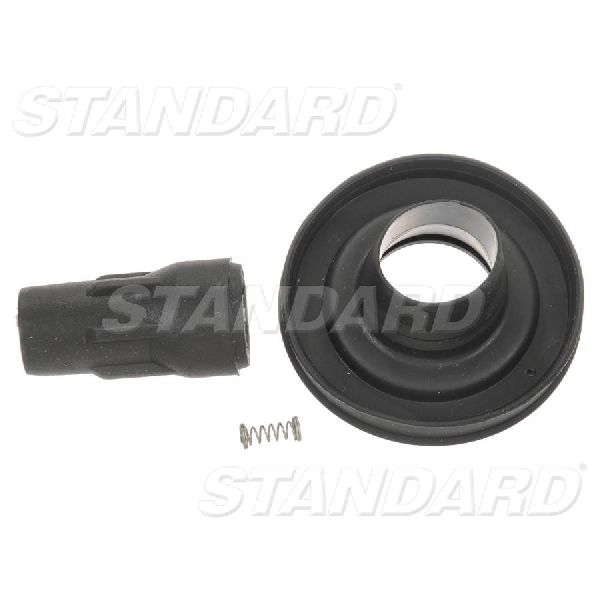
Aftermarket price range: $230-$600 (for repair or remanufactured) - Ignition Coil
(OEM #CY01-18-100A)— A failing ignition coil is the typical root cause of PCM failure. All six must be replaced with the PCM to prevent a repeat failure.
Trusted brands: Mazda (OEM), Bosch, NGK, Delphi
OEM price range: $80-$120 each
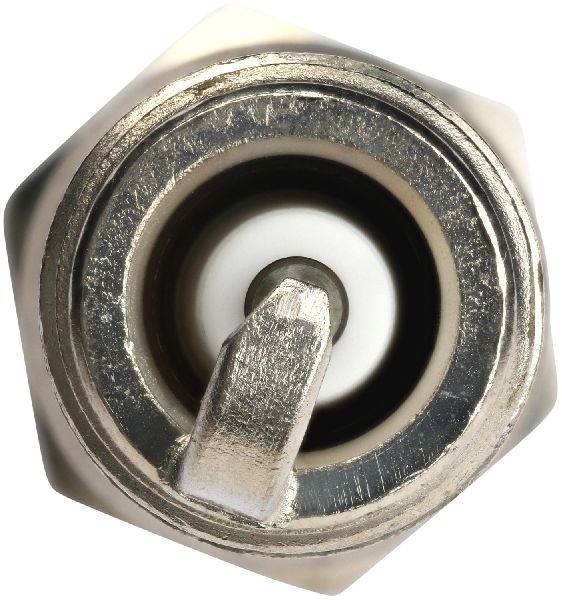
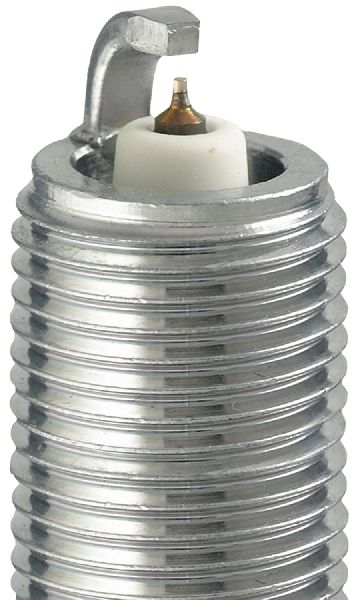
Aftermarket price range: $40-$70 each - Spark Plugs
(OEM #L3Y4-18-110 (NGK ILTR5A-13G))— Should always be replaced with ignition coils as a set to ensure proper ignition performance and prevent future coil stress.
Trusted brands: NGK, Denso
OEM price range: $15-$25 each
Aftermarket price range: $8-$15 each
Related Codes That Often Appear With This One
- U0073 — Control Module Communication Bus 'A' Off - Indicates a general failure of the CAN bus, often seen with U0100 when the issue is intermittent or network-wide.
- U0101 — Lost Communication with TCM - The Transmission Control Module (TCM) will report this code when it can no longer hear from the PCM.
- P0351-P0356 — Ignition Coil 'A' through 'F' Primary/Secondary Circuit - These codes point to a fault in a specific ignition coil circuit and are a strong clue that the PCM has been damaged by a coil failure. A Mazda TSB (01-026/11) addresses this exact scenario.
Technical Service Bulletins (TSBs) & Recalls
- TSB 01-026/11: Addresses rough idle and MIL on with DTCs P0351-P0356, noting that ignition coil damage may be found and that the repair is covered under the emissions warranty. This directly relates to the root cause of PCM failure.
- TSB 01-007/15: While this specific TSB is for P0011/P0012 on different models, it highlights Mazda's use of TSBs to address specific engine control issues. No direct TSB for U0100 on the CX-9 was found, likely because it's a symptom of the coil/PCM failure addressed in TSB 01-026/11.
Platform-Specific Known Issues
- A known common issue for the 2007-2015 Mazda CX-9 is for a failing ignition coil to short and destroy the driver circuit within the PCM. This is a very common cause of a no-start or rough running condition accompanied by code U0100 and often P035x codes.
- Clogged sunroof drains are another common problem, leading to water leaking into the cabin and potentially damaging electronics like the Body Control Module (BCM), which can cause network communication faults.
Documented NHTSA Reports
- In a related Mazda platform report, NHTSA ODI #11196097 describes a U0100 code pending with no PCM communication where a loose wire from an air bag connector was investigated as a potential cause for the network disruption.
- NHTSA ODI #10781946 reports a vehicle coming to a complete stop on the highway with all systems immobilized and code U0100 detected; in this instance, burnout parts were replaced but the problem persisted.
Mechanic-Grade Diagnostic Values
- CAN Bus Resistance — expected: Approximately 60 Ω. Failure: 120 Ω indicates an open circuit or one terminating resistor is offline. A reading near 0 Ω indicates a short between the CAN High and Low lines.
- CAN High Voltage (to Ground) — expected: ~2.6V - 2.7V (average). Failure: 0V may indicate a short to ground. Voltage significantly different from the expected average suggests a network fault.
- CAN Low Voltage (to Ground) — expected: ~2.3V - 2.4V (average). Failure: 0V may indicate a short to ground. Voltage significantly different from the expected average suggests a network fault.
- PCM Ground Circuit Resistance — expected: Less than 0.1 Ω. Failure: Higher resistance indicates a poor ground connection, which can cause module communication errors.
Scan Tool Commands That Help
- FORScan: Module Configuration (As-Built format) — Required when replacing a PCM or BCM to program the new module with the vehicle's specific configuration data. It can also be used to enable/disable features.
- FORScan: KOEO (Key On Engine Off) and KOER (Key On Engine Running) Self-Tests — These tests command all modules to check for faults. This can help identify which module is not responding or is reporting an internal error, which is crucial for diagnosing a U0100 code.
- Mazda Modular Diagnostic System (M-MDS): PCM Configuration — This is the official Mazda dealer tool used to program a new PCM to the vehicle after replacement.
Wiring & Ground Locations
- PCM — Under the cowl panel, near the base of the windshield on the passenger side. Access requires removing the battery, battery tray, and cowl panel components.. This is the module that has lost communication. Its location makes it susceptible to water damage if the cowl drains are clogged, and its connectors must be checked for corrosion.
- PCM Connectors — Two large multi-pin connectors that plug into the PCM module itself.. These are the primary points to test for power, ground, and CAN bus signals directly at the module to confirm if the fault is with the PCM or the external wiring.
- Body Control Module (BCM) — Located in the driver's side footwell, behind the kick panel.. The BCM is a major node on the CAN bus. It is highly susceptible to water damage from clogged sunroof drains, and its failure can bring down the network, causing a U0100 code.
- Main Engine/Transmission Grounds — Key ground points are typically found bolted to the engine block, transmission housing, and the chassis near the battery.. A corroded or loose main ground can cause floating voltages and disrupt communication between all modules, including the PCM.
Real Owner Repair Stories
- Reddit user on r/MechanicAdvice (2011 Mazda CX-9) — Intermittent issues with multiple warning lights (ABS, Traction Control, AT), gauges dropping, and codes U0073, U0100, U0101.
❌ Tried (didn't work) Initial diagnosis was inconclusive.
✅ What actually fixed it The owner mentioned a past water leak from clogged sunroof drains that soaked the carpet. The strong implication, supported by other known issues, is that water damaged the Body Control Module (BCM) or related wiring in the footwell, causing the network communication failure. - Mazdas247 Forum user (2008 Mazda CX-9 Touring) — Turn signals, door locks, and overhead lights stopped working after heavy rain entered through an open moonroof. Electrical burning odor was noticed.
❌ Tried (didn't work) Dealer immediately blamed aftermarket trailer wiring without testing., Replacing the turn signal fuse (it didn't blow again).
✅ What actually fixed it The owner, an automation engineer, diagnosed a failed Body Control Module (BCM). The failure was attributed to the water intrusion from the open sunroof. A replacement BCM restored function.
OEM Part Supersession History
CY01-18-881, CY01-18-881A, CY01-18-881D, CY01-18-881E→CY01-18-881F— Revisions to address internal component failures, likely related to the ignition coil driver circuit weakness.
Heads up: While earlier part numbers may physically fit, it is critical to use the latest revision (or a remanufactured unit based on it) for the best chance of a durable repair. Programming is required.
Model Year Variations Within This Range
- 2007: The 2007 model used a 3.5L V6 engine. While the ignition coil failure pattern is similar, the specific PCM part number may differ from the later 3.7L models. Always verify the part number on the original unit.
- 2008-2015: These models used the 3.7L V6 engine. The PCM failure from ignition coils is most widely documented for this engine. The part number CY01-18-881x series is associated with these years.
Diagnostic Flowchart
Other Known Issues on This Vehicle
Issues unrelated to this code that are worth knowing about as an owner of this generation:
- Internal Water Pump Failure 🔴 High — Common in higher-mileage (typically over 80,000 miles) 2008-2015 V6 models. Failure can be sudden and without warning.
- AWD Transfer Case (PTO) Failure 🔴 High — A common issue on first-generation AWD models, often occurring between 70,000 and 120,000 miles. (Ref: TSB 03-004/15 (addresses rear differential mount hardening, which can cause related noises/vibrations).)
- Power Brake Booster Failure 🔴 High — Particularly common on 2010-2012 models, but can affect others. (Ref: Mazda Special Service Program (SSP 93) extended warranty coverage for this part to 7 years/90,000 miles.)
- Clogged Sunroof Drains Causing Water Leaks 🟠 Medium — Common across all years with a sunroof, especially if parked outdoors under trees.
Used vs. New Parts: Buying Guide for This Vehicle
When a used part is the smart pick: A used PCM from a junkyard can be a cost-effective option IF you can verify the donor vehicle did not suffer from an ignition coil failure. It is a gamble, as the used PCM may have the same inherent weakness. A used BCM is a much safer bet, as they do not have the same common failure pattern as the PCM.
Donor-vehicle mileage cap: roughly under 80000 miles for the part to have meaningful remaining life.
What to inspect on the donor part:
- For a PCM, ask the salvage yard if the engine ran before being pulled. Avoid PCMs from vehicles with front-end collision damage that could have damaged the coils.
- Check the connectors on any used module for signs of corrosion, bent pins, or water damage.
- Look for handwritten markings from the salvage yard indicating the part has been 'tested' or came from a 'running and driving' vehicle.
OEM-only on this vehicle (don't cheap out):
- Powertrain Control Module (PCM) - While repair services are a good option, if buying a replacement part, OEM is the most reliable choice to avoid compatibility and programming issues. A repaired original unit is often better than a questionable used one.
Aftermarket brands forum-validated for this vehicle:
- Ignition Coils: NGK, Bosch, Delphi are reputable brands often recommended as OEM-quality alternatives.
- Spark Plugs: NGK (ILTR5A-13G) and Denso are the trusted OEM suppliers and are highly recommended.
Brands owners have reported issues with on this vehicle:
- Unnamed, 'white box' ignition coils from online marketplaces. These are frequently cited as having a high failure rate and can cause repeat PCM damage.
Real Owner Stories
Aggregated from forums and TSBs cited above. Mileages and costs reflect what owners reported in those sources.
2007 Mazda CX-9 3.5L V6
Symptoms: The #6 ignition coil was repeatedly melting down. The PCM was found to be continuously grounding the coil.
What fixed it: Mazda replaced the PCM under warranty.
Source hint: mazdas247.com thread titled 'PCM computer melting down ignition coils'
2011 Mazda CX-9 3.7L V6
Symptoms: Intermittent limp mode, instrument cluster went dead, and the car struggled to drive up hills.
What fixed it: The owner identified a past issue with soaked carpets from a clogged sunroof drain as a likely cause of module damage.
Source hint: reddit.com/r/MazdaCX9 thread titled '2011 cx9 having intermittent issue and u0073'
2007-2015 Mazda CX-9 V6
Symptoms: Electrical problems and network communication issues caused by water intrusion in the cabin.
What fixed it: Cleaning the clogged sunroof drains and addressing water damage on the Body Control Module (BCM).
Source hint: mazdaforum.com thread titled 'CX-9 electrical problems Body Control Module water damage'
Mazdaspeed3 Owner Report
Symptoms: Owner had a U0100 code pending with no PCM communication.
What fixed it: Investigation found a connector was unclipped during assembly and not reinstalled properly; a loose wire from the air bag was identified as a potential source of the problem (NHTSA ODI #11196097).
Mazda3 Owner Report
Symptoms: The vehicle came to a complete stop while running on the highway, immobilizing all systems. Code U0100 was detected.
What fixed it: Although wiring was checked and burnout parts were replaced, the owner reported the same problem arose again (NHTSA ODI #10781946).
Related OBD-II Codes
Frequently Asked Questions
Does TSB 01-026/11 apply to my Mazda CX-9 if I have a U0100 code?
Can a clogged sunroof drain really cause a U0100 code on a 2011 CX-9?
Is it true that I have to replace all the ignition coils if my PCM failed?
Will my emissions warranty cover the PCM and coil repair on my CX-9?
Why did my speedometer and RPM gauges drop to zero while driving?
Where are the main ground points I should check for a U0100 code on this vehicle?
Helpful Videos
Used OEM Parts in Stock
New Aftermarket Parts Available


The information in this article is provided for general reference and educational purposes only. Vehicle specifications, procedures, and part compatibility can vary by production date, trim level, and region. Always consult your vehicle's factory service manual and verify part numbers before purchasing or performing repairs. Safety-critical components such as airbags, seat belts, and braking systems should be installed by a qualified professional.
- Mazda CX-9:
- 🧭 Diagnostic Flowchart
- 🎬 Helpful Videos
- 🛍️ Shop This Part
- What's Unique About the 2007-2015 Mazda CX-9
- Symptoms You May Notice
- Most Likely Causes
- Rare But Worth Checking
- Diagnosis Steps
- Parts You'll Likely Need
- Related Codes That Often Appear With This One
- Technical Service Bulletins (TSBs) & Recalls
- Platform-Specific Known Issues
- Documented NHTSA Reports
- Mechanic-Grade Diagnostic Values
- Scan Tool Commands That Help
- Wiring & Ground Locations
- Real Owner Repair Stories
- OEM Part Supersession History
- Model Year Variations Within This Range
- Other Known Issues on This Vehicle
- Used vs. New Parts: Buying Guide for This Vehicle
- Real Owner Stories
- 2007 Mazda CX-9 3.5L V6
- 2011 Mazda CX-9 3.7L V6
- 2007-2015 Mazda CX-9 V6
- Mazdaspeed3 Owner Report
- Mazda3 Owner Report
- Related OBD-II Codes
- Frequently Asked Questions
- 🎟️ Get 5% Off