

U0100 on 2016-2023 Mazda CX-9: Lost Communication with ECM/PCM Causes and Fixes
On a 2016-2023 Mazda CX-9, code U0100 is most often a temporary glitch caused by a weak battery, loose connection, or extreme cold. Start by checking the battery and its terminals. If the issue persists, inspect wiring harnesses for damage, as this was the cause of a specific recall on 2018 models (NHTSA ID: 18V030) where faulty connector terminals could disrupt communication.
- Before suspecting expensive components, always start by testing your CX-9's battery. A weak battery is the most common trigger for this code.
- Thoroughly inspect and clean the battery terminals and main chassis ground connections.
- Be aware of the 2018 model year recall for wiring harness issues, as this could be the root cause even on other years within this generation.
- This code indicates a serious fault that can affect drivability and safety; it should be addressed promptly.
- Do not immediately replace the PCM; the fault is more likely in the supporting electrical system.
What's Unique About the 2016-2023 Mazda CX-9
For the second-generation CX-9 (2016-2023), the U0100 code is not typically tied to a single, chronically failing part like the Transmission Control Module (TCM) seen in older Mazdas. Instead, owner experiences and a recall for the 2018 model year point towards electrical integrity issues being more common. A recall (Mazda recall #3419E, NHTSA ID 18V030) was issued for 7,854 2018 CX-9s built between Sept. 12, 2017, and Nov. 9, 2017, due to wiring harness connectors having a weak retention force. This could cause intermittent communication disruptions between modules, leading to a no-start condition, turn signal failure, or airbag light illumination. Additionally, some owners have reported the code appearing during extreme cold, suggesting that a weak or aging battery can easily trigger this communication fault by providing unstable voltage.
Symptoms You May Notice
- Check Engine Light is on
- AT (Automatic Transmission) warning light may illuminate
- Vehicle may enter 'limp mode' with reduced engine power
- Engine may not start or may stall while driving
- Erratic or harsh transmission shifting
- Instrument cluster gauges (speedometer, tachometer) may stop working intermittently
- Turn signals may stop working
- Multiple warning lights on the dashboard appearing simultaneously
- Key fob communication errors or warnings
- Replacing the PCM immediately. The code 'Lost Communication with PCM' often leads people to blame the PCM itself, but the problem is far more likely to be in the power supply (battery, grounds) or the data pathways (wiring, connectors) TO the PCM.
Most Likely Causes
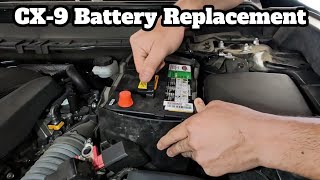
- Weak or Failing Battery 🔴 High Probability → Shop Vehicle Battery Modern vehicles like the CX-9 have a high electrical demand. A battery that can still start the car may not provide stable enough voltage for all control modules, causing communication dropouts, especially in cold weather. This is one of the most common triggers for network communication codes across all modern cars.
How to confirm: Test the battery voltage with a multimeter. A healthy, fully charged battery should read approximately 12.6 volts with the engine off. Anything below 12.4V warrants a recharge and retest. Have the battery load-tested at an auto parts store to confirm its health.
Typical fix: Recharge or replace the vehicle's 12V battery.
Est. part cost: $150-$300 - Corroded or Loose Battery Terminals/Grounds 🟡 Medium Probability → Shop Vehicle Battery Vibration and environmental factors can lead to loose connections or corrosion over time, creating electrical resistance that can disrupt module communication.
How to confirm: Visually inspect the battery terminals for white or greenish corrosion. Wiggle the terminal clamps to check for tightness. Trace the main ground strap from the battery's negative terminal to the chassis and ensure it is clean, free of corrosion, and securely fastened.
Typical fix: Clean the battery terminals and cable ends with a wire brush and a terminal cleaning tool. Tighten all connections. Clean chassis ground points with a wire brush and ensure they are tight.
Est. part cost: $5-$15 - Faulty Wiring Harness or Connectors 🟡 Medium Probability A recall for the 2018 model year (NHTSA ID: 18V030, Mazda recall: 3419E) specifically addressed weak retention force in wiring harness connectors, which could cause communication disruptions. This indicates a known potential weak point in the vehicle's wiring, even for vehicles outside the specific recall VIN range.
How to confirm: This is difficult without a wiring diagram. A technician would perform a visual inspection of major harness connectors (at the PCM, TCM, BCM) and perform a 'wiggle test' while monitoring network stability with a scan tool. Checking for CAN bus resistance between pins 6 and 14 of the OBD-II port (should be ~60 ohms with battery disconnected) can also identify wiring issues.
Typical fix: Repair the damaged section of the harness or reseat/replace the faulty connector. For the recalled vehicles, dealers will repair the wiring harnesses free of charge.
Est. part cost: $50-$1500+
Rare But Worth Checking
- Faulty Powertrain Control Module (PCM): → Shop Engine Control Module (ECM) While the code directly points to a communication loss *with* the PCM, it's possible for the PCM itself to be the source of the problem due to an internal failure. This is less common than wiring or voltage issues and should be considered a last resort after other causes are ruled out.
- Another Failing Control Module: A different module on the CAN bus (like the TCM or ABS module) can fail in a way that it 'floods' the network with bad data or shorts the bus, preventing the PCM from communicating. This can sometimes set a U0100 code. Diagnosing this requires a professional scan tool to see which modules are offline.
- Water Intrusion: In one documented case on an older CX-9, clogged sunroof drains led to water soaking the carpet and damaging electrical components on the floor, causing multiple communication codes including U0100. A clogged A/C drain can also cause water to leak into the passenger footwell, potentially affecting the Body Control Module (BCM).
Diagnosis Steps
- Check and record any other stored DTCs. Codes like U0101 or U0073 provide important clues to the location of the fault.
- Perform a full battery and charging system test. Ensure the battery has at least 12.6 volts with the engine off and can hold a load. Check that the alternator is charging correctly (typically 13.2-14.5 volts when running).
- Inspect battery terminals and main chassis grounds for corrosion and tightness. Clean and tighten as necessary.
- Check all relevant fuses for the PCM, TCM, and other control modules in the fuse boxes.
- Perform a visual inspection of the main wiring harnesses connected to the PCM and other key modules. Look for any signs of damage, chafing, or loose connectors. Pay attention to the areas mentioned in the 2018 recall.
- If you have an advanced scan tool, check the CAN bus network status 🎬 Watch: Diagnosing Mazda CAN bus communication errors. and see which modules are online.
- With the battery disconnected, measure the resistance between Pin 6 (CAN High) and Pin 14 (CAN Low) on the OBD-II port. A healthy network should read approximately 60 Ohms. A reading of 120 Ohms suggests a problem with a terminating resistor or a break in the wiring. A reading near 0 Ohms indicates a short circuit.
- If the basics don't solve the issue, professional diagnosis is recommended. A technician will use a wiring diagram, multimeter, and oscilloscope to check for proper voltage, ground, and data signals at the PCM connector.
Parts You'll Likely Need
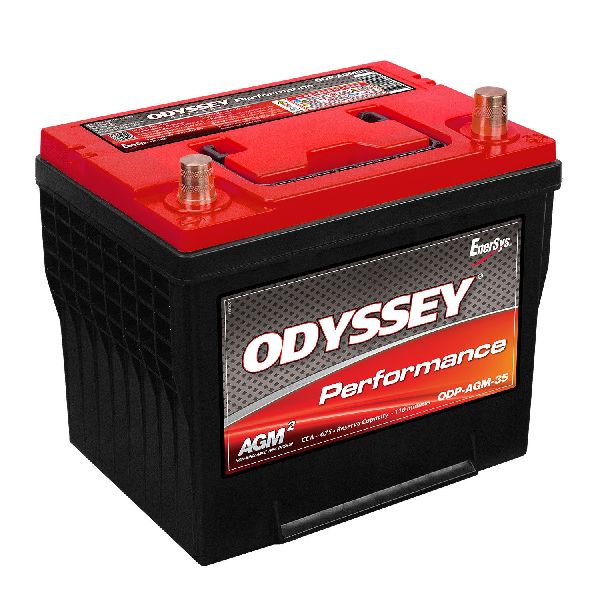
- 12V Automotive Battery — A weak or failing battery is a primary cause of transient communication codes due to unstable voltage.
Trusted brands: Interstate, DieHard, Duralast, ACDelco
OEM price range: $200-$350
Aftermarket price range: $150-$300
Related Codes That Often Appear With This One
- U0073 — Control Module Communication Bus 'A' Off. This is a general network code indicating the entire CAN bus is down, often appearing with U0100 when a major communication failure occurs.
- U0101 — Lost Communication with TCM. If this code is present with U0100, it strongly suggests the problem lies in the network between the PCM and the Transmission Control Module, or one of those two modules.
Platform-Specific Known Issues
- A recall was issued for 7,854 2018 Mazda CX-9 models (built between Sept. 12, 2017 and Nov. 9, 2017) for a wiring harness issue where weak connector retention could cause communication disruptions between control modules. This could lead to symptoms like turn signal failure, no-start conditions, or airbag issues, and could potentially set a U0100 code. The Mazda recall number is 3419E and the NHTSA campaign number is 18V030.
Mechanic-Grade Diagnostic Values
- CAN Bus Network Resistance — expected: ~60 Ohms. Failure: A reading of ~120 Ohms indicates an open circuit or a missing terminating resistor. A reading near 0 Ohms indicates a short between CAN High and CAN Low wires.
- CAN Line Resistance to Ground — expected: Mega-ohms or Open Line (OL). Failure: Any reading showing low resistance or continuity to ground indicates a short circuit in the wiring harness.
- Battery Voltage (Engine Off) — expected: ~12.6 Volts. Failure: A reading below 12.4V suggests the battery is discharged. A reading below 12.0V can cause modules to drop off the network, triggering communication codes like U0100.
Scan Tool Commands That Help
- Mazda MDARS / FORScan: PCM Replacement / Programmable Module Installation (PMI) — This function is required after installing a new or used PCM. It configures the module to the vehicle's specific options and, most importantly, synchronizes it with the immobilizer system (PATS). Without this step, the vehicle will not start.
- Advanced Scan Tool (e.g., FORScan): Network Test / Module Status — This function actively pings all modules on the CAN bus and reports which ones are communicating and which are offline. This is a critical first step in network diagnostics to see if only the PCM is offline or if multiple modules are affected, which would point to a network-wide issue rather than a single module failure.
Wiring & Ground Locations
- PCM Location — On older models, the PCM is often located in the engine bay, under the battery tray, requiring removal of the battery and cowl components for access. While the exact location for the 2016+ models may vary slightly, it remains in the engine compartment.. Technicians need to access the PCM connectors to test for power, ground, and CAN signals directly at the module to determine if the fault is with the PCM itself or the wiring going to it.
- G10 and G11 — These are major ground points located behind the left side of the dashboard, near the driver's side kick panel area.. The PCM, BCM, and Instrument Cluster often use these ground points. A loose or corroded ground at G10 or G11 can cause intermittent communication issues and a host of seemingly unrelated electrical problems, including a U0100 code.
- BCM Location — The Body Control Module (BCM) is typically located in the passenger-side footwell area or integrated with the interior fuse panel. On the 2019+ models, there is a Front BCM (FBCM) and Rear BCM (RBCM).. A failing BCM can disrupt the entire CAN network. Its location in the footwell makes it susceptible to water damage from a clogged A/C drain or sunroof drain, which can lead to network communication codes.
- A/C Evaporator Drain Hose — The drain hose exits through the firewall on the passenger side. It can become detached from the firewall grommet or clogged with debris.. If this drain clogs, condensation backs up and overflows into the passenger footwell, potentially soaking the BCM and its connectors, causing corrosion and network failures.
Real Owner Repair Stories
- Mazdas247 Forum User (2019 Mazda CX-9, 37k miles) — Car would not start, displayed a multitude of malfunction warnings on the dash (SCBS, Keyless System, etc.), and the horn did not work. The engine would attempt to crank for a split second and then stop.
❌ Tried (didn't work) Disconnecting a recently installed remote starter, Inspecting fuses, Trying a different key fob, Disconnecting the battery for an hour
✅ What actually fixed it The user suspected the battery was dead despite the vehicle being only 2.5 years old. The resolution pointed towards charging or replacing the battery, as all the symptoms were classic signs of a low voltage condition causing module communication failure. - Mazdas247 Forum User (2019 Mazda CX-9) — U0100 code appeared with a check engine light, along with a 'low key fob battery' warning.
❌ Tried (didn't work) Swapping key fobs
✅ What actually fixed it The issue occurred during a period of record-breaking cold temperatures. The owner cleared the code and it did not return on subsequent drives. The root cause was determined to be the extreme cold affecting the main vehicle battery, causing a temporary voltage drop sufficient to trigger the communication code. - NHTSA ODI #10781946 — In a related Mazda platform case, an owner reported the vehicle coming to a complete stop while running on the highway, immobilizing all systems. A scan detected code U0100. Despite checking wiring recalls and replacing "burn out parts," the problem persisted, highlighting how critical electrical integrity is for maintaining PCM communication.
- NHTSA ODI #11196097 — A manufacturer report involving a loose wire from an airbag connector that was unclipped during assembly and not properly reinstalled led to a pending U0100 code for no PCM communication. This reinforces that even non-powertrain wiring issues can sometimes interfere with the network.
Model Year Variations Within This Range
- 2018: A specific batch of 2018 CX-9s (built Sept 12, 2017 - Nov 9, 2017) was subject to recall 3419E (NHTSA 18V030) for wiring harness connectors with weak retention force. This defect could cause intermittent communication loss between modules, directly leading to code U0100 and other symptoms like no-start or turn signal failure.
- 2019+: Starting around 2019, the CX-9 uses a more distributed body control system with a Front Body Control Module (FBCM) and a Rear Body Control Module (RBCM), as opposed to a single BCM in some earlier models. This can change diagnostic strategy, as a failure in either module could potentially disrupt the network.
Diagnostic Flowchart
Other Known Issues on This Vehicle
Issues unrelated to this code that are worth knowing about as an owner of this generation:
- Cracked Cylinder Head (Coolant Leak) 🔴 High — Reported in some 2016-2021 models with the 2.5T engine. Cracks can form around the exhaust manifold, leading to external coolant leaks. (Ref: Mazda TSB 01-012/21 (later revised) addresses this issue, noting potential causes as exhaust manifold stress or residual stress in the head material.)
- Excessive Oil Consumption / Faulty Valve Stem Seals 🟠 Medium — Primarily affects certain 2021 models with the 2.5T engine, causing a low oil level warning light to appear between oil changes. (Ref: Mazda TSB 01-012/21 (and subsequent revisions) acknowledges the issue, suspecting damaged valve stem seals as the cause of oil leaking into the combustion chamber.)
- Internally-Driven Water Pump Failure (First Gen) 🔴 High — This is a notorious issue for the first-generation CX-9 (2007-2015) which used a Ford-derived V6. The water pump is driven by the timing chain, and a failure can cause coolant to mix with engine oil, leading to catastrophic engine failure. This does NOT apply to the 2016-2023 models.
- Prematurely Warped Front Brake Rotors 🟡 Low — Some owners report brake judder/vibration at highway speeds due to warped front brake rotors, sometimes occurring at relatively low mileage.
- Soul Red Crystal Paint Chipping 🟡 Low — Owners have widely reported that the signature 'Soul Red Crystal' paint is thin and prone to chipping and flaking easily, making touch-ups difficult due to its complex multi-layer composition.
Used vs. New Parts: Buying Guide for This Vehicle
When a used part is the smart pick: For this code, a used wiring harness from a reputable salvage yard can be a cost-effective solution if the failure is confirmed to be a damaged harness (e.g., from an accident or rodent damage) and not a systemic issue like the 2018 recall. Used modules are generally not recommended due to programming requirements.
Donor-vehicle mileage cap: roughly under 80000 miles for the part to have meaningful remaining life.
What to inspect on the donor part:
- For a wiring harness, ensure there are no cut wires, no signs of heat damage/melting, and that all connector housings are intact.
- Verify the donor vehicle was not in a flood.
- For any electronic module, check connector pins for any signs of green or white corrosion.
OEM-only on this vehicle (don't cheap out):
- Powertrain Control Module (PCM)
- Body Control Module (BCM)
Aftermarket brands forum-validated for this vehicle:
- For the battery, brands like Interstate, Duralast Platinum (AGM), and DieHard are frequently cited as reliable replacements by owners.
Brands owners have reported issues with on this vehicle:
- Avoid generic, unbranded PCMs or BCMs from online marketplaces. These often have incorrect software or are not programmable, leading to wasted time and money. A remanufactured OEM unit from a reputable rebuilder is a better alternative to a questionable aftermarket part.
Real Owner Stories
Aggregated from forums and TSBs cited above. Mileages and costs reflect what owners reported in those sources.
2019 Mazda CX-9 2.5T
Symptoms: The U0100 code appeared during a period of record-breaking cold temperatures along with a key fob battery warning.
What fixed it: The code was cleared and did not return, suggesting it was a transient issue caused by low battery voltage due to extreme cold.
Source hint: Mazdas247 / '2016~2023 - Code U0100' / URL: https://www.mazdas247.com/forum/index.php?threads/code-u0100.123879034/
2018 Mazda CX-9 2.5T
Symptoms: Potential for turn signal failure, no-start conditions, or airbag issues due to weak connector retention force.
What fixed it: Dealers repair the wiring harnesses free of charge under the recall program.
Source hint: NHTSA campaign number 18V030 / Mazda recall 3419E
Mazda Platform Owner
Symptoms: An owner reported that their vehicle came to a complete stop while running on the highway, immobilizing all systems. A scan detected code U0100.
What fixed it: Despite checking wiring recalls and replacing "burn out parts," the owner noted the problem persisted, emphasizing the complexity of diagnosing intermittent communication loss.
Source hint: NHTSA ODI #10781946
Related OBD-II Codes
Frequently Asked Questions
Is there a recall for my 2018 Mazda CX-9 that could cause the U0100 code?
Can cold weather trigger a U0100 code on my 2019 CX-9?
How can I tell if my U0100 code is caused by a weak battery or a wiring issue?
Does the internally-driven water pump failure issue apply to my 2016-2023 CX-9?
Could a sunroof leak be related to my communication codes?
What is the 'limp mode' symptom associated with U0100 on the CX-9?
Helpful Videos


We Have This Part in Stock


The information in this article is provided for general reference and educational purposes only. Vehicle specifications, procedures, and part compatibility can vary by production date, trim level, and region. Always consult your vehicle's factory service manual and verify part numbers before purchasing or performing repairs. Safety-critical components such as airbags, seat belts, and braking systems should be installed by a qualified professional.
- Mazda CX-9:
- 🧭 Diagnostic Flowchart
- 🎬 Helpful Videos
- 🛍️ Shop This Part
- What's Unique About the 2016-2023 Mazda CX-9
- Symptoms You May Notice
- Most Likely Causes
- Rare But Worth Checking
- Diagnosis Steps
- Parts You'll Likely Need
- Related Codes That Often Appear With This One
- Platform-Specific Known Issues
- Mechanic-Grade Diagnostic Values
- Scan Tool Commands That Help
- Wiring & Ground Locations
- Real Owner Repair Stories
- Model Year Variations Within This Range
- Other Known Issues on This Vehicle
- Used vs. New Parts: Buying Guide for This Vehicle
- Real Owner Stories
- 2019 Mazda CX-9 2.5T
- 2018 Mazda CX-9 2.5T
- Mazda Platform Owner
- Related OBD-II Codes
- Frequently Asked Questions
- 🎟️ Get 5% Off