

U0100 on 2004-2008 Pontiac Grand Prix: Lost Communication with ECM Causes and Fixes
On a 2004-2008 Grand Prix, code U0100 is most often caused by a faulty ignition switch (subject to a recall), poor electrical grounds, or chafed wiring, not a bad ECM. Check for the ignition switch recall first, then inspect battery connections and key ground points on the engine and chassis before replacing parts.
- STOP: Before any other diagnosis, check if the ignition switch recall (NHTSA #14V400000) has been performed on your car.
- U0100 is an electrical fault, not a mechanical one. The most likely causes are simple: a bad ground, a weak battery, or a chafed wire.
- Do not replace the ECM unless you are 100% certain it is the problem. It is the most expensive and least likely cause.
- A thorough visual inspection of grounds and wiring harnesses is the most effective diagnostic step you can take.
- This code indicates a critical failure. Do not drive the vehicle, as it could stall at any time.
What's Unique About the 2004-2008 Pontiac Grand Prix
For this generation of Pontiac Grand Prix (the eighth, built on the W-body platform), U0100 is frequently a symptom of two well-known issues. First, a major safety recall for the ignition switch (NHTSA #14V400000) can cause the engine to shut off, mimicking a communication loss. The defect allows the ignition to be bumped out of the 'run' position, cutting power to critical modules. Second, like many GM vehicles from this era, the Grand Prix is susceptible to poor ground connections and wiring harness problems, which are far more common culprits than an actual failed ECM.
Symptoms You May Notice
- Engine will not start, or cranks but does not fire
- Engine stalls unexpectedly while driving
- Check Engine Light is on
- Multiple other warning lights may be on (e.g., ABS, Traction Control)
- Transmission may be stuck in one gear ('limp mode')
- Scan tool cannot communicate with the ECM/PCM
- Message center may display warnings like 'Reduced Engine Power'
- Replacing the Engine Control Module (ECM) first. The ECM is expensive and requires programming. The actual cause is much more likely to be a simple wiring, ground, or power supply issue.
Most Likely Causes
- Faulty Ignition Switch (Recall) 🔴 High Probability → Shop Ignition Switch A documented safety defect led to NHTSA Recall #14V400000. The switch can be bumped out of the 'Run' position by a heavy keychain or a jarring event, cutting power to the ECM and causing a stall that looks like a communication failure.
How to confirm: Contact any GM dealership with your VIN to see if the recall work has been performed. This should be the absolute first step. The recall fix involved installing inserts into the key slot or a cover over the key head to prevent unintended rotation.
Typical fix: Have the recall service performed by a GM dealer, which involves modifying the existing keys and providing new key rings. If the recall was performed but the switch is faulty, it will need to be replaced. 🎬 Watch: How to replace the ignition switch
Est. part cost: $0 (if recall is open) - Poor or Corroded Grounds 🔴 High Probability GM W-body vehicles of this era are known for grounding issues. Ground straps and bolts corrode or loosen over time, creating high resistance and causing modules to lose power or reference. The ECM and TCM share common ground points, making them vulnerable.
How to confirm: Perform a voltage drop test on the main ground connections. Visually inspect and physically check grounds G113 (on a transaxle stud, near the starter), G101 (left front upper tie bar, near headlamp), and G102 (right front of engine compartment). Look for rust, looseness, or broken wires inside the insulation near the terminal.
Typical fix: Disconnect the battery, then remove, clean (with a wire brush), and securely re-tighten all relevant ground connections. Apply dielectric grease to prevent future corrosion. In some cases, the factory ground wire must be replaced. 🎬 See this guide on Grand Prix fuses and grounds
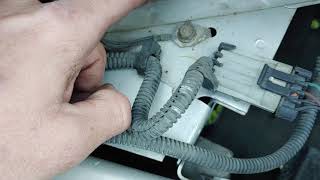
Est. part cost: $0 - $15 - Chafed or Damaged Wiring Harness 🟡 Medium Probability Engine vibration and heat can cause wiring insulation to wear through where it contacts sharp metal edges or other components, leading to shorts in the CAN bus or power/ground circuits. A common chafe point is the harness near the ECM, which is located inside the air filter box assembly.
How to confirm: Visually inspect the wiring harness leading to the ECM (located in the air filter box), the TCM, and around the engine and transmission. Look for any signs of rubbing, melting, or physical damage. Check the resistance of the CAN bus at the OBD-II port (should be ~60 ohms with battery disconnected).
Typical fix: Repair the damaged section of wire by soldering and heat-shrinking. Protect the repaired area with loom or re-route it to prevent future damage.
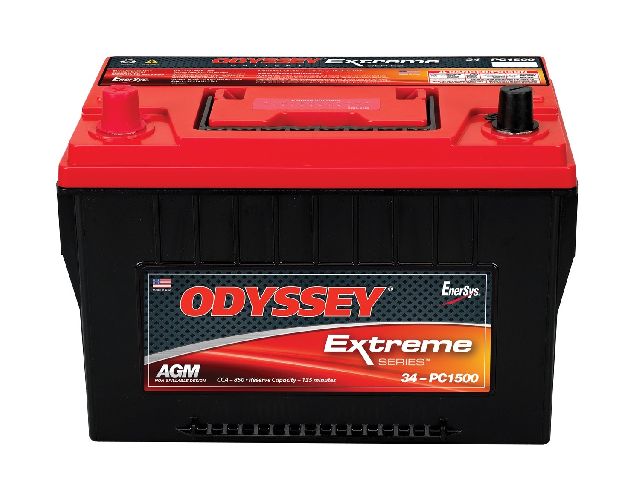
Est. part cost: $5 - $25 - Weak or Failing Battery 🟡 Medium Probability → Shop Vehicle Battery All modern cars are sensitive to low voltage. If the battery's voltage drops too low during cranking or operation, control modules can shut down and fail to communicate, triggering a U0100 code.
How to confirm: Test the battery with a multimeter. A healthy, fully charged battery should read at least 12.4V-12.6V with the engine off. Have the battery load-tested at an auto parts store, as a battery can show good voltage but fail under load.
Typical fix: Recharge or replace the battery. Ensure battery terminals are clean and tight.
Est. part cost: $150 - $250 - Failed Transmission Control Module (TCM) ⚪ Low Probability → Shop Transmission Assembly On some GM platforms, the TCM is a known weak point that can fail and disrupt the entire communication network, causing other modules to report a loss of communication with the ECM. Since the TCM and ECM are on the same high-speed GMLAN bus, a fault in one can affect the other.
How to confirm: This is difficult to confirm without an advanced scan tool. If U0101 (Lost Communication with TCM) is also present, the TCM is a more likely suspect. 🎬 Watch: Diagnostic walkthrough for GM lost communication codes A diagnostic technique is to disconnect the TCM harness connector and see if communication with the ECM is restored.
Typical fix: Replace the Transmission Control Module. This part is located on the valve body inside the transmission side cover and typically requires professional service to access and replace.
Est. part cost: $200 - $500
Rare But Worth Checking
- Failed Engine Control Module (ECM): → Shop Engine Control Module (ECM) While U0100 directly points to the ECM, the module itself is rarely the true cause. Exhaust all other possibilities (wiring, grounds, power, other modules) before condemning the ECM. A replacement ECM will require programming to the vehicle's VIN.
- Blown Fuse: A blown fuse for the ECM or ignition circuit can cause a complete loss of power to the module. Always check the underhood and interior fuse boxes before proceeding with complex diagnostics.
Diagnosis Steps
- Check for Recalls: Contact a GM dealer with your VIN to verify if the ignition switch recall (NHTSA #14V400000) is open for your vehicle.
- Check Battery Health: Ensure the battery is fully charged (12.4V+ engine off) and the terminals are clean and tight.
- Scan for Codes: Use an OBD-II scanner to read all codes from all available modules. Note if other 'U' codes are present, especially U0101. Note if the scanner can or cannot communicate with the ECM.
- Inspect Fuses: Visually inspect all fuses related to the ECM, PCM, IGN, and BCM in both the underhood and interior fuse panels.
- Inspect Grounds: Disconnect the battery. Locate, remove, clean, and re-secure the main engine and chassis grounds. Pay special attention to the ground on the transaxle stud (G113) and the main grounds in the engine bay (G101, G102).
- Inspect Wiring: Carefully inspect the wiring harness going to the ECM (in the airbox) for any signs of chafing, melting, or corrosion. Trace the harness around the engine for other potential damage points.
- Check CAN Bus Resistance: With the battery disconnected, use a multimeter to measure the resistance between Pin 6 (CAN High) and Pin 14 (CAN Low) on the OBD-II port. A healthy reading is approximately 60 ohms.
- Isolate Modules: If the bus resistance is incorrect or the issue persists, you can try disconnecting modules one at a time (e.g., TCM, ABS module) to see if communication with the ECM is restored. This can help identify a faulty module that is bringing down the network.
- Test ECM Power/Ground: If all else fails, use a wiring diagram to test for proper power and ground signals directly at the ECM connector. If power and ground are present but the module does not communicate, the ECM may have failed.
Parts You'll Likely Need
- Ignition Switch
(OEM #15896241)— A primary cause of stalling and communication loss due to a safety recall.
Trusted brands: ACDelco
OEM price range: $30-$50
Aftermarket price range: $20-$40 - Battery — Low system voltage from a weak or old battery can cause intermittent communication faults between modules.
Trusted brands: ACDelco, DieHard, Interstate
OEM price range: $200-$300
Aftermarket price range: $150-$250
Related Codes That Often Appear With This One
- U0101 — Lost Communication with TCM. The ECM and TCM are on the same high-speed data bus. A network-wide electrical problem or a fault in the shared G113 ground will often cause both codes to appear together.
- U0073 — Control Module Communication Bus 'A' Off. This indicates a general failure of the entire communication network, often pointing to a wiring short, a problem with a terminating resistor, or a module pulling the network down.
Technical Service Bulletins (TSBs) & Recalls
- 14350D — Unintended Ignition Key Rotation — This is a follow-up to the main ignition switch recall (14V400000), providing dealers with instructions on how to perform the remedy, which involves modifying the key head.
Platform-Specific Known Issues
- NHTSA Recall #14V400000 for the ignition switch is a critical factor for this code on 2004-2008 models. The symptom of the engine shutting off can be easily misdiagnosed as a module communication failure.
- The ECM is located inside the air cleaner housing on the driver's side of the engine bay, making it relatively accessible but also exposing its wiring harness to engine bay conditions.
Mechanic-Grade Diagnostic Values
- GMLAN Bus Resistance — expected: Approximately 60 Ohms. Failure: A reading of 120 Ohms indicates an open in one of the two terminating resistors. A reading of 0 Ohms indicates the CAN High and CAN Low wires are shorted together.
- GMLAN High Speed Bus Voltage (Key On, Engine Off) — expected: CAN High (Pin 6) and CAN Low (Pin 14) should both read approximately 2.5V at rest (recessive state).. Failure: Significant deviation from 2.5V on either line indicates a short to power or ground.
- GMLAN High Speed Bus Voltage (Communicating) — expected: CAN High (Pin 6) toggles to ~3.5V and CAN Low (Pin 14) toggles to ~1.5V (dominant state).. Failure: A flat line or lack of toggling indicates no communication. A noisy or distorted signal can indicate a module or wiring fault.
- ECM Ground Circuit Resistance — expected: Less than 0.1 Ohms. Failure: Higher resistance indicates a poor ground connection, which is a common cause of communication failures.
Scan Tool Commands That Help
- Tech2: Module Communication Test — To actively poll each module on the GMLAN network and see which ones are responding. This can quickly identify if the ECM is the only module offline or if it's a network-wide problem.
- Tech2: Crankshaft Position Variation Learn — This procedure is required after replacing the ECM to synchronize the new module with the crankshaft position sensor, preventing a P1336 code.
- Tech2 / SPS: VIN Programming — Absolutely required when installing a new or used ECM. The VIN in the ECM must match the vehicle's other modules (like the BCM) to disable the anti-theft system and allow the car to start.
Wiring & Ground Locations
- G113 — On a transaxle stud, near the starter motor, on the lower right front of the engine.. This is a critical ground point shared by the ECM and other engine components. Corrosion or looseness here is a very common cause of U0100 and other communication codes.
- G101 — On the left side of the front end upper tie bar, near the driver-side headlamp.. This is a primary chassis ground. A poor connection here can cause a wide range of electrical issues, including module communication problems.
- G102 — Located in the right front of the engine compartment.. Another key engine bay ground point that provides a return path for multiple components. It should be checked for corrosion and tightness.
- GMLAN Splice Pack — There is a splice pack for the CAN bus system located underneath the glove box.. This provides a central point to test the network and isolate modules. By disconnecting modules one by one from this splice pack, a technician can identify if a specific module is causing the network to crash.
- ECM Connectors (C1/C2) — Located on the ECM, which is inside the air cleaner housing on the driver's side of the engine bay.. These are the main connection points for all ECM power, ground, and data lines. They should be inspected for corrosion, pin damage, or water intrusion.
Real Owner Repair Stories
- GM Forum user 'Rygar' (2008 Pontiac Grand Prix 3.8L V6) — Intermittent misfire on cylinder #1 (P0201), which eventually led to communication issues.
❌ Tried (didn't work) Re-flashing the original ECM., Plugging in a used ECM, which resulted in a 'no communication' error with the scan tool.
✅ What actually fixed it A new (not used) ECM was purchased and successfully flash programmed to the car. The user noted that programming a used ECM might have required a second, separate GM subscription, which may have been the reason for the initial failure with the used units. The new, properly programmed ECM resolved the misfire and communication problems.
OEM Part Supersession History
25799293→20939745, 20912838, 23276089— Standard part evolution and consolidation for the ignition switch.
Heads up: While multiple part numbers exist, they are generally interchangeable for the affected models. Always verify fitment with a VIN.
Model Year Variations Within This Range
- 2004: The 2004 model year had some one-year-only parts, including the BCM and charging system components. This can be relevant as a faulty BCM can cause a U0100 code.
- 2005-2008 (GXP V8 Models): The GXP models with the 5.3L LS4 V8 have a different wiring harness for each model year (2005, 2006, 2007, 2008). Additionally, 2005-2006 models use an E40 ECM, while 2007-2008 models use an E67 ECM with a different crank/cam trigger setup. This is critical when sourcing a replacement ECM or harness.
Diagnostic Flowchart
Other Known Issues on This Vehicle
Issues unrelated to this code that are worth knowing about as an owner of this generation:
- Cracked Plastic Coolant Elbows 🔴 High — Extremely common on all 3800 Series II/III engines. Failure is a matter of 'when', not 'if'. Often occurs between 60,000 and 120,000 miles.
- Failing 4T65-E Transmission Pressure Control Solenoid (PCS) 🔴 High → Shop Transmission Valve Body — Very common, especially on vehicles over 90,000 miles. Often triggers code P1811 (Max Adapt and Long Shift).
- Premature Wheel Bearing / Hub Assembly Failure 🟠 Medium — Common failure item, with many owners reporting replacement needed before 100,000 miles. Aftermarket quality varies significantly.
- Lower Intake Manifold (LIM) Gasket Failure 🟠 Medium — Less common on the Series III 3800 engine (2004+) than the Series II, but still a known potential issue, especially on higher mileage examples.
Used vs. New Parts: Buying Guide for This Vehicle
When a used part is the smart pick: A used ECM from a junkyard can be a cost-effective option, BUT ONLY if you have a definitive plan for programming. Many owners find that getting a remanufactured unit from a reputable seller who pre-programs it to your VIN is a much smoother process. Other modules like the BCM or TCM can also be sourced used, but they too will likely require programming.
Donor-vehicle mileage cap: roughly under 150000 miles for the part to have meaningful remaining life.
What to inspect on the donor part:
- For an ECM, ensure the donor vehicle was not in a flood or fire.
- Check that the part number on the used ECM is an exact match or a known compatible replacement for your original.
- Inspect the connector pins on the used module for any signs of corrosion, moisture, or physical damage before purchasing.
OEM-only on this vehicle (don't cheap out):
- Engine Control Module (ECM): While aftermarket remanufactured units are common (e.g., Cardone), a new OEM unit or a professionally cloned/programmed used OEM unit is the safest bet to avoid compatibility issues. The key is the programming, not just the hardware.
Aftermarket brands forum-validated for this vehicle:
- ACDelco (for ignition switch and other electrical components)
- Cardone (for remanufactured ECMs, but ensure programming service is included)
Brands owners have reported issues with on this vehicle:
- Unbranded, no-name electrical components from online marketplaces can be unreliable and cause more diagnostic headaches.
Real Owner Stories
Aggregated from forums and TSBs cited above. Mileages and costs reflect what owners reported in those sources.
2004-2008 Pontiac Grand Prix
Symptoms: The engine shuts off unexpectedly while driving, which can be misdiagnosed as a module communication failure.
What fixed it: Having the ignition switch recall service performed by a GM dealer, which involves modifying the existing keys and providing new key rings.
Cost: $0-$0
Source hint: vehicle_specific_issues regarding NHTSA Recall #14V400000
2004-2008 Pontiac Grand Prix
Symptoms: Multiple codes including U0073, U0100, and U0101 appearing simultaneously.
What fixed it: Cleaning and re-tightening ground connections, specifically looking for corrosion or looseness at the main engine and chassis ground points.
Source hint: Chevrolet Forum thread 'U0073, U0100, and U0101 codes' and Grand Prix Forums
Related OBD-II Codes
Frequently Asked Questions
Is there a recall for the 2004-2008 Pontiac Grand Prix that could cause a U0100 code?
Where is the Engine Control Module (ECM) located on my Grand Prix?
My Grand Prix shows 'Reduced Engine Power' and won't start. Could this be a grounding issue?
What should the CAN bus resistance be when testing the OBD-II port for a U0100?
Can a bad transmission module cause a U0100 code in my Pontiac?
Does TSB 14350D apply to the U0100 communication issues?
Helpful Videos

We Have This Part in Stock


The information in this article is provided for general reference and educational purposes only. Vehicle specifications, procedures, and part compatibility can vary by production date, trim level, and region. Always consult your vehicle's factory service manual and verify part numbers before purchasing or performing repairs. Safety-critical components such as airbags, seat belts, and braking systems should be installed by a qualified professional.
- Pontiac Grand Prix:
- 🧭 Diagnostic Flowchart
- 🎬 Helpful Videos
- 🛍️ Shop This Part
- What's Unique About the 2004-2008 Pontiac Grand Prix
- Symptoms You May Notice
- Most Likely Causes
- Rare But Worth Checking
- Diagnosis Steps
- Parts You'll Likely Need
- Related Codes That Often Appear With This One
- Technical Service Bulletins (TSBs) & Recalls
- Platform-Specific Known Issues
- Mechanic-Grade Diagnostic Values
- Scan Tool Commands That Help
- Wiring & Ground Locations
- Real Owner Repair Stories
- OEM Part Supersession History
- Model Year Variations Within This Range
- Other Known Issues on This Vehicle
- Used vs. New Parts: Buying Guide for This Vehicle
- Real Owner Stories
- 2004-2008 Pontiac Grand Prix
- 2004-2008 Pontiac Grand Prix
- Related OBD-II Codes
- Frequently Asked Questions
- 🎟️ Get 5% Off