

U0100 on 2003-2007 Saturn Ion: Lost Communication With ECM/PCM Causes and Fixes
On a 2003-2007 Saturn Ion, code U0100 is most often caused by a bad ground connection at the Transmission Control Module (TCM) or a failed TCM itself, leading to a no-start, stalling, or erratic shifting. Before replacing any expensive parts, inspect and clean all power and ground connections to the TCM and ECM, as this is a well-documented failure point.
- Do NOT immediately replace the ECM. U0100 on a Saturn Ion is usually caused by something else.
- The most likely culprit is a bad ground connection at the Transmission Control Module (TCM). Check, clean, or add a new ground wire before doing anything else.
- If grounds are good, the TCM itself is the next most likely part to have failed.
- This is a complex electrical issue. If you are not comfortable using a multimeter and reading wiring diagrams, professional service is strongly recommended.
- If you see code U0101 along with U0100, it almost certainly confirms the problem is in the transmission control system.
What's Unique About the 2003-2007 Saturn Ion
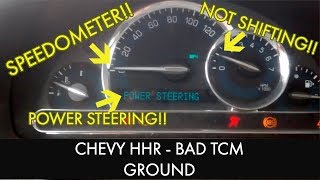
While U0100 points to the Engine Control Module (ECM), on the Saturn Ion and similar GM Delta platform vehicles, the ECM is often not the actual problem. The code is frequently a symptom of the Transmission Control Module (TCM) failing or losing its power or ground connection. A faulty TCM can disrupt the entire communication network, making it seem like the ECM is offline. Owners often experience a cascade of issues, including transmission and power steering problems, that all trace back to a poor ground at the TCM or a faulty TCM.
Symptoms You May Notice
- Engine will not start or cranks but won't fire
- Engine stalls intermittently while driving, sometimes with complete loss of power
- Transmission shifts erratically, harshly, or gets stuck in one gear (limp mode)
- Check Engine Light is on
- Multiple warning lights on the dash (ABS, Traction Control, Power Steering)
- Loss of power steering assist
- Scan tool cannot communicate with the ECM or TCM
- Gear indicator on the dash may go blank
- Replacing the Engine Control Module (ECM) first. The U0100 code is most often a symptom of another module (like the TCM) or a wiring issue, not a failed ECM.
- Replacing the battery without checking for a parasitic drain caused by a faulty module trying to stay 'awake'.
Most Likely Causes
- Poor Ground Connection at the Transmission Control Module (TCM) 🔴 High Probability → Shop Transmission Assembly The TCM's ground connection can corrode or come loose, causing the module to lose power and disrupt the entire vehicle network. This is a widely documented failure point on the Saturn Ion and its platform mates.
How to confirm: With the key off, use a multimeter to check for continuity between the TCM case and a known good chassis ground. A bad ground will show high resistance (over 0.5 ohms). You can also perform a voltage drop test on the ground wire with the system on. A visual inspection may reveal a corroded or loose ground wire at the chassis.
Typical fix: Locate the TCM ground point on the chassis. Disconnect, clean the ground point and the wire terminal until they are bright metal, apply dielectric grease, and re-secure it tightly. In some cases, running a new, dedicated ground wire from the TCM casing to a clean spot on the chassis is the most reliable repair.
Est. part cost: $1-$10 for wire and terminals - Failed Transmission Control Module (TCM) 🟡 Medium Probability → Shop Transmission Assembly On many GM vehicles from this era, including the Ion, the TCM is a common failure item due to heat and vibration, causing internal faults that can bring down the communication network.
How to confirm: After confirming the TCM has good power and ground, and the wiring is intact, a professional scan tool will show that the TCM is not communicating. If other modules are online but the TCM is not, the module itself has likely failed.
Typical fix: Replace the Transmission Control Module. The new module will require programming to the vehicle's VIN with a GM-specific scan tool like a Tech 2.
Est. part cost: $250-$500 - Wiring Harness Damage 🟡 Medium Probability Wires can become chafed, corroded, or broken, especially in the harness going to the transmission or the main fuse block. The CAN bus wires are a twisted pair and are sensitive to damage.
How to confirm: Visually inspect the wiring harnesses to the ECM and TCM for any signs of damage, corrosion at the connectors, or wires rubbing against sharp edges. Check for continuity and shorts on the CAN bus wires (typically a twisted pair) with a multimeter.
Typical fix: Repair or replace the damaged section of the wiring harness. Clean or replace corroded connector pins.
Est. part cost: $20-$100 for repair supplies - Low Battery Voltage or Poor Battery Connections ⚪ Low Probability → Shop Vehicle Battery
How to confirm: Test the battery voltage with a multimeter; it should be above 12.4V with the engine off. A low battery can cause a variety of communication codes. Inspect the battery terminals for corrosion and ensure they are tight.
Typical fix: Clean the battery terminals and charge or replace the battery if it fails a load test.
Est. part cost: $0-$200
Rare But Worth Checking
- Failed Engine Control Module (ECM): → Shop Engine Control Module (ECM) While the code points to the ECM, it is rarely the actual point of failure. This should only be considered after all other possibilities (TCM, wiring, grounds) have been exhaustively ruled out.
- Faulty Underhood Fuse Block: → Shop Fuse Box Internal corrosion or cracks in the fuse block can cause intermittent power and communication issues to various modules. This can cause a no-start condition where the powertrain relay does not engage.
- Defective Ignition Switch: → Shop Ignition Switch The Saturn Ion was part of a massive GM recall for faulty ignition switches. A bad switch can cause the vehicle to lose power unexpectedly, which can disrupt module communication and log various codes, though it's less likely to be the primary cause of an isolated U0100.
Diagnosis Steps
- Check Battery Health: Ensure the battery is fully charged (at least 12.4V) and the terminals are clean and tight. A weak battery is a common cause of network codes.
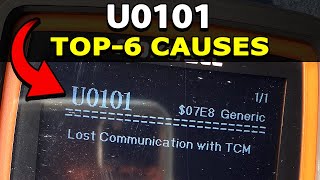
- Scan for All Codes: Use a scan tool capable of reading codes from all modules (ECM, TCM, BCM, ABS). Note which modules are not communicating. The presence of U0101 is a major clue. 🎬 Watch: Top causes of U0101 lost communication codes
- Inspect Grounds: Visually inspect and clean the main engine-to-chassis and battery-to-chassis ground straps. Pay special attention to the ground connection for the TCM, which is a known weak point.
- Check Fuses: Inspect all fuses related to the ECM, TCM, and even the OBD-II port in the underhood and interior fuse panels.
- Inspect TCM Wiring: Check the wiring harness and connector at the TCM for any visible damage, corrosion, or loose pins. Verify power and ground at the TCM connector using a multimeter and wiring diagrams.
- Check CAN Bus Resistance: With the battery disconnected, measure the resistance between the two CAN bus wires at the OBD-II port (pins 6 and 14). It should be approximately 60 ohms. A reading of 120 ohms indicates a break in the circuit or a missing terminating resistor. A reading near 0 ohms indicates a short.
- Isolate Modules: If the CAN bus resistance is incorrect, unplug modules one by one (starting with the TCM, as it's the most likely suspect) to see if the resistance returns to normal, which would indicate a shorted module.
- Professional Diagnosis: If the cause is not found, a professional with a GM-specific scan tool (like a Tech 2) can perform a more in-depth network test to pinpoint the fault.
Parts You'll Likely Need
- Transmission Control Module (TCM)
(OEM #24234567 (for 2005 2.2L), 24235340 (for 2006 2.2L), 24230461 (for 2006 2.0L), 24239224 (for 2007 2.0L) - Note: Always verify with VIN.)— Internal failure of this module is a common cause of network communication faults on this platform, triggering a U0100 code.
Trusted brands: ACDelco (OEM), Flagship One, Vertex
OEM price range: $400-$600
Aftermarket price range: $250-$450
Related Codes That Often Appear With This One
- U0101 — This code means 'Lost Communication with TCM'. If you see U0100 and U0101 together, it's a very strong indicator that the problem is with the Transmission Control Module or its wiring/power/ground.
- U0073 — This code means 'Control Module Communication Bus 'A' Off'. It indicates a general network failure, which can be caused by a single faulty module (like the TCM) bringing the entire system down.
- P0700 — This is a generic code requested by the TCM to turn on the Check Engine Light. Its presence confirms the root of the problem is within the transmission control system.
Platform-Specific Known Issues
- A poor ground connection at the Transmission Control Module (TCM) is a known issue that can cause a complete loss of communication, leading to a U0100 code and multiple system failures.
- The Saturn Ion was part of the major GM ignition switch recall. A faulty switch can cause a sudden loss of all vehicle power while driving, which can also trigger communication codes.
- The electric power steering motor was also subject to a recall and can fail, causing loss of steering assist. While not directly causing U0100, it's a common electrical issue on this platform.
Mechanic-Grade Diagnostic Values
- CAN Bus Network Resistance — expected: ~60 Ohms. Failure: 120 Ohms indicates an open circuit or a missing terminating resistor. ~0 Ohms indicates a short between CAN High and CAN Low wires. Readings like ~40 Ohms can indicate a third, unwanted terminating resistor on the network.
- CAN Bus Voltage (Key On, Engine Off) — expected: CAN High (Pin 6 to Ground): ~2.6V. CAN Low (Pin 14 to Ground): ~2.4V.. Failure: Voltages that are the same (e.g., both 2.5V) can indicate a short between the two lines. Both at 0V suggests a short to ground.
- TCM Ground Circuit Resistance — expected: Less than 0.5 Ohms. Failure: Resistance higher than 0.5 Ohms indicates a poor ground connection, which is a primary cause of this code on the Ion.
- TCM Power Supply Voltage (Key On) — expected: 12.0V - 14.5V (Battery Voltage). Failure: Low or no voltage indicates a blown fuse, wiring issue, or problem with the underhood fuse block.
Scan Tool Commands That Help
- GM Tech 2 / GDS2: Module Status / Network Test — This is the primary professional step. The tool can poll all modules on the CAN bus and display a list of which ones are 'Present' and communicating versus which ones are 'Not Present'. For a U0100, this test will quickly confirm if the ECM is truly offline or if another module (like the TCM or BCM) is the one not responding, causing the symptom code.
- GM Tech 2 / GDS2: TCM Programming / Setup — This is mandatory after replacing the Transmission Control Module. The new module must be programmed with the vehicle's specific VIN and software calibration, otherwise it will not communicate on the network and the U0100/U0101 codes will persist.
Wiring & Ground Locations
- G107 — At the rear of the engine, on a stud on the transmission case, just down and to the right of the oil filter housing.. This is the primary ground point for the Transmission Control Module (TCM). Corrosion or looseness at this specific stud is the most common root cause for U0100 and U0101 codes on the Saturn Ion.
- Underhood Fuse Block — Located in the engine compartment on the driver's (left) side.. This fuse block supplies power to both the ECM and TCM. It is known to suffer from internal corrosion between its circuit board layers, which can cause intermittent power loss to the modules and trigger communication codes.
- TCM Connector — Bolted to the transmission, typically behind the driver's side strut tower in the engine compartment.. This is the main connection point for testing TCM power (Pins 31, 32) and ground (Pin 49). Verifying voltage and ground integrity here is a critical diagnostic step before condemning the module.
- Interior Fuse Panel / BCM — Behind a panel on the driver's side of the center console.. On the Ion, the interior fuse panel is integrated into the Body Control Module (BCM). A failure in the BCM can disrupt the CAN bus and cause communication codes. It also contains fuses for various modules that should be checked.
Real Owner Repair Stories
- Saturn Forum user (2005 Saturn Ion) — While driving, RPMs and speed would drop, door locks would click, speedometer drops to 0, and 'POWER STR' message appears. Codes P0700, U0101, and others were present.
❌ Tried (didn't work) Initial thought was a fuel pump problem.
✅ What actually fixed it The user was advised to check power and ground at the TCM connector (Pins 31, 32 for power; Pin 49 for ground), pointing towards a classic TCM electrical failure scenario. The symptoms described are a textbook example of the TCM failing or losing connection.
OEM Part Supersession History
24234567→N/A - Often referenced by hardware code 24226863— Part for 2005 2.2L models.
Heads up: Part numbers for TCMs are extremely specific to year and engine. For example, a 2006 2.0L uses 24230461 and a 2007 2.0L uses 24239224. They are not interchangeable. Always verify the part number with the vehicle's VIN.
Model Year Variations Within This Range
- 2003-2004: These early models were available with a VTi continuously variable transmission (CVT) or a Getrag 5-speed manual. The more common 4-speed automatic (4T45-E) was used from 2005-2007. The TCM and its potential failures are specific to the transmission type.
- 2005-2007: A significant facelift occurred in 2005, which included interior changes and a switch to the GM 4T45-E 4-speed automatic as the sole automatic option. The BCM/interior fuse box part numbers also changed around this time (e.g., 22625098 for 2003-2004). Diagnostic procedures for the BCM may differ slightly.
Diagnostic Flowchart
Other Known Issues on This Vehicle
Issues unrelated to this code that are worth knowing about as an owner of this generation:
- Defective Ignition Switch 🔴 High → Shop Ignition Switch — Extremely widespread, subject of a major safety recall (NHTSA Recall No. 14V047). (Ref: 14V047)
- Electric Power Steering (EPS) Failure 🔴 High — Very common, leading to a sudden loss of steering assist. Subject of a safety recall. (Ref: 14V153)
- Timing Chain Wear/Failure (2.2L Ecotec) 🔴 High — Common on higher mileage engines (100k+ miles). Original tensioners and guides can wear, causing chain rattle on startup, and eventually leading to catastrophic engine damage if the chain breaks or jumps time. (Ref: GM TSB #03-06-01-017 (for an updated oiler nozzle))
- Key Stuck in Ignition / Won't Shut Off 🟠 Medium — A common complaint related to both the ignition switch recall and issues with the shifter assembly.
- Fuel Pump Module / Fuel Line Leaks 🟠 Medium — Subject of several recalls due to plastic components cracking, leading to fuel leaks and potential fire hazards. (Ref: 09V419, 04V281)
Used vs. New Parts: Buying Guide for This Vehicle
When a used part is the smart pick: For the Transmission Control Module (TCM) or Body Control Module (BCM), a used part from a reputable recycler is often the only cost-effective option, as new OEM parts can be scarce or prohibitively expensive. Since these are electronic modules, a used unit from a low-mileage, non-wrecked donor is a viable repair strategy.
Donor-vehicle mileage cap: roughly under 100000 miles for the part to have meaningful remaining life.
What to inspect on the donor part:
- Verify the part number on the used module EXACTLY matches the original.
- Inspect all connector pins for corrosion, discoloration, or being bent. Green or white powder indicates water damage, and the module should be rejected.
- Ask for a warranty. Reputable sellers of used electronics will offer at least a 30-day warranty.
- Ensure you have a plan for programming. A used TCM or BCM is not plug-and-play and will require a GM-specific scan tool (like a Tech 2) to program it to your car's VIN.
OEM-only on this vehicle (don't cheap out):
- Transmission Control Module (TCM)
- Body Control Module (BCM)
Aftermarket brands forum-validated for this vehicle:
- ACDelco (Remanufactured OEM)
- Flagship One (Pre-programmed)
- Vertex Auto (Pre-programmed)
Brands owners have reported issues with on this vehicle:
- Unknown, no-name brands from online marketplaces without a warranty or programming support. The programming is as critical as the hardware itself.
Real Owner Stories
Aggregated from forums and TSBs cited above. Mileages and costs reflect what owners reported in those sources.
2003-2007 Saturn Ion
Symptoms: Intermittent no-start condition where the engine would not fire.
What fixed it: Replacing the ignition switch, which is part of the Passlock2 security system that communicates with the BCM.
Source hint: Edmunds.com Car Forums: A thread on 'Saturn Ion Starting Problems'
2003-2007 Saturn Ion
Symptoms: U0100/U0101 codes present; loss of communication with the module.
What fixed it: Cleaning the TCM ground or replacing the TCM entirely.
Source hint: SaturnFans.com: Numerous threads discuss the U0100/U0101 codes
2003-2007 Saturn Ion 2.2L Ecotec — ~115000 miles
Symptoms: Engine rattle on startup; potential for catastrophic engine damage.
What fixed it: Installation of an updated oiler nozzle as per GM TSB #03-06-01-017 to address timing chain wear.
Source hint: GM TSB #03-06-01-017
Related OBD-II Codes
Frequently Asked Questions
Is there a recall for the ignition switch on my 2003-2007 Saturn Ion that could cause communication codes?
My Saturn Ion is losing power steering assist; is this related to the U0100 code?
Why does my scan tool say it cannot communicate with the TCM on my Ion?
Does the timing chain issue on the 2.2L Ecotec engine cause U0100?
Can a weak battery cause multiple warning lights like ABS and Traction Control to come on?
Do I need special tools to replace the Transmission Control Module if it has failed?
Helpful Videos
We Have This Part in Stock

The information in this article is provided for general reference and educational purposes only. Vehicle specifications, procedures, and part compatibility can vary by production date, trim level, and region. Always consult your vehicle's factory service manual and verify part numbers before purchasing or performing repairs. Safety-critical components such as airbags, seat belts, and braking systems should be installed by a qualified professional.
- Saturn Ion:
- 🧭 Diagnostic Flowchart
- 🎬 Helpful Videos
- 🛍️ Shop This Part
- What's Unique About the 2003-2007 Saturn Ion
- Symptoms You May Notice
- Most Likely Causes
- Rare But Worth Checking
- Diagnosis Steps
- Parts You'll Likely Need
- Related Codes That Often Appear With This One
- Platform-Specific Known Issues
- Mechanic-Grade Diagnostic Values
- Scan Tool Commands That Help
- Wiring & Ground Locations
- Real Owner Repair Stories
- OEM Part Supersession History
- Model Year Variations Within This Range
- Other Known Issues on This Vehicle
- Used vs. New Parts: Buying Guide for This Vehicle
- Real Owner Stories
- 2003-2007 Saturn Ion
- 2003-2007 Saturn Ion
- 2003-2007 Saturn Ion 2.2L Ecotec — ~115000 miles
- Related OBD-II Codes
- Frequently Asked Questions
- 🎟️ Get 5% Off