

U0100 on 2014-2018 Subaru Forester: Lost Communication with ECM Fixes
On a 2014-2018 Subaru Forester, code U0100 is often caused by a weak battery or poor electrical connection. Before suspecting an expensive ECM failure, check the battery, its terminals, and ground connections, as this is the most likely and cheapest fix. This code frequently appears with other 'U' codes, causing a 'Christmas tree' dashboard and limp mode.
- U0100 on a 2014-2018 Forester is a critical code indicating a major communication failure; the vehicle should not be driven.
- The most common and easily fixed cause is a weak or failing battery. Always start your diagnosis here.
- Symptoms are often dramatic, including a dashboard full of warning lights, stalling, and the vehicle entering a low-power limp mode.
- The issue is frequently accompanied by other communication codes like U0101, U0122, and U0155.
- Due to the complexity of CAN bus diagnostics, professional help is strongly recommended if a new battery and clean ground connections do not solve the problem.
What's Unique About the 2014-2018 Subaru Forester
While U0100 is a generic code, on the 2014-2018 Forester, it frequently appears with a cascade of other 'U' codes (U0101, U0122, U0155), causing the dashboard to light up 'like a Christmas tree' and putting the car into a severe limp mode. Owners report that intermittent electrical issues, often stemming from the battery or grounding points, are a common trigger for this widespread network failure. Unlike some other Subaru models where U0100 might be linked to a specific component TSB (like on the BRZ with timing faults), on the Forester of this generation, it points more broadly to a general network health problem that requires a systematic electrical diagnosis starting with the basics: battery and grounds.
Generation note: The 2014-2018 Subaru Forester belongs to the fourth generation (SJ series). There are no major differences within this year range that significantly affect the diagnosis of a U0100 code. However, early models (2014-2015) were more prone to the excessive oil consumption issue, which is a separate but notable problem for the platform.
Symptoms You May Notice
- All warning lights on the dashboard illuminating simultaneously (Christmas tree effect)
- Vehicle entering 'limp mode' with severely reduced power
- Engine stalling or failing to start
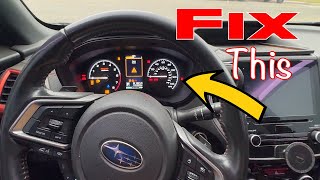
- Speedometer, tachometer, and other gauges dropping to zero 🎬 Watch: Diagnosing Subaru dash lights and starting issues.
- Erratic transmission shifting or inability to shift
- Check Engine Light is on (may be intermittent)
- Loss of power steering
- Replacing the ECM without first performing a thorough diagnosis of the battery, grounds, and CAN bus wiring. This is an expensive and often unnecessary first step.
- Replacing the battery but failing to clean the terminal clamps or check the main ground connections, leaving the underlying electrical resistance issue unresolved.
Most Likely Causes
- Weak or Failing Battery 🔴 High Probability → Shop Vehicle Battery Modern vehicles like the Forester are packed with electronics that are highly sensitive to voltage. A battery that can't maintain a stable voltage (below 12.0V), especially during startup, can cause communication modules to drop offline. Even a new battery can be problematic if it's not the correct type or has been drained.
How to confirm: Test the battery with a multimeter or a dedicated battery tester. A healthy, fully charged battery should read around 12.6 volts with the engine off. Check the battery terminals for any signs of corrosion and ensure they are tight. A load test is the most definitive way to confirm battery health.
Typical fix: Replace the battery and clean the terminals. After replacement, some vehicles may need an ignition cycle procedure (turning the key to 'on' for 10-15 seconds, then 'off', repeated 2-3 times) to help modules re-synchronize.
Est. part cost: $150-$300 - Poor Ground Connections 🟡 Medium Probability Corrosion or loose connections at main chassis and engine ground points can create electrical resistance, leading to voltage drops and unpredictable behavior from control modules. These are exposed to the elements and can degrade over time. The ECU specifically gets its ground reference from the top of the intake manifold, which can be a point of failure.
How to confirm: Visually inspect the main ground straps from the battery to the chassis and from the engine to the chassis. Use a multimeter to perform a voltage drop test from the battery negative post to various ground points on the engine and chassis; the reading should be very close to zero (under 0.2V). A Reddit user with a 2018 Forester performed this exact test while troubleshooting U0100.
Typical fix: Remove, clean all contact surfaces to bare metal, and securely retighten all affected ground connections. Applying dielectric grease can help prevent future corrosion.
Est. part cost: $0-$10 - Damaged CAN Bus Wiring or Connectors 🟡 Medium Probability The CAN bus is a network of twisted-pair wires running throughout the vehicle. A single break, short, or corroded connector pin in this network can bring down communication for all modules. This can be caused by anything from rodent damage to previous improper repairs.
How to confirm: This is a complex diagnosis that usually requires a professional. It involves a visual inspection of wiring harnesses for damage and using a multimeter to check for proper resistance (around 60 ohms between CAN High and CAN Low pins at the OBD-II port) and an oscilloscope to check for a clean signal.
Typical fix: Repair the damaged section of the wiring harness or replace the faulty connector.
Est. part cost: $10-$500
Technical Service Bulletins (TSBs) & Recalls
While the Forester platform often sees U0100 as a general network health issue, other Subaru models have documented specific relationships between this code and mechanical performance. For instance, TSB Bulletin #09-128-24 and TSB Bulletin #09-128-24R note that U0100 (Lost Communication with ECM/PCM “A”) can appear in conjunction with camshaft position timing faults (P0011 and P0012) on other platforms like the BRZ, illustrating how communication failures can sometimes be linked to broader system performance issues within the manufacturer's electronics architecture.
Rare But Worth Checking
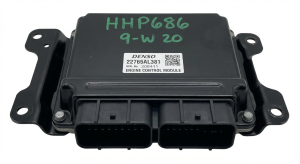
- Faulty Engine Control Module (ECM): → Shop Engine Control Module (ECM) While possible, the ECM itself is rarely the point of failure. All other electrical, wiring, and network possibilities should be exhaustively ruled out before condemning the ECM, as it is an expensive component that requires programming to the vehicle's VIN.
- Faulty Alternator: → Shop Alternator An alternator that is failing can produce electrical 'noise' or unstable voltage that disrupts the CAN bus network. If the battery is good, but you have persistent electrical issues, the charging system should be tested. A user on Reddit with a 2018 Forester replaced their alternator while chasing this issue.
- Aftermarket Electronics: Improperly installed remote starters, alarms, or audio equipment can interfere with the CAN bus network and cause communication errors. These devices can be improperly tapped into the CAN wiring, causing signal degradation or voltage issues.
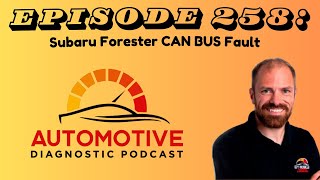
- Blown Fuse: A blown fuse for a critical module on the CAN network can cause that module to go offline, sometimes creating a communication storm that brings down other modules. A technician on a podcast traced a Forester's CAN bus failure to a blown fuse that, when replaced, caused the entire network to crash due to a short elsewhere.
Diagnosis Steps
- Check for other Diagnostic Trouble Codes (DTCs). A U0100 code is often accompanied by other 'U' codes, which can help confirm a network-wide issue.
- Test the battery. Ensure it has a full charge (12.6V+) and can hold a load. Clean any corrosion from the terminals and ensure they are tight. This is the most common and easiest fix.
- Inspect all major power and ground connections. Check the battery-to-chassis and engine-to-chassis ground straps for corrosion and tightness. Perform a voltage drop test on the ground side.
- Visually inspect wiring harnesses, especially around the ECM, under the dash, and in the engine bay for any signs of damage, chafing, or rodent activity.
- Check Fuses. Inspect fuses related to the ECM, TCM, and other control modules. A single blown fuse can sometimes cause network-wide communication issues.
- If the above steps do not resolve the issue, professional diagnosis is recommended. A technician will use a scan tool to view network data and an oscilloscope to test the integrity of the CAN bus signals. 🎬 See a professional diagnose a Forester CAN bus fault.
- As a final step, if the network wiring and all other modules are confirmed to be good, the ECM itself may be tested.
Parts You'll Likely Need
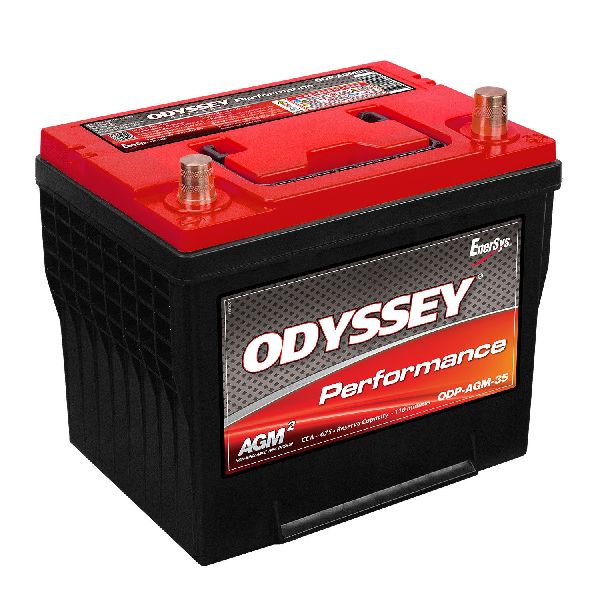
- Vehicle Battery — Low or unstable voltage from a failing battery is the most common trigger for communication faults on this platform.
Trusted brands: Interstate, DieHard, Duralast
OEM price range: $200-$350
Aftermarket price range: $150-$300 - Engine Control Module (ECM)
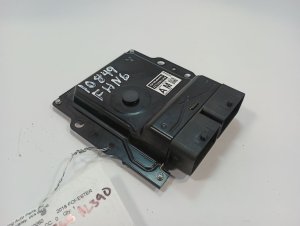
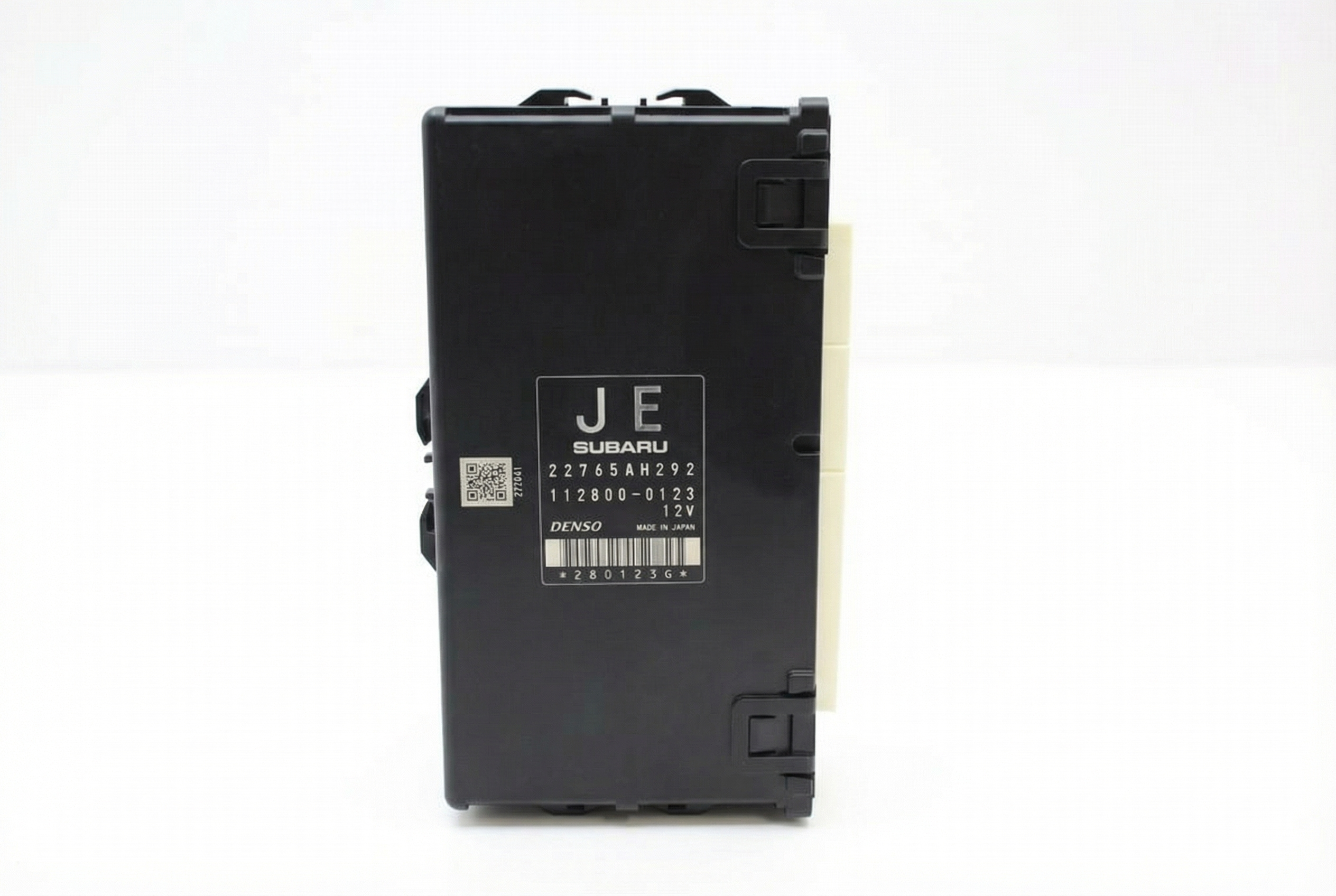
(OEM #e.g., 22765AF43B (Part numbers are highly specific to VIN, year, and trim; this is an example and must be verified))— This is the least likely cause and should only be replaced after all other diagnostic avenues have been exhausted. It is the 'brain' of the system, and an internal failure will cut off communication.
Trusted brands: Subaru (OEM)
OEM price range: $800-$1200
Related Codes That Often Appear With This One
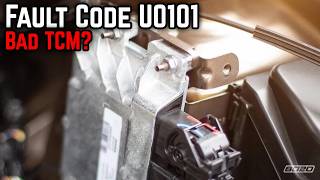
- U0101 — Lost Communication with Transmission Control Module. It's on the same CAN network and often loses communication at the same time as the ECM.
- U0122 — Lost Communication with Vehicle Dynamics Control Module. This is the stability/traction control system, which also relies on data from the ECM over the CAN bus.
- U0155 — Lost Communication with Instrument Panel Cluster Control Module. This explains why the gauges and warning lights go haywire during a network failure.
Mechanic-Grade Diagnostic Values
- CAN Bus Network Resistance — expected: Approximately 60 Ohms. Failure: A reading of 120 Ohms indicates a break in the circuit or a missing terminating resistor. A reading near 0 Ohms indicates a short between the CAN High and CAN Low wires.
- CAN High (CAN-H) Voltage — expected: Approximately 2.5 to 3.5 Volts. Failure: Significant deviation from this range indicates a network fault.
- CAN Low (CAN-L) Voltage — expected: Approximately 1.5 to 2.5 Volts. Failure: Significant deviation from this range indicates a network fault.
- Ground Circuit Resistance — expected: Less than 0.1 Ohms. Failure: Higher resistance indicates a poor ground connection, which is a common cause of communication failures.
Wiring & Ground Locations
- Engine Control Module (ECM) — On some SJ Foresters, the ECM is located in the engine bay on the passenger side. On others, it is located in the passenger-side footwell, under the carpet and a protective metal plate.. This is the module that has lost communication. Its location is critical for visual inspection of its connectors and for testing its power and ground circuits.
- Main ECU Grounds — The ECU gets its primary ground reference from studs on the top of the intake manifold.. These grounds are critical. If the intake manifold's connection to the block or chassis is poor (e.g., due to TGV deletes or corrosion), the ECU will have an unstable ground, leading to bizarre electrical issues including CAN communication faults.
- CAN Gateway Module — On some Subaru models, a central CAN gateway is used. On Foresters requiring one for aftermarket accessories like Flex Fuel, it is often installed on the passenger's side strut tower behind the ABS module. The Body Integrated Unit (BIU) also acts as a gateway for many network signals.. The gateway module routes messages between different CAN buses. A failure in this module or its wiring can isolate the ECM from other systems.
- CAN Joint Connector — Service schematics often show a 'CAN joint connector' located on the left side of the dash, which acts as a splice pack for the network.. A corroded or damaged pin within this central splice can take down the entire network, causing widespread communication codes.
Real Owner Repair Stories
- Art's Auto Berkeley repair blog (2014 Subaru Forester) — Keyless entry and other wireless functions not working, which are often tied into the same network as the ECM.
❌ Tried (didn't work) Checking fuses, Checking power and ground at the keyless entry receiver
✅ What actually fixed it The Body Integrated Unit (BIU) had suffered water intrusion, causing heavy corrosion on the circuit board and destroying a via (a connection between layers of the board). Replacing the BIU restored communication.
Model Year Variations Within This Range
- 2017-2018: The 2017 model year received a refresh that included more advanced electronics, such as an updated EyeSight system with color cameras, steering-responsive headlights, and additional driver-assist features. This increases the number of modules on the CAN bus and the complexity of the network, potentially adding more failure points for a communication breakdown.
Diagnostic Flowchart
Other Known Issues on This Vehicle
Issues unrelated to this code that are worth knowing about as an owner of this generation:
- Excessive Oil Consumption 🔴 High — Common on 2011-2014 2.5L and 2012-2013 2.0L engines. Led to a class-action lawsuit. Owners may need to top off oil between changes. (Ref: A class-action lawsuit settlement extended warranties and provided for oil consumption tests and potential engine repairs/replacements for affected vehicles.)
- CVT Transmission Failure/Hesitation 🔴 High → Shop Transmission Assembly — Affects a wide range of models from 2010-2018. Symptoms include shuddering, hesitation, or complete failure. (Ref: Subaru extended the CVT warranty to 10 years/100,000 miles for many vehicles, including the 2014-2018 Forester, under a Warranty Enhancement Program. (See TSB 16-115-18))
- A/C Compressor Clutch Failure 🟠 Medium — Common on 2014-2016 models. The A/C may stop blowing cold, especially when the engine bay is hot. (Ref: TSB 10-84-16R and 15-209-17 address issues with the A/C compressor and clutch, recommending replacement with an updated part.)
- Failing Rear Suspension Springs 🟠 Medium — Some owners report rear coil springs breaking, particularly on earlier models of the generation (2014). (Ref: A recall was issued for some 2013-2018 Foresters for faulty rear suspension springs.)
- Power Rear Gate Memory Issues 🟡 Low — Not a failure, but a common point of confusion for owners is how to set the memory height for the power liftgate to avoid hitting garage ceilings.
- Corroding A/C Condenser 🟠 Medium — The condenser may corrode and leak refrigerant, causing the A/C to fail. Affects 2017-2018 models. (Ref: Subaru initiated a service program (WRB-21R) to inspect and replace affected condensers free of charge.)
Used vs. New Parts: Buying Guide for This Vehicle
When a used part is the smart pick: For this repair, using a used part is generally not recommended for control modules like the ECM or BIU due to complex, VIN-specific programming and immobilizer integration. A used battery is never a good idea. However, used wiring harnesses or connectors can be a cost-effective option if a specific section is damaged and can be sourced from a reputable auto recycler.
Donor-vehicle mileage cap: roughly under 80000 miles for the part to have meaningful remaining life.
What to inspect on the donor part:
- For wiring harnesses, inspect for any signs of cuts, abrasions, rodent damage, or brittle insulation.
- Ensure all connector locking tabs are intact and not broken.
- Check for corrosion (green or white powder) on all connector pins.
- Verify the donor vehicle was not in a flood or fire.
OEM-only on this vehicle (don't cheap out):
- Engine Control Module (ECM)
- Body Integrated Unit (BIU)
Aftermarket brands forum-validated for this vehicle:
- For batteries: Interstate, DieHard, Duralast Gold/Platinum
Brands owners have reported issues with on this vehicle:
- Unknown or unverified ECM/PCM 'repair' services on platforms like eBay without a lifetime warranty and clear programming instructions.
- Cheap, off-brand batteries that may not provide stable voltage for the vehicle's sensitive electronics.
Real Owner Stories
Aggregated from forums and TSBs cited above. Mileages and costs reflect what owners reported in those sources.
2018 Subaru Forester Touring
Symptoms: Randomly the dash will light up like Christmas and make a bunch of beeping noise, intermittent U0100, U0101, U0122, and U0155 codes, gauges dropping to zero.
What fixed it: The owner engaged in a year-long troubleshooting process including replacing the battery twice, the alternator, the fuse box, and cleaning multiple ground connections.
Source hint: reddit.com/r/SubaruForester
Related OBD-II Codes
Frequently Asked Questions
My 2018 Forester dashboard looks like a 'Christmas tree' with all lights on; is this related to U0100?
Could a weak battery really cause communication codes on my Subaru?
Is there a specific ground point I should check on my Forester for U0100?
Does the CVT warranty extension (TSB 16-115-18) cover issues related to U0100?
I replaced my battery to fix U0100; do I need to do anything else?
Can rodent damage cause this code on a 2014-2018 Forester?
Helpful Videos

Used OEM Parts in Stock
New Aftermarket Parts Available


The information in this article is provided for general reference and educational purposes only. Vehicle specifications, procedures, and part compatibility can vary by production date, trim level, and region. Always consult your vehicle's factory service manual and verify part numbers before purchasing or performing repairs. Safety-critical components such as airbags, seat belts, and braking systems should be installed by a qualified professional.
- Subaru Forester:
- 🧭 Diagnostic Flowchart
- 🎬 Helpful Videos
- 🛍️ Shop This Part
- What's Unique About the 2014-2018 Subaru Forester
- Symptoms You May Notice
- Most Likely Causes
- Technical Service Bulletins (TSBs) & Recalls
- Rare But Worth Checking
- Diagnosis Steps
- Parts You'll Likely Need
- Related Codes That Often Appear With This One
- Mechanic-Grade Diagnostic Values
- Wiring & Ground Locations
- Real Owner Repair Stories
- Model Year Variations Within This Range
- Other Known Issues on This Vehicle
- Used vs. New Parts: Buying Guide for This Vehicle
- Real Owner Stories
- 2018 Subaru Forester Touring
- Related OBD-II Codes
- Frequently Asked Questions
- 🎟️ Get 5% Off