

U0100 on 2020-2024 Subaru Outback: Lost Communication with ECM Causes and Fixes
On a 2020-2024 Outback, code U0100 is most often a symptom of a weak or dead battery. This is frequently caused by a known parasitic drain from the Starlink/DCM module, which requires a dealer software update per Service Program WRD-24. Always test the battery and charging system and check for parasitic draw before suspecting other parts like the ECM itself.
- U0100 on a 2020-2024 Outback is most likely caused by a weak battery, often due to a known parasitic drain from the Starlink DCM module.
- Before any complex diagnostics, fully test the battery and charging system. Check for open recalls or service campaigns related to the DCM.
- Do not drive the vehicle with this code. A sudden stall or loss of power is possible and dangerous.
- The fix is often a simple battery replacement or a no-cost software update from a Subaru dealer.
- Do not replace the expensive ECM unless all other possibilities (battery, wiring, fuses, parasitic drain) have been professionally ruled out.
What's Unique About the 2020-2024 Subaru Outback
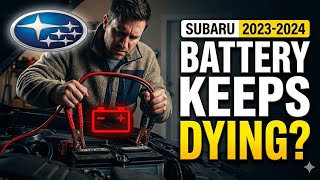
For this generation of Subaru Outback, the U0100 code is very frequently a secondary code triggered by a primary electrical problem. These vehicles are known for issues with parasitic battery drain caused by the Data Communications Module (DCM), which is part of the Starlink telematics system. A software flaw can prevent the DCM from going to sleep after the ignition is off, as it gets stuck in a loop trying to communicate with cellular towers. The resulting low voltage is a common cause of network communication faults like U0100, making a battery/DCM issue the most likely culprit, rather than a true CAN bus or ECM failure. Subaru has issued Service Program WRD-24 to address this with a firmware update.
Symptoms You May Notice
- Check Engine Light is on
- Multiple other warning lights on the dashboard (e.g., ABS, Eyesight, RAB)
- Engine will not start or is very slow to crank.
- Engine stalls intermittently while driving.
- Reduced engine power or 'limp mode'.
- Transmission may not shift correctly.
- MySubaru app or SOS overhead light may be malfunctioning or show a solid red light.
- Infotainment screen is black, frozen, or rebooting.
- Replacing the ECM without first confirming proper battery voltage and checking for parasitic drains. The ECM is expensive and rarely the true cause of a U0100 code on this platform.
- Replacing the battery without fixing the underlying DCM parasitic drain, leading to the new battery failing prematurely.
Most Likely Causes
- Weak or Dead Battery due to DCM Parasitic Drain 🔴 High Probability → Shop Vehicle Battery A widely documented software flaw in the Data Communications Module (DCM) prevents it from entering sleep mode, causing a significant parasitic draw that can drain a healthy battery in hours or days. This is due to a software logic error where the module gets stuck in a handshake loop with cellular towers after the ignition is off.
How to confirm: Perform a parasitic draw test on the battery. A draw significantly higher than 50-70 milliamps after the vehicle has been off and asleep for 30+ minutes points to this issue. A dealer can check for and apply Service Program WRD-24, which is the official fix. Owners often report a dead battery after the car sits for only a day or two.
Typical fix: The official fix is a firmware update performed by a Subaru dealer under Service Program WRD-24 to correct the DCM software logic. This is often covered by Subaru as a customer satisfaction initiative, even outside the basic warranty. The battery will also need to be tested with a Midtronics tester and will likely require replacement, as deep cycling from the drain causes permanent damage.
Est. part cost: $0-$350 - Failing Battery or Loose/Corroded Terminals 🟡 Medium Probability → Shop Vehicle Battery Even without the specific DCM issue, the factory-installed batteries on this generation of Outback are frequently cited by owners as having a short lifespan, often failing within 2-3 years. The vehicle's complex electronics and auto start/stop system place high demands on the battery.
How to confirm: Test the battery with a multimeter or a digital battery tester. A healthy, fully charged battery should read approximately 12.6 volts with the engine off. Check that the battery terminals are clean and tight. Many auto parts stores will test your battery for free.
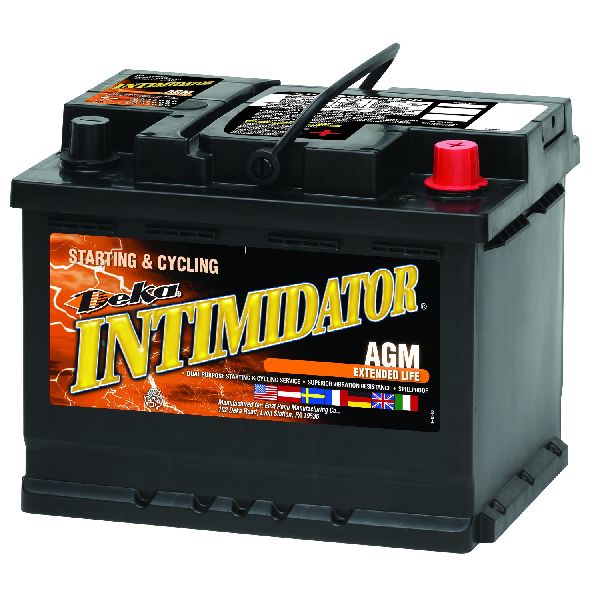
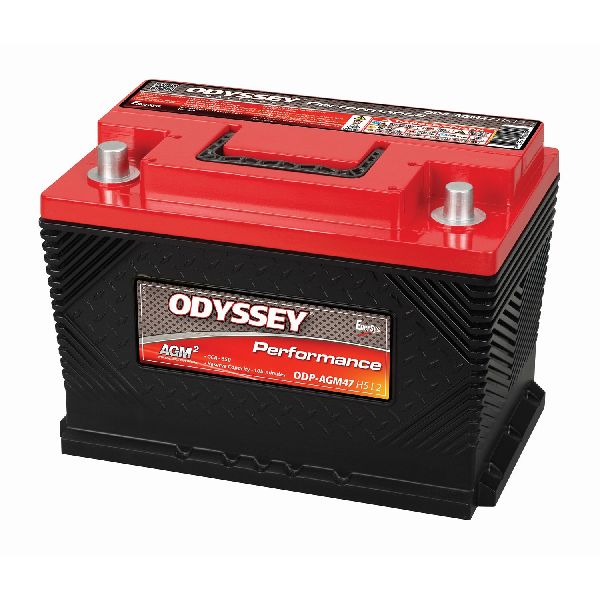
Typical fix: Replace the battery and clean the terminals. Many owners on forums like subaruoutback.org recommend upgrading to a higher-quality Absorbed Glass Mat (AGM) battery for better durability against the vehicle's high electronic demands.
Est. part cost: $150-$350 - Damaged Engine Wiring Harness ⚪ Low Probability → Shop Engine Wiring Harness Safety recall WRK-21 was issued for some 2022 Outback models (with the 2.4L turbo engine) due to a risk of a damaged terminal in the engine wiring harness connector at the ECM, which can cause a loss of connection.
How to confirm: Check your vehicle's VIN for open recalls on the NHTSA or Subaru website. The recall specifically mentions a deformed terminal on an engine test harness used during production may have damaged the female terminal on the vehicle's harness.
Typical fix: If the vehicle is under recall WRK-21, a Subaru dealer will inspect and, if necessary, replace the engine wiring harness and ECM at no cost to the owner.
Est. part cost: $0 (if under recall) - CAN Bus Wiring or Network Fault ⚪ Low Probability
How to confirm: This requires advanced diagnostics, including checking for 60 ohms of resistance across the CAN high and CAN low circuits (pins 6 and 14) at the OBD-II port. This confirms the terminating resistors are intact. Further diagnosis involves using an oscilloscope to check the CAN signal waveform and tracing wires for shorts or opens.
Typical fix: Locate and repair the short or open in the CAN bus wiring harness. This could be due to corrosion, rodent damage, or physical abrasion. This is typically a job for a professional.
Est. part cost: $50-$500
Rare But Worth Checking
- Faulty Main Relay or Blown Fuse: An ALLDATA report on a 2014 Outback with U0100 found the cause to be a faulty main relay and a related blown fuse that prevented the ECM from powering on. While for an older generation, it's a simple and valid check for any no-communication scenario.
- Failed Engine Control Module (ECM): → Shop Engine Control Module (ECM) This is the 'last resort' diagnosis. The ECM itself can fail, but it is much more likely that the problem lies in its power supply or the wiring connected to it. Always eliminate all other possibilities before condemning the ECM, as it is an expensive component and requires programming.
Diagnosis Steps
- Check Battery Health: Start with the simplest cause. Test the battery voltage. It should be at least 12.4V. If it's low, charge it fully and re-test. If it won't hold a charge, replace it.
- Inspect Battery Terminals: Ensure terminals are clean, free of corrosion, and tightly secured.
- Scan for All Codes: Use a quality OBD-II scanner to pull all codes from all modules, not just the engine. Note any other 'U' codes or telematics-specific 'B' codes.
- Check for Recalls/TSBs: Check your VIN for open recalls (like WRK-21 for the harness or WRA-24 for ODS sensors) and service programs. Specifically mention Service Program WRD-24 to your dealer to address the DCM parasitic drain.
- Perform a Parasitic Draw Test: This is a critical step. With the vehicle off and all doors closed for at least 30 minutes, measure the amperage draw from the battery. A high draw (over ~70mA) confirms a module is not sleeping. If pulling the DCM fuse causes a significant drop, the DCM is confirmed as the culprit.
- Inspect Fuses: Check fuses related to the ECM and other control modules, particularly in the under-hood fuse box.
- Professional Diagnosis: If the battery, fuses, and parasitic draw test are inconclusive, the next steps involve checking CAN bus wiring integrity (checking for 60 Ohms between pins 6 and 14 on the DLC) and testing individual modules. This requires professional tools and should be done by a qualified technician.
Parts You'll Likely Need
- 12V Battery
(OEM #SOA821B900 (Subaru Enhanced EFB, Group 25))— The most common trigger for this code on this vehicle is low system voltage caused by a weak or dead battery, often due to the DCM parasitic drain. The original equipment battery is often cited as being undersized for the vehicle's electrical load.
Trusted brands: Subaru (OEM), Interstate (AGM), DieHard (AGM), Odyssey (AGM)
OEM price range: $200-$300
Aftermarket price range: $180-$350 - Data Communications Module (DCM)
(OEM #86229AN69A (Example, part number may vary by year/trim))— This module is the source of the common parasitic drain. While often fixed with a software update (WRD-24), a hardware failure may require replacement if it cannot accept the new firmware.
Trusted brands: Subaru (OEM)
OEM price range: $500-$800
Related Codes That Often Appear With This One
- U0101 — Lost Communication with TCM. The Transmission Control Module (TCM) is on the same CAN network, and a widespread network failure will often set codes for multiple modules.
- U0122 — Lost Communication With Vehicle Dynamics Control Module. Like the TCM, the VDC (stability control) module is a critical node on the CAN bus that will report a fault if it can't hear from the ECM.
- B282x / B2805 — Telematics system codes. These codes point directly to internal communication or power source failures in the DCM, reinforcing it as the likely root cause of the battery drain and subsequent U-codes.
Technical Service Bulletins (TSBs) & Recalls
- WRD-24: Service Program to apply a firmware update to the Data Communications Module (DCM) to fix the parasitic battery drain.
- WRK-21: Safety recall for potential damage to the engine wiring harness on certain 2022 2.4L Turbo models.
- WRA-24: Safety recall for Occupant Detection System (ODS) sensors on 2020-2022 models.
- 15-261-20R: TSB for infotainment system software updates to fix issues like black screens, freezing, and reboots.
- Bulletin #09-128-24: A manufacturer service bulletin notes that U0100 (Lost Communication with ECM/PCM “A”) may appear alongside camshaft position timing performance codes P0011 and P0012.
- Bulletin #09-128-24R: This updated manufacturer bulletin similarly documents the occurrence of U0100 in conjunction with timing over-advanced or system performance issues on Bank 1 and Bank 2.
Platform-Specific Known Issues
- DCM Parasitic Battery Drain: → Shop Vehicle Battery A known software issue in the Data Communications Module (DCM) prevents it from fully going to sleep, causing a parasitic battery drain that triggers low-voltage communication faults like U0100. Subaru has issued Service Program WRD-24 to fix this with a software update.
Mechanic-Grade Diagnostic Values
- CAN Bus Network Resistance — expected: ~60 Ohms. Failure: A reading of ~120 Ohms indicates an open circuit or a missing terminating resistor. A reading of 0 Ohms indicates a short between the CAN High and CAN Low wires.
- CAN Bus Voltage (CAN-H) — expected: ~2.5 Volts to 3.5 Volts (during communication). Failure: Significant deviation from this range, or voltage that is stuck high or low, indicates a bus or module fault.
- CAN Bus Voltage (CAN-L) — expected: ~1.5 Volts to 2.5 Volts (during communication). Failure: Significant deviation from this range, or voltage that is stuck high or low, indicates a bus or module fault.
- CAN Bus to Ground Resistance — expected: Infinite resistance (Open circuit). Failure: Any reading showing continuity to ground indicates a short circuit on the respective CAN line.
Scan Tool Commands That Help
- Subaru Select Monitor (SSM4): Reprogram — This function is required to program a new or replacement ECM to the vehicle's immobilizer and other systems. It is a mandatory step after replacing the module.
- Subaru Select Monitor (SSM4): Each System Check — After a general scan shows a U0100 code, this function allows a technician to attempt to communicate with individual modules (ECM, TCM, VDC, etc.) to see which ones are online and which are not, helping to isolate the source of the communication loss.
Wiring & Ground Locations
- OBD-II Data Link Connector (DLC) — Under the driver's side dashboard, located a few inches to the right of the hood release lever. It is typically a white connector mounted in a bracket.. This is the primary access point for all network diagnostics. Pin 6 (CAN High) and Pin 14 (CAN Low) are used to measure the resistance and voltage of the main CAN bus to verify its integrity.
OEM Part Supersession History
Data Communications Module (DCM)→86229AL400 (DCM Bypass Box)— For vehicles where the owner does not have an active STARLINK subscription, Subaru offers a 'Bypass Box' as an alternative repair. If diagnostics confirm the DCM is faulty (e.g., causing a parasitic drain) but the owner doesn't use the telematics service, this part can be installed instead of a full new DCM to restore audio functions that route through the module without the telematics hardware.
Heads up: This part is ONLY for vehicles WITHOUT an active STARLINK subscription. Installing it on a vehicle with an active subscription will disable all telematics services.
Model Year Variations Within This Range
- 2023-2024: The 2023 model year refresh introduced significant electronic changes. The infotainment system was updated to 'Gen 4.5', adding wireless Apple CarPlay/Android Auto. The EyeSight system received a wider-view camera and new software. An electronic brake booster was also added. While not directly linked to new U0100 causes, these changes to the vehicle's electronic architecture and software environment could present different diagnostic paths compared to 2020-2022 models if the fault lies within these updated systems.
Diagnostic Flowchart
Other Known Issues on This Vehicle
Issues unrelated to this code that are worth knowing about as an owner of this generation:
- Spontaneously Cracking Windshields 🟠 Medium — Widespread enough to trigger a class-action lawsuit and a subsequent warranty extension. Can happen at any time. (Ref: Warranty Extension for 8 years/100,000 miles for qualifying cracks on 2020-2022 models.)
- Infotainment System Freezing/Black Screen 🟠 Medium — Very common on 2020-2022 models, particularly in cold weather. Less frequent on newer models with updated software. (Ref: TSB 15-261-20R provides software updates to address these glitches.)
- CVT Transmission Concerns 🔴 High → Shop Transmission Assembly — While not as common as other issues, catastrophic failures have been reported, often out of warranty. Recall WRK-21 addressed a specific chain slip issue on 2020-2021 2.4L Turbo models. (Ref: Recall WRK-21 (for specific 2.4T models))
- Faulty Occupant Detection System (ODS) Sensors 🔴 High — Affects 118,723 vehicles from 2020-2022 model years, leading to a safety recall. (Ref: Recall WRA-24)
- Sluggish Auto Start-Stop System 🟡 Low — A common complaint across the model years; considered more of a design characteristic than a failure. Many owners purchase aftermarket devices to disable it.
Used vs. New Parts: Buying Guide for This Vehicle
When a used part is the smart pick: For a U0100 fault, using used parts is generally not recommended due to programming requirements. A wiring harness from a verified low-mileage, non-crashed donor vehicle could be a cost-effective option if a specific section of wiring is found to be damaged.
Donor-vehicle mileage cap: roughly under 50000 miles for the part to have meaningful remaining life.
What to inspect on the donor part:
- For a wiring harness, inspect for any signs of cuts, abrasions, rodent damage, or brittle insulation.
- Ensure all connector housings are intact, not cracked, and locking tabs are present.
- Verify the donor vehicle was not in a flood or fire.
OEM-only on this vehicle (don't cheap out):
- Engine Control Module (ECM): Must be purchased new and programmed by a Subaru dealer or qualified specialist with the Subaru Select Monitor to match the vehicle's VIN and immobilizer system.
- Data Communications Module (DCM): Must be purchased new to ensure it has the latest firmware. It requires provisioning by a dealer to link to the vehicle and STARLINK services (if applicable).
Aftermarket brands forum-validated for this vehicle:
- Battery: Interstate (AGM), DieHard (AGM), Odyssey (AGM) are often cited by owners as reliable upgrades over the factory EFB battery.
Real Owner Stories
Aggregated from forums and TSBs cited above. Mileages and costs reflect what owners reported in those sources.
2024 Subaru Outback
Symptoms: The battery was draining and dying after the car sat for only a day or two.
What fixed it: A dealer applied Service Program WRD-24, which is a firmware update to the Data Communications Module (DCM) to fix the software logic error.
Source hint: Reddit r/Subaru_Outback thread titled '2024 outback owners what problems are arising for'
2022 Subaru Outback 2.4L Turbo
Symptoms: Loss of connection to the ECM due to a damaged terminal in the engine wiring harness connector.
What fixed it: Inspection and replacement of the engine wiring harness and ECM under safety recall WRK-21.
Source hint: Safety recall WRK-21
2020 Subaru Outback
Symptoms: Infotainment screen is black, frozen, or rebooting; multiple warning lights on the dashboard.
What fixed it: Applied TSB 15-261-20R for infotainment software updates and replaced the factory battery with a higher-quality AGM battery.
Source hint: TSB 15-261-20R and subaruoutback.org forum discussions
Related OBD-II Codes
Frequently Asked Questions
My 2024 Outback battery keeps dying after sitting for a day. Is there a specific fix for this?
Does the engine wiring harness recall WRK-21 apply to all 2022 Outback models?
My infotainment screen is freezing and I have a U0100 code. Are these related?
Will Subaru cover the cost of a battery replacement if it was damaged by the DCM drain?
Can I check for the DCM parasitic drain myself before going to the dealer?
Are there any other recalls I should be aware of for my 2020-2022 Outback while fixing the U0100 code?
Helpful Videos
We Have This Part in Stock


The information in this article is provided for general reference and educational purposes only. Vehicle specifications, procedures, and part compatibility can vary by production date, trim level, and region. Always consult your vehicle's factory service manual and verify part numbers before purchasing or performing repairs. Safety-critical components such as airbags, seat belts, and braking systems should be installed by a qualified professional.
- Subaru Outback:
- 🧭 Diagnostic Flowchart
- 🎬 Helpful Videos
- 🛍️ Shop This Part
- What's Unique About the 2020-2024 Subaru Outback
- Symptoms You May Notice
- Most Likely Causes
- Rare But Worth Checking
- Diagnosis Steps
- Parts You'll Likely Need
- Related Codes That Often Appear With This One
- Technical Service Bulletins (TSBs) & Recalls
- Platform-Specific Known Issues
- Mechanic-Grade Diagnostic Values
- Scan Tool Commands That Help
- Wiring & Ground Locations
- OEM Part Supersession History
- Model Year Variations Within This Range
- Other Known Issues on This Vehicle
- Used vs. New Parts: Buying Guide for This Vehicle
- Real Owner Stories
- 2024 Subaru Outback
- 2022 Subaru Outback 2.4L Turbo
- 2020 Subaru Outback
- Related OBD-II Codes
- Frequently Asked Questions
- 🎟️ Get 5% Off