

U0100 on 2004-2009 Toyota Prius: Lost Communication with ECM Causes and Fixes
On a 2004-2009 Prius, code U0100 is most often caused by a weak 12V auxiliary battery or a blown 15A EFI fuse. The fuse often blows due to damaged oxygen sensor wires, a common result of catalytic converter theft. Check the battery and this fuse before suspecting an expensive ECU failure.
- Always check the 12V auxiliary battery first; low voltage is a very common cause for this code on a Prius.
- Inspect the 15A EFI fuse in the engine bay fuse box. If it is blown, the cause is likely a short circuit.
- The most common cause of a blown EFI fuse on this car is damaged oxygen sensor wiring, often from a catalytic converter theft.
- Do not assume an expensive computer (ECU) has failed until all power, ground, and wiring issues have been ruled out.
- This code indicates a serious fault; the vehicle should not be driven until it is repaired.
What's Unique About the 2004-2009 Toyota Prius
The Gen 2 Prius is highly susceptible to catalytic converter theft due to the higher concentration of precious metals in its converter. This act frequently damages the downstream oxygen sensor wiring, causing it to short circuit against the car's frame. This short blows the 15A EFI fuse, which powers the Engine Control Module (ECM). As a result, the ECM goes offline, triggering the U0100 code. 🎬 Watch: A detailed breakdown of the Prius U0100 error code. This specific chain of events—from theft to a communication code—is a very common and well-documented story for this vehicle.
Symptoms You May Notice
- Vehicle will not start or go into 'Ready' mode.
- "Check Hybrid System" message on the multi-function display.
- Red Triangle of Death warning light is illuminated.
- Multiple warning lights on at once (Check Engine, VSC, ABS).
- Engine runs rough or vehicle operates in a low-power 'limp' mode, unable to exceed low speeds.
- Fuel gauge may flash or read incorrectly.
- Car may not power off correctly without disconnecting the 12V battery.
- Failure of the OBD bulb check or smog check failure due to communication loss (NHTSA ODI #10967916).
- Replacing the expensive Hybrid Inverter or Hybrid Battery Pack without proper diagnosis. While these can cause other hybrid system warnings, they are not the primary cause of a U0100 code.
- Assuming the ECM has failed without first checking the 15A EFI fuse and the associated O2 sensor wiring.
Most Likely Causes
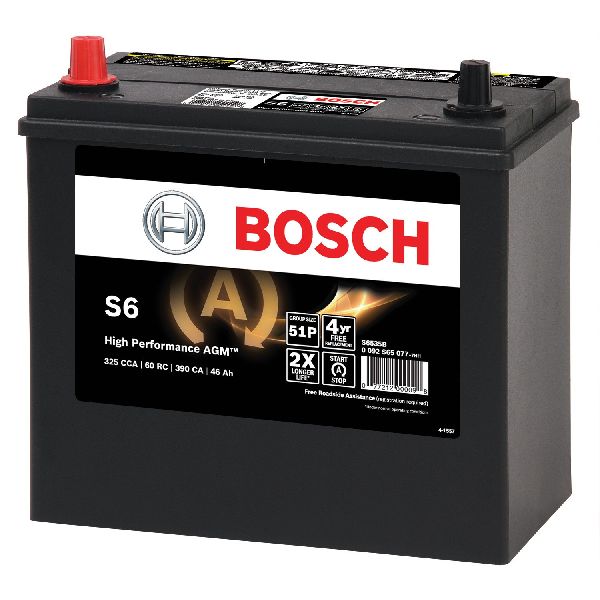
- Weak or Failed 12V Auxiliary Battery 🔴 High Probability → Shop Vehicle Battery The complex network of ECUs in the Prius is sensitive to low voltage. An aging 12V battery can cause sporadic communication dropouts and false codes between modules before it fails completely.
How to confirm: Use a multimeter to test the 12V battery voltage with the car off; it should be at least 12.4V. A reading below 12.0V indicates a weak battery. A proper load test at an auto parts store is the definitive way to confirm battery health.
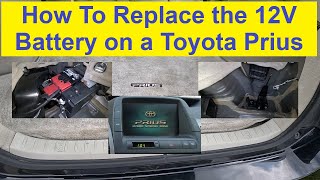
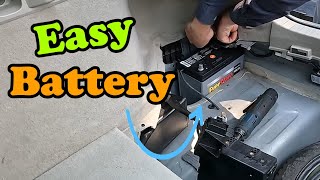
Typical fix: Replace the 12V auxiliary battery, which is located in the right rear corner of the trunk, under the floor panel. 🎬 Watch: Step-by-step guide to replacing your 12V auxiliary battery.
Est. part cost: $180-$250 - Blown 15A EFI Fuse 🔴 High Probability This fuse directly supplies power to the Engine Control Module (ECM). If it blows, the ECM shuts down, and communication is lost. This is a very frequent failure point.
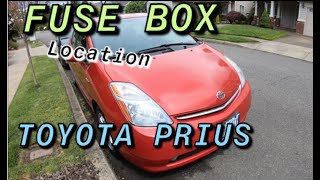
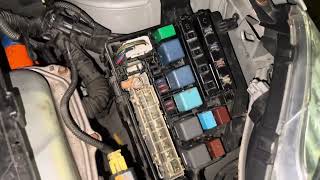
How to confirm: Locate the fuse box in the engine compartment, near the driver's side. Find the 15A low-profile mini fuse labeled 'EFI' and visually inspect it to see if the internal metal strip is broken. Test with a multimeter for continuity.
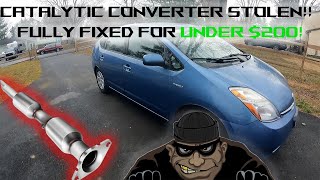
Typical fix: Replace the fuse. However, you must find the underlying cause of the blown fuse, as it will likely blow again otherwise. The most common cause is a shorted O2 sensor wire. 🎬 See how to repair wiring damage after catalytic converter theft.
Est. part cost: $1-$5 - Shorted Oxygen (O2) Sensor Wiring 🟡 Medium Probability This is the most common reason for the EFI fuse to blow. The Gen 2 Prius is a frequent target for catalytic converter theft, and the O2 sensor wires are often cut or damaged in the process, allowing them to short to the chassis or exhaust pipe.
How to confirm: Visually inspect the wiring leading to the oxygen sensors under the vehicle. Look for cut, frayed, or melted wires, particularly in the area where the catalytic converter was or is located.
Typical fix: Repair the damaged section of the wiring harness and secure it away from the exhaust or frame. If the sensor itself is damaged, it will also need replacement.
Est. part cost: $50-$200 for a sensor and wiring repair supplies. - Poor ECM Power or Ground Connection ⚪ Low Probability
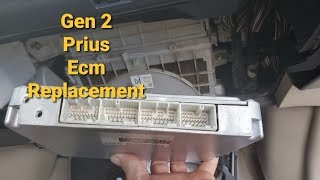
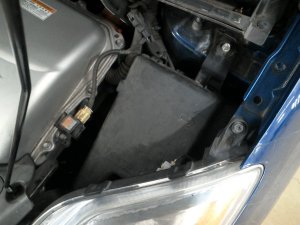
How to confirm: Inspect the main ground straps from the engine/transmission to the chassis for corrosion or looseness. Check the ECM connectors for corrosion or loose pins. This requires locating the ECM, which is behind the glove box, next to the Hybrid Vehicle ECU.
Typical fix: Clean corroded ground points with a wire brush and ensure a tight connection. Clean ECU connectors with electrical contact cleaner.
Est. part cost: $5-$20
Rare But Worth Checking
- Failed Engine Control Module (ECM): → Shop Engine Control Module (ECM) While uncommon, the ECM itself can fail. This should only be considered after all power, ground, and wiring issues have been definitively ruled out. A diagnostic tool like Techstream may be needed to confirm.
- Failed Hybrid Vehicle Control ECU: Similar to the ECM, the main hybrid ECU can fail, but it is much less likely than wiring or power supply issues. Replacement requires programming by a dealer or specialist.
- Damage to the CAN Bus Wiring Harness: A break or short in the twisted pair CAN bus wires between the Hybrid ECU and the ECM can cause this code. This is difficult to trace and often requires professional diagnosis with a multimeter and wiring diagrams. Corrosion at junction connectors behind the dash is a possible cause.
- Failed Combination Meter: The instrument cluster (speedometer display) on the Gen 2 Prius is a known failure point and acts as an ECU on the network. When it fails, it can disrupt CAN communication and, in some cases, contribute to U-codes, though it's more commonly associated with a blank display and other symptoms.
- OBD-II Port Interference: Third-party telematic devices plugged into the OBD port have been documented to cause communication errors U0100 and U0111 (NHTSA ODI #10649235).
Diagnosis Steps
- Read all codes from all modules using a capable OBD-II scanner (like Toyota Techstream). Note which module is reporting the U0100 code, as this is key for diagnosis.
- Check the 12V auxiliary battery. Test its static voltage (should be >12.4V) and have it load tested. A weak battery is a very common source of electronic gremlins.
- Inspect the 15A 'EFI' fuse in the under-hood fuse box. If it's blown, do not just replace it. Proceed to the next step.
- If the EFI fuse was blown, get under the car and thoroughly inspect the oxygen sensor wiring for cuts, melting, or shorting to the frame. This is the most likely cause, often related to catalytic converter theft.
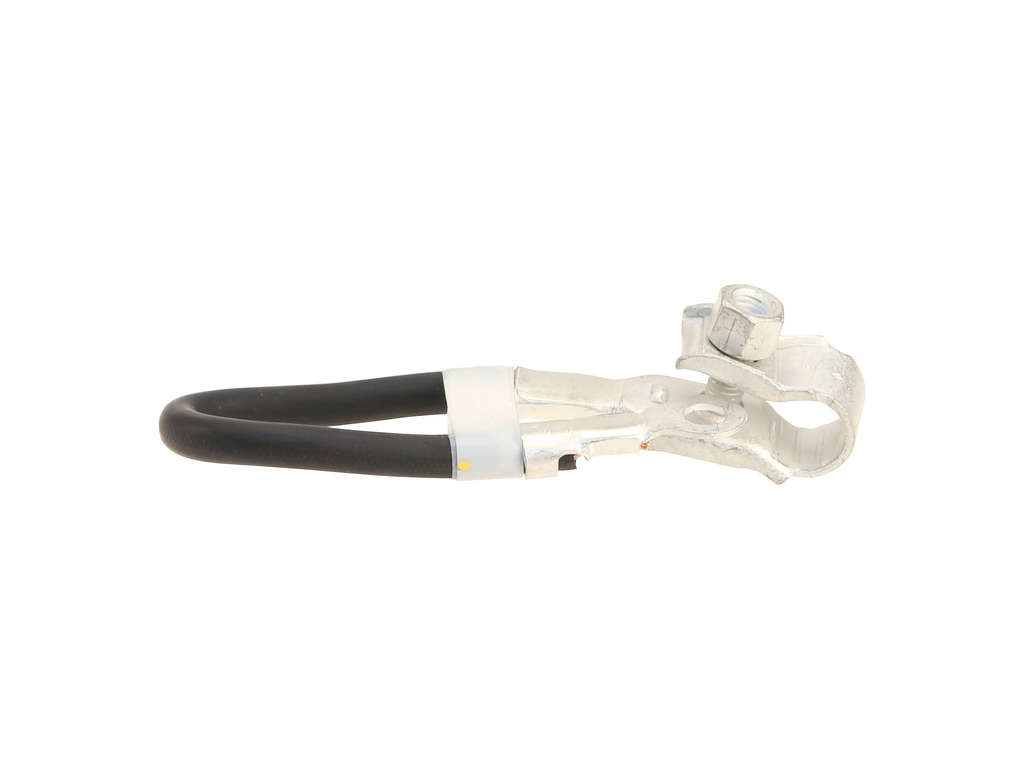
- If the fuse and battery are good, inspect the main battery terminals and chassis ground connections for looseness or corrosion. The main ECM ground points are also critical to check.
- Check for power and ground at the ECM connector. The ECM is located behind the glovebox. This is an advanced step requiring a wiring diagram and multimeter to check specific pins as outlined in the factory service manual.
- If all wiring, fuses, and power/grounds are confirmed good, the issue may be a faulty ECM, Hybrid Control ECU, or another module on the CAN bus, which requires professional diagnosis.
Parts You'll Likely Need
- 12V Auxiliary Battery
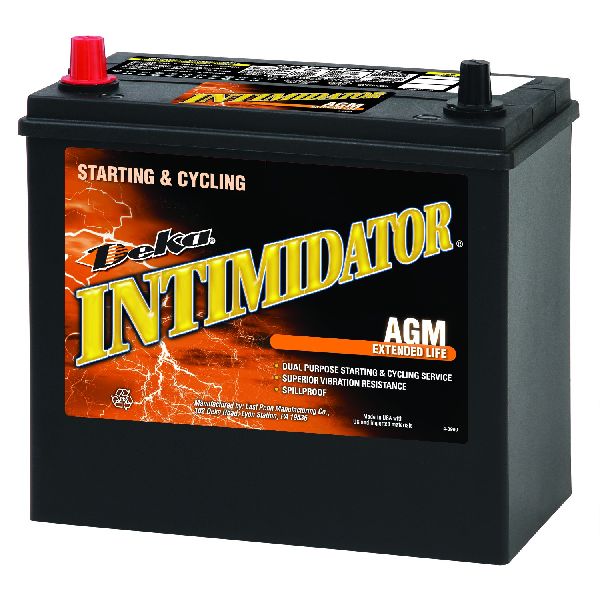
(OEM #28800-21171 (or S46B24R group size))— A weak 12V battery is a top cause of network communication faults on the Prius.
Trusted brands: Toyota TrueStart (28800-21171), Optima YellowTop DS46B24R, Bosch Platinum AGM S46B24R
OEM price range: $220-$280
Aftermarket price range: $180-$250 - Low Profile Mini Fuse (15A)
(OEM #90080-82059 (example))— The EFI fuse is a critical link that powers the ECM. If it blows due to a short, communication is lost.
Trusted brands: Bussmann, Littlefuse
OEM price range: $1-$5
Aftermarket price range: $1-$5 - Engine Control Module (ECM)
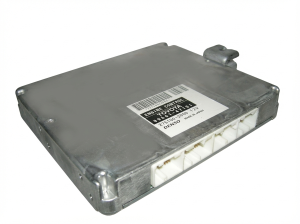
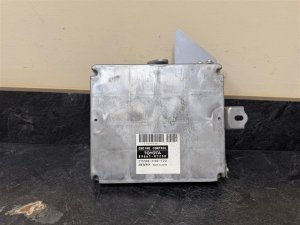
(OEM #89661-47073 (2004-2005), 89661-47250 (2007-2009) - Varies by year/spec)— In rare cases where the module itself has failed internally, it must be replaced. This is a last resort after checking all power, grounds, and wiring.
Trusted brands: Toyota (OEM), Denso (OEM supplier)
OEM price range: $700-$1000
Aftermarket price range: $50-$300 (Used/Remanufactured)
Related Codes That Often Appear With This One
- U0111 — Lost Communication With Battery Energy Control Module. This often appears with U0100 because a general CAN bus network failure or power supply issue will affect communication with multiple modules simultaneously.
- U0293 — Lost Communication With Hybrid Vehicle Control System. This is another communication code that points to a network-wide problem.
- P3000 — Battery Control System. This code is often triggered by the Hybrid ECU when it detects a problem. A communication loss that triggers U0100 can be the root cause for the P3000 being flagged.
- C1259 — HV System Regenerative Malfunction. This code is often set by the brake system when it loses communication with the hybrid powertrain controller, a direct consequence of the fault causing U0100.
- C1310 — HV System Malfunction. Similar to C1259, this is a general code from the brake/stability control system indicating it has detected a fault in the hybrid system, often due to the communication loss.
Platform-Specific Known Issues
- Catalytic converter theft is extremely common on this generation, making the resulting O2 sensor wire damage a frequent cause for the 15A EFI fuse to blow, which in turn triggers U0100.
Mechanic-Grade Diagnostic Values
- CAN Bus Resistance — expected: 54 Ω - 69 Ω. Failure: A reading below 54 Ω indicates a short between CAN H and CAN L wires. A reading of ~120 Ω indicates one of the two terminating resistors (ECUs) is disconnected or faulty. A reading of 0 Ω or infinite resistance indicates a major bus failure.
- CAN Bus Resistance (with one terminating ECU disconnected) — expected: 108 Ω - 132 Ω (approximately 120 Ω). Failure: If disconnecting the ECM does not raise the resistance from ~60 Ω to ~120 Ω, the fault is likely in the wiring or another module. If the resistance is still low with the ECM disconnected, the ECM is not the source of the short.
- CAN Bus Voltage (CAN H to Ground) — expected: 2.5 V - 3.5 V (during communication). Failure: Voltage significantly outside this range, or stuck at 0V or 5V, indicates a wiring fault or a module pulling the bus high or low.
- CAN Bus Voltage (CAN L to Ground) — expected: 1.5 V - 2.5 V (during communication). Failure: Voltage significantly outside this range, or stuck at 0V or 5V, indicates a wiring fault or a module pulling the bus high or low.
- CAN Bus Short to Ground — expected: 1 MΩ or more. Failure: Low resistance between either CAN H (DLC3 Pin 6) or CAN L (DLC3 Pin 14) and Chassis Ground (DLC3 Pin 4) indicates a short to ground in the wiring harness.
Hidden / Shadow Codes Worth Checking
- U0100 INF 211: Lost Communication with ECM/PCM 'A' (no signal input). This suggests a complete and total loss of signal from the ECM. (see via Toyota Techstream software, in the DTC details or freeze frame data.)
- U0100 INF 212: Lost Communication with ECM/PCM 'A' (transmission error). This suggests that some communication is attempted but the data is corrupt or invalid. (see via Toyota Techstream software, in the DTC details or freeze frame data.)
- U0100 INF 530: Lost Communication with ECM/PCM 'A' (timeout error). This indicates the receiving module did not get an expected message from the ECM within the required timeframe. (see via Toyota Techstream software, in the DTC details or freeze frame data.)
Scan Tool Commands That Help
- Toyota Techstream: Health Check — This should be the first step. It scans all ECUs on the vehicle and reports which ones have stored DTCs. For a U0100, it is critical to know WHICH module is reporting the code (e.g., the Hybrid ECU, the Brake ECU, etc.) as it helps isolate the fault.
- Toyota Techstream: CAN Bus Check / Communication Bus Check — After running a Health Check, this function provides a live view of the CAN network. It displays a list of all expected ECUs and indicates their communication status (OK or N/C - No Communication). This is the definitive way to see which modules are offline and helps determine if the fault is with a single module (like the ECM) or a larger section of the network.
Wiring & Ground Locations
- ECM (Engine Control Module) — Behind the glove compartment, mounted next to the Hybrid Vehicle Control ECU.. This is the module that is 'lost'. All power, ground, and communication wires terminate here, making its connectors (E6) a primary inspection point.
- Ground Points EA, EB, EC — In the engine compartment. EA and EB are typically on the left side fender apron, EC is on the engine block itself.. These are the primary ground points for the ECM and other engine-related components. A corroded or loose ground here can cause a floating voltage and disrupt ECM operation, leading to communication loss.
- Ground Points II, IJ — Behind the instrument panel, on the main metal support brace (Instrument Panel Brace LH).. These ground points serve the Combination Meter, Junction Connectors, and other in-dash ECUs. A fault here can disrupt the entire CAN network from within the cabin.
- CAN Junction Connectors (J/C1, J/C2) — Located behind the dashboard, typically attached to the instrument panel reinforcement brace. Service diagrams may label them F70 and F71.. These are the central hubs where the CAN bus wires from multiple ECUs (including the ECM, Hybrid ECU, and Combination Meter) meet. A loose connection, corrosion, or damage to one of these connectors can sever communication for multiple modules at once. The ECM specifically connects through the CAN No. 2 Junction Connector.
Real Owner Repair Stories
- PriusChat user 'Adam Hamlin' (2007 Toyota Prius) — After replacing a failed inverter water pump, the car started throwing U0100 and U0293, the red triangle would illuminate, and the car would die.
❌ Tried (didn't work) Checking fuses, Inspecting wires
✅ What actually fixed it The cheap, aftermarket OBD-II code reader was causing CAN bus interference. The problem was resolved by clearing the codes and immediately unplugging the reader. The car then started and ran normally without the reader connected. - Reddit user r/prius (2007 Toyota Prius) — Car stopped accelerating and then would not turn on, displaying code U0100. This occurred 24 hours after having a stolen catalytic converter replaced.
❌ Tried (didn't work) Replacing the 12V battery (the car turned on but still would not accelerate).
✅ What actually fixed it The thread implies the root cause was related to the converter replacement. The most common cause in this scenario is the O2 sensor wiring being damaged or improperly repaired, shorting out and blowing the EFI fuse, which powers the ECM. The fix is to find and repair the short in the O2 sensor harness. - YouTube channel 'Mr.Electric' (2008 Toyota Prius) — Check engine light with a code for O2 sensor heater circuit failure, which was determined to be an internal ECM fault.
❌ Tried (didn't work) Extensive electrical testing pointed towards an internal ECM driver failure.
✅ What actually fixed it Replaced the Engine Control Module (ECM) with a used unit from a donor vehicle. The key finding was that no immobilizer reprogramming ('reflash') was necessary. The car started and ran correctly with the used ECM. - NHTSA ODI #10649235 — An owner reported that after moving a third-party telematic device (In-Drive) from the OBD port, a diagnostic scan showed communication errors U0100 and U0111. The device was not reinstalled, and the vehicle was test driven to confirm the resolution.
OEM Part Supersession History
89661-47070, 89661-47071, 89661-47072→89661-47100, 89661-47101, 89661-47102, 89661-47103, 89661-47104— Standard hardware and firmware revisions to address issues, including the well-known stalling problem in 2004-2005 models.
Heads up: While many part numbers are interchangeable, it is critical to match the part number from your original ECM. Installing a much newer ECM in an older car can sometimes cause issues if it expects different firmware on other modules. However, for Gen 2 Prius, the ECM can typically be swapped with a used unit without immobilizer reprogramming.
Model Year Variations Within This Range
- 2004-2005: Early models were more prone to a specific ECM software glitch that could cause the engine to stall while driving. Toyota issued a service campaign to update the ECM firmware. When replacing an ECM on these years, it's crucial that the replacement unit has the updated software or is from a later model year that already includes it.
- 2006-2009: These are post-facelift models. While electrically very similar, some connectors and minor part revisions occurred. When sourcing a used ECM, it is safest to match the year range (04-05 vs 06-09) to ensure maximum compatibility with the other vehicle modules like the Combination Meter and Hybrid ECU.
Diagnostic Flowchart
Other Known Issues on This Vehicle
Issues unrelated to this code that are worth knowing about as an owner of this generation:
- Combination Meter Failure 🔴 High — Very common, especially on 2004-2007 models. The display goes blank, car may not turn off, and other functions fail.
- Brake Actuator Assembly Failure 🔴 High → Shop ABS Control Module — Widespread issue causing ABS, VSC, and BRAKE lights, along with a loud buzzing/honking noise. Toyota issued a warranty extension, which has now expired. (Ref: T-SB-0307-08 / BR001-07)
- Excessive Oil Consumption 🟠 Medium — Common on higher mileage (100k+) engines, often attributed to piston ring design. Can consume over 1 quart per 1,000 miles.
- Inverter Coolant Pump Failure 🔴 High — A common failure that will cause the 'Check Hybrid System' light and can lead to inverter damage if not addressed. A recall was issued for this part. (Ref: Toyota Safety Recall)
- HID Headlight Ballast Failure 🟠 Medium — On models with factory HID headlights, the ballasts frequently fail, causing flickering or headlights that go out intermittently. Toyota had a warranty extension for this. (Ref: Warranty Extension Program (expired))
- Hybrid Battery (HV) Degradation 🟠 Medium → Shop Vehicle Battery — As the vehicles age, failure of individual cells in the high-voltage battery pack becomes common, typically after 10-15 years or 150k+ miles, leading to code P0A80.
Used vs. New Parts: Buying Guide for This Vehicle
When a used part is the smart pick: A used Engine Control Module (ECM) is an excellent choice for this repair. Unlike in many other cars, the Gen 2 Prius ECM can often be swapped with a matching used part without requiring expensive dealer reprogramming for the immobilizer system, making it a cost-effective DIY or independent shop repair.
Donor-vehicle mileage cap: roughly under 200000 miles for the part to have meaningful remaining life.
What to inspect on the donor part:
- Verify the part number on the used ECM EXACTLY matches the one on your original module.
- Purchase from a reputable seller with a warranty and return policy.
- Inspect the connector pins on the used ECM for any signs of corrosion, damage, or being bent.
OEM-only on this vehicle (don't cheap out):
- 12V Auxiliary Battery (Aftermarket AGM batteries of the correct S46B24R size from reputable brands like Bosch or Optima are acceptable, but cheap, incorrect-spec batteries should be avoided).
- Hybrid Vehicle Control ECU (Due to programming requirements).
Aftermarket brands forum-validated for this vehicle:
- Denso (for Oxygen Sensors - they are the OEM supplier)
- NTK (for Oxygen Sensors - also an OEM supplier)
- MillerCAT (for Catalytic Converter Shields - their design is well-regarded and sold by Toyota dealers).
Brands owners have reported issues with on this vehicle:
- Non-CARB compliant, ultra-cheap catalytic converters (these often fail to meet emissions requirements and can cause persistent check engine lights).
- Generic, low-quality 'universal' oxygen sensors.
Real Owner Stories
Aggregated from forums and TSBs cited above. Mileages and costs reflect what owners reported in those sources.
2012 Prius
Symptoms: Check hybrid system light, engine won't start, integration relay buzzing, and U0100 error code appearing on the scanner.
What fixed it: Fixed a bad grounding from the engine.
Source hint: owner_reports
2004 Prius
Symptoms: U0100 code present; discussion focused on the 15A EFI fuse and shorted O2 sensor wires.
What fixed it: Replacing the 15A EFI fuse and repairing shorted O2 sensor wires.
Source hint: PriusChat - Thread Title: '2004 gen II Code U0100'
2005 Prius
Symptoms: U0100 and U0111 codes appearing simultaneously, specifically after a catalytic converter theft.
What fixed it: Replacing the blown EFI fuse caused by the converter theft.
Source hint: PriusChat - Thread Title: 'U0100 and u0111 on Prius 2005'
2008 Prius
Symptoms: Smog check failure due to OBD bulb check failure and OBDII failure. Stored fault codes were U0100 (Lost Communication with ECM/PCM "A") and U0111 (Lost Communication with Battery Energy Control Module "A").
What fixed it: Documented in NHTSA ODI #10967916; diagnosis focused on the communication loss between the ECM and Battery Energy Control Module.
Source hint: NHTSA ODI #10967916
Related OBD-II Codes
Frequently Asked Questions
Why is my 2004-2009 Prius showing a U0100 code after my catalytic converter was stolen?
Where is the EFI fuse located on my Gen 2 Prius, and what size is it?
Can a weak 12V auxiliary battery cause a U0100 code even if the car still seems to have some power?
Is there a recall for the inverter coolant pump that might be related to my 'Check Hybrid System' light?
My Prius won't turn off unless I disconnect the 12V battery; is this related to U0100?
Where is the Engine Control Module (ECM) located if I need to check the connections?
Helpful Videos
Used OEM Parts in Stock
New Aftermarket Parts Available

The information in this article is provided for general reference and educational purposes only. Vehicle specifications, procedures, and part compatibility can vary by production date, trim level, and region. Always consult your vehicle's factory service manual and verify part numbers before purchasing or performing repairs. Safety-critical components such as airbags, seat belts, and braking systems should be installed by a qualified professional.
- Toyota Prius:
- 🧭 Diagnostic Flowchart
- 🎬 Helpful Videos
- 🛍️ Shop This Part
- What's Unique About the 2004-2009 Toyota Prius
- Symptoms You May Notice
- Most Likely Causes
- Rare But Worth Checking
- Diagnosis Steps
- Parts You'll Likely Need
- Related Codes That Often Appear With This One
- Platform-Specific Known Issues
- Mechanic-Grade Diagnostic Values
- Hidden / Shadow Codes Worth Checking
- Scan Tool Commands That Help
- Wiring & Ground Locations
- Real Owner Repair Stories
- OEM Part Supersession History
- Model Year Variations Within This Range
- Other Known Issues on This Vehicle
- Used vs. New Parts: Buying Guide for This Vehicle
- Real Owner Stories
- 2012 Prius
- 2004 Prius
- 2005 Prius
- 2008 Prius
- Related OBD-II Codes
- Frequently Asked Questions
- 🎟️ Get 5% Off