

U0101 on 2016-2019 Buick Cascada: Lost Communication With TCM Causes and Fixes
On a 2016-2019 Buick Cascada, code U0101 means the Transmission Control Module (TCM) has gone offline. This is most often caused by a wiring or connector issue, a blown fuse, or a faulty TCM. The vehicle may get stuck in one gear or shift erratically.
- Code U0101 on a Buick Cascada means the Transmission Control Module (TCM) is offline.
- Do not immediately assume the TCM has failed. The most common causes are wiring problems, loose connectors, or blown fuses, as confirmed by GM service bulletins.
- Driving is not recommended as the transmission may behave unpredictably, creating a safety risk.
- Diagnosis is complex and may require professional tools. Replacing the TCM requires special programming.
- Always start by checking the battery, fuses, and visible wiring before moving to more complex diagnostics.
What's Unique About the 2016-2019 Buick Cascada
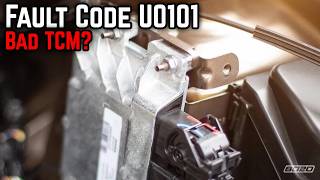
The Buick Cascada, like many modern GM vehicles, has a complex electrical system. While U0101 can point to a failed Transmission Control Module (TCM), GM has a history of issuing service bulletins for other models that point to wiring and connection issues as the primary cause. For the Cascada, this is explicitly noted in Preliminary Information bulletin PIP4990C, which covers the 2016 Cascada among many other GM models with 6-speed automatic transmissions. The bulletin strongly advises technicians to inspect for damaged terminals or poor pin fit at the transmission connector, underhood fuse block, and TCM grounds before replacing the expensive control module (TEHCM). It also notes to check for the harness rubbing through on sharp objects on top of the transmission. Manufacturer TSB Bulletin #PIP4990D further reinforces this by advising technicians to gather all other stored diagnostic trouble codes in the vehicle when investigating U0101. The TCM on this vehicle is a separate module, not integrated inside the transmission, which can make access and diagnosis slightly different from other GM products where the module (TEHCM) is internal. The TCM is located under the left side of the instrument panel.
Symptoms You May Notice
- Check Engine Light is on
- Transmission may not shift out of a low gear (limp mode)
- Harsh or erratic shifting
- Inability to shift gears
- Loss of the gear position indicator (PRNDL) on the dashboard
- ABS and StabiliTrak warning lights may also illuminate
- Replacing the Transmission Control Module (TCM) without first thoroughly checking all wiring, connectors, fuses, and grounds. A simple wiring repair is often the actual fix, as emphasized by GM's own service bulletins.
Most Likely Causes
- Wiring or Connector Issues 🔴 High Probability Vibration, heat, and exposure to the elements can cause wiring to chafe or connectors to become corroded or loose. GM Preliminary Information bulletin PIP4990C specifically calls out poor terminal fit at the transmission connector, harness rub-through on the engine block, and poor terminal fit at the underhood fuse block as common causes for U0101 on this platform. Other GM service bulletins for similar platforms highlight harness chafe points against the ECM/TCM bracket and upper control arm.
How to confirm: Visually inspect the wiring harness going to the TCM and transmission for any signs of damage, chafing, or corrosion. Check that the connector at the TCM and transmission are secure and the pins are clean and making good contact. A 'pin drag' test may be needed to confirm good terminal tension.
Typical fix: Repair the damaged section of wiring or replace the connector pigtail. Clean any corrosion from connector pins. Secure harness away from sharp edges.
Est. part cost: $10-$60 - Blown Fuse or Faulty Relay 🟡 Medium Probability A power surge or a short in a related circuit can cause the fuse protecting the TCM to blow, cutting off its power and communication. Water intrusion in the fuse box can also cause corrosion and connection issues.
How to confirm: Locate the fuse for the TCM in the vehicle's fuse box (refer to the owner's manual). Visually inspect the fuse. Test for power on both sides of the fuse with the ignition on.
Typical fix: Replace the blown fuse. If the fuse blows again, further diagnosis is needed to find the underlying short circuit.
Est. part cost: $1-$5 - Failed Transmission Control Module (TCM) 🟡 Medium Probability → Shop Transmission Assembly Like any electronic component, the TCM can fail internally due to heat, vibration, or age. However, this should be the last item to suspect after all wiring, power, and ground checks are exhausted, per GM's own service information.
How to confirm: This is diagnosed by exclusion. If all power, ground, and network wiring to the TCM test good (power at >12V, ground resistance <0.5 Ohms, CAN bus resistance at 60 Ohms), the module itself is the likely culprit. This requires a multimeter and potentially an oscilloscope for proper diagnosis.
Typical fix: Replace the Transmission Control Module. The new module will need to be programmed to the vehicle's VIN with a specialized scan tool.
Est. part cost: $200-$500 - Low Battery Voltage ⚪ Low Probability → Shop Vehicle Battery Control modules require a stable voltage above 12.0V to operate correctly. A weak or failing battery or a faulty alternator can cause intermittent communication drops across the entire network, triggering U-codes.
How to confirm: Test the battery voltage with the engine off (should be >12.4V) and with the engine running (should be 13.5-14.5V). A load test can confirm the battery's health.
Typical fix: Charge or replace the vehicle's battery.
Est. part cost: $150-$300
Rare But Worth Checking
- Faulty Body Control Module (BCM) or BCM Ground: → Shop Body Control Module On some GM platforms, a poor ground for the BCM (like the G218 ground) or a failing BCM can disrupt the entire communication network, leading to codes like U0101. While not directly for the Cascada, it's a known GM pattern worth considering if other diagnostics fail. The BCM on the Cascada is located on the passenger side, under the center console.
- Poor TCM Ground Connection: GM bulletin PIP4990C specifically mentions inspecting the TCM ground as a key diagnostic step. Technicians are advised to refer to schematics to identify the specific ground point (e.g., G106, G107) and perform a voltage drop test to ensure its integrity before replacing parts.
Diagnosis Steps
- Scan for all stored Diagnostic Trouble Codes (DTCs) in all modules to see if other communication codes are present. A full vehicle scan is critical.
- Check the battery. Ensure it is fully charged (>12.4V) and the charging system is functioning correctly (13.5-14.5V when running).
- Inspect the fuses related to the TCM. Check the underhood and interior fuse boxes. Replace any blown fuses.
- Locate the TCM under the left side of the instrument panel. Inspect the TCM connector for loose pins, corrosion, or damage.
- Inspect the wiring harness leading to the transmission and TCM for any visible signs of chafing, melting, or breaks, especially where it passes near hot or moving parts or on top of the transmission, as noted in GM bulletin PIP4990C.
- Using a multimeter, verify that the TCM has proper power (>12V) and ground (<0.5 Ohms resistance to chassis) at its connector. Perform a load check on these circuits.
- If power and ground are good, check the CAN bus network wires for integrity. With the battery disconnected, resistance between the two CAN wires (Pins 6 and 14 at the OBD-II port) should be 60 ohms. If it is 120 ohms, there is a break in the circuit or a terminating module is offline.
- If all wiring and connections are confirmed to be good, the TCM itself is likely faulty and requires replacement and programming.
Parts You'll Likely Need
- Transmission Control Module (TCM)
(OEM #24287772 (example, always verify with VIN))— If all wiring and power supply checks pass, the internal circuitry of the TCM has likely failed, requiring replacement. This part requires programming to the vehicle.
Trusted brands: ACDelco
OEM price range: $300-$500
Aftermarket price range: $200-$350 - Connector Pigtail — The connector at the TCM or transmission is a common point of failure due to corrosion or loose terminals, which can interrupt communication.
Trusted brands: ACDelco, Dorman
OEM price range: $20-$60
Aftermarket price range: $10-$40
Related Codes That Often Appear With This One
- U0100 — Lost Communication with ECM/PCM. If the entire network is disrupted, multiple modules may lose communication simultaneously.
- U0140 — Lost Communication with Body Control Module. The presence of this code alongside U0101 strongly suggests a wider network problem, possibly related to a shared power or ground circuit, or a break in the CAN bus wiring.
- U0073 — Control Module Communication Bus 'A' Off. This is a general network failure code, indicating a problem with the high-speed CAN bus itself, rather than a single module.
Technical Service Bulletins (TSBs) & Recalls
- PIP4990C: This Preliminary Information bulletin from GM is highly relevant. It instructs technicians investigating a U0101 code on vehicles including the 2016 Cascada to thoroughly inspect wiring, connectors at the transmission and fuse block, and grounds before replacing the TEHCM/TCM. It specifically mentions checking for harness rub-through on top of the transmission.
- TSB Bulletin #PIP4990D: This updated bulletin advises technicians that for vehicles with the service engine soon lamp and DTC U0101, they should review appropriate Service Information diagnostics and gather all other diagnostic trouble codes stored in the vehicle.
Mechanic-Grade Diagnostic Values
- TCM Power Supply Voltage — expected: 12.0V - 12.6V with Key On, Engine Off.. Failure: Voltage below 11.5V can cause communication loss.
- TCM Ground Circuit Resistance — expected: Less than 0.5 Ohms between the TCM connector ground pin and a clean chassis ground.. Failure: Resistance greater than 0.5 Ohms (or 3 Ohms in some service docs) indicates a poor ground connection.
- CAN Bus Network Resistance — expected: Approximately 60 Ohms between CAN High (Pin 6) and CAN Low (Pin 14) at the DLC with the battery disconnected.. Failure: A reading of 120 Ohms indicates an open circuit or a missing terminating resistor (i.e., a module is offline). A reading near 0 Ohms indicates a short between the CAN lines.
- CAN Bus Voltage (High-Speed CAN) — expected: CAN High: ~2.6V, CAN Low: ~2.4V with key on.. Failure: Voltages stuck high, low, or at battery/ground potential indicate a short on the bus.
Scan Tool Commands That Help
- GDS2 (GM Global Diagnostic System 2): Vehicle DTC Information / All DTC Check — This is the first step to poll all modules on all networks. It quickly confirms if the TCM is the only module offline or if it's a wider network issue.
- GDS2 (GM Global Diagnostic System 2): Data Bus Diagnostic Tool — This function actively queries the bus to identify which modules are present and communicating, helping to isolate the point of failure in the network topology.
- GDS2 (GM Global Diagnostic System 2): Replace and Reprogram — This function is required after installing a new or used TCM. It writes the vehicle's VIN and correct calibration files to the module, allowing it to integrate with the vehicle's other systems.
Wiring & Ground Locations
- TCM (K71) — Under the left side of the instrument panel.. This is the location of the module itself. The connector and nearby harness are primary inspection points for damage or corrosion.
- G106 / G107 — Typically located in the engine compartment, on the frame rail or engine block. G106 is often on the front center of the frame cross rail.. GM bulletin PIP4990C specifically calls out checking the TCM ground. These are common ground points for powertrain modules. A loose or corroded connection here will cut power to the TCM.
- Engine Harness Chafe Point — On top of the transmission where the harness can contact sharp edges on the engine block.. This specific chafe point is mentioned in GM bulletin PIP4990C for the Cascada and can directly cause shorts in the circuits leading to the TCM, resulting in a U0101 code.
- Engine Harness Chafe Point (General GM) — On other GM platforms, common chafe points include the harness rubbing against the ECM/TCM mounting bracket, the upper control arm, and shock tower bolts.. While not specific to the Cascada in the TSBs found, these are known problem areas on similar GM vehicles and are worth inspecting for any signs of abrasion that could short power, ground, or CAN bus wires.
Real Owner Repair Stories
- Reddit user on r/mechanicadvice (2016 Buick Verano (similar GM platform)) — Car stopped accelerating, multiple warning lights for Stabilitrak, power steering, and parking assist came on. U0101 code appeared later.
❌ Tried (didn't work) Replacing the battery., Replacing spark plugs and coil packs.
✅ What actually fixed it The alternator was failing, causing system voltage to drop to around 12.5V while running. Replacing the alternator resolved the communication issues and the U0101 code.
OEM Part Supersession History
24287772→24297298 (ACDelco)— Part update or revision by the manufacturer.
Heads up: Always verify the correct part number with the vehicle's VIN before ordering. Programming is required for the new module to function.
Diagnostic Flowchart
Other Known Issues on This Vehicle
Issues unrelated to this code that are worth knowing about as an owner of this generation:
- Convertible Top Malfunctions 🟠 Medium — Commonly reported issue. Can range from leaks, failure to open/close, or the rear window separating from the top. TSB 16-NA-352 addresses a specific 'Extend Cargo Shade' message error. (Ref: TSB 16-NA-352)
- PCV Diaphragm Failure in Valve Cover 🟠 Medium — Affects the 2016 model year. A cracked PCV diaphragm causes a vacuum leak, leading to a rough idle and a P0171 (System Too Lean) code. (Ref: GM Special Coverage N192291620 (extends warranty to 10 yrs/120k miles for this part))
- Electrical Glitches (Infotainment/Sensors) 🟡 Low — Some owners report issues like the infotainment screen freezing, malfunctioning sensors, or problems with key fob operation. (Ref: Recall 16126 for incorrect Convertible Roof Control Module on a small number of 2016 models.)
- Carbon Buildup on Intake Valves 🟠 Medium — As a Spark Ignition Direct Injection (SIDI) engine, the 1.6L Turbo is prone to carbon buildup over time, which can cause misfires (P0300) and poor performance not fixed by plugs/coils. (Ref: TSB 16-NA-383 (describes a cleaning procedure))
- Lethargic Performance 🟡 Low — A common complaint from reviewers and some owners is that the 1.6L turbo engine feels underpowered for the vehicle's nearly two-ton weight, resulting in sluggish acceleration.
Used vs. New Parts: Buying Guide for This Vehicle
When a used part is the smart pick: A used TCM can be a cost-effective option IF you have access to the proper tools and subscriptions (like GM's Techline Connect) to reprogram it. Without reprogramming, a used TCM from another vehicle will not work, as it is locked to the original vehicle's VIN.
Donor-vehicle mileage cap: roughly under 80000 miles for the part to have meaningful remaining life.
What to inspect on the donor part:
- Verify the part number matches your original or its superseded number.
- Inspect the connector pins for any signs of corrosion, moisture, or physical damage.
- If possible, get the VIN of the donor vehicle to check its history for transmission-related issues.
- Purchase from a reputable salvage yard with a warranty or return policy.
OEM-only on this vehicle (don't cheap out):
- Transmission Control Module (TCM) - While aftermarket options from brands like Dorman exist, OEM (ACDelco) is strongly recommended for best compatibility and successful programming. GM's programming software (SPS2) can be finicky with non-OEM modules.
Brands owners have reported issues with on this vehicle:
- Unbranded, no-name TCMs from online marketplaces. These often have a high failure rate or are unable to be programmed correctly.
Real Owner Stories
Aggregated from forums and TSBs cited above. Mileages and costs reflect what owners reported in those sources.
2016 Buick Cascada
Symptoms: The vehicle entered limp mode and would not shift out of a low gear; the Check Engine Light, ABS, and StabiliTrak lights all illuminated simultaneously.
What fixed it: Technicians identified a harness rub-through on the engine block and poor terminal fit at the transmission connector, as described in bulletin PIP4990C.
Source hint: GM Preliminary Information bulletin PIP4990C
Related OBD-II Codes
Frequently Asked Questions
Does GM bulletin PIP4990C apply to my 2016 Buick Cascada regarding the U0101 code?
I'm seeing a 'System Too Lean' P0171 code along with my transmission issues; is this common on the 2016 model?
Could a 'Convertible Roof Control Module' recall be related to my communication error?
Where is the Transmission Control Module (TCM) located on the Buick Cascada for inspection?
My Cascada won't shift out of a low gear and the PRNDL display is gone. Is this a TCM failure?
What are the specific CAN bus resistance values I should look for when diagnosing this on my Buick?
Helpful Videos
We Have This Part in Stock




The information in this article is provided for general reference and educational purposes only. Vehicle specifications, procedures, and part compatibility can vary by production date, trim level, and region. Always consult your vehicle's factory service manual and verify part numbers before purchasing or performing repairs. Safety-critical components such as airbags, seat belts, and braking systems should be installed by a qualified professional.
- Buick Cascada:
- 🧭 Diagnostic Flowchart
- 🎬 Helpful Videos
- 🛍️ Shop This Part
- What's Unique About the 2016-2019 Buick Cascada
- Symptoms You May Notice
- Most Likely Causes
- Rare But Worth Checking
- Diagnosis Steps
- Parts You'll Likely Need
- Related Codes That Often Appear With This One
- Technical Service Bulletins (TSBs) & Recalls
- Mechanic-Grade Diagnostic Values
- Scan Tool Commands That Help
- Wiring & Ground Locations
- Real Owner Repair Stories
- OEM Part Supersession History
- Other Known Issues on This Vehicle
- Used vs. New Parts: Buying Guide for This Vehicle
- Real Owner Stories
- 2016 Buick Cascada
- Related OBD-II Codes
- Frequently Asked Questions
- 🎟️ Get 5% Off