

U0101 on 2010-2016 Buick LaCrosse: Lost Communication With TCM Causes and Fixes
On a 2010-2016 Buick LaCrosse, code U0101 almost always points to a wiring or connector problem, not a bad Transmission Control Module (TCM). Before replacing the expensive TCM, inspect the transmission connector pins, underhood fuse block, and TCM grounds for a poor fit or corrosion, as highlighted in GM Technical Service Bulletins like 17-NA-211. A wiring repair is often all that's needed.
- U0101 on a 2010-2016 LaCrosse is a communication code, not a mechanical transmission failure.
- Always check the simple, known issues first: battery voltage, TCM-related fuses, and grounds.
- The most likely cause is a poor electrical connection at the transmission connector or a chafed wire, as documented in GM service bulletins.
- Do not replace the expensive Transmission Control Module (TCM) until all wiring and connector issues have been professionally ruled out.
- This is a complex electrical issue; professional diagnosis is strongly recommended.
What's Unique About the 2010-2016 Buick LACROSSE

For this generation of Buick LaCrosse and other similar GM vehicles, the U0101 code is very frequently caused by electrical connection issues rather than an actual failed Transmission Control Module (TCM). General Motors has issued multiple Technical Service Bulletins (TSBs), culminating in #17-NA-211, advising technicians to specifically check for poor terminal pin fit at the main transmission connector, the underhood fuse block, and TCM ground locations (G106, G107) before considering TCM replacement. This indicates a known weakness in the vehicle's electrical connections that can mimic the symptoms of a much more expensive component failure.
Diagnostic Flowchart
Tap your situation to follow the diagnostic path that matches what you're seeing on this vehicle.
Generation note: The 2010-2016 model years cover the entire second generation of the Buick LaCrosse. The issues and fixes are generally consistent across this generation and its platform mates.
Symptoms You May Notice
- Check engine light is on
- Transmission warning message on the dashboard
- Vehicle is stuck in one gear (limp mode), limiting speed
- Harsh, erratic, or delayed shifting
- Inability to shift out of Park or Neutral
- The gear indicator (PRNDL) on the dash may be blank or incorrect
- Vehicle may stall unexpectedly, especially on 2010-2012 models with the X403 connector issue
- Scan tool cannot communicate with the TCM
- Replacing the Transmission Control Module (TCM/TEHCM) without first thoroughly inspecting all related wiring and connectors. The TSBs make it clear that connection issues are the most common fault.
- Overlooking a poor ground connection (G106/G107) or a chafed harness on top of the transmission, as these are specific failure points mentioned by GM.
Most Likely Causes

- Poor Terminal Fit at Transmission Connector or Fuse Block 🔴 High Probability → Shop Transmission Assembly This is the primary known issue documented by GM in TSBs PIP4990D and 17-NA-211 for this platform. The pins in the connectors can spread or corrode, causing an intermittent connection.
How to confirm: Visually inspect the pins in the main transmission electrical connector for looseness, corrosion, or damage. Check fuses in the underhood block to ensure they are fully seated and the terminals are tight. A technician may use a special tool to check pin tension.
Typical fix: Repair or re-tension the affected terminal pins. Clean the connector with electrical contact cleaner and apply dielectric grease (GM P/N 12377900) before reconnecting. In some cases, a new connector pigtail is required.
Est. part cost: $0-$50 - Damaged or Chafed Wiring Harness 🟡 Medium Probability TSB #17-NA-211 specifically mentions that the wiring harness can rub against sharp areas on the top of the transmission or engine block, causing an open or short in the CAN bus circuit.
How to confirm: Carefully inspect the entire wiring harness leading from the firewall to the transmission for any signs of rubbing, melting, or breaks. Pay close attention to where the loom is secured or makes contact with other components.
Typical fix: Repair the damaged section of wire using a splice sleeve and heat shrink tubing. Protect the harness from future damage using a protective loom or by re-routing it 🎬 Watch: How to find and repair a chafed TCM wiring harness away from sharp edges.
Est. part cost: $5-$25 - Poor TCM Power or Ground Connection 🟡 Medium Probability
How to confirm: Locate the main grounds for the TCM (TSBs point to G106 and G107) and ensure they are clean, free of paint/corrosion, and tight. Use a multimeter to verify stable 12V power at the TCM connector with the key on and perform a voltage drop test on the ground circuit to ensure its integrity.
Typical fix: Disassemble, clean, and tighten the ground connection. Repair any breaks in the power or ground wire.
Est. part cost: $0-$10 - Failed Transmission Control Module (TCM/TEHCM) ⚪ Low Probability → Shop Transmission Assembly While the module can fail, GM TSBs strongly advise ruling out all wiring and connection issues first, as they are a more frequent cause of this code. Internal failure of the TEHCM is a diagnosis of exclusion.
How to confirm: This is diagnosed by exclusion. If all wiring, connectors, power, and grounds are confirmed to be perfect using a multimeter and visual inspection, the TCM is the likely culprit. A diagnostic technique is to bypass the TCM by jumping the CAN wires at its connector; if other modules can then communicate with each other, the TCM is likely faulty.
Typical fix: Replace the Transmission Control Module (TEHCM). This part is located inside the transmission oil pan and is integral to the valve body. It requires programming by a dealer or qualified shop after installation.
Est. part cost: $400-$900
Rare But Worth Checking
- Water Intrusion at Connector X403 (2010-2012 models): → Shop HVAC Electrical Connector TSB PIC5327E points to a specific issue on early second-gen models where water and dirt can enter connector X403, located in the rear wheel well liner area. This causes corrosion and various electrical faults, including U0101 and stalling.
- Low System Voltage: A weak battery or failing alternator can cause unpredictable communication errors between modules. If the battery is old or you've had starting issues, this should be checked first.
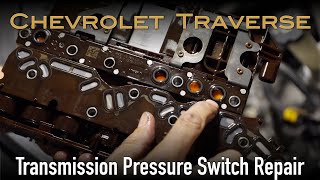
- Internal TEHCM Pressure Switch Failure: → Shop Transmission Valve Body The 6T70/75 transmissions are known for failures of the laminated fluid pressure switches inside the TEHCM. This can cause erratic shifting and may eventually lead to a complete TEHCM failure, logging a U0101 code. Aftermarket kits, like those from Sonnax (P/N 124740-70K), are available to rebuild these switches without replacing the entire module. 🎬 Watch: How to repair the internal pressure switches on a 6T70
Diagnosis Steps
- Read all fault codes from all vehicle modules with a professional scan tool. Note which modules are reporting a loss of communication with the TCM.
- Check the battery and charging system. Ensure battery voltage is above 12.4V with the engine off and between 13.7V and 14.7V with the engine running.
- Inspect the underhood fuse block. Per TSB #17-NA-211, physically check all fuses related to the transmission (TCM/TRANS) and ECU. Wiggle them to check for poor terminal fit.
- Locate and inspect the main TCM ground straps/bolts (G106, G107). Per the TSB, ensure they are clean, free of corrosion, and tight to the chassis/engine block.
- Disconnect the main electrical connector at the transmission. Carefully inspect both the male and female pins for any signs of corrosion, damage, or being spread too far apart (poor pin fit).
- Trace the wiring harness from the TCM connector back to the firewall, looking for areas where it might be chafed, melted, or pinched against the engine block or transmission case, as noted in TSBs.
- For 2010-2012 models, remove the rear wheel well liner and inspect connector X403 for any signs of water intrusion or corrosion as per TSB PIC5327E.
- If wiring appears intact, test the CAN bus wires (typically Tan and Tan/Black) for continuity and for shorts to power or ground. With the battery disconnected, the resistance between the two CAN wires at the diagnostic port 🎬 See how to perform a CAN bus communication test should be ~60 ohms.
- As an advanced step, a technician may jump the CAN bus wires at the TCM connector to bypass the module. If communication is restored between other modules on the network, the TCM itself is confirmed to be the fault.
- If all wiring, power, and grounds are confirmed to be good, the fault is likely with the TEHCM itself.
Parts You'll Likely Need
- Transmission Control Module (TCM/TEHCM)
(OEM #24256861 (superseded by other numbers, VIN match is critical))— This is the part to replace ONLY after all wiring, connector, power, and ground issues have been completely ruled out. It is located inside the transmission and requires programming.
Trusted brands: ACDelco (OEM)
OEM price range: $500-$900
Aftermarket price range: $400-$650 - Dielectric Grease
(OEM #12377900 (US) / 10953529 (Canada))— Used to protect electrical connectors from moisture and corrosion after cleaning or repair, as explicitly recommended by GM TSBs PIC5327E and 17-NA-211.
Trusted brands: Permatex, ACDelco
OEM price range: $15-$25
Aftermarket price range: $5-$10 - Connector X403 (Male/Female) — For 2010-2012 models, this connector in the rear wheel well is a known point of failure due to water intrusion. If corroded, it may need to be replaced with a new pigtail.
Trusted brands: ACDelco, Dorman
OEM price range: $40-$80
Aftermarket price range: $20-$50
Related Codes That Often Appear With This One
- U0100 — This is a similar code for 'Lost Communication with ECM/PCM'. If the CAN bus network has a major fault (like a shorted wire), multiple communication codes can appear at once.
- U0140 — This code means 'Lost Communication with Body Control Module (BCM)'. Its presence alongside U0101 can help pinpoint a wider network failure versus an issue isolated to just the TCM circuit.
Technical Service Bulletins (TSBs) & Recalls
- 17-NA-211 / PIP4990D: Diagnostic tip for MIL on with DTC U0101, advising to check connectors, fuses, and grounds before replacing parts.
- PIC5327E: Notes potential for water/dirt intrusion and corrosion at connector X403 on 2010-2012 models.
Platform-Specific Known Issues
- TSB #17-NA-211 (supersedes PIP4990D/C/B/A): This is the most current GM bulletin for DTC U0101. It directs technicians to investigate poor terminal fit at the transmission connector and underhood fuse block, chafed harnesses on top of the transmission, and bad grounds (G106, G107) before replacing the TEHCM.
- TSB #PIC5327E: This bulletin specifically targets 2010-2012 LaCrosse models, warning that water intrusion into connector X403 in the rear wheel well can cause corrosion, leading to stalling or various electrical problems including U0101.
Mechanic-Grade Diagnostic Values
- CAN Bus Network Resistance — expected: ~60 Ω (ohms) when measured between the CAN High and CAN Low pins at the DLC with the battery disconnected.. Failure: A reading of ~120 Ω indicates an open circuit or a missing termination resistor. A reading significantly less than 60 Ω (e.g., 40 Ω) or a short to ground indicates a wiring fault or a failed module.
- CAN Bus Voltage (Key On, Engine Off) — expected: CAN High: ~2.5V to 3.5V. CAN Low: ~1.5V to 2.5V.. Failure: Voltages outside these ranges, or a line that is stuck at 0V or 12V, indicates a short to ground or power.
- TCM Power Supply Voltage — expected: 12.0V - 12.6V at the TCM power supply pin with the key on.. Failure: Low or no voltage indicates a problem with the fuse, relay, or the power feed wire.
- TCM Ground Circuit Voltage Drop — expected: Less than 0.1V (100mV).. Failure: A reading higher than 0.1V indicates high resistance in the ground circuit, which can cause the module to malfunction under load.
- Unplugged Module CAN Port Resistance — expected: 28kΩ - 50kΩ between CAN High and CAN Low pins on the module itself.. Failure: A reading outside this range, or low resistance from either CAN pin to the module's ground pin, suggests the module has an internal short and is likely faulty.
Scan Tool Commands That Help
- Professional Scan Tool (e.g., GM GDS2): Read Fault Codes From All Modules — This is the first step. Seeing which other modules have lost communication with the TCM (U0101) or which other modules the TCM has lost communication with (e.g., U0100, U0140) helps map the network failure.
- Professional Scan Tool (e.g., GM GDS2): Bidirectional Communication Test — To actively ping the TCM and wait for a response. If the scan tool sends a request and receives no reply, it confirms a live communication failure, ruling out an intermittent issue.
- GM GDS2 / SPS: Module Programming/Setup — This is required after replacing the TCM/TEHCM. The new module must be programmed with the correct software and vehicle-specific information to function.
Wiring & Ground Locations

- G106 / G107 — TSBs point to these as key grounds. G106 is often located on the front center of the frame cross rail, under the crank pulley. G107 is often nearby, on the chassis frame rail.. These are primary ground points for the engine and transmission control modules. High resistance or a loose connection here is a direct cause of communication loss specified in GM service bulletins.
- G103 — On some GM platforms, located on the left frame rail, potentially under the Starter Generator Control Module bracket.. A known failure point on later GM models for causing ECM/TCM communication loss. The ground cable runs from the transmission housing to this stud on the frame rail.
- Transmission Main Connector (X2) — On the side of the 6T70/75 transmission case. It is a large, round, twist-lock connector.. This is the single point of connection for all power, ground, and communication lines to the internal TCM/TEHCM. Poor pin fit here is the most common cause of U0101 on this vehicle.
- CAN Bus Wires — Twisted pair of wires, typically Tan and Tan with a Black stripe, running throughout the vehicle's harnesses.. These two wires are the physical data network. A short or open in either wire will sever communication. They must be tested for continuity and resistance.
Real Owner Repair Stories
- Diagnostic process demonstrated in YouTube video by 'OmarGautomotive' (2010 Ford F-150 (Note: Different vehicle, but identical diagnostic principle for U0101)) — No communication with the TCM on a scan tool, setting a U0101 code in the ECM.
❌ Tried (didn't work) Checking fuses for the TCM (they were good)., Checking for 12V power at the TCM connector (power was present).
✅ What actually fixed it Testing the ground pins at the TCM connector revealed no ground. Tracing the ground wire back led to a splice connector where the ground was good on one side but open on the other. Applying a temporary ground to the TCM side of the connector restored communication, confirming the fault was the open ground in the splice connector.
"I Checked Everything" — The Actual Cause
- A common scenario for U0101 is that basic electrical tests (like checking for voltage with a multimeter) will pass, but the code persists. The actual cause is often poor terminal tension ('pin fit') in the transmission connector or underhood fuse block. The connection is sufficient to show voltage with no load, but it fails when the module is active and drawing current, or due to vibration while driving. This is why GM TSBs specifically call out checking pin fit, not just the presence of power and ground.
OEM Part Supersession History
24256861→24287420 (and potentially others)— Part revision and updates by the manufacturer.
Heads up: The part is a complete assembly including the valve body and the TCM (TEHCM). It is critical to match the part number to the vehicle's VIN. An incorrect part may fit physically but will not have the correct programming or solenoid calibration, causing shifting issues or preventing communication.
Model Year Variations Within This Range
- 2010-2012: These earlier models are specifically called out in TSB PIC5327E for potential water intrusion at connector X403 in the rear wheel well, which can cause U0101 and other electrical faults.
- 2010-2016: The core issue of poor terminal fit and harness chafing described in TSBs like PIP4990D and 17-NA-211 applies across the entire second generation, indicating it was a persistent design weakness.
Helpful Videos
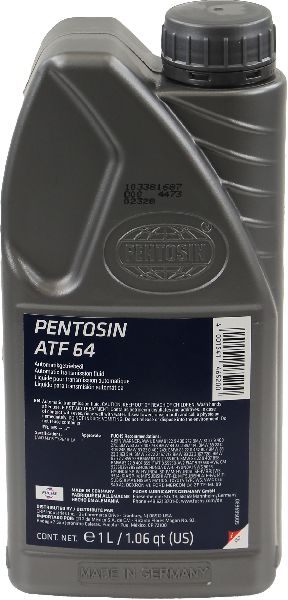
We Have This Part in Stock
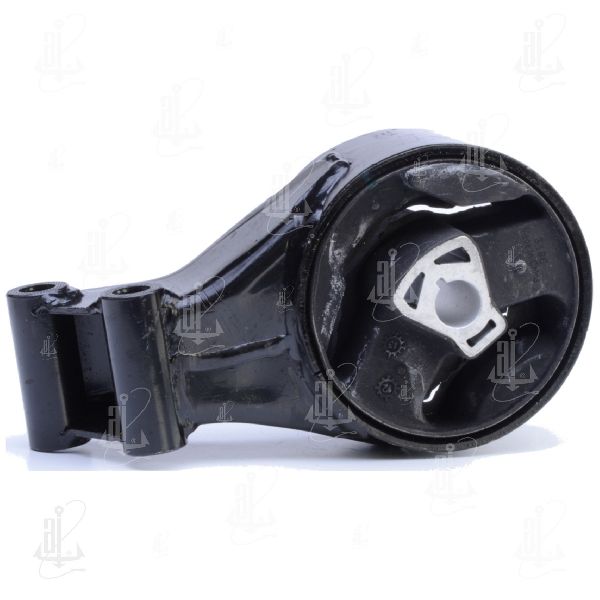
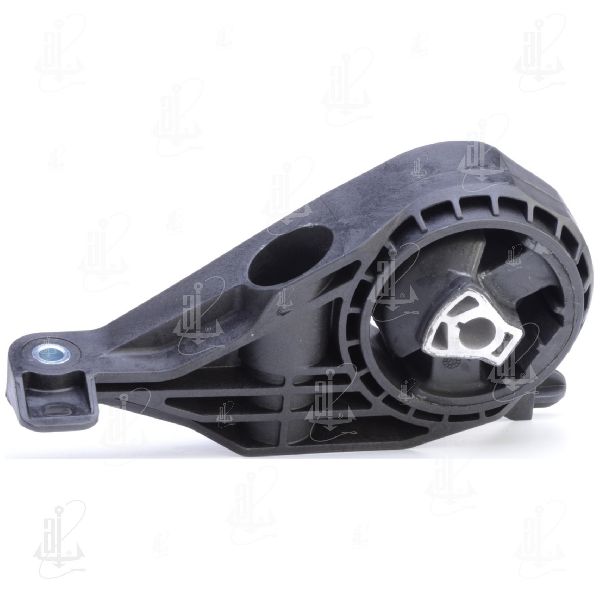

The information in this article is provided for general reference and educational purposes only. Vehicle specifications, procedures, and part compatibility can vary by production date, trim level, and region. Always consult your vehicle's factory service manual and verify part numbers before purchasing or performing repairs. Safety-critical components such as airbags, seat belts, and braking systems should be installed by a qualified professional.
- Buick LACROSSE:
- 🧭 Diagnostic Flowchart
- 🎬 Helpful Videos
- 🛍️ Shop This Part
- What's Unique About the 2010-2016 Buick LACROSSE
- Symptoms You May Notice
- Most Likely Causes
- Rare But Worth Checking
- Diagnosis Steps
- Parts You'll Likely Need
- Related Codes That Often Appear With This One
- Technical Service Bulletins (TSBs) & Recalls
- Platform-Specific Known Issues
- Mechanic-Grade Diagnostic Values
- Scan Tool Commands That Help
- Wiring & Ground Locations
- Real Owner Repair Stories
- "I Checked Everything" — The Actual Cause
- OEM Part Supersession History
- Model Year Variations Within This Range
- 🎟️ Get 5% Off