

U0101 on 2010-2015 Chevrolet Camaro: Lost Communication with TCM Causes and Fixes
Code U0101 on a 2010-2015 Camaro means the Transmission Control Module (TCM) is offline. This often results in limp mode and harsh shifting. The most common cause is a failed internal TCM/TEHCM, which is located inside the transmission oil pan. Other causes include bad wiring at the transmission connector, poor grounds, or low battery voltage.
- U0101 on a 2010-2015 Camaro means the Transmission Control Module (TCM) has lost communication.
- The most common symptom is the transmission entering 'limp mode,' being stuck in a single gear.
- The TCM is located inside the transmission oil pan, making replacement a job best left to professionals.
- Always check for simple fixes first: test the battery, check TCM fuses, and inspect the main transmission connector for damage before assuming the module has failed.
- A replacement TCM/TEHCM must be programmed to your car's VIN to function correctly.
What's Unique About the 2010-2015 Chevrolet Camaro
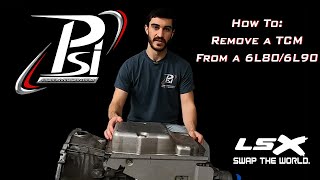
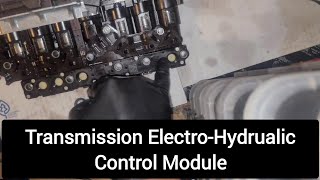
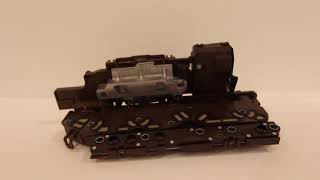
On the 5th generation Camaro, equipped with either the 6L50 (V6) or 6L80 (V8) automatic transmission, the Transmission Control Module (TCM) is not an easily accessible external part. Instead, it is integrated with the valve body inside the transmission oil pan, a component known as a TEHCM (Transmission Electro-Hydraulic Control Module). This internal location makes the module vulnerable to constant high heat and vibration, which can lead to solder joint failure or electronic component degradation over time. Replacement is a complex job that requires removing the transmission pan and draining the fluid.
Symptoms You May Notice
- Check Engine Light is on
- Transmission warning light is illuminated
- Vehicle is stuck in one gear (limp mode, often 2nd or 3rd)
- Harsh or erratic shifting
- Delayed or no engagement when shifting from Park to Drive or Reverse
- The gear indicator (PRNDL) on the instrument cluster is blank or incorrect
- "Service StabiliTrak" or "Service Traction Control" messages may appear
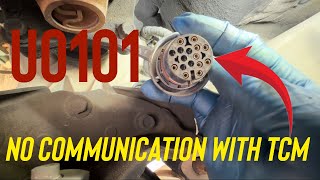
- Scan tool cannot communicate with the TCM 🎬 Watch: How to diagnose a U0101 no communication code
- Replacing the entire transmission. The U0101 code is an electrical/communication fault, not a mechanical failure. A full transmission replacement is almost never the correct fix for this code alone.
Most Likely Causes
- Internal Transmission Control Module (TEHCM) Failure 🔴 High Probability → Shop Transmission Assembly The TEHCM is located inside the transmission, where it is exposed to high temperatures (180-250°F) and constant vibration, which can lead to internal circuit board failure over time.
How to confirm: After confirming all external wiring, connectors, power, and grounds are good, the TEHCM itself is the likely point of failure. A professional scan tool will be unable to communicate with the TCM, confirming it's offline. NHTSA ODI #11616544 describes a case where a technician found the TCM was bad after being unable to communicate with the module.
Typical fix: Replace the TEHCM assembly inside the transmission pan. The new module must be programmed with the vehicle's VIN and specific calibration files using GM's software.
Est. part cost: $300-$700 - Damaged Wiring or Corroded Connector 🟡 Medium Probability The main transmission harness connector can be exposed to moisture and road debris. TSB PIP4990D specifically notes that the harness can chafe on sharp edges on top of the transmission case, causing an open or short in the CAN bus wires.
How to confirm: Visually inspect the main electrical connector at the transmission for corrosion, bent pins, or fluid intrusion. Trace the harness over the top of the transmission for any signs of chafing or damage. Check for power, ground, and CAN bus signal integrity at the connector pins.
Typical fix: Clean the connector terminals, repair the damaged wires, or replace the connector pigtail. Secure the harness away from any sharp edges.
Est. part cost: $20-$150 - Low Battery Voltage or Poor Grounds ⚪ Low Probability → Shop Vehicle Battery Control modules require stable voltage to communicate properly. A weak battery, failing alternator, or corroded ground straps can cause intermittent network dropouts. TSB PIP4990D specifically calls out checking TCM grounds, such as G106 and G107.
How to confirm: Test the battery voltage with the engine off (should be >12.4V) and while running (should be 13.7-14.7V). Load test the battery and inspect the main engine/chassis ground connections (G106/G107) for corrosion or looseness.
Typical fix: Replace the weak battery, repair the charging system, or clean/tighten the ground connections.
Est. part cost: $5-$300 - Blown Fuse ⚪ Low Probability
How to confirm: Check the underhood fuse block for any fuses labeled TCM, TRANS, or ECM. A blown fuse indicates a power supply issue to the module. TSB PIP4990D also mentions checking for poor terminal fit within the fuse block itself.
Typical fix: Replace the blown fuse. If it blows again immediately, there is a short circuit in the wiring that must be diagnosed.
Est. part cost: $1-$5
Diagnosis Steps
- Perform a full vehicle scan to see which other modules may have stored communication codes. Note all codes present and which modules are reporting them.
- Check the battery and charging system. Ensure voltage is stable and above 12.4V with the engine off. Low voltage can cause widespread communication faults.
- Inspect the underhood fuse block. Check all fuses related to the transmission (TCM, TRANS) and engine controls (ECM). Per TSB PIP4990D, check for loose-fitting fuses or terminals within the block itself.
- Raise the vehicle and locate the main electrical connector on the side of the transmission. Disconnect it and inspect for any bent or corroded pins, or signs of fluid intrusion. Clean and apply dielectric grease if necessary.
- Inspect the wiring harness for physical damage, paying close attention to the area on top of the transmission where it can rub against the engine block, as noted in TSB PIP4990D.
- With the connector unplugged, use a multimeter and wiring diagram to verify that the TEHCM is receiving battery power and has a good ground on the appropriate pins. Check grounds G106/G107.
- With the battery disconnected, measure the resistance between Pins 6 and 14 of the OBD-II port. A healthy CAN bus should read approximately 60 ohms. A reading of 120 ohms indicates an open circuit or a missing terminating resistor, while a reading near 0 ohms indicates a short between the CAN wires.
- If all external wiring, power, and grounds are confirmed to be good, the internal TEHCM has most likely failed and requires replacement.
Parts You'll Likely Need
- Transmission Electro-Hydraulic Control Module (TEHCM)
(OEM #ACDelco 24256861 (Note: Part numbers can be superseded, verify with VIN. Other numbers like 24287420 may apply to different configurations).)— This is the combined Transmission Control Module and valve body assembly. Due to its location inside the transmission, it is the most common point of failure for this code after external wiring is ruled out.
Trusted brands: ACDelco, Dorman
OEM price range: $450-$700
Aftermarket price range: $300-$550 - Transmission Pan Gasket — Required to be replaced anytime the transmission pan is removed to access the TEHCM.
Trusted brands: ACDelco, Fel-Pro
OEM price range: $25-$50
Aftermarket price range: $15-$30 - Transmission Filter Kit — Should be replaced as part of the service when the pan is off.
Trusted brands: ACDelco, Wix
OEM price range: $30-$60
Aftermarket price range: $20-$40 - DEXRON-VI Automatic Transmission Fluid — The transmission fluid must be drained to replace the TEHCM. A pan drop requires approximately 6-7 quarts to refill.
Trusted brands: ACDelco, Valvoline, Mobil 1
OEM price range: $8-$12 per quart
Aftermarket price range: $7-$10 per quart
Related Codes That Often Appear With This One
- P0700 — This code means 'Transmission Control System (MIL Request)'. It's a generic code set by the ECM when the TCM has detected a fault and requested the Check Engine Light to be turned on. It almost always accompanies more specific transmission codes, or in this case, a communication failure.
- U0100 — Lost Communication with ECM/PCM. If there is a major network problem, multiple modules may lose communication. Seeing this with U0101 points towards a broader issue like a CAN bus wiring short or a problem with a gateway module.
- U0140 — Lost Communication with Body Control Module (BCM). Similar to U0100, its presence suggests a wider network fault rather than an isolated TCM problem.
Technical Service Bulletins (TSBs) & Recalls
- PIP4990D: Recommends thorough inspection of wiring, connectors, and grounds before replacing the TEHCM for a U0101 code.
- 17-NA-211: Supersedes PIP4990D, reiterating the same diagnostic advice to check external factors before module replacement.
Platform-Specific Known Issues
- GM issued a Preliminary Information bulletin (PIP4990D), later superseded by 17-NA-211, for various vehicles with 6-speed automatics that experience a U0101 code. It strongly advises checking for poor terminal fit at connectors, harness chafing on top of the transmission, and bad grounds (G106/G107) before replacing the TEHCM.
- Some owners on forums report that extreme heat, such as during a track day, can trigger a temporary U0101 code that resolves after the car cools down, suggesting a heat-soak issue with the internal TEHCM.
Mechanic-Grade Diagnostic Values
- High-Speed CAN Bus Network Resistance — expected: ~60 Ω (Ohms) ±5 Ω. Failure: A reading of ~120 Ω indicates an open circuit or a missing terminating resistor (one module offline or a break in the wiring). A reading near 0 Ω indicates a short between the CAN High and CAN Low wires.
- TEHCM Power and Ground at Connector — expected: Pins 1 & 4: Battery Positive Voltage (~12.6V with key on). Pins 2 & 5: Good ground (less than 0.1V or <5 Ohms to chassis ground). Pin 12: Ignition Voltage (~12.6V with key in 'Run').. Failure: No voltage on power pins indicates a blown fuse or open wire. High resistance or voltage on ground pins indicates a corroded or loose ground connection (check G106/G107).
- Ground Circuit Voltage Drop — expected: ≤100–200 millivolts (mV). Failure: A reading higher than 200mV indicates excessive resistance in the ground circuit, which can cause modules to drop offline.
Scan Tool Commands That Help
- GM GDS2 / Techline Connect (SPS): Replace and Reprogram — This function is required after installing a new or remanufactured TEHCM. It flashes the module with the correct VIN-specific calibration files from GM's servers. The vehicle will not operate correctly (or at all) until this is done.
- GM GDS2 / Techline Connect (SPS): Save Warranty Job Code — After a successful programming event, the software generates a warranty job code. This code must be saved and often provided to the part supplier (including GM) to validate the warranty on the new TEHCM.
- GM GDS2 or high-end bidirectional scanner: Transmission Service Fast Learn / Reset Adapts — After the TEHCM has been programmed, this procedure must be performed. It allows the new module to learn the clutch volume indexes and pressure curves, ensuring smooth shifts and preventing damage.
Wiring & Ground Locations
- G106 / G107 — For the V6 engine, G106 and G107 are located on the left rear of the engine. For the V8 engine, G107 is on the right rear of the engine. These are critical grounds for the engine and transmission control modules.. TSB 17-NA-211 (superseding PIP4990D) explicitly calls out checking these grounds for looseness or corrosion as a primary diagnostic step before replacing the TEHCM for a U0101 code.
- Transmission Harness Chafing Point — The wiring harness running over the top of the transmission case.. TSB 17-NA-211 notes that the harness can rub against sharp edges on the transmission case or engine block, eventually wearing through the insulation on the CAN bus wires and causing a short or open circuit, leading to U0101.
- Transmission Main Connector (16-pin) — On the driver's side of the transmission case. This is the pass-through connector for the internal TEHCM.. This is the primary point for testing power, ground, and CAN signals to the TEHCM. It is susceptible to corrosion, fluid contamination, and poor pin tension, all of which can cause a U0101.
Real Owner Repair Stories
- Reddit user in r/MechanicAdvice (2014 GMC Sierra 1500 with 6L80 transmission (functionally identical TEHCM and network to the Camaro)) — Permanent U0101 code, no shifting, and no gear selection displayed on the dash after installing a remanufactured transmission.
❌ Tried (didn't work) Erasing codes with a consumer-grade scan tool., Disconnecting the battery for several minutes., Cleaning fluid from the main electrical connector with contact cleaner.
✅ What actually fixed it The user concluded that a consumer-grade tool was insufficient. The necessary next step, which is the implied fix, was to use a J2534 pass-thru device to properly diagnose the CAN network and determine if the new TEHCM was dead on arrival or simply needed programming, which cannot be done without the proper tool. The story highlights the necessity of professional tools for this specific code after a part replacement. - NHTSA ODI #11654876 — An owner reported that a failed TCM resulted in a U0101 code, low power ("limp mode"), hard shifting, and no gear selection indicator on the dash.
- NHTSA ODI #11462104 — A report noted that along with a U0101 code for loss of communication with the TCM, the vehicle also displayed a P0700 code and issues with the transmission input shaft speed sensor.
"I Checked Everything" — The Actual Cause
- A common 'hidden' failure pattern for U0101 on these vehicles is poor terminal fit inside a connector, as highlighted by GM TSB 17-NA-211. A technician might perform a visual inspection and a continuity test on the wiring, both of which could pass. However, the female pin terminal inside the connector (at the transmission, or even in the underhood fuse block) may have spread apart, creating a weak connection that fails under load or vibration. This is missed by basic checks but can be found by using terminal tension test probes or by carefully inspecting each pin for signs of spreading.
OEM Part Supersession History
24256861→Varies by year. Examples include 24274046, 24285393, 24294364.— Revisions to improve solenoid performance, update pressure manifold design, and enhance thermal tolerance.
Heads up: TEHCMs are NOT backward or forward compatible. The internal logic and calibration files are specific to the model year range. Installing a TEHCM from a 2014+ vehicle into a 2012 Camaro will result in immediate limp mode and communication failures, even if it physically fits.
Model Year Variations Within This Range
- 2010-2013 vs 2014-2015: The specific part number for the internal TEHCM changed. 2010-2013 models typically use TEHCM P/N 24256861. Later models use a different, non-interchangeable TEHCM (e.g., 24274046). It is critical to verify the correct part number for the specific model year and VIN before ordering a replacement.
Documented NHTSA Reports
NHTSA ODI #11279453 describes a severe electrical failure where the vehicle would not turn on or click, showing no power to the starter or alternator while throwing code U0101. Additionally, NHTSA ODI #11673769 notes that U0101 can appear alongside "Service Stabilitrak" warnings and steering system issues, sometimes linked to defective gear assemblies or torque sensors.
Diagnostic Flowchart
Other Known Issues on This Vehicle
Issues unrelated to this code that are worth knowing about as an owner of this generation:
- Premature Timing Chain Wear (V6 Models) 🔴 High — Common on 3.6L LLT engines, typically between 60,000-100,000 miles. Often presents with codes P0008 and P0017. (Ref: Multiple TSBs exist, but no universal recall. Repair can be costly, involving replacement of chains, tensioners, and guides.)
- Passenger Airbag Sensor (PPS) Failure 🔴 High — Widespread on 2010-2012 models. The sensor mat in the passenger seat cushion fails, disabling the passenger airbag and illuminating the 'Service Airbag' light. (Ref: Subject of a class-action lawsuit and TSBs, but no recall was issued for the sensor itself. Repair requires seat disassembly.)
- Convertible Top Water Leaks 🟠 Medium — Common on convertible models, leading to water in the rear footwells. Caused by clogged or detached drain tubes, failed 'water management bags', or poor seam sealing. (Ref: GM issued service bulletins (e.g., #PI0603A, #17-NA-211) with diagnostic procedures for dealers.)
- Key Stuck in Ignition 🟡 Low — Affects automatic transmission models where a faulty shifter interlock or a weak battery prevents the key from being released. (Ref: Related to a recall for the ignition switch key fob design, but the stuck key issue can also be a separate problem.)
- Torque Converter Shudder (6L80) 🟠 Medium — Owners report a 'rumble strip' vibration between 35-60 mph. Often caused by a failing torque converter clutch (TCC). (Ref: A fluid flush with a specific type of fluid is sometimes recommended by dealers as a first step, but converter replacement is often necessary.)
Used vs. New Parts: Buying Guide for This Vehicle
When a used part is the smart pick: For this specific repair, purchasing a used TEHCM from a junkyard is strongly discouraged and almost never makes sense. The part is electronically married to the donor vehicle's VIN and requires specialized GM tools to reprogram, a service many independent shops cannot perform. The risk of getting a faulty or incompatible part is extremely high.
What to inspect on the donor part:
- Not applicable, as used is not recommended.
OEM-only on this vehicle (don't cheap out):
- Transmission Electro-Hydraulic Control Module (TEHCM)
Aftermarket brands forum-validated for this vehicle:
- Sonnax (for remanufactured units)
- Dorman (offers remanufactured and new units)
Brands owners have reported issues with on this vehicle:
- Unknown or unbranded sellers on platforms like eBay or Amazon. The quality control and likelihood of receiving a non-functional or non-programmable unit are very high.
Real Owner Stories
Aggregated from forums and TSBs cited above. Mileages and costs reflect what owners reported in those sources.
2010-2015 Chevrolet Camaro (V8 with 6L80 transmission)
Symptoms: The code appeared during a race after the vehicle experienced high heat levels.
What fixed it: The code resolved after the car was allowed to cool down, indicating a heat-soak issue with the internal TEHCM.
Source hint: Camaro5.com - Thread 'U0101 code'
Related OBD-II Codes
Frequently Asked Questions
Does GM have a technical service bulletin for the U0101 code on my Camaro?
Why does my Camaro's gear indicator go blank when the Check Engine Light comes on?
Can high temperatures cause a U0101 code on my Camaro?
Where are the specific ground locations I should check for this code?
Is it possible that a simple fuse is causing my transmission communication error?
How much does it typically cost to fix the TEHCM on a 2010-2015 Camaro?
Helpful Videos
We Have This Part in Stock


The information in this article is provided for general reference and educational purposes only. Vehicle specifications, procedures, and part compatibility can vary by production date, trim level, and region. Always consult your vehicle's factory service manual and verify part numbers before purchasing or performing repairs. Safety-critical components such as airbags, seat belts, and braking systems should be installed by a qualified professional.
- Chevrolet Camaro:
- 🧭 Diagnostic Flowchart
- 🎬 Helpful Videos
- 🛍️ Shop This Part
- What's Unique About the 2010-2015 Chevrolet Camaro
- Symptoms You May Notice
- Most Likely Causes
- Diagnosis Steps
- Parts You'll Likely Need
- Related Codes That Often Appear With This One
- Technical Service Bulletins (TSBs) & Recalls
- Platform-Specific Known Issues
- Mechanic-Grade Diagnostic Values
- Scan Tool Commands That Help
- Wiring & Ground Locations
- Real Owner Repair Stories
- "I Checked Everything" — The Actual Cause
- OEM Part Supersession History
- Model Year Variations Within This Range
- Documented NHTSA Reports
- Other Known Issues on This Vehicle
- Used vs. New Parts: Buying Guide for This Vehicle
- Real Owner Stories
- 2010-2015 Chevrolet Camaro (V8 with 6L80 transmission)
- Related OBD-II Codes
- Frequently Asked Questions
- 🎟️ Get 5% Off