

U0101 on 2007-2014 Chevrolet Corvette: Lost TCM Communication Causes & Fixes
On a 2007-2014 Corvette, code U0101 indicates a loss of communication with the Transmission Control Module (TCM). This is frequently caused by a poor connection, corrosion, or backed-out pins in a major wiring harness connector, specifically the large connector near the battery or the 16-way connector on the transmission itself, as detailed in GM Technical Service Bulletin #08-07-30-021H. The transmission may get stuck in one gear (limp mode), but the fix is often electrical—cleaning connectors
- U0101 on a Corvette is almost always an electrical problem, not a mechanical transmission failure.
- Before replacing any parts, fully charge and test the battery and clean all major ground connections.
- The most likely cause is a poor connection in a major wiring harness. Inspect, clean, and secure connectors before suspecting a bad TCM.
- This code can make the vehicle unsafe to drive; have it diagnosed promptly.
What's Unique About the 2007-2014 Chevrolet CORVETTE
The C6 Corvette (2007-2013) is specifically known for electrical issues related to this code, as outlined in GM's own Technical Service Bulletin #08-07-30-021H. This bulletin points to fretting corrosion and backed-out pins in key harness connectors as a primary cause for a host of communication errors, including U0101. Owners on CorvetteForum have repeatedly traced the fault to specific locations, such as a backed-out ground pin in the large connector near the battery/fuse box or issues with the 16-way transmission connector (X184). These connection issues often cause multiple strange electrical symptoms at once, all tracing back to a single weak point in the wiring rather than a failed module.
Diagnostic Flowchart
Tap your situation to follow the diagnostic path that matches what you're seeing on this vehicle.
Generation note: This range covers the later C6 generation (2007-2013) and the first year of the C7 generation (2014). The primary cause, related to wiring and connector issues described in TSB 08-07-30-021H, is well-documented for C6 models. For the C6, the TCM is an external module in the passenger fender well. For the 2014 C7, the TCM is located internally within the transmission valve body assembly, making it more susceptible to issues from internal damage or wiring problems near the transmission itself. While C7 models can also experience this code, the cause is more generally related to low battery voltage or other wiring faults, as multiple electrical codes often appear at once.
Symptoms You May Notice
- Transmission may not shift or gets stuck in one gear (limp mode).
- Check Engine Light is on.
- Illumination of various warning lights on the Instrument Panel Cluster (IPC), such as "Service Traction System" or "Service Stabilitrak".
- Gear selector indicator on the dash may be blank or not show the current gear.
- Harsh clunk when shifting into gear, especially Reverse.
- Intermittent door lock cycling or chimes operating on their own.
- Instrument panel gauges may fluctuate erratically or do a full sweep.
- Scan tool may be unable to communicate with the TCM.
- Replacing the entire transmission. The U0101 code is an electrical communication fault, not a mechanical failure. Unless there are other codes or symptoms pointing to an internal transmission problem, the transmission itself is rarely the cause.
- Replacing the TCM without checking wiring first. 🎬 Watch: Why you shouldn't rush to replace the TCM. Many owners and shops replace the TCM only to find the problem persists because the root cause was a simple corroded connector or a bad ground.
Most Likely Causes
- Poor Connection at a Main Harness Connector 🔴 High Probability GM TSB #08-07-30-021H specifically calls out fretting corrosion or backed-out terminals in major harness connectors as a common cause. CorvetteForum members have provided real-world examples, such as a ground wire pin backing out of the large connector beside the battery on the fender wall, or a deformed seal on the transmission-to-engine harness connector (X184) allowing moisture entry.
How to confirm: Visually inspect the large wiring harness connectors. One key location is the main connector near the battery and under-hood fuse box. Another is the 16-way round connector (X184) on the passenger side of the transmission. Look for any signs of corrosion (green or white powder), moisture, or pins that have pushed back into the connector and appear shorter than the others.
Typical fix: Disconnect the connector, clean the pins and sockets thoroughly with an electrical contact cleaner, apply a small amount of dielectric grease to the seal, and ensure it is fully seated and locked. If a pin has backed out, it needs to be properly re-seated in its slot. In one documented case, a user bypassed the faulty ground in the connector by splicing a new ground wire.
Est. part cost: $5-$20 - Low Battery Voltage or Bad Grounds 🟡 Medium Probability → Shop Vehicle Battery Corvettes are sensitive to battery voltage. A weak or dying battery can cause a cascade of communication error codes as modules fail to power up and communicate correctly. The C6 is also known for having critical ground points that can become corroded, especially the ones located under the battery tray. 🎬 Watch: How to locate and clean these critical ground points.
How to confirm: Test the battery voltage with a multimeter. A healthy battery should read approximately 12.6 volts with the engine off and 13.7-14.7 volts with the engine running. Inspect and clean the main battery terminals. Locate and clean the chassis ground points, especially the two under the battery tray, which require removing the battery and its mounting bracket to access.
Typical fix: Clean battery terminals and all major ground connections with a wire brush until shiny, then re-tighten. If the battery is old or fails a load test, replace it.
Est. part cost: $150-$350 - Failed Transmission Control Module (TCM) ⚪ Low Probability → Shop Transmission Assembly While less common than wiring issues, the TCM itself can fail internally. On C6 Corvettes (2007-2013), the TCM (a GM T42 controller) is a separate module located outside the transmission, inside the passenger side fender, directly behind the wheel. Its location can expose it to water and debris if the fender liner is not properly installed. On the 2014 C7, the TCM is internal to the transmission.
How to confirm: This is usually a process of elimination. If all wiring, connectors, power, and grounds to the TCM have been tested with a multimeter and are confirmed to be good, the module itself is the likely culprit. This requires a vehicle-specific wiring diagram.
Typical fix: Replace the Transmission Control Module. The new module will need to be programmed to the vehicle's VIN using specialized scan tools.
Est. part cost: $200-$400
Rare But Worth Checking
- Chafed Wiring Harness:
- Faulty Underhood Fuse Block: → Shop Fuse Box
Diagnosis Steps
- Check the battery voltage and ensure it is fully charged and healthy. Clean the battery terminals.
- Scan for all DTCs in all modules. Note any other 'U' codes (U0073, U0100, U0140), as they confirm a wider network issue.
- Inspect fuses related to the TCM, ECM, and transmission in the underhood fuse block.
- Crucial Step: Following TSB #08-07-30-021H, locate and inspect the main wiring harness connectors. Pay close attention to the large connector near the battery/fuse box for backed-out pins, especially grounds.
- Raise the vehicle and inspect the 16-way round transmission harness connector (X184) on the passenger side of the transmission for corrosion, backed-out pins, or a damaged seal.
- Disconnect the suspect connector(s), check for corrosion or backed-out pins, clean with contact cleaner, apply dielectric grease to the seal, and reconnect securely.
- Remove the battery and battery tray to access and clean the main chassis ground points (G105, G106) located on the frame rail underneath.
- If all wiring and connections are good, use a multimeter and a wiring diagram to verify the TCM is receiving proper power and ground at its connector (located behind the passenger front wheel well liner).
- If power and ground are present but communication is still lost, the TCM is likely faulty and may need replacement and programming.
Parts You'll Likely Need
- Electrical Contact Cleaner and Dielectric Grease — This is the primary fix for the most common cause: corroded or poor connections in the wiring harness, as identified in TSB 08-07-30-021H and confirmed by numerous owner experiences.
Trusted brands: CRC, Permatex
Aftermarket price range: $10-$20 - Transmission Control Module (TCM)
(OEM #ACDelco 24252114 (example, veri)
Related Codes That Often Appear With This One
- U0073 — Control Module Communication Bus 'A' Off. This is a general high-speed CAN bus failure code that often appears with more specific module communication codes like U0101, indicating a network-wide problem.
- U0100 — Lost Communication with ECM/PCM. Its presence suggests a wider network problem, as the TCM and ECM are failing to communicate with each other.
- U0140 — Lost Communication With Body Control Module (BCM). Seeing this code with U0101 strongly points to a shared network wiring or power/ground issue affecting multiple modules.
- P0700 — Transmission Control System (MIL Request). This is a generic code sent by the TCM to the ECM to request the Check Engine Light be turned on. It confirms the fault is transmission-related and often precedes the U0101 if the TCM is failing intermittently.
Technical Service Bulletins (TSBs) & Recalls
- 08-07-30-021H: This bulletin is the most critical document for this issue. It addresses a loss of high-speed GMLAN communications that can cause numerous symptoms including a no-shift condition and multiple 'U' codes (U0073, U0100, U0101, etc.). It specifically points to checking for backed-out terminals in the transmission harness connector and other harness-related issues.
Platform-Specific Known Issues
- Per TSB #08-07-30-021H, the 16-way electrical connector to the automatic transmission (X184) is a known weak point for terminals backing out or developing corrosion, causing a loss of GMLAN communication.
- A CorvetteForum user provided a detailed repair story, tracing their U0101 and P1682 codes to a ground wire pin that had backed out of the large connector located beside the battery on the fender wall. After pushing it back in, the problem was resolved.
- The main ground points for the C6 are located on the frame rail directly underneath the battery tray. These are susceptible to corrosion from battery fumes or leaks and are a common source of various electrical gremlins.
Mechanic-Grade Diagnostic Values
- High-Speed GMLAN (CAN Bus) Resistance — expected: Approximately 60 Ω across pins 6 and 14 of the DLC with the battery disconnected.. Failure: A reading of 120 Ω indicates an open circuit or one of the two terminating resistors is offline. A reading near 0 Ω indicates a short between the CAN high and low wires.
- CAN High Voltage (Key On) — expected: Approximately 2.5V to 3.5V (averaging ~2.7V) between DLC pin 6 and a good ground.. Failure: Voltage outside this range indicates a network fault.
- CAN Low Voltage (Key On) — expected: Approximately 1.5V to 2.5V (averaging ~2.3V) between DLC pin 14 and a good ground.. Failure: Voltage outside this range indicates a network fault.
- TCM Power Supply Voltage (Key On) — expected: 12.0V - 12.6V at the TCM's main power supply pin.. Failure: Low or no voltage indicates a problem with the fuse, relay, or wiring supplying power to the module.
- TCM Ground Circuit Resistance — expected: Below 0.5 Ω between the TCM ground pin and a clean chassis ground point.. Failure: High resistance indicates a corroded or loose ground connection, a common cause of intermittent communication.
Scan Tool Commands That Help
- Tech 2 / GDS2: Communication Test / Bidirectional Data Request — After confirming power and ground to the TCM are good, a technician can use a bidirectional scan tool to send a direct request to the TCM. If the TCM does not respond, it confirms a communication failure on the network or an internal module fault.
- Tech 2 / GDS2: Module Setup / Relearn — This function is required after replacing the TCM. The new module must be programmed with the vehicle's VIN and specific software calibrations to communicate correctly with the ECM and other modules.
Wiring & Ground Locations
- G101 — On the frame member in the front left (driver's side) of the engine compartment.. This is a primary chassis ground. A loose or corroded connection here can cause various electrical issues, including module communication failures.
- G105 / G106 — On the engine block. G105 is on the driver's side between cylinders 5 & 7; G106 is on the passenger's side above the starter. Accessing G106 requires disconnecting the battery due to proximity to the starter's positive terminal.. These are critical engine-to-chassis grounds. Poor connections can disrupt signals for modules grounded to the engine, including the ECM, which is a key part of the communication network.
- G401 — On the inside of the frame rail, behind the driver's side rear tire.. This ground serves rear-body electronics. While less directly related to the TCM, a fault here can introduce noise onto the electrical system, contributing to communication issues.
- X184 — The transmission-to-engine harness connector, located on the passenger side of the transmission.. This connector carries the GMLAN communication wires between the TCM and the rest of the vehicle's network. It is a very common failure point for corrosion or backed-out pins causing U0101.
- TCM (C6) — Inside the passenger side front fender, directly behind the wheel. It is protected by a rubber shield.. This is the physical location of the module itself for 2007-2013 models. Water and debris can enter this area if the shield is missing or damaged, corroding the TCM connector.
- TCM (C7) — Internal to the transmission, part of the valve body assembly.. For 2014 models, the module is not serviced separately from the valve body. Diagnosis focuses on the external transmission connector and wiring harness leading to it.
Real Owner Repair Stories
- CorvetteForum user (2005 Corvette) — Check engine light with code U0101, intermittent shifting problems.
❌ Tried (didn't work) Checking fuses, Checking battery (was brand new), Considering a new TCM
✅ What actually fixed it The user suspected the TCM was failing but was advised to first check the harness connection at the TCM itself, located in the passenger side fender well. Cleaning this connector and ensuring it was secure resolved the communication issue.
OEM Part Supersession History
24226863, 24242391→24252114— Standard part revision and consolidation by GM for the T42 TCM.
Heads up: These part numbers are generally interchangeable for vehicles using the T42 controller, but the module must be programmed with the correct software for the specific vehicle's VIN, engine (E38/E40 ECM), and transmission (4L60E/65E/70E).
Model Year Variations Within This Range
- 2007-2013 (C6): The Transmission Control Module (TCM) is a separate, external module (GM T42) located in the passenger front fender well, behind the wheel.
- 2014 (C7): The Transmission Control Module (TCM) is located inside the automatic transmission as part of the valve body assembly. This makes the external wiring connector at the transmission the primary point of inspection, as the module itself is not easily accessible.
Helpful Videos

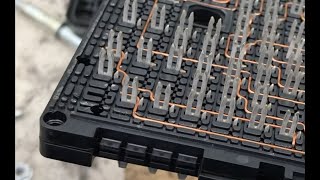
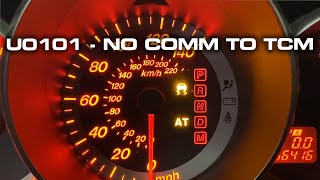
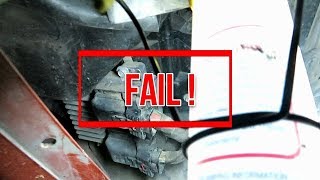
We Have This Part in Stock


The information in this article is provided for general reference and educational purposes only. Vehicle specifications, procedures, and part compatibility can vary by production date, trim level, and region. Always consult your vehicle's factory service manual and verify part numbers before purchasing or performing repairs. Safety-critical components such as airbags, seat belts, and braking systems should be installed by a qualified professional.
- Chevrolet CORVETTE:
- 🧭 Diagnostic Flowchart
- 🎬 Helpful Videos
- 🛍️ Shop This Part
- What's Unique About the 2007-2014 Chevrolet CORVETTE
- Symptoms You May Notice
- Most Likely Causes
- Rare But Worth Checking
- Diagnosis Steps
- Parts You'll Likely Need
- Related Codes That Often Appear With This One
- Technical Service Bulletins (TSBs) & Recalls
- Platform-Specific Known Issues
- Mechanic-Grade Diagnostic Values
- Scan Tool Commands That Help
- Wiring & Ground Locations
- Real Owner Repair Stories
- OEM Part Supersession History
- Model Year Variations Within This Range
- 🎟️ Get 5% Off