

U0101 on 2016-2017 Chevrolet Malibu: Lost Communication with TCM Causes and Fixes
On a 2016-2017 Chevrolet Malibu, code U0101 almost always points to an electrical issue, not a failed transmission. The most common causes are poor pin connections at the transmission connector, a bad ground, or a wiring harness issue, as highlighted in GM Technical Service Bulletin #PIP4990D and its successor #17-NA-211. Expect to start with inspecting and cleaning connectors and checking for chafed wires before suspecting a faulty Transmission Control Module (TCM).
- U0101 means the Transmission Control Module (TCM) has stopped communicating; this is a critical fault that makes the vehicle unsafe to drive.
- Do not immediately assume the TCM has failed. The most common cause on a 2016-2017 Malibu is a wiring or connector issue.
- Your first diagnostic steps should be to check the battery, TCM-related fuses, and thoroughly inspect the main transmission connector for damage or contamination.
- If the TCM does need to be replaced, it will require special programming to link it to your vehicle's VIN.
- This is not a beginner-friendly DIY repair due to the complexity of network diagnostics and the safety risks involved.
What's Unique About the 2016-2017 Chevrolet MALIBU

For this generation of Chevrolet Malibu, General Motors has specifically issued Technical Service Bulletins (TSBs) that point technicians away from immediately replacing the TCM. Instead, they highlight a high probability of wiring and connection issues. TSB #PIP4990D and its successor, #17-NA-211, specifically call out checking for poor terminal fit at the transmission connector and the underhood fuse block, as well as inspecting the main harness for damage where it might rub against the engine block. This makes a thorough wiring inspection the critical first step on these vehicles.
🎬 Watch: A basic diagnostic walkthrough for the Malibu U0101 code.Diagnostic Flowchart
Tap your situation to follow the diagnostic path that matches what you're seeing on this vehicle.
Symptoms You May Notice

- Check Engine Light is on
- Service Transmission message on the dashboard
- Vehicle enters 'limp mode,' limiting speed
- Harsh, erratic, or no shifting
- Vehicle may stall while driving.
- Gear position indicator on the dash may be blank or incorrect
- Vehicle may not start
- Hard 'clunk' when shifting into gear, especially Reverse
- Power door locks may cycle erratically during the fault
- Replacing the entire transmission. This code is an electrical/communication fault, not a mechanical failure. 🎬 See why diagnosing the CAN network first prevents costly mistakes. Replacing the transmission without diagnosing the root cause will not fix the U0101 code.
- Replacing the TCM without first thoroughly inspecting all related wiring and connectors. As per multiple GM TSBs, wiring is a more frequent cause of this code.
Most Likely Causes

- Damaged Wiring or Poor Connector Pin Fit 🔴 High Probability TSBs #PIP4990D and #17-NA-211 identify this as the most frequent cause. Specific failure points include the main transmission harness connector (X225) where pins loosen or get contaminated, and the harness chafing on a sharp edge of the engine block or transmission case. The connector's flip-style latch can also cause pins to spread if not handled carefully during service.
How to confirm: Visually inspect the wiring harness for chafing, especially where it runs over the transmission and engine. Disconnect the main transmission connector and check for corrosion, bent pins, or transmission fluid contamination. A burnt or blackened pin is a clear sign of a poor connection. Perform a 'pin drag' test with a proper terminal test kit to ensure each female pin has a snug fit on its male counterpart.
Typical fix: Clean the connector with electrical contact cleaner and apply dielectric grease upon reassembly. If pins are loose or burnt, they may need to be re-tensioned or the connector pigtail replaced. 🎬 Watch: How to replace a damaged TCM connector pigtail. Repair any damaged sections of the wiring harness with solder and heat shrink, then re-route to prevent future rubbing.
Est. part cost: $15-$75 - Poor Power or Ground to the TCM 🟡 Medium Probability Control modules are sensitive to voltage drops. A corroded or loose ground connection is a common failure point and is specifically called out as a primary check in TSB #PIP4990D. The key grounds for the TCM are often labeled G106 or G107.
How to confirm: Locate the TCM ground (G106/G107) on the chassis or engine block and inspect it for corrosion or looseness. Use a multimeter to perform a voltage drop test on the power and ground circuits to the TCM to ensure the circuit can handle a load, not just show static voltage.
Typical fix: Disassemble the ground connection, clean the terminal and the chassis point to bare metal, and tighten it securely. Repair any corroded or broken ground wires.
Est. part cost: $1-$10 - Blown Fuse for the TCM 🟡 Medium Probability
How to confirm: Check the underhood fuse block for fuses related to the TCM. For the 2016+ Malibu, these are often fuses F15 (5A) and F26 (15A), and potentially relay R66. Visually inspect the fuses and, more reliably, test them with a multimeter for continuity.
Typical fix: Replace the blown fuse. If the fuse blows again, it indicates a short circuit in the wiring or the TCM itself that needs to be diagnosed immediately.
Est. part cost: $1-$5 - Failed Transmission Control Module (TCM) ⚪ Low Probability → Shop Transmission Assembly While the module can fail, GM TSBs strongly suggest it is far less common than wiring issues. On these Malibus, the TCM is integrated into the valve body inside the transmission (a unit called a TEHCM), making it susceptible to heat, vibration, and contaminated fluid over its life.
How to confirm: This is diagnosed by exclusion. If all wiring, connectors, fuses, and grounds are confirmed to be good with load tests, and a scan tool still cannot communicate with the TCM, the module itself is the likely culprit.
Typical fix: Replace the Transmission Control Module/TEHCM. This part is inside the transmission and requires removal of the transmission side cover for access. The new module must be programmed to the vehicle's VIN using GM's Service Programming System (SPS) after installation.
Est. part cost: $400-$800
Rare But Worth Checking
- Faulty Engine Control Module (ECM): → Shop Engine Control Module (ECM) While rare, the ECM is a key part of the CAN bus network. A failure within the ECM could theoretically disrupt communication with the TCM, but it would typically be accompanied by other codes and symptoms related to engine management.
- Low Battery Voltage: → Shop Vehicle Battery A weak or failing battery can cause a variety of intermittent communication codes across the vehicle's network as modules fail to power up correctly. Always ensure the battery voltage is stable (~12.6V engine off, 13.7-14.7V engine on) before diving into complex diagnostics.
Diagnosis Steps
- Scan all vehicle modules for other DTCs. Note which modules have stored the U0101 code to help isolate the network fault.
- Check the battery and charging system. Ensure battery voltage is stable and terminals are clean and tight. Low voltage can cause communication errors.
- Inspect the fuses for the TCM in the underhood fuse block (typically F15 and F26).
- Following TSB #PIP4990D, perform a thorough visual inspection of the main transmission wiring harness. Look for chafing where it passes over the engine/transmission, kinks, and corrosion.
- Disconnect the main transmission connector (X225). Inspect for any bent, loose, burnt, or corroded pins. Check for any signs of fluid intrusion.
- Perform a 'pin drag test' on the female terminals of the transmission connector to ensure they provide adequate tension.
- Inspect the TCM ground connections (G106/G107) for tightness and corrosion. Clean and tighten as necessary.
- If wiring and connections appear good, use a multimeter to perform a load test (voltage drop) on the power and ground circuits at the TCM connector to confirm they can carry current.
- If all wiring, power, and grounds are confirmed good, the final step is to suspect a faulty TCM/TEHCM.
Parts You'll Likely Need
- Transmission Control Module (TEHCM)
(OEM #24287422)— This is the part to replace if all wiring and connection checks pass. It is the integrated computer and valve body assembly inside the transmission.
Trusted brands: ACDelco (Genuine GM)
OEM price range: $600-$900
Aftermarket price range: $400-$600 - Transmission Connector Pigtail — If the main connector or its pins are damaged or corroded beyond cleaning, replacing the connector end (pigtail) is necessary to ensure a solid connection.
Trusted brands: ACDelco, Dorman
OEM price range: $40-$70
Aftermarket price range: $20-$40
Related Codes That Often Appear With This One
- U0073 — Control Module Communication Bus 'A' Off. This is a general network code that often appears with U0101, indicating a broader communication problem on the high-speed CAN bus.
- P0700 — Transmission Control System (MIL Request). This is a generic code sent by the TCM to the ECM to request the Check Engine Light be turned on. If you see this with U0101, it means the TCM detected a fault right before it lost communication.
Technical Service Bulletins (TSBs) & Recalls
- TSB #17-NA-211: Successor to PIP4990D, reiterates that U0101 is frequently caused by wiring, connector, or ground issues rather than a failed TEHCM. It advises inspecting the harness for rubbing on the engine block and applying dielectric grease to the connector after inspection.
- TSB #PIP4990D: The original well-known bulletin for this issue across many GM models. It directs technicians to check terminal pin fit at the transmission connector, underhood fuse block, and TCM grounds (G106, G107) before replacing parts.
Platform-Specific Known Issues
- NHTSA TSB #PIP4990D explicitly warns that U0101 is 'frequently caused by issues in areas other than the control solenoid / module assembly (TEHCM)'. It directs technicians to inspect transmission connector pins, the underhood fuse block for poor terminal fit, and the TCM ground before replacing any parts.
- An owner of a similar year Chevrolet reported that codes U0101, U0073, and U0415 appeared when the vehicle suddenly stopped in traffic, highlighting the potential safety risk.
Mechanic-Grade Diagnostic Values
- CAN Bus Network Resistance — expected: ~60 Ohms. Failure: A reading of ~120 Ohms indicates an open circuit or a missing terminating resistor. A reading near 0 Ohms indicates a short between the CAN High and CAN Low wires.
- TCM Ground Circuit Resistance — expected: Less than 0.5 Ohms. Failure: High resistance indicates a corroded, loose, or broken ground connection at G106 or G107.
- TCM Power Supply Voltage (Key On, Engine Off) — expected: 12.0 - 12.6 V (should equal battery voltage). Failure: Low or no voltage at the TCM connector's power pin points to a blown fuse (F15/F26), a bad relay, or an open in the power wire.
Scan Tool Commands That Help
- GM GDS2 (Global Diagnostic System 2): Vehicle DTC Information / Module Diagnostics — Use this initial scan to see which modules are reporting the U0101 code. Attempting to directly access the TCM data list will quickly confirm if it is online or not.
- GM SPS2 (Service Programming System) via Techline Connect: Module Programming/Setup — This is required after replacing the TEHCM (TCM). The new module must be programmed with the vehicle's specific VIN and software calibration to function.
Wiring & Ground Locations
- G106 — In the engine compartment at the right side inner fender, behind the air cleaner.. This is a primary ground point for the TCM. Corrosion or looseness here is a common cause of intermittent communication loss and is a specific checkpoint mentioned in GM TSBs.
- Harness Chafe Point — On top of the transmission where the wiring harness can rub against a sharp edge on the engine block.. This specific point of friction can wear through the wire insulation over time, causing the CAN bus wires to short to ground or to each other, directly causing a U0101 code.
- X225 — The main 14-pin electrical connector at the transmission housing.. This is the single point of connection for all power, ground, and communication lines to the internal TCM (TEHCM). It is highly susceptible to contamination, corrosion, and damaged pins.
Real Owner Repair Stories
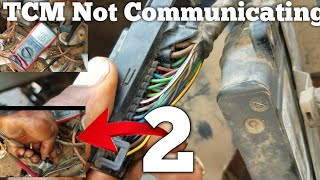
- YouTube channel 'Garrys repair and auto electrical diagnostics' (Chevrolet Malibu/Impala (2011-2020 platform)) — Intermittent U0101 code, vehicle enters limp mode, power door locks cycle erratically when the fault occurs.
❌ Tried (didn't work) Initial assumption was a complex intermittent network problem.
✅ What actually fixed it Upon inspection of the main transmission connector, one of the terminal pins was found to be black and burnt, indicating a severe lack of contact. The fix required repairing the burnt pin and connector to restore a solid connection.
OEM Part Supersession History
24257276, 24275861→24287422— Standard part revision and improvement by the manufacturer.
Heads up: The newest part number (24287422) is the correct replacement for the earlier versions. Always verify the part number with the vehicle's VIN before ordering.
Model Year Variations Within This Range
- 2017: For the 2017 model year, Malibus equipped with the 2.0L Turbo engine received a new 9-speed automatic transmission (Hydra-Matic 9T50), replacing the 8-speed used previously. Malibus with the base 1.5L engine retained the 6-speed automatic. This means diagnostics and the specific TEHCM part number for a 2017 2.0T model will differ from a 2016 model or a 2017 1.5L model.
Helpful Videos

We Have This Part in Stock

The information in this article is provided for general reference and educational purposes only. Vehicle specifications, procedures, and part compatibility can vary by production date, trim level, and region. Always consult your vehicle's factory service manual and verify part numbers before purchasing or performing repairs. Safety-critical components such as airbags, seat belts, and braking systems should be installed by a qualified professional.
- Chevrolet MALIBU:
- 🧭 Diagnostic Flowchart
- 🎬 Helpful Videos
- 🛍️ Shop This Part
- What's Unique About the 2016-2017 Chevrolet MALIBU
- Symptoms You May Notice
- Most Likely Causes
- Rare But Worth Checking
- Diagnosis Steps
- Parts You'll Likely Need
- Related Codes That Often Appear With This One
- Technical Service Bulletins (TSBs) & Recalls
- Platform-Specific Known Issues
- Mechanic-Grade Diagnostic Values
- Scan Tool Commands That Help
- Wiring & Ground Locations
- Real Owner Repair Stories
- OEM Part Supersession History
- Model Year Variations Within This Range
- 🎟️ Get 5% Off