

U0101 on 2005-2010 Chrysler 300: Lost Communication with TCM Causes and Fixes
On a 2005-2010 Chrysler 300, code U0101 is most often caused by a leaking transmission electrical connector plug that allows fluid to contaminate the wiring, or a failed conductor plate inside the transmission. Expect to pay $15-$50 for a new connector plug or $150-$250 for a conductor plate kit. In many cases, the vehicle will be stuck in 'limp mode' and may not start.
- Before any other action, inspect the round 13-pin electrical connector on the transmission for fluid leaks. This is the most common cause.
- Do not immediately assume the TCM is bad. The problem is far more likely to be the cheap connector plug, the internal conductor plate, or a wiring issue.
- This code puts the car in a dangerous 'limp mode' and should be addressed immediately. Do not continue to drive the vehicle.
- Always check the simple things first: battery voltage, fuses, and ground connections, as low voltage can cause random communication codes.
What's Unique About the 2005-2010 Chrysler 300
The first-generation Chrysler 300 uses a Mercedes-Benz NAG1 (also known as 722.6 or W5A580) 5-speed automatic transmission. This transmission is known for two specific, very common failure points that directly cause the U0101 code. 🎬 Watch: A complete diagnostic guide for the U0101 communication code. The first is a cheap 13-pin electrical connector plug with O-rings that fail, allowing transmission fluid to leak and wick up the wiring harness, causing short circuits. The second is the internal conductor plate, which houses speed sensors that are prone to failure from heat and age, leading to a total loss of communication.
Symptoms You May Notice
- Vehicle enters "limp mode," stuck in a single gear (usually 2nd).
- Check Engine Light and/or a transmission-specific warning light is on.
- The gear selector indicator (PRNDL) on the dashboard is blank, shows dashes, or has all lights lit up.
- Harsh, erratic, or completely failed shifting.
- Inability to shift out of Park.
- Vehicle may not start, and the dash may display a "Service Shifter" or "Vehicle Not in Park" message.
- ESP/BAS warning light may also illuminate.
- Replacing the Transmission Control Module (TCM) before checking for a leaking connector plug and cleaning the harness. The fluid-contaminated harness will cause the new TCM to also fail or report communication errors.
- Assuming the entire transmission has failed mechanically when it is an electrical or communication issue that can be fixed with much cheaper parts like the conductor plate or connector plug.
- Replacing the conductor plate without first replacing the leaking 13-pin connector plug. The continued leak will damage the new conductor plate's connection.
Most Likely Causes
- Leaking Transmission Electrical Connector Plug 🔴 High Probability → Shop Transmission Assembly The O-rings on the 13-pin connector for the NAG1/722.6 transmission are a well-documented failure point. The leak allows ATF to wick up the wiring harness via capillary action, contaminating the TCM connector and causing short circuits.
How to confirm: Visually inspect the round, black 13-pin electrical connector on the passenger side of the transmission, near the front. Look for any signs of reddish transmission fluid. If found, disconnect the harness (twist the bayonet-style collar) and check for fluid inside the connector pins.
Typical fix: Replace the electrical connector plug and its O-rings. This part is often called a "pilot bushing". Clean the entire wiring harness and the TCM connector thoroughly with electrical contact cleaner until all fluid residue is gone. If the harness is saturated, it may need replacement.
Est. part cost: $15-$50 - Faulty Transmission Conductor Plate 🔴 High Probability → Shop Transmission Assembly The conductor plate is a plastic part inside the transmission that holds the speed sensors and solenoid connections. It is submerged in hot fluid and becomes brittle over time, leading to cracks in the electrical traces or failure of the integrated input/output speed sensors, which causes a loss of communication.
How to confirm: This is diagnosed after confirming the external wiring, connector, and power/grounds are all good. If there is no communication with the TCM and no external cause is found, the conductor plate is the next most likely culprit. This often requires a professional scan tool to confirm specific speed sensor fault codes that accompany U0101.
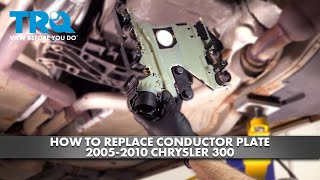
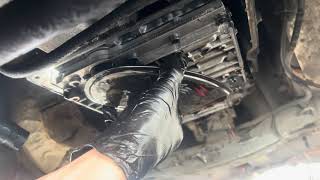
Typical fix: The transmission fluid pan and valve body must be removed to access and replace the conductor plate. It is typically sold as a kit with a new connector plug, filter, and pan gasket. The new conductor plate does not require programming.
Est. part cost: $150-$250 - Low Battery Voltage or Poor Grounds 🟡 Medium Probability → Shop Vehicle Battery The various control modules on the CAN bus require a stable voltage to communicate. The battery in these vehicles is located in the trunk, with a long power cable and several ground points that can corrode over time, causing intermittent voltage drops and communication faults.
How to confirm: Test the battery voltage with a multimeter. It should be ~12.6V with the engine off and ~13.7-14.7V while running. Inspect the battery terminals in the trunk and the main chassis ground straps for corrosion or looseness.
Typical fix: Recharge or replace the battery. Clean all battery terminals and ground connection points thoroughly.
Est. part cost: $0-$250 - Faulty Electronic Shifter Module (ESM) ⚪ Low Probability The center console shifter is an electronic module on the CAN bus. Spilling liquids (coffee, soda) on the shifter is a common way to damage its internal electronics, causing it to send invalid data or stop communicating, which can trigger a U0101 in the PCM.
How to confirm: If you have a scan tool, check for communication with the ESM. If there are other codes related to the ESM or if a beverage was recently spilled on the console, the ESM is a likely suspect. The module can be removed for inspection by disassembling the center console.
Typical fix: The center console must be disassembled to replace the ESM. The replacement part may need to be programmed by a dealer.
Est. part cost: $100-$300
Rare But Worth Checking
- Damaged Wiring Harness: Beyond the common fluid leak, the harness can be damaged by road debris, improper repairs, or chafing against the chassis or exhaust components. A visual inspection of the entire harness from the transmission to the TCM is necessary. Poor pin tension at the TCM connector can also cause intermittent connection loss.
- Failed Transmission Control Module (TCM): → Shop Transmission Assembly While the TCM can fail, it is often replaced unnecessarily. This should only be considered after all other possibilities—especially fluid contamination, wiring, power, and grounds—have been completely ruled out.
- Blown Fuse: A blown fuse supplying power to the TCM will cause an immediate U0101 code. On these vehicles, check fuses in both the front (underhood) and rear (trunk) power distribution centers.
Diagnosis Steps
- Check Battery and Grounds: Ensure the battery is fully charged (~12.6V engine off) and terminals are clean. A voltage below 12.4V can cause communication issues. Inspect main ground connections in the engine bay and trunk.
- Scan for All Codes: Use a quality OBD-II scanner to check for codes in all modules (PCM, ABS, etc.), not just the PCM. Note if other modules also report communication loss with the TCM.
- Inspect the 13-Pin Connector: This is the most critical step. Get under the vehicle and visually inspect the main transmission wiring harness connector for any sign of fluid leakage. If wet, disconnect it and inspect for oil inside the pins.
- Clean Contaminated Connectors: If fluid is found, use a dedicated electrical contact cleaner to thoroughly clean the harness connector and the TCM's connector. Let it dry completely before reconnecting.
- Check Fuses: Check all fuses related to the TCM and the Electronic Shifter Module (ESM) in both the front (underhood) and rear (trunk) fuse boxes. A video for a similar model points to fuses F29 and F37 in the front and F26 in the trunk.
- Test CAN Bus Wiring: If the problem persists, use a multimeter to check for 60 ohms of resistance across the CAN High (Pin 6) and CAN Low (Pin 14) pins at the OBD-II diagnostic port (with the battery disconnected). This verifies the integrity of the network's main termination resistors.
- Check Power and Ground at the TCM: If possible, access the TCM connector and verify it is receiving battery voltage and has a good ground connection. A lack of either points to a wiring or fuse issue.
- Suspect Internal Components: If all external wiring, power, and grounds are confirmed to be good, the fault is likely internal to the transmission (conductor plate) or a failed TCM.
- Professional Diagnosis: At this point, a professional with a dealership-level scan tool (like wiTECH) is needed to definitively diagnose a faulty conductor plate versus a faulty TCM by attempting to communicate directly with the module.
Parts You'll Likely Need
- Transmission Conductor Plate Kit (NAG1/722.6)
- Transmission Electrical Connector Plug (Pilot Bushing)
- NAG1 / 722.6 Transmission Fluid
Related Codes That Often Appear With This One
- P0700 — P0700 is a generic code that means the TCM has requested the check engine light to be turned on. It almost always accompanies specific transmission codes like U0101.
- U0002 — This code indicates a CAN C Bus Off Performance issue, pointing to a general network problem rather than just one module. Seeing this with U0101 suggests a wiring short or power issue affecting the whole network.
- P0715 — This code indicates a fault with the Input Speed Sensor circuit. Since this sensor is integrated into the conductor plate on the NAG1 transmission, P0715 is a strong indicator that the conductor plate has failed.
Technical Service Bulletins (TSBs) & Recalls
- While searches were conducted for specific TSBs for the 2005-2010 model year regarding U0101, none were prominently found. The issue is so well-documented as a mechanical/electrical failure of the connector or conductor plate that it is typically handled as a standard repair rather than a software-related bulletin for this generation. A TSB (#18-013-22) exists for much newer (2021+) models with a different transmission, but it is not relevant to the 2005-2010 300.
- Manufacturer TSB Bulletin #1801322 notes that a technician may find U0101 (Lost Communication With TCM) along with U0102 (Lost Communication With Transfer Case Control Module / AWD) and U0103 (Lost Communication With Electric Gear Shifter) during investigation of Malfunction Indicator Lamp (MIL) illumination.
Mechanic-Grade Diagnostic Values
- CAN Bus Network Resistance — expected: 53.5 to 67 Ohms. Failure: A reading of ~120 Ohms indicates an open circuit or a missing terminating resistor. A reading significantly below 53 Ohms suggests a short between the CAN high and low wires.
- TCM Power Supply Voltage — expected: 12.0 - 12.6 Volts (Ignition On, Engine Off). Failure: Voltage below 12.0V indicates a weak battery, poor connection, or a wiring issue that can cause communication faults.
- TCM Ground Circuit Resistance — expected: Less than 0.5 Ohms. Failure: High resistance indicates a corroded, loose, or broken ground connection, which is a common cause of intermittent module communication.
Scan Tool Commands That Help
- wiTECH or equivalent professional scan tool: Reset Transmission Adaptives — This function should be performed after replacing the conductor plate, valve body, or the entire transmission assembly. It erases the old learned shift data and forces the TCM to re-calibrate for the new components, ensuring proper baseline operation.
- wiTECH or equivalent professional scan tool: Store Adaptives — After performing the adaptation drive cycle, this command can be used to manually save the new adaptive values immediately, rather than waiting for the TCM's automatic 10-minute storage interval.
Wiring & Ground Locations
- TCM Location — The TCM for the NAG1 transmission is typically located in the engine compartment, on the passenger side near the firewall.. This is the module that has lost communication. Its location is critical for checking for power, ground, and inspecting the main wiring harness connector for fluid intrusion or damage.
- G305 — Right side of the luggage compartment (trunk).. This is a major chassis ground point. Since the battery is also in the trunk, corrosion or looseness at this ground can cause a variety of difficult-to-diagnose electrical issues, including module communication faults.
- 13-pin Transmission Connector — On the passenger side of the transmission housing, near the front.. This is the single most common failure point for this code. The O-rings fail, allowing transmission fluid to leak into the connector and wick up the harness, causing shorts and communication loss.
Real Owner Repair Stories
- Diablosport Forums user (2005-2010 Chrysler 300C 5.7L) — Check Engine Light on, ESP/BAS light on, vehicle in limp mode (less than 3k RPM and 35 MPH).
❌ Tried (didn't work) Resetting to stock tune, Reinstalling modified tune, Pulling fuse #11 in the rear fuse box
✅ What actually fixed it The user pulled multiple fuses from the trunk fuse box (8, 11, 36, 44), waited for an hour and a half, reinstalled them, started the car, and then cleared the U0101 code with a handheld tuner. This restored normal operation. This suggests a hard reset of the modules by cutting power for an extended period resolved a temporary glitch.
Model Year Variations Within This Range
- 2008-2010: A mid-generation refresh occurred for the 2008 model year, which included a revised interior with an updated infotainment system, restyled headlights/taillights, and different interior materials. While these changes did not directly affect the common causes of U0101 (the NAG1 transmission and its core components remained), a technician should be aware of potential wiring differences in the dash and center console if diagnosing a faulty ESM.
- 2005-2007 vs 2008-2010: The decklid and taillight shapes were slightly altered for 2008, meaning parts are not interchangeable between the two ranges. This is not directly related to U0101 but is a key service detail for this generation.
- 2009-2010: AWD models received an updated Borg-Warner transfer case that could disconnect the front axle to run in RWD mode when AWD was not needed. This adds another control module to the network but is not a common cause of U0101.
Diagnostic Flowchart
Used vs. New Parts: Buying Guide for This Vehicle
When a used part is the smart pick: A used Electronic Shifter Module (ESM) can be a cost-effective option, as they are generally reliable unless physically damaged by a liquid spill. A used wiring harness can also be viable if it comes from a low-mileage, non-corroded donor car and is thoroughly inspected for damage.
Donor-vehicle mileage cap: roughly under 80000 miles for the part to have meaningful remaining life.
What to inspect on the donor part:
- For a Conductor Plate: Avoid. The integrated sensors are a wear item. A used part has unknown life remaining and the labor to install it is too high to risk an early failure.
- For a TCM: Inspect the connector pins for any signs of corrosion or fluid contamination. Ensure the part number matches exactly. Be aware that some may require programming.
- For an ESM: Check for any stickiness, discoloration, or signs of liquid spills around the shifter assembly. Test the mechanical feel of the shifter.
- For a Wiring Harness: Check for intact sheathing, no brittle or cracked sections, and clean connector pins. Avoid harnesses from regions with heavy road salt use.
OEM-only on this vehicle (don't cheap out):
- Transmission Electrical Connector Plug (Pilot Bushing): The cost is very low and the failure rate is very high. There is no reason to use a used part. Always install a new one with fresh O-rings during any related service.
- Conductor Plate: Given the high labor cost to access this internal part, installing a new OEM or high-quality aftermarket part (e.g., Dorman, Standard Ignition) is the only sensible choice to ensure longevity.
Aftermarket brands forum-validated for this vehicle:
- Conductor Plate: Dorman, Standard Motor Products (SMP), FCP Euro (Kit)
- Connector Plug / Pilot Bushing: FCP Euro, Mopar (OEM)
Brands owners have reported issues with on this vehicle:
- Unbranded, 'white box' conductor plates or electrical connectors from online marketplaces are a significant risk due to questionable quality control and material durability.
Real Owner Stories
Aggregated from forums and TSBs cited above. Mileages and costs reflect what owners reported in those sources.
Chrysler 300
Symptoms: The U0101 code and associated limp mode were intermittent at first. Clearing the code would work temporarily, but the issue eventually became permanent.
What fixed it: The issue was resolved by replacing the leaking transmission electrical connector and/or the internal conductor plate.
Source hint: 300cforums.com
2007 3.5L Chrysler 300
Symptoms: Owner experienced an intermittent U0101 code and limp mode that eventually became a permanent, non-resettable fault.
What fixed it: The source described the classic symptom progression for this fault, which is typically resolved by addressing the leaking connector or faulty conductor plate.
Source hint: Reddit r/Cartalk
Related OBD-II Codes
Frequently Asked Questions
Where is the transmission electrical connector I need to check for leaks on my 2005-2010 Chrysler 300?
I spilled coffee on my shifter. Could that really cause this transmission code?
My battery is in the trunk. Can a weak battery actually cause my car to go into limp mode with a U0101 code?
If I replace the transmission conductor plate myself, does the new part need to be programmed by the dealer?
Are there any official TSBs or recalls for the U0101 code on my Chrysler 300?
What is the part number for the leaking transmission connector plug?
Besides the Check Engine Light, what other warning lights might come on with a U0101 code?
Helpful Videos
We Have This Part in Stock


The information in this article is provided for general reference and educational purposes only. Vehicle specifications, procedures, and part compatibility can vary by production date, trim level, and region. Always consult your vehicle's factory service manual and verify part numbers before purchasing or performing repairs. Safety-critical components such as airbags, seat belts, and braking systems should be installed by a qualified professional.
- Chrysler 300:
- 🧭 Diagnostic Flowchart
- 🎬 Helpful Videos
- 🛍️ Shop This Part
- What's Unique About the 2005-2010 Chrysler 300
- Symptoms You May Notice
- Most Likely Causes
- Rare But Worth Checking
- Diagnosis Steps
- Parts You'll Likely Need
- Related Codes That Often Appear With This One
- Technical Service Bulletins (TSBs) & Recalls
- Mechanic-Grade Diagnostic Values
- Scan Tool Commands That Help
- Wiring & Ground Locations
- Real Owner Repair Stories
- Model Year Variations Within This Range
- Used vs. New Parts: Buying Guide for This Vehicle
- Real Owner Stories
- Chrysler 300
- 2007 3.5L Chrysler 300
- Related OBD-II Codes
- Frequently Asked Questions
- 🎟️ Get 5% Off