

U0101 on 2006-2010 Dodge Charger: Lost Communication With TCM Causes and Fixes
On a 2006-2010 Dodge Charger, code U0101 usually means the Transmission Control Module (TCM) has failed or its wiring is damaged. A very common cause is the transmission electrical connector sleeve leaking fluid, which damages the wiring or the TCM itself. The car will likely go into 'limp mode,' stuck in one gear. Diagnosis often starts by checking this connector, and the fix can range from replacing a cheap seal to replacing the entire TCM/conductor plate assembly inside the transmission.
- U0101 on your Charger means the transmission computer (TCM) has stopped communicating, which is why the car is in 'limp mode'.
- Before suspecting the expensive TCM, ALWAYS inspect the cheap 13-pin electrical connector on the side of the transmission for fluid leaks. This is the most common cause.
- Always check the battery and main ground connections first, as low voltage can cause random communication codes.
- The TCM is not a simple bolt-on part; it's integrated into the conductor plate inside the transmission pan, making replacement a job for an experienced DIYer or a professional.
What's Unique About the 2006-2010 Dodge Charger
The 2006-2010 Charger belongs to the Chrysler LX platform, sharing its core electronics and wiring with the Chrysler 300 and Dodge Magnum. Many of these vehicles, particularly V8 models and some V6s, use the Mercedes-designed W5A580 (NAG1) 5-speed automatic transmission. On these models, the TCM is not a separate external module; it is integrated into the 'conductor plate' mounted on top of the valve body, inside the transmission oil pan. A critical and extremely common failure point is the 13-pin electrical connector sleeve where the harness plugs into the transmission. Its O-rings fail, allowing transmission fluid to leak and wick up into the connector pins and harness, causing communication loss and triggering U0101.
🎬 Watch: Diagnosing U0101 communication loss on the LX platformSymptoms You May Notice
- Check Engine Light is on
- Transmission or Drivetrain warning light is on
- ESP/BAS and Traction Control lights may illuminate
- Vehicle enters a 'limp mode,' stuck in a single gear
- Harsh, erratic, or complete inability to shift gears
- Engine may not respond to the throttle pedal at a stop
- Gear selector indicator (PRNDL) on the dash may be blank, show boxes, or flash
- Replacing the entire transmission. This is a communication code, not a mechanical one. A full transmission replacement will not fix a bad wire or faulty TCM, although a new transmission often comes with a new conductor plate.
- Replacing the shifter assembly. While a faulty shifter can cause other issues, it is not a typical cause for a U0101 code.
Most Likely Causes
- Leaking Transmission Electrical Connector Plug Very High Probability → Shop Transmission Assembly The O-rings on the 13-pin connector sleeve (where the harness plugs into the NAG1 transmission) are a notorious failure point. They degrade over time, allowing ATF to seep into the electrical connector, shorting the communication pins.
How to confirm: Visually inspect the 13-pin round connector on the front passenger side of the transmission. Disconnect it (may require twisting a collar) and check for any oily residue (transmission fluid). This is a primary check and should be done first. TSB 08-019-08 points to this inspection.
Typical fix: Replace the electrical connector plug adapter/sleeve. This is a very inexpensive part. Thoroughly clean the harness connector with electronics cleaner and clear the codes. If the problem persists, the fluid may have already damaged the conductor plate/TCM.
Est. part cost: $15-$50 - Faulty Conductor Plate (Integrated TCM) 🔴 High Probability The TCM is integrated into the conductor plate, which lives inside the hot transmission pan. It's prone to failure from heat cycles, vibration, and especially from fluid intrusion originating from the leaking connector plug. Internal circuit board components can fail, sometimes intermittently with temperature changes.
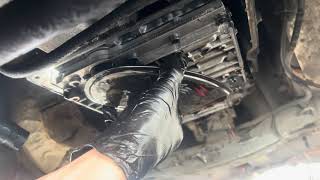
How to confirm: After confirming the connector plug is clean (or has been replaced) and that power and grounds to the TCM are good, the conductor plate/TCM is the prime suspect. 🎬 Watch: How to remove the conductor plate and valve body A high-end scan tool will show the module as 'offline'.
Typical fix: Replace the conductor plate assembly inside the transmission. This requires draining the fluid, dropping the pan, and removing the valve body. The new module must be programmed to the vehicle.
Est. part cost: $250-$700 - Wiring Harness or Connector Damage 🟡 Medium Probability Aside from the common connector leak, the harness itself can be chafed or damaged, especially near the exhaust or drivetrain components.
How to confirm: Visually inspect the entire wiring harness between the PCM and the TCM. Check connectors for corrosion, moisture, or pushed-out pins. Test the CAN bus wires for continuity and for shorts to power or ground using a multimeter.
Typical fix: Repair the damaged section of the harness or replace the faulty connector.
Est. part cost: $20-$200 - Low Battery Voltage or Poor Grounds ⚪ Low Probability → Shop Vehicle Battery All modern vehicles are sensitive to low voltage. A weak battery or failing alternator can cause unpredictable communication errors between modules.
How to confirm: Test the battery voltage with the engine off (should be >12.4V) and while running (should be 13.7V-14.7V). Inspect and clean the main battery terminals and chassis ground points.
Typical fix: Replace the weak battery, fix the charging system, or clean/tighten ground connections.
Est. part cost: $0-$250
Rare But Worth Checking
- Faulty Totally Integrated Power Module (TIPM): → Shop Fuse Box The TIPM is the vehicle's main fuse box and electrical hub. It's a known source of various electrical issues on Chrysler/Dodge platforms and can cause communication codes like U0101 if it fails to properly route power or network signals to the TCM. Check TCM-related fuses first (e.g., Fuse 2 in the front TIPM on some models).
- Faulty Powertrain Control Module (PCM): → Shop Engine Control Module (ECM) While the code is logged by the PCM, it's rare for the PCM itself to be the cause of a single module communication loss. This should only be considered after all other possibilities have been exhausted.
Diagnosis Steps
- Check for any other stored diagnostic trouble codes. Address other CAN bus or power-related codes first.
- Check and verify battery voltage is stable and between 12.4V (off) and 14.7V (running).
- Crucial First Step: Inspect the 13-pin electrical connector at the transmission for signs of fluid leakage (oily residue). This is the most common cause. If fluid is present, replace the connector sleeve and clean the harness before proceeding.
- Check TCM-related fuses in the front TIPM (fuse box in the engine bay).
- Using a scan tool capable of network diagnostics, check the status of all modules on the CAN bus. Verify if the TCM is listed as 'active' or 'offline'.
- If the connector was dry and fuses are good, check the power and ground circuits for the TCM at its connector to ensure it's receiving proper voltage and has a solid ground connection.
- If power and ground are good, test the CAN bus communication wires. With the ignition off, measure resistance between the two CAN wires. With the ignition on, measure the voltage on each CAN wire relative to ground (should be around 2.5V).
- If all wiring, power, and grounds test good, the Conductor Plate / Transmission Control Module (TCM) is the most likely cause of the fault.
Parts You'll Likely Need
- Conductor Plate / TCM
(OEM #52108308AB (superseded by 52108308AC))— This module, which includes the TCM, is the most common point of failure for this specific code on the 2006-2010 Charger, often damaged by heat or fluid intrusion.
Trusted brands: Mopar (OEM), Dorman, Cardone, Febi Bilstein
OEM price range: $500-$900
Aftermarket price range: $250-$450 - Transmission Electrical Connector Plug Adapter
(OEM #68021352AA)— This is the single most common failure point leading to U0101. The O-rings on this inexpensive part fail, allowing fluid to contaminate the electrical connection to the TCM. It should be inspected first and replaced as a primary diagnostic step or preventative measure.
Trusted brands: Mopar (OEM), Various Aftermarket
OEM price range: $20-$50
Aftermarket price range: $10-$25
Related Codes That Often Appear With This One
- U0002 — This code indicates a general CAN C Bus performance issue. If seen with U0101, it suggests a wider network problem rather than just an isolated TCM fault.
- P0700 — This is a generic code meaning 'Transmission Control System Malfunction'. The PCM sets this code to turn on the Check Engine Light when it receives a fault request from the TCM. If U0101 is present, you may not see this code, as the TCM isn't communicating at all.
Technical Service Bulletins (TSBs) & Recalls
- TSB 08-019-08: While this TSB may address other electronic issues, it is often referenced in forums for its procedure which involves inspecting the 13-way transmission harness connector for corrosion or fluid intrusion—a key diagnostic step for U0101 on this platform.
- TSB Bulletin #1801222: This manufacturer bulletin notes that a technician may find U0101 (Lost Communication With TCM) along with U0102 and U0103 during investigation of Malfunction Indicator Lamp (MIL) illumination.
Platform-Specific Known Issues
- NAG1/W5A580 Transmission Design: → Shop Transmission Assembly The use of the Mercedes-Benz NAG1 transmission means the TCM is integrated into the conductor plate inside the transmission pan. This design makes it susceptible to failure from fluid contamination caused by a leaking electrical pass-through connector sleeve, a very common issue. The repair is more involved than for an external TCM.
Mechanic-Grade Diagnostic Values
- CAN Bus Resistance (Battery Disconnected) — expected: Approximately 60 Ω between CAN-H (Pin 6) and CAN-L (Pin 14) at the OBD-II port.. Failure: A reading of ~120 Ω indicates one of the two terminating resistors is offline. A reading near 0 Ω indicates a short between the CAN wires.
- CAN Bus Voltage (Key On, Engine Off) — expected: CAN-H (Pin 6 to ground) should be ~2.6V. CAN-L (Pin 14 to ground) should be ~2.4V.. Failure: Significant deviation, such as one line being at 0V or 5V, indicates a short to ground or power.
- TCM Ground Circuit Resistance — expected: Less than 5.0 Ω, ideally under 0.5 Ω.. Failure: High resistance indicates a poor ground connection, which can cause the module to drop offline.
- NAG1 Solenoid Resistance (at TCM connector) — expected: Line Pressure Solenoid (Pins 38 to 36): ~5.5 Ω. Shift Solenoids (e.g., Pins 38 to 16, 38 to 15): ~4.5 Ω. Lock Up Clutch Solenoid (Pins 38 to 17): ~2.7 Ω.. Failure: Readings that are significantly open (infinite) or shorted (near zero) indicate a failed solenoid within the conductor plate assembly.
Scan Tool Commands That Help
- wiTECH (Chrysler Dealer Tool): ECU View / Network View — This is the initial step to see which modules are active on the network. A red 'X' next to the TCM confirms it is not communicating, directly supporting the U0101 code.
- wiTECH (Chrysler Dealer Tool): Reset Adaptive Values — After replacing the conductor plate or valve body, this function should be used to clear the old learned shift data before performing a new quick learn.
- wiTECH (Chrysler Dealer Tool): Quick Learn — This procedure is required after replacing the conductor plate/TCM or clearing adaptive values. It allows the TCM to learn the hydraulic and mechanical tolerances of the clutches for smooth shifting.
- wiTECH (Chrysler Dealer Tool): Reprogram TCM — Used to flash the TCM with updated software to fix bugs or improve performance. This is a standard procedure when a new module is installed.
Wiring & Ground Locations
- TCM Connector (13-pin) — On the front passenger side of the NAG1 transmission housing, where the main vehicle harness connects.. This is the single most common failure point. The O-rings on the internal sleeve fail, allowing transmission fluid to leak into the connector, shorting the CAN bus and power pins, directly causing U0101.
- G300 — Below the driver's side 'B' pillar, under the carpet/trim.. This is a major chassis ground point for various interior modules. While not a direct ground for the TCM, poor grounding here can introduce electrical noise onto the network, potentially contributing to communication issues.
- Engine to Chassis Ground Strap — Typically runs from the engine block to the vehicle's frame rail or subframe.. A corroded or broken main engine ground strap can cause modules to seek ground through other paths, leading to unstable voltages and communication errors across the entire vehicle, including with the TCM.
- Totally Integrated Power Module (TIPM) — The main fuse and relay box in the engine compartment.. The TIPM houses the fuses and relays that supply power to the TCM. It is also a central hub for CAN bus wiring. A fault within the TIPM itself can cut power or communication to the TCM.
Real Owner Repair Stories
- DodgeForum.com user '07ChargerDude' (2007 Dodge Charger, 3.5L V6 w/NAG1) — U0101 code, ESP/BAS lights on, but only when the car was cold (below 50°F). When the fault occurred, the car would have no throttle response from a stop.
❌ Tried (didn't work) Waiting for the car to warm up, which would temporarily resolve the issue until the next cold start.
✅ What actually fixed it Replacing the Transmission Control Module (TCM)/conductor plate. The owner confirmed that after testing power and grounds, the TCM was the culprit. A used TCM was purchased and programmed, which resolved the cold-start communication loss. - NHTSA ODI #10807120: An owner reported experiencing multiple fault codes including U0101, U1110, and U1120. They were able to record the dash display while the issue was occurring back-to-back, but the dealership initially only reset the lamp.
- NHTSA ODI #11362939: A driver reported that their vehicle displayed traction control, ABS, and service key lights along with seven different codes, including U0101, U1110, and U1120. After resetting the computer, the same issues returned after approximately 200 miles.
OEM Part Supersession History
52108308AB→52108308AC— Revision and improvement of the conductor plate assembly.
Heads up: The newer part number (AC) is a direct replacement for the older (AB) version and is fully compatible.
Model Year Variations Within This Range
- 2006 vs 2007+: There was a change in the CAN bus communication speed between 2006 and 2007 models. The TCMs are labeled differently (e.g., EGS52 for 2006, EGS53 for 2007+). However, forum users have reported that a newer EGS53 TCM can be used in a 2006 vehicle if programmed correctly.
Diagnostic Flowchart
Used vs. New Parts: Buying Guide for This Vehicle
When a used part is the smart pick: A used conductor plate/TCM can be a cost-effective option, especially if the failure is intermittent and not caused by major fluid contamination. One owner successfully fixed a cold-start issue with a used module. However, this is a gamble on the part's remaining lifespan.
Donor-vehicle mileage cap: roughly under 100000 miles for the part to have meaningful remaining life.
What to inspect on the donor part:
- Inspect the 13-pin connector port on the used conductor plate for any signs of cracks or physical damage.
- Ask the seller if the donor vehicle had any transmission-related trouble codes.
- Prefer sellers who offer a short-term warranty or return policy.
OEM-only on this vehicle (don't cheap out):
- Transmission Electrical Connector Plug Adapter (68021352AA). The cost difference is minimal, and OEM O-rings are crucial for preventing the very leak that causes U0101.
Aftermarket brands forum-validated for this vehicle:
- Dorman (917-678): Widely available and often used. Some users report it appears to be a rebranded OEM part.
- Standard Motor Products (SMP): Generally considered a high-quality aftermarket supplier.
Brands owners have reported issues with on this vehicle:
- Unbranded, low-cost 'budget' parts from online marketplaces may have a higher failure rate, though some users have success. The labor involved in the repair makes it risky to use a part of unknown quality.
Real Owner Stories
Aggregated from forums and TSBs cited above. Mileages and costs reflect what owners reported in those sources.
2006 Dodge Charger R/T
Symptoms: The car went into limp mode and threw the U0101 'Lost Communication with TCM' code.
What fixed it: The owner found the 13-pin transmission connector full of fluid. The fix was replacing the leaking connector sleeve (part number 68021352AA) and cleaning the harness connector. The TCM itself was not faulty.
Source hint: lxforums.com - Thread: 'U0101 Lost Communication with TCM - FIXED!'
2007 Dodge Charger 3.5 V6
Symptoms: The Check Engine Light, ESP/BAS, and Traction Control lights came on with code U0101. The issue would only happen in cold weather.
What fixed it: The problem was resolved by replacing the Transmission Control Module (TCM), which is part of the conductor plate assembly. The failure was temperature-sensitive.
Source hint: DodgeForum.com
Related OBD-II Codes
Frequently Asked Questions
I have a U0101 code on my 2007 Charger. What is the absolute first thing I should check?
Why is my 2006-2010 Dodge Charger so prone to this specific U0101 transmission code?
My PRNDL gear indicator is blank and the car is stuck in one gear. Is this related to the U0101 code?
If the leaking connector plug is the problem, is it an expensive fix?
The mechanic says I need a new conductor plate. Does it need to be programmed?
My U0101 code and limp mode only seem to happen when it's cold outside. What could cause that?
Helpful Videos

We Have This Part in Stock


The information in this article is provided for general reference and educational purposes only. Vehicle specifications, procedures, and part compatibility can vary by production date, trim level, and region. Always consult your vehicle's factory service manual and verify part numbers before purchasing or performing repairs. Safety-critical components such as airbags, seat belts, and braking systems should be installed by a qualified professional.
- Dodge Charger:
- 🧭 Diagnostic Flowchart
- 🎬 Helpful Videos
- 🛍️ Shop This Part
- What's Unique About the 2006-2010 Dodge Charger
- Symptoms You May Notice
- Most Likely Causes
- Rare But Worth Checking
- Diagnosis Steps
- Parts You'll Likely Need
- Related Codes That Often Appear With This One
- Technical Service Bulletins (TSBs) & Recalls
- Platform-Specific Known Issues
- Mechanic-Grade Diagnostic Values
- Scan Tool Commands That Help
- Wiring & Ground Locations
- Real Owner Repair Stories
- OEM Part Supersession History
- Model Year Variations Within This Range
- Used vs. New Parts: Buying Guide for This Vehicle
- Real Owner Stories
- 2006 Dodge Charger R/T
- 2007 Dodge Charger 3.5 V6
- Related OBD-II Codes
- Frequently Asked Questions
- 🎟️ Get 5% Off