

U0101 on 2021 Dodge Charger: Lost Communication With TCM Causes and Fixes
On a 2021 Dodge Charger, code U0101 most often indicates a software issue that requires a dealer to update the Powertrain Control Module (PCM). A specific Technical Service Bulletin (TSB 18-012-22) exists for this exact problem on models with the 3.6L V6 built before mid-October 2021. If not software, the cause is likely a wiring issue, such as a damaged connector, or a failed Transmission Control Module (TCM).
- For a 2021 Dodge Charger (especially 3.6L models built before Oct 2021), the first step for code U0101 should be checking if TSB #18-012-22 applies, as a simple software update may fix it.
- This is a serious code; do not continue driving as the transmission may behave unpredictably, get stuck in gear, or cause the vehicle to stall.
- Diagnosis is complex and requires professional tools. Do not replace the expensive Transmission Control Module (TCM) without first definitively ruling out the software TSB, wiring issues, and power supply problems.
- The problem is a loss of communication, not necessarily a mechanical failure inside the transmission. Check for a long list of other U-codes, as this strongly points to the known software glitch.
What's Unique About the 2021-2021 Dodge CHARGER
For the 2021 Dodge Charger, specifically models with the 3.6L V6 engine built on or before October 14, 2021, this code is addressed by manufacturer's Technical Service Bulletin #18-012-22. This TSB points to a known software issue where the PCM needs to be reprogrammed with an update to resolve false communication loss codes. This makes a software update the most likely and vehicle-specific fix, distinguishing it from older vehicles where wiring or module failure might be the immediate primary suspects.
Diagnostic Flowchart
Tap your situation to follow the diagnostic path that matches what you're seeing on this vehicle.
Symptoms You May Notice
- Check Engine Light (Malfunction Indicator Lamp or MIL) is on.
- Transmission may be stuck in one gear (limp mode), sometimes fixed in third gear.
- Harsh, erratic, or delayed shifting.
- Inability to shift out of Park.
- The gear indicator on the dashboard may be blank or incorrect.
- Vehicle may not start or may stall.
- Loss of ABS, Traction Control System (TCS), and cruise control functions.
- A diagnostic scan tool may be unable to establish communication with the TCM.
- Replacing the Transmission Control Module (TCM) when only a PCM software update was needed, as per TSB 18-012-22.
- Replacing the entire transmission when the fault is purely electrical or software-related.
- Overlooking a simple corroded ground wire or loose connector.
- Replacing the TCM when the fault was a poor connection at the Star Connector block.
Most Likely Causes
- Powertrain Control Module (PCM) Software Update Needed 🔴 High Probability → Shop Engine Control Module (ECM) Manufacturer TSB #18-012-22 specifically calls for a PCM software update to fix this code on 2021 models with the 3.6L V6 engine (Sales Code ERB) and 8-speed auto transmission (850RE or 8HP50) built on or before October 14, 2021.
How to confirm: A Dodge dealership or a qualified shop with a wiTECH scan tool can check the current PCM software calibration ID against the latest version available in the TSB.
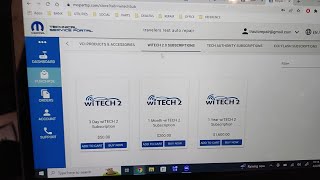
Typical fix: Reprogramming or 'flashing' the PCM with the latest manufacturer software. 🎬 See how a technician uses wiTECH to program the PCM.
Est. part cost: $0-$250 - Wiring or Connector Issues 🟡 Medium Probability The CAN bus wiring harness can be susceptible to damage. Specific real-world failures include broken locking tabs on harness connectors causing a loose connection, fluid contamination in the main transmission plug after service, and chafing against the chassis or other components. On older models, some owners report the issue only occurs in cold weather, suggesting a poor connection or failing solder joint is sensitive to temperature changes. A key failure point on Chrysler platforms is the Star Connector (also called a CAN bus block), where multiple module communication lines join; a single loose or corroded pin in this block can take down the entire network. 🎬 Watch: Troubleshooting communication loss on the Chrysler LX platform.
How to confirm: Visually inspect the wiring harness between the PCM and TCM, paying close attention to the main connectors. Check for corrosion, backed-out pins, or fluid intrusion. Use a multimeter to test for continuity and shorts on the CAN C High and CAN C Low wires. A common diagnostic technique is to isolate modules one by one at the Star Connector block to see if communication is restored.
Typical fix: Repairing the damaged section of wire, cleaning/securing the faulty connector, or replacing a harness pigtail. In some cases, technicians have had to bypass a faulty power feed wire from the fuse box to the TCM.
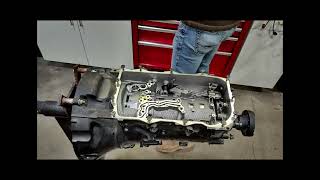
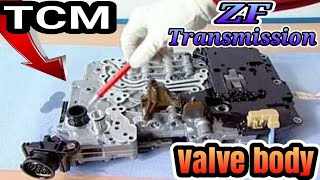
Est. part cost: $10-$150 - Faulty Transmission Control Module (TCM) ⚪ Low Probability → Shop Transmission Assembly While less common than software or wiring faults, the TCM can fail internally. On many modern Dodge vehicles with the 8-speed transmission, the TCM is integrated into the transmission valve body (a mechatronic unit), making replacement more involved. 🎬 Watch: Step-by-step removal of the 8HP transmission control module.
How to confirm: This is diagnosed by exclusion. If the PCM software is up to date, and all wiring, power, and grounds to the TCM test good, the module itself is the likely culprit. A professional scan tool will show the TCM as inactive or non-responsive on the CAN bus network view.
Typical fix: Replacing the TCM (or the entire valve body/mechatronic unit) and programming the new module to the vehicle.
Est. part cost: $600-$1200 - Low Battery Voltage or Poor Ground ⚪ Low Probability → Shop Vehicle Battery Modern control modules are sensitive to voltage. A weak battery, failing alternator, or corroded main ground connection can cause modules to randomly drop off the communication network, triggering a U0101 code.
How to confirm: Test the battery voltage with the engine off (should be >12.4V, ideally 12.6V) and perform a load test. Check the alternator output with the engine running (should be 13.5V-14.5V). Inspect and clean the main battery terminals and chassis ground points, including the main engine ground strap.
Typical fix: Replacing the battery, alternator, or cleaning/repairing ground connections.
Est. part cost: $20-$600
Rare But Worth Checking
- Faulty Totally Integrated Power Module (TIPM) / Fuse Box: → Shop Fuse Box
Diagnosis Steps
- Scan the vehicle for all stored Diagnostic Trouble Codes (DTCs). Note all U-codes, as a long list may point directly to the software TSB.
- Check for applicable TSBs, specifically TSB #18-012-22 for 2021 3.6L models. If the TSB applies, verifying the PCM software version should be the first diagnostic action.
- Test the battery and charging system. Ensure battery voltage is above 12.4V (engine off) and the alternator provides stable voltage (13.5V-14.5V running).
- Perform a thorough visual inspection of the wiring harness and connectors between the PCM and the TCM. Look for any signs of damage, corrosion, broken locking tabs, or loose connections.
- Using a wiring diagram, verify that the TCM has proper power and ground at its connector. Check TCM fuses F29 (15A) and F37 (10A) in the front fuse box.
- If power and ground are good, use a multimeter to check the resistance of the CAN bus network at the OBD-II port (pins 6 and 14) with the battery disconnected. Resistance should be approximately 60 ohms. A reading of 120 ohms indicates a missing terminating resistor or an open circuit, while a reading near 0 ohms indicates a short between the CAN High and Low wires.
- Check CAN bus voltages at the diagnostic link connector with the key on. CAN High (Pin 6) should be ~2.6V and CAN Low (Pin 14) should be ~2.4V. These are biased signals, and seeing a major deviation (e.g., one line at 0V or 5V) indicates a short.
- If all wiring, power, and software are confirmed good, the TCM is the most likely failed component.
Parts You'll Likely Need
- Transmission Control Module (TCM)
(OEM #68347574AA (Note: This fits 2018-2020 models; the exact part for a 2021 may vary and is often integrated with the valve body. Verify with VIN.))— If software and wiring issues are ruled out, the TCM itself may have failed, preventing it from communicating on the network.
Trusted brands: Mopar
OEM price range: $800-$1200
Aftermarket price range: $600-$900
Related Codes That Often Appear With This One
- U0102 — Lost Communication With Transfer Case Control Module. This is listed in TSB 18-012-22 as a code that can be set along with U0101 due to the same PCM software glitch.
- U0103 — Lost Communication With Electric Gear Shift Module. Also listed in TSB 18-012-22.
- U0140 — Lost Communication With Body Control Module. TSB 18-012-22 indicates a general communication breakdown can occur, setting multiple U-codes simultaneously.
- U0402 — Implausible Data Received From TCM. This code can be logged by the PCM if it receives corrupt data just before losing communication entirely, and is also mentioned in the TSB.
- Full list from TSB 18-012-22 — The PCM software issue can cause a cascade of communication failures. Other codes listed in the bulletin include U0104, U0125, U0128, U0129, U0141, U0155, and many more, indicating a widespread network instability fixed by the update.
Technical Service Bulletins (TSBs) & Recalls
- 18-012-22: Addresses MIL illumination with DTC U0101 and a host of other communication codes on 2021 Chargers with the 3.6L engine built on or before 10/14/2021. The fix is a PCM software update.
Platform-Specific Known Issues
- A known software issue can cause the Malfunction Indicator Lamp (MIL) to illuminate and set code U0101 on 2021 models with the 3.6L V6. This is documented in Dodge's Technical Service Bulletin #18-012-22, which recommends reprogramming the PCM and may also cause loss of ABS and TCS.
Mechanic-Grade Diagnostic Values
- CAN Bus Network Resistance — expected: ~60 Ω. Failure: 120 Ω indicates an open circuit or missing terminating resistor. 0-10 Ω indicates a short between CAN High and Low wires.
- CAN Bus Voltage (Key On, Engine Off) — expected: CAN High (Pin 6): ~2.6V, CAN Low (Pin 14): ~2.4V. Failure: Significant deviation, such as one line at 0V or 5V, indicates a short to ground or power.
- TCM Power Supply Fuses (Front Fuse Box/TIPM) — expected: Fuse F29 (15A) and Fuse F37 (10A) should have continuity and show battery voltage.. Failure: A blown fuse indicates an overload or short in the TCM power circuit.
- Battery Voltage (Engine Off) — expected: >12.4V, ideally 12.6V. Failure: Lower voltage can cause random communication faults across various modules.
Scan Tool Commands That Help
- wiTECH 2.0: Vehicle Topology View — This is the main screen in wiTECH and provides an immediate visual overview of the entire CAN bus network. It color-codes modules to show which are communicating, which have DTCs, and which are offline (e.g., the TCM in a U0101 fault), guiding the diagnostic starting point.
- wiTECH 2.0: Reprogram PCM — Used to perform the software update (flash) as specified in TSB 18-012-22. The tool connects to FCA servers to download and install the latest calibration file.
- wiTECH 2.0: Restore Configuration and Align Proxi — This procedure is required after flashing or replacing certain modules. It ensures that all modules on the network recognize each other and have the correct vehicle configuration data, preventing further communication errors.
Wiring & Ground Locations
- Star Connector (CAN Bus Hub) — On similar Chrysler platforms (Challenger, 300, Ram), this is a block with multiple (often green) connectors. It is typically found behind the glove box, behind the driver's side dash near the headlight switch, or behind the passenger-side kick panel.. This is the central hub where CAN bus wires from various modules meet. A single loose pin, corrosion, or wiring fault at this connector can disconnect the TCM from the rest of the network, directly causing a U0101 code. Technicians often isolate modules here to find the source of a network-down issue.
- TCM Power Fuses — In the main engine fuse box (TIPM) on the left side of the engine bay. Specifically, fuses F29 (15A) and F37 (10A).. These fuses supply the primary power to the Transmission Control Module. If either fuse is blown or the circuit from the fuse box to the TCM is open, the module will lose power and be unable to communicate, setting code U0101.
- Main Engine Ground Cable — A braided strap connecting the engine block to the vehicle's chassis/frame.. A poor ground connection can create unstable voltage levels for all vehicle electronics. While not a direct cause, an intermittent or high-resistance ground can cause modules like the TCM to drop offline unexpectedly.
Real Owner Repair Stories
- Mad Mikes Garage on YouTube (GMC Truck (similar CAN bus principles)) — Persistent U0101 code that could not be cleared, no manual shift function.
❌ Tried (didn't work) Checking fuses., Was about to send it to a dealer.
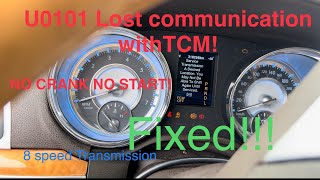
✅ What actually fixed it The technician had previously probed the TCM connector with probes that were too large, which spread the female pin terminals. This caused a poor connection on one or more pins. The fix was to remove the connector retainer and use thin needle-nose pliers to carefully bend each terminal slightly inward to ensure a tight connection. - YouTube video by 'No Crank No Start' (2012 Chrysler 300 3.6L with 8-speed (similar powertrain and wiring)) — No crank, no start condition with code U0101.
❌ Tried (didn't work) Checking fuses, which were good.
✅ What actually fixed it The power wire (Red/Purple) from the fuse box to the TCM connector had an internal break. Power was present at the fuse but not at the TCM connector pin. The fix was to solder a new bypass wire from the load side of the fuse directly to the power input wire at the TCM connector.
Model Year Variations Within This Range
- 2021 models built on or before October 14, 2021: These vehicles are subject to TSB 18-012-22, which indicates a high probability that code U0101 is caused by a software issue in the PCM. The primary fix is a software update, which is less likely to be the cause for vehicles built after this date.
Helpful Videos
We Have This Part in Stock



The information in this article is provided for general reference and educational purposes only. Vehicle specifications, procedures, and part compatibility can vary by production date, trim level, and region. Always consult your vehicle's factory service manual and verify part numbers before purchasing or performing repairs. Safety-critical components such as airbags, seat belts, and braking systems should be installed by a qualified professional.
- Dodge CHARGER:
- 🧭 Diagnostic Flowchart
- 🎬 Helpful Videos
- 🛍️ Shop This Part
- What's Unique About the 2021-2021 Dodge CHARGER
- Symptoms You May Notice
- Most Likely Causes
- Rare But Worth Checking
- Diagnosis Steps
- Parts You'll Likely Need
- Related Codes That Often Appear With This One
- Technical Service Bulletins (TSBs) & Recalls
- Platform-Specific Known Issues
- Mechanic-Grade Diagnostic Values
- Scan Tool Commands That Help
- Wiring & Ground Locations
- Real Owner Repair Stories
- Model Year Variations Within This Range
- 🎟️ Get 5% Off