

U0101 on 2011 Ford Focus: Lost Communication With TCM Causes and Fixes
On a 2011 Ford Focus, code U0101 means the Transmission Control Module (TCM) has stopped communicating with the rest of the vehicle's computers. This is most often caused by wiring issues, poor ground connections, or a faulty TCM. Unlike the 2012+ models, this is not related to the widespread DPS6 transmission problems, as the 2011 model uses a different, more conventional 4-speed automatic (4F27E).
- U0101 on a 2011 Focus means the Transmission Control Module (TCM) is offline.
- This is NOT the same common TCM failure that affects 2012+ Ford Focus models.
- Diagnosis should start with the simplest things: check the battery, fuses, and all ground connections.
- Thoroughly inspect the wiring harness and connectors to the TCM for damage before condemning the module.
- Driving the vehicle is unsafe and not recommended.
What's Unique About the 2011-2011 Ford Focus
It is critical to distinguish the 2011 Ford Focus sold in North America from the 2012 and newer models. The 2011 model is the last of the second generation, equipped with a conventional 4-speed automatic transmission (4F27E). The widespread, well-documented TCM failures and warranty extensions (like 14M02) associated with the 'PowerShift' (DPS6) dual-clutch transmission apply to the 2012-2018 Focus, not this 2011 model. Therefore, while U0101 on a 2012+ Focus almost always points to a specific, known TCM defect, the causes on a 2011 are more general and require broader electrical diagnostics.
Symptoms You May Notice
- Check Engine Light is on
- Transmission warning light is illuminated
- Vehicle enters "limp mode," limiting speed
- Harsh or erratic shifting
- Transmission may get stuck in one gear
- Inability to shift out of Park or Neutral
- Sudden loss of power while driving
- Gear indicator on the dashboard may flash or disappear
- Vehicle may not start (no-crank condition)
- Replacing the transmission: This code indicates an electrical or communication problem, not a mechanical failure within the transmission itself. 🎬 Watch: A quick breakdown of the U0101 code and common fixes. Replacing the entire transmission would be extremely costly and would not fix the U0101 code.
Most Likely Causes
- Wiring Harness or Connector Issues 🔴 High Probability Wiring harnesses can become damaged from heat, vibration, or rubbing against chassis components. The main connector at the TCM is a common point for corrosion or for pins to become loose, interrupting the CAN bus signal.
How to confirm: Visually inspect the entire wiring harness between the PCM and the TCM for any signs of chafing, melting, or corrosion. Pay close attention to the connectors at both modules, checking for bent or corroded pins. A multimeter can be used to check for continuity on the CAN bus wires (typically a twisted pair).
Typical fix: Repair the damaged section of wire or clean/replace the faulty connector. Sometimes simply unplugging and securely replugging the connector can resolve an intermittent connection. - Poor Power or Ground Connection 🟡 Medium Probability Ford platforms of this era are known for having ground points that can corrode or have poor contact due to paint on the chassis from the factory. A weak battery or failing alternator can also cause intermittent voltage drops that disrupt module communication.
How to confirm: Check that the battery voltage is at least 12.6V with the engine off and that it holds a charge. Use a multimeter to perform a voltage drop test on the TCM's power and ground circuits directly at the module's connector to ensure it's receiving full power and has a solid ground. Inspect the main chassis ground straps for corrosion or looseness.
Typical fix: Clean the battery terminals and chassis ground points to bare metal. Tighten all connections. If the battery is weak, replace it. - Failed Transmission Control Module (TCM) 🟡 Medium Probability → Shop Transmission Assembly
How to confirm: If all wiring, power, and ground connections have been thoroughly tested and confirmed to be good, the TCM itself is likely faulty. This is a diagnosis by elimination. A professional scan tool that can attempt to communicate directly with individual modules can confirm that the TCM is the only module not responding.
Typical fix: Replace the Transmission Control Module. The new module will require programming to the vehicle's VIN. - Blown Fuse ⚪ Low Probability
How to confirm: Check the vehicle's fuse boxes (both in the engine bay and inside the cabin) for any fuses related to the TCM, transmission, or PCM. Visually inspect the fuse or use a multimeter to test for continuity.
Typical fix: Replace the blown fuse. If the fuse blows again immediately, it indicates a short circuit in the wiring that needs to be found and repaired.
Rare But Worth Checking
- Failed Powertrain Control Module (PCM): → Shop Engine Control Module (ECM) While less common than a TCM failure, the PCM is the other end of the communication line. If the TCM is replaced and the problem persists, the PCM could be the root cause.
- Faulty Instrument Panel Cluster (IPC): On some Ford models of this era, the Instrument Panel Cluster acts as a gateway for the CAN bus network. A failure within the cluster's circuit board can disrupt communication between other modules, including the TCM. Symptoms may include erratic gauges or warning lights in addition to the U0101 code.
Diagnosis Steps
- Scan for all diagnostic trouble codes in all modules to see if other communication codes are present. This helps determine if the issue is isolated to the TCM or a wider network problem.
- Check the battery. Ensure it is fully charged (12.6V+ engine off) and the terminals are clean and tight. Low voltage can cause unpredictable communication errors.
- Inspect all fuses related to the TCM, PCM, and transmission in both the engine compartment and interior fuse panels.
- Locate the TCM. On the 2011 Focus, it is typically mounted to the side of the transmission case, under the air filter box. Visually inspect its connector and nearby wiring for any obvious damage, corrosion, or looseness.
- Test for power and ground at the TCM connector using a multimeter and a wiring diagram. Confirm the module is receiving proper voltage and has a solid ground connection.
- If power and ground are good, test the CAN bus network. With the battery disconnected, measure the resistance between pins 6 and 14 of the OBD-II port. 🎬 See this guide to understanding and testing the CAN bus network. A healthy network should read approximately 60 Ohms. A reading of 120 Ohms may indicate a break in the circuit to the TCM or a failed terminating resistor.
- If all wiring, power, grounds, and the network test okay, the failure is most likely internal to the TCM itself.
Parts You'll Likely Need
- Transmission Control Module (TCM)
(OEM #AE8Z-7Z369-F)— If wiring and power/ground issues are ruled out, the module itself is the most likely point of failure. Note: The part number AE8Z-7Z369-F is primarily for the DPS6 transmission in 2012+ models but is often cross-referenced; always verify the exact part number for the 4F27E with a dealer using your VIN.
Trusted brands: Motorcraft
OEM price range: $600-$800
Aftermarket price range: $300-$500 - Wiring Harness Connector Pigtail — If the connector at the TCM is found to be corroded or damaged, a replacement pigtail may be needed to repair the harness.
OEM price range: $40-$80
Aftermarket price range: $20-$50
Related Codes That Often Appear With This One
- U0100 — This code means 'Lost Communication with ECM/PCM'. Seeing both codes together can point to a more significant network issue or a power/ground problem affecting multiple modules.
- U0073 — This code stands for 'Control Module Communication Bus A Off', indicating a failure of the entire CAN network. If you see this, the problem is larger than just the TCM and could be a wiring short or a failure in a gateway module like the IPC.
Technical Service Bulletins (TSBs) & Recalls
- TSB 16-0129 / TSB 16-0044: While these TSBs specifically mention U0101 and apply to some 2011 Fiesta models with the DPS6, they are primarily associated with the 2012-2016 Focus. They are useful for understanding Ford's diagnostic process for U0101 but do not point to the same widespread TCM failure on the 2011 Focus with the 4F27E transmission.
- Bulletin #TSB 16-0129 notes that U0100, U0101, U1013 and/or P0606 may be present or stored in the PCM memory, and the transmission PRNDL/S gear selector on the instrument cluster may flash.
- Bulletin #16-0044 describes an issue where vehicles may exhibit a no-start condition, lack of transmission engagement, or loss of power with DTCs U0100, U0101, U1013, U3003 and/or P0606.
Platform-Specific Known Issues
- Instrument Cluster CAN Bus Gateway Failure: The 2008-2011 Focus instrument cluster can suffer from internal failures on its circuit board that disrupt CAN bus communication. 🎬 Watch: How to repair instrument cluster faults on the Focus MK2. This can cause a U0101 code along with other communication codes, erratic gauge behavior, and random warning lights. Several services specialize in repairing these clusters, which is often more cost-effective than replacement.
Mechanic-Grade Diagnostic Values
- CAN Bus Network Resistance — expected: ~60 Ohms (measured between pins 6 and 14 of the OBD-II port with battery disconnected).. Failure: A reading of ~120 Ohms indicates an open circuit or one of the terminating resistors is offline. A reading near 0 Ohms indicates the CAN High and Low wires are shorted together.
- CAN Bus Voltage (Key On, Engine Off) — expected: CAN High (Pin 6 to ground): ~2.6V to 3.0V. CAN Low (Pin 14 to ground): ~2.0V to 2.4V.. Failure: Voltages stuck high, low, at 0V, or equal to each other indicate a short to power, short to ground, or an open circuit.
- TCM Power Supply Voltage — expected: >12.0 Volts at the TCM connector power pins with key on.. Failure: Voltage below 12.0V indicates a problem with the power supply circuit, fuse, or battery/charging system.
- TCM Ground Circuit Resistance — expected: < 0.5 Ohms between the TCM connector ground pins and the negative battery terminal.. Failure: Resistance higher than 0.5 Ohms indicates a corroded or loose ground connection that needs to be cleaned or repaired.
Hidden / Shadow Codes Worth Checking
- U0101:00-68: This is a more specific version of U0101 that includes a Failure Type Code (FTC). While the exact meaning of the '68' subtype can vary, it often points to an 'event information' failure, indicating the module has gone offline intermittently. It helps confirm the issue is a communication drop-out. (see via Ford's Integrated Diagnostic System (IDS) or high-end professional scan tools like some Autel or Snap-on models.)
- NHTSA ODI #11149790 describes a case where a dealer found codes U1013:00:68 and U0101:00:68, which were resolved by replacing the TCM.
Scan Tool Commands That Help
- Ford IDS (or equivalent like FORScan): TCM Self-Test — Use this command to directly query the TCM. If the self-test fails or the tool cannot establish communication to even start the test, it strongly points to a fault in the TCM itself or its primary power/ground/CAN circuits.
- Ford IDS (or equivalent like FORScan): TCM Adaptive Learning Reset — This function should be performed after replacing a TCM or even after a significant power loss. It clears the learned shift strategies. For the 4F27E, this is less complex than the DPS6, but can still resolve erratic shifting if the code was caused by a temporary glitch.
Wiring & Ground Locations
- TCM Main Connector (C1750) — On the side of the 4F27E transmission, typically located under the air filter box assembly in the engine bay.. This is the primary connection point for all power, ground, and CAN bus signals to the TCM. Probing for voltage, ground, and network signals happens here.
- Main Chassis Grounds — Key ground points are located on the chassis rail under the airbox and near the battery tray. They are typically 10mm or 13mm bolts.. These grounds are critical for the TCM and other modules. They are notorious for being painted over at the factory, leading to poor connections over time that can cause intermittent communication faults.
- CAN Bus Wires at TCM Connector — At the TCM connector (C1750), the CAN bus wires are Pin 47 (WH/BU) for CAN High and Pin 48 (WH) for CAN Low.. These are the specific pins to test for CAN signal integrity directly at the module. If the signal is good here but the module doesn't respond, the TCM is likely faulty.
Real Owner Repair Stories
- YouTube channel 'Romano's Automotive' (Ford Focus (year not specified, but a model with known TCM issues covered by Ford outside of warranty, consistent with the 2011+ era)) — No crank, no start. 'Parking Aid Module Fault' displayed on the dash. Gear indicator lights (PRNDL) did not change when shifting. U0101 code present.
❌ Tried (didn't work) Clearing codes (U0101 returned immediately).
✅ What actually fixed it Diagnosis confirmed the CAN bus signal was good at the DLC and at the TCM connector. Power and ground tests at the TCM connector were also good. This isolated the fault to an internal failure of the TCM. The final fix was to have Ford replace the TCM, which was done under a special warranty extension program. - An owner reported in NHTSA ODI #10670375 that after a technician performed PCM tests and pinpoint tests, the TCM was found inoperative with codes U0101 and U0100, requiring a TCM replacement and clutch learning.
- In NHTSA ODI #11389931, an owner noted that after finally receiving a check engine light for U0101 and P07A3, the TCM was covered under warranty even though the vehicle was over 100,000 miles.
Diagnostic Flowchart
Other Known Issues on This Vehicle
Issues unrelated to this code that are worth knowing about as an owner of this generation:
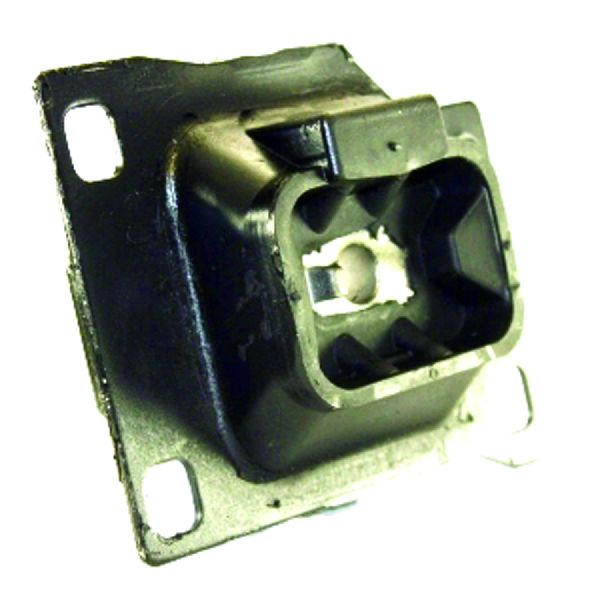
- Failed Passenger-Side Engine Mount 🔴 High — Very common. The hydraulic, fluid-filled mount fails, causing severe vibration at idle and while in gear. Often misdiagnosed as a transmission problem.
- Faulty EVAP Canister Purge Valve 🟠 Medium — Widespread issue causing codes like P0443 and P1450. Symptoms include rough idle, difficulty starting after refueling, and an illuminated check engine light. (Ref: Ford Safety Recall 18S32 (NHTSA 18V-735) was issued for this problem, as it could deform the fuel tank.)
- Instrument Panel Cluster Failure 🟠 Medium — Common for the 2008-2011 generation. Solder joints on the main board can fail, causing loss of gauges, erratic warning lights, and CAN bus communication problems across the vehicle.
- Lower Engine Torque Mount (Dog Bone) Failure 🟠 Medium — The lower rear engine mount often fails, causing a clunking noise on acceleration/deceleration and excess engine movement. It is less noticeable than the passenger side mount failure but still common.
Used vs. New Parts: Buying Guide for This Vehicle
When a used part is the smart pick: A used TCM from a junkyard can be a cost-effective option for the 4F27E transmission, as they are not prone to the same high failure rates as the DPS6 TCMs in the 2012+ models. This is most viable if you have access to a professional scan tool for programming.
Donor-vehicle mileage cap: roughly under 120000 miles for the part to have meaningful remaining life.
What to inspect on the donor part:
- Verify the donor vehicle is a 2009-2011 Focus with the 4F27E transmission, not a 2012+ model.
- Inspect the connector pins on the used TCM for any signs of corrosion, moisture, or physical damage.
- If possible, get the VIN of the donor car to help with potential reprogramming needs.
- Ask about the donor vehicle's history (e.g., was it in a flood or front-end collision?). Avoid modules from flood-damaged cars.
OEM-only on this vehicle (don't cheap out):
- Transmission Control Module (TCM): While a used OEM part can work, it is strongly recommended to use either a new OEM (Motorcraft) part or a reputable remanufactured unit. Aftermarket TCMs for this platform are rare and have a questionable reputation.
Brands owners have reported issues with on this vehicle:
- Unbranded, no-name TCMs from online marketplaces should be avoided due to high rates of being dead-on-arrival or failing prematurely.
Real Owner Stories
Aggregated from forums and TSBs cited above. Mileages and costs reflect what owners reported in those sources.
2011 Ford Focus
Symptoms: The owner experienced a U0101 code and attempted a temporary fix by disconnecting the battery and reseating various connectors under the hood.
What fixed it: Disconnecting the battery and reseating various connectors under the hood to resolve potential connection issues.
Source hint: https://www.ford-trucks.com/forums/1105304-u0101-code-help.html
2011 Ford Focus
Symptoms: Loss of gauges, erratic warning lights, and CAN bus communication problems across the vehicle.
What fixed it: Repairing the solder joints on the instrument panel cluster's main circuit board.
Source hint: vehicle_specific_issues: Instrument Cluster CAN Bus Gateway Failure
Related OBD-II Codes
Frequently Asked Questions
Does TSB 16-0129 or TSB 16-0044 regarding the DPS6 transmission apply to my 2011 Ford Focus?
Could my 2011 Focus's erratic gauges and warning lights be related to the U0101 code?
I'm having trouble starting my 2011 Focus after refueling; is this linked to the transmission code?
Where is the TCM located on my 2011 Focus for inspection?
Can a bad engine mount cause transmission-like symptoms on this car?
What should the resistance be when testing the CAN bus at the OBD-II port?
Helpful Videos
We Have This Part in Stock

The information in this article is provided for general reference and educational purposes only. Vehicle specifications, procedures, and part compatibility can vary by production date, trim level, and region. Always consult your vehicle's factory service manual and verify part numbers before purchasing or performing repairs. Safety-critical components such as airbags, seat belts, and braking systems should be installed by a qualified professional.
- Ford Focus:
- 🧭 Diagnostic Flowchart
- 🎬 Helpful Videos
- 🛍️ Shop This Part
- What's Unique About the 2011-2011 Ford Focus
- Symptoms You May Notice
- Most Likely Causes
- Rare But Worth Checking
- Diagnosis Steps
- Parts You'll Likely Need
- Related Codes That Often Appear With This One
- Technical Service Bulletins (TSBs) & Recalls
- Platform-Specific Known Issues
- Mechanic-Grade Diagnostic Values
- Hidden / Shadow Codes Worth Checking
- Scan Tool Commands That Help
- Wiring & Ground Locations
- Real Owner Repair Stories
- Other Known Issues on This Vehicle
- Used vs. New Parts: Buying Guide for This Vehicle
- Real Owner Stories
- 2011 Ford Focus
- 2011 Ford Focus
- Related OBD-II Codes
- Frequently Asked Questions
- 🎟️ Get 5% Off