

U0101 on 2010-2019 Ford Taurus: Lost Communication With TCM Causes and Fixes
Code U0101 on a 2010-2019 Ford Taurus means the Transmission Control Module (TCM) has stopped communicating. This is most often caused by wiring issues, a faulty TCM which is located inside the transmission, or low battery voltage. Expect serious shifting problems, a no-start condition, or the vehicle entering 'limp mode'.
- U0101 means the Transmission Control Module (TCM) is offline; do not drive the vehicle.
- Always check the battery, fuses, and ground connections first, as these are simple fixes that can cause this code.
- Thoroughly inspect the wiring harness and connector at the TCM for damage or corrosion before buying any parts.
- If the wiring is good, the TCM itself has likely failed and will need to be replaced and programmed.
- This is a complex electrical issue; professional diagnosis is highly recommended to avoid unnecessary expense.
What's Unique About the 2010-2019 Ford Taurus
The 2010-2019 Ford Taurus (sixth generation) uses a complex Controller Area Network (CAN bus) to link its electronic modules. A key distinction for this platform is that the Transmission Control Module (TCM) is not a separate, easily accessible box. It is integrated into the lead frame/valve body assembly inside the transmission itself. This makes diagnosis more involved and replacement significantly more labor-intensive than on platforms with external TCMs. Failures are often traced to corroded connector pins at the transmission case, wiring harness chafing, or internal failure of the TCM/lead frame assembly, rather than a simple module swap.
Symptoms You May Notice
- Check Engine Light is on
- Transmission or wrench warning light is on
- Vehicle enters "limp mode," staying in a single gear (usually 2nd or 3rd)
- Harsh, erratic, or delayed shifting
- Inability to shift out of Park or Neutral
- Vehicle may not start or crank
- The gear selector indicator (PRNDL) on the dash may flash or be blank
- Sudden loss of power while driving
- Replacing the transmission itself when the problem is purely electrical.
- Replacing the TCM/valve body without first thoroughly checking all wiring, power, and ground connections, which are more common and cheaper failure points.
Most Likely Causes
- Wiring Harness or Connector Issues 🔴 High Probability Harnesses can be subject to vibrations, heat, and moisture, leading to chafed wires, corrosion in connectors, or loose pins over time. The main harness connector at the transmission case is a common point of failure due to its location and susceptibility to poor pin tension.
How to confirm: Visually inspect the wiring harness going to the transmission case connector for any signs of damage, corrosion, or loose connections. Use a multimeter to check for continuity on the CAN bus wires (pins 6 and 14 on the diagnostic connector) and verify power and ground at the TCM connector on the transmission. A common failure point is a corroded ground splice connector or poor pin fitment inside the main connector itself.
Typical fix: Repair the damaged section of the wire or replace the connector pigtail. Clean any corrosion from connector pins and ensure good pin tension. In some cases, a bad ground splice must be bypassed.
Est. part cost: $10-$80 - Failed Transmission Control Module (TCM) / Lead Frame 🟡 Medium Probability → Shop Transmission Assembly The TCM is internal to the transmission, submerged in fluid and subject to heat and vibration. Solder joints on the lead frame or internal electronic components can fail, causing a loss of communication.
How to confirm: This is a process of elimination. If all wiring, fuses, power, and grounds to the TCM are confirmed to be good at the transmission connector, the internal TCM/lead frame assembly is the likely culprit. An advanced scan tool will show no communication with the TCM module.
Typical fix: Replace the TCM, which is typically sold as part of the main control valve body assembly. This requires dropping the transmission pan. The new module will require programming to the vehicle's VIN by a dealer or a properly equipped independent shop using tools like IDS or FORScan.
Est. part cost: $400-$900 - Low Battery Voltage or Poor Ground Connection 🟡 Medium Probability → Shop Vehicle Battery All modern electronic modules are sensitive to voltage. A weak battery, failing alternator, or corroded main ground strap can cause intermittent communication dropouts across the network.
How to confirm: Test the battery voltage with a multimeter; it should be above 12.4V with the engine off. Perform a voltage drop test on the main battery ground and the chassis grounds (such as G104 or G108 in the engine bay) to check for high resistance.
Typical fix: Replace the battery, repair the charging system, or clean/tighten the ground connections.
Est. part cost: $5-$250 - Blown Fuse ⚪ Low Probability
How to confirm: Check the vehicle's fuse box for any fuses related to the TCM or Powertrain Control. On some Fords, these are fuses F26 (10A) and F53 (5A) in the junction block. A visual inspection or a multimeter test will confirm if a fuse is blown.
Typical fix: Replace the blown fuse. If the new fuse blows immediately, it indicates a short circuit in the wiring that must be found and repaired.
Est. part cost: $1-$5
Rare But Worth Checking
- Faulty Powertrain Control Module (PCM): → Shop Engine Control Module (ECM) While possible, it's much less common for the PCM to be the source of a U0101 code. This should only be considered after all other possibilities, including the TCM and wiring, have been exhaustively ruled out.
- Faulty Body Control Module (BCM): → Shop Body Control Module The BCM acts as a gateway for communication on some networks. A failing BCM can sometimes disrupt CAN bus traffic and cause communication codes for other modules. The BCM is located to the left of the steering column.
Diagnosis Steps
- Scan for all stored trouble codes. Note any other 'U' codes, as they can point to a wider network issue.
- Check the battery. Ensure it is fully charged and the terminals are clean and tight. Voltage should be at least 12.4V.
- Inspect the fuses. Check all fuses related to the TCM and PCM in the under-hood and interior fuse panels. Specifically check fuses F26 and F53 if applicable.
- Perform a visual inspection. Carefully inspect the wiring harness leading to the large circular connector on the transmission case. Look for any signs of chafing, melting, corrosion, or loose connections. Pay close attention to where the harness may rub against the engine, chassis, or exhaust components.
- Verify TCM Power and Ground at the Connector. Disconnect the transmission harness connector. Using a multimeter and the vehicle's wiring diagram, confirm that the TCM power input pins have battery voltage (>12.0V) and the ground pins have good continuity to ground (<0.5 Ohms). A loss of power or ground at this connector is a common fault.
- Check CAN Bus Integrity. With the key off and battery disconnected, check the resistance between Pin 6 (CAN-H) and Pin 14 (CAN-L) at the DLC port. It should be approximately 60 ohms. A reading of 120 ohms indicates an open circuit or a missing terminating resistor (likely in the TCM), while near 0 ohms indicates the wires are shorted together.
- Isolate the Module. If all wiring, power, and grounds are confirmed good all the way to the transmission connector, the internal TCM/lead frame assembly is the most likely failed component. Replacing it is the final step.
Parts You'll Likely Need
- Transmission Control Module (TCM) / Valve Body Assembly
(OEM #BT4Z-7A100-B)— If wiring and power are confirmed to be good, the internal electronics of the TCM/lead frame assembly are the next likely point of failure. It is typically replaced as a complete unit with the valve body.
Trusted brands: Motorcraft, Dorman
OEM price range: $600-$900
Aftermarket price range: $400-$700 - Wiring Harness Pigtail Connector — The main connector at the transmission case is a common point for corrosion or pin damage, which can be fixed by splicing in a new pigtail without replacing the entire harness.
Trusted brands: Motorcraft, Dorman
OEM price range: $40-$80
Aftermarket price range: $20-$50
Related Codes That Often Appear With This One
- U0100 — Lost Communication with ECM/PCM. Seeing U0100 and U0101 together often points to a broader network problem or a power/ground issue affecting multiple modules, not just the TCM.
- U0073 — Control Module Communication Bus 'A' Off. This indicates a failure of the entire CAN bus network. You will likely see many other U-codes along with U0101, pointing to a central network failure rather than a single module issue.
Technical Service Bulletins (TSBs) & Recalls
- TSB 16-0129: While this TSB specifically addresses 2011-2016 Fiesta and 2012-2016 Focus models with the DPS6 transmission, it documents that codes U0100 and U0101 can be caused by TCM failure on Ford products, providing a relevant diagnostic pattern. It notes that the transmission PRNDL/S gear selector on the instrument cluster may flash when these codes are present.
- SSM 48563 / SSM 47097: These TSBs apply to F-150s but are highly relevant as they concern the same family of transmissions and codes. They direct technicians to inspect the transmission wiring harness for chafing where it contacts the engine or other components, indicating a known pattern of wiring failure leading to U-codes like U0101 and U0401.
Platform-Specific Known Issues
- Internal TCM/Lead Frame Failure: A common repair story on forums involves confirming good power, ground, and CAN signals at the transmission connector, leading to the conclusion that the internal TCM has failed. The repair requires dropping the transmission pan and replacing the entire valve body/TCM assembly, followed by programming.
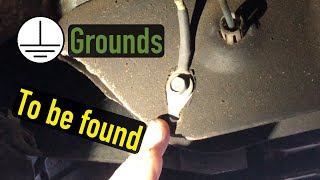
- Corroded Ground Wires: Owners have traced the U0101 code to a loss of ground at the TCM connector. In one detailed video, a technician found a severely corroded ground on the frame rail that supplied the TCM harness, causing the no-start and communication loss.
Mechanic-Grade Diagnostic Values
- CAN Bus Network Resistance — expected: 60 Ohms (± 2 Ohms). Failure: 120 Ohms indicates an open circuit or missing terminator; ~0 Ohms indicates a short between CAN High and CAN Low wires.
- TCM Power Supply Voltage — expected: >12.0 Volts (Key On, Engine Off). Failure: Voltage below 12.0V indicates a power supply issue (fuse, relay, wiring).
- TCM Ground Circuit Resistance — expected: < 0.5 Ohms. Failure: Resistance higher than 0.5 Ohms indicates a poor ground connection.
- CAN Bus Voltage (Recessive/Idle State) — expected: CAN-H: ~2.5V, CAN-L: ~2.5V. Failure: Significant deviation from 2.5V on either line at idle points to a bus fault or biased module.
- CAN Bus Voltage (Dominant/Active State) — expected: CAN-H: ~3.5V, CAN-L: ~1.5V. Failure: Inability for the lines to pull to these voltages during communication indicates a wiring fault or failed transceiver in a module.
Scan Tool Commands That Help
- Ford IDS: Network Test — This is the first step in diagnosing any 'U' code. It pings all modules on the network and creates a visual map of which ones are not responding, immediately confirming the TCM is offline.
- FORScan: TCM Module Firmware Update / Programming — Required after replacing the TCM/Valve Body assembly. This function allows writing the correct calibration file to the new module so it can work with the vehicle.
- FORScan: TCM Adaptive Learning — After programming a new TCM, this service function must be run. It commands the transmission to perform a series of internal adjustments to learn clutch touch-points and shift drum positions.
Wiring & Ground Locations
- C175T — The transmission-specific connector at the Powertrain Control Module (PCM), typically located on the firewall in the engine bay.. This is a primary test point for checking CAN bus continuity and voltage between the transmission and the PCM without having to access the transmission connector directly.
- Main Transmission Bulkhead Connector — The large, circular 16-pin connector on the side of the transmission case.. This is the single point of failure for all power, ground, and communication to the internal TCM. It is highly prone to corrosion, moisture intrusion, and poor pin fitment.
- G104 / G108 — Common engine compartment grounds. G104 is often on the right front fender apron; G108 can be near the power brake booster.. The PCM and other modules rely on these grounds. Corrosion or looseness here can cause unstable voltage and network-wide communication errors, including U0101.
Real Owner Repair Stories
- Ford Boss Me - Auto / Politics / Family YouTube Channel (2017-2020 Ford model (specific model not Taurus, but same 10-speed architecture principles apply)) — No crank, no start, multiple communication codes including U0101.
❌ Tried (didn't work) Initial diagnosis pointed towards a bad TCM or major wiring damage.
✅ What actually fixed it The issue was poor pin fitment at the main transmission connector. The technician disconnected the connector, cleaned it, and reconnected it, which restored communication and allowed the vehicle to start. The final recommendation was to tighten the female pins in the connector to ensure a solid connection. - Pine Hollow Auto Diagnostics YouTube Channel (Ford vehicle with CAN network communication issue) — Harsh gear engagement, stuck in 3rd gear, U0101 code.
❌ Tried (didn't work) Initial scope readings on the CAN bus were inconclusive or misleading.
✅ What actually fixed it The root cause was a pin tension issue between the female pin in the harness connector and the male pin on the TCM. The technician accidentally fixed it temporarily by back-probing the connector, which pushed the pin into making contact. The permanent fix required addressing the loose female terminal in the connector housing.
Documented NHTSA Reports
- An owner reported a check engine light with codes U0101 and P07A3; while the clutch was no longer covered under warranty, the TCM remained covered (NHTSA ODI #11389931).
- NHTSA ODI #11487894 describes a vehicle producing codes P090C, U0100-00, U3003-17, U3003-16, U0101-00, and U0401-00, though the failure could not be duplicated by the dealer at that time.
- A 20-mile drive resulted in a vehicle returning with no cause or correction after displaying a massive array of communication codes including U0101, U0103, U0111, and U0146 (NHTSA ODI #11330875).
OEM Part Supersession History
Varies by year→BT4Z-7A100-B (Example for Valve Body w/ TCM)— Revisions to address failure points and improve reliability.
Heads up: When replacing the TCM/Solenoid Body, the new Solenoid Strategy ID must be programmed into the PCM. Failure to do so will result in harsh or erratic shifting, even if the part is new.
Model Year Variations Within This Range
- 2010-2019: While the core design of the 6F50/55 transmission and internal TCM remained consistent, part numbers for the valve body/TCM assembly were superseded multiple times. A 2013 facelift updated vehicle aesthetics and infotainment but did not fundamentally change the cause of U0101 codes.
Diagnostic Flowchart
Other Known Issues on This Vehicle
Issues unrelated to this code that are worth knowing about as an owner of this generation:
- Internal Water Pump Failure (3.5L V6) 🔴 High — Common after 80,000-120,000 miles. Failure allows coolant to mix with engine oil, leading to catastrophic engine damage if not caught early.
- Power Transfer Unit (PTU) Failure (AWD Models) 🔴 High — Common failure point due to fluid overheating and lack of a drain plug for servicing. Often occurs between 60,000 and 100,000 miles. (Ref: TSB 09-25-7)
- Electronic Throttle Body (ETB) Failure 🟠 Medium — Widespread across many Ford models of this era. Can occur at any mileage. (Ref: Customer Satisfaction Program 13N03 (expired))
- Rear Suspension Toe Link Fracture 🔴 High — Affects Police Interceptor and SHO Performance Pack models primarily, but a recall was issued for others. (Ref: NHTSA Recall 20V072000)
Used vs. New Parts: Buying Guide for This Vehicle
When a used part is the smart pick: A used valve body with an integrated TCM can be a cost-effective option if you have access to advanced scan tools like FORScan (with an extended license) or Ford's IDS to perform the necessary reprogramming. Without the ability to program the module, a used part is not viable.
Donor-vehicle mileage cap: roughly under 80000 miles for the part to have meaningful remaining life.
What to inspect on the donor part:
- Obtain the Solenoid Strategy ID from the donor part or vehicle. This is a long alphanumeric code, often on a sticker on the transmission case or the part itself, and is critical for programming.
- Inspect the electrical connector pins on the used part for any signs of corrosion, bending, or damage.
- Choose a donor from a vehicle that was not involved in a severe front-end collision to reduce the risk of impact damage to the transmission.
OEM-only on this vehicle (don't cheap out):
- Transmission Control Module (TCM) / Valve Body Assembly: While aftermarket options exist, the complexity of programming makes a new OEM (Motorcraft) part, or a high-quality remanufactured unit from a specialist who can pre-program it to your VIN, the most reliable choice to avoid compatibility issues.
Aftermarket brands forum-validated for this vehicle:
- TransGo (for valve body repair kits, not full modules)
- Dorman (for replacement connector pigtails and some electronic components)
Brands owners have reported issues with on this vehicle:
- Unbranded, low-cost valve bodies from online marketplaces may have a high failure rate or be impossible to program correctly.
Real Owner Stories
Aggregated from forums and TSBs cited above. Mileages and costs reflect what owners reported in those sources.
2010-2019 Ford Taurus
Symptoms: Vehicle experienced a no-start condition and a total loss of communication with the TCM.
What fixed it: Technician identified and repaired a failed ground splice connector near ground point G100.
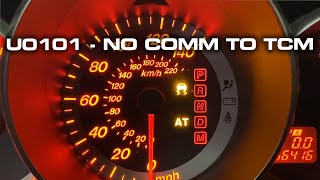
Source hint: YouTube - How to Check U0101 No communication with TCM
2010-2019 Ford Taurus
Symptoms: The vehicle entered limp mode with a U0101 code present.
What fixed it: The owner noted that electrical/wiring problems are a common culprit rather than internal transmission failure, often requiring inspection of the harness for chafing.
Source hint: Reddit r/MechanicAdvice - U0101 code. Lost communication with TCM.
2010-2019 Ford Taurus
Symptoms: Loss of ground at the TCM connector resulting in communication loss.
What fixed it: Traced the fault to a severely corroded ground on the frame rail that supplied the TCM harness.
Source hint: vehicle_specific_issues - Corroded Ground Wires
2010-2019 Ford Taurus
Symptoms: Confirmed good power, ground, and CAN signals at the transmission connector, but the module remained unresponsive.
What fixed it: Replacement of the internal TCM/lead frame assembly (valve body assembly) followed by VIN programming.
Source hint: vehicle_specific_issues - Internal TCM/Lead Frame Failure
Related OBD-II Codes
Frequently Asked Questions
Does TSB 16-0129 apply to my 2010-2019 Ford Taurus?
Which fuses should I check on my Taurus if I have a U0101 code?
Where is the main ground strap located on the Taurus for the transmission?
Can a bad battery cause my Taurus to go into limp mode with a U0101 code?
If I replace the TCM in my Taurus, does it require special programming?
Helpful Videos

We Have This Part in Stock





The information in this article is provided for general reference and educational purposes only. Vehicle specifications, procedures, and part compatibility can vary by production date, trim level, and region. Always consult your vehicle's factory service manual and verify part numbers before purchasing or performing repairs. Safety-critical components such as airbags, seat belts, and braking systems should be installed by a qualified professional.
- Ford Taurus:
- 🧭 Diagnostic Flowchart
- 🎬 Helpful Videos
- 🛍️ Shop This Part
- What's Unique About the 2010-2019 Ford Taurus
- Symptoms You May Notice
- Most Likely Causes
- Rare But Worth Checking
- Diagnosis Steps
- Parts You'll Likely Need
- Related Codes That Often Appear With This One
- Technical Service Bulletins (TSBs) & Recalls
- Platform-Specific Known Issues
- Mechanic-Grade Diagnostic Values
- Scan Tool Commands That Help
- Wiring & Ground Locations
- Real Owner Repair Stories
- Documented NHTSA Reports
- OEM Part Supersession History
- Model Year Variations Within This Range
- Other Known Issues on This Vehicle
- Used vs. New Parts: Buying Guide for This Vehicle
- Real Owner Stories
- 2010-2019 Ford Taurus
- 2010-2019 Ford Taurus
- 2010-2019 Ford Taurus
- 2010-2019 Ford Taurus
- Related OBD-II Codes
- Frequently Asked Questions
- 🎟️ Get 5% Off