

U0101 on 2015-2017 GMC Yukon XL: Lost Communication with TCM Causes and Fixes
On a 2015-2017 GMC Yukon XL, code U0101 is frequently caused by a poor Body Control Module (BCM) ground at location G218, a known issue cited in GM Technical Service Bulletin #PIT5405C. Before suspecting the expensive Transmission Control Module (TCM), inspect and clean this ground, which is a common and low-cost fix. Other likely causes include faults with the Serial Data Gateway Module (SDGM) or chafed wiring harnesses in the engine bay, particularly the G110 ground on the engine block.
- U0101 on a 2015-2017 Yukon XL means the Transmission Control Module (TCM) is offline.
- The most likely cause is NOT a failed TCM, but a poor ground connection at the Body Control Module (G218), as documented in GM TSBs.
- Always check and clean the G218 ground and inspect related fuses before considering any expensive part replacements.
- Symptoms are serious, including the transmission entering limp mode, making the vehicle unsafe to drive.
- If the TCM does need replacement, it must be professionally programmed to the vehicle's VIN to function.
What's Unique About the 2015-2017 Gmc YUKON XL
The 2015-2017 GMC Yukon XL belongs to the K2XX platform, which uses a complex communication network with a Serial Data Gateway Module (SDGM) to route information. Unlike other vehicles where a U0101 might point directly to a bad TCM, on this specific platform, the root cause is very often a network infrastructure problem. Manufacturer TSBs, specifically #PIT5405C, identify a poor Body Control Module (BCM) ground (G218) as a common culprit for a cascade of communication codes, including U0101. Additionally, TSBs like #PIT5586G point to the SDGM itself as a source of network failure.
Diagnostic Flowchart
Tap your situation to follow the diagnostic path that matches what you're seeing on this vehicle.
Symptoms You May Notice
- Check Engine Light illuminated
- Transmission warning light on
- Vehicle enters "limp mode," often stuck in 2nd or 3rd gear
- Harsh, erratic, or delayed shifting
- Gear position indicator (PRNDL) on the dash may be blank or incorrect
- "Service Stabilitrak" message may appear on the dashboard
- Vehicle may not start or may stall intermittently
- Loss of power steering assist, especially at low speeds
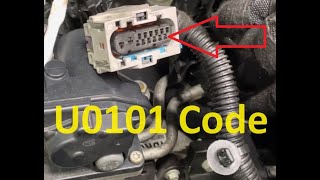
- Instrument panel gauges may fluctuate, go blank, or stop working (e.g., tachometer) 🎬 Watch: See these specific symptoms occurring in a real Yukon.
- Radio and HVAC controls may become inoperative or go blank
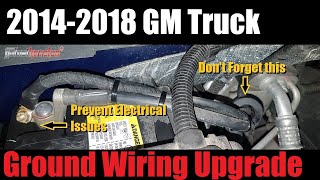
- Replacing the Transmission Control Module (TCM) without first thoroughly inspecting and cleaning the BCM ground 🎬 See how to upgrade your K2XX grounds to prevent electrical issues. at G218 and checking all related wiring and the SDGM.
- Replacing the entire transmission when the problem is purely electrical and related to communication, not mechanical failure.
- Replacing the battery without confirming that the battery cable connections and main chassis grounds are clean and tight.
Most Likely Causes
- Poor Body Control Module (BCM) Ground at G218 🔴 High Probability → Shop Body Control Module This is a well-documented issue in GM Technical Service Bulletin #PIT5405C for this platform. Sound-deadening insulation can get trapped under the ground lug during assembly, or the connection can become loose, causing intermittent, high-resistance communication loss across the network. This issue is frequently mentioned by owners in forums as the primary fix.
How to confirm: Locate ground G218, which is a 10mm nut on a stud found under the driver's side of the dashboard, behind the kick panel and near the A-pillar speaker. Disassemble the ground connection and visually inspect for trapped black foam insulation, looseness, or corrosion.
Typical fix: Cleaning and securing the ground connection. The fix involves removing the 10mm nut, pulling the ground eyelet off, trimming away any interfering insulation, cleaning the terminal and chassis mounting point to bare metal, and re-securing it tightly. 🎬 Watch: This video shows exactly how to fix the G218 ground.
Est. part cost: $0-$5 - Wiring Harness or Connector Issue 🟡 Medium Probability Wiring harnesses, especially those near the transmission or in the engine bay, are exposed to heat, moisture, and vibration. TSB #21-NA-149 details common chafe points in the driver's side engine bay and wheel well that can short CAN bus wires. The main engine ground G110, located on the driver's side of the engine block behind the power steering pump, can also become loose or corroded, causing U0100 and U0101.
How to confirm: Visually inspect the wiring harness and connectors going to the TCM, SDGM, and ECM. Check for chafing near the shock tower and upper control arm. Inspect ground G110 on the engine block. A multimeter can be used to check for 60 ohms of resistance between pins 6 and 14 of the OBD-II port, which confirms CAN bus integrity.
Typical fix: Repairing the damaged section of the harness or replacing a corroded connector pigtail. Cleaning and tightening ground connections like G110.
Est. part cost: $20-$100 - Faulty Serial Data Gateway Module (SDGM) 🟡 Medium Probability → Shop Telematics Interface Module The SDGM acts as a router for network traffic. TSB #PIT5586G notes these modules can suffer from 'logic lock-ups' or have poor pin connections at their main connectors (X1/X2), bringing down the entire network and causing multiple 'U' codes.
How to confirm: The SDGM is located high in the driver's side dashboard, above the BCM. After ruling out grounds and wiring, a technician can use a scan tool to see if the SDGM is responsive. Disconnecting the battery for 30 minutes can sometimes reset a logic lock-up. Inspecting the connectors for backed-out pins is also a key step.
Typical fix: Resetting the module by disconnecting power, or replacing the module. A replacement SDGM must be programmed by a dealer or qualified shop per service update N212353390.
Est. part cost: $60-$150 - Weak or Failing Battery / Poor Battery Connections ⚪ Low Probability → Shop Vehicle Battery TSB #PIT5405C also lists a discharged/faulty battery or high resistance in the battery cables as a potential cause for these communication issues. Modern vehicles are highly sensitive to voltage, and a weak battery can cause modules to malfunction and drop off the network.
How to confirm: Test the battery voltage with a multimeter; it should be above 12.4V with the engine off and ~13.8-14.5V when running. Have the battery load-tested. TSB #PIT5405C advises checking that battery cable clamps are torqued to 7 Nm (62 lb-in) and that the negative cable ground on the engine block is tight.
Typical fix: Replace the vehicle's battery or clean and tighten all battery cable connections.
Est. part cost: $150-$300 - Failed Transmission Control Module (TCM) ⚪ Low Probability → Shop Transmission Assembly While direct failure is less common than network issues on this platform, the TCM (or TEHCM, which is inside the transmission) can fail internally due to circuit board faults.
How to confirm: This should be the last step after confirming all grounds, power, wiring, and the SDGM are good. A professional scan tool is needed. If the tool cannot establish communication with the TCM, but all other modules are online and the wiring/power/ground to the TCM is verified to be good, the TCM itself is likely faulty.
Typical fix: Replace the TCM/TEHCM. The new module is located inside the transmission oil pan and must be programmed by a dealership or a qualified shop with GM-specific software.
Est. part cost: $250-$700
Rare But Worth Checking
- Shorted B+ Cable at Starter Solenoid: TSB #PIT5405C notes that the starter heat shield can come loose or the cable can be mis-installed, causing the main battery cable to short against the shield. This creates major electrical havoc, often triggering a host of communication codes including U0101.
- Blown Fuse: A blown fuse for the TCM, BCM, or ECM will cut its power, causing an immediate U0101 code. While simple to check, it's important to investigate why the fuse blew, as it may indicate a short circuit in the wiring.
- Corrosion in Underhood Fuse Block: → Shop Fuse Box In some cases, moisture intrusion can cause corrosion on the internal connections of the underhood fuse block, leading to intermittent power and communication issues for multiple modules.
Diagnosis Steps
- Check the battery voltage and perform a load test. Ensure it's stable and above 12.4V. Inspect and tighten battery terminals per TSB #PIT5405C.
- Use a professional scan tool to read codes from ALL vehicle modules (ECM, BCM, ABS, etc.), not just the engine computer. Note all communication 'U' codes, as multiple codes point to a network-wide fault.
- Following GM TSB #PIT5405C, locate, inspect, and clean the Body Control Module ground at G218. It is located on a stud behind the driver's side kick panel/A-pillar area. Remove the 10mm nut, trim away any trapped insulation, clean all contacts to bare metal, and re-torque.
- Inspect the fuses for the TCM, BCM, and SDGM in the underhood and interior fuse panels.
- Inspect engine bay grounds, particularly G110 on the driver's side of the engine block.
- Following TSB #PIT5586G, inspect the connectors at the Serial Data Gateway Module (SDGM) for any signs of corrosion, damage, or backed-out pins.
- Perform a CAN bus resistance test. With the battery disconnected, measure the resistance between Pin 6 (CAN High) and Pin 14 (CAN Low) of the OBD-II port. A healthy network should read approximately 60 Ohms.
Parts You'll Likely Need
- Transmission Control Module (TCM)
(OEM #24279973 (Verify with VIN, multiple PNs exist for 6L80 vs 8L90 transmissions))— This is the part to replace if all wiring, ground, and power supply issues have been ruled out. It is the electronic brain of the transmission, often integrated into the TEHCM inside the oil pan.
Trusted brands: ACDelco, GM Genuine Parts
OEM price range: $220-$450
Aftermarket price range: $180-$350 - Serial Data Gateway Module (SDGM)
(OEM #13534928 (supersedes many, check VIN) or 13542838)— This module acts as a network router and is a known failure point according to TSBs. If it locks up or has a bad connection, it can cause U0101.
Trusted brands: ACDelco, GM Genuine Parts
OEM price range: $60-$120
Aftermarket price range: $50-$100
Related Codes That Often Appear With This One
- U0100 — Lost Communication with ECM/PCM. A network-wide issue like a bad ground will often cause multiple modules to lose communication simultaneously.
- U0140 — Lost Communication with Body Control Module. This code is frequently seen with U0101 because the problematic G218 ground is directly connected to the BCM, making it the epicenter of the network failure.
- U0073 — Control Module Communication Bus 'A' Off. This is a general code indicating the entire high-speed communication network is down, which is often triggered by the same root causes as U0101, like the G218 ground or a faulty SDGM.
- P0700 — Transmission Control System (MIL Request). This code is set by the ECM to turn on the Check Engine Light when it detects any fault from the TCM, including a loss of communication.
Technical Service Bulletins (TSBs) & Recalls
- Bulletin #PIT5405C: Mentions U0101 in a list of codes that can be caused by a poor BCM ground at G218, a shorted starter cable, or a faulty battery/cables.
- Bulletin #PIT5405A: An earlier version of the same bulletin, also pointing to the G218 ground as a cause for U0101 and other communication codes.
- Bulletin #PIT5586G: Identifies the Serial Data Gateway Module (SDGM) as a potential cause for network communication loss.
- Bulletin #21-NA-149: Details specific locations where the engine wiring harness may chafe and short out, causing communication DTCs.
Platform-Specific Known Issues
- TSB #PIT5405C: Documents that a wide range of communication DTCs, including U0101, can be caused by a poor connection at the BCM ground G218 due to trapped insulation. This is the most critical vehicle-specific issue for this code.
- TSB #PIT5586G: Points to the Serial Data Gateway Module (SDGM) as a source of network failure from either a software 'logic lock' or poor pin connections at its main connectors.
- TSB #21-NA-149: Details common wiring harness chafe points in the driver's side engine bay and wheel well that can lead to short circuits on the CAN bus, causing communication codes.
Mechanic-Grade Diagnostic Values
- High-Speed CAN Bus Network Resistance — expected: ~60 Ohms. Failure: A reading of ~120 Ohms indicates an open circuit or a missing terminating resistor in a module. A reading near 0 Ohms indicates a short between the CAN High and Low wires.
- TCM/Module Ground Circuit Resistance — expected: Less than 0.5 Ohms. Failure: Higher resistance indicates a corroded, loose, or broken ground connection (like G110 or G218), which can prevent the module from communicating.
- Battery System Voltage — expected: 12.4V or higher (engine off), ~13.8V - 14.5V (engine running). Failure: Low static voltage or unstable charging voltage can cause random communication codes as modules malfunction.
Scan Tool Commands That Help
- GDS2 (GM Global Diagnostic System 2): Module Diagnostics > View All Modules — This is the first step to see which modules are and are not communicating on the network. Seeing U0101 in the ECM and U0100 in the BCM, for example, points to a network-wide issue rather than just a bad TCM.
- GDS2 (GM Global Diagnostic System 2): Module Diagnostics > BCM > Output Controls — If U0140 (Lost Comms with BCM) is also present, a technician can use this function to command BCM outputs like lights or locks. If they don't work, it strongly suggests the BCM itself has a core issue (power, ground, internal), which could be the source of the network crash.
- Professional Scan Tool: Bidirectional Communication Test / Ping Module — After verifying wiring, this command sends a direct request to the TCM. If the TCM does not respond but other modules do, it helps confirm the fault is isolated to the TCM or its direct wiring/power/ground circuits.
Wiring & Ground Locations
- G218 — Inside the cabin, on a stud under the driver's side dashboard, behind the kick panel near the A-pillar speaker.. This is the primary ground for the Body Control Module (BCM). It's a notorious failure point where insulation gets trapped under the lug, causing high resistance and bringing down the entire communication network, triggering U0101 and other codes.
- G110 — In the engine bay, on the driver's side of the engine block, often located behind the power steering pump.. This is a common ground point for both the Engine Control Module (ECM) and the Transmission Control Module (TCM). A loose or corroded connection here can simultaneously knock both modules offline, triggering U0100 and U0101.
- SDGM Connectors (X1/X2) — High in the driver's side dashboard, typically above the BCM.. The Serial Data Gateway Module is the central router for network traffic. TSB #PIT5586G identifies loose or backed-out pins in these connectors as a common cause for widespread communication failures, including U0101.
- Frame Grounds (Front) — On the frame itself, located behind both front wheels.. These grounds are in a terrible location exposed to road spray from the tires, making them highly susceptible to corrosion which can lead to intermittent electrical and network issues.
Real Owner Repair Stories
- YouTube channel 'Broken Cars with Johnnie Mic' (2015 GMC Yukon) — Intermittent no-start, loss of power steering assist, tachometer and PRNDL indicator would go blank. Scan tool showed U0100 and U0101, with no communication to ECM or TCM.
❌ Tried (didn't work) Initial assumption was a module failure.
✅ What actually fixed it The owner noticed that shifting the vehicle in and out of gear would sometimes make the connection come back, pointing to a loose connection. The fault was traced to a loose ground bolt at G110 on the driver's side of the engine block. Tightening this ground connection resolved all symptoms and codes. - Professional repair case study (GM Truck (K2XX Platform)) — Multiple 'U' codes, network communication failure.
❌ Tried (didn't work) Initial wiring checks of main CAN bus lines showed no shorts or opens.
✅ What actually fixed it Diagnosis revealed high resistance (110 ohms instead of 60) on the network. The fault was traced to the audio amplifier module connector. The pins showed signs of 'terminal fretting' (micro-corrosion from vibration). Disconnecting and reconnecting the amplifier connector cleaned the connection, restored the correct 60-ohm resistance, and fixed the communication problem without replacing any parts.
"I Checked Everything" — The Actual Cause
- While a smoke test is not used for electrical codes, a similar pattern exists: A vehicle can have all main CAN bus wiring test perfectly for continuity (no opens or shorts), yet the network still fails. A common cause is 'terminal fretting' (micro-corrosion) at a seemingly unrelated module's connector, like the audio amplifier. This fretting creates high resistance that corrupts the entire network, but it's only detectable by measuring network resistance while isolating modules one-by-one, a step often skipped in basic diagnosis.
OEM Part Supersession History
24256939, 24257213, 24259639, and others→24275873 (example of a later number)— Internal component and circuit fault corrections.
Heads up: These part numbers apply to the TEHCM for the 6L80/6L90 6-speed automatic. They are NOT compatible with the 8L90 8-speed automatic.24276411 (AC Delco)→N/A— N/A
Heads up: This part number is for the TCM used in the 8L90 8-speed automatic transmission. It is physically and electronically different from the 6-speed TEHCM and cannot be interchanged.OEM TEHCM→Dorman 609-006— Aftermarket alternative to OEM.
Heads up: This is an aftermarket TEHCM designed to fit multiple GM models with 6-speed transmissions. Verify specific vehicle fitment before purchasing.
Model Year Variations Within This Range
- 2015-2017: The 2015 model year marked the introduction of the 8-speed 8L90 automatic transmission in some Yukon XL models (especially Denali trim), which continued through 2017. Other models retained the 6-speed 6L80 transmission. The Transmission Control Module (TEHCM) is integrated into the valve body on both but is specific to the transmission type (6-speed vs. 8-speed). They are not interchangeable. Diagnosis for U0101 is similar, but the part numbers for a failed TCM are different.
Helpful Videos


We Have This Part in Stock



The information in this article is provided for general reference and educational purposes only. Vehicle specifications, procedures, and part compatibility can vary by production date, trim level, and region. Always consult your vehicle's factory service manual and verify part numbers before purchasing or performing repairs. Safety-critical components such as airbags, seat belts, and braking systems should be installed by a qualified professional.
- Gmc YUKON XL:
- 🧭 Diagnostic Flowchart
- 🎬 Helpful Videos
- 🛍️ Shop This Part
- What's Unique About the 2015-2017 Gmc YUKON XL
- Symptoms You May Notice
- Most Likely Causes
- Rare But Worth Checking
- Diagnosis Steps
- Parts You'll Likely Need
- Related Codes That Often Appear With This One
- Technical Service Bulletins (TSBs) & Recalls
- Platform-Specific Known Issues
- Mechanic-Grade Diagnostic Values
- Scan Tool Commands That Help
- Wiring & Ground Locations
- Real Owner Repair Stories
- "I Checked Everything" — The Actual Cause
- OEM Part Supersession History
- Model Year Variations Within This Range
- 🎟️ Get 5% Off