

U0101 on 2017-2022 Honda CR-V: Lost Communication With TCM Causes and Fixes
On a 2017-2022 Honda CR-V, code U0101 is often caused by a weak battery, sometimes due to a known parasitic drain issue (TSB A19-039). If the battery is good, the next most likely cause is a failed Transmission Control Module (TCM). This is a serious fault that can prevent the car from starting or shifting and requires immediate attention.
- U0101 on a 2017-2022 CR-V is a critical fault that will likely make the vehicle undrivable.
- Always test the battery first. A weak battery due to a known parasitic drain issue (TSB A19-039) is a very common cause.
- If the battery and wiring are good, the Transmission Control Module (TCM) has likely failed.
- Replacing the TCM is not a DIY job; it requires special programming to sync with the vehicle.
- Do not immediately replace the starter or battery without proper diagnosis; the root cause is a communication failure.
What's Unique About the 2017-2022 Honda CR-V
For the fifth-generation CR-V (2017-2022), this code has two very common platform-specific causes. First, these vehicles are known to have a parasitic battery drain issue where the PCM fails to go to sleep after an EVAP check, as addressed by Honda TSB A19-039. Low battery voltage is a frequent trigger for communication codes. Second, the related Honda Civic from the same era has a documented history of TCM failures causing this exact code (TSB A17060C), making the TCM a high-probability suspect on the CR-V as well.
Symptoms You May Notice
- Vehicle will not start or crank
- Inability to shift the transmission out of Park
- Transmission is stuck in a single gear (limp mode), with limited speed
- Check Engine Light and Transmission Warning Light are on
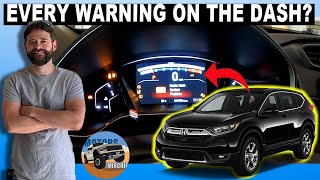
- Multiple warning lights on the dashboard may illuminate at once (ABS, VSA, Power Steering) - often called a 'Christmas tree' effect.
- Harsh or erratic shifting
- The gear position indicator (PRNDL) on the dashboard is blank or incorrect.
- Replacing the starter motor when the vehicle won't crank. The no-crank condition is often due to the PCM not receiving the 'Park/Neutral' signal from the offline TCM.
- Replacing the PCM. While possible, PCM failure is much rarer than TCM failure or wiring/power issues for this specific code.
Most Likely Causes
- Weak or Dead Battery 🔴 High Probability → Shop Vehicle Battery This CR-V generation is subject to Technical Service Bulletin A19-039, which identifies a PCM software flaw that can cause a parasitic drain, leading to a dead battery. Control modules require stable voltage (typically above 12.4V), and low voltage is a primary cause of communication faults.
How to confirm: Test the battery voltage with a multimeter after the car has been off for at least an hour. A healthy, fully charged battery should read approximately 12.6 volts. If it's below 12.4 volts, it's low and needs charging and load testing. If the battery repeatedly dies, suspect the parasitic drain from TSB A19-039. 🎬 See this walkthrough on fixing the hidden battery drain issue.
Typical fix: Replace the battery if it fails a load test. Many owners recommend upgrading from the stock Group 51R battery to a larger Group 24F or 35 for more reserve capacity. If a parasitic drain is confirmed, the PCM software must be updated by a Honda dealer per TSB A19-039.
Est. part cost: $150-$300 - Failed Transmission Control Module (TCM) 🟡 Medium Probability → Shop Transmission Assembly The related 10th generation Honda Civic has a well-documented issue with internal TCM failure causing U0101, detailed in TSB A17060C. Given the shared platform architecture, the CR-V is similarly affected. Manufacturer bulletin #ATS161101 notes that this internal malfunction often results in no communication with the transmission and an inability to shift out of park.
How to confirm: After confirming the battery, fuses, and wiring are good, a professional scan tool is used to try and communicate directly with the TCM. If the TCM does not respond, it has likely failed. A key test is to measure voltage at the TCM connector with it unplugged (should be >12V) and then plugged in. If voltage drops significantly (e.g., to under 1V), the TCM has an internal short.
Typical fix: Replace the Transmission Control Module. The new module must be programmed by a Honda dealer or qualified shop to work with the vehicle.
Est. part cost: $600-$900 - Wiring or Connector Issues ⚪ Low Probability The TCM is located in the driver's side front wheel well, making its harness susceptible to damage from road debris or moisture ingress over time.
How to confirm: Visually inspect the wiring harness and connectors going to the TCM for any signs of damage, corrosion, or moisture. Use a multimeter to check for proper power and ground at the TCM connector and test the continuity of the CAN bus wires between the TCM and PCM.
Typical fix: Repair the damaged section of the wiring harness or clean/replace the corroded connector.
Est. part cost: $10-$500 - Blown Fuse ⚪ Low Probability
How to confirm: Check the vehicle's fuse boxes (both in the engine bay and inside the cabin) for any fuses related to the Transmission Control Module or PCM. A user on Reddit triggered code U0101 simply by disturbing fuses while installing a dash cam, showing the system's sensitivity.
Typical fix: Replace the blown fuse with a new one of the exact same amperage rating. If the fuse blows again, there is an underlying short circuit that must be found.
Est. part cost: $1-$5
Rare But Worth Checking
- Poor Ground Connection:
Diagnosis Steps
- Scan for all diagnostic trouble codes. Note if U0101 is present with other codes like U0038, which strongly suggests a TCM-centric fault. Manufacturer Bulletin #A17060C confirms that the combination of U0038 and U0101 typically points to an internal TCM malfunction.
- Check Battery Health: Test the battery voltage after the car has rested. It must be above 12.4V. Charge and re-test if low. A weak battery is the most common cause, often due to the parasitic drain issue described in TSB A19-039.
- Inspect Fuses: Check all fuses related to the transmission and powertrain control modules in the interior and under-hood fuse panels.
- Inspect Wiring and Connectors: Access the TCM by removing the driver's side front wheel and wheel well liner. Visually inspect the TCM connector and nearby wiring for any obvious signs of damage, corrosion, or loose connections.
- Verify Power and Ground at TCM: Using a multimeter and the vehicle's wiring diagram, confirm that the TCM is receiving proper battery voltage (>12.4V) and has a solid ground connection (<0.5 Ohms to chassis). Test for voltage drop on the ground side.
- Check CAN Bus Circuit: Test the resistance of the CAN bus high and low wires at the TCM connector (should be around 60 ohms with the battery disconnected). Check for proper voltage on the CAN lines (CAN High ~2.5-3.5V, CAN Low ~1.5-2.5V).
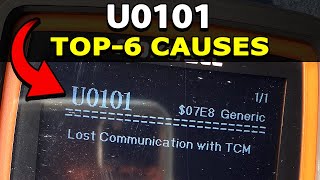
- Condemn the TCM: If the battery, fuses, power, ground, and CAN wiring are all confirmed to be good, and a professional scan tool cannot communicate with the module, the TCM itself is the most likely point of failure. 🎬 Watch: A mechanic explains the top 6 causes of U0101 codes.
Parts You'll Likely Need
- Transmission Control Module (TCM)
(OEM #Varies by year and FWD/AWD (e.g., 28100-5XH-A22 for some models))— Internal failure of the TCM is a documented cause of this code on related Honda platforms and a common failure point for this symptom set after ruling out power issues.
Trusted brands: Honda (Genuine OEM)
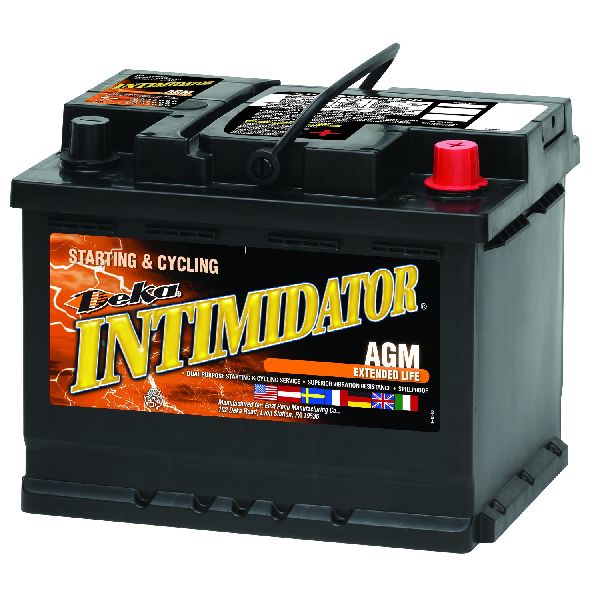
OEM price range: $600-$900 - AGM Battery — A weak battery is a primary cause of communication codes, and this vehicle platform has a known issue that can cause premature battery failure. Upgrading to a higher-capacity battery (Group 24F or 35) is a common preventative measure recommended by owners.
Trusted brands: Bosch, DieHard, Interstate
OEM price range: $200-$300
Aftermarket price range: $150-$250
Related Codes That Often Appear With This One
- U0038 — This code indicates a 'TM-CAN Malfunction (TCM ECU BUS-OFF)'. It is often stored alongside U0101 and specifically points to the TCM being the source of the communication failure on the network, rather than another module or a general bus problem. TSB A17060C for the Civic lists this code combination as the primary indicator for a failed TCM.
- P0864 — This code stands for 'TCM Communication Circuit Range/Performance'. It can be set along with U0101 and indicates an electrical problem within the communication circuit itself, such as abnormal voltage or resistance, pointing towards a wiring issue.
Technical Service Bulletins (TSBs) & Recalls
- A19-039: Addresses a parasitic battery drain from a PCM software flaw where the module fails to enter sleep mode, a common indirect cause of U0101
- Bulletin #A17060C: Notes that an internal malfunction with the TCM can cause the vehicle to not shift out of park, not crank, and store DTCs U0038 and U0101.
- Bulletin #ATS161101: Describes symptoms where multiple indicators are lit on the instrument panel and the gauge control module loses communication with the transmission (U0101).
Platform-Specific Known Issues
- Parasitic Battery Drain (TSB A19-039): A software issue in the Powertrain Control Module (PCM) can cause it to stay 'awake' after the vehicle is off, draining the battery. This happens when the PCM performs an EVAP system leak check and fails to return to sleep mode. This low voltage can trigger code U0101. The fix is a software update performed by a Honda dealer.
Mechanic-Grade Diagnostic Values
- CAN Bus Network Resistance — expected: ~60 Ohms. Failure: A reading of ~120 Ohms indicates an open circuit or a single failed terminating resistor in a module or harness. A reading near 0 Ohms indicates a short between the CAN High and CAN Low wires.
- CAN High (CAN-H) Voltage — expected: ~2.6V to 3.5V. Failure: Voltage stuck high, low, or at 0V indicates a short to power or ground.
- CAN Low (CAN-L) Voltage — expected: ~1.5V to 2.4V. Failure: Voltage stuck high, low, or at 0V indicates a short to power or ground. The two signals should be clean mirror images of each other on an oscilloscope.
- TCM Ground Circuit Resistance — expected: Below 0.5 Ohms. Failure: A higher resistance reading indicates a corroded or loose ground connection, which can cause the module to go offline intermittently.
- TCM Power Supply Voltage — expected: 12.0V - 12.6V. Failure: Voltage below 12.0V indicates a problem with the battery, alternator, or the power supply circuit/fuse for the TCM.
Scan Tool Commands That Help
- Honda Diagnostic System (i-HDS): Network Diagnosis / Communication Check — To actively poll all modules on the CAN bus. If the i-HDS cannot get a response from the TCM, it confirms the module is offline and is the source of the U0101 code.
- Honda Diagnostic System (i-HDS) with J2534 Rewrite: Replace ECM/PCM (or TCM equivalent function) — This function is mandatory after installing a new or used TCM. It is used to write the vehicle's VIN and specific transmission characterization data into the replacement module to ensure proper shifting and communication.
Wiring & Ground Locations
- Main Transmission Ground — A ground strap bolted directly from the transmission housing to the vehicle's chassis/frame. This is often located under the air intake box assembly in the engine bay.. This is a primary ground path for the entire powertrain. Corrosion or a loose connection at this point can cause a host of electrical issues, including intermittent module communication failures like U0101.
- Main Battery Ground — The main negative battery cable splits into a 'Y'. One large cable bolts to the engine/transmission, and a smaller secondary wire bolts to the chassis fender wall.. Both of these ground points must be clean and secure. A fault in the main engine ground can force electrical current to find other paths, leading to unstable module operation.
- TCM Connector — Located behind the driver's side front wheel and wheel well liner, connected to the TCM.. This is the direct interface for the module. All power, ground, and CAN bus signals must be verified at this connector's pins. Its location makes it vulnerable to moisture and debris from the road.
OEM Part Supersession History
Varies (e.g., 28100-5XH-A22)→Varies (e.g., 28100-5RG-A22, 28100-5RH-A22)— Part numbers can differ based on model year (pre/post facelift), drivetrain (FWD/AWD), and internal hardware/software revisions from the manufacturer.
Heads up: It is critical to match the part number from the original TCM on the vehicle. While a different part number might physically fit, it may have incorrect software or hardware for the specific vehicle configuration, leading to failure even after programming.
Model Year Variations Within This Range
- 2020-2022: The 2020 model year introduced a significant facelift, made the 1.5L Turbo engine standard on all non-hybrid trims, and made the Honda Sensing suite standard. A Hybrid model was also introduced with a different powertrain and a push-button gear selector instead of a physical lever. While the U0101 code's meaning is the same, diagnostic steps for the hybrid powertrain may differ.
Diagnostic Flowchart
Other Known Issues on This Vehicle
Issues unrelated to this code that are worth knowing about as an owner of this generation:
- Fuel Diluting Engine Oil (1.5L Turbo) 🔴 High — Common, especially in colder climates and on vehicles used for frequent short trips. A class-action lawsuit was filed regarding this issue. (Ref: Honda addressed this with software updates and, in some cases, extended warranties on components like fuel injectors (TSB 22-002).)
- Sticky or Notchy Steering at Highway Speeds 🔴 High — Widespread on 2023-2025 models, but some earlier models have reported similar sensations. Affects nearly 1.7 million Honda/Acura vehicles. (Ref: Recall 24V-744. The fix involves replacing a spring and applying special grease to the steering gearbox worm gear, though some owners report it's a temporary solution.)
- Parasitic Battery Drain 🟠 Medium → Shop Vehicle Battery — Very common across 2017-2019 models, leading to dead batteries and various electrical fault codes, including U0101. (Ref: TSB A19-039 provides a PCM software update to fix the logic flaw causing the drain.)
- Infotainment System Glitches/Failures 🟡 Low — Frequently reported issues include the screen freezing, being unresponsive, or randomly rebooting.
- Transmission Judder or Vibration 🟠 Medium → Shop Transmission Assembly — Some owners report a judder or vibration under light acceleration, often between 20-60 mph. (Ref: Various TSBs for other Honda models (like 17-043 for Odyssey) address this with a software update and transmission fluid flush, indicating a known issue with fluid deterioration.)
Used vs. New Parts: Buying Guide for This Vehicle
When a used part is the smart pick: A used TCM is a viable and cost-effective option for this repair, as the primary failure mode is often internal electronics rather than wear. However, the cost savings must be weighed against the absolute necessity of professional reprogramming.
Donor-vehicle mileage cap: roughly under 100000 miles for the part to have meaningful remaining life.
What to inspect on the donor part:
- Verify the part number on the used module EXACTLY matches the original part number from your vehicle.
- Source from a reputable auto recycler that guarantees the part is functional.
- Inspect the connector pins on the used module for any signs of corrosion, moisture damage, or bent pins.
- Avoid modules from vehicles with obvious signs of major flood or fire damage.
OEM-only on this vehicle (don't cheap out):
- Transmission Control Module (TCM) - While used OEM is an option, there are no widely trusted aftermarket manufacturers for this specific, complex electronic component. A new or used Genuine Honda part is the standard repair path.
Aftermarket brands forum-validated for this vehicle:
- For the battery (a common cause), brands like Interstate, DieHard, and Bosch are well-regarded replacements. Many owners recommend upgrading to a larger Group 24F or 35 AGM battery for increased capacity.
Brands owners have reported issues with on this vehicle:
- Avoid off-brand, non-programmable, or 'plug-and-play' TCMs advertised online. For this vehicle, TCM replacement is not a simple swap; programming is mandatory.
Real Owner Stories
Aggregated from forums and TSBs cited above. Mileages and costs reflect what owners reported in those sources.
2019 Honda CR-V
Symptoms: Triggered U0101 and P0864 codes after disturbing the fuse box while attempting to install a dash cam.
What fixed it: Ensuring fuses were properly seated and not disturbed; the code was triggered by electrical interruptions during the installation process.
Source hint: Reddit r/AskAMechanic: A user with a 2019 CR-V confirmed that disturbing the fuse box while attempting to install a dash cam triggered U0101 and P0864 codes
2017-2019 Honda CR-V
Symptoms: Multiple warning lights on the dashboard (Christmas tree effect) and a dead battery.
What fixed it: Updating the PCM software per TSB A19-039 to fix a parasitic drain and replacing the battery.
Source hint: CRVownersclub.com: Multiple threads discuss the U0101 code appearing alongside a 'Christmas tree' of dash lights, with the overwhelming consensus pointing to a weak or failing battery
Documented NHTSA Reports
Honda Accord Hybrid (Cross-Model Reference)
Symptoms: An owner reported a system reboot followed by a long list of logged communication errors including U0100, U0101, U0122, and U0131.
Source hint: NHTSA ODI #11589674
Related OBD-II Codes
Frequently Asked Questions
Why does my 2017-2019 Honda CR-V keep having a dead battery that triggers the U0101 code?
Can I upgrade the battery in my CR-V to prevent these communication errors?
Is there a specific TSB for TCM failure that applies to the CR-V's platform?
How does the 'Christmas tree' dashboard effect relate to code U0101?
Could a simple fuse issue cause a U0101 transmission error on a 2019 CR-V?
Where is the Transmission Control Module located if I need to inspect the wiring?
Helpful Videos
We Have This Part in Stock


The information in this article is provided for general reference and educational purposes only. Vehicle specifications, procedures, and part compatibility can vary by production date, trim level, and region. Always consult your vehicle's factory service manual and verify part numbers before purchasing or performing repairs. Safety-critical components such as airbags, seat belts, and braking systems should be installed by a qualified professional.
- Honda CR-V:
- 🧭 Diagnostic Flowchart
- 🎬 Helpful Videos
- 🛍️ Shop This Part
- What's Unique About the 2017-2022 Honda CR-V
- Symptoms You May Notice
- Most Likely Causes
- Rare But Worth Checking
- Diagnosis Steps
- Parts You'll Likely Need
- Related Codes That Often Appear With This One
- Technical Service Bulletins (TSBs) & Recalls
- Platform-Specific Known Issues
- Mechanic-Grade Diagnostic Values
- Scan Tool Commands That Help
- Wiring & Ground Locations
- OEM Part Supersession History
- Model Year Variations Within This Range
- Other Known Issues on This Vehicle
- Used vs. New Parts: Buying Guide for This Vehicle
- Real Owner Stories
- 2019 Honda CR-V
- 2017-2019 Honda CR-V
- Documented NHTSA Reports
- Honda Accord Hybrid (Cross-Model Reference)
- Related OBD-II Codes
- Frequently Asked Questions
- 🎟️ Get 5% Off