

U0101 on 2011-2016 Hyundai Elantra: Lost Communication With Transmission Fixes
On a 2011-2016 Elantra, U0101 means the main computer has lost contact with its own transmission control functions. The fix is almost always tracking down a wiring fault, bad ground, or blown fuse before suspecting the expensive Powertrain Control Module (PCM). There is no separate Transmission Control Module (TCM) to replace, as it is integrated into the PCM.
- U0101 on a 2011-2016 Elantra is a network code indicating a communication loss with the transmission controls, which are inside the main engine computer (PCM).
- Do not assume the main computer has failed. The most common causes are simpler and cheaper to fix: bad wiring, loose/corroded grounds, or blown fuses.
- Diagnosis is critical. Start with the easiest things first: check fuses, battery health, and visually inspect all wiring running to the transmission.
- This is a difficult DIY repair. Due to the complex electrical diagnosis required, professional service is strongly recommended to avoid costly misdiagnosis.
- There is no separate TCM to replace. If the PCM is condemned, it must be programmed to the vehicle after installation.
What's Unique About the 2011-2016 Hyundai Elantra
The key challenge on the 2011-2016 Elantra is that the Transmission Control Module (TCM) is integrated into the Powertrain Control Module (PCM), which is located under the driver's side dashboard, near the steering column. This means there isn't a separate, transmission-mounted module to inspect or replace. All diagnostic paths for wiring, power, and ground ultimately lead back to the central PCM. This makes pinpointing the fault more complex than on vehicles with a distinct TCM, as the problem could be in the external wiring harness, the PCM's power/ground supply, or the PCM itself.
Symptoms You May Notice
- Check Engine Light is on
- Transmission warning light may be illuminated
- Vehicle is stuck in one gear ('limp mode')
- Harsh or erratic shifting
- Inability to shift out of Park
- Gear position indicator on the dashboard may be blank or incorrect 🎬 Watch: Troubleshooting gear shifting and communication issues on an Elantra
- A scan tool may fail to communicate with the transmission controller
- Replacing the brake light switch. A faulty brake light switch can prevent the vehicle from shifting out of Park but it will not set a U0101 communication code.
- Replacing the transmission range sensor (inhibitor switch). This sensor tells the computer the shifter's position. If it fails, it will typically set its own specific codes (like P0707) and cause starting or shifting issues, but not a total loss of communication with the TCM.
- Condemning the entire transmission. This is an electronic communication fault, not a mechanical failure. Replacing the transmission will not fix the U0101 code unless the internal wiring harness was the specific point of failure and was replaced with the new transmission.
Most Likely Causes
- Wiring Harness Damage or Corrosion 🔴 High Probability The wiring harness runs from the engine bay to the transmission. It is exposed to heat, vibration, and moisture, which can cause wires to break, chafe on brackets, or connectors to corrode over time.
How to confirm: Visually inspect the entire wiring harness between the transmission and the firewall. Pay close attention to the main connector on the transmission case, the area under the battery tray, and where the harness may rub against the engine or chassis. Disconnect connectors and check for green or white corrosion on the pins.
Typical fix: Repair the damaged section of wire or replace the corroded connector pigtail. Clean connector pins with an electrical contact cleaner.
Est. part cost: $10-$50 - Poor Power or Ground to the PCM 🟡 Medium Probability Ground straps can corrode or loosen over time, and fuses can blow due to intermittent shorts. The PCM requires a stable power and ground reference to operate correctly. A weak battery or failing alternator can also cause low voltage issues that trigger communication codes.
How to confirm: Check all relevant fuses, often labeled 'TCM', 'ATM', or 'ECU' in the fuse box. Using a wiring diagram, locate the main chassis ground points for the PCM (a common one is on the body near the left front corner of the engine bay) and ensure they are clean and tight. Use a multimeter to verify battery voltage is above 12.4V and that you have a clean ground signal (<0.5 Ω resistance to chassis) at the PCM's main connector pins.
Typical fix: Replace blown fuses (and diagnose the cause if they blow again). Clean and tighten ground connections with a wire brush and secure the bolt.
Est. part cost: $1-$20 - Faulty Powertrain Control Module (PCM) ⚪ Low Probability → Shop Engine Control Module (ECM) While electronic modules are generally reliable, internal failures can occur due to voltage spikes, heat, or age. Because the TCM is internal to the PCM, a failure of the transmission control portion requires replacement of the entire unit.
How to confirm: This is a diagnosis of exclusion. If all wiring, connectors, power, grounds, and CAN bus network integrity have been meticulously tested and confirmed to be good, the PCM itself is the likely culprit.
Typical fix: Replace the Powertrain Control Module. The new module will need to be programmed to the vehicle's VIN and specific options by a dealer or a qualified independent shop with the correct equipment.
Est. part cost: $600-$1000
Rare But Worth Checking
- Internal Transmission Wiring Harness Failure: → Shop Transmission Assembly This part (OEM # 46307-3B650) is a known failure point for other transmission codes like P0713 (Temp Sensor) and various solenoid codes. While it doesn't typically cause U0101 on its own, a significant short or open circuit within this harness could disrupt the entire transmission's electronics and cause a communication loss. TSBs like 19-AT-015H and 20-AT-008H call for its replacement when fixing other electrical transmission faults.
Diagnosis Steps
- Scan the vehicle for all diagnostic trouble codes. Note if U0101 is the only code, or if other communication (U-prefix) codes are present across multiple modules.
- Check the battery and charging system. Ensure battery voltage is above 12.4V with the engine off and that the alternator is charging correctly when running. Low or unstable voltage is a common cause of network errors.
- Inspect all fuses related to the powertrain and transmission. Check both the under-hood and interior fuse panels for fuses labeled 'TCM', 'ATM', 'ECU', or 'PCM'.
- Perform a thorough visual inspection of the wiring harness that runs to the transmission. Look for any signs of physical damage, chafing, melting, or corrosion, especially near the transmission housing, under the battery, and around engine brackets.
- Inspect the main chassis ground connections in the engine bay. Locate the primary ECU/PCM ground strap, remove it, clean the contact surfaces to bare metal, and re-secure it tightly.
- If the external wiring looks good, the next step is to test the circuits at the PCM connector (located under the driver's side dash). Using a vehicle-specific wiring diagram and a multimeter, disconnect the PCM and verify you have proper power and ground signals going into the module on the correct pins.
- With the PCM still disconnected, test the CAN bus network. Measure the resistance between the CAN High and CAN Low pins at the diagnostic port (pins 6 and 14) or the PCM connector. A healthy network should read approximately 60 ohms. A reading of 120 ohms indicates a break in the circuit 🎬 See how to test CAN High and Low signals or a missing terminating resistor, while a reading near 0 ohms indicates a short between the two lines.
- If all wiring, power, grounds, and CAN bus resistance check out, the fault is most likely internal to the Powertrain Control Module (PCM).
Parts You'll Likely Need
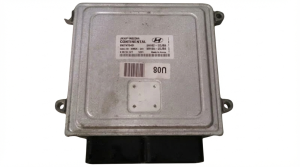
- Powertrain Control Module (PCM) — This is the part that fails if all wiring and power/ground checks pass. Because the TCM is integrated, the entire PCM must be replaced. Part numbers are highly specific to the vehicle's year, engine, and options and must be matched by VIN.
Trusted brands: Hyundai (OEM)
OEM price range: $800-$1200
Aftermarket price range: $400-$800 (Remanufactured) - Internal Transmission Wiring Harness
(OEM #46307-3B650)— This harness inside the transmission oil pan connects the valve body solenoids and sensors. It is a known failure point for other codes and could cause U0101 in cases of a severe short.
Trusted brands: Hyundai (OEM)
OEM price range: $70-$100
Aftermarket price range: $40-$70
Technical Service Bulletins (TSBs) & Recalls
- TSB 21-EM-002H: Details a warranty extension for the 1.8L Nu engine due to piston slap, a major unrelated platform issue.
- TSB 17-ST-001: Describes the replacement procedure for the flexible steering coupler to fix a common steering column click.
- TSB 18-ST-001: Addresses steering rack noise, another common owner complaint.
- TSB 19-AT-015H / 20-AT-008H: Details procedures for replacing the internal transmission harness and solenoids for various electrical fault codes (not U0101 specifically, but related to the harness).
Platform-Specific Known Issues
- The Transmission Control Module (TCM) is integrated into the Powertrain Control Module (PCM) on this platform. This is the most critical vehicle-specific issue, as it dictates the entire diagnostic strategy, eliminating the possibility of replacing a separate TCM.
- Grounding points in the engine bay are susceptible to corrosion, which can cause intermittent communication issues. A key ground to check is located on the driver's side inner fender, near the battery.
- The internal transmission harness (46307-3B650) is a documented weak point for other transmission electrical faults and should be considered if other diagnostics are inconclusive.
Mechanic-Grade Diagnostic Values
- CAN Bus Network Resistance — expected: ~60 Ω (Ohms) across CAN High and CAN Low pins (e.g., at OBD-II pins 6 & 14) with battery disconnected.. Failure: A reading of ~120 Ω indicates an open circuit or a missing terminating resistor. A reading near 0 Ω indicates a short between the CAN lines.
- CAN Bus Voltage (Key On, Engine Off) — expected: CAN High (Pin 6 at OBD-II) should be ~2.6V. CAN Low (Pin 14 at OBD-II) should be ~2.4V, both measured to chassis ground.. Failure: Voltages stuck at 0V, 5V, or battery voltage indicate a short to ground or power on the respective line.
- PCM Power and Ground Pins — expected: Battery voltage (>12.4V) on power supply pins (e.g., Pins 5 & 6 on connector CGG-K) and less than 0.5 Ω resistance to chassis on ground pins (e.g., Pins 3 & 4 on connector CGG-K).. Failure: No voltage or high resistance on ground pins indicates a fault in the power supply or ground circuit leading to the PCM.
Scan Tool Commands That Help
- Hyundai GDS (Global Diagnostic System) or equivalent professional scanner: ECU/PCM Communication Test — To actively ping the integrated TCM to see if it responds on the network. A 'no response' confirms the communication loss seen by other modules.
- Hyundai GDS (Global Diagnostic System): ECU/PCM Programming/Coding — This is required after installing a new PCM to write the vehicle's VIN and configuration data to the module, allowing it to function in the car.
Wiring & Ground Locations
- GE02 — Left front corner of the vehicle, in the engine compartment.. This is a primary chassis ground point. Corrosion or a loose connection here can disrupt power to the PCM and other critical components, leading to communication faults like U0101.
- GNG03 — Top rear of engine.. This is a main engine-to-chassis ground. A poor connection here can cause voltage instability for all engine-related electronics, including the PCM.
- Smart Junction Box — Under the left side of the dash, near the kick panel.. This box manages power distribution and contains fuses and relays. A fault within this box or its connections can cut power to the PCM.
- PCM Connector CGGA-K / CGG-K — On the Powertrain Control Module, located under the driver's side dash.. This is the main connector where power, ground, and network lines enter the PCM. Pins 3 and 4 are power grounds, while Pins 5 and 6 are main relay power supplies that must be verified during diagnosis.
Real Owner Repair Stories
- YouTube video by 'OmarGautomotive' (Ford, but demonstrating a universally applicable U0101 diagnostic process.) — No communication with TCM, code U0101 present.
❌ Tried (didn't work) Checked fuses F53 and F26, both were good., Verified power at the transmission connector pins 9 and 14, both had voltage.
✅ What actually fixed it The ground for the TCM was good at the main ground point (G100), but there was a bad splice/junction connector between the main ground point and the module connector. The ground wire had continuity before the splice but was open after the splice. Repairing the connection in the splice pack restored the ground and fixed the communication issue. - YouTube video (2016 Hyundai Elantra) — U0101 Lost Communication with Transmission Control Module, gear position indicator (P) was not showing on the dash.
❌ Tried (didn't work) Initial diagnosis showed the communication code.
✅ What actually fixed it The video, presented in Urdu/Hindi, concludes by showing the gear position indicator functioning correctly again after the repair, implying the fault was successfully diagnosed and fixed, though the specific repair steps were not detailed for the viewer. The resolution confirms that this is a solvable problem on this specific model. - NHTSA ODI #10862093 — An owner reported being unable to shift into Park, Reverse, or Neutral, only Drive. After having the car towed, diagnostic testing pulled code U0101. The transmission returned to normal operation after technicians examined the pins and connectors and plugged the TCM back in.
- NHTSA ODI #11578139 (Cross-model reference) — A manufacturer report for a similar platform noted that when the TCM failed, the gears became stuck while driving and the car would no longer start, with code U0101 and the ECS light appearing.
OEM Part Supersession History
46307-3B610, 46307-3B620→46307-3B650— Part revision and improvement by the manufacturer.
Heads up: The latest part number, 46307-3B650, is the correct service replacement for the earlier versions on this platform.39103-2EMB2→39103-2EMB3, 39103-2EMP2, 39103-2EMP3— Software and hardware revisions for the PCM.
Heads up: Part numbers for the PCM are extremely specific to year, emissions (Federal vs. SULEV), and ignition type (key vs. push-to-start). You must match the part number exactly or use a VIN-based lookup. An incompatible PCM will not function.
Model Year Variations Within This Range
- 2011-2013: Early models of this generation had specific PCM part numbers (e.g., 39103-2EMB2) that were later superseded. While the integrated TCM architecture is the same, matching the exact part number or a confirmed interchange is critical for these years.
- 2014-2016: Post-facelift models may have different PCM part numbers due to minor changes in vehicle options or emissions programming, even if the core architecture is identical. Always verify by VIN.
Diagnostic Flowchart
Other Known Issues on This Vehicle
Issues unrelated to this code that are worth knowing about as an owner of this generation:
- Engine Ticking / Piston Slap (1.8L Nu Engine) 🔴 High — Widespread issue, often noticeable on cold starts and can progress to engine damage or failure. Typically appears between 70,000 and 105,000 miles. (Ref: Subject of class-action lawsuits and warranty extensions (e.g., TXXK, TSB 21-EM-002H) covering the engine short block for this specific issue.)
- Steering Coupler Failure 🟠 Medium — Extremely common. Owners report a distinct clicking or clunking noise from the steering column when turning the wheel. (Ref: Hyundai issued a warranty extension (10 years/100,000 miles) and TSBs (e.g., 17-ST-001, 18-ST-001) for the flexible coupler part (P/N 56315-2K000-FFF).)
- Premature Brake Wear 🟡 Low — Often reported by owners, with pads and rotors wearing out faster than expected, sometimes in under 20,000 miles.
- Suspension Noises (Sway Bar Links) 🟡 Low — Clunking or knocking sounds over bumps are common, typically caused by worn front sway bar end links or bushings. This is a relatively inexpensive repair.
- Internal Transmission Harness Failure 🟠 Medium → Shop Transmission Assembly — While not the primary cause for U0101, the internal harness (P/N 46307-3B650) is a known failure point for various solenoid and sensor codes (e.g., P0713, P0741-P0773). A severe short could potentially cause communication loss. (Ref: TSB 20-AT-008H and 19-AT-015H address replacing this harness for other solenoid-related DTCs.)
Used vs. New Parts: Buying Guide for This Vehicle
When a used part is the smart pick: A used part is a viable option for a wiring harness pigtail or a connector that needs to be spliced in. For the main PCM, a used part is only a smart choice if it is purchased from a specialist who can clone your original module's data or pre-program the used unit to your car's VIN before shipping.
Donor-vehicle mileage cap: roughly under 150000 miles for the part to have meaningful remaining life.
What to inspect on the donor part:
- For a PCM: Ensure the casing is not cracked or corroded. All connector pins must be straight, clean, and free of any green or white residue.
- For a wiring harness/connector: Inspect for brittle plastic, cut wires, or any signs of previous 'repairs' using tape or non-standard connectors.
OEM-only on this vehicle (don't cheap out):
- Powertrain Control Module (PCM). Due to the complex VIN and immobilizer programming required, aftermarket 'new' units are not available. The choice is between a new OEM unit from a dealer or a remanufactured/used OEM unit from a specialist who can program it. A used PCM from a junkyard without programming is not plug-and-play and will not work.
Aftermarket brands forum-validated for this vehicle:
- For PCM replacement/repair services: Flagship One (FS1), ECU Maverick, and other similar mail-in programming/cloning services are reported to successfully provide programmed modules.
Brands owners have reported issues with on this vehicle:
- Avoid purchasing a used PCM from a general salvage yard or individual seller (e.g., eBay) unless they explicitly guarantee it has been 'unlocked' or will be programmed to your VIN before shipment. A locked, used PCM is unusable.
Real Owner Stories
Aggregated from forums and TSBs cited above. Mileages and costs reflect what owners reported in those sources.
2012 Kia Forte (Platform Mate)
Symptoms: The owner was troubleshooting a U0101 (Lost Communication With TCM) and performed network testing. They found 59 ohms at the OBD-II port but 110 ohms at the ECU connector.
What fixed it: The owner used these diagnostic values to identify a break in the CAN bus network integrity between the diagnostic port and the ECU.
Source hint: MHH Auto - 'U0101 (Lost Communication With TCM) Kia Forte ECU programming'
2011 Hyundai Elantra 1.8L Nu — ~85000 miles
Symptoms: Owner reported a progression of ticking noises (piston slap) leading toward complete engine failure, which is a major platform concern alongside electrical issues.
What fixed it: While not a fix for U0101, the engine issue required a short block replacement under the TXXK warranty extension.
Source hint: CarComplaints.com - '2011 Hyundai Elantra Engine Failure'
2014 Hyundai Elantra
Symptoms: Owner experienced a loud engine ticking noise and sought help regarding whether the 'piston slap' was a 'death sentence' for the engine.
What fixed it: The owner had to negotiate with the dealer and Hyundai corporate for potential warranty coverage under the documented engine failure issues.
Source hint: Reddit r/Cartalk - '2014 Hyundai Elantra Piston Slap is it a death sentence for my engine?'
Related OBD-II Codes
Frequently Asked Questions
Can I just replace the Transmission Control Module (TCM) on my 2013 Elantra to fix U0101?
Does TSB 21-EM-002H address the U0101 communication code?
Where is the most common ground point to check for communication issues on the Elantra?
Is there a specific wiring harness known to fail and cause electrical transmission faults in this model?
What should the CAN bus resistance be when testing the network for a U0101 code?
Could a weak battery cause my Elantra to get stuck in 'limp mode' with a U0101 code?
Helpful Videos

Used OEM Parts in Stock
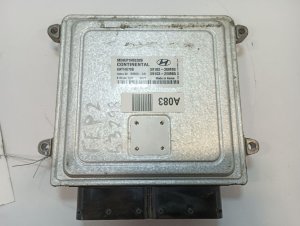
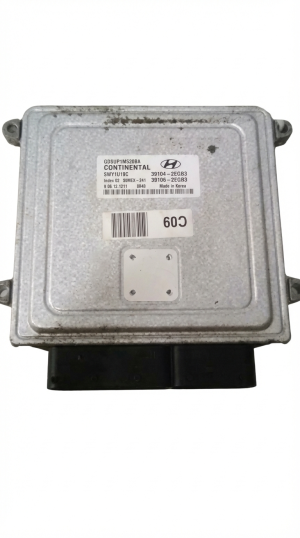
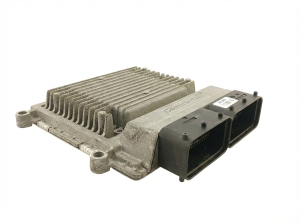
New Aftermarket Parts Available





The information in this article is provided for general reference and educational purposes only. Vehicle specifications, procedures, and part compatibility can vary by production date, trim level, and region. Always consult your vehicle's factory service manual and verify part numbers before purchasing or performing repairs. Safety-critical components such as airbags, seat belts, and braking systems should be installed by a qualified professional.
- Hyundai Elantra:
- 🧭 Diagnostic Flowchart
- 🎬 Helpful Videos
- 🛍️ Shop This Part
- What's Unique About the 2011-2016 Hyundai Elantra
- Symptoms You May Notice
- Most Likely Causes
- Rare But Worth Checking
- Diagnosis Steps
- Parts You'll Likely Need
- Technical Service Bulletins (TSBs) & Recalls
- Platform-Specific Known Issues
- Mechanic-Grade Diagnostic Values
- Scan Tool Commands That Help
- Wiring & Ground Locations
- Real Owner Repair Stories
- OEM Part Supersession History
- Model Year Variations Within This Range
- Other Known Issues on This Vehicle
- Used vs. New Parts: Buying Guide for This Vehicle
- Real Owner Stories
- 2012 Kia Forte (Platform Mate)
- 2011 Hyundai Elantra 1.8L Nu — ~85000 miles
- 2014 Hyundai Elantra
- Related OBD-II Codes
- Frequently Asked Questions
- 🎟️ Get 5% Off