

U0101 on 2009-2014 Hyundai Sonata: Lost Communication with TCM Causes and Fixes
On a 2009-2014 Hyundai Sonata, code U0101 most often indicates a simple electrical issue like a blown fuse, a weak battery, or a bad ground connection, not a failed transmission computer. Always check the fuses in the engine bay (labeled 'TCU' or 'ATM') and cabin fuse boxes before suspecting more expensive parts.
- Code U0101 is a serious network communication error that makes the vehicle unsafe to drive.
- Always start your diagnosis by checking the battery and all related fuses. This is the most common and cheapest fix.
- Be aware of your vehicle's generation: 2009-2010 models have the transmission controller inside the main engine computer (PCM), while 2011-2014 models have a separate TCM.
- Do not replace the expensive control module unless you have professionally ruled out all power, ground, and wiring issues first.
What's Unique About the 2009-2014 Hyundai Sonata
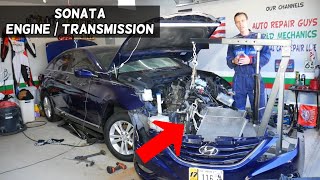
The key difference on this platform is the architecture of the control modules between generations. On the earlier 2009-2010 (NF) Sonata, the transmission control functions are built directly into the main engine computer (PCM); there is no separate TCM. For the 2011-2014 (YF) Sonata, Hyundai used a separate, external Transmission Control Module. This distinction is critical for diagnosis, as on older models the problem lies with the PCM or network, while on newer models it could be the separate TCM, its wiring, or the network.
Generation note: This range covers two Sonata generations: the 5th generation facelift (NF, 2009-2010) and the 6th generation (YF, 2011-2014). The primary difference for this code is that the NF models have an integrated PCM/TCM, while the YF models have a separate TCM.
Symptoms You May Notice
- Check Engine Light is on
- Transmission warning light is on
- Vehicle enters 'limp mode' (stuck in 2nd or 3rd gear)
- Harsh, erratic, or delayed shifting
- Vehicle will not shift out of Park or Neutral
- Gear position indicator on the dashboard may be blank or incorrect
- Inability to communicate with the TCM using a scan tool
- Replacing the entire transmission when the fault is purely electrical.
- Replacing the TCM/PCM without first thoroughly checking all related fuses, grounds, and wiring harness connections.
Most Likely Causes
- Blown Fuse or Poor Power Supply 🔴 High Probability Electrical issues are a common point of failure on all modern vehicles. A simple blown fuse powering the control module is a frequent cause for a complete communication loss. Fuses labeled 'TCU 1' (10A) and 'TCU 2' (15A) in the engine bay fuse box are common culprits.
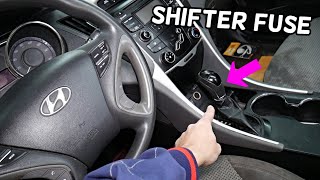
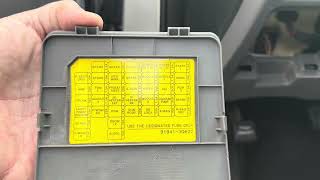
How to confirm: Visually inspect all fuses in both the engine compartment and interior fuse panels, specifically 🎬 Watch: How to find and access your Sonata's fuse boxes any labeled 'TCM,' 'PCM,' 'ECU,' or 'TRANS'. Test the battery to ensure it provides stable voltage above 12.4V with the engine off. A weak battery can cause communication glitches.
Typical fix: Replace the blown fuse. If the fuse blows again, a short circuit in the wiring harness must be diagnosed. If the battery is weak or failing, it must be replaced.
Est. part cost: $1-$20 for fuses, $150-$300 for a new battery. - Wiring Harness or Connector Fault 🟡 Medium Probability Wiring harnesses, especially those near the transmission and engine, are exposed to heat, vibration, and moisture, which can lead to corrosion on connector pins or breaks in the wires over time. Ground straps are also a known failure point.
How to confirm: Visually inspect the wiring harness and connectors going to the transmission and the main computer (PCM). Look for any signs of corrosion (green or white powder), chafed or broken wires, or loose-fitting connectors. A multimeter can be used to check for continuity and for shorts to power or ground on the CAN bus wires.
Typical fix: Clean any corroded connectors with an electrical contact cleaner and a small brush. Repair any broken or chafed wires. Ensure all connectors are fully seated and apply dielectric grease to prevent future corrosion. In some cases, simply examining pins and connectors and re-plugging the TCM can restore communication, as noted in NHTSA ODI #10862093.
Est. part cost: $10-$50 for cleaning supplies and wiring repair materials. - Failed Control Module (PCM or TCM) ⚪ Low Probability While less common than electrical or wiring faults, internal failure of the control module due to age, heat, or voltage spikes can occur.
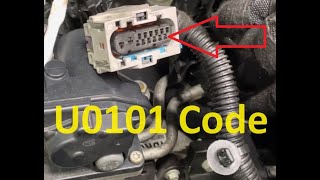
How to confirm: This is typically a diagnosis of exclusion. If all power, ground, and communication wires to the module test good, but the module remains offline, the module itself is likely faulty. 🎬 Watch: A breakdown of common causes for the U0101 code This requires a professional-grade scan tool to confirm the module is not responding.
Typical fix: Replace the faulty module. For 2009-2010 models, this is the PCM. For 2011-2014 models, this is the separate TCM. The replacement module will need to be programmed to the vehicle's VIN.
Est. part cost: $800-$1900 for a new, programmed PCM/TCM from the dealer.
Rare But Worth Checking
- Faulty cabin fuse box (Junction Box): On the YF Sonata (2011-2014), the internal circuitry of the cabin fuse box can fail, causing various electrical issues, including communication problems on the CAN bus.
Diagnosis Steps
- Check for other DTCs: Scan for any other codes that could point to a broader electrical or network issue. Multiple 'U' codes suggest a network-wide problem, not just a single module.
- Inspect Battery and Fuses: Ensure the battery is fully charged and terminals are clean. Meticulously check all fuses in the engine bay and interior fuse boxes related to the PCM and TCM, often labeled 'TCU', 'ATM', or 'ECU'.
- Visual Inspection: Carefully inspect the wiring harness and connectors to the main computer (PCM, located in the engine bay) and, for 2011-2014 models, the transmission itself where the TCM or its connectors are located. Look for any visible damage, corrosion, or loose connections. Check main ground straps from the battery to the chassis and engine.
- Check for Power and Ground: Using a multimeter and a vehicle-specific wiring diagram, verify that the correct control module (PCM for 2009-2010, TCM for 2011-2014) is receiving proper battery voltage (12V+) and has a solid ground connection (less than 0.5 ohms resistance) at its electrical connector.
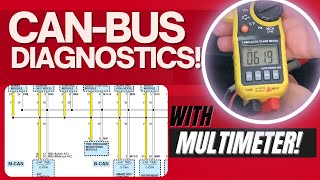
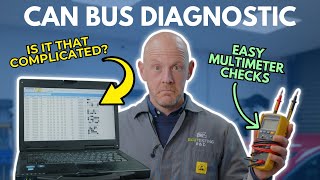
- Test CAN Bus Lines: If power and ground are good, check the integrity of the CAN bus communication wires between the PCM and TCM. This involves checking for correct resistance (typically 60 ohms across the CAN High and CAN Low 🎬 See this quick guide on testing CAN bus resistance wires with the battery disconnected) and checking for shorts to power or ground.
- Diagnose Control Module: If all wiring and power inputs are confirmed to be good, the control module itself is the likely culprit. This is the final step and often requires professional confirmation.
Parts You'll Likely Need
- Fuses — A blown fuse is the most common and simplest cause for the control module to lose power and stop communicating.
Trusted brands: Bussmann, Littlefuse
OEM price range: $1-$5
Aftermarket price range: $1-$3 - Powertrain Control Module (PCM/ECM)
(OEM #e.g., 39110-2G860 for 2010 2.4L (verify with VIN))— For 2009-2010 models, the TCM is integrated into this unit. If the module itself fails, the entire PCM must be replaced and programmed.
Trusted brands: Hyundai (Genuine OEM)
OEM price range: $1200-$1900
Aftermarket price range: $400-$800 (Remanufactured) - Transmission Control Module (TCM)
(OEM #e.g., 39107-26950 for some 2011-2014 models (verify with VIN))— For 2011-2014 models, this is a separate module. If it fails internally after all wiring checks out, it must be replaced and programmed.
Trusted brands: Hyundai (Genuine OEM)
OEM price range: $800-$1500
Aftermarket price range: $300-$700 (Remanufactured)
Related Codes That Often Appear With This One
- U0001 — This is a general High Speed CAN Communication Bus fault, which can appear alongside U0101 if the entire network is having issues.
- P0700 — This is a generic Transmission Control System Malfunction code. It's often set in the PCM to indicate that a more specific fault has been stored in the TCM.
- P0562 — System Voltage Low. This code can be set if a weak battery or failing alternator causes voltage drops that disrupt module communication, leading to U0101.
Technical Service Bulletins (TSBs) & Recalls
- While no specific TSB for U0101 was found, several TSBs exist for PCM software updates on the 2009-2010 models related to transmission adaptive learning, which could be relevant if the issue is software-related.
- TSB 11-01-016-1 provides a procedure to update the TCM software on 2011 Sonatas (2.0L/2.4L) to revise the logic for other transmission-related DTCs, indicating that software updates are a common service action for this module.
Platform-Specific Known Issues
- A critical distinction for this vehicle range is the control module architecture. 2009-2010 (NF) models use a single Powertrain Control Module (PCM) that also controls the transmission. 2011-2014 (YF) models use a separate Transmission Control Module (TCM).
- On 2011-2014 YF Sonatas, a faulty cabin fuse box (Smart Junction Box) has been noted to cause bizarre electrical issues, which could potentially include CAN bus communication faults leading to a U0101 code.
Mechanic-Grade Diagnostic Values
- CAN Bus Network Resistance — expected: ~60 Ohms. Failure: A reading of ~120 Ohms indicates one of the two terminating resistors is missing or the circuit is open to it. A reading near 0 Ohms indicates a short between the CAN High and CAN Low wires.
- CAN High (CAN-H) Voltage to Ground — expected: 2.5V to 3.5V (Key On, Engine Off). Failure: Voltage significantly outside this range indicates a circuit fault.
- CAN Low (CAN-L) Voltage to Ground — expected: 1.5V to 2.5V (Key On, Engine Off). Failure: Voltage significantly outside this range indicates a circuit fault.
- TCM/PCM Power Supply at Connector — expected: 12.0V - 12.6V (Key On). Failure: Low or no voltage indicates a problem with the fuse, relay, or power supply wire.
- TCM/PCM Ground Circuit Resistance — expected: Less than 0.5 Ohms. Failure: Higher resistance indicates a poor ground connection, which can cause intermittent communication issues.
Scan Tool Commands That Help
- Hyundai GDS (Global Diagnostic System): ECU Upgrade (Auto or Manual Mode) — Used to re-flash the TCM or PCM with updated software from Hyundai. This can resolve intermittent communication issues or problems related to adaptive learning that may trigger a U0101 code.
- Hyundai GDS (Global Diagnostic System): VIN Programming / ECU Initialization — This is a mandatory step after replacing a PCM (2009-2010) or TCM (2011-2014). The new module must be programmed with the vehicle's VIN to communicate with other modules and disable the immobilizer.
- Hyundai GDS (Global Diagnostic System): Actuation Test / Bidirectional Data — Allows a technician to directly send a command to the TCM and see if it responds. If the TCM does not respond to a direct command but its power and grounds are good, it confirms the module is faulty.
Wiring & Ground Locations
- PCM Location (2009-2010 NF) — In the engine bay, mounted to the firewall, often behind the air filter assembly.. This is the integrated PCM/TCM for this generation. Checking its connectors for corrosion or damage is a primary diagnostic step.
- TCM Location (2011-2014 YF) — Typically located in the engine compartment, sometimes near the battery or mounted to the transaxle itself.. This is the separate transmission computer for this generation. Its external location makes its wiring harness susceptible to heat and moisture damage.
- Ground Point (Example: Gf04/Gf05) — Wiring diagrams for the 2012-2014 Sonata show various ground points, such as Gf04 (left 'C' pillar) and Gf05 (right 'C' pillar), though engine bay grounds are more critical for the PCM/TCM.. A corroded or loose main ground strap in the engine bay can cause fluctuating voltage and disrupt communication between modules, leading to a U0101 code.
- Data Link Connector (DLC) Pins — Under the driver's side dashboard.. CAN High is on Pin 6 and CAN Low is on Pin 14. This is the primary access point for measuring the overall resistance of the CAN bus network (~60 ohms) to quickly check for shorts or open circuits.
Real Owner Repair Stories
- 2CarPros.com forum user (2010 Hyundai Sonata) — Check engine light with code U0101, occasional transmission 'dropping' or entering a fail-safe mode.
❌ Tried (didn't work) The user noted that restarting the car would temporarily resolve the issue.
✅ What actually fixed it The certified expert on the forum suggested the intermittent nature pointed towards a software issue within the integrated PCM/TCM. The recommended fix was to have a dealer check for and apply any available PCM software updates related to transmission adaptive learning, as the module might be failing to adapt correctly, causing a communication fault that resets on restart. - NHTSA ODI #11578139 — An owner reported that their TCM failed and gears became stuck while driving, requiring the use of a bypass switch to park the car. The vehicle would no longer start, the U0101 code appeared, and the ECS light came on.
- NHTSA ODI #10862093 — A report describes a vehicle that would not enter Park, Reverse, or Neutral, only Drive. After being towed, a technician pulled code U0101 and found that examining the pins and connectors and re-plugging the TCM restored transmission function.
Model Year Variations Within This Range
- 2009-2010 (NF): The transmission is controlled by the main Powertrain Control Module (PCM). There is no separate TCM. A U0101 fault points to an issue with the PCM itself, its power/ground, or the CAN wiring.
- 2011-2014 (YF): This generation uses a separate, external Transmission Control Module (TCM). A U0101 fault can be caused by the TCM, its dedicated wiring and connectors, or the CAN bus network. This adds a component to the diagnostic checklist compared to the earlier models.
Diagnostic Flowchart
Other Known Issues on This Vehicle
Issues unrelated to this code that are worth knowing about as an owner of this generation:
- Theta II Engine Failure 🔴 High — Very common on 2011-2014 models with the 2.4L GDI and 2.0L Turbo engines. Manufacturing debris could block oil passages, leading to connecting rod bearing failure, engine knocking, and eventual seizure. (Ref: Multiple recalls (e.g., NHTSA 15V568000, 17V226000) and a major class-action lawsuit settlement led to extended warranties and engine replacements for affected vehicles.)
- Steering Coupler Failure 🟠 Medium — Common on 2011-2014 models. The flexible rubber coupler in the electronic power steering motor disintegrates, causing a clicking or clunking noise in the steering column when turning the wheel. (Ref: Hyundai issued an extended warranty (TXXC) for this part to 10 years/100,000 miles.)
- Peeling White Paint 🟡 Low — Widespread on vehicles with white paint. The paint delaminates and peels off in large sheets, particularly on the roof and hood, due to a suspected paint application defect. (Ref: Hyundai extended the paint warranty for this specific issue on many models after public pressure and news investigations.)
- Faulty Cabin Fuse Box / Junction Box 🟠 Medium — Reported on 2011-2014 models. An internal malfunction in the fuse box can cause various electrical gremlins, such as parking lights staying on or loss of power to certain circuits.
- Timing Chain Tensioner Failure 🟠 Medium — Can occur on the 2.4L engine, leading to a rattling noise on startup. If not addressed, it can lead to timing chain slack and potential engine damage. Hyundai later released an updated tensioner part.
Used vs. New Parts: Buying Guide for This Vehicle
When a used part is the smart pick: A used PCM (2009-2010) or TCM (2011-2014) from a reputable salvage yard can be a cost-effective option, as widespread internal hardware failure is not the most common cause of U0101. These modules are often replaced unnecessarily when the fault is in the wiring.
Donor-vehicle mileage cap: roughly under 120000 miles for the part to have meaningful remaining life.
What to inspect on the donor part:
- Verify the part number on the used module EXACTLY matches the original.
- Inspect the connector pins for any signs of corrosion, moisture, or physical damage.
- Check the casing for cracks or signs that it has been opened before.
- Purchase from a seller that offers a warranty and has good reviews.
OEM-only on this vehicle (don't cheap out):
- Powertrain Control Module (PCM)
- Transmission Control Module (TCM)
Aftermarket brands forum-validated for this vehicle:
- For control modules, remanufactured units from reputable suppliers like Cardone or Dorman are available, but OEM is generally preferred.
Brands owners have reported issues with on this vehicle:
- Avoid no-name, unverified electronics from online marketplaces, as they often lack proper programming support and quality control.
Real Owner Stories
Aggregated from forums and TSBs cited above. Mileages and costs reflect what owners reported in those sources.
2010 Hyundai Sonata
Symptoms: Intermittent U0101 code that would occasionally resolve itself after restarting the vehicle.
What fixed it: Investigated PCM software updates as the TCM and PCM are a single integrated unit on this model year.
Source hint: 2CarPros.com forum thread
2011-2014 Hyundai Sonata (YF)
Symptoms: Loss of communication with the transmission module (U0101).
What fixed it: Replaced blown 'TCU' fuses located in the engine bay fuse box.
Source hint: hyundai-forums.com
2011-2014 Hyundai Sonata (YF)
Symptoms: U0101 code and transmission shifting issues.
What fixed it: Traced and repaired corroded wiring harnesses.
Source hint: hyundai-forums.com
Hyundai Owner Report
Symptoms: Vehicle would not shift out of Park, Reverse, or Neutral, only Drive.
What fixed it: A technician pulled code U0101 and restored communication by examining the TCM pins and connectors and re-plugging the module.
Source hint: NHTSA ODI #10862093
Hyundai Owner Report
Symptoms: TCM failed and gears became stuck while driving; vehicle would no longer start and the ECS light illuminated.
What fixed it: Diagnostic testing confirmed code U0101 was present after the transmission communication failure.
Source hint: NHTSA ODI #11578139
Related OBD-II Codes
Frequently Asked Questions
Where is the Transmission Control Module located on my 2010 Hyundai Sonata?
My 2011 Sonata has a U0101 code; which fuses should I check first?
Does TSB 11-01-016-1 apply to the U0101 communication error?
Can a bad battery cause a U0101 code on my 2013 Sonata?
Is there a known issue with the fuse box causing electrical codes on 2011-2014 models?
What is the difference in module architecture between the 2010 and 2011 Sonata?
Helpful Videos
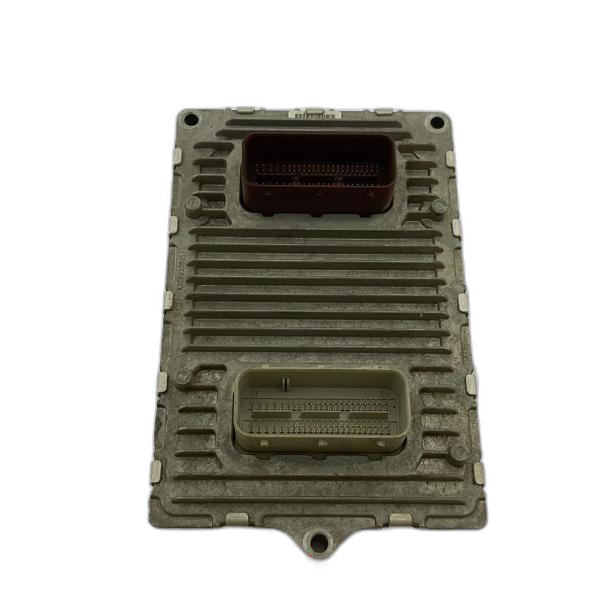
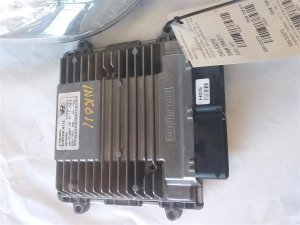
Used OEM Parts in Stock
New Aftermarket Parts Available

The information in this article is provided for general reference and educational purposes only. Vehicle specifications, procedures, and part compatibility can vary by production date, trim level, and region. Always consult your vehicle's factory service manual and verify part numbers before purchasing or performing repairs. Safety-critical components such as airbags, seat belts, and braking systems should be installed by a qualified professional.
- Hyundai Sonata:
- 🧭 Diagnostic Flowchart
- 🎬 Helpful Videos
- 🛍️ Shop This Part
- What's Unique About the 2009-2014 Hyundai Sonata
- Symptoms You May Notice
- Most Likely Causes
- Rare But Worth Checking
- Diagnosis Steps
- Parts You'll Likely Need
- Related Codes That Often Appear With This One
- Technical Service Bulletins (TSBs) & Recalls
- Platform-Specific Known Issues
- Mechanic-Grade Diagnostic Values
- Scan Tool Commands That Help
- Wiring & Ground Locations
- Real Owner Repair Stories
- Model Year Variations Within This Range
- Other Known Issues on This Vehicle
- Used vs. New Parts: Buying Guide for This Vehicle
- Real Owner Stories
- 2010 Hyundai Sonata
- 2011-2014 Hyundai Sonata (YF)
- 2011-2014 Hyundai Sonata (YF)
- Hyundai Owner Report
- Hyundai Owner Report
- Related OBD-II Codes
- Frequently Asked Questions
- 🎟️ Get 5% Off