

U0101 on 2007-2018 Jeep Wrangler: Causes and Fixes for Lost Communication with TCM
On a 2007-2018 Jeep Wrangler, code U0101 most often means the Transmission Control Module (TCM) has lost power or has a bad connection. Before suspecting the TCM, check the simple fixes: the TCM fuse (J18) and power relay (often K5) in the under-hood fuse box (TIPM). A faulty relay is a very common and inexpensive fix, often costing under $20 and resolving limp mode and 'Hot Oil' warnings.
- Before suspecting an expensive module failure, always check the simple things first: the battery, the TCM fuse, and the TCM power relay (K5).
- A faulty TCM power relay is a very common cause for U0101 on the Jeep Wrangler JK and is an easy, inexpensive part to replace.
- Symptoms are severe and include limp mode and potential no-start conditions, so the vehicle should not be driven until repaired.
- The TCM is located inside the cabin, under the dashboard to the right of the steering column, not in the engine bay or on the transmission.
- If a fuse or relay replacement doesn't fix the issue, a thorough inspection of the wiring harness for damage is the next logical step before condemning the TCM.
What's Unique About the 2007-2018 Jeep Wrangler

For the Jeep Wrangler JK (2007-2018), the U0101 code is frequently not caused by an expensive internal TCM failure, but by simpler electrical issues. Owners often find the problem is a faulty power relay for the TCM located in the under-hood fuse box (TIPM), a blown fuse, or corroded connectors. Because these vehicles are often used off-road, the wiring harnesses are also susceptible to damage from heat, chafing against the frame or engine, or contamination from water and mud, making a thorough visual inspection a critical first step.
Symptoms You May Notice

- Check Engine Light is on
- Transmission warning light is on
- Vehicle is stuck in one gear (limp mode, often 2nd or 3rd gear).
- Harsh or erratic shifting, sometimes with a loud bang when engaging a gear.
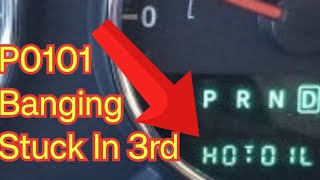
- "HOT OIL" message appears on the instrument cluster, even when the engine is cold.
- Gear position indicator on the dash may be blank or incorrect.
- Vehicle may not start, with a message like "Transmission not in park".
- Traction control and hill descent control lights may illuminate.
- Shifter indicator lights may all turn red or orange.
- Replacing the entire transmission when the issue is purely electrical.
- Replacing the TCM when the actual fault is a simple $15 relay or a blown fuse.
- Replacing the PCM when the fault lies with the TCM or its wiring.
Most Likely Causes

- Faulty TCM Power Relay 🔴 High Probability → Shop Wiring Relay The relay that supplies power to the TCM is a known failure point on this platform, housed in the TIPM which is susceptible to moisture and vibration.
How to confirm: Locate the TCM relay (often marked K5 in the under-hood fuse box/TIPM). Swap it with an identical relay from a non-critical system (like the horn or radiator fan low-speed relay, K11) and see if the problem resolves. If it does, the relay is bad. 🎬 See how swapping a simple relay can fix the U0101 code.
Typical fix: Replace the faulty relay. It is a simple plug-and-play part.
Est. part cost: $10-$25 - Blown Fuse for the TCM 🟡 Medium Probability An intermittent short in the wiring or a voltage spike can blow the fuse, cutting all power to the TCM. This can happen randomly, as reported by some owners.
How to confirm: Visually inspect the fuse for the TCM (often labeled J18, a 20A yellow fuse) in the under-hood fuse box (TIPM). Use a multimeter to test for continuity if a visual inspection is unclear.
Typical fix: Replace the blown fuse. If it blows again, a short circuit in the wiring harness must be diagnosed. Some owners carry spare fuses as a trail fix.
Est. part cost: $1-$5 - Poor Power or Ground Connection 🟡 Medium Probability Off-road use and exposure to elements can lead to corrosion on battery terminals, main ground straps, and module connectors. A weak battery can also cause communication faults.
How to confirm: Check that the battery terminals are clean and tight. Ensure battery voltage is above 12.4V with the engine off. Inspect the main body and engine ground straps for corrosion or looseness. Use a multimeter to verify stable voltage and a good ground at the TCM connector itself.
Typical fix: Clean or replace corroded terminals and ground straps. Repair the specific power or ground wire going to the TCM.
Est. part cost: $5-$50 - Damaged Wiring or Connectors 🟡 Medium Probability Wiring harnesses can chafe against the frame or engine components, especially near the exhaust or where they pass through the firewall. Connectors can become contaminated with water, mud, or oil, especially on vehicles used for off-roading.
How to confirm: Visually inspect the entire wiring harness between the PCM (on the firewall) and the TCM (under the dash). Pay close attention to the connectors at both modules for bent pins, corrosion, or fluid intrusion. Wiggle the harness while the vehicle is running to see if it triggers the fault.
Typical fix: Repair the damaged section of wire. Clean the connectors with electrical contact cleaner and ensure a secure connection.
Est. part cost: $10-$100 - Failed Transmission Control Module (TCM) ⚪ Low Probability → Shop Transmission Assembly
How to confirm: This is typically diagnosed by exclusion. If all power (verified with a load test like a headlight bulb), ground, and CAN bus network wiring to the module test good, but a scan tool still cannot communicate with it, the TCM itself is likely faulty.
Typical fix: Replace the TCM. The new module will need to be programmed to the vehicle's VIN, though some owners have had success with used modules that automatically learn the VIN.
Est. part cost: $200-$700
Rare But Worth Checking
- Faulty Powertrain Control Module (PCM): → Shop Engine Control Module (ECM) While rare, the PCM is the central hub for communication. If it fails, it can cause a variety of communication codes, including U0101. This should only be considered after all other possibilities are exhausted.
- CAN Bus Network Fault: A short or open in the CAN bus wiring itself can take down multiple modules. This usually presents with multiple U-codes, not just U0101 in isolation. On some Jeeps, a faulty CAN bus block connector (STAR connector) behind the glove box can cause these issues due to water intrusion or corrosion.
- Aftermarket Tuner Issues: In some documented cases, aftermarket engine/transmission tuners (like Superchips) have been linked to causing intermittent U0101 codes and 'Hot Oil' warnings. Removing the tune and returning the vehicle to factory settings resolved the issue.
Diagnosis Steps
- Check the battery first. Ensure it has a full charge (12.4V+ with engine off) and the terminals are clean and tight. Low system voltage can cause communication errors.
- Inspect the fuses related to the TCM in the under-hood fuse box (TIPM). Specifically check fuse J18 (20A).
- Inspect and test the TCM power relay (often K5 in the TIPM). Swap it with an identical relay from a non-essential system (like the horn) as a quick and effective test.
- If using an aftermarket tuner, return the vehicle's software to the factory stock setting to eliminate it as a variable.
- If fuses and relays are good, perform a thorough visual inspection of the wiring harness between the PCM and the TCM. Look for any signs of chafing, melting, or corrosion, especially where the harness runs near the exhaust or firewall.
- Locate the TCM, which is under the driver's side dashboard, to the right of the steering column. 🎬 Watch: How to locate and remove the TCM under the dash. Disconnect its connectors and inspect for corrosion, moisture, or bent pins. Clean if necessary.
- Using a multimeter and a wiring diagram, verify that the TCM is receiving battery power and has a solid ground connection at its connector. A load test using a headlight bulb is more effective than a simple voltage check to ensure the circuit can carry current.
- If power and ground are confirmed, test the CAN bus wires at the TCM connector for proper resistance (should be around 60 ohms between CAN High and CAN Low with the battery disconnected) and check for shorts to power or ground.
- If all wiring, power, and grounds are good, the Transmission Control Module (TCM) is the most likely failed component.
Parts You'll Likely Need
- TCM Power Relay
(OEM #Commonly a standard 4-pin or 5-pin relay, Mopar p/n 56006709 or similar.)— This is a very common failure point that cuts power to the TCM, causing a U0101 code. It's the first and cheapest part to check.
Trusted brands: Mopar, Bosch, Standard Motor Products
OEM price range: $15-$30
Aftermarket price range: $10-$20 - Transmission Control Module (TCM)
(OEM #e.g., Mopar 68347573AA (for 2016-2018 models with W5A580). Part number is year and transmission specific.)— If all wiring and power inputs are confirmed good, the module itself may have failed internally. This is the last resort after exhausting all other diagnostic steps.
Related Codes That Often Appear With This One
- U11C2 — This code for 'Implausible/Missing Transmission Message' is often logged by other modules (like the instrument cluster) when they can't get a signal from the TCM, directly related to the U0101 fault.
Platform-Specific Known Issues
- The K5 relay in the Totally Integrated Power Module (TIPM) failing is a widely documented cause for U0101 on the JK platform, often accompanied by a 'Hot Oil' message.
- A Reddit user reported their U0101 issue, which included limp mode and a no-start condition, was ultimately resolved by finding and replacing a single blown fuse for the TCU (TCM). They could not find a root cause for the blown fuse.
- A detailed diagnostic video on a 2016 Wrangler with U0101 and a 'Hot Oil' message showed the technician confirming good power, ground, and CAN signal at the TCM connector, leading to the conclusion of a failed TCM. A used TCM was installed and resolved the issue.
Mechanic-Grade Diagnostic Values
- CAN Bus Network Resistance — expected: Approximately 60 Ohms. Failure: A reading of 120 Ohms indicates one of the two terminating resistors is offline. A reading near 0 Ohms indicates a short between the CAN High and CAN Low wires. Readings significantly higher than 60 Ohms can indicate corrosion or a poor connection.
- CAN Bus Voltage (Key On, Engine Off) — expected: CAN High: ~2.5V to 3.0V. CAN Low: ~2.0V to 2.5V.. Failure: Voltages that are stuck high, low, or at zero indicate a short to power, a short to ground, or an open circuit. A healthy CAN bus signal will show rapid voltage fluctuations on an oscilloscope.
- TCM Ground Connection Resistance — expected: Below 0.5 Ohms. Failure: A reading higher than 0.5 Ohms indicates a poor ground connection, which can cause intermittent module operation.
Scan Tool Commands That Help
- wiTECH (Chrysler/Jeep Dealer Tool): Network View / Topology — This function displays all modules on the CAN bus and shows which ones are actively communicating. For a U0101, the TCM would appear as 'offline' or 'not responding', confirming the communication loss from the network's perspective. It also shows which other modules are logging the U0101 code.
- wiTECH or high-end aftermarket scanner: Reset Transmission Adaptations — After replacing a TCM and resolving the communication issue, this function should be used to clear the learned shift parameters from the old module, ensuring the new module learns the driver's habits and transmission characteristics from a clean slate.
Wiring & Ground Locations

- TCM (Transmission Control Module) — Under the driver's side dashboard, mounted horizontally to the right of the steering column, directly above the gas pedal area.. This is the module that is offline. Its location is required for checking power, ground, and CAN bus connections directly at its connectors.
- TIPM (Totally Integrated Power Module) — Under the hood, on the passenger side of the engine bay.. The TIPM houses the critical fuse (J18) and relay (K5) that supply power to the TCM. Many U0101 faults originate from failures within the TIPM.
- CAN Bus STAR Connector (Junction Block) — Located behind the glove box. There are often two, a white and a green one.. This is a central hub where CAN bus wires from multiple modules connect. Corrosion or a loose pin in this connector, often from water leaking into the dash, can disrupt the entire network and cause communication codes for various modules, including the TCM.
Real Owner Repair Stories
- Reddit user RioDaWrangler on r/Wrangler (Jeep Wrangler (year not specified, but JK generation)) — While on a trail, transmission suddenly went into neutral with a dash message not to shut off the vehicle. Limp mode engaged. After parking, the vehicle would not restart and displayed a "Transmission not in park" message. Shifter lights turned red.
❌ Tried (didn't work) Extensive diagnostic tracing with a shop foreman to find a short in the wiring harness. Wiggling and twisting the harness could not replicate the fault.
✅ What actually fixed it A single blown fuse for the TCU (TCM) was found and replaced. The root cause of why the fuse blew was never determined, but replacing it resolved all symptoms and the issue did not return. - YouTube video by 'Jeep Wrangler Rubicon' (2015 Jeep Wrangler Rubicon) — After idling, the dash displayed a 'Hot Oil' message, check engine light was flashing, and the vehicle was beeping. Code U0101 was present.
❌ Tried (didn't work) Inspecting the wiring harness for damage., Unplugging and replugging the TCM module under the dash.
✅ What actually fixed it The K5 relay in the under-hood fuse box (TIPM) had failed. The owner confirmed the diagnosis by swapping it with the K11 (radiator fan) relay, which immediately cleared the symptoms. Replacing the faulty K5 relay with a new part was the final fix. - YouTube video by 'Pine Hollow Auto Diagnostics' (2016 Jeep Wrangler 3.6L) — Banging into gear, stuck in 3rd gear (limp mode), 'Hot Oil' message on the dash, and codes U0101 and U11C2.
❌ Tried (didn't work) Checking fuses., Manually activating the TCM relay with a uActivate tool to confirm the circuit could carry power., Load testing the power supply wires to the relay.
✅ What actually fixed it After confirming with a multimeter and load testing that power and ground at the TCM connector were good, and verifying with an oscilloscope that the CAN bus signal was present and looked perfect at the connector, the TCM itself was condemned. Replacing the TCM with a used unit resolved the communication issue and all symptoms.
When the Usual Fixes Don't Work
- In one documented case, a Jeep owner experienced all the classic symptoms of U0101 including limp mode and a 'Transmission not in park' message after being on a trail. After extensive professional diagnosis failed to find a wiring short, the ultimate fix was simply replacing a blown fuse for the TCM. The reason for the fuse blowing was never found, suggesting that an intermittent, unrepeatable short circuit can be the cause, which contradicts the idea that a blown fuse always points to a hard, persistent wiring fault.
OEM Part Supersession History
68293700AA, 68293700AB, 68293700AC→68347573AA— Part revision and consolidation by the manufacturer.
Heads up: Using the wrong part number for the specific year and transmission will result in a no-communication or no-start condition. Always verify the part number against the vehicle's VIN.
Model Year Variations Within This Range
- 2007-2011: These models use the 3.8L V6 and 42RLE transmission. The TCM part numbers and some specific wiring pinouts will differ from the later 3.6L models.
- 2012-2018: These models use the 3.6L Pentastar V6 and W5A580 (NAG1) transmission. The TCM is a different part number (e.g., 68347573AA for later years) than the early JKs.
- 2007-2018: The TIPM itself is a known failure point across the entire generation, but specific internal relay failures (like for the fuel pump) led to recalls and lawsuits, primarily focused on earlier years. While the U0101 cause is often an external relay, an internal TIPM fault is always a possibility.
Diagnostic Flowchart
Used vs. New Parts: Buying Guide for This Vehicle
When a used part is the smart pick: A used TCM can be a cost-effective option, as demonstrated in a professional diagnostic video where a used module successfully fixed the issue without immediate programming needs. Used TIPM modules are also widely available and can be a viable fix if the replacement is known to be from a vehicle without similar electrical issues. Relays and fuses are standard items where used parts are perfectly acceptable.
Donor-vehicle mileage cap: roughly under 50000 miles for the part to have meaningful remaining life.
What to inspect on the donor part:
- For a TCM: Ensure the part number matches exactly. Check for any signs of water damage or corrosion on the case and pins.
- For a TIPM: Inspect for corrosion on all external fuse/relay sockets and the large connectors underneath. Avoid any units that show signs of water intrusion or heat damage (melted plastic).
- Check the donor vehicle's history if possible to avoid parts from flood-damaged or fire-damaged cars.
OEM-only on this vehicle (don't cheap out):
- While not strictly required, using a Mopar OEM TCM is the safest bet to ensure compatibility and avoid programming issues. Some aftermarket or remanufactured modules can have quality control problems.
Aftermarket brands forum-validated for this vehicle:
- For relays: Bosch, Standard Motor Products (SMP)
- For TIPM repair services: Circuit Board Medics (offers a rebuild service that addresses common internal relay failures).
Brands owners have reported issues with on this vehicle:
- Be cautious with no-name, unbranded electronic modules (TCM, TIPM) from online marketplaces, as they often lack quality control and may not be programmed correctly.
Real Owner Stories
Aggregated from forums and TSBs cited above. Mileages and costs reflect what owners reported in those sources.
Jeep Wrangler
Symptoms: The vehicle went into limp mode on a trail with a long warning message, which was followed by a no-start condition.
What fixed it: The problem was resolved by replacing a single blown fuse for the TCU/TCM. The owner now carries spare fuses.
Source hint: reddit.com/r/Wrangler - 'Engine code U0101 lost communication with tcm...' (2021)
2016 Jeep Wrangler
Symptoms: The vehicle displayed a U0101 code and a 'Hot Oil' message on the instrument cluster.
What fixed it: After diagnostics confirmed good power, ground, and CAN signal at the TCM connector, the technician concluded the TCM had failed. A used TCM was installed and resolved the issue.
Source hint: vehicle_specific_issues - Diagnostic video on a 2016 Wrangler
2014 Jeep Wrangler (automatic)
Symptoms: The owner experienced the 'Hot Oil' light and a U0101 code.
What fixed it: After checking relays and confirming power and ground were good at the TCM connector, the diagnosis pointed to a bad TCM, which was replaced.
Source hint: wranglerforum.com - 'U0101 no comm with tcm' (July 2021)
Related OBD-II Codes
Frequently Asked Questions
My Jeep Wrangler is stuck in gear with a 'HOT OIL' light on the dash. What's the first thing I should check for a U0101 code?
I'm getting a U0101 code intermittently on my Wrangler, and sometimes it won't start. Could a fuse be the problem?
Where is the Transmission Control Module (TCM) located on my 2007-2018 Jeep Wrangler?
I use my Wrangler for off-roading. Are there any specific causes of U0101 I should look for?
My mechanic says the TCM has failed. How is that typically confirmed on a Wrangler?
If I have to replace the TCM on my Jeep, does the new one need to be programmed?
Helpful Videos
We Have This Part in Stock


The information in this article is provided for general reference and educational purposes only. Vehicle specifications, procedures, and part compatibility can vary by production date, trim level, and region. Always consult your vehicle's factory service manual and verify part numbers before purchasing or performing repairs. Safety-critical components such as airbags, seat belts, and braking systems should be installed by a qualified professional.
- Jeep Wrangler:
- 🧭 Diagnostic Flowchart
- 🎬 Helpful Videos
- 🛍️ Shop This Part
- What's Unique About the 2007-2018 Jeep Wrangler
- Symptoms You May Notice
- Most Likely Causes
- Rare But Worth Checking
- Diagnosis Steps
- Parts You'll Likely Need
- Related Codes That Often Appear With This One
- Platform-Specific Known Issues
- Mechanic-Grade Diagnostic Values
- Scan Tool Commands That Help
- Wiring & Ground Locations
- Real Owner Repair Stories
- When the Usual Fixes Don't Work
- OEM Part Supersession History
- Model Year Variations Within This Range
- Used vs. New Parts: Buying Guide for This Vehicle
- Real Owner Stories
- Jeep Wrangler
- 2016 Jeep Wrangler
- 2014 Jeep Wrangler (automatic)
- Related OBD-II Codes
- Frequently Asked Questions
- 🎟️ Get 5% Off