

U0101 on 2011-2015 Kia Sorento: Lost Communication with TCM Causes and Fixes
This code means the Transmission Control Module (TCM) has stopped communicating. On this Sorento, the TCM is inside the main engine computer (PCM) behind the battery. The most likely causes are bad battery voltage, a blown fuse, or wiring damage near the battery, before suspecting a failed PCM. Check simple electrical issues first.
- U0101 on a 2011-2015 Sorento means the integrated transmission controller inside the main engine computer (PCM) is offline.
- Always check the simple things first: battery health, grounds, and all related fuses before suspecting more complex issues.
- The wiring harness and connectors for the PCM, located behind the battery, are a key inspection point for damage or corrosion.
- Do not drive the vehicle. It will be in limp mode and may behave unpredictably, creating a safety hazard.
- If the PCM itself has failed, it must be replaced and programmed by a professional, as it is not a simple plug-and-play part.
What's Unique About the 2011-2015 Kia Sorento
On the 2011-2015 Kia Sorento, the Transmission Control Module (TCM) is not a separate module. Instead, it is integrated into the main Powertrain Control Module (PCM), which is the computer that controls both the engine and transmission. This single unit is located in the engine bay, directly behind the battery. This design means you cannot replace only the TCM; if the module is faulty, the entire PCM must be replaced. It also focuses the diagnostic search for wiring, power, and ground issues on the single PCM unit and its connectors.
Symptoms You May Notice
- Check Engine Light is on
- Transmission warning light may be on
- Vehicle is stuck in one gear (limp mode), usually 2nd or 3rd
- Harsh or abrupt shifting, especially when moving from Park to Drive or Reverse
- Inability to shift gears
- The gear position indicator (PRNDL) on the dashboard may be blank or incorrect
- Vehicle may have reduced power or stall
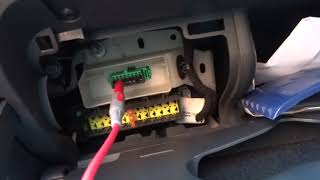
- Scan tool cannot communicate with the TCM 🎬 Watch: Understanding the U0101 code and how to fix it
- Replacing the entire transmission when the issue is purely electrical.
- Replacing the valve body or solenoids inside the transmission, which are unlikely to cause a communication code.
- Immediately blaming the PCM/TCM without thoroughly checking fuses, grounds, and wiring first.
Most Likely Causes
- Low Battery Voltage or Poor Ground Connection 🔴 High Probability → Shop Vehicle Battery Control modules require stable voltage to communicate. Low voltage from an old battery, failing alternator, or corroded/loose ground straps is a very common source of network errors on any modern vehicle.
How to confirm: With the engine off, test the battery voltage using a multimeter; it should be at least 12.4V. With the engine running, it should be between 13.7V and 14.7V. Inspect the main chassis ground straps for corrosion or looseness, especially the one near the PCM.
Typical fix: Charge or replace the battery. Clean or replace corroded ground straps.
Est. part cost: $150-$300 - Blown Fuse for PCM/TCM 🟡 Medium Probability The PCM that houses the TCM has several power inputs protected by fuses in the engine bay fuse box. An electrical surge or a short circuit can blow a fuse, cutting power to the module and causing it to drop off the network.
How to confirm: Consult the owner's manual or the fuse box lid to identify all fuses related to the 'PCM', 'TCM', 'ECU', or 'AT' (Automatic Transmission). Visually inspect each fuse and test for continuity with a multimeter.
Typical fix: Replace the blown fuse. If the fuse blows again immediately, a short circuit in the wiring must be found and repaired.
Est. part cost: $1-$10 - Damaged Wiring Harness or Connector 🟡 Medium Probability The PCM is located behind the battery, an area where corrosion from battery acid can occur or where wires can be accidentally damaged during battery replacement. Forum users report finding corroded pins and loose terminals in the main PCM connector as a direct cause. TSB SA104 also notes a potential for a starter solenoid wire to short to ground, indicating wiring vulnerability in this area.
How to confirm: Disconnect the battery. Unplug the connectors from the PCM. Carefully inspect the wiring harness for any signs of chafing, breaks, or green/white corrosion. Check the connector pins for corrosion, moisture, or being bent/pushed out.
Typical fix: Repair the damaged section of wiring. Clean the connectors with an electronic contact cleaner and use dielectric grease upon reassembly. Replace the connector if pins are severely damaged.
Est. part cost: $20-$200 - Failed Powertrain Control Module (PCM) ⚪ Low Probability → Shop Engine Control Module (ECM) While not extremely common, internal failure of the control module can happen due to heat, vibration, or age, causing the integrated TCM portion to fail. This is a common point of failure on platform-mate Hyundai Santa Fes as well.
How to confirm: This is a diagnosis of exclusion. If battery voltage is good, all fuses are intact, and the wiring/connectors show no faults when tested with a multimeter for power, ground, and CAN bus continuity, the PCM itself is the likely culprit.
Typical fix: Replace the Powertrain Control Module. The new module will need to be programmed to the vehicle's VIN and specific configuration by a dealer or a qualified shop with Kia-specific tools.
Est. part cost: $600-$1200
Rare But Worth Checking
- Faulty Transmission Range Sensor (Inhibitor Switch): → Shop Transmission Assembly
Diagnosis Steps
- Scan for all codes in all modules. Note any other 'U' codes or codes in the ABS, BCM, or instrument cluster modules. The presence of many communication codes often points to a network-wide issue like low voltage or a CAN bus fault.
- Check battery voltage and charging system health. Ensure voltage is stable and above 12.4V with the engine off. This is the most common and easiest first step.
- Inspect all fuses related to the PCM and transmission in both the engine bay and interior fuse panels. Check fuses labeled 'TCM', 'PCM', 'ECU', 'AT'.
- Locate the PCM behind the battery. Perform a thorough visual inspection of its connectors and the surrounding wiring harness for any signs of damage, corrosion, or moisture. Pay close attention to the pins inside the connector.
- If tools and a wiring diagram are available, disconnect the PCM connector and check for proper power and ground signals at the appropriate pins using a multimeter.
- Check the CAN bus wiring. With the battery disconnected, measure the resistance between the two CAN bus pins at the OBD-II port (pins 6 and 14). A healthy network should read approximately 60 ohms. 🎬 See: How to test the CAN bus network with a multimeter
- Inspect the Transmission Range Sensor (Inhibitor Switch) and its connector for damage or corrosion.
- If all wiring, power, and grounds are confirmed to be good, the PCM is the most likely failed component.
Parts You'll Likely Need
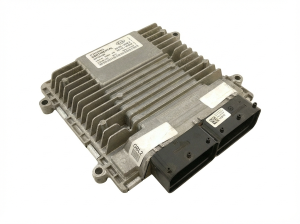
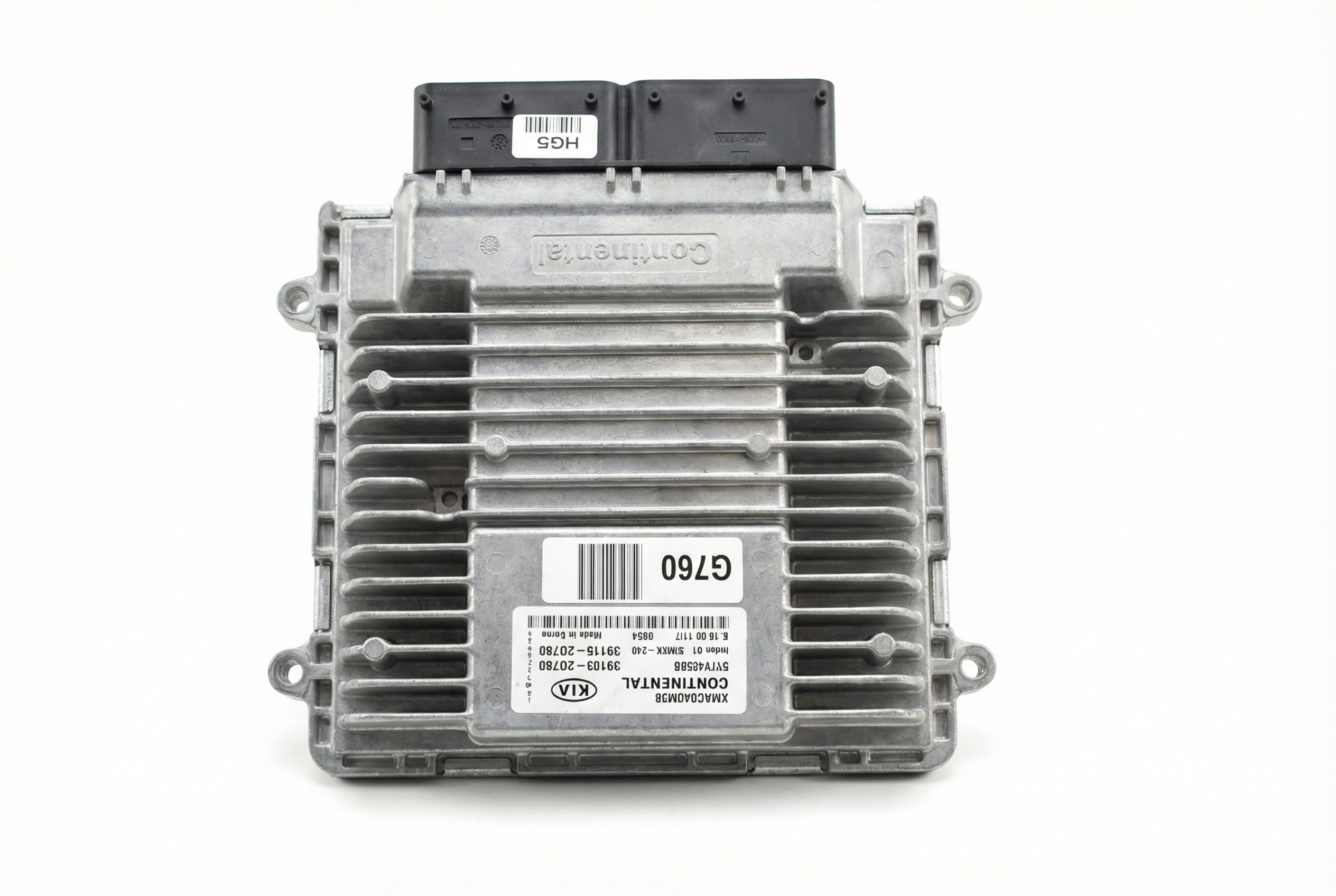
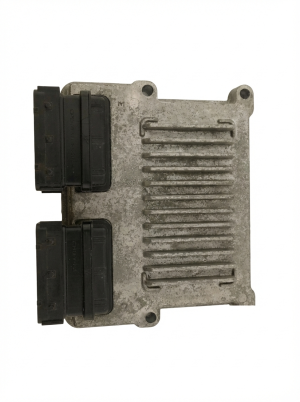
- Powertrain Control Module (PCM)
(OEM #Varies by year/engine, e.g., 39110-XXXXX. Must be matched to VIN.)— This is the final step after ruling out all wiring, fuse, and power supply issues. On this Sorento, the TCM is inside the PCM, so the entire unit must be replaced if it fails.
Trusted brands: Kia (Genuine OEM)
OEM price range: $800-$1200
Aftermarket price range: $600-$900 - Battery — A weak or failing battery is a very common cause of network communication codes due to unstable voltage.
Trusted brands: Interstate, Duralast, DieHard
OEM price range: $200-$300
Aftermarket price range: $150-$250
Related Codes That Often Appear With This One
- U0100 — Lost Communication with ECM/PCM. If other modules report this code, it can point towards a faulty PCM as the root cause.
- P0700 — Transmission Control System (MIL Request). This is a general code indicating the TCM has requested the check engine light be turned on. It often appears alongside more specific transmission-related codes like U0101.
- P0705 — Transmission Range Sensor Circuit Malfunction. If this code is present with U0101, it points strongly toward a faulty inhibitor switch or its wiring as a potential cause.
Technical Service Bulletins (TSBs) & Recalls
- TSB SA104: Notes that on some 2.4L Sorento models, the starter solenoid wire in a harness may contact a coolant line bracket, potentially shorting to ground. While not directly for U0101, it indicates known wiring harness vulnerabilities in the engine bay that could lead to electrical issues.
Platform-Specific Known Issues
- A user on the Kia-Forums website with a 2011 Sorento reported solving a U0101 code by cleaning corrosion from the large PCM connector behind the battery. This should be one of the first places to inspect closely.
- A Reddit user with a similar GM vehicle experienced a U0101 code that was ultimately fixed by finding and tightening a loose terminal in the TCM connector, after needlessly replacing the entire transmission first. This highlights the importance of checking simple connections.
Mechanic-Grade Diagnostic Values
- CAN Bus Network Resistance — expected: ~60 Ohms. Failure: A reading of ~120 Ohms indicates an open circuit or that one of the two terminating resistors (one in the PCM) is offline. A reading significantly less than 60 Ohms suggests a shorted wire or faulty module.
- CAN Bus Voltage (Key On, Engine Off) — expected: CAN High (Pin 6 at DLC): ~2.5-3.5V. CAN Low (Pin 14 at DLC): ~1.5-2.5V.. Failure: Voltages stuck near 0V or battery voltage indicate a short to ground or power, respectively.
- PCM Ground Circuit Voltage Drop — expected: Less than 0.1V. Failure: A reading higher than 0.1V between the PCM ground pin and the negative battery terminal indicates excessive resistance in the ground circuit, which can cause the module to malfunction.
- PCM Power Supply — expected: 12.0V - 12.6V (Battery Voltage). Failure: Voltage significantly below 12.0V indicates a problem with the power supply circuit, fuse, or main relay.
Hidden / Shadow Codes Worth Checking
- N/A for this manufacturer: Kia/Hyundai vehicles do not typically use 'shadow codes' in the same way as some German manufacturers. Instead, the dealer-level Kia GDS (Global Diagnostic System) scan tool can access more detailed fault information and communication logs than standard OBD-II scanners. For a U0101 fault, the GDS can show if other modules on the network are also reporting a loss of communication with the PCM/TCM, which is critical for diagnosis. (see via Kia GDS or equivalent high-end professional scan tool.)
Scan Tool Commands That Help
- Kia GDS (Global Diagnostic System): VIN Writing — This function is mandatory after installing a new or used PCM. It writes the vehicle's VIN into the module's memory, which is required for it to communicate with other modules and the immobilizer system.
- Kia GDS (Global Diagnostic System): TCM Upgrade (Auto or Manual Mode) — This function is used to re-flash the integrated TCM with updated software from Kia. This can resolve communication issues caused by software bugs and is often required after replacing the PCM.
- Kia GDS (Global Diagnostic System): Reset TCM Adaptive Learning Values — After a PCM replacement or software update, resetting the transmission's adaptive learning values is necessary to ensure smooth shifting and prevent performance issues. The TCM relearns shift pressures and timing based on the new software or hardware.
Wiring & Ground Locations
- PCM Main Ground — A primary ground strap runs from the negative battery terminal to the vehicle's chassis/inner fender and often directly to the engine block.. This is the most critical ground for the entire powertrain management system. Corrosion or looseness here can cause unstable voltage and network communication failures, including U0101.
- Engine Block Ground — A dedicated ground point bolted directly to the engine block.. The PCM and many of its sensors use the engine block as a ground reference. A poor connection here can cause erratic sensor readings and module communication errors.
- Cylinder Head Ground — A smaller ground wire or strap often bolted to the cylinder head.. Provides a ground path for components mounted on the upper part of the engine. While less common to be the sole cause, it's part of the overall ground circuit integrity.
- Transmission Ground — A ground strap connecting the transmission case to the vehicle chassis.. Ensures the transmission case, which houses sensors and solenoids controlled by the integrated TCM, has a solid ground reference.
Real Owner Repair Stories
- JL's Auto Solution YouTube Channel (2014 Kia Sorento 3.3L GDI) — No-start condition with check engine light on. Scan tool could not communicate with the ECM/PCM. Multiple other modules (Airbag, 4WD, Blind Spot Detection) reported 'Lost Communication with ECM/PCM' codes (U0100).
❌ Tried (didn't work) Initially, the mechanic found that fuses powered by the main relay were dead. Testing the main relay showed it was not receiving a ground signal from the PCM. Manually providing power to the PCM's power input pins still resulted in a no-communication state.
✅ What actually fixed it The diagnosis concluded that the PCM itself had failed internally. It was unable to provide the ground for its own main relay or communicate on the CAN bus, even when its power and ground inputs were verified or supplied externally. The fix was to replace the PCM and program the new unit with the vehicle's VIN. - NHTSA ODI #11570456 — An owner of a similar Kia model reported that their scanner could not communicate with the ECM/TCM, resulting in a U0101 code along with shifting and starting issues.
Model Year Variations Within This Range
- 2011-2013: These models primarily used the 2.4L I4 and 3.5L V6 MPI engines. They utilize a specific negative battery cable with an integrated battery sensor, part number 37180-2P110.
- 2014-2015: This facelift generation introduced the 3.3L V6 GDI engine, replacing the 3.5L V6. This engine change requires a different PCM with specific software and programming. Part numbers for the PCM are not interchangeable with earlier years.
Diagnostic Flowchart
Other Known Issues on This Vehicle
Issues unrelated to this code that are worth knowing about as an owner of this generation:
- Catastrophic Engine Failure (Theta II Engines) 🔴 High — Widespread across 2.4L and some V6 models. Failures can occur at any mileage but are common between 60,000-135,000 miles. Caused by manufacturing debris (metal shavings) leading to connecting rod bearing failure. (Ref: Multiple recalls (e.g., 17V224000, 20V750000) and a major class-action lawsuit settlement provide extended lifetime warranties and potential engine replacements for affected vehicles.)
- Worn Steering Coupler (MDPS 'Click') 🟠 Medium — Extremely common. A clicking or clunking noise from the steering column when turning the wheel, especially when stationary. Caused by the degradation of a small, flexible rubber coupler in the Motor-Driven Power Steering (MDPS) column. (Ref: TSB CHA-044 and TSB 14-ST-002-1 detail the replacement procedure for the flexible coupling (Part No. 56315-2K000-FFF).)
- Engine Compartment Fire Risk (HECU) 🔴 High — Affects certain models. The Hydraulic Electronic Control Unit (HECU) for the ABS can short circuit, potentially causing a fire, even when the vehicle is parked. (Ref: Recalls 20V519000 and 23V652000 were issued to address this by installing a new fuse and, in some cases, replacing the HECU.)
- Peeling White Paint 🟡 Low — Common on vehicles with 'Snow White Pearl' paint. The paint can bubble, flake, and peel off in large sheets, exposing the primer or bare metal.
- Faulty Transmission Range Sensor (Inhibitor Switch) 🟠 Medium → Shop Transmission Assembly — Can cause no-start conditions, incorrect gear display, and may contribute to communication codes like U0101.
Used vs. New Parts: Buying Guide for This Vehicle
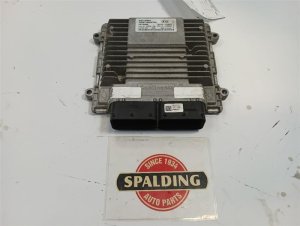
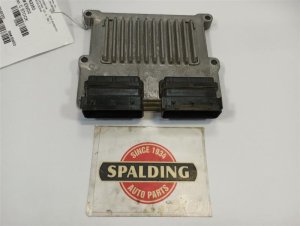
When a used part is the smart pick: A used PCM from a salvage yard is a cost-effective option IF you have a guaranteed method for reprogramming. It makes the most sense for shops with access to a Kia GDS tool or a J2534 pass-through device, or for DIYers who purchase from a seller that offers VIN pre-programming.
Donor-vehicle mileage cap: roughly under 125000 miles for the part to have meaningful remaining life.
What to inspect on the donor part:
- Match the OEM part number on the case EXACTLY. Even a single digit difference can mean incompatibility.
- Source the part from a vehicle with the same year, model, engine, and transmission.
- Inspect the connectors on the used PCM for any bent, corroded, or pushed-out pins.
- Buy from a reputable recycler that offers a warranty and confirms the part was from a running vehicle, not one with electrical or flood damage.
OEM-only on this vehicle (don't cheap out):
- Powertrain Control Module (PCM): While used is an option, a new OEM unit from Kia is the only way to guarantee you have the latest hardware/software revisions and a full warranty. Given the complexity and programming requirements, OEM is the lowest-risk path.
Aftermarket brands forum-validated for this vehicle:
- Flagship One (FS1)
- Cardone (Remanufactured)
Brands owners have reported issues with on this vehicle:
- Unknown sellers on platforms like eBay or Amazon that do not offer VIN programming services or a warranty should be avoided, as an unprogrammed PCM is unusable.
Real Owner Stories
Aggregated from forums and TSBs cited above. Mileages and costs reflect what owners reported in those sources.
2011 Kia Sorento
Symptoms: The vehicle threw a U0101 code and experienced communication issues with the transmission module.
What fixed it: Cleaning corrosion from the large PCM connector located behind the battery.
Source hint: kia-forums.com
2013-2018 Hyundai Santa Fe
Symptoms: U0101 communication code, symptoms identical to the Sorento including limp mode and shifting issues.
What fixed it: Repaired wiring corrosion under the battery and addressed faulty ground connections.
Source hint: Platform-mate data for Hyundai Santa Fe
Kia Soul (Cross-Model Reference)
Symptoms: Shifting and starting issues were reported by an owner who found their scanner could not communicate with the ECM/TCM, resulting in a U0101 code.
What fixed it: Documented under NHTSA ODI #11570456.
Source hint: NHTSA ODI #11570456
Related OBD-II Codes
Frequently Asked Questions
Could the starter solenoid issue mentioned in TSB SA104 be causing my U0101 code?
My 2011 Sorento is stuck in 3rd gear and the PRNDL display is blank. Is this related to U0101?
Can a bad battery really cause a transmission communication code on a Kia Sorento?
Where is the PCM/TCM located on the 2011-2015 Sorento for inspection?
Is there a recall for the electrical issues causing U0101?
Does the Hyundai Santa Fe have the same U0101 issues as my Sorento?
Helpful Videos
Used OEM Parts in Stock
New Aftermarket Parts Available

The information in this article is provided for general reference and educational purposes only. Vehicle specifications, procedures, and part compatibility can vary by production date, trim level, and region. Always consult your vehicle's factory service manual and verify part numbers before purchasing or performing repairs. Safety-critical components such as airbags, seat belts, and braking systems should be installed by a qualified professional.
- Kia Sorento:
- 🧭 Diagnostic Flowchart
- 🎬 Helpful Videos
- 🛍️ Shop This Part
- What's Unique About the 2011-2015 Kia Sorento
- Symptoms You May Notice
- Most Likely Causes
- Rare But Worth Checking
- Diagnosis Steps
- Parts You'll Likely Need
- Related Codes That Often Appear With This One
- Technical Service Bulletins (TSBs) & Recalls
- Platform-Specific Known Issues
- Mechanic-Grade Diagnostic Values
- Hidden / Shadow Codes Worth Checking
- Scan Tool Commands That Help
- Wiring & Ground Locations
- Real Owner Repair Stories
- Model Year Variations Within This Range
- Other Known Issues on This Vehicle
- Used vs. New Parts: Buying Guide for This Vehicle
- Real Owner Stories
- 2011 Kia Sorento
- 2013-2018 Hyundai Santa Fe
- Kia Soul (Cross-Model Reference)
- Related OBD-II Codes
- Frequently Asked Questions
- 🎟️ Get 5% Off