

U0101 on 2005-2013 Mercedes-Benz S-Class: Lost Communication with TCM Causes and Fixes
On a 2005-2013 S-Class (W221), code U0101 almost always points to a failed Transmission Conductor Plate, which houses the integrated Transmission Control Module (TCM), inside the 7G-Tronic (722.9) transmission. This failure is typically due to faulty internal speed sensors. The fix requires replacing or repairing the conductor plate. A new OEM part must be SCN coded by a dealer or specialist. A rebuilt unit avoids coding but still requires removing the valve body. Expect to pay $800-$2,000+ at a
- U0101 on a W221 S-Class is most likely caused by a failed conductor plate inside the transmission.
- Before condemning the conductor plate, always check the battery voltage and charging system first, as low voltage is a common trigger.
- If you replace the conductor plate with a new part, it MUST be programmed to your car by a dealer or specialist.
- Having your original conductor plate rebuilt is a viable, often cheaper, alternative that avoids the need for programming.
- Do not replace the entire transmission; this is an electronic fault, not a mechanical one.
What's Unique About the 2005-2013 Mercedes-Benz S-Class
The 2005-2013 S-Class (W221 generation) uses the 722.9 7G-Tronic transmission, which is known for a very common failure of its conductor plate. There are three main versions of this conductor plate, often referred to as VGS1, VGS2, and VGS3. The internal speed sensors (Y3/8n1, Y3/8n2) on these plates are prone to failure, which cuts off communication and triggers the U0101 code. Unlike many vehicles where the TCM is a separate, accessible module, here it's a complex part submerged in transmission fluid. Because Mercedes considers this a theft-relevant part, a brand new conductor plate must be programmed to the car using special equipment (SCN Coding), making replacement a challenge for DIYers and many independent shops. Repairing the original unit is a popular alternative that bypasses this programming requirement.
Generation note: The 2005-2013 year range primarily covers the W221 generation of the S-Class. This generation was introduced in Europe in late 2005 and began in the US for the 2007 model year. All non-V12 models in this range use a version of the 722.9 7G-Tronic transmission, so the causes and fixes for U0101 are consistent across these years. Early models (approx. 2005-2007) used the VGS1 conductor plate, which may require replacement of the entire valve body if a new part is sourced.
Symptoms You May Notice
- Check Engine Light is on
- Transmission is stuck in 'limp mode' (usually 2nd or 3rd gear)
- Harsh, erratic, or delayed shifting, especially a hard clunk when engaging Drive or Reverse.
- Vehicle will not shift out of Park
- Gear indicator on the dashboard is blank, does not highlight the selected gear, or shows all gears selected at once.
- Car may crank but fail to start because the ECU cannot confirm the transmission is in Park or Neutral.
- A message on the dashboard like 'Transmission Malfunction – Visit Workshop'.
- Replacing the entire transmission. The U0101 code is an electronic communication issue, not a mechanical failure of the gears or clutches. Replacing the whole transmission is unnecessary and extremely expensive when only the conductor plate is at fault.
- Replacing the valve body. While the conductor plate is attached to the valve body, the valve body itself is a hydraulic/mechanical component and rarely fails. The fault is almost always in the electronic conductor plate.
Most Likely Causes
- Failed Conductor Plate / TCM 🔴 High Probability The internal speed sensors on the 722.9 transmission's conductor plate are a well-documented, common failure point due to heat, vibration, and electronic faults over time.
How to confirm: Use a Mercedes-specific scanner (like Xentry/DAS) to check for codes beyond the generic U0101. Codes like 0717, 0718 (for Turbine Speed Sensor Y3/8n1) or 2767, 2768 (for Internal Speed Sensor Y3/8n2) are a definitive sign 🎬 Watch: How to identify and repair these specific sensor fault codes. of a bad conductor plate.
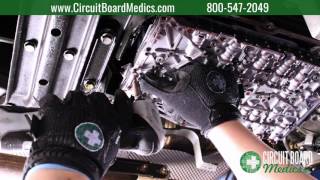
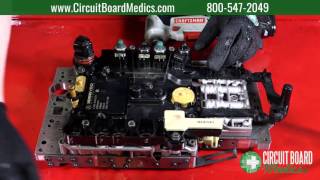
Typical fix: Replace the conductor plate. This involves draining the fluid, dropping the transmission pan, and removing the valve body to access the plate. 🎬 See this walkthrough on removing the TCM and valve body. A new plate requires online SCN coding. Alternatively, the original plate can be sent to a specialist for rebuilding, which avoids the need for coding and is a common solution.
Est. part cost: $300-$600 for a rebuilt unit, $700-$1200+ for a new OEM part. Some early VGS1 versions may require the valve body to be purchased as well, increasing cost. - Low Battery Voltage or Faulty Alternator 🟡 Medium Probability → Shop Alternator Mercedes-Benz vehicles use many sensitive electronic modules that are highly susceptible to low or unstable voltage, which can cause communication dropouts between modules, triggering a U0101 code.
How to confirm: With the engine off, check the battery voltage with a multimeter; it should be above 12.4V. With the engine running, it should be between 13.7V and 14.7V. If readings are low, the battery or charging system is the likely problem. This should be the first check before suspecting the conductor plate.
Typical fix: Charge or replace the battery. If the charging voltage is low, test and replace the alternator.
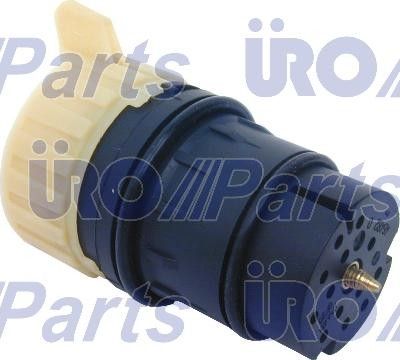
Est. part cost: $150-$400 for a new AGM battery. - Leaking 13-Pin Transmission Connector ⚪ Low Probability → Shop Transmission Assembly The o-rings on the 13-pin electrical connector sleeve that plugs into the transmission can fail, allowing transmission fluid to wick up the wiring harness. While this was a very common issue on the older 722.6 transmission, it can still occur on the 722.9, potentially causing shorts and communication errors if fluid reaches control modules.
How to confirm: Unplug the large round connector at the transmission (passenger side). Inspect the pins and the harness for any signs of reddish transmission fluid. The presence of any fluid indicates the seal has failed.
Typical fix: Replace the 13-pin connector sleeve and its o-rings (part number is often A2035400253). Clean any fluid from the harness connectors with electrical contact cleaner. If fluid has migrated far up the harness, the harness itself may need extensive cleaning or replacement.
Est. part cost: $15-$40 for a new connector sleeve. - Blown Fuse or Damaged Wiring ⚪ Low Probability
How to confirm: Check the vehicle's fuse diagrams (often in the front SAM - Signal Acquisition Module) for fuses related to the transmission control unit (TCU/EGS). Visually inspect and test these fuses. Trace the wiring harness from the transmission connector for any signs of physical damage, chafing, or corrosion, paying special attention to the CAN bus wires.
Typical fix: Replace any blown fuses. Repair or replace the damaged section of the wiring harness.
Est. part cost: $5-$50
Diagnosis Steps
- Scan for All Codes: Use a high-quality scanner capable of reading Mercedes-specific transmission codes (e.g., Xentry/DAS). A generic U0101 is not enough. Note any accompanying codes, especially speed sensor faults (0717, 0718, 2767, 2768), which strongly point to the conductor plate.
- Check Battery and Charging System: This is the easiest and first check. Verify battery voltage is above 12.4V with the engine off and that the alternator is charging correctly (13.7V-14.7V) when running. A weak power supply is a common cause of module communication errors on these vehicles.
- Inspect Fuses: Locate and inspect all fuses related to the transmission control system (often labeled TCU, TCM, or EGS in the front SAM).
- Inspect Transmission Electrical Connector: Safely raise the vehicle and locate the 13-pin electrical connector on the transmission (passenger side, towards the rear). Disconnect it and check for any signs of transmission fluid contamination, which indicates a leaking connector sleeve that must be replaced.
- Check Power and Ground at the TCM Connector: Using a wiring diagram for the 722.9 transmission, identify the power and ground pins on the harness side of the transmission connector. Verify that the TCM is receiving proper battery voltage and has a solid ground connection.
- Check CAN Bus Signals: If possible, use an oscilloscope to check for proper CAN bus signal activity (CAN High and CAN Low) at the transmission connector. The two signals should be mirror images of each other. A flat or noisy signal indicates a wiring or network problem.
- Diagnose Conductor Plate: If all external wiring, power, grounds, and fuses are good, and especially if specific speed sensor codes are present, the conductor plate/TCM is confirmed as the culprit.
Parts You'll Likely Need
- Transmission Conductor Plate (TCM/VGS)
(OEM #A0034460310 (VGS3), A0335457332 (VGS2))— This is the most common point of failure for this code on the 722.9 transmission due to internal speed sen
Related Codes That Often Appear With This One
- 0717 — This code means 'The signal from component Y3/8n1 (Turbine Speed Sensor, VGS) is not available,' directly indicating a failure of a sensor on the conductor plate.
- 0718 — This code means 'Component Y3/8n1 (Turbine Speed Sensor, VGS) is defective,' which also points directly to a faulty conductor plate.
- 2767 — This code means 'The signal from component Y3/8n2 (Internal Speed Sensor, VGS) is not available,' another specific code for a failed sensor on the conductor plate.
- 2768 — This code means 'Component Y3/8n2 (Internal Speed Sensor, VGS) is defective,' confirming a fault with the internal speed sensor on the conductor plate.
Platform-Specific Known Issues
- The conductor plate (TCM) is classified by Mercedes-Benz as a 'theft-related part'. This means a new replacement part must be programmed online (SCN coded) to the vehicle's VIN, a service typically only available at dealerships or highly specialized independent shops.
- There are different versions of the conductor plate (VGS1, VGS2, VGS3). For early VGS1 models, Mercedes may require replacement of the entire valve body along with the conductor plate, significantly increasing cost.
Mechanic-Grade Diagnostic Values
- Line pressure modulating solenoid resistance — expected: 5.5 Ω. Failure: Significant deviation from 5.5 Ω
- 2-3 or 3-4 shift solenoid resistance — expected: 4.5 Ω. Failure: Significant deviation from 4.5 Ω
- ATF Temperature Sensor resistance — expected: 800-1200 Ω at 20°C (68°F). Failure: Reading outside this range indicates a faulty sensor.
- CAN Bus resistance at TCM connector — expected: Approximately 60 Ω (with battery disconnected). Failure: A reading of 120 Ω suggests one of the two terminating resistors is offline. A reading near 0 Ω indicates a short between CAN High and CAN Low.
Hidden / Shadow Codes Worth Checking
- 0513: This is a DAS/Xentry specific code that can mean 'Drive authorization signal missing or invalid'. While U0101 is generic, a 0513 points more specifically towards a communication breakdown between the EIS (Electronic Ignition Switch), ECU, and TCM, which can sometimes be the root cause rather than just the conductor plate itself. (see via Mercedes-Benz Xentry/DAS (Dealer/Specialist scanner))
Scan Tool Commands That Help
- Xentry/DAS: Initial startup with manual settings input — When replacing a conductor plate where the old unit's data cannot be read/transferred. This allows a specialist to manually write the necessary flow data to a new or virginized TCM without cloning the old one.
- Xentry/DAS: SCN (Software Calibration Number) Coding — This is required to 'marry' a brand new, OEM conductor plate to the vehicle's VIN and security system. It requires an online connection to Mercedes-Benz servers.
- Xentry/DAS: Forced Shift Adaptation — After replacing the conductor plate or valve body, this function guides the technician through a specific driving procedure to quickly relearn clutch pack fill times and pressures for smooth shifting. Without this, adaptation can take hundreds of miles of normal driving.
- Specialized programming tools (e.g., Vediamo): Virginize / Renew — This function is used on a secondhand (used) conductor plate to wipe its previous vehicle data, returning it to a 'like-new' state. Once virginized, it can then be programmed to a new vehicle using Xentry.
Wiring & Ground Locations
- CAN-C Distributor (X30/5) — Located in the driver's side footwell, under the carpet/floor panel. It's a small black box where multiple CAN-C (powertrain) wires connect.. A loose connection or corrosion at this central distribution point can interrupt communication between the ECU and the TCM, triggering a U0101 code even if the TCM and its direct wiring are perfectly fine.
- TCM Main Ground — The TCM grounds through the transmission casing itself. A key ground point is the strap connecting the engine/transmission bell housing to the chassis.. A corroded or loose engine-to-chassis ground strap can cause intermittent and hard-to-diagnose communication faults for all modules on the powertrain, including the TCM.
- 13-Pin Transmission Connector (Round) — On the passenger side of the 722.9 transmission case.. This is the single point of connection for all power, ground, and communication signals to the conductor plate/TCM. Checking for power, ground, and CAN signals (CAN-C High/Low) must be done at this connector's harness-side pins.
Real Owner Repair Stories
- MBWorld.org Forums user 'engmalek' (S-Class (W221)) — Car would not shift at all, gear indicator was blank on the dash, generic code U0101 present. Transmission fluid was noted as very dirty, black, and burned during a recent service.
❌ Tried (didn't work) Initial diagnosis from a mechanic suggested the entire valve body was the problem.
✅ What actually fixed it The actual problem was the conductor plate. It was replaced with the newest version available at the time, which resolved all symptoms and communication errors. - MBWorld.org Forums user 'a2j' (Mercedes GL-Class (X164) with similar powertrain architecture) — Crank no-start condition, especially after towing on a warm day. Generic code U0101 was present.
❌ Tried (didn't work) Initial suspicion was the conductor plate / TCM due to the code and heat-related failure., A more specific scan with DAS revealed code 0513 (no communication with transfer case module), shifting focus away from the TCM.
✅ What actually fixed it The actual root cause was a failing fuel pump. The U0101 and other communication codes were misleading symptoms. The user advised to always perform basic troubleshooting (check for fuel, spark, air) before chasing electronic codes.
OEM Part Supersession History
VGS1 Conductor Plate (e.g., A0335456632, A0335456732)→VGS2 (e.g., A0335457332) and VGS3 (e.g., A0034460310) plates— Re-engineering to improve reliability of speed sensors and other electronics.
Heads up: If replacing a VGS1 conductor plate with a NEW OEM part, Mercedes requires the entire valve body to be replaced as well. However, a repaired original VGS1 plate or a cloned/virginized used VGS2/VGS3 plate can often be fitted to the original VGS1 valve body by specialists, avoiding the high cost of a new valve body assembly.
Model Year Variations Within This Range
- 2005-2007 (approx.): These early W221 models were equipped with the first-generation (VGS1) 722.9 conductor plate. These are the most problematic and have a special requirement when replacing with a new part: the valve body must be replaced along with the conductor plate as a set from the dealer.
- 2008-2013 (approx.): These later models used more reliable VGS2 and VGS3 conductor plates. For these versions, the conductor plate can be purchased and replaced separately from the valve body, simplifying the repair.
Diagnostic Flowchart
Other Known Issues on This Vehicle
Issues unrelated to this code that are worth knowing about as an owner of this generation:
- Airmatic Suspension Failure 🔴 High — Very common, especially after 8-10 years or 80,000-100,000 miles. Failures include leaking air struts/bags, worn compressors, and faulty valve blocks.
- M273 V8 Balance Shaft/Idler Gear Wear 🔴 High — Affects early production V8 engines (M273) from approximately 2006-2008. A worn idler gear sprocket leads to timing issues, check engine light, and rattling noises. It is an engine-out repair. (Ref: A class-action lawsuit settlement provided extended coverage, but it has since expired.)
- Intake Manifold Swirl Flap Actuator Failure 🟠 Medium — The plastic lever for the intake manifold's tumble flaps is known to break on M272 (V6) and M273 (V8) engines, causing performance issues and a check engine light. The lever itself is cheap, but replacing it can be labor-intensive.
- Failing Audio Gateway / Amplifier 🟡 Low — The audio amplifier, part of the fiber-optic loop, can fail, resulting in no sound from the speakers even if the COMAND unit appears to be working. It can also cause a parasitic battery drain.
- Power Window Regulator/Motor Failure 🟡 Low — It is common for the window regulators or motors to fail, causing a window to become stuck.
Used vs. New Parts: Buying Guide for This Vehicle
When a used part is the smart pick: A used conductor plate ONLY makes sense if you have access to a specialist who can 'virginize' (reset) the used part and then program it to your car. A used plate is locked to its original vehicle's VIN and will not work if simply swapped. Given the high failure rate, buying used is risky unless it's just a donor for a cloning/virginizing service.
Donor-vehicle mileage cap: roughly under 60000 miles for the part to have meaningful remaining life.
What to inspect on the donor part:
- Must be the correct VGS version (VGS1, VGS2, or VGS3) to match your valve body or intended upgrade path.
- Ensure the 13-pin connector and all pins are physically intact with no damage.
- Ask for the donor vehicle's VIN to check its history, if possible.
- Ideal for 'cloning' service where data from your old plate is transferred to the donor plate. This requires your old plate to still be partially readable.
OEM-only on this vehicle (don't cheap out):
- Conductor Plate (TCM): While repair/rebuild is common, if buying a replacement part, a new Genuine Mercedes part is the most reliable option, though it requires dealer/specialist SCN coding.
Aftermarket brands forum-validated for this vehicle:
- Rebuild Services: Companies like Circuit Board Medics, ECU Testing, and Injectronics have a reputation for successfully repairing the original conductor plates, which is often a better option than a questionable used part. This bypasses the need for SCN coding.
Brands owners have reported issues with on this vehicle:
- Unknown eBay/Amazon sellers offering 'new' non-OEM conductor plates. These are often of questionable quality and may not be programmable. The part is too critical and labor-intensive to risk on a cheap, unverified component.
Real Owner Stories
Aggregated from forums and TSBs cited above. Mileages and costs reflect what owners reported in those sources.
2007 Mercedes-Benz E350
Symptoms: The vehicle entered 'limp mode' and the owner pulled a U0101 trouble code.
What fixed it: Replacement of the conductor plate in the 7G transmission, as suggested by an independent mechanic.
Source hint: MBWorld.org forums thread titled 'U0101 TROUBLE CODE - MBWorld.org Forums'
Mercedes-Benz with 7G-Tronic Transmission
Symptoms: U0101 connection with TCM lost and the car was not shifting.
What fixed it: Replacing the conductor plate followed by an adaptation drive cycle.
Source hint: MBWorld.org forums thread titled 'U0101 conection with TCM lost ,car in not shifting, all is working - MBWorld.org Forums'
Mercedes-Benz W204 C-Class
Symptoms: The owner experienced a U0101 code and a no-start condition.
What fixed it: Checking battery voltage, as low voltage is a common trigger for communication codes on these cars.
Source hint: MBWorld.org forums thread titled 'TCM U0101 - MBWorld.org Forums'
Related OBD-II Codes
Frequently Asked Questions
Why is my S-Class gear indicator blank and the car won't shift out of Park?
Can I just buy a used conductor plate for my 2005-2013 S-Class to fix U0101?
Could a simple battery issue cause a U0101 communication code on my Mercedes?
What specific transmission codes should I look for alongside U0101 to confirm a conductor plate failure?
Is the 13-pin connector leak as common on the 722.9 transmission as it was on older models?
Do I need to replace the entire valve body if I have a U0101 code?
Helpful Videos


We Have This Part in Stock

The information in this article is provided for general reference and educational purposes only. Vehicle specifications, procedures, and part compatibility can vary by production date, trim level, and region. Always consult your vehicle's factory service manual and verify part numbers before purchasing or performing repairs. Safety-critical components such as airbags, seat belts, and braking systems should be installed by a qualified professional.
- Mercedes-Benz S-Class:
- 🧭 Diagnostic Flowchart
- 🎬 Helpful Videos
- 🛍️ Shop This Part
- What's Unique About the 2005-2013 Mercedes-Benz S-Class
- Symptoms You May Notice
- Most Likely Causes
- Diagnosis Steps
- Parts You'll Likely Need
- Related Codes That Often Appear With This One
- Platform-Specific Known Issues
- Mechanic-Grade Diagnostic Values
- Hidden / Shadow Codes Worth Checking
- Scan Tool Commands That Help
- Wiring & Ground Locations
- Real Owner Repair Stories
- OEM Part Supersession History
- Model Year Variations Within This Range
- Other Known Issues on This Vehicle
- Used vs. New Parts: Buying Guide for This Vehicle
- Real Owner Stories
- 2007 Mercedes-Benz E350
- Mercedes-Benz with 7G-Tronic Transmission
- Mercedes-Benz W204 C-Class
- Related OBD-II Codes
- Frequently Asked Questions
- 🎟️ Get 5% Off