

U0101 on 2005-2021 Nissan Frontier: Lost Communication with TCM Causes and Fixes
On 2005-2010 models, U0101 is most often caused by a failed radiator leaking coolant into the transmission, destroying the Transmission Control Module (TCM). This is the infamous 'Strawberry Milkshake of Death' (SMOD). The fix requires replacing the radiator, TCM/valve body, and flushing or replacing the transmission, costing thousands. On 2011+ models, where the radiator design was improved, suspect a faulty IPDM (smart fuse box) or wiring issues first before condemning the TCM.
- For a 2005-2010 Frontier, U0101 almost always means the radiator has failed and destroyed the TCM. Check for pink, milky transmission fluid immediately.
- Do not replace the transmission or TCM without also replacing the radiator, or the failure will repeat.
- For 2011-2019 models, the radiator issue is less likely; investigate the IPDM (fuse box) and wiring harness as primary suspects.
- For a 2020 model, be aware of TSB NTB21-002A, which points to a specific known issue causing U0101 and a no-start condition.
- This is not a simple DIY fix. Diagnosis is complex, and the most common repair involves replacing major, expensive components.
What's Unique About the 2005-2021 Nissan Frontier
The 2005-2010 Nissan Frontier (D40 generation) is infamous for a specific design flaw leading to code U0101. The original-equipment Calsonic radiator has an integrated transmission cooler that is prone to rupturing internally. This allows engine coolant and automatic transmission fluid to mix, creating a destructive pink, frothy liquid nicknamed the 'Strawberry Milkshake of Death' (SMOD). This contaminated fluid quickly destroys the sensitive electronics of the TCM, which is located inside the transmission oil pan as part of the valve body. This issue was so widespread that it led to a class-action lawsuit and a warranty extension from Nissan. While Nissan updated the radiator design around 2010-2011, making the issue less common on newer models, it remains the primary story behind catastrophic transmission failures on the second-generation Frontier.
Generation note: - 2005-2010: These models are highly susceptible to the 'Strawberry Milkshake of Death' (SMOD) caused by a defective Calsonic radiator design, which leads to TCM failure and U0101. This is the first and most critical item to check. - 2011-2019: The radiator was updated, significantly reducing the risk of SMOD, though isolated cases on 2011 models have been reported. For these years, U0101 is more likely caused by other issues like a faulty IPDM or wiring problems. - 2020-2021: These trucks feature a new 9-speed automatic transmission. A specific Technical Service Bulletin (NTB21-002A) exists for the 2020 model, linking U0101 to a no-start condition that may require a specific campaign service (R22B1 or R22A9) to be performed by a dealer.
Symptoms You May Notice
- Check Engine Light is on
- A/T Check light may be illuminated on the dashboard
- Vehicle is stuck in one gear (fail-safe or 'limp mode')
- Harsh, erratic, or delayed shifting
- Inability to shift out of Park
- Engine will not crank or start (especially on 2020 models per TSB NTB21-002A)
- Gear position indicator on the dash may be blank or incorrect
- Dangerous lurching or the transmission failing to engage (NHTSA ODI #11631268)
- Replacing the entire transmission without first replacing the faulty radiator. If the original radiator is reused, the new transmission and TCM will be destroyed by coolant contamination again.
- Replacing the TCM/valve body without checking the fluid for contamination. If SMOD is present, the new TCM will fail quickly.
- Condemning the TCM on a 2011+ model without first thoroughly checking the IPDM and its associated fuses for power output to the TCM.
Most Likely Causes
- TCM Failure due to Radiator Leak (SMOD) 🔴 High Probability → Shop Radiator This is the most notorious and well-documented cause for U0101 on 2005-2010 models. The original Calsonic radiator's internal transmission cooler fails, mixing coolant with transmission fluid. Known faulty radiator part numbers include 21460-EA200, 21460-EA215, and 21460-EA265. The contaminated fluid destroys the TCM.
How to confirm: Check the transmission fluid dipstick and radiator overflow tank. If the fluid is pink, milky, and frothy like a strawberry milkshake, you have SMOD. Also check the coolant for signs of oily contamination. Do not start or drive the vehicle.
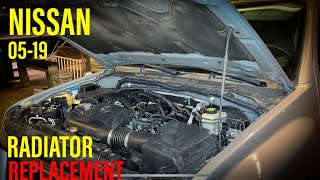
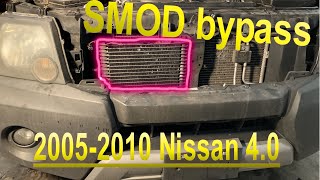
Typical fix: This is an expensive repair. The radiator and the TCM (which is integrated with the valve body) MUST be replaced. 🎬 Watch: Complete guide to replacing your radiator The transmission and cooler lines must be thoroughly flushed. In many cases, the entire transmission is damaged and requires a full replacement or rebuild. A preventative 'radiator bypass' is a common modification where an external cooler is used exclusively, but this is not a fix once SMOD has occurred. 🎬 See how to perform the preventative radiator bypass
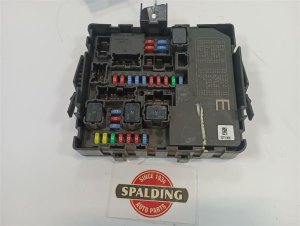
Est. part cost: $800-$3500 - Faulty Intelligent Power Distribution Module (IPDM-ER) 🟡 Medium Probability → Shop Fuse Box The IPDM, a smart fuse/relay box, is a known failure point on many Nissan models from this era. Internal relay failures, often due to moisture intrusion or vibration, can cut power to the TCM, causing it to drop off the communication network and trigger U0101.
How to confirm: With the ignition on, check for 12V power at the fuse designated for the TCM in the IPDM. A technician can perform a self-test on the IPDM. If the relay for the TCM is not providing power despite having a good fuse, the IPDM itself is the primary suspect. The module is located in the engine bay near the battery. 🎬 Watch: How to fix a no-start issue with the IPDM
Typical fix: Replacement of the entire IPDM-ER unit. It is a plug-and-play module. A common part number is 284B7-ZE03A or its successor, 284B6-ZE03B.
Est. part cost: $150-$400 - CAN Bus Wiring or Connector Fault ⚪ Low Probability Wiring harnesses can be susceptible to chafing against the chassis or engine components, and connectors can suffer from corrosion, especially in regions with heavy road salt use.
How to confirm: Visually inspect the wiring harness going to the transmission for any signs of chafing, melting, or corrosion at the main connector. A technician can use a multimeter to check for proper resistance (around 60 ohms) across the CAN High and CAN Low pins at the diagnostic port or TCM connector.
Typical fix: Repair the damaged section of wiring or clean/replace the corroded connector.
Est. part cost: $10-$100 - Low Battery Voltage or Bad Grounds ⚪ Low Probability → Shop Vehicle Battery
How to confirm: Test the battery voltage; it should be above 12.4V with the engine off. Modern control modules are sensitive to low voltage and can drop off the network. Check that battery terminals are clean and tight. Inspect the main chassis and engine ground straps for corrosion or looseness.
Typical fix: Charge or replace the battery. Clean or replace corroded terminals and ground straps.
Est. part cost: $5-$250
Rare But Worth Checking
- Faulty ECM: While possible, it is much more likely that the TCM, the network, or the power supply to the TCM is the source of the problem. The ECM should only be suspected after all other possibilities have been exhaustively ruled out.
Diagnosis Steps
- Scan for all stored trouble codes in all modules. Note any other 'U' codes or 'P' codes. A U1000 code alongside U0101 points strongly to a network issue.
- FOR 2005-2010 MODELS: Immediately inspect the transmission fluid and coolant for signs of cross-contamination (the 'strawberry milkshake'). If present, the radiator and TCM are the cause.
- Check for the 'radiator bypass' mod. Some owners proactively install an external transmission cooler. If this has been done, SMOD is unlikely.
- If no contamination is found, check the battery voltage and the condition of the battery terminals and main ground connections. Ensure voltage is stable and above 12.4V.
- Locate the IPDM-ER in the engine bay. Inspect it for any signs of water intrusion or corrosion. Check the fuse that supplies power to the TCM. Test for 12V at this fuse location.
- Visually inspect the wiring harness leading to the transmission. Pay close attention to the main connector on the transmission case for any damage or corrosion. Check for chafing near hot or sharp components.
- If a capable scan tool is available, attempt to communicate directly with the TCM. If the tool cannot connect to the TCM but can connect to the ECM, this confirms the TCM is offline.
- A professional technician will then test the CAN bus wiring for proper resistance (should be ~60 ohms with battery disconnected) and check for shorts between CAN High/Low and ground/power.
- If wiring, grounds, and power supply (from the IPDM) are all confirmed to be good, the TCM itself is condemned.
Parts You'll Likely Need
- Radiator
(OEM #Faulty originals include 21460-EA215, 21460-EA265.)— The primary cause of TCM failure on 2005-2010 models due to internal leaks. It MUST be replaced to prevent a repeat failure.
Trusted brands: Koyo (often recommended as a robust aftermarket replacement), Spectra Premium, Denso
OEM price range: $400-$600
Aftermarket price range: $150-$300 - Transmission Control Module / Valve Body Assembly
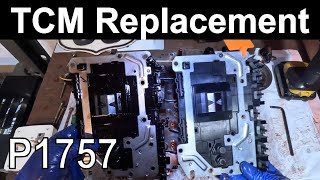
(OEM #RE5R05A (This is the transmission model, the specific TCM part number is programmed to the VIN))— The TCM is integrated into the valve body on these models and is destroyed by coolant contamination (SMOD). It must be replaced. On later models, it can fail electronically without SMOD.
Trusted brands: Hitachi (OEM), Rostra, Transtar
OEM price range: $1000-$1500
Aftermarket price range: $600-$1000 (Remanufactured) - Intelligent Power Distribution Module (IPDM-ER)
(OEM #284B7-ZE03A (superseded by 284B6-ZE03B))— A common failure on 2011+ models, or on earlier models where SMOD is not present. Internal relay failure cuts power to the TCM.
Trusted brands: Nissan (OEM), Standard Motor Products (SMP)
OEM price range: $250-$400
Aftermarket price range: $150-$250
Related Codes That Often Appear With This One
- U1000 — This is a general CAN Communication Circuit fault code on Nissans. It often appears alongside more specific U-codes like U0101, indicating a widespread network problem.
- P07xx — Various P07xx codes (e.g., for shift solenoids) may be stored alongside U0101. This happens because the failing TCM is logging internal faults before it loses communication completely.
Technical Service Bulletins (TSBs) & Recalls
- NTB21-002A: Addresses a no-crank, no-start condition on 2020 models with U0101, pointing to specific campaign services (R22B1/R22A9) as the first step in diagnosis. The TCM may show as "UNKWN" in the PRESENT status.
- NTB21-002: Notes that for certain 2020 models, the customer may state the engine will not crank and will not start, and DTC U0101 (Lost Comm TCM) is stored in the ECU and/or Shifter Control Unit (SCU).
- NTB10-114: While not directly cited by number in searches, this TSB relates to the warranty extension Nissan offered for the SMOD issue on Frontiers, Xterras, and Pathfinders, extending coverage for the radiator and transmission to 8 years/80,000 miles or 10 years/100,000 miles for some components.
- NTB09-124: Pertains to the timing chain whine issue on the VQ40DE engine, a separate common problem with this platform.
Platform-Specific Known Issues
- Strawberry Milkshake of Death (SMOD): Affects 2005-2010 models with automatic transmissions. A breach in the radiator allows coolant to mix with transmission fluid, destroying the transmission and its control module. Nissan extended the warranty for this issue, but it has since expired for most vehicles.
- IPDM Relay Failures: The IPDM-ER is prone to internal failures of its non-serviceable relays, which can cause intermittent power loss to critical components like the fuel pump and TCM.
Mechanic-Grade Diagnostic Values
- CAN Bus Resistance — expected: ~60 Ω across CAN_H and CAN_L pins with battery disconnected.. Failure: A reading of ~120 Ω indicates one of the two terminating resistors is offline. A reading of 0 Ω indicates a short between the CAN lines.
- CAN Bus Voltage (Key On, Engine Off) — expected: CAN High (CAN_H) should be 2.5-3.5V. CAN Low (CAN_L) should be 1.5-2.5V.. Failure: Voltages outside these ranges, or a lack of voltage differential, indicate a bus fault, short to power/ground, or a faulty module pulling the bus down.
- TCM Power Supply Voltage — expected: 12.0V - 12.6V at the TCM's power supply pin with ignition on.. Failure: Low or no voltage indicates a problem with the fuse, IPDM, or wiring harness between the IPDM and TCM.
- TCM Ground Circuit Resistance — expected: Below 0.5 Ω between the TCM ground pin and a clean chassis ground point.. Failure: High resistance indicates a corroded or loose ground connection, which can cause intermittent communication loss.
- RE5R05A Transmission Solenoid Resistance — expected: 3.3 Ω for all solenoids except the Low Coast Brake solenoid. The Low Coast Brake solenoid should be 23 Ω.. Failure: Readings significantly outside these values indicate a failed solenoid within the valve body.
Scan Tool Commands That Help
- Nissan CONSULT or compatible J2534 device: TCM Reprogramming / Calibration Update — Required after replacing the TCM/Valve Body assembly to ensure the module has the correct software for the specific vehicle VIN and transmission type. Nissan's NERS (Nissan ECU Reprogramming Software) is needed.
- Nissan CONSULT or advanced bidirectional scanner: IPDM E/R Auto Active Test — This self-test commands the IPDM to cycle its internal relays, including the one that powers the TCM. A technician can listen for the relay click and verify power output, helping to confirm if the IPDM is functional without removing it.
- Nissan CONSULT or advanced bidirectional scanner: Clear Self-Learning / Reset Adaptive Strategies — This should be performed after any major transmission repair, including replacing the valve body/TCM. It erases the learned shift pressure adjustments, forcing the TCM to relearn the transmission's characteristics from a baseline.
Wiring & Ground Locations
- E15, E24 — Right front of the engine compartment. These are major grounding points for the engine harness.. A corroded or loose connection at these primary ground points can cause unstable voltage for multiple control units, including the ECM and IPDM, leading to network communication faults like U0101.
- F10, F16 — Left front of the engine, near the engine block.. These are critical engine ground points. The ECM relies on these grounds for stable operation. A fault here can cause the ECM to malfunction and disrupt CAN communication.
- Main Body Ground — On the passenger-side inner fender panel, where the negative battery cable is strapped to the body.. This is the primary return path for many electronic modules. Corrosion under this strap is a known issue and can cause a voltage drop across the entire vehicle's electrical system, leading to unpredictable module behavior and communication codes.
- TCM Connector — On the transmission case, where the main harness connects to the valve body.. This connector is the single point of failure for all communication and power to the TCM. It is susceptible to contamination from fluid leaks, road debris, and corrosion, which can directly cause a U0101 code.
Real Owner Repair Stories
- Reddit user in r/MechanicAdvice (2013 Chevy Impala LTZ (Note: Not a Frontier, but illustrates a common, non-platform-specific cause)) — U0101 code, 'Service Stabilitrak' and 'Service Traction' lights, gear indicator on dash disappeared, hard clunk when shifting into reverse.
❌ Tried (didn't work) The user took the vehicle to a shop for diagnosis, implying standard checks were likely performed.
✅ What actually fixed it Replacement of a corroded negative battery terminal. The poor ground connection was causing enough of a voltage issue to knock the TCM offline intermittently. - NHTSA ODI #11631268 — An owner reported dangerous lurching and instances where the transmission would not engage. A diagnostic check revealed code U0101, indicating bad communication between the TCM and the vehicle.
OEM Part Supersession History
284B7-ZE03A→284B6-ZE03B— Internal design revision by Nissan, likely to improve reliability of the internal relays and circuitry.
Heads up: The new part number (284B6-ZE03B) is a direct, backward-compatible replacement for the older unit.
Model Year Variations Within This Range
- 2005-Mid 2009: TCMs were often manufactured by Bosch. These units had different internal pressure switch configurations compared to later models.
- Mid 2009+: Nissan transitioned to Hitachi-made TCMs. The valve body was redesigned, eliminating most pressure switches and changing the separator plate. These TCMs also had different programming requirements, initially making them harder for independent shops to program without dealer tools.
Diagnostic Flowchart
Other Known Issues on This Vehicle
Issues unrelated to this code that are worth knowing about as an owner of this generation:
- Timing Chain Guide Wear / Whine 🔴 High — Common on VQ40DE engines, typically after 80,000-120,000 miles. Manifests as a high-pitched whine or rattle on startup that eventually becomes constant. (Ref: Nissan TSB NTB09-124 addresses the issue, but it was not a recall. Repair involves replacing the primary and secondary timing chains, guides, and tensioners, which is a labor-intensive job.)
- Fuel Level Sending Unit Failure 🟠 Medium — Extremely common on 2005-2008 models. The fuel gauge becomes inaccurate, often showing 1/4 tank when empty, leading to unexpected stalling. (Ref: Nissan issued a safety recall (NHTSA Campaign ID: 10V075000, Nissan PC042) for certain 2006 and 2008 models to replace the fuel level sending unit.)
- Rear Axle Seal Leak 🟠 Medium — Common across many model years. A clogged rear differential breather vent causes pressure to build, forcing gear oil past the axle seals. This contaminates the rear brakes and can lead to bearing failure if ignored. (Ref: No recall, but a well-known issue in the owner community. The common fix is to replace the seals and install an extended differential breather hose.)
- Catalytic Converter Failure 🟠 Medium — Often occurs after 100,000 miles, triggering codes P0420 and P0430. The internal monolith can break apart and, in severe cases, get sucked back into the engine causing catastrophic failure.
Used vs. New Parts: Buying Guide for This Vehicle
When a used part is the smart pick: A used IPDM from a junkyard is a very common and cost-effective repair, as it is a plug-and-play module. This is a smart choice if SMOD has been ruled out and the IPDM is the suspected cause.
Donor-vehicle mileage cap: roughly under 150000 miles for the part to have meaningful remaining life.
What to inspect on the donor part:
- Check the IPDM for any signs of water damage, such as white or green corrosion on the exterior case or connector pins.
- Ensure the plastic housing is not cracked or broken.
- If possible, source the part from a vehicle of a similar or newer model year to get a potentially more revised part.
- Verify the part number (e.g., 284B7-ZE03A) matches exactly.
OEM-only on this vehicle (don't cheap out):
- Transmission Control Module (TCM) / Valve Body: While aftermarket remanufactured units exist, they can be a gamble. A new OEM unit or one from a highly reputable remanufacturer (like Transtar) is strongly recommended because the TCM requires precise VIN-specific programming that cheap rebuilders may not perform correctly.
Aftermarket brands forum-validated for this vehicle:
- Radiator: Koyo, Spectra Premium, Denso are widely regarded by Frontier owners as reliable replacements for the faulty original Calsonic unit.
Brands owners have reported issues with on this vehicle:
- Generic, unbranded TCM/Valve Body assemblies from online marketplaces. These often have incorrect programming or use low-quality solenoids, leading to a quick repeat failure.
Real Owner Stories
Aggregated from forums and TSBs cited above. Mileages and costs reflect what owners reported in those sources.
2005-2010 Nissan Frontier
Symptoms: Transmission fluid appeared pink, milky, and frothy like a strawberry milkshake; vehicle entered fail-safe or 'limp mode'.
What fixed it: Replacement of the radiator and the TCM (integrated with the valve body), followed by a thorough flush of the transmission and cooler lines.
Cost: $800-$3500
Source hint: vehicle_specific_issues section regarding 'Strawberry Milkshake of Death (SMOD)'
2011 Nissan Frontier
Symptoms: Cracked radiator and transmission failure due to cross-contamination.
What fixed it: Repair of the radiator and transmission failure, though the owner disputed that the issue was resolved for the 2011 model year.
Source hint: CarComplaints.com report cited in forum_citations
Nissan Frontier (D40 Platform)
Symptoms: A multi-week diagnostic journey involving U1000 and U0101 codes.
What fixed it: Replacing the faulty Intelligent Power Distribution Module (IPDM).
Source hint: ClubFrontier.org thread 'The U1000/U0101 nightmare is over'
2012 Nissan Frontier
Symptoms: Lost communication with TCM (U0101); SMOD was ruled out during inspection.
What fixed it: The IPDM was the suspected culprit after ruling out fluid contamination.
Source hint: Reddit r/nissanfrontier post 'U0101 code lost communication with TCM'
Related OBD-II Codes
Frequently Asked Questions
I have a 2020 Nissan Frontier that won't crank or start and shows code U0101. Is there a specific bulletin for this?
What is the 'Strawberry Milkshake of Death' (SMOD) I keep hearing about in Frontier forums?
My 2011 Frontier has U0101 but the fluid looks fine. Could it be the fuse box?
Is there a specific radiator part number I should look out for to avoid TCM communication loss?
Will Nissan pay for my transmission and TCM replacement if I have SMOD?
Can I just bypass the radiator to prevent U0101 caused by fluid contamination?
Helpful Videos

Used OEM Parts in Stock
New Aftermarket Parts Available

The information in this article is provided for general reference and educational purposes only. Vehicle specifications, procedures, and part compatibility can vary by production date, trim level, and region. Always consult your vehicle's factory service manual and verify part numbers before purchasing or performing repairs. Safety-critical components such as airbags, seat belts, and braking systems should be installed by a qualified professional.
- Nissan Frontier:
- 🧭 Diagnostic Flowchart
- 🎬 Helpful Videos
- 🛍️ Shop This Part
- What's Unique About the 2005-2021 Nissan Frontier
- Symptoms You May Notice
- Most Likely Causes
- Rare But Worth Checking
- Diagnosis Steps
- Parts You'll Likely Need
- Related Codes That Often Appear With This One
- Technical Service Bulletins (TSBs) & Recalls
- Platform-Specific Known Issues
- Mechanic-Grade Diagnostic Values
- Scan Tool Commands That Help
- Wiring & Ground Locations
- Real Owner Repair Stories
- OEM Part Supersession History
- Model Year Variations Within This Range
- Other Known Issues on This Vehicle
- Used vs. New Parts: Buying Guide for This Vehicle
- Real Owner Stories
- 2005-2010 Nissan Frontier
- 2011 Nissan Frontier
- Nissan Frontier (D40 Platform)
- 2012 Nissan Frontier
- Related OBD-II Codes
- Frequently Asked Questions
- 🎟️ Get 5% Off