

U0101 on 2016-2018 Nissan Maxima: Lost Communication with TCM Causes and Fixes
Code U0101 on a 2016-2018 Nissan Maxima means the Transmission Control Module (TCM) has stopped communicating with the rest of the vehicle's network. This often leads to a no-start, limp mode, or erratic shifting. The most common causes are poor battery voltage, bad grounds, or wiring issues, which should be checked before suspecting a failed TCM.
- U0101 is a critical communication failure, not a mechanical one. Do not assume the transmission is bad.
- Always start diagnosis with the simplest and most common electrical issues: battery, fuses, and ground connections.
- The vehicle is not safe to drive with this code active; it can stall, refuse to shift, or enter a low-speed limp mode at any time.
- Diagnosing CAN bus faults is complex. If basic electrical checks don't solve the problem, professional help is recommended.
- Do not replace the TCM unless you have definitively ruled out all other possibilities, as it is expensive and requires programming.
What's Unique About the 2016-2018 Nissan Maxima
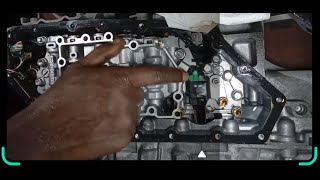
For the eighth-generation Maxima (A36), the U0101 code is a critical network fault that can be sensitive to battery health. A key vehicle-specific factor is that the Transmission Control Module (TCM) is not a separate, easily accessible box. It is integrated with the transmission's valve body and located inside the transmission oil pan. This makes physical inspection of the module or its replacement a significantly more labor-intensive job that requires draining the transmission fluid. Therefore, thoroughly diagnosing all external factors like battery, grounds (especially the one on the transmission case), and wiring harness integrity is even more critical on this platform before assuming TCM failure.
Symptoms You May Notice
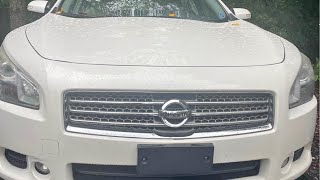
- Vehicle will not start or crank 🎬 See how to troubleshoot a Maxima that won't start or crank.
- Transmission is stuck in 'Limp Mode' (usually a single gear, limiting speed).
- Check Engine Light is on.
- Transmission or other warning lights are illuminated on the dashboard.
- Gear selector indicator (PRNDL) on the dash may be blank or incorrect.
- Harsh, erratic, or delayed shifting.
- Inability to shift out of Park.
- Scan tool cannot communicate with the TCM.
- Replacing the Transmission Control Module (TCM) without first verifying its power, ground, and network connections. A simple wiring or fuse issue is much more common.
- Assuming the entire transmission has failed mechanically when it is only an electronic communication issue.
Most Likely Causes
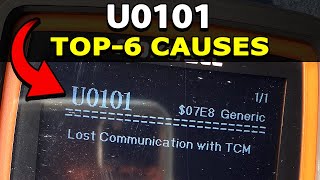
- Low or Unstable Battery Voltage 🔴 High Probability → Shop Vehicle Battery Modern vehicle networks are highly sensitive to voltage. A weak or failing battery can cause modules to drop offline intermittently during startup or operation. This is the most common and first-place-to-look cause for U-codes. 🎬 Watch: A breakdown of the top 6 causes for U0101 codes.
How to confirm: Test the battery voltage with a multimeter. With the engine off, it should be at least 12.4V. With the engine running, it should be between 13.7V and 14.7V. Also, check for loose or corroded battery terminals.
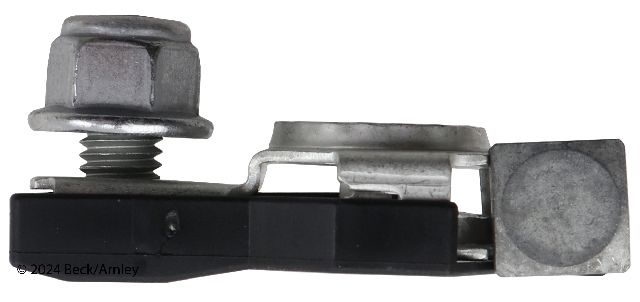
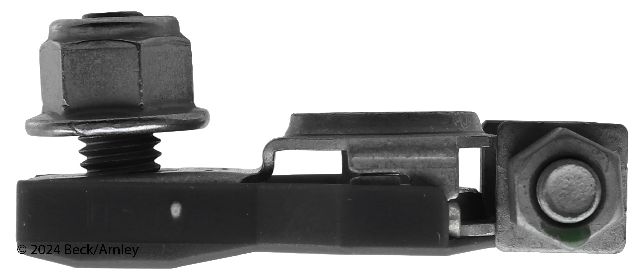
Typical fix: Clean the battery terminals and cable ends. If the battery fails a load test, replace it.
Est. part cost: $150-$300 - Poor Ground Connections 🟡 Medium Probability Ground straps and connection points can corrode over time, creating high resistance that prevents modules from operating correctly. A key ground to inspect on this platform is the one located on the transmission case itself.
How to confirm: Locate the main engine-to-chassis and battery-to-chassis ground straps. Specifically find and inspect the ground connection on the transmission housing for corrosion, looseness, or damage. Perform a voltage drop test on the ground circuit; it should be less than 0.5V.
Typical fix: Remove, clean, and securely re-attach the ground connections. Replace any corroded or broken ground straps.
Est. part cost: $10-$50 - Blown Fuse for TCM 🟡 Medium Probability
How to confirm: Consult the owner's manual or the fuse box covers to identify fuses related to the TCM, transmission, or ECU. Visually inspect the fuse or test for continuity with a multimeter.
Typical fix: Replace the blown fuse. If the fuse blows again immediately, it indicates a short circuit in the wiring that needs to be diagnosed.
Est. part cost: $1-$5 - Damaged Wiring Harness or Connectors ⚪ Low Probability Wiring harnesses can be damaged by road debris, improper service, or rodent damage. The main harness connector to the transmission is a critical inspection point. Aftermarket installations (like amplifiers) are also a common source of CAN bus interference if not wired correctly.
How to confirm: Visually inspect the wiring harness leading to the transmission. Check the main transmission connector for bent, corroded, or loose pins. Check for continuity on the CAN bus wires (typically a twisted pair) and verify power/ground at the TCM connector.
Typical fix: Repair the damaged section of the wire or replace the faulty connector. This often requires soldering and heat-shrinking for a durable repair.
Est. part cost: $20-$100
Rare But Worth Checking
- Failed Transmission Control Module (TCM): → Shop Transmission Assembly This should be the last thing to suspect. On the Maxima, the TCM is integrated into the valve body assembly inside the transmission. All other possibilities (power, ground, wiring) must be ruled out first, as replacing it is expensive, labor-intensive, and often not the actual problem.
Diagnosis Steps
- Check for Other Codes: Use a professional-grade scanner to check for codes in all vehicle modules, not just the engine. Multiple 'U' codes suggest a widespread network problem.
- Verify Battery Health: Test the battery and charging system. Ensure voltage is stable and terminals are clean and tight. A weak battery is a very common cause of communication codes.
- Inspect Fuses: Check all fuses related to the transmission and control modules in both the under-hood and interior fuse panels.
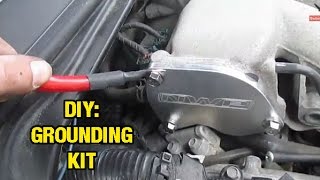
- Inspect Grounds: Locate and inspect the main battery, engine, and chassis ground points for corrosion and tightness. Pay special attention to the ground strap on the transmission housing. 🎬 Watch: How to install a grounding kit to fix electrical issues.
- Inspect Transmission Connector: Locate the main electrical connector on the outside of the transmission. Disconnect it (with the battery disconnected) and inspect for any signs of corrosion, moisture, or bent/backed-out pins.
- Test CAN Bus Resistance: With the battery disconnected, measure the resistance between pins 6 and 14 on the OBD-II port. A healthy network should read approximately 60 ohms. A reading of 120 ohms suggests a break in the circuit or that a module is offline.
- Verify Power and Ground at the TCM Connector: If steps 1-6 are good, use a wiring diagram to test for proper power and ground at the pins on the transmission connector that lead to the TCM. If power or ground is missing, trace that circuit to find the fault.
- Isolate the TCM: If all external wiring, power, and grounds are confirmed good, the internal TCM/valve body assembly is the most likely culprit.
Parts You'll Likely Need
- Battery — A weak or failing battery is a primary cause of network communication faults on modern vehicles.
Trusted brands: Interstate, DieHard, Duralast
OEM price range: $200-$350
Aftermarket price range: $150-$300 - TCM / Valve Body Assembly
(OEM #31705-29X0E (Verify with VIN, may be superseded by 31705-29X0C))— If all wiring, power, and ground tests pass, the module itself, which is integrated with the valve body, has likely failed internally. This is the last resort replacement.
Trusted brands: Nissan Genuine
OEM price range: $700-$900
Aftermarket price range: $500-$700
Related Codes That Often Appear With This One
- U0100 — Lost Communication with ECM/PCM. If the main network is unstable, communication can be lost with multiple modules.
- U0073 — Control Module Communication Bus Off. This indicates a major fault on the CAN bus itself, such as a short circuit, which would prevent all modules from communicating.
Technical Service Bulletins (TSBs) & Recalls
- NTB19-115: While not directly for U0101, this TSB involves an ECM reprogram for 2016-2018 Maximas for emissions compliance. It's good to ensure your vehicle's software is up to date.
- NTB17-082a: Though focused on an EVAP leak code (P0456), this TSB applies to the 2016-2018 Maxima and is a good example of a bulletin that helps technicians diagnose common electrical component issues (in this case, an O-ring seal). It shows the level of detail available for diagnosing specific parts.
- NTB15-082b: This bulletin for other Nissan models details the diagnostic procedure for CAN system issues, providing a framework that is applicable for diagnosing a U0101 code on a Maxima. It emphasizes a systematic check of the network.
- TSB Bulletin #NTB21-002: This manufacturer bulletin notes that a customer may state the engine will not crank and will not start (intermittently) when DTC U0101 is stored in the ECU or Shifter Control Unit (SCU).
- TSB Bulletin #NTB21-002A: This updated service information for the same make describes a no-start condition where the TCM may show as "UNKWN" in the scan tool while U0101 is stored as a past or current code.
Platform-Specific Known Issues
- Owner Experience: U-Codes After Aftermarket Amp Install: A user on Maxima Forums reported that after installing an aftermarket amplifier, their 2016 Maxima began throwing codes U0073, U0100, and U0101, and the climate control module stopped working. This highlights how tapping into the vehicle's electrical system improperly can disrupt the CAN bus and cause widespread communication failures. The likely cause was either an excessive electrical load on the stock system or interference introduced into the network wiring.
Mechanic-Grade Diagnostic Values
- CAN Bus Network Resistance — expected: ~60 Ω. Failure: A reading of ~120 Ω indicates an open circuit or a missing terminating resistor in a module. A reading near 0 Ω indicates a short between the CAN High and Low wires.
- CAN Bus Voltage (Key ON, Engine OFF) — expected: CAN-H: ~2.6V, CAN-L: ~2.4V. Failure: Voltages that are stuck high (5V), low (0V), or equal on both lines indicate a short to power, short to ground, or short between the lines.
- TCM Power Supply Voltage — expected: 12.0 - 13.5V. Failure: Voltage below 12.0V indicates a power supply issue (fuse, wiring, IPDM) that can cause the TCM to drop offline.
- TCM Ground Circuit Resistance — expected: < 0.5 Ω. Failure: Resistance higher than 0.5 Ω indicates a poor ground connection, which is a common cause of communication issues.
Scan Tool Commands That Help
- Nissan CONSULT-III Plus: Work Support > WRITE IP CHARA - REPLACEMENT TCM — This function is mandatory after replacing the TCM/Valve Body assembly. It writes the unique calibration data from a CD or QR code provided with the new part to the TCM. Failure to perform this step will result in improper transmission operation.
- Nissan CONSULT-III Plus: Work Support > SAVE / WRITE CALIBRATION DATA — This is used when only the TCM is being replaced (if it were a separate component). It saves the calibration data from the old module to be written to the new one. For the Maxima A36, where the TCM is integrated, the 'WRITE IP CHARA' function is more relevant.
- Nissan CONSULT-III Plus: Work Support > Select Learning — After a TCM or valve body replacement and calibration write, this procedure is required to allow the TCM to learn clutch engagement points for smooth operation. It involves a specific sequence of shifting between Neutral, Drive, and Reverse.
- Professional-grade Bi-directional Scanner: TCM Communication Test / Network Test — Used during initial diagnosis to actively ping the TCM and see if it responds on the network. A 'No Response' confirms the communication loss and helps verify the U0101 fault is active.
Wiring & Ground Locations
- F89 — This is the main round electrical harness connector on the outside of the transmission case.. This is the single point of connection for all power, ground, and CAN bus signals to the internal TCM. Checking for power, ground, and CAN signals at the pins of this connector is the most critical electrical test for diagnosing U0101.
- G100 (example) — While the specific designator can vary, a key ground point (G100) was identified in one repair video on the passenger side of the vehicle, where a junction connector for the TCM ground circuit is located.. A fault within a ground junction connector can cause a loss of ground specifically to the TCM, even if the main ground point on the chassis is clean and secure. This is a hidden failure point that can be easily missed.
- CAN Bus Wires — A twisted pair of wires within the harness leading to the F89 transmission connector.. These two wires are the direct communication link. Any damage, corrosion, or shorting of this specific pair will immediately cause a U0101 code. They must be inspected carefully if power and ground to the TCM are confirmed to be good.
Real Owner Repair Stories
- YouTube video by a professional technician (Vehicle with a U0101 code (specific model not a Maxima, but demonstrates a universally applicable fault)) — No communication with TCM, setting code U0101.
❌ Tried (didn't work) Checking fuses F53 and F26, which were both good., Verifying power at the TCM connector pins 9 and 14, which was present., Checking the main ground point G100, which was clean and secure.
✅ What actually fixed it The technician found that while the main ground point was good, a ground junction connector between the main ground and the TCM harness had failed internally. Applying a direct ground to the wire after the faulty junction connector restored communication with the TCM. The fix was to repair or bypass the faulty junction connector. - NHTSA ODI #11114960 — An owner reported that their dashboard was lighting up and the vehicle was found to have a U0101 lost communication code. Despite the code, the service department initially refused to keep the vehicle for extended repair.
- NHTSA ODI #11631268 — An owner described dangerous lurching and instances where the transmission would not engage, noting that the diagnostic code was U0101 indicating bad communication between the TCM and the vehicle.
OEM Part Supersession History
31705-29X0E→31705-29X0C— Part has been updated by the manufacturer. The original part is discontinued.
Heads up: Part number 31705-29X0C also replaces 3170529x0a, 3170529x1a, and 3170529x1b. It is critical to verify the correct part number with the vehicle's VIN before ordering, as multiple revisions exist.
Diagnostic Flowchart
Other Known Issues on This Vehicle
Issues unrelated to this code that are worth knowing about as an owner of this generation:
- CVT Judder, Hesitation, and Premature Failure 🔴 High — Widespread issue, subject of a class-action lawsuit and warranty extension. Can occur at various mileages, often noted between 30k-90k miles. (Ref: NTB17-039L, NTB15-084d. A class-action settlement extended the powertrain warranty for this component.)
- ABS Actuator Pump Leak (Fire Risk) 🔴 High — Sufficiently common to trigger a major recall. The leak allows brake fluid onto an internal circuit board. (Ref: Recall 18V-601.)
- Automatic Emergency Braking (AEB) Malfunction 🟠 Medium — Numerous owner complaints of the system engaging unexpectedly, causing sudden braking with no obstacle present. (Ref: NHTSA Investigation PE19-003.)
- Infotainment System Glitches/Failure 🟡 Low — Owners report issues like the screen going blank, rebooting constantly, or failing to start up with the vehicle.
- Spontaneously Cracking Windshield 🟡 Low — Some owners have reported the windshield cracking without any impact, suggesting a potential stress or manufacturing issue.
Used vs. New Parts: Buying Guide for This Vehicle
When a used part is the smart pick: A used TCM/Valve Body assembly from a reputable dismantler can be a cost-effective option, but it carries significant risk. It only makes sense if the donor vehicle has very low mileage, a verifiable history of no transmission issues, and the seller offers a warranty.
Donor-vehicle mileage cap: roughly under 50000 miles for the part to have meaningful remaining life.
What to inspect on the donor part:
- Verify the part number on the used unit exactly matches the required superseded part number for your vehicle.
- Inspect the electrical connector pins for any signs of corrosion, damage, or fluid intrusion.
- Ask for the VIN of the donor car to check its history for accidents or reported transmission problems.
- Ensure the unit comes with the calibration CD or a clear picture of the QR code. Without this, programming the part to your vehicle is impossible.
OEM-only on this vehicle (don't cheap out):
- TCM / Valve Body Assembly
Aftermarket brands forum-validated for this vehicle:
- For this specific integrated component, sticking with a new Nissan Genuine part is the most reliable option to ensure compatibility and avoid repeat labor costs. Some forum users have had success with remanufacturers like Sunbelt for older models, but for the A36 Maxima, OEM is strongly recommended.
Brands owners have reported issues with on this vehicle:
- Unknown or unverified sellers on platforms like eBay or Amazon. Reviews for used/rebuilt valve bodies are mixed, with some users receiving defective or incorrect parts, leading to wasted time and money.
Real Owner Stories
Aggregated from forums and TSBs cited above. Mileages and costs reflect what owners reported in those sources.
2016 Nissan Maxima S
Symptoms: Immediately after an aftermarket amplifier installation, the vehicle threw three codes and the climate control module stopped working.
What fixed it: The issue was attributed to the aftermarket installation improperly tapping into the electrical system, causing CAN bus interference.
Source hint: Maxima Forums: 2016 Nissan Maxima S threw 3 codes
2016-2018 Nissan Maxima — ~60000 miles
Symptoms: CVT Judder, hesitation, and premature transmission failure.
What fixed it: Replacement of the CVT component, often covered under a powertrain warranty extension resulting from a class-action settlement.
Source hint: NTB17-039L, NTB15-084d
Related OBD-II Codes
Frequently Asked Questions
Can installing an aftermarket amplifier in my 2016 Maxima cause the U0101 code?
Is there a TSB for the 2016-2018 Maxima regarding the CVT issues often associated with these codes?
Does the emissions reprogram TSB NTB19-115 apply to my 2017 Maxima?
Where is the most common ground point to check for U0101 on a 2016-2018 Maxima?
What should the battery voltage be on my Maxima to ensure the TCM stays online?
My 2016 Maxima has an EVAP leak (P0456); is there a related TSB?
Helpful Videos
We Have This Part in Stock


The information in this article is provided for general reference and educational purposes only. Vehicle specifications, procedures, and part compatibility can vary by production date, trim level, and region. Always consult your vehicle's factory service manual and verify part numbers before purchasing or performing repairs. Safety-critical components such as airbags, seat belts, and braking systems should be installed by a qualified professional.
- Nissan Maxima:
- 🧭 Diagnostic Flowchart
- 🎬 Helpful Videos
- 🛍️ Shop This Part
- What's Unique About the 2016-2018 Nissan Maxima
- Symptoms You May Notice
- Most Likely Causes
- Rare But Worth Checking
- Diagnosis Steps
- Parts You'll Likely Need
- Related Codes That Often Appear With This One
- Technical Service Bulletins (TSBs) & Recalls
- Platform-Specific Known Issues
- Mechanic-Grade Diagnostic Values
- Scan Tool Commands That Help
- Wiring & Ground Locations
- Real Owner Repair Stories
- OEM Part Supersession History
- Other Known Issues on This Vehicle
- Used vs. New Parts: Buying Guide for This Vehicle
- Real Owner Stories
- 2016 Nissan Maxima S
- 2016-2018 Nissan Maxima — ~60000 miles
- Related OBD-II Codes
- Frequently Asked Questions
- 🎟️ Get 5% Off