

U0101 on 2019-2021 Nissan Pathfinder: Lost Communication with TCM Causes and Fixes
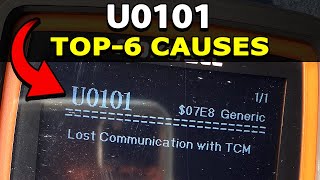
On a 2019-2021 Nissan Pathfinder, code U0101 means the Transmission Control Module (TCM) has gone offline. This will likely put the vehicle in 'limp mode'. After checking fuses and battery voltage, the most common causes are a wiring issue, a poor ground connection, or a failed TCM, which is located inside the transmission and is often replaced with the valve body.
- Code U0101 means the Transmission Control Module (TCM) is offline, which is a serious issue that will affect driving.
- Before suspecting an expensive module failure, always check the easiest and most common causes first: the battery, charging system, and all related fuses.
- Visually inspect the main wiring connector at the transmission for corrosion or damage, as this is a common failure point.
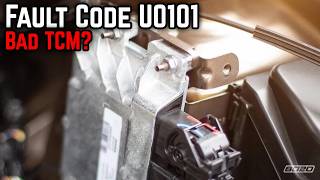
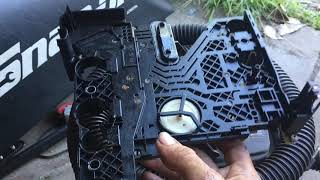
- On this Pathfinder, the TCM is inside the transmission oil pan, attached to the valve body. Replacing it is a significant labor job and requires programming.
- Due to the complexity of network diagnostics and the location of the TCM, this repair is best left to a professional technician.
What's Unique About the 2019-2021 Nissan Pathfinder
The 2019-2021 Pathfinder is part of the R52 generation, which uses a Jatco CVT8 Continuously Variable Transmission. For this platform, the Transmission Control Module (TCM) is not a separate, easily accessible box. Instead, it is an electronic component bolted directly to the transmission's valve body, located inside the transmission oil pan. This integrated design means that diagnosing a bad TCM often leads to a more involved repair that requires opening the transmission, and the TCM is typically replaced as part of the valve body assembly.
🎬 Watch: Nissan valve body and TCM removal walkthroughSymptoms You May Notice
- Check Engine Light is on
- Transmission warning light is illuminated
- Vehicle enters 'limp mode' (stuck in one gear, reduced power)
- Harsh, erratic, or no shifting
- Gear position indicator on the dashboard may be blank or incorrect
- Vehicle may not start
- Hard 'clunk' when shifting into gear
- Replacing the entire transmission when only the TCM/valve body is faulty. 🎬 See: How to diagnose and fix a U0101 code
- Condemning the TCM without first verifying proper battery voltage, grounds, and power supply to the module.
- Replacing the TCM when the actual fault is a corroded pin in the main transmission harness connector.
Most Likely Causes
- Low Battery Voltage or Faulty Charging System 🔴 High Probability → Shop Vehicle Battery All modern vehicles with complex computer networks are sensitive to low voltage. A weak battery or failing alternator can cause unpredictable communication errors between modules.
How to confirm: Test the battery voltage with the engine off (should be ~12.6V) and while running (should be ~13.7-14.7V). A simple load test at an auto parts store can confirm battery health.
Typical fix: Recharge or replace the battery. If the charging voltage is low, diagnose and replace the alternator.
Est. part cost: $150-$400 - Damaged Wiring or Corroded Connectors 🟡 Medium Probability The main harness connector to the transmission is exposed to road debris and moisture, which can lead to corrosion or physical damage over time. A loose or corroded pin in this connector is a common real-world cause.
How to confirm: Perform a thorough visual inspection of the wiring harness leading to the transmission, focusing on the large circular connector. Disconnect it and check for corroded, bent, or backed-out pins. Check for power and ground at the TCM connector using a multimeter.
Typical fix: Clean the connector pins with an electronic cleaner and apply dielectric grease. Repair any damaged sections of the wiring harness. In severe cases, the harness connector may need to be replaced.
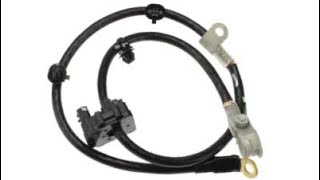
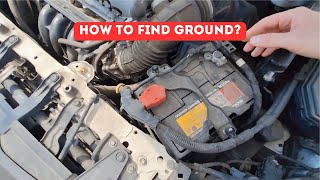
Est. part cost: $20-$300 - Poor Ground Connection 🟡 Medium Probability Corroded or loose ground straps between the engine/transmission and the chassis are a known issue on many Nissan vehicles, leading to floating voltages and communication errors. A ground point under the battery tray is a known weak spot on this platform. 🎬 Watch: How to replace a Nissan battery ground cable
How to confirm: Locate and inspect the main ground straps. One key ground runs from the engine or transmission case to the firewall or frame rail. Check for corrosion or looseness. Perform a voltage drop test on the ground circuit to confirm its integrity.
Typical fix: Remove, clean, and securely re-fasten the ground strap connections. If the strap is frayed or heavily corroded, replace it.
Est. part cost: $15-$50 - Blown Fuse 🟡 Medium Probability
How to confirm: Consult the owner's manual to locate the fuse(s) for the Transmission Control Module (TCM) and Powertrain Control Module (PCM) in the under-hood and in-cabin fuse boxes. Visually inspect the fuses and test for continuity with a multimeter.
Typical fix: Replace the blown fuse. If the fuse blows again immediately, it indicates a short circuit in the wiring or the TCM itself that needs to be diagnosed.
Est. part cost: $1-$10 - Failed Transmission Control Module (TCM) ⚪ Low Probability → Shop Transmission Assembly The TCM is integrated with the valve body inside the hot environment of the transmission, which can contribute to electronic failure over time.
How to confirm: This is typically diagnosed by exclusion. If the battery, fuses, wiring, power, and grounds to the TCM are all confirmed to be good, and the CAN network tests okay, the TCM itself is the most likely culprit. An advanced scan tool will show no response when trying to communicate directly with the TCM.
Typical fix: Replace the TCM, which on this vehicle means replacing the entire transmission valve body assembly it is mounted to. The new module will need to be programmed to the vehicle.
Est. part cost: $600-$1200
Rare But Worth Checking
- CAN Bus Network Fault: A break or short in the CAN communication wires somewhere else in the vehicle can disrupt the entire network, causing a U0101 code even if the TCM and its wiring are fine. This requires advanced network diagnostics to trace.
- Faulty Engine Control Module (ECM): → Shop Engine Control Module (ECM) While rare, a fault within the ECM can sometimes manifest as a communication loss to another module. This is an unlikely cause and should only be considered after all other possibilities are exhausted.
Diagnosis Steps
- Check Battery and Charging System: Ensure battery voltage is above 12.4V with the engine off and that the alternator is charging correctly when running (13.7-14.7V). A weak power supply is a primary cause of communication faults.
- Perform a Full System Scan: Use an OBD-II scanner to check for codes in all vehicle modules. Note if other modules are also reporting communication errors, which would point to a wider network issue.
- Inspect Fuses: Check all fuses related to the transmission, TCM, and ECM in the vehicle's fuse boxes (both in the engine bay and cabin).
- Visual Inspection of Harness: Inspect the main wiring harness connector at the transmission for any signs of corrosion, moisture, or physical damage. This is a common point of failure.
- Check Power and Ground at TCM: If accessible, disconnect the TCM connector and use a multimeter to verify it is receiving battery voltage and has a good ground connection. Check for corroded or loose chassis ground straps.
- Test CAN Bus Resistance: With the battery disconnected, measure the resistance between the CAN High (Pin 6) and CAN Low (Pin 14) pins at the OBD-II port. A healthy network should read approximately 60 ohms. Readings of 120 ohms or infinite resistance indicate a break in the wiring or a missing terminating resistor.
- Isolate the TCM: If wiring, power, and grounds are good, the final step is to suspect a faulty TCM. This may require professional confirmation with an advanced scan tool that can attempt to communicate directly with the TCM.
- Check for TSBs: Have a dealer check if any Technical Service Bulletins for TCM software updates or known wiring issues apply to your vehicle's VIN.
Parts You'll Likely Need
- Transmission Valve Body with TCM
(OEM #31705-29X0C, 31705-62X1D, 31705-62X1C (verify by VIN))— If the TCM is confirmed to be faulty, it is replaced as a single unit with the valve body it is mounted to inside the transmission. This part requires programming to the vehicle after installation.
Trusted brands: Hitachi, Dorman (Remanufactured), Nissan (OEM)
OEM price range: $900-$1500
Aftermarket price range: $600-$1000 - Battery — Low voltage is a frequent cause of communication codes. If the battery fails a load test, it must be replaced before further network diagnosis.
Trusted brands: Interstate, DieHard, Bosch
OEM price range: $200-$350
Aftermarket price range: $150-$250 - Chassis Ground Strap — A corroded or broken engine-to-chassis ground strap is a possible cause of communication faults and is an inexpensive part to replace during diagnosis.
Trusted brands: Nissan (OEM), Standard Motor Products
OEM price range: $25-$50
Aftermarket price range: $15-$30
Related Codes That Often Appear With This One
- U1000 — This is a general Nissan code for a CAN Communication Circuit fault. It often appears alongside more specific U-codes like U0101, indicating a broader network problem.
- U0100 — Lost Communication with ECM/PCM. This can appear with U0101 if the network fault is severe, affecting multiple critical modules.
Technical Service Bulletins (TSBs) & Recalls
- NTB13-036F: General CAN system diagnostic troubleshooting guide.
- NTB16-120b / PC500: A voluntary service campaign for older (2013-2014) R52 Pathfinders to reprogram the TCM for CVT issues, showing a history of software fixes for this transmission.
- NHTSA Campaign 19V807000: Recall for ABS actuator leaks that could cause electrical shorts and fire, highlighting the sensitivity of the vehicle's electronic systems.
- NTB17-034 (and subsequent revisions): TSB for CVT judder on various Nissan models, often involving valve body replacement or TCM reprogramming, which is relevant context for the integrated TCM design.
- TSB Bulletin #NTB21-002: A manufacturer service bulletin noting that U0101 may be stored in the ECU or Shifter Control Unit (SCU) as past or current, potentially causing an intermittent no-crank/no-start condition.
- TSB Bulletin #NTB21-002A: This update further describes service information where the TCM may show as "UNKWN" in the present status when U0101 is stored.
Platform-Specific Known Issues
- Corrosion in Main Transmission Connector: → Shop Transmission Assembly The primary electrical connector on the transmission case is susceptible to water intrusion and corrosion, which can interrupt the CAN bus or power signals to the TCM, directly causing a U0101 code. A thorough inspection of these pins should be a primary diagnostic step.
Mechanic-Grade Diagnostic Values
- CAN Bus Resistance at OBD-II Port — expected: Approximately 60 Ω. Failure: A reading of 120 Ω indicates a break in the CAN circuit or a missing terminating resistor (often in the ECM or TCM). A reading significantly less than 60 Ω (e.g., near 0 Ω) suggests a short between the CAN High and CAN Low wires.
- CAN Bus Voltage (Key On, Engine Off) — expected: CAN High (Pin 6): ~2.5V to 3.5V. CAN Low (Pin 14): ~1.5V to 2.5V.. Failure: Voltages outside these ranges, or a lack of voltage differential, indicate a problem on the bus, such as a short to power or ground.
- TCM Power Supply Pin — expected: 12.0V - 12.6V (Battery Voltage) with ignition on.. Failure: Low or no voltage indicates a problem with the fuse, relay, or wiring supplying power to the TCM.
- TCM Ground Pin Resistance to Chassis — expected: Less than 0.5 Ω. Failure: High resistance indicates a poor ground connection, which is a common cause of intermittent communication issues.
Scan Tool Commands That Help
- Nissan CONSULT-III plus: Save/Write Calibration Data — This function is mandatory when replacing the TCM. The calibration data from the old TCM must be saved before removal and written to the new TCM. If the old TCM is completely dead, the data must be loaded from a disc or QR code that comes with the new valve body assembly.
- Nissan CONSULT-III plus: WRITE IP CHARA - REPLACEMENT TCM — This is the specific command used to write the saved or new calibration data to a replacement TCM. Failure to perform this step will result in improper transmission operation and likely other fault codes.
- Nissan CONSULT-III plus or compatible J2534 device: Clutch Point Learning / Select Learning — After a new TCM/valve body is installed and programmed, these relearn procedures must be performed to allow the TCM to adapt to the specific mechanical characteristics of the clutches and solenoids in the CVT.
- Advanced Bidirectional Scan Tool: Module Communication Test — To confirm a U0101 diagnosis, a scan tool can attempt to directly ping the TCM. If the TCM does not respond while all other modules on the network do, it helps isolate the fault to the TCM or its direct wiring/power/ground.
Wiring & Ground Locations
- Main Transmission Harness Connector — On the exterior of the transmission case, where the main vehicle harness connects to the transmission.. This is the single point of connection for all power, ground, and communication lines to the internal TCM. It is highly susceptible to corrosion, moisture intrusion, and pin damage, making it a primary suspect for a U0101 code.
- Chassis Ground Under Battery Tray — On the chassis frame rail, located beneath the battery and battery tray.. This is a known common failure point for corrosion on many Nissan platforms. A poor ground here can cause a floating voltage reference for multiple modules, leading to network communication errors like U0101.
- E72 Braided Ground Strap — A short, braided strap often running from the passenger-side engine head or exhaust manifold heat shield to the vehicle's firewall.. This strap is critical for providing a stable ground reference between the engine/transmission assembly and the chassis, where many control modules are grounded. Fraying or corrosion of this strap is common and can cause intermittent communication faults.
OEM Part Supersession History
31705-29X0A, 31705-29X1A, 31705-29X1B→31705-29X0C (which may further supersede to a kit like 3170E-29X9C)— Revisions to address reliability issues or component changes in the valve body solenoids or TCM electronics.
Heads up: Using an incorrect revision may lead to programming failure or drivability issues. It is critical to verify the correct part number for the vehicle's VIN. The latest part number from Nissan often comes as a kit including gaskets and seals.
Diagnostic Flowchart
Other Known Issues on This Vehicle
Issues unrelated to this code that are worth knowing about as an owner of this generation:
- CVT Judder/Shudder and Premature Failure 🔴 High — Common across the R52 generation, particularly in earlier years (2013-2016), but can still occur. Often reported between 60,000 and 100,000 miles. (Ref: Multiple TSBs like NTB17-034 have been issued for reprogramming the TCM or replacing the valve body/transmission for judder issues on various Nissan models with CVTs.)
- Automatic Emergency Braking (AEB) Malfunction 🔴 High — Numerous owner complaints of the AEB system engaging unexpectedly (phantom braking) or deactivating randomly, triggering warning lights. (Ref: NHTSA Campaign ID 19V654000 was a recall for the backup camera, but broader AEB issues are widely documented in owner forums and NHTSA complaints. TSB NTB19-042F addresses a blinking AEB light due to windshield contamination.)
- ABS Actuator Failure Causing Fire Risk 🔴 High — A brake fluid leak onto the ABS actuator's internal circuit board can cause an electrical short. (Ref: NHTSA Campaign ID 19V807000 (Nissan Recall 18V-601) was issued for this problem, advising owners to park outside and away from structures if the ABS light stays on.)
- Secondary Hood Latch Failure 🔴 High — Corrosion and debris can cause the secondary hood latch to seize in the open position, creating a risk of the hood flying open if the primary latch is released while driving. (Ref: NHTSA Campaign ID R22A3 / R24C6 was a safety recall to inspect, lubricate, and/or replace the latch assembly on 2013-2016 models, but the issue highlights a design vulnerability.)
Used vs. New Parts: Buying Guide for This Vehicle
When a used part is the smart pick: A used TCM/Valve Body assembly is a high-risk, low-reward option. It only makes sense if the vehicle is of very low value and the part is extremely cheap. The primary challenge is that the used part MUST be reprogrammed with vehicle-specific calibration data, which can be difficult or impossible without the original QR code or data disc for that specific used part.
Donor-vehicle mileage cap: roughly under 60000 miles for the part to have meaningful remaining life.
What to inspect on the donor part:
- Verify the donor vehicle did not have a transmission-related failure.
- Crucially, you MUST obtain the QR code tag from the donor transmission case or the calibration CD that came with it. Without this, programming is nearly impossible.
- Inspect the electrical connector pins for any signs of corrosion, bending, or damage.
- Ensure the part is from the exact same model year and engine configuration to maximize compatibility.
OEM-only on this vehicle (don't cheap out):
- Transmission Control Module (TCM) / Valve Body Assembly
Aftermarket brands forum-validated for this vehicle:
- Hitachi (often the OEM supplier)
Brands owners have reported issues with on this vehicle:
- Unnamed, low-cost units from online marketplaces (e.g., Amazon, eBay) that claim 'no programming needed' are highly suspect and often fail or cause further issues.
Real Owner Stories
Aggregated from forums and TSBs cited above. Mileages and costs reflect what owners reported in those sources.
2013-2016 Nissan Pathfinder 3.5L V6 — ~80000 miles
Symptoms: CVT Judder/Shudder and premature transmission failure symptoms.
What fixed it: TCM reprogramming or replacement of the valve body assembly as per TSB NTB17-034.
Source hint: TSB NTB17-034
2023 Chevrolet Impala
Symptoms: Limp mode, no gear indicator on the dash, and a hard clunk when shifting.
What fixed it: Repairing a loose wire/terminal at the TCM connector.
Source hint: Reddit - r/MechanicAdvice - 'U0101 code. Lost communication with TCM.' (2023)
Nissan Owner Report — NHTSA ODI #11114960
Symptoms: Dashboard lights illuminated and the vehicle was found to have a U0101 lost communication code during a service check.
What fixed it: The owner reported the car was supposedly fixed after 45 minutes, though the specific repair was not detailed by the dealer.
Source hint: NHTSA ODI #11114960
Nissan Owner Report — NHTSA ODI #11631268
Symptoms: Dangerous lurching and intermittent failure to engage gears.
What fixed it: Diagnosis confirmed a U0101 code indicating bad communication between the TCM and the vehicle.
Source hint: NHTSA ODI #11631268
Related OBD-II Codes
Frequently Asked Questions
Could the CVT judder I'm feeling be related to the U0101 code on my Pathfinder?
Is there a specific TSB for CAN system diagnostics for my 2019-2021 Pathfinder?
I heard about a recall involving electrical shorts; could this cause my TCM to lose communication?
Where is the most common place to check for wiring damage on this model?
Is there a specific ground point I should check for the U0101 code?
Does the 2019-2021 Pathfinder have a history of TCM software updates?
Helpful Videos

We Have This Part in Stock

The information in this article is provided for general reference and educational purposes only. Vehicle specifications, procedures, and part compatibility can vary by production date, trim level, and region. Always consult your vehicle's factory service manual and verify part numbers before purchasing or performing repairs. Safety-critical components such as airbags, seat belts, and braking systems should be installed by a qualified professional.
- Nissan Pathfinder:
- 🧭 Diagnostic Flowchart
- 🎬 Helpful Videos
- 🛍️ Shop This Part
- What's Unique About the 2019-2021 Nissan Pathfinder
- Symptoms You May Notice
- Most Likely Causes
- Rare But Worth Checking
- Diagnosis Steps
- Parts You'll Likely Need
- Related Codes That Often Appear With This One
- Technical Service Bulletins (TSBs) & Recalls
- Platform-Specific Known Issues
- Mechanic-Grade Diagnostic Values
- Scan Tool Commands That Help
- Wiring & Ground Locations
- OEM Part Supersession History
- Other Known Issues on This Vehicle
- Used vs. New Parts: Buying Guide for This Vehicle
- Real Owner Stories
- 2013-2016 Nissan Pathfinder 3.5L V6 — ~80000 miles
- 2023 Chevrolet Impala
- Nissan Owner Report — NHTSA ODI #11114960
- Nissan Owner Report — NHTSA ODI #11631268
- Related OBD-II Codes
- Frequently Asked Questions
- 🎟️ Get 5% Off